
Reviewed · TOKYO KIMONO EXPERIENCES
Guided Tour of Walking and Photography in Asakusa in kimono
The best part of this Asakusa outing is simple: you get to see one of Tokyo’s most traditional districts while dressed for the setting. A qualified kimono dresser and tour guide helps you choose your outfit, hairstyle, and accessories, then leads you to places where the colors and lines of the kimono look especially good in photographs.
I like the personal photo help, since you are not left trying to take arm-length selfies in a formal outfit. I also like the small group size, capped at seven, and the chance to ask about Japanese customs as you walk. The main consideration is time: about an hour goes into dressing, and kimono option fees, meals, and attraction costs are not included.
Key points at a glance
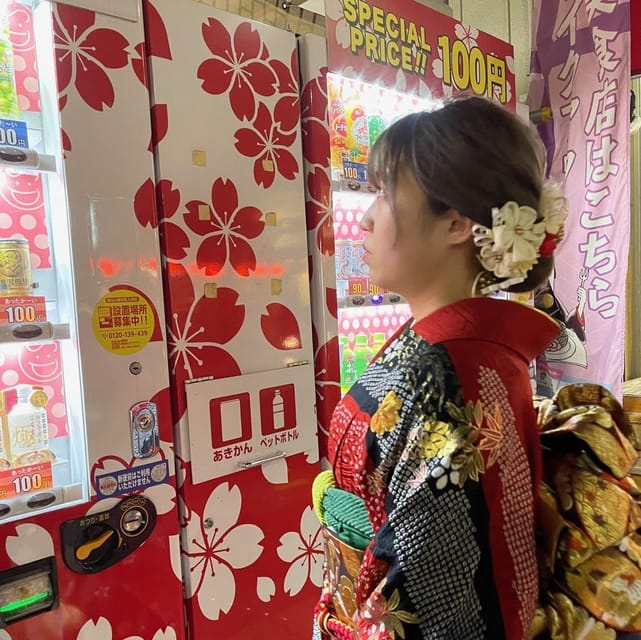
- About one hour for kimono fitting: Choose the kimono and hairstyle with advice from a guide trained in kimono dressing.
- A photo-friendly Asakusa route: Visit Kaminarimon Gate, Nakamise Shopping Street, Senso-ji Temple, and Sumida River Terrace.
- Emiko has earned warm praise: Her help with fitting, family needs, photos, videos, food suggestions, and shopping has been singled out by several participants.
- Your camera is welcome: The guide takes photographs for you at selected viewpoints.
- Small group format: The tour accepts no more than seven people and offers English, Chinese, and Japanese guidance.
- The price is $116 per person: Standard kimono rental and guiding are included, while styling upgrades and personal expenses cost extra.
Why a kimono changes your Asakusa walk
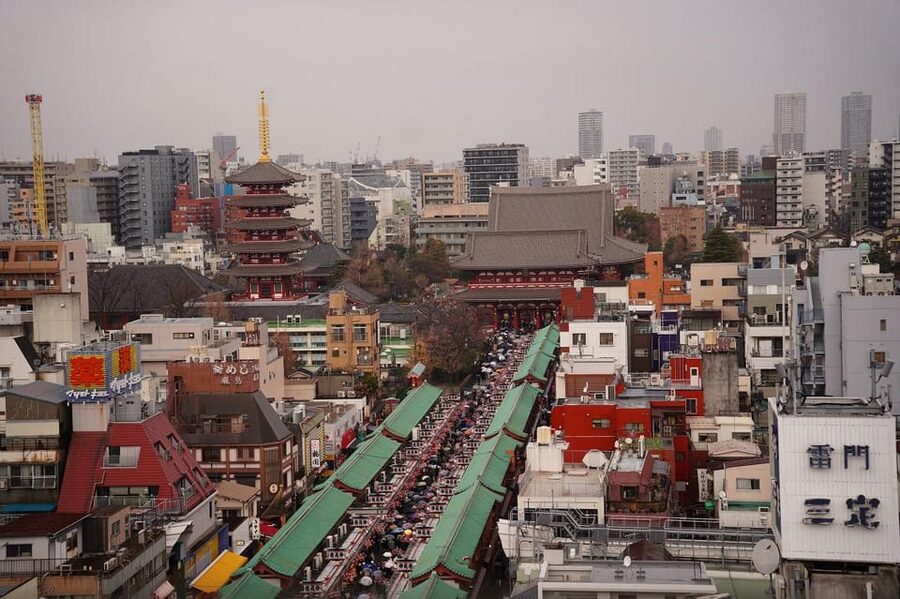
Asakusa is already one of Tokyo’s easiest districts for traditional sightseeing. Add a kimono and the visit becomes more than a temple stop followed by souvenir shopping. You are participating in the visual culture of the neighborhood, at least for a few hours, and the setting gives your photographs a clear sense of place.
The activity begins near Asakusa Station on the Ginza Line. Meet at Exit 1, where the guide carries the company’s orange LightSpeedStar logo. This detail matters in a crowded station area, so arrive with enough time to find the exit and identify the guide. Late arrivals and no-shows are not refunded.
The guide is qualified in kimono dressing and domestic travel itinerary management. That combination is useful. You get help with the practical side of wearing the clothing, plus explanations about the places you visit. English, Chinese, and Japanese are offered.
Emiko is the guide named in the strongest personal accounts of this experience. Her role has included helping families through the dressing process, suggesting places to eat, explaining cultural details, taking photographs and videos, and assisting with souvenir shopping. Guides can vary, but Emiko’s approach appears especially helpful for first-time kimono renters and families with young children.
More Asakusa and Sensoji tours:
- Tokyo: Japanese Dance Cabaret Theater Asakusa-Kaguwa Ticket
★ 4.8 · 2,270 reviews - Tokyo: Meiji Shrine, Asakusa, Skytree Bus Tour and Cruise
★ 4.7 · 1,986 reviews - Tokyo: Roll and Authentic Sushi Making Class in Asakusa
★ 4.9 · 1,957 reviews
The first hour at the kimono shop
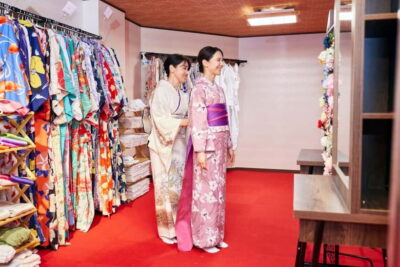
The dressing session is not a quick costume change. Plan on roughly one hour at the shop. You choose a kimono, select a hairstyle, and have the garment fitted and adjusted to your body.
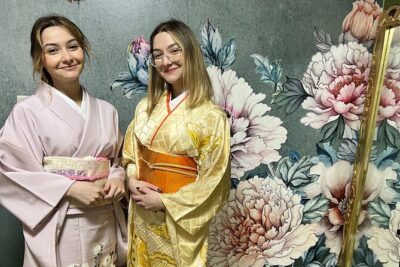
That time is valuable because a kimono is not casual clothing. The guide can advise you from a Japanese cultural point of view, helping you select an outfit that suits the season, the setting, and the look you want in photographs. Men and women are both welcome, and the experience is designed to make the outfit look polished rather than loosely borrowed.
Hair styling is part of the process, but the standard fee does not cover every possible upgrade. The shop offers additional choices for an extra charge, so ask clearly what is included before selecting an optional hairstyle or styling service. The standard kimono cost is included, while option fees are not.
You should also set realistic expectations about comfort. The point is not to race around Asakusa. The itinerary uses short walks, temple grounds, shopping streets, and photo stops. Even so, you will spend several hours dressed formally, so sensible footwear and a relaxed pace matter. The supplied information does not specify shoe arrangements, so confirm those details with the company before the tour.
For families, this part can work well if you allow time for children to settle into the clothing. A two-year-old has taken part successfully, with the guide helping the family throughout. Still, young children may need patience during the fitting and while posing for photographs.
Kaminarimon Gate and the first photographs
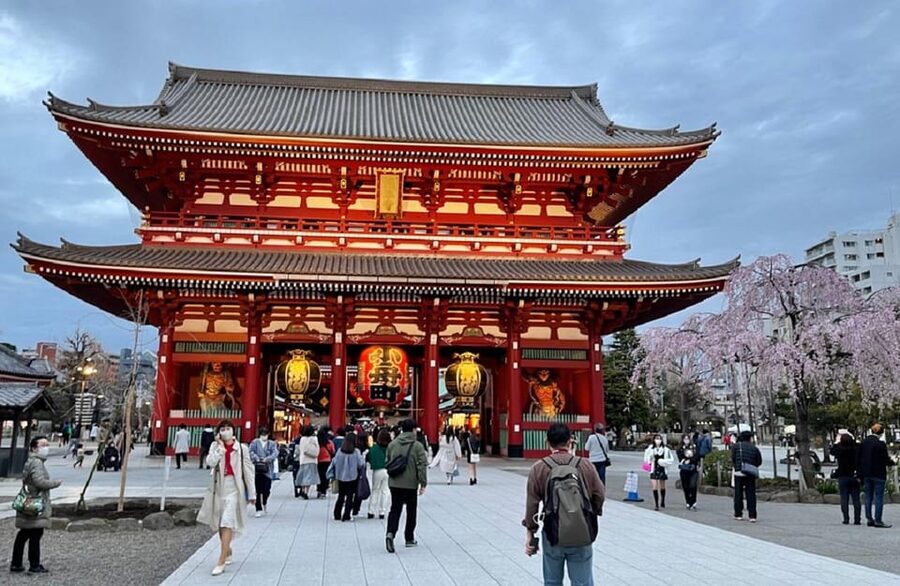
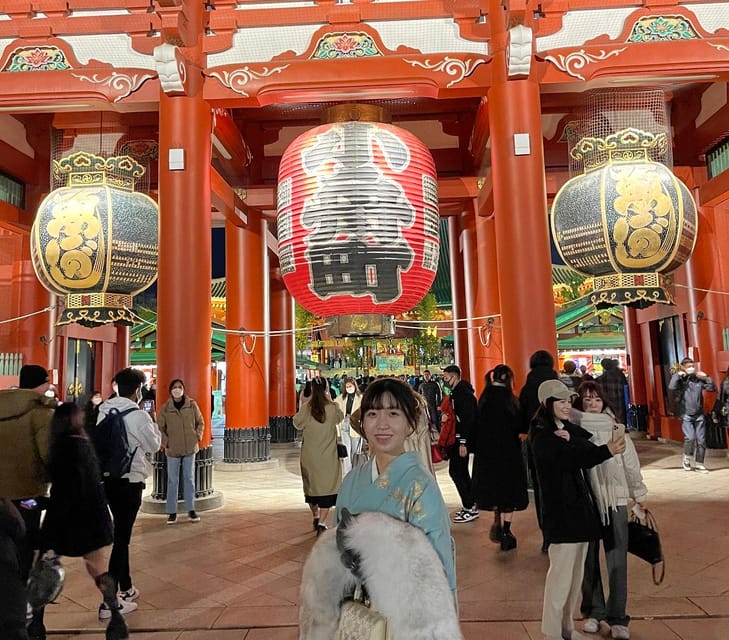
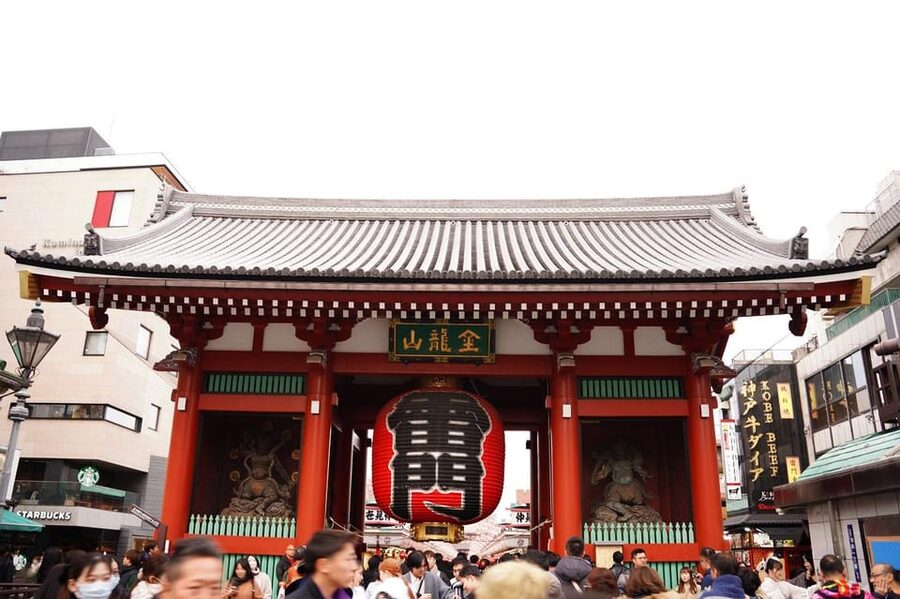
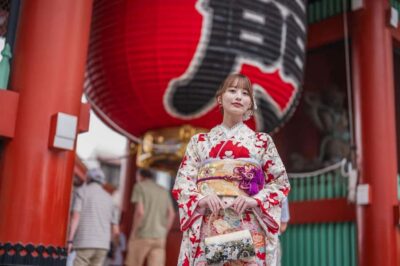
Once dressed, you walk about five minutes to Kaminarimon Gate, the main entrance to Senso-ji. Its official name is Kaminari Gate, but most people know it as Kaminarimon. The enormous lantern and bold gate structure create an immediate, unmistakable Asakusa background.
This is one of the strongest places to photograph the kimono because the traditional clothing and famous entrance belong to the same visual story. Your guide can suggest where to stand and take photographs with your camera. That service is worth noting: you are not paying only for someone to point out a monument, but also for help recording the day.
Expect a busy public setting. Kaminarimon is one of the district’s most recognizable sights, so photographs may include other people. The guide can help you find workable angles, but this is not a private photo studio. If you want a quieter image, be prepared to follow the guide’s timing and positioning advice.
The schedule allows about ten minutes for the initial visit, followed by additional free time near the gate later in the route. That gives you more than one quick photo opportunity. It also means the guide can keep the outing moving without forcing every pose into the first few minutes.
Nakamise Shopping Street, with time to browse
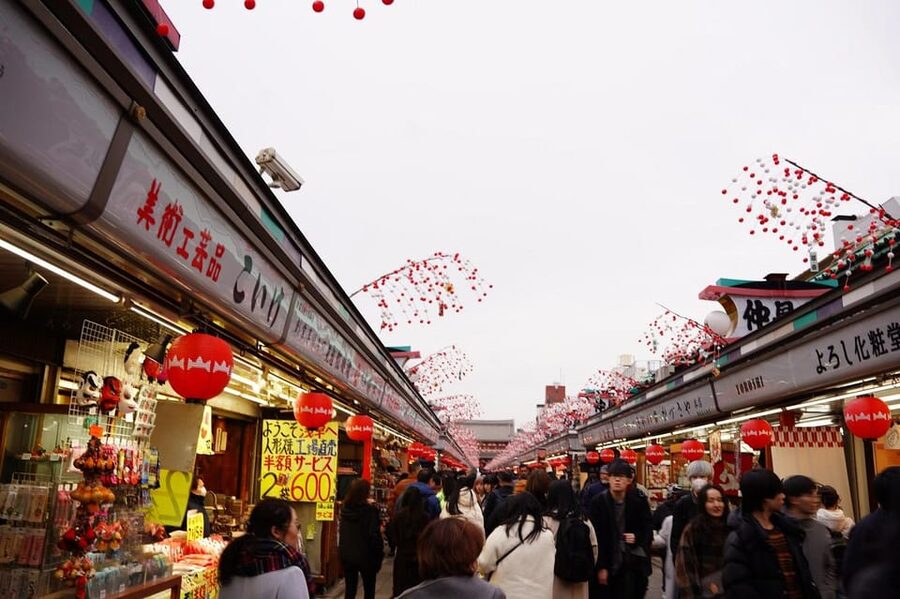
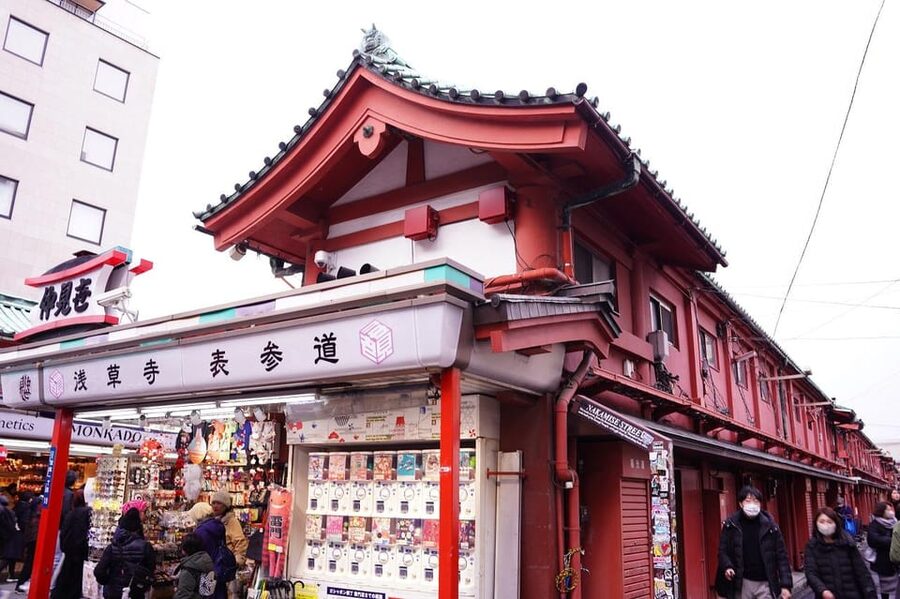
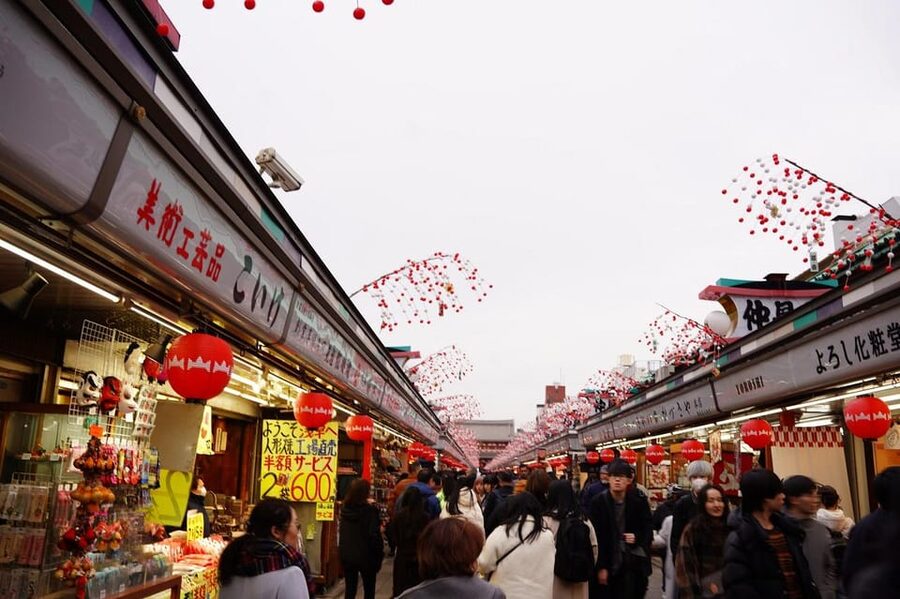
From Kaminarimon, the walk continues along Nakamise Shopping Street. This is one of Japan’s oldest shopping streets, lined with long-established stores and souvenir shops aimed at both local shoppers and sightseers.
The street is useful for two reasons. First, it gives you a practical look at Asakusa beyond the temple itself. Second, the shopfronts and traditional-style streetscape provide another setting for kimono photographs. Your guide can point out good places to stop and can help you with souvenir shopping if you need advice.
The scheduled visit is short, about fifteen minutes, so do not expect a long shopping session here. If you see something you want, keep an eye on the clock. The tour also includes roughly thirty minutes of free time around Kaminarimon later, but the route continues according to the guide’s plan.
This is one place where the small group format helps. Seven people or fewer is easier to manage on a narrow commercial street than a large coach group. You can ask questions without shouting across a crowd, and the guide can keep track of the group while still allowing a little personal browsing.
More Tokyo kimono experiences:
- Let’s make kimono !(Kimono is a gift for you
★ 5.0 · 252 reviews - Tokyo: Matcha and Kimono Experience
★ 4.7 · 219 reviews - Tokyo: Asakusa Kimono Dressing and Matcha Experience
★ 4.9 · 173 reviews - Asakusa: Kimono Tea Ceremony with Matcha and Sweet
★ 4.9 · 153 reviews
Senso-ji Temple and the pagoda view
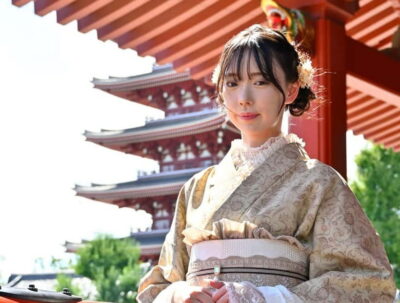
Senso-ji is the heart of the walk. With more than 1,000 years of history, it gives the kimono experience its strongest cultural setting. You can offer prayers at the temple, observe the grounds, and learn from the guide about what you are seeing.
The visit lasts about twenty-five minutes. That is enough for a meaningful look, but not a slow architectural study. If you want extensive time inside every area or a long period for personal worship, you may find the schedule brisk.
The five-story pagoda is an important Asakusa landmark and a familiar subject in paintings of the district. It also helps your guide frame photographs that show more than a close-up portrait. With the pagoda, temple buildings, and possibly cherry blossoms in the same image, you get a photograph that identifies the place clearly.
The tour description specifically highlights a view that can include cherry blossoms, Senso-ji, and Tokyo Skytree together. Seasonal conditions will affect the flowers, of course, but the composition is appealing even when blossoms are not present. You get old Tokyo architecture in the foreground and the modern skyline in the distance.
Remember that this remains an active religious site. The kimono is not just a photo prop here. Follow the guide’s instructions about respectful behavior and prayer, and keep posing from interfering with people who have come to worship.
Sumida River Terrace and Tokyo Skytree
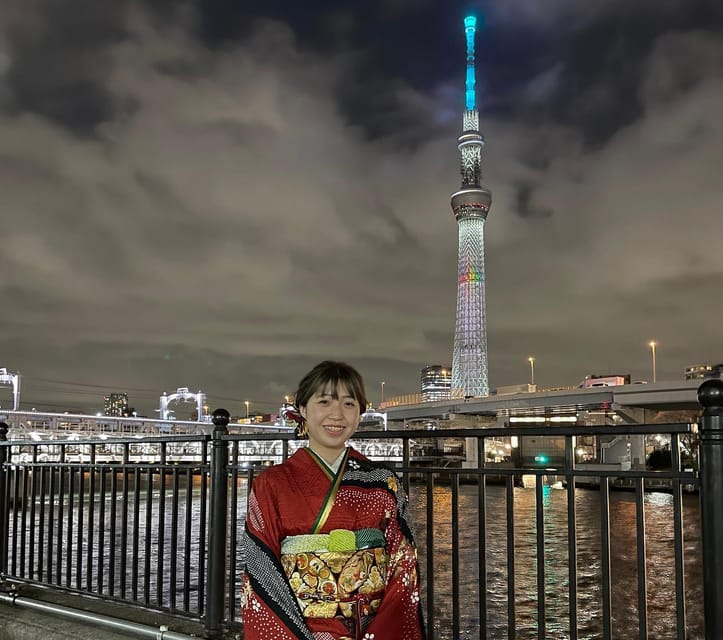
After the temple district, the group walks toward Sumida River Terrace, specifically the left bank area downstream from Shirahige Bridge. The walk is short, and the terrace changes the mood of the tour.
Here the background opens toward the river and Tokyo Skytree. The guide looks for photographs that place you in the kimono with Skytree and, when in season, cherry blossoms behind you. This is a good counterpoint to the tighter temple and shopping-street scenes.
The scheduled stop lasts about thirty minutes. That gives the guide time to photograph each person rather than snapping one rushed group picture. It also lets you enjoy the view without treating the entire stop as a formal portrait session.
The terrace is likely to be more comfortable for group movement than the narrow approach to the temple, though the information provided does not promise an empty or private setting. You should still expect an ordinary public riverside area. The value comes from the combination of river, tower, seasonal trees, and traditional clothing.
After the terrace, you return on foot to the kimono shop for a final photo stop of about fifteen minutes. The tour then finishes back near Asakusa Station. If you choose the next-day return option, you can keep the kimono and continue sightseeing after the guided portion. The guide can suggest places to go, but the next-day option is not part of the standard included fee unless selected.
What the $116 price really covers
At $116 per person, this is not the cheapest way to walk around Asakusa. It is also more than a basic kimono rental. The price includes the standard kimono fee, a qualified English-speaking guide, the four-hour route, and practical assistance with photographs and sightseeing.
That bundle can make sense if you want the experience to run smoothly. You do not have to work out where to pose, how to reach the key sights, or how to ask someone else to take photographs. The guide handles the route and helps connect the outfit to the places you see.
The value is weaker if you mainly want to rent a kimono and wander independently. In that case, a shorter rental may cost less and give you more control over your timing. This guided activity is aimed at people who want the clothing, cultural context, photo assistance, and a planned Asakusa walk in one booking.
Budget separately for optional kimono or hairstyle upgrades, food and drinks, entrance fees, transport, and personal purchases. The main route focuses on outdoor sightseeing, so the supplied cost information does not promise admission to extra facilities.
Who will get the most from this outing
I would recommend it most strongly to first-time visitors who want a straightforward introduction to Asakusa. You get the major sights without having to plan a route through the district, and you receive help with a garment that can be intimidating to arrange alone.
It also suits couples, friends, and solo visitors who care about photographs. The guide takes pictures with your camera, which solves one of the common problems of dressing up for a day out. You can concentrate on the experience instead of searching for a stranger every time you want a full-length shot.
Families can benefit from the personal attention, especially if a guide such as Emiko is leading the group. The small group limit leaves more room for help with children and shopping questions. Still, parents should remember that one hour of dressing and several formal stops require cooperation from young children.
I would be more cautious about recommending it to anyone who dislikes structured schedules or formal clothing. The route includes several fixed stops, and the fitting takes a substantial part of the morning or afternoon. It is also not designed as a deep temple tour, a food tour, or a long shopping expedition.
Practical details before you reserve
The activity lasts four hours, and starting times depend on availability. Check the available slot carefully because the kimono fitting begins near the start and the return to the shop is built into the schedule.
The meeting point is Ginza Line Asakusa Station, Exit 1. Look for the guide with the orange LightSpeedStar logo. The company may contact you about kimono arrangements around seven days before the date, and WhatsApp contact is available.
The tour is wheelchair accessible according to the supplied information. Since the route includes walking between the station, shop, temple area, shopping street, and riverside terrace, confirm the exact accessibility arrangements with the company if you need specific assistance.
Cancellation is free up to twenty-four hours before the activity for a full refund. You can also reserve and pay later, which helps if your Tokyo plans are still shifting. There is no refund for a no-show or late arrival, so the meeting point deserves careful attention.
Should you book the Asakusa kimono tour?
Book it if you want more than a rental. The strongest reasons are the guided dressing advice, the planned route through Asakusa, and the practical photo help at Kaminarimon, Senso-ji, and Sumida River Terrace. The small group limit adds useful personal attention, and Emiko’s record of helping with families, photos, food ideas, and shopping is a real plus when she is your guide.
Skip it if your priority is low cost, long independent browsing, or a detailed temple study. At $116, the experience earns its price through service and convenience rather than admission to paid sights.
For most first-time visitors seeking a memorable Tokyo photograph with real Asakusa scenery behind it, this is a well-targeted half-day choice. Just budget for extras, allow time for the fitting, and arrive at Exit 1 on time.
FAQ
How long does the kimono fitting take?
The fitting, kimono selection, and hairstyle choice take about one hour.
What sights are included in the walking route?
The route includes Kaminarimon Gate, Nakamise Shopping Street, Senso-ji Temple, and Sumida River Terrace near Shirahige Bridge.
Will the guide take photographs for me?
Yes. The guide will take photographs with your camera and suggest places where the kimono works well with the scenery.
Is the activity available in English?
Yes. Live guidance is offered in English, Chinese, and Japanese.
How many people can join the tour?
It is a small-group activity limited to seven participants.
What does the $116 price include?
The price includes the standard kimono fee and guidance from a qualified English-speaking guide. Optional kimono services, entrance fees, transportation, food, drinks, and personal expenses are not included.
What happens if I want to keep the kimono after the tour?
If you select the next-day return option, you can continue sightseeing in the kimono and return it the following day. The guide can advise you on where to go afterward.
More Tokyo walking tours
- Tokyo Tsukiji Fish Market Food and Culture Walking Tour
★ 5.0 · 3,184 reviews - Tokyo: Imperial Palace and Shogun Historical Walking Tour
★ 5.0 · 2,251 reviews - Tokyo: Shinjuku Local Bar and Izakaya Guided Walking Tour
★ 4.9 · 1,794 reviews - Tokyo: Tsukiji Fish Market Food and Walking tour
★ 5.0 · 1,724 reviews
More Tokyo photo shoots
- Best Go Kart Experience in Shibuya Crossing with Iconic Photos
★ 5.0 · 348 reviews - Tokyo Go-Karting Experience: Shibuya Crossing with Photos
★ 4.8 · 190 reviews - Tokyo Cyberpunk Street Photo Tour
★ 5.0 · 165 reviews - Tokyo by Night Photography Tour (Private Option Available)
★ 5.0 · 151 reviews
Newly reviewed around Tokyo
- Tokyo Asakusa:Calligraphy & Make T-shirt Activity★ 5.0 · 62 reviews
- Intercity Shuttle, Tokyo to Haneda /Narita /Yokohama /Makuhari★ 5.0 · 5 reviews
- 1 Hour Travel around Tokyo with a Professional Photographer★ 5.0 · 3 reviews
- Travel Tokyo with Your Own Personal Photographer★ 5.0 · 43 reviews
- Train in Samurai Swordsmanship and Defeat the Demon in Tokyo★ 5.0 · 5 reviews
- Shuttle Van 6hr Tokyo Tour to-and-from Tokyo, Yokohama and Narita★ 5.0 · 9 reviews
- Kickboxing & Body Training with EX-Pro Fighter★ 5.0 · 4 reviews
- Traditional Japanese Knife Sharpening Class★ 5.0 · 18 reviews
Tokyo Kimono Experiences, compared.
Tokyo Asakusa: Traditional Kimono Rental Experience at Wargo
Read our review →
Tokyo Authentic Kimono Rental in Asakusa with Photography Option
Read our review →
Kimono Rental inside Shinjuku Gyoen National Garden
Read our review →Browse the lists this tour appears in