
Reviewed · WORKSHOPS
Traditional Japanese Knife Sharpening Class
Japanese knife sharpening is not a quick trick with a gadget. It is a hands-on craft built around water stones, careful angles, and patience. In this Tokyo class, you learn the theory, then put it to work on a real blade until it can slice through a standing paper tube.
I like two things right away: you do not need to pack or buy equipment, and the small maximum of six gives the instructor room to correct your technique. Charlie is praised for clear English and careful explanations, while Timothy is noted for showing the dramatic change from a very dull knife to a razor-sharp one.
The main consideration is price. At $98.53 for roughly two hours, this is not a cheap add-on activity. You are paying for instruction, equipment, and a knife to take home, so the value is strongest if you cook, collect Japanese knives, or want a skill you can repeat at home.
Key points to know before you book
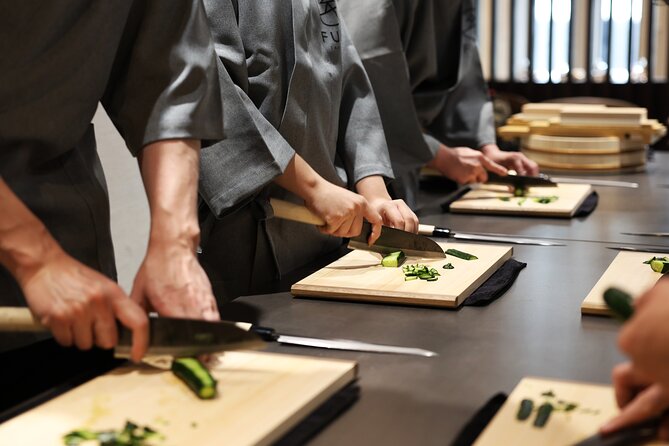
- A real hands-on result: You sharpen a knife yourself rather than simply watching a demonstration.
- Small group size: The class accepts a maximum of six people, which matters when you are learning a precise physical skill.
- Several whetstone grits: You work through stones suited to different stages of sharpening and polishing.
- Useful background: The lesson covers Japanese knife history, steel types, and sharpening theory.
- Strong English instruction: Charlie is described as clear and engaging, and Timothy is also praised for teaching the method well.
- A practical souvenir: You leave with the knife you sharpened, not just a certificate or a photograph.
Why this two-hour Tokyo class is more useful than buying a knife
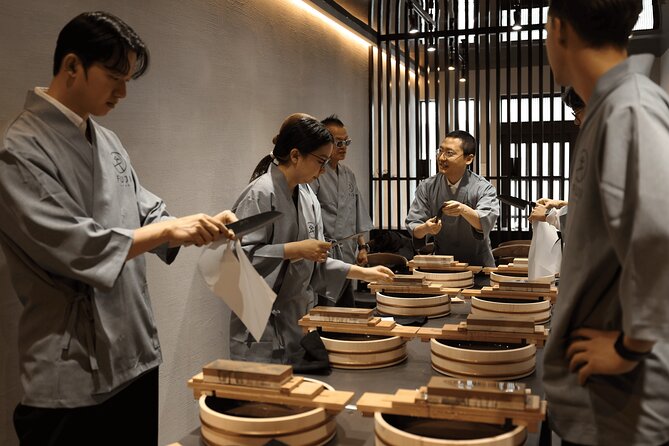
Many visitors come to Japan hoping to buy a Japanese kitchen knife. That can be a fine souvenir, but a new blade will eventually lose its edge. This class tackles the part that sales counters cannot teach you: how to maintain the knife once you get home.
You learn by handling the equipment yourself. That matters because sharpening is a physical skill. You need to feel how the blade meets the stone, keep a steady motion, and understand when to change from one grit to another. A short talk alone would not give you that sense.
The session also puts the tool in context. You study different kinds of steel and the ideas behind Japanese sharpening. That helps explain why two knives may need different care, and why a whetstone is used in stages rather than as a single magic fix.
I especially like the built-in before-and-after test. Timothy’s class begins with a knife so dull it can barely cut paper, then finishes with a blade capable of slicing a standing tube of rolled paper. That is an easy result to understand. You can see and feel what your work has done.
More hands-on classes and workshops in Tokyo:
- Sushi Making Tokyo Roll and Authentic Japanese Sushi Class
★ 5.0 · 3,971 reviews - Tokyo: Roll and Authentic Sushi Making Class in Asakusa
★ 4.9 · 1,957 reviews - Tokyo Shinjuku Chopsticks Making Class
★ 5.0 · 1,763 reviews
Meeting in Nishiasakusa, with Tokyo Skytree nearby
The meeting point is at 1-chōme-9-8 Nishiasakusa, Taito City, Tokyo 111-0035. The area is near public transportation, and Tokyo Skytree is listed as the itinerary stop. The class itself begins and ends at the meeting point, so do not plan on a long guided sightseeing route around Tokyo.
This setup makes the activity easy to pair with time in eastern Tokyo. You can build the class into a day that includes Asakusa or a visit toward Skytree, but the knife lesson is the main event. The Skytree reference should not lead you to expect an observation-deck visit or a full city tour.
Allow yourself enough time to find the address before the start. A sharpening lesson works best when you arrive calm and ready to focus, rather than rushing in from another part of the city.
The opening lesson: knives, steel, and sharpening theory
The first part gives you the ideas behind the practice. You learn about Japanese knife history, types of steel, and the theory behind sharpening. This is valuable because it turns a repetitive motion into a logical process.
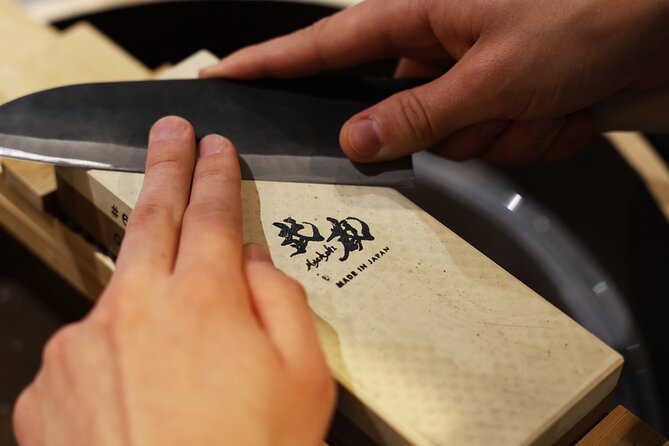
A sharp edge is not produced by simply rubbing a blade across a stone at random. The class explains how the stone’s grit affects the work and why different stages are needed. Coarser stones can help reshape or repair an edge, while finer stones refine it. The exact lesson flow may depend on the knife and its condition, but the point is to understand the job each stone performs.
The steel discussion also gives you useful buying knowledge. If you later visit a knife shop, you will have a better sense of why blade material matters and why proper maintenance is part of owning a Japanese knife. You are not just being shown a local craft. You are learning how to make sensible decisions about a kitchen tool.
Charlie is repeatedly praised for explaining the process in detail and communicating well in English. That is important here. Sharpening has small technical points, and a vague explanation can leave you repeating the wrong movement at home.
Moving through the whetstones

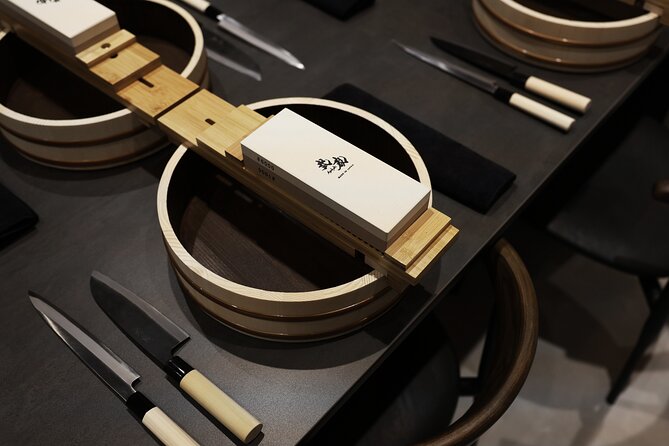
After the introduction, you work with whetstones of varying grits. The equipment is provided, so you do not have to locate stones in Tokyo or guess which ones to buy before the class.
Expect this part to require attention rather than strength. You need to concentrate on the blade’s contact with the stone and repeat the motion carefully. The instructor can watch what you are doing and help you adjust. With a group capped at six, there is a reasonable chance for direct guidance, though the class is still shared with other participants.
The word traditional can sometimes suggest a performance you watch from the side. That is not the idea here. You take part. You sharpen your own blade and learn a process that can be repeated in your kitchen.
The class suits people who enjoy tactile work. If you like cooking, making things, or caring for well-made tools, the pace should feel satisfying. If you want a quick Tokyo activity requiring little concentration, this may feel slower and more technical than expected.
A completely different kind of day in Tokyo:
- Mt Fuji and Hakone 1-Day Bus Tour Return by Bullet Train
★ 5.0 · 26,383 reviews - 1-Day Tokyo Bus Tour
★ 5.0 · 14,250 reviews - Tokyo: teamLab Planets TOKYO Digital Art Museum Entry Ticket
★ 4.6 · 9,779 reviews - Mt Fuji & Hakone Cruise, Drum Show Bullet Train 1 Day from Tokyo
★ 4.0 · 7,413 reviews
The dull-knife-to-sharp-knife test
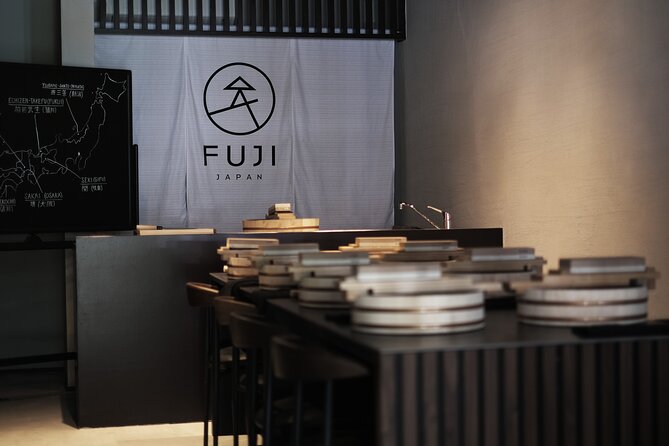
The strongest teaching feature is the clear contrast between the starting blade and the finished one. A very dull knife gives you an honest starting point. You can test it against paper, then see what careful work on the stones changes.
The final paper-tube test gives the session a memorable finish. A knife that can slice through a rolled tube standing on its own offers a simple demonstration of edge sharpness. It also gives you a way to judge your progress without relying only on the instructor’s opinion.
Do not read this as a promise that every blade will reach exactly the same result. Knife condition, steel, and your own technique all matter. Still, the class is designed around a visible improvement, not a vague lesson that ends when the clock runs out.
That practical result is also why you should pay attention to the finishing and polishing portion. A sharp edge is useful, but learning how to leave the blade in good condition is part of responsible knife care.
What Charlie and Timothy add to the experience

The strongest personal detail available about the teaching is the praise for Charlie and Timothy. Charlie is described as patient, accommodating, and very strong in English. His teaching style is presented as detailed without losing the human side of the class.
Timothy is specifically associated with the dull-blade demonstration and the paper-tube test. That gives you a sense of a lesson that uses clear proof rather than abstract claims.
Instructor quality matters more than fancy surroundings in a class like this. You can own excellent stones and still damage a knife if your angle or motion is wrong. A teacher who watches closely and answers questions can save you frustration later.
The class also appears suitable for an occasion such as a birthday. One participant used it as a shared cooking-related activity with a partner, which makes sense. You finish with a useful object and a story about making it sharp yourself, rather than simply purchasing another souvenir.
Is $98.53 a fair price?
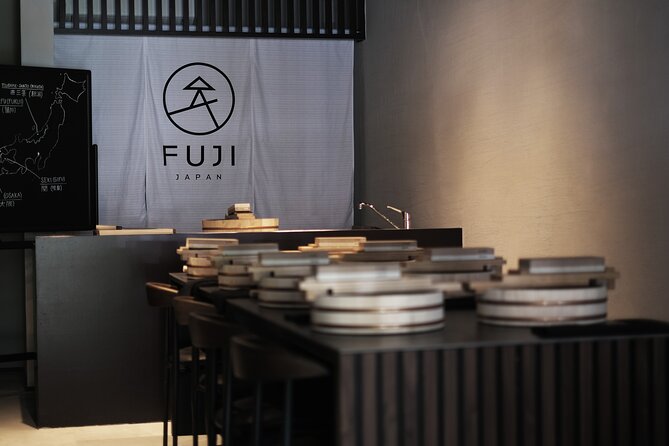
At $98.53 per person, the class sits in the special-interest activity range. Two hours is not a full day, and the price will seem high if you measure it only by time.
The value improves when you count what is included: instruction, access to multiple whetstones, guided practice, background on knives and steel, and the sharpened knife you take home. You also avoid buying equipment blindly. A beginner who purchases the wrong stone or uses the wrong method could waste money and damage a blade.
I would call it good value for a serious home cook, knife fan, craftsperson, or anyone who has already planned to buy a Japanese knife. It is less convincing for someone who wants a general cultural activity with no lasting practical use.
The small group helps justify the cost. A maximum of six means this is not a large demonstration where you sit far from the action. Still, you should book it for the instruction and skill, not because it is the cheapest way to spend two hours in Tokyo.
Who should take this class?
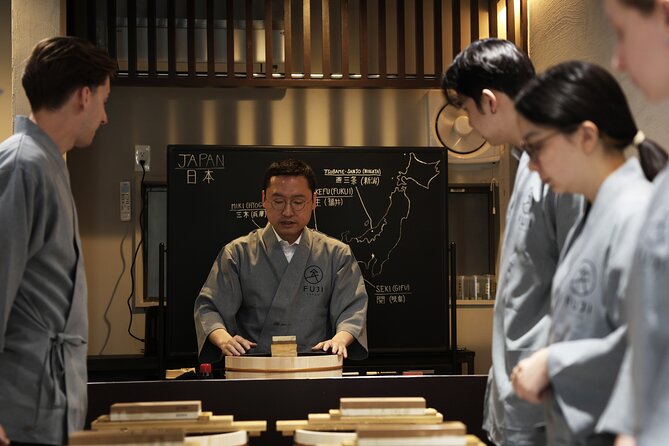
I would recommend it most strongly to:
- Home cooks who want to maintain their knives properly
- People planning to buy a Japanese knife in Tokyo
- Cooking enthusiasts who enjoy learning by doing
- Craftspeople who appreciate careful tool maintenance
- Couples or friends looking for a practical shared activity
- Visitors who want a souvenir they will actually use
You do not need to be an expert. The class starts with theory and provides the equipment, so beginners are part of the intended audience. You do need enough interest to concentrate and follow instructions.
The experience may not suit you if you dislike repetitive hand work or want a fast, purely visual attraction. It also may not be the right choice if you are looking for a broad tour of Tokyo. The Skytree connection does not turn this into a city sightseeing activity.
Practical details that affect your day
The activity lasts approximately two hours and ends back at the meeting point. That makes it easy to fit around other plans, though I would avoid scheduling a tightly timed attraction immediately afterward. A class can run slightly differently depending on the group and the work needed on the knife.
A mobile ticket is provided, and booking confirmation arrives at the time of booking. The meeting point is near public transportation, and most people can participate. Since the group is limited to six, check your chosen date carefully before making other plans.
Free cancellation is available if you cancel at least 24 hours before the local start time. Cancellations or changes made less than 24 hours ahead are not accepted for a refund. That is a useful safety net, but the cutoff is firm.
The activity is listed with a 100 percent recommendation rate and a five out of five rating from 18 ratings. The most consistent praise centers on the teaching, clear explanations, patience, and the satisfying change in the knife. Those are the qualities I would use to judge the class, more than the surrounding sightseeing.
Should you book it?
Book this class if you want to understand Japanese knives instead of merely buying one. The combination of steel theory, several whetstone grits, personal instruction, and a knife you sharpen yourself gives the experience a useful afterlife at home.
I would hesitate only if $98.53 feels too high for a two-hour activity or if you have little interest in cooking and tools. For everyone else, especially a serious cook or a couple seeking a hands-on Tokyo memory, the small group and patient English instruction make this a sensible choice.
FAQ
How long does the Japanese knife sharpening class last?
The class lasts approximately two hours.
Where does the experience begin?
It begins at 1-chōme-9-8 Nishiasakusa, Taito City, Tokyo 111-0035, Japan.
Where does the activity end?
The activity ends back at the meeting point.
How many people can join the class?
The maximum group size is six people.
Is equipment provided?
Yes. The experience provides the equipment needed for the sharpening lesson, including whetstones of various grits.
What will I learn during the class?
You will learn about Japanese knife history, steel types, sharpening theory, and hands-on sharpening technique.
Can I take the knife home?
Yes. You can take home the knife you sharpen during the session.
Is the class near public transportation?
Yes. The meeting point is near public transportation.
What is the cancellation policy?
You can cancel for a full refund up to 24 hours before the experience start time. Cancellations or changes made less than 24 hours before the start are not accepted for a refund.
Newly reviewed around Tokyo
- Tokyo Asakusa:Calligraphy & Make T-shirt Activity★ 5.0 · 62 reviews
- Intercity Shuttle, Tokyo to Haneda /Narita /Yokohama /Makuhari★ 5.0 · 5 reviews
- 1 Hour Travel around Tokyo with a Professional Photographer★ 5.0 · 3 reviews
- Travel Tokyo with Your Own Personal Photographer★ 5.0 · 43 reviews
- Train in Samurai Swordsmanship and Defeat the Demon in Tokyo★ 5.0 · 5 reviews
- Shuttle Van 6hr Tokyo Tour to-and-from Tokyo, Yokohama and Narita★ 5.0 · 9 reviews
- Kickboxing & Body Training with EX-Pro Fighter★ 5.0 · 4 reviews
- Tokyo History: Sensoji Temple & Asakusa District Private Tour★ 5.0 · 28 reviews
Workshops, compared.
Sushi Making Tokyo Roll and Authentic Japanese Sushi Class
Read our review →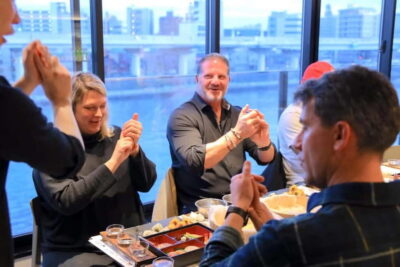
Roll and Authentic Sushi Making Class in Asakusa
Read our review →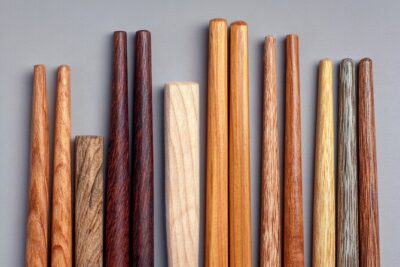
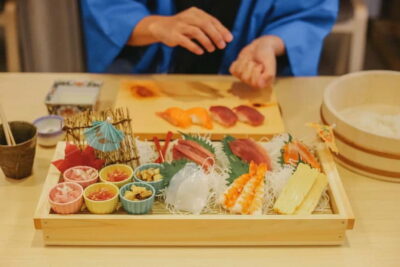
Sushi Making Class in a Happi Coat near a Famous Spot
Read our review →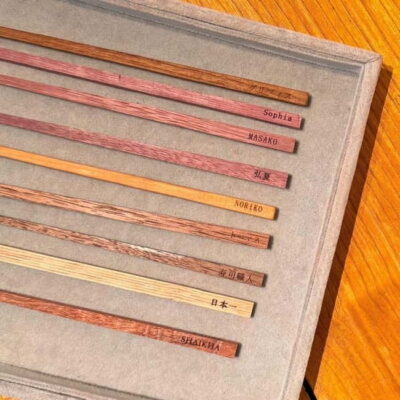
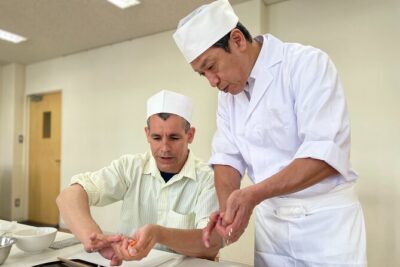
Tokyo Sushi Making Class in Tsukiji with Professional Chef
Read our review →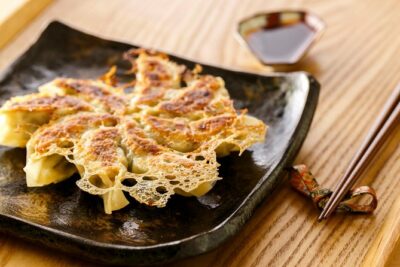
Ramen & Gyoza Cooking Class in Tokyo with Local Supermarket Visit
Read our review →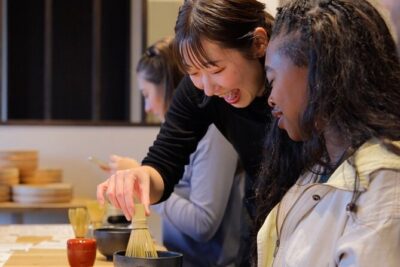
Matcha Making Class in Tokyo with Authentic Japanese Sweets Set
Read our review →Browse the lists this tour appears in