
Reviewed · TOKYO TRADITIONAL CRAFT WORKSHOPS
Tokyo Shinjuku Chopsticks Making Class
The best part of this one-hour Shinjuku workshop is the simple transformation: you begin with rough wooden sticks and leave with chopsticks shaped by your own hands. A traditional kanna hand plane does the main work, followed by sanding and oiling. You also get to choose your wood, so the final pair feels personal rather than pulled from a shop shelf.
I like two things here. First, the work is genuinely hands-on, with enough technique to make the finished pair feel earned. Second, the staff are patient with beginners, and instructors including Masa, Tom, Yuki, Nana, Sayaka, and Ken have been praised for clear English and helpful guidance. The main drawback is crowding: at busy times, assistance can slow down, and premium wood and engraving cost extra.
Key points at a glance
- Traditional kanna hand plane: Shape raw wood with a small Japanese woodworking tool instead of simply decorating a ready-made souvenir.
- Two wood choices included: Pick from the included options, or pay a small upgrade for premium woods with different colors, scents, and textures.
- A practical souvenir: Your finished chopsticks are usable, personal, and easy to pack for the trip home.
- About one hour: The session fits neatly into a Shinjuku day, though busy periods can make the workshop feel more crowded.
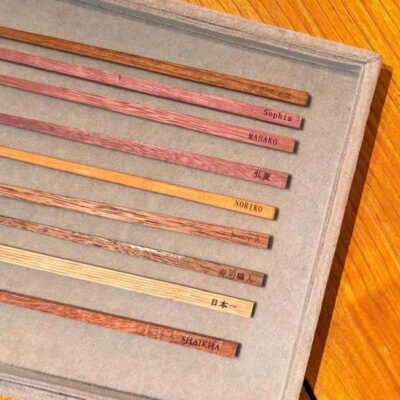
- Optional 2,000-yen engraving: Add a name or message for a more permanent keepsake, but count it as an extra cost.
- Beginner-friendly instruction: You need no woodworking background, and staff can help if your first attempt goes wrong.
Turning rough sticks into a Tokyo souvenir
This activity begins at 7-chōme-4-5 Nishishinjuku, in Shinjuku City. The meeting point is also the ending point, so you will not need to arrange transport between stages. The workshop is near public transportation, but pay close attention to your booking directions before setting out. One poor experience came from conflicting location information, so I would check the exact address and map pin on the day.
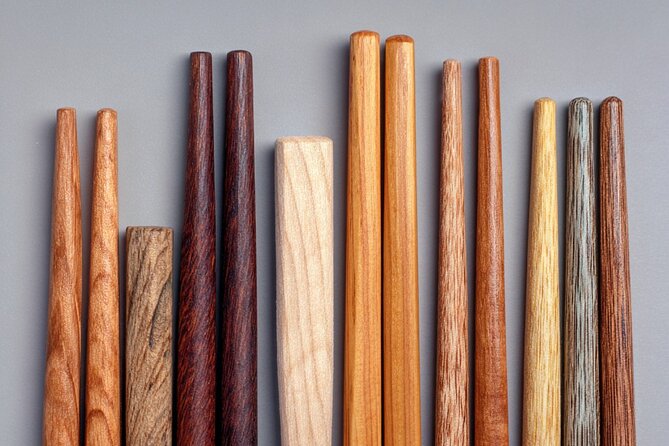
Once seated, you choose the wood for your chopsticks. Two varieties are included in the basic price. Premium woods are available for an added fee, giving you more choice in color, grain, scent, and texture.
That choice matters more than it may seem. Chopsticks are narrow objects, so the wood becomes much of their visual character. A pale, even grain creates a clean look. A more distinctive wood can make the pair feel like a small piece of craftwork. If you are shopping for a souvenir, this is the point where you decide how much of the final cost you want to spend.
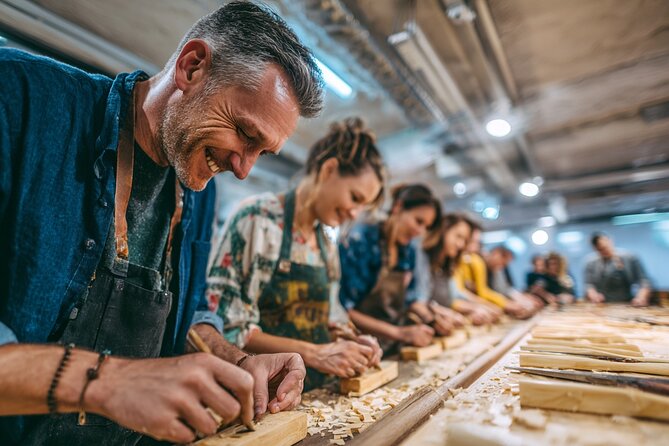
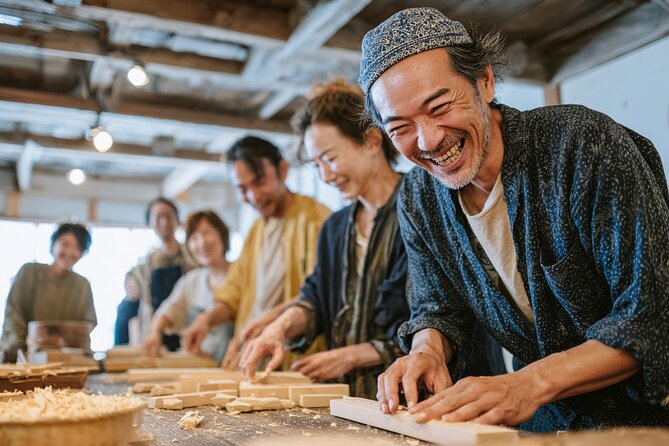
The staff then explain how to hold and use the kanna. You work along the wood to remove material and shape the sticks. This is not a quick coloring project. You need to pay attention to pressure, direction, and symmetry. Some woods take more effort than others, and the task can require a surprising amount of muscle.
That small challenge is part of the appeal. You are not simply buying an item marked Made in Japan. You are learning enough of the process to understand why smooth, even chopsticks require care. The work is accessible, but it is not entirely effortless.
More things to do in Shinjuku:
- Tokyo: Shinjuku Food Tour (13 Dishes at 4 Local Eateries)
★ 5.0 · 6,603 reviews - Tokyo Bar Hopping Tour in Shinjuku (All-You-Can-Drink + Dinner)
★ 5.0 · 3,587 reviews - Tokyo: Shinjuku Food Tour (15 Dishes and 4 Eateries)
★ 4.9 · 2,033 reviews
How the shaping process feels
The first pass can feel uncertain. You may remove too little wood, work unevenly, or make a mistake on one stick. Staff can show you how to adjust your technique, and one instructor, Masa, was specifically praised for staying patient when a participant had trouble with the first chopstick.
That kind of support is important. A beginner class works only if the instructors let you learn through small errors instead of taking the tool away at the first sign of trouble. The staff have also allowed people to start again when a first attempt did not go well.
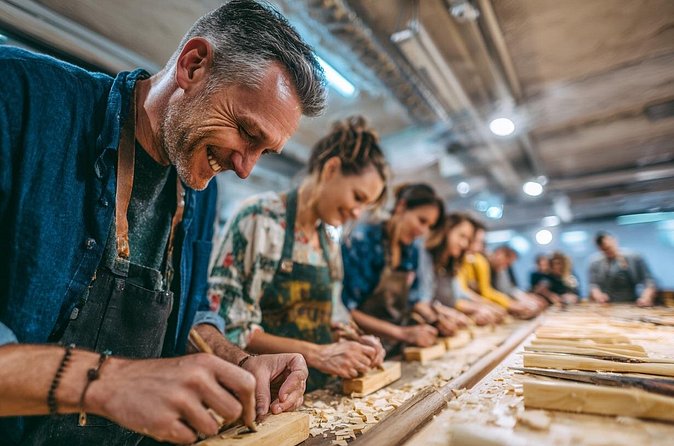
The workshop can be busy, though. The setup includes four tables with multiple workstations, and the maximum group size is 32 people. That is a sizeable class for a tool-based activity. At quiet times, you should have a relaxed session. At the middle of the day or during a full class, you may need to wait for help.
I would choose an earlier or less crowded session if your schedule allows. Several people found the concept enjoyable but felt that limited instructor attention made the process feel rushed or less clearly explained. The class does not always force you to hurry, but the room can feel hectic when many people need help at once.
Sanding and oiling finish the pair
After shaping, you smooth the chopsticks with sandpaper. This stage removes rough spots and helps even out the form. It is also where you can make small corrections, though sanding will not fix a major difference in length or shape.
The final step is oiling. The finish brings out the wood and helps turn the rough sticks into a pair that looks ready for use. Staff guide you through shaping, sanding, and oiling in order, so the activity has a clear start, middle, and finish rather than a loose craft session.
I like this progression because each step has a purpose. The kanna gives you the basic form. Sanding improves the feel in your hand. Oil gives the wood a finished appearance. You can understand how the materials change as you work, which makes the souvenir more satisfying than a standard purchased pair.
The tools may not always be perfectly sharp. Some participants found the blades blunt, making the shaping harder than necessary. That can be frustrating, especially for a first-time woodworker. On the other hand, the extra effort does make the activity feel like actual making rather than a staged photo opportunity.
Choosing between the basic and premium options
The advertised price is about $20 per person, which makes this one of the more affordable hands-on activities in Tokyo. For that price, you receive the workshop, instruction, and two included wood options.
The value depends on what you want. If you are looking for a quick cultural activity and a useful souvenir, the basic package is reasonable. You get a full process, not just a demonstration, and the finished object has a story attached to it.
The price rises when you select premium wood. The exact upgrade varies, so ask before committing. Some people felt the premium choices were expensive compared with the base price. I would inspect the included woods first, then upgrade only if a particular grain or color matters to you.
Engraving costs 2,000 yen. You can add your name or another short personalization, and it gives the chopsticks a clear memory of your Japan trip. It is also an easy extra to accept without thinking about the total. If you are watching your spending, decide before the session whether engraving is worth it.
My practical approach would be simple: start with the included wood, compare the available options, and treat premium materials and engraving as separate purchases. The basic experience already provides the main value.
More Tokyo craft workshops:
- Chopstick Making Workshop in Ginza
★ 4.8 · 1,366 reviews - Kintsugi Experience: Art of Golden Joinery in Tokyo
★ 5.0 · 467 reviews - Tokyo Chopstick Making Workshop with Artisan
★ 5.0 · 466 reviews - Authentic Pure Gold Kintsugi Workshop with Master Taku in Tokyo
★ 5.0 · 217 reviews
Helpful instructors, with a busy-room warning
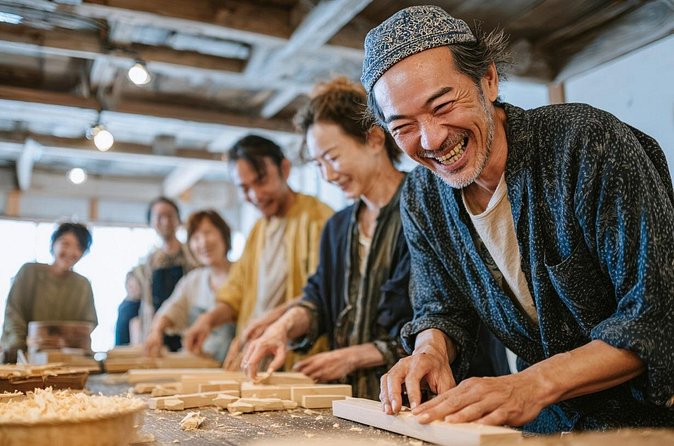
The staff are one of the strongest parts of the activity. Named instructors such as Tom and Yuki have been praised for explaining the process in good English. Ken, Sayaka, Mimi, Yin, Nana, Mauro, Shae, Kiwa, and Katana have also been singled out for patience, encouragement, or careful help.
That matters if you are nervous about using the kanna. You can ask questions during the shaping stage, and staff can guide you through the steps rather than leaving you to guess. English support is especially useful when discussing pressure, direction, and the amount of wood to remove.
Still, the staff-to-participant ratio may feel tight during a full session. One instructor cannot watch every workstation at once. If your chopsticks look uneven, ask for help early instead of waiting until the final sanding stage.
Families should also divide attention between children and the tools. The activity suits a wide age range, and people from 10 to 84 have enjoyed it together, but younger children may need close supervision. The process is family-friendly because everyone can work at the same table, not because the tools are completely foolproof.
Why this works well for families and first-time visitors
This is a good choice for a group that wants to make something together without committing half a day. The one-hour length leaves room for Shinjuku shopping, food, or another activity.
It also gives different ages a shared task. Children can enjoy the physical work. Adults can focus on getting the shape even. Older family members can take part at their own pace. The finished chopsticks give everyone a concrete reminder of the same hour.
For a first Tokyo activity, the workshop offers a gentle introduction to Japanese craft. You learn about a traditional tool, work with Japanese woods, and leave with something connected to daily life. Chopsticks are not just decorative objects. They are ordinary household items, which makes the souvenir practical.
Solo visitors can enjoy it too. The staff have helped individuals through the process, and you do not need a group to make the session worthwhile. If you are traveling alone, the work gives you something to focus on and a natural reason to talk with the instructors.
When the workshop may not suit you
I would skip this activity if you want a polished, luxury craft experience with quiet, one-to-one attention. The room can be full, the tools may feel less sharp than ideal, and the instruction can vary depending on how busy the session is.
I would also be cautious if you dislike upselling. Premium wood and engraving are optional, but they are part of the spending decision. One participant felt pressured toward higher-grade wood and engraving. You should feel free to keep the basic included materials and decline extras.
This is not a museum demonstration. You will be doing repetitive hand work, and the wood may resist the tool. If you expect instant results, the first few minutes may disappoint. If you enjoy learning through a little trial and error, the process has much more appeal.
The location also requires care. The official meeting point is in Nishishinjuku, but one poor experience involved confusion over directions. Save the address, confirm the meeting point in your booking details, and leave a little time to find the room.
Booking, timing, and practical details
Confirmation is provided at booking, and the activity accepts mobile tickets. You will return to the same meeting point at the end, so there is no separate drop-off location to arrange.
The class lasts approximately one hour. That is enough time for shaping, sanding, and oiling, but not so much that you should expect a long lesson in Japanese woodworking. Arriving early may help if there is an open workstation, though early access is not guaranteed.
The maximum group size is 32 people. That number explains the mixed experience of the room. The four-table setup can handle groups, but a full class puts pressure on the available instructors.
Service animals are allowed, and the site is near public transportation. The activity has free cancellation if you cancel at least 24 hours before the local start time. Cancellations or changes within 24 hours are not refunded or accepted.
Should you book the Shinjuku chopsticks class?
I would book this if you want a short, hands-on souvenir and do not mind doing some real work. It is especially good for families, first-time visitors, couples, and anyone who values an object made during the trip rather than another shop purchase.
Choose the basic wood option if you want to keep the cost near $20. Consider premium wood only after seeing the included choices, and add the 2,000-yen engraving only if personalization matters to you.
For the best chance at a calm session, avoid the busiest middle-of-day period if your schedule permits. Confirm the Nishishinjuku meeting point, arrive ready to use your hands, and expect a little unevenness before the final sanding. If that sounds enjoyable, this is a small but memorable Tokyo activity with a useful result.
FAQ
Where does the chopsticks-making class meet?
The meeting point is 7-chōme-4-5 Nishishinjuku, Shinjuku City, Tokyo 160-0023, Japan.
Where does the activity end?
The activity ends back at the meeting point in Nishinjuku.
How long does the workshop last?
The workshop lasts approximately one hour.
How much does the experience cost?
The listed price is $20 per person. Premium wood and engraving cost extra.
Do I need woodworking experience?
No. The activity is designed for beginners, and staff guide you through shaping, sanding, and oiling.
What tool will I use?
You will use a traditional kanna, a Japanese hand plane, to shape the raw wood.
How many wood choices are included?
Two types of wood are included in the basic experience. Premium woods are available for an additional fee.
Can I engrave my chopsticks?
Yes. Engraving is available for 2,000 yen.
What is the cancellation policy?
You can cancel at least 24 hours before the local start time for a full refund. Cancellations and changes within 24 hours are not accepted, and the amount paid is not refunded.
More hands-on classes and workshops in Tokyo
- Sushi Making Tokyo Roll and Authentic Japanese Sushi Class
★ 5.0 · 3,971 reviews - Matcha Making Class in Tokyo with Authentic Japanese Sweets Set
★ 5.0 · 744 reviews - Tokyo: Samurai Sword & Archery Class from Samurai Descendant
★ 5.0 · 603 reviews - Tokyo: Tsukiji Fish Market Sushi Making Class with Pro Chef
★ 4.9 · 506 reviews
More Tokyo cooking classes
- Tokyo: Roll and Authentic Sushi Making Class in Asakusa
★ 4.9 · 1,957 reviews - Tokyo: Sushi Making Class in a Happi Coat near a Famous Spot
★ 4.9 · 1,377 reviews - Tokyo Sushi Making Class in Tsukiji with Professional Chef
★ 5.0 · 1,177 reviews - Ramen & Gyoza Cooking Class in Tokyo with Local Supermarket Visit
★ 5.0 · 823 reviews
Newly reviewed around Tokyo
- Tokyo Asakusa:Calligraphy & Make T-shirt Activity★ 5.0 · 62 reviews
- Intercity Shuttle, Tokyo to Haneda /Narita /Yokohama /Makuhari★ 5.0 · 5 reviews
- 1 Hour Travel around Tokyo with a Professional Photographer★ 5.0 · 3 reviews
- Travel Tokyo with Your Own Personal Photographer★ 5.0 · 43 reviews
- Train in Samurai Swordsmanship and Defeat the Demon in Tokyo★ 5.0 · 5 reviews
- Shuttle Van 6hr Tokyo Tour to-and-from Tokyo, Yokohama and Narita★ 5.0 · 9 reviews
- Kickboxing & Body Training with EX-Pro Fighter★ 5.0 · 4 reviews
- Traditional Japanese Knife Sharpening Class★ 5.0 · 18 reviews
Tokyo Traditional Craft Workshops, compared.
Kintsugi Experience: Art of Golden Joinery in Tokyo
Read our review →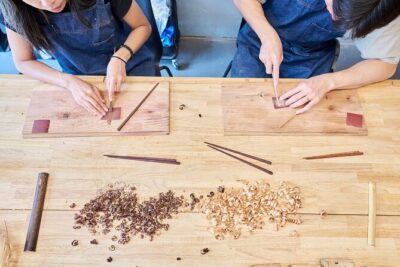

Authentic Pure Gold Kintsugi Workshop with Master Taku in Tokyo
Read our review →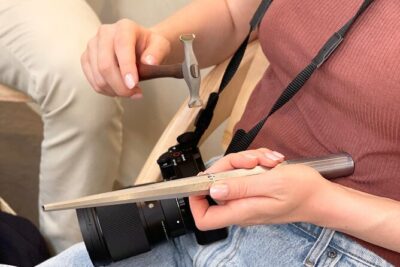
Private Handmade Ring Workshop Activity in Tokyo Shibuya
Read our review →
Kintsugi Workshop Class in Shibuya, Tokyo with mon cadeau
Read our review →Browse the lists this tour appears in