
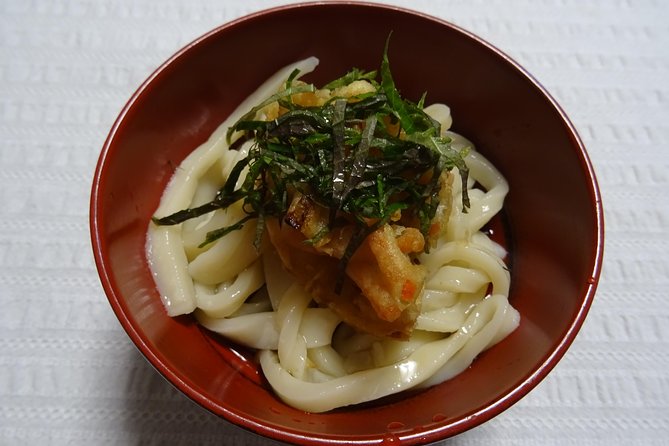
Reviewed · TOKYO TRADITIONAL CRAFT WORKSHOPS
Experience all of Japanese culture and Japanese food experience classes “origami, udon, Japanese food, green tea, calligraphy” in 4 hours
The most memorable part of this Tokyo experience is not a famous sight. It is the chance to spend four hours in Taka and Keiko’s home, making food and learning small pieces of Japanese culture at the kitchen table. You fold an origami crane, make udon from scratch, prepare sushi and gyoza, and finish with matcha and your name written in Japanese calligraphy.
I especially like the hands-on cooking, since you do not simply watch a demonstration. I also like the easy pace and personal welcome, including the walk from JR Omori Station through a quiet neighborhood and past a shrine. The main consideration is that this is a home-based cultural visit, not a polished cooking school. If you prefer a formal class with exact recipes and restaurant-style presentation, this may feel informal.
Key points
- A four-hour visit in a local home: Taka and Keiko host you personally rather than leading a large sightseeing group.
- Udon made from the beginning: You work with the ingredients, knead the dough, and step on it as part of the traditional preparation.
- A full Japanese lunch: Sushi, gyoza, tempura, and small Japanese dishes make this more than a single cooking lesson.
- Drinks are included: Sake, beer, shochu, and soft drinks are available with lunch.
- A useful family activity: Children have enjoyed the origami and noodle-making, and the program suits mixed-age groups.
- A personal souvenir: Keiko writes your name in calligraphy on colored paper for you to take home.
A Tokyo cultural experience that feels personal
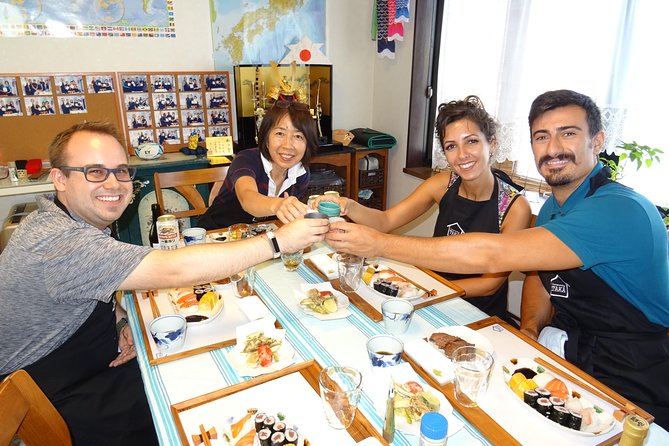
Many Tokyo activities give you a quick lesson, a few photos, and a polite goodbye. This one is built around time spent with two people. Taka meets you at the central exit of JR Omori Station at 10:30 a.m., then walks with you for about eight minutes to the house.
That short walk matters. You pass a shrine and move through a quiet residential area, seeing a side of Tokyo that is easy to miss when your schedule is built around Shibuya, Asakusa, and the Imperial Palace. The activity begins before you reach the front door, with a small look at everyday neighborhood life.
At home, Taka explains the plan. The sequence is clear, but the tone is relaxed: origami, udon, cooking, lunch, matcha, and calligraphy. You are not being rushed from one station to the next. The emphasis is on doing things together and talking as you work.
The activity is private, so only your own group participates. That makes it a good choice if you want to ask questions, travel with children, or work at your own pace. It also means much of the experience depends on conversation and your willingness to take part.
More Tokyo craft workshops:
- Tokyo Shinjuku Chopsticks Making Class
★ 5.0 · 1,763 reviews - Chopstick Making Workshop in Ginza
★ 4.8 · 1,366 reviews - Kintsugi Experience: Art of Golden Joinery in Tokyo
★ 5.0 · 467 reviews
Folding a crane before lunch
The first activity is origami, using a paper crane as the project. This is a simple opening, but it works well. You begin with something quiet and precise before moving into the more physical cooking tasks.
Origami gives you a direct connection to a familiar part of Japanese culture without turning the lesson into a lecture. You will need to follow the folds carefully, and children often enjoy the challenge. If your group has different ages or energy levels, this first activity gives everyone an easy way to settle in.
The crane also becomes a small reminder of the morning. You are not only taking photos of Japanese culture. You are making something with your own hands, even if your folds are less tidy than Keiko’s.
Making udon with your feet
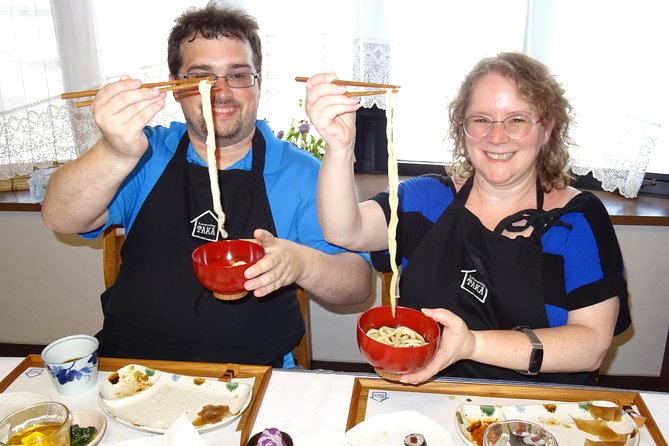
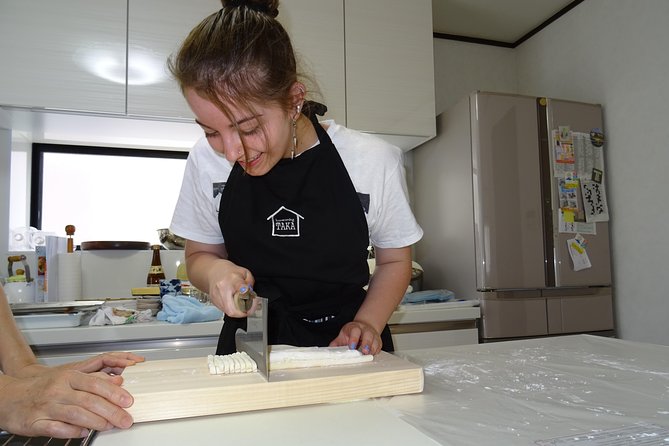
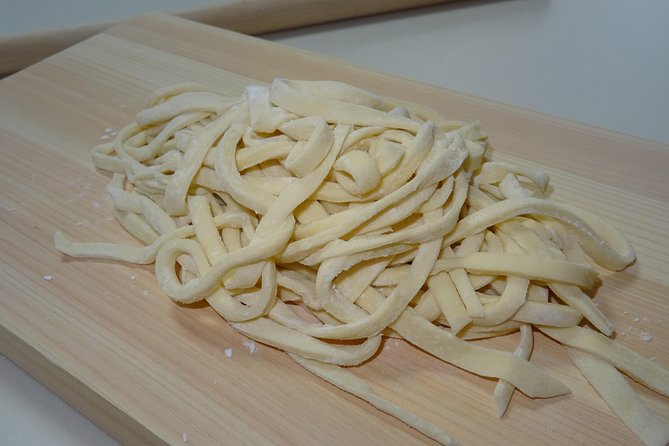
The udon lesson is one of the more unusual parts of the program. You start with the materials and work through the process until the noodles are ready. At one point, you step on the dough as part of the preparation.
That physical detail makes the lesson memorable. Udon is easy to order in Japan, but it is different when you see the effort behind its texture and shape. You get a better sense of how a few basic ingredients become a satisfying meal through kneading, resting, and careful handling.
The class is practical rather than technical. You should expect to participate, get involved, and enjoy the process instead of standing back with a notebook. The experience does not provide a detailed menu of every recipe or cooking measurement, so you may want to make notes or ask questions if you hope to repeat the dishes at home.
Families often get a lot from this part. The movement keeps children interested, and making food together gives everyone a job. Adults may appreciate the traditional method, while younger participants usually remember the novelty of stepping on the dough.
Sushi, gyoza, tempura, and Japanese side dishes
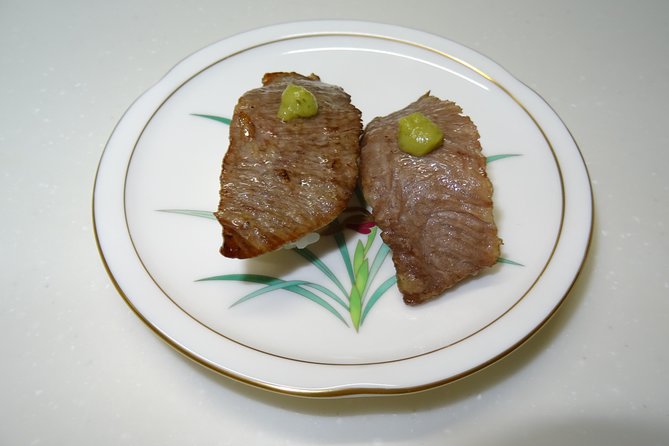
The main meal includes sushi and gyoza, with tempura also part of the cooking experience. Taka and Keiko work with you as you prepare the dishes, while Keiko serves additional Japanese small plates.
This is a generous menu for a four-hour activity. You are not learning one recipe and then eating a small sample. The meal gives you several different ways to handle food: shaping sushi, preparing filled dumplings, and cooking tempura. Each task shows a different part of Japanese home cooking.
The meal also creates room for conversation. Once the cooking is done, you sit down and eat at an unhurried pace. That social time is central to the experience. If you want a quick class before heading to another attraction, the schedule may feel long. If you value conversation and a connection with your hosts, the slower pace is a major benefit.
All ingredients are described as Japanese, and drinks are included. You can have beer, sake, shochu, or soft drinks with lunch. Since alcohol is freely available, this can feel more like a friendly meal than a standard morning tour. Soft drinks make the arrangement workable for children and anyone who does not drink alcohol.
There is also useful flexibility for diets. Vegetarians and vegans can enjoy the dishes with different ingredients. You should give the provider your dietary needs when booking or before the activity, since the meal depends on advance preparation.
More Tokyo calligraphy classes:
- Tokyo: Calligraphy on Kanji Fan & Scroll with Drink
★ 5.0 · 210 reviews - Let’s experience calligraphy in YANAKA, Taito-ku, TOKYO !!
★ 5.0 · 127 reviews - Tokyo: Calligraphy Workshop & Original T-Shirt Creation
★ 4.9 · 105 reviews - Tokyo: Calligraphy Workshop & Original T-Shirt Creation
★ 5.0 · 80 reviews
Matcha and sweets after the meal
After lunch, you make matcha together and taste it with local Japanese sweets. This is a calmer finish to the food portion of the visit.
Matcha can taste strong and grassy if you are not used to it, but the sweets provide a natural balance. The value here is in learning the basic ritual and enjoying the pause after lunch, not in receiving a formal tea ceremony. The experience is a friendly introduction rather than a highly structured performance.
I like this placement in the schedule. After the active cooking, matcha gives you time to sit, talk, and let the meal settle. It also shows a different side of Japanese food culture, where preparation and presentation can matter as much as the ingredients.
Calligraphy that gives you something to keep
The final activity is calligraphy. Keiko writes your name on colored paper, which you take home as a souvenir.
This is a better keepsake than a generic key ring. It is personal, light, and easy to pack. The paper also connects directly to the people who hosted you, so it carries more meaning than a purchase from a souvenir shop.
You should think of this as a cultural introduction rather than a full calligraphy course. Keiko writes the name for you, so the focus is on receiving and understanding the art rather than mastering the brush yourself. If you want more hands-on practice, ask whether there is time to try writing as well, but the stated souvenir is the host-written name.
The farewell is intentionally personal. Taka and Keiko walk you back to JR Omori Station at the end, hoping to see you again. That return walk gives the visit a clear beginning and ending, and it is another reason the experience feels more like an invitation into a home than a standard scheduled activity.
Why JR Omori is a useful starting point
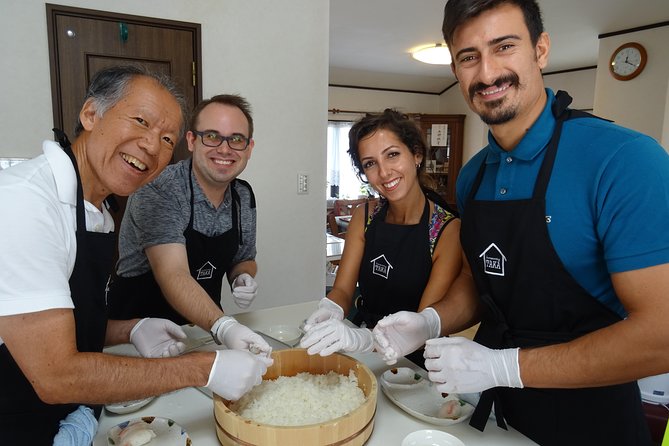
The meeting point is the central exit of JR Omori Station. Look for a person carrying a bag with the homecoming TAKA logo. The house is about an eight-minute walk away.
Omori is not one of Tokyo’s headline sightseeing districts, and that is part of the point. You are not being dropped into a staged cultural set. You begin in an ordinary part of the city, pass a shrine, and walk through a residential area before reaching the house.
The activity ends back at the meeting point. No transfer is included, so you handle your own transportation to and from JR Omori Station. Plan to arrive with enough time to find the central exit and the logo bag without starting the morning in a rush.
The start time is 10:30 a.m., and the total duration is about four hours. That leaves the rest of the afternoon open for sightseeing, though you may want a relaxed plan after a large lunch.
What the $92.50 price gives you
At $92.50 per person, this is not the cheapest way to eat lunch in Tokyo. You could buy an excellent meal for less, and a short origami demonstration would cost far less. The value comes from combining food, instruction, cultural activities, drinks, and personal hosting in one private visit.
The included items are substantial:
- Lunch with sushi, gyoza, tempura, and Japanese side dishes
- Sake, beer, shochu, and soft drinks
- Aprons for the cooking activities
- Origami instruction
- Matcha and Japanese sweets
- A calligraphy name souvenir
- A four-hour private experience
For a family, the price may compare well with booking several separate activities. You also avoid spending time moving between venues. For a solo visitor or couple, the cost is easier to justify if personal conversation and home hospitality are high on your list.
The price is less appealing if you mainly want professional cooking instruction. The program is broad rather than specialized. You sample several cultural activities, but you do not spend four hours perfecting sushi technique or studying tea ceremony form.
The strong point is variety with genuine contact. You cook, eat, drink, make crafts, and talk. That mix is hard to reproduce through ordinary sightseeing.
Who will enjoy this most
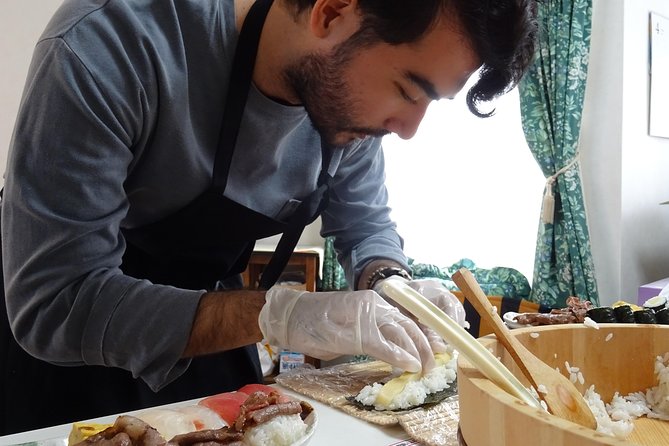
I would point families toward this activity first. Children around school age can take part in origami, noodle-making, and food preparation, while teenagers can enjoy the meal and the personal setting. Families have also used the visit as a way to help children connect with Japan beyond temples and shopping streets.
It also suits couples and solo visitors who enjoy conversation. You may meet people from other countries through the shared experience, but the activity itself is private to your booking group. The real social focus is your interaction with Taka and Keiko.
This is a good fit if you want:
- A home visit rather than a commercial kitchen
- Several short cultural activities in one morning
- A substantial meal with drinks
- A family-friendly experience
- Vegetarian or vegan food options
- A quieter neighborhood away from Tokyo’s main tourist areas
- A personal souvenir connected to the hosts
It may not suit you if you dislike eating in private homes, need a tightly timed schedule, or want advanced culinary training. The hosts aim to make you feel part of their home, so openness and conversation are part of the deal.
Practical points before you book
The activity is confirmed at booking, and a mobile ticket is provided. Free cancellation is available when you cancel at least 24 hours before the 10:30 a.m. start time. Changes or cancellations within that window are not accepted for a refund.
Wear something comfortable for cooking and movement. An apron is included, but you are still taking part in hands-on food preparation. Since the meal includes alcohol, choose drinks according to your own needs and remember that soft drinks are available.
Make dietary requests early. Vegetarian and vegan versions are possible with different ingredients, but the hosts need to know what you require.
Most important, allow the full four hours. This is not an activity to squeeze between a morning at Tsukiji and an afternoon reservation in Shibuya. The value comes from the time spent cooking, eating, and talking.
Should you book the homecoming TAKA experience?
Book it if you want a personal, food-centered introduction to Japan and are happy with a relaxed home setting. Taka and Keiko offer much more than a meal: you get a neighborhood walk, origami, handmade udon, a broad Japanese lunch, matcha, calligraphy, and time for conversation.
I would especially recommend it for families, first-time visitors, and anyone who wants to make a human connection in Tokyo. I would be more cautious if your main goal is a formal chef-led class or a traditional tea ceremony with strict procedure.
At $92.50, the experience earns its price through the number of activities and the personal attention. You leave with food in your stomach, a calligraphy souvenir, and a better sense of how Japanese hospitality can work inside an ordinary home.
FAQ
Where does the experience begin?
You meet at the central exit of JR Omori Station at 10:30 a.m. Look for someone carrying a bag with the homecoming TAKA logo.
How long does the activity last?
The experience lasts approximately four hours and ends back at the meeting point near JR Omori Station.
What food will I prepare?
You will make handmade udon, sushi, and gyoza, and take part in preparing tempura. Keiko also serves Japanese small dishes with lunch.
Are drinks included?
Yes. Sake, beer, shochu, and soft drinks are included with the experience.
Can vegetarians and vegans participate?
Yes. Vegetarians and vegans can enjoy the dishes with different ingredients.
Is this a private activity?
Yes. Only your booking group participates in the activity.
More Tokyo dinner experiences
- Tokyo Bar Hopping Tour in Shinjuku (All-You-Can-Drink + Dinner)
★ 5.0 · 3,587 reviews - Tokyo: Sumo Show and Dining Experience
★ 4.8 · 2,742 reviews - Sumida River: Japanese Traditional Yakatabune Dinner Cruise
★ 4.6 · 779 reviews - Tokyo Bay Yakatabune Dinner/Day Cruise with Japan Show and Drinks
★ 4.5 · 473 reviews
More Tokyo food tours
- Tokyo: Shinjuku Food Tour (13 Dishes at 4 Local Eateries)
★ 5.0 · 6,603 reviews - Tokyo: Shinjuku Food Tour (15 Dishes and 4 Eateries)
★ 4.9 · 2,033 reviews - Best of Shinjuku: Izakaya Food Tour (4 Stops, 14+ Tastings)
★ 5.0 · 1,863 reviews - Tokyo Night Foodie Tour in Shinjuku – Seasonal Sushi, Wagyu Beef
★ 5.0 · 1,161 reviews
Newly reviewed around Tokyo
- Tokyo Asakusa:Calligraphy & Make T-shirt Activity★ 5.0 · 62 reviews
- Intercity Shuttle, Tokyo to Haneda /Narita /Yokohama /Makuhari★ 5.0 · 5 reviews
- 1 Hour Travel around Tokyo with a Professional Photographer★ 5.0 · 3 reviews
- Travel Tokyo with Your Own Personal Photographer★ 5.0 · 43 reviews
- Train in Samurai Swordsmanship and Defeat the Demon in Tokyo★ 5.0 · 5 reviews
- Shuttle Van 6hr Tokyo Tour to-and-from Tokyo, Yokohama and Narita★ 5.0 · 9 reviews
- Kickboxing & Body Training with EX-Pro Fighter★ 5.0 · 4 reviews
- Traditional Japanese Knife Sharpening Class★ 5.0 · 18 reviews
Tokyo Traditional Craft Workshops, compared.
Kintsugi Experience: Art of Golden Joinery in Tokyo
Read our review →

Authentic Pure Gold Kintsugi Workshop with Master Taku in Tokyo
Read our review →
Private Handmade Ring Workshop Activity in Tokyo Shibuya
Read our review →
Kintsugi Workshop Class in Shibuya, Tokyo with mon cadeau
Read our review →Browse the lists this tour appears in