
Reviewed · TOKYO TRADITIONAL CRAFT WORKSHOPS
Kintsugi Workshop Class in Shibuya, Tokyo with mon cadeau
The most appealing part of this Shibuya class is that you do not just watch a craft demonstration. You choose a piece of crockery from mon cadeau’s collection and work on restoring it yourself, using the Japanese practice of highlighting breaks with gold-colored glue. It is a quiet change of pace from Tokyo’s crowded streets.
I like the small limit of six people, which gives Michiko and Yuki time to guide each person. I also like the thoughtful opening with matcha tea and local sweets. The main caution is the price: at $145.35 per person, this two-hour class is a special activity rather than a casual drop-in stop.
Key points to know before you book
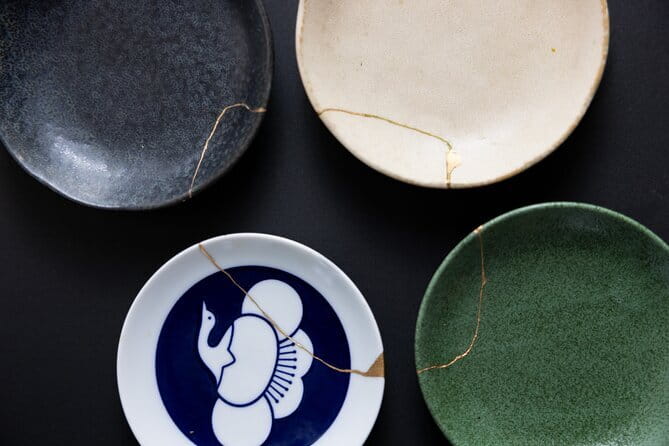
- You choose your own pottery piece: The class includes a piece of crockery from mon cadeau’s collection for you to repair.
- Michiko and Yuki provide personal instruction: Expect demonstrations, step-by-step help, and support as you work.
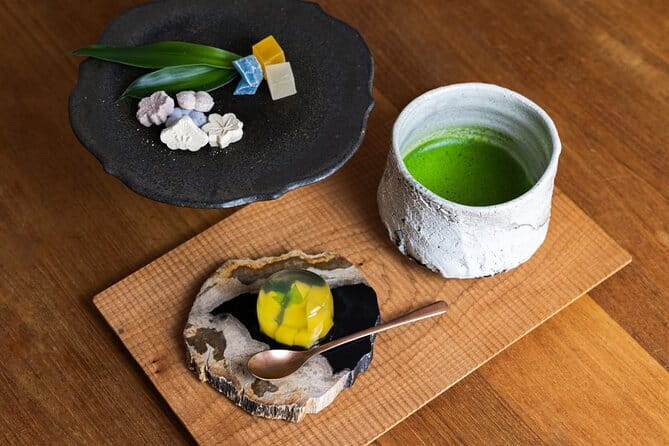
- Matcha and Japanese sweets begin the session: The welcome sets a calm tone before the practical work starts.
- The group is limited to six people: This is a private activity for your group, not a large public class.
- The workshop lasts about two hours: It fits well into a Shibuya day without taking over your whole schedule.
- Your restored crockery goes home with you: The finished object gives you a lasting reminder of your time in Japan.
Why this Shibuya craft class is worth considering
Kintsugi is the Japanese practice of repairing broken pottery and making the repaired lines part of the object’s appearance. Instead of treating damage as something to hide, the method gives the break a visible place in the finished piece. That idea gives this class more weight than a standard souvenir-making activity.
You are not simply buying a finished object in a shop. You are taking part in the repair process, with your own hands. The result may not look factory-perfect, and that is part of the point. You leave with something personal, made during a calm couple of hours in Tokyo.
The class takes place at mon cadeau in Shibuya, beginning and ending at Central Hospital, 25-1 Shinsenchō, Shibuya, Tokyo 150-0045. The meeting location is near public transportation, but the supplied information does not give a precise station, route, or walking time. I would allow extra time to find the address, especially if you are coming from a busy part of Shibuya.
More things to do in Shibuya:
- Official Street Go-Kart in Shibuya
★ 5.0 · 3,435 reviews - Tokyo: Street Kart Experience in Shibuya
★ 4.9 · 1,484 reviews - Shibuya Meltdown Nightlife Tour: All-You-Can-Drink Bar Hopping
★ 5.0 · 1,058 reviews
Starting with matcha, sweets, and a slower pace
The workshop begins with matcha tea and local Japanese sweets. This is more than a snack break. It gives you a chance to settle in before handling the pottery and hearing about the craft.
The welcome also helps define the mood. You are not rushing through a line of attractions or trying to cover several parts of Tokyo in one morning. You sit down, meet the instructors, and prepare for a hands-on activity that rewards patience.
The food and drink are a meaningful touch for anyone interested in Japanese hospitality. They also make the class comfortable for couples, families, and small groups who want a shared cultural activity rather than another sightseeing stop.
Do not expect a full meal. The information describes tea and local sweets, so you should eat beforehand if you need something substantial. The class is best viewed as a cultural welcome, not a food tour.
Choosing the crockery you will repair
After the introduction, you choose a piece of pottery from mon cadeau’s collection. This choice gives the class a personal angle from the start. You are not all completing an identical project with identical materials.
The supplied details do not specify the exact range of pieces or how many choices are available. You may find that the collection includes different shapes and sizes, but you should not book expecting a particular type of bowl, cup, or plate. The practical appeal is the chance to select something that suits you.
Think about the finished object as a keepsake. A small piece may be easier to manage within a two-hour class, while a larger or more complicated item could require more care. Since the instructor helps you select from the available collection, you can ask for guidance before beginning.
This is also one place where expectations matter. You are learning a traditional craft in a short workshop, not completing a long professional restoration project. The experience centers on learning the process and creating a meaningful object, not producing museum-quality pottery.
Learning the origins and meaning of kintsugi
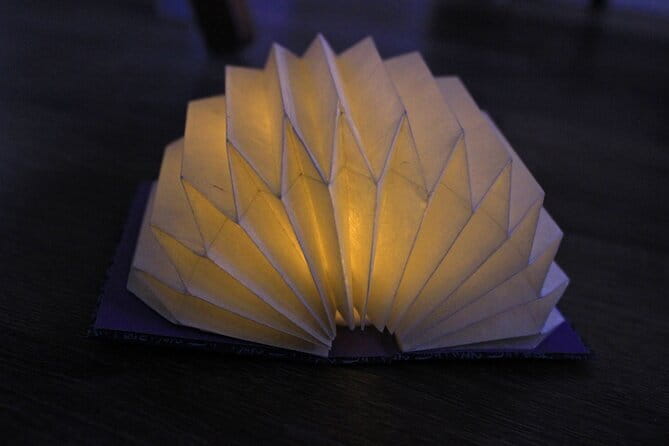
Michiko and Yuki explain the origins and traditions connected with kintsugi before guiding you through the practical work. The class therefore links technique with the broader idea behind the craft: repaired damage can remain visible and become part of an object’s character.
That message gives the workshop a reflective side without requiring you to treat it as a formal lecture. You learn why the repair is designed to show, then apply that idea to the piece in front of you.
The experience is especially useful if you have already seen kintsugi online and wanted to try it for yourself. It turns a familiar image, gold lines on pottery, into a process you can understand through direct practice.
The exact amount of historical background is not stated, so I would expect an accessible introduction rather than a long academic talk. The focus is on making, with cultural context woven into the class.
More Tokyo craft workshops:
- Tokyo Shinjuku Chopsticks Making Class
★ 5.0 · 1,763 reviews - Chopstick Making Workshop in Ginza
★ 4.8 · 1,366 reviews - Kintsugi Experience: Art of Golden Joinery in Tokyo
★ 5.0 · 467 reviews - Tokyo Chopstick Making Workshop with Artisan
★ 5.0 · 466 reviews
A step-by-step repair with Michiko and Yuki
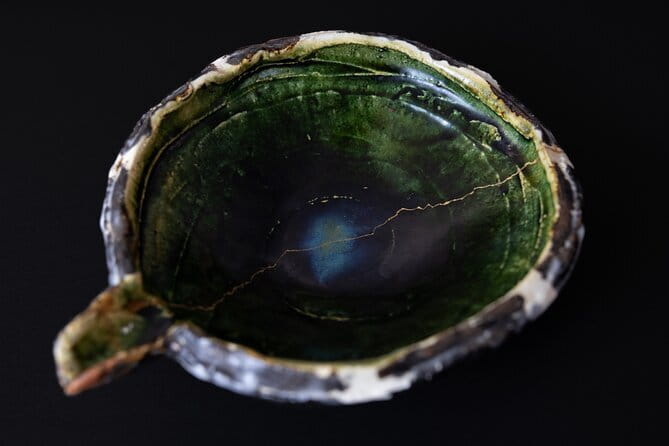
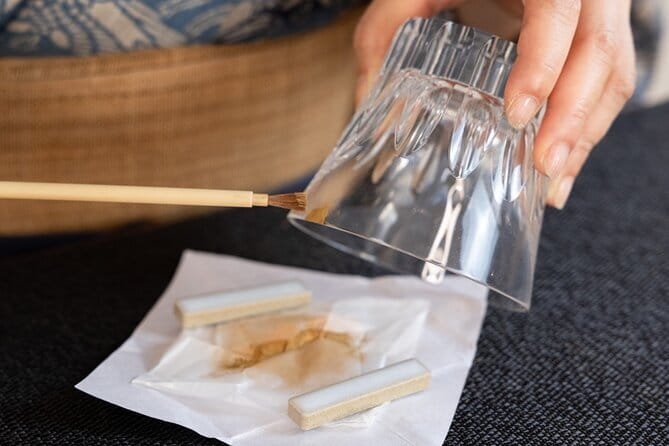
The instructors provide demonstrations throughout the workshop, then give you time to follow the process on your own crockery. This structure matters. You can see how a task is handled before trying it, and you have someone nearby when you need help.
Michiko is repeatedly singled out for her warm welcome, patience, and clear guidance. Yuki also helps with each stage, giving the class two friendly instructors for a very small group. That combination should be reassuring if you are not naturally confident with crafts.
Personal guidance is one of the strongest reasons to choose this workshop instead of trying to follow an online tutorial. You can ask questions as the work develops, and the instructors can help you avoid rushing a delicate step.
The class is described as suitable for most people, and service animals are allowed. No special skill level is listed. Still, kintsugi is a careful process, so you should be ready to work slowly and pay attention to instructions.
Why the six-person limit changes the experience
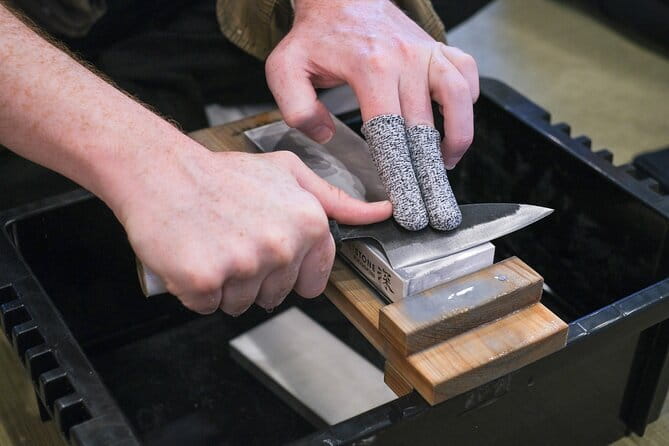
A maximum of six participants keeps this from feeling like a production-line class. The instructors can move between people, watch the work, and offer help when needed.
The activity is also private, meaning only your group participates. That is useful if you are booking with a partner, family member, or friends and want the session to feel personal. It also reduces the pressure some people feel in a large class.
A small group does not guarantee that every person will spend every minute with an instructor. You will still do much of the work yourself. The benefit is that help is available when you need it, rather than having to wait behind a large group.
The format suits beginners particularly well. If you are already skilled at pottery repair, you may find the hands-on work introductory. For most visitors, though, the small group should make the class more relaxed and easier to follow.
What the two-hour schedule feels like
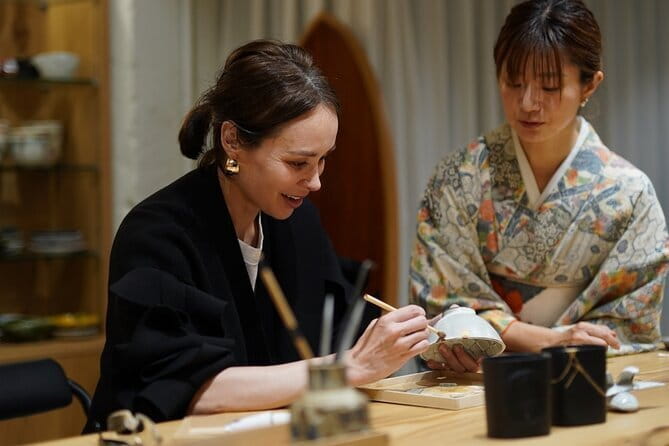
The full experience lasts about two hours. A likely flow is the matcha welcome, an introduction to kintsugi, a demonstration, your choice of pottery, and guided repair work.
That is enough time to make the activity feel substantial without turning it into an all-day commitment. You can schedule it between other Shibuya plans, though I would avoid placing a tight reservation immediately afterward. The class depends on careful work, and you will enjoy it more if you are not watching the clock.
The two-hour length also helps explain the price. At $145.35 per person, you are paying for instruction, a pottery piece, the hosted tea and sweets, and a private small-group setting. The value is strongest if you care about the learning and the personal object you take home.
If you mainly want a low-cost souvenir, this will feel expensive. If you want a guided cultural activity with an instructor, materials, and a finished keepsake, the price is easier to justify.
The finished piece and what you take home

The main physical result is your restored crockery. The finished piece carries the marks of your own work, which makes it more meaningful than a mass-produced souvenir.
Do not expect perfection. The appeal of kintsugi is that the repair remains visible, and your first attempt may show the careful, human nature of the process. The instructors’ support should help you create a satisfying result, but this is still a beginner workshop.
The object is also a practical reminder of the class. Each time you see it at home, you can recall the matcha, the sweets, the Shibuya setting, and the time spent learning something with your hands.
The supplied information does not state whether the piece is ready to use for food or drink after the class. I would ask Michiko or Yuki about care, handling, and display before assuming it can go straight into regular kitchen use.
Who will enjoy this experience most
I would recommend the class to anyone who wants a slower activity during a Tokyo visit. It works particularly well for couples, parent and adult-child combinations, and small groups of friends who want to make something together.
It is also a good fit for people who have read about kintsugi and want to move from admiration to practice. The class gives you cultural background, direct instruction, and a personal object instead of only a photograph.
The atmosphere should suit visitors who enjoy quiet concentration. If your ideal Tokyo day means moving quickly from one major sight to the next, two hours at a craft table may feel like a detour. If you appreciate time to sit and focus, it can be a welcome change.
Families can participate because most people can take part, but the information does not give a minimum age. If you are booking for a young child, confirm suitability with the provider before paying.
Practical details that affect your decision
You receive confirmation at booking, and the activity uses a mobile ticket. The meeting and return point are both Central Hospital at 25-1 Shinsenchō in Shibuya.
The experience is non-refundable and cannot be changed for any reason. That is the biggest booking drawback, so check your Tokyo schedule carefully before committing. If the minimum number required to operate the class is not reached, the provider offers another date or experience, or a full refund.
The class is near public transportation, though exact directions are not provided. I would save the full address in your phone and plan to arrive early rather than trying to locate it at the last minute.
The activity currently has a 5 out of 5 score from 74 ratings, with 100 percent recommending it. The strongest praise centers on Michiko’s hospitality, the patient instruction from Michiko and Yuki, the small group, and the tea and sweets. Those details point to a well-hosted experience, but the non-refundable policy and high price still deserve attention.
Should you book the Mon Cadeau kintsugi workshop?
Book it if you want a personal, hands-on cultural activity and are happy to pay for careful instruction in a very small group. The combination of matcha, Japanese sweets, background on kintsugi, individual pottery selection, and a piece to take home gives the class a clear identity.
I would skip it if you want a cheap craft activity, a large social event, or a flexible reservation you can change later. The price is high for two hours, and the booking is non-refundable.
For the right visitor, this is a thoughtful Shibuya break from sightseeing. You arrive with a piece of pottery and leave with a repaired object, a better sense of kintsugi, and a memorable way to connect with Japanese craft.
FAQ
Where does the kintsugi workshop meet?
The workshop begins at Central Hospital, 25-1 Shinsenchō, Shibuya, Tokyo 150-0045, Japan.
Where does the activity end?
The class ends back at the meeting point.
How long does the workshop last?
The workshop lasts approximately two hours.
How much does the experience cost?
The listed price is $145.35 per person.
How many people can join the class?
The workshop has a maximum of six participants.
Is this a private activity?
Yes. Only your group participates in the activity.
Who leads the workshop?
The instructors are Michiko and Yuki. They provide demonstrations and personal guidance throughout the class.
Is tea included?
Yes. The experience begins with matcha tea and local Japanese sweets.
Do you choose the pottery piece?
Yes. You choose a piece of crockery from mon cadeau’s collection to repair.
Can you cancel for a refund?
No. The experience is non-refundable and cannot be changed for any reason. If the minimum number needed to operate the class is not reached, you will be offered another date or experience, or a full refund.
More hands-on classes and workshops in Tokyo
- Sushi Making Tokyo Roll and Authentic Japanese Sushi Class
★ 5.0 · 3,971 reviews - Tokyo: Roll and Authentic Sushi Making Class in Asakusa
★ 4.9 · 1,957 reviews - Tokyo: Sushi Making Class in a Happi Coat near a Famous Spot
★ 4.9 · 1,377 reviews - Tokyo Sushi Making Class in Tsukiji with Professional Chef
★ 5.0 · 1,177 reviews
Newly reviewed around Tokyo
- Tokyo Asakusa:Calligraphy & Make T-shirt Activity★ 5.0 · 62 reviews
- Intercity Shuttle, Tokyo to Haneda /Narita /Yokohama /Makuhari★ 5.0 · 5 reviews
- 1 Hour Travel around Tokyo with a Professional Photographer★ 5.0 · 3 reviews
- Travel Tokyo with Your Own Personal Photographer★ 5.0 · 43 reviews
- Train in Samurai Swordsmanship and Defeat the Demon in Tokyo★ 5.0 · 5 reviews
- Shuttle Van 6hr Tokyo Tour to-and-from Tokyo, Yokohama and Narita★ 5.0 · 9 reviews
- Kickboxing & Body Training with EX-Pro Fighter★ 5.0 · 4 reviews
- Traditional Japanese Knife Sharpening Class★ 5.0 · 18 reviews
Tokyo Traditional Craft Workshops, compared.
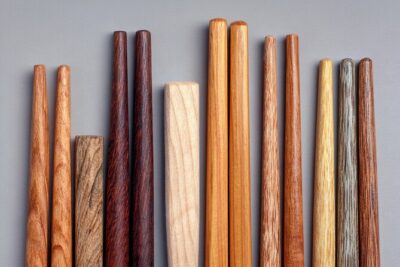
Kintsugi Experience: Art of Golden Joinery in Tokyo
Read our review →
Authentic Pure Gold Kintsugi Workshop with Master Taku in Tokyo
Read our review →
Private Handmade Ring Workshop Activity in Tokyo Shibuya
Read our review →
Browse the lists this tour appears in