
Reviewed · TOKYO TRADITIONAL CRAFT WORKSHOPS
Tokyo: Chopstick Making Workshop with Artisan
The best part of this Tokyo workshop is its simple promise: you turn a plain piece of wood into something you can use at home. With traditional tools, patient instruction, and a small-group setting, you shape, smooth, and finish your own chopsticks in about an hour. I like the hands-on work and the chance to see everyday Japanese design from the maker’s side.
I also like the personal souvenir. You choose from more than 10 types of wood, with three options included in the base price, then take your finished pair home wrapped for use or gifting. The main caution is timing. Most people finish comfortably in an hour, but the process can feel rushed if the room is full or if you want extra time for detail work.
Key points to know before you book
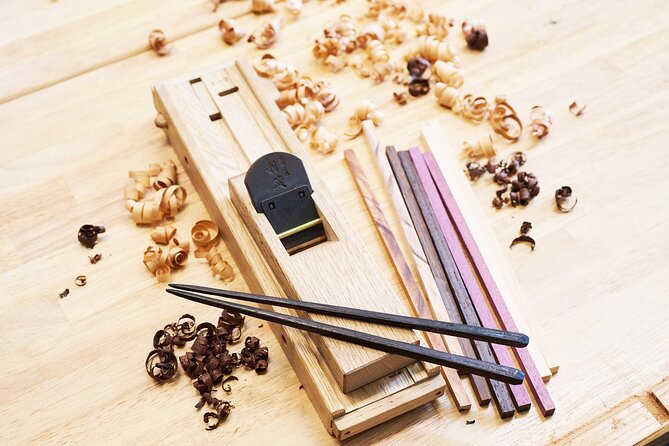
- A real craft session: Use traditional tools to shape, shave, smooth, and finish wooden chopsticks.
- Small groups matter: The workshop accepts up to 10 people, and the close guidance suits first-time crafters.
- English support is available: Staff members including Yuki, Angie, Chihiro, Victoria, and others guide the work in English and Japanese.
- The base price is low: At $16 per person, the workshop offers a useful handmade souvenir for modest cost.
- Wood choice affects the final price: Three wood types are included, while higher-grade options cost extra.
- Allow for optional extras: Engraving costs an additional ¥1,000, according to workshop information shared by participants.
Turning a plain block of wood into a Tokyo souvenir
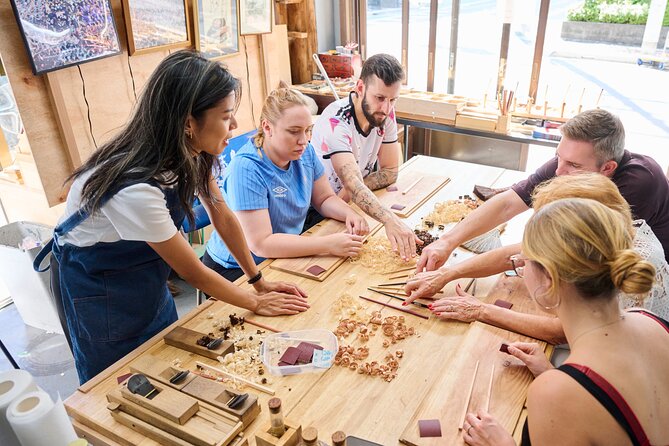
This is not a sit-back-and-watch craft demonstration. You make the chopsticks yourself, with an artisan or workshop instructor showing you each stage and correcting your technique as you go.
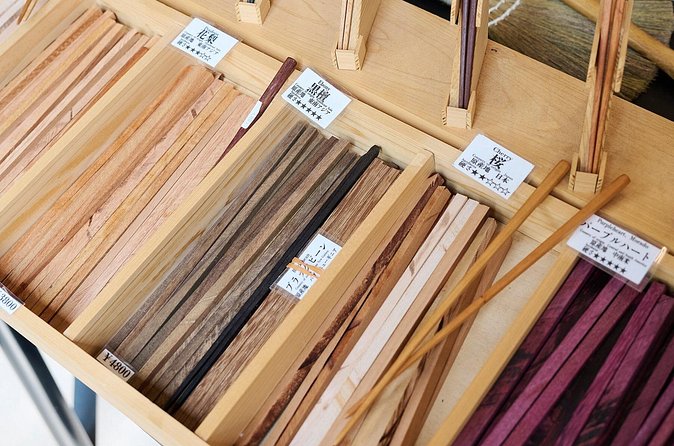
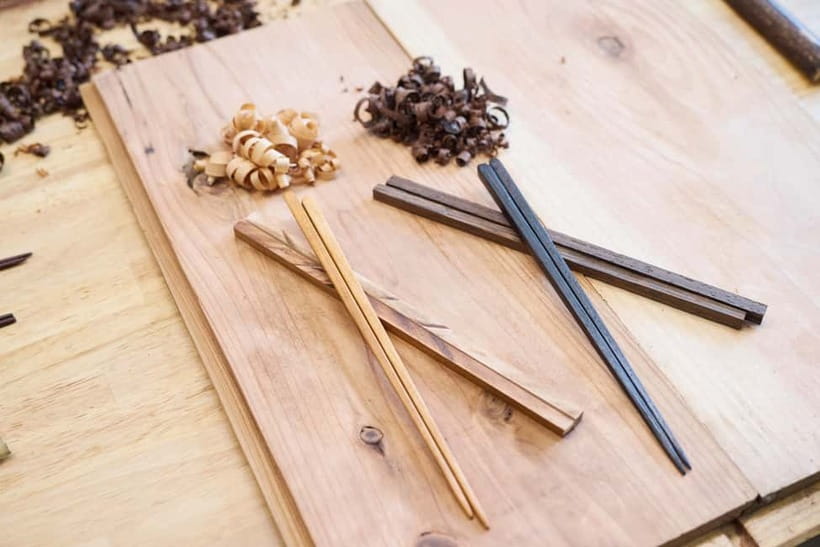
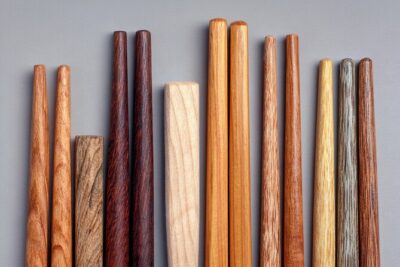
The work begins with your choice of wood. The workshop offers more than 10 types, although only three are included in the $16 price. The higher-grade woods require an additional fee, so ask about the choices before you settle on one. This is a useful detail because the wood becomes the visual and tactile character of the finished pair.
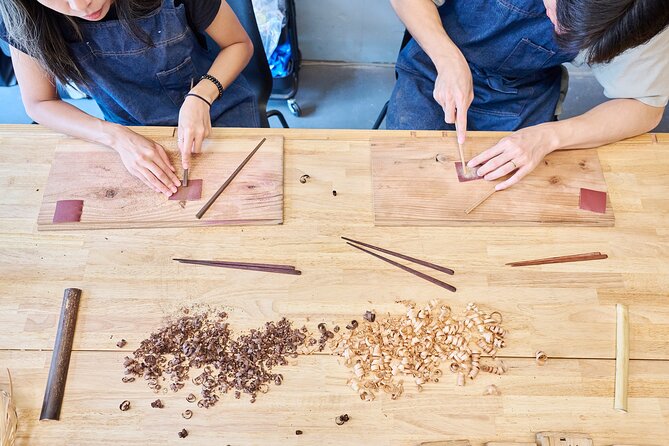
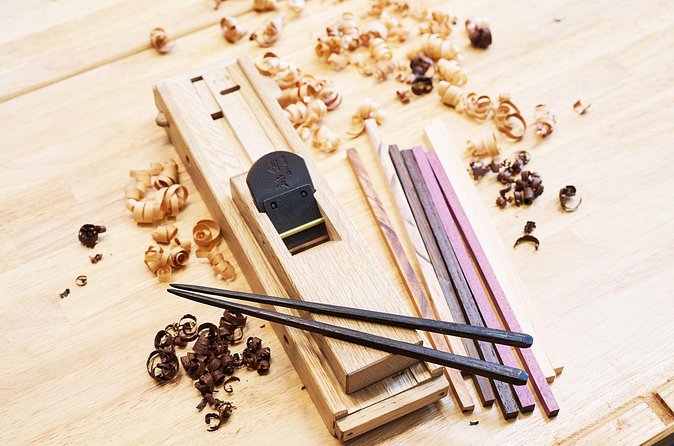
Once you choose, you shape the chopsticks with traditional tools. The process includes shaving or carving the wood, smoothing the surface, and working toward an even final form. You do not need previous craft experience. The instructions are described as simple and direct, and the staff stays close enough to help when your cuts or angles need fixing.
The experience is especially satisfying because the work has a clear result. You begin with unfinished wood and leave with personalized chopsticks, wrapped and ready to use or give away. It is a practical keepsake rather than another small object that sits in a suitcase.
More Tokyo craft workshops:
- Tokyo Shinjuku Chopsticks Making Class
★ 5.0 · 1,763 reviews - Chopstick Making Workshop in Ginza
★ 4.8 · 1,366 reviews - Kintsugi Experience: Art of Golden Joinery in Tokyo
★ 5.0 · 467 reviews
Why the cultural lesson adds value
Chopsticks are ordinary objects in Japan, but this workshop gives you time to consider how much thought goes into them. You learn about their cultural significance while working with the material, so the lesson does not feel separated from the activity.
That connection matters. A short explanation in a museum can tell you facts about Japanese customs, but shaping your own pair gives those ideas a physical anchor. You notice the balance, the surface, and the care needed to make two matching utensils. The workshop turns a familiar meal item into an example of Japanese craftsmanship.
I also like the setting. Hashiyuki Chopsticks Shop and Workshop is in Taito, at 1-7-1 Misuji. The location is identified in Japanese as 雪入紙業社, or Yukiirishigyosya. You are visiting a working craft shop in one of Tokyo’s older craft-oriented neighborhoods, rather than attending a generic activity in a hotel or shopping center.
The supplied coordinates are 35.7032168, 139.7853879. Use the full address and the Japanese name when checking your route, since the shop name may appear differently in map searches.
The one-hour process, step by step
The advertised duration is one hour, and that is a reasonable target for most people. You might finish in about 30 minutes if you work quickly, but the extra time allows you to shape the wood with more care and enjoy the instruction.
Choosing your wood
The wood selection is one of the most interesting parts of the session. You can choose from more than 10 kinds, with three included at no extra cost. Additional high-grade woods are available for a fee.
The choice gives the experience a personal starting point. You are not simply decorating a factory-made pair. You are selecting the material that will become your finished chopsticks. If you care about appearance or want a more special gift, ask the staff to explain the paid options before deciding.
More hands-on classes and workshops in Tokyo:
- Sushi Making Tokyo Roll and Authentic Japanese Sushi Class
★ 5.0 · 3,971 reviews - Tokyo: Roll and Authentic Sushi Making Class in Asakusa
★ 4.9 · 1,957 reviews - Tokyo: Sushi Making Class in a Happi Coat near a Famous Spot
★ 4.9 · 1,377 reviews - Tokyo Sushi Making Class in Tsukiji with Professional Chef
★ 5.0 · 1,177 reviews
Learning to shape the chopsticks
The instructor demonstrates how to work the wood with the tools provided. You then follow along, shaping the chopsticks and checking your progress.
The staff’s role is practical. They show you how to shave the wood, keep the form even, and avoid or repair mistakes. English-speaking support is available, and the workshop also operates in Japanese. Names praised for clear, friendly guidance include Yuki, Angie, Chihiro, Victoria, Tomo, Kaana, and Anthony.
The experience seems designed for beginners, not skilled woodworkers. You get enough direction to begin confidently, but you still do the work yourself. That balance is important. Too much help would turn the activity into a demonstration, while too little would leave you struggling with the tools.
Smoothing and finishing
After the rough shaping, you smooth the chopsticks and work on the final surface. This is the quieter part of the workshop, and it helps explain why handmade objects take time. Small uneven spots become easier to notice as the form gets closer to finished.
The activity has a calm rhythm. You concentrate on the wood, listen to the instructor, and gradually see the pair take shape. One participant described the work as peaceful, while another found it challenging in a good way. That sounds like the right expectation: this is not physically demanding, but it does ask you to pay attention.
Personalizing your pair
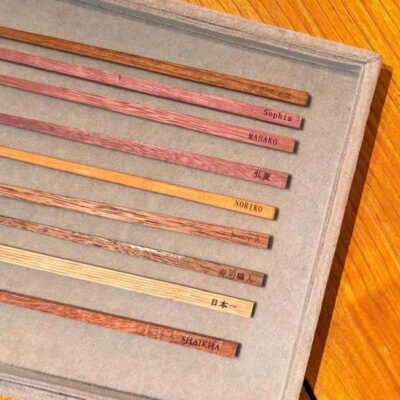
Your chopsticks are personalized through the making process and can also receive optional engraving. Engraving is not included in the base price, and the additional cost is ¥1,000.
If you are making a gift, engraving is worth considering. It adds a clear personal touch without changing the basic workshop. Allow a little extra time if you choose it, since the basic session already uses much of the one-hour allocation.
At the end, your chopsticks are wrapped beautifully. You can take them home the same day, which makes the activity easy to fit into a short Tokyo itinerary.
Small groups, friendly instruction, and the pace of the room
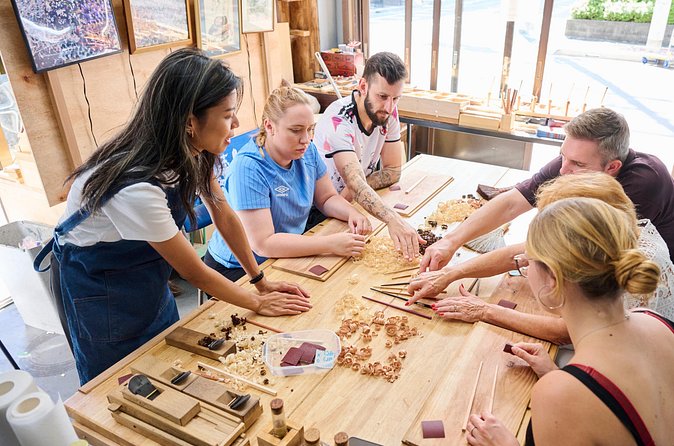
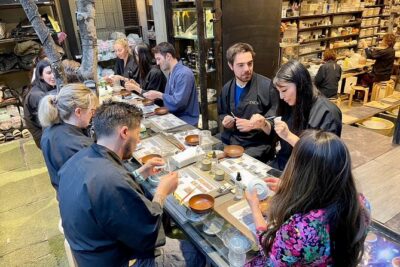
The group limit is 10 people. That is small enough for individual help, and the staff are repeatedly praised for being patient, warm, and willing to correct mistakes.
The strongest part of the experience appears to be the instruction. Yuki guided one group in fluent English and even offered a ramen recommendation. Angie was praised for explaining how to get the best result and for describing the differences between wood types. Chihiro and Victoria were noted for patiently helping a family that included children from age eight through adults.
The group size can still affect the pace. If several people arrive at different times, the instructors may need to move between stations while giving quick demonstrations. One participant felt rushed because two employees were assisting about 10 people in a compact room, and because the groups did not begin together.
That is the main limitation to keep in mind. The workshop is short by design, and the hour includes instruction, carving, smoothing, and finishing. If you want a slow, meditative craft class with long pauses, this may feel brisk. If you keep your work moving and ask for help early, the timing should be easier.
A morning booking may also have a different feel from a later session, but the supplied information does not promise a quieter time. The safest approach is to arrive ready to begin and avoid assuming you will have a large amount of spare time.
What the $16 price really gets you
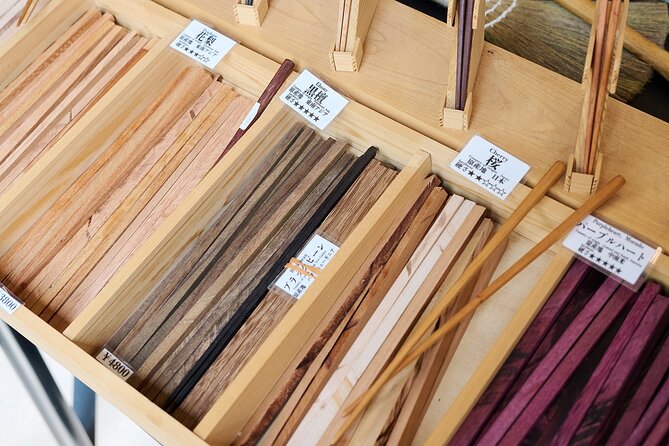
At $16 per person, this is an inexpensive way to add a hands-on cultural activity to a Tokyo visit. The price includes the workshop, tools, materials, a choice among three included wood types, instruction, and your personalized chopsticks.
The value comes from the combination. You get an activity, a lesson in Japanese craftsmanship, and a useful souvenir in one hour. A purchased pair of chopsticks might cost less, but it would not carry the memory of shaping and finishing them yourself.
The cost can rise if you select one of the higher-grade woods or add engraving. That is not necessarily a problem, but budget-minded visitors should decide in advance how much they want to spend. At the base price, the experience remains strong value. With several paid extras, it becomes more of a special gift-making session.
I would particularly recommend the workshop if you want a souvenir that is light, easy to pack, and connected to your time in Japan. The finished chopsticks are useful at home, and the making process gives you a story to tell when you use them.
Who will enjoy this workshop most
This suits first-time crafters, solo visitors, couples, friends, and families. The activity is accessible to beginners, and the family feedback shows that children as young as eight can take part with help.
Solo visitors also get more than a craft project. The instructors are willing to talk about Japan, answer questions, and offer local suggestions. That can make the session a pleasant pause in a busy sightseeing schedule.
It is also a good choice for anyone who prefers making something to buying something. Tokyo has no shortage of shops, but a handmade object gives you a stronger connection to the city. You will remember the wood, the tools, and the small mistakes that the instructor helped you fix.
The workshop is wheelchair accessible, which makes it easier to consider for a mixed group. Since the room is described as small, you may still want to confirm any particular access needs when booking.
Who might want a different activity
You may want to skip this if you are looking for a long craft class. The official duration is one hour, and some people can complete the basic work in roughly 30 minutes. The session is focused and efficient rather than expansive.
It may also disappoint if you expect every wood type or engraving to be included. Three wood choices are part of the base price, while higher-grade wood costs more. Engraving is an optional ¥1,000 extra.
Finally, this is not the best choice for someone who dislikes fine handwork or wants to avoid any chance of a small mistake. The staff can help fix problems, but you still need to shape and smooth the wood yourself. That is the point of the workshop, though the hands-on part may not suit every mood.
Practical details for fitting it into your day
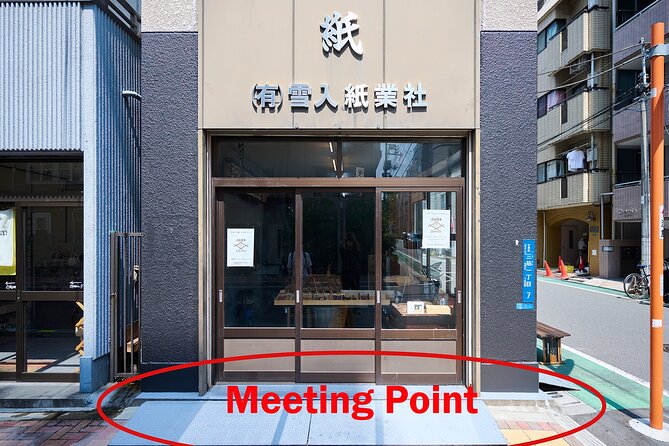
The meeting point is Hashiyuki Chopsticks Shop and Workshop, 1-7-1 Misuji, Taito-ku, Tokyo. The Japanese name is 雪入紙業社, and the listed coordinates are 35.7032168, 139.7853879.
The session lasts one hour, with starting times available according to the booking schedule. Since the work is timed, I would arrive prepared to start rather than planning a late arrival. You want the full period for carving and smoothing, especially if you choose engraving.
The group limit is 10 people. English and Japanese are available, and the experience is offered as a small group activity. You can cancel up to 24 hours in advance for a full refund, and reserve now while paying later, which is useful when your Tokyo plans are still changing.
The activity has a 4.8 out of 5 rating from 122 reviews. The most consistent strengths are clear instruction, kind staff, a calm atmosphere, and the quality of the finished chopsticks. The main weakness is the possibility of a rushed hour when the room is full.
Should you book the chopstick workshop?
I would book this if you want a low-cost, personal souvenir and a break from Tokyo’s fast pace. The work is beginner-friendly, the instructors offer close help, and the finished chopsticks are both attractive and useful.
Choose the base wood if you want to keep the price near $16. Pay for a higher-grade wood or ¥1,000 engraving only if the chopsticks are meant as a special gift. Families, couples, solo visitors, and anyone interested in Japanese craft should find plenty here.
I would hesitate only if you want a long, unhurried class or have a packed schedule with no room for a one-hour appointment. For most visitors, though, this is a thoughtful little activity: hands-on, culturally grounded, and easy to carry home.
FAQ
Where does the chopstick workshop take place?
It takes place at Hashiyuki Chopsticks Shop and Workshop, 1-7-1 Misuji, Taito-ku, Tokyo. The Japanese name provided for the location is 雪入紙業社, or Yukiirishigyosya.
How long does the activity last?
The workshop lasts one hour. Some people may finish the basic work in about 30 minutes, but the full hour allows time for instruction and finishing.
How much does the workshop cost?
The listed price is $16 per person.
What is included in the price?
The price includes the chopstick-making workshop, tools, materials, instruction, personalized chopsticks, and a choice of three included wood types.
How many kinds of wood can I choose from?
The workshop offers more than 10 types of wood. Three types are included in the base price, while higher-grade choices require an additional fee.
Is engraving included?
No. Engraving is an optional extra. The supplied activity information identifies the cost as ¥1,000.
Can beginners take part?
Yes. The workshop is designed for beginners, and the instructors guide you through shaping, smoothing, and finishing the chopsticks.
Is English instruction available?
Yes. Staff members provide instruction in English and Japanese.
How many people can join the group?
The activity is limited to 10 participants.
Is the workshop wheelchair accessible?
Yes. The activity is listed as wheelchair accessible.
Newly reviewed around Tokyo
- Tokyo Asakusa:Calligraphy & Make T-shirt Activity★ 5.0 · 62 reviews
- Intercity Shuttle, Tokyo to Haneda /Narita /Yokohama /Makuhari★ 5.0 · 5 reviews
- 1 Hour Travel around Tokyo with a Professional Photographer★ 5.0 · 3 reviews
- Travel Tokyo with Your Own Personal Photographer★ 5.0 · 43 reviews
- Train in Samurai Swordsmanship and Defeat the Demon in Tokyo★ 5.0 · 5 reviews
- Shuttle Van 6hr Tokyo Tour to-and-from Tokyo, Yokohama and Narita★ 5.0 · 9 reviews
- Kickboxing & Body Training with EX-Pro Fighter★ 5.0 · 4 reviews
- Traditional Japanese Knife Sharpening Class★ 5.0 · 18 reviews
Tokyo Traditional Craft Workshops, compared.
Kintsugi Experience: Art of Golden Joinery in Tokyo
Read our review →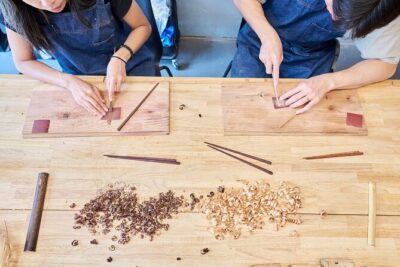
Authentic Pure Gold Kintsugi Workshop with Master Taku in Tokyo
Read our review →
Private Handmade Ring Workshop Activity in Tokyo Shibuya
Read our review →
Kintsugi Workshop Class in Shibuya, Tokyo with mon cadeau
Read our review →Browse the lists this tour appears in