
Reviewed · TOKYO CALLIGRAPHY CLASSES
Tokyo: Calligraphy Workshop & Original T-Shirt Creation
The most memorable part of this Shinjuku workshop is not simply writing Japanese characters. You grind a solid inkstick by hand, prepare authentic ink, learn brush control, and then turn your name into kanji with help from a professional calligrapher. It is a quiet, hands-on break from Tokyo’s noise.
I like the generational teaching behind the class, with instructors such as Sosen passing on an art learned from his grandfather. I also like the patient English support from guides including Hiromi, Nono, Aki, Naoto, and others. The main drawback is practical: the original T-shirt costs extra, and calligraphy is harder than it looks.
Key points to know
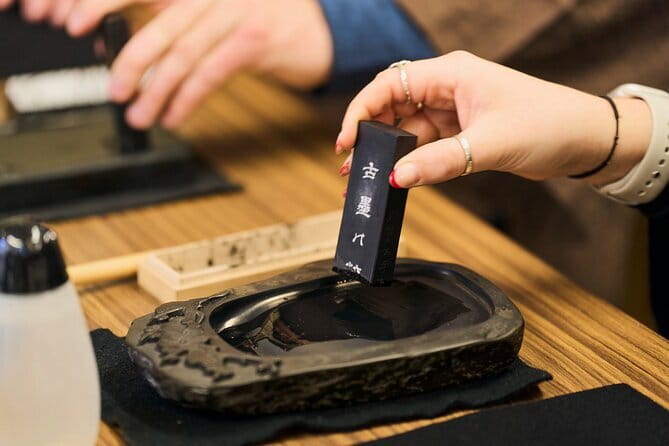
- Make ink the traditional way: Grind a solid inkstick before you touch the brush.
- Create a personal souvenir: Your name is transformed into kanji, then written on paper and optionally on a T-shirt.
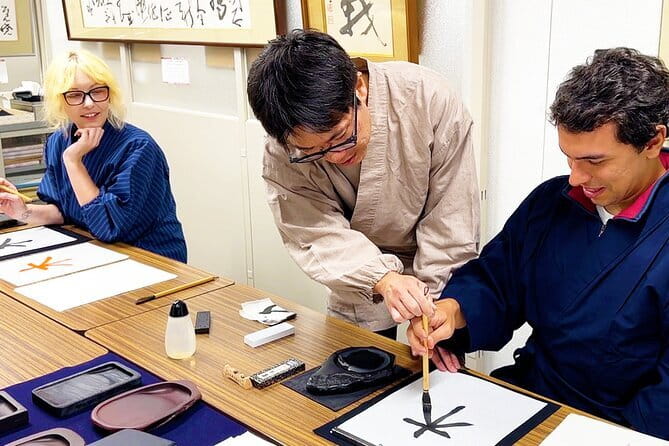
- Learn from a professional calligrapher: The teacher demonstrates stroke order, spacing, brush position, and technique.
- English guidance keeps it accessible: A live English-speaking guide translates and helps throughout the class.
- Small groups mean useful feedback: With no more than 10 people, the instructor can spend time correcting each student.
- Plan for the T-shirt surcharge: Supplies and paper artwork are included, but the original shirt is not.
A quiet art lesson in the middle of Shinjuku
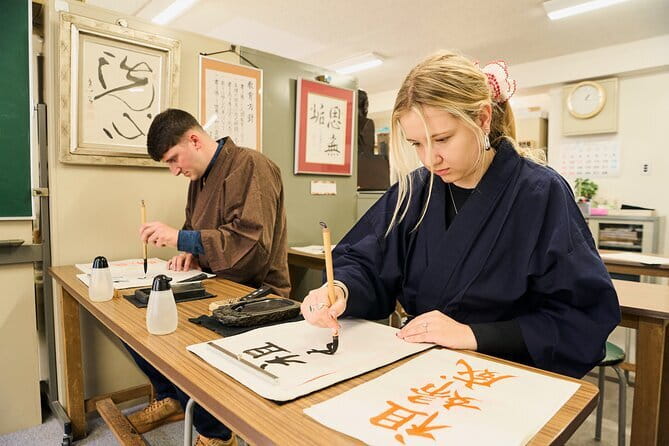
Tokyo is full of neon, train noise, department stores, and hurried foot traffic. This workshop gives you two hours to slow down and do one thing carefully. You sit with brush, ink, and paper, paying attention to pressure and movement rather than checking the time.
That calm is not accidental. Grinding ink is a slow task, and it helps you switch from sightseeing mode to study mode. Several participants found the process meditative, while others enjoyed the challenge of making a character look balanced. You do not need an art background, and the class is designed to work for children as well as adults.
The setting in Shinjuku also makes the timing useful. You can fit the class between sightseeing stops, use it as a rainy-day plan, or book it when you need a gentler afternoon. The activity lasts two hours, so it gives you a real introduction without taking an entire day.
More Tokyo calligraphy classes:
- Tokyo: Calligraphy on Kanji Fan & Scroll with Drink
★ 5.0 · 210 reviews - Let’s experience calligraphy in YANAKA, Taito-ku, TOKYO !!
★ 5.0 · 127 reviews - Experience all of Japanese culture and Japanese food experience classes “origami, udon, Japanese food, green tea, calligraphy” in 4 hours
★ 5.0 · 105 reviews
Meeting the guide near Okubo Station
The meeting point is the FamilyMart Okubo Station South Exit Store at 1-23-21 Hyakunincho, Shinjuku-ku. A guide holds a sign marked Local Guide Stars, which should make the meeting easier in this busy part of Tokyo.
The starting point is in the Okubo area, close to Shinjuku but separate from the main Shinjuku Station maze. Give yourself enough time to find the South Exit and the convenience store. Tokyo station exits can be confusing, and arriving breathless is not the best preparation for a class built around patience.
From there, the group goes to the workshop in Shinjuku. The class is limited to 10 participants. That matters here because brush practice requires individual correction. A large lecture-style group would make it harder to ask about your name, your selected characters, or the details of each stroke.
Changing into workwear and preparing the ink

The workshop begins with traditional Japanese workwear. This is a small but effective change of pace. You are not just watching a demonstration from the side of the room. You are preparing to work in the same spirit as the lesson.
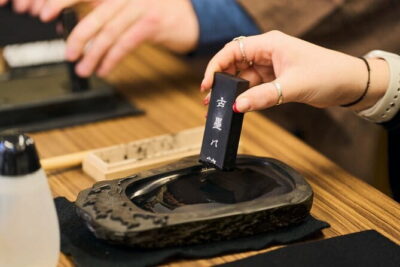
Next comes the solid inkstick. You grind it against an inkstone with water until the ink reaches a usable consistency. This is the most unusual part of the class for many people because modern visitors are used to opening a bottle of ink and getting straight to the brush.
The process teaches an important point about calligraphy: the finished character is only one part of the art. Preparation, posture, pressure, rhythm, and concentration all matter. It also gives the class a peaceful opening. You have time to settle in before the more difficult writing begins.
Learning brush strokes before writing your name
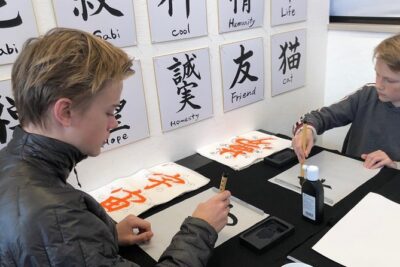
The calligrapher demonstrates the basic brush techniques, then gives you time to practice. You learn how to hold the brush, control its angle, and change pressure during a stroke. Stroke order and the way characters sit beside one another are also explained.
Do not expect to produce polished Japanese calligraphy immediately. Even a simple character can look uneven when the ink, brush, and hand are unfamiliar. One useful feature of the class is that the instructor corrects your work directly and shows how a small change in pressure can improve the line.
This is where a small group helps. Guides and instructors have been praised for taking time with beginners, including students who were the only person in their session. That may sound intimidating, but private attention can be a real advantage if you want to understand what your hand is doing instead of simply copying a finished example.
The lesson also gives you cultural context. You learn about Japanese writing systems and how characters developed over time. The focus is practical rather than academic, but it helps explain why a kanji character carries more than a simple sound.
More hands-on classes and workshops in Tokyo:
- Sushi Making Tokyo Roll and Authentic Japanese Sushi Class
★ 5.0 · 3,971 reviews - Tokyo: Roll and Authentic Sushi Making Class in Asakusa
★ 4.9 · 1,957 reviews - Tokyo Shinjuku Chopsticks Making Class
★ 5.0 · 1,763 reviews - Tokyo: Sushi Making Class in a Happi Coat near a Famous Spot
★ 4.9 · 1,377 reviews
Turning your name into kanji
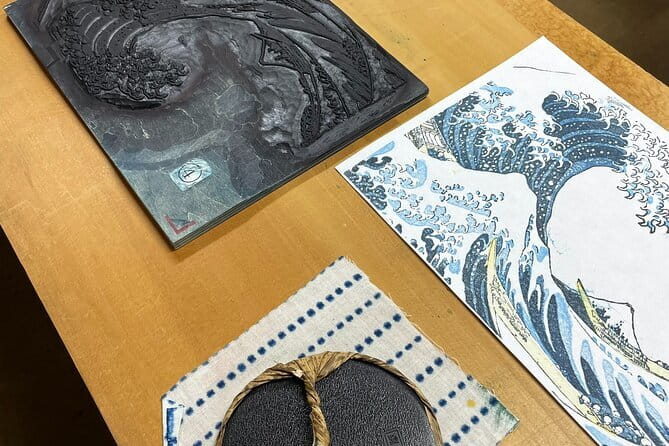
The personal centerpiece is choosing kanji for your name. The instructor helps transform your name into characters with meanings that suit you. You may also choose other words or characters that have personal significance.
This is more interesting than having your name transliterated without explanation. You get to ask what the selected kanji mean and see how the characters work together visually. Several students appreciated having freedom in the choice of characters, while others enjoyed learning how Japanese names can carry layers of meaning.
Take your time at this stage. A name written in kanji is not just a decorative logo. The meaning matters, and you will probably want to remember why those particular characters were chosen. Your English-speaking guide can translate the teacher’s explanation and add cultural context.
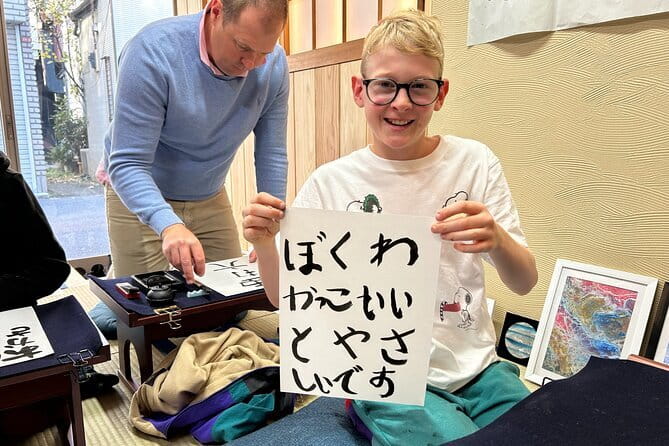
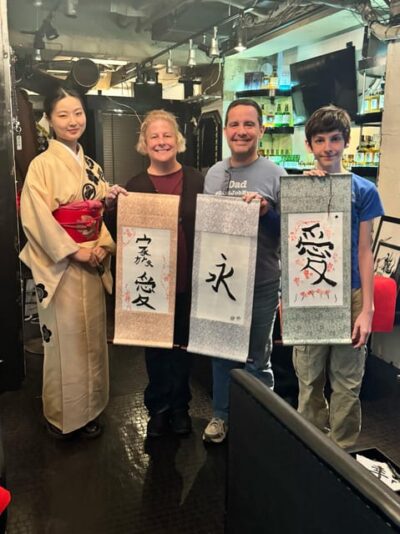
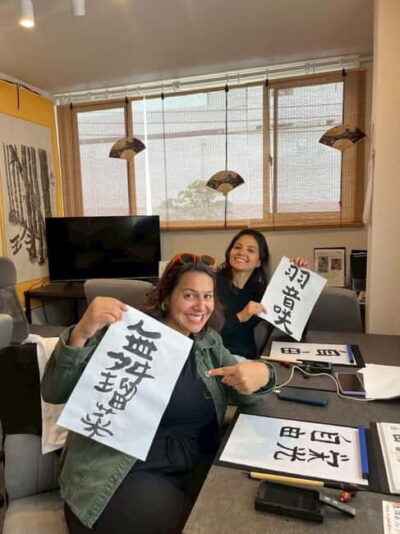
The instructor also creates a more polished version of your name for you to take home on paper. This is important because your own practice sheet may look delightfully imperfect. The finished piece gives you a stronger souvenir, while your own writing shows the effort you put into the class.
Creating the optional T-shirt
If you choose the T-shirt option, you write your kanji directly onto an original shirt. This turns the workshop into a wearable souvenir rather than a paper keepsake. It is a fun idea for couples, families, and anyone who likes souvenirs with a personal story.
The shirt is not included in the $30 price. You pay extra for it, and one participant felt the additional cost was fairly high. Check the price before committing, especially if you are traveling with several people. The base activity still includes the calligraphy supplies and artwork, so you can skip the shirt without losing the main lesson.
You should also keep your expectations realistic. Your T-shirt may be funny-looking rather than perfectly professional. That is part of the charm, but it is worth knowing before you pay for the optional item. The goal is not to create a factory-perfect garment. It is to put your own brushwork and chosen characters onto something you can remember the class by.
If you prefer a more formal keepsake, ask about the paper artwork option during the session. A participant wished there were a scroll option instead of only a shirt, so the T-shirt may not suit everyone’s taste. For most people, though, the paper piece and the personal process provide enough value even without buying extra clothing.
The teachers and English support
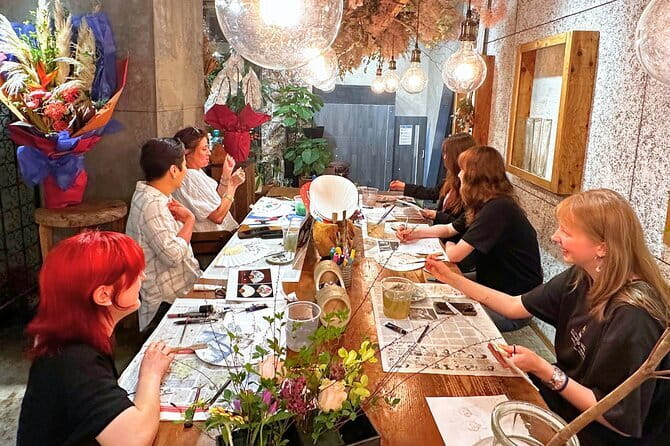
The workshop uses an English-speaking guide alongside the Japanese calligraphy teacher. Names can vary by session, but guides such as Hiromi, Nono, Aki, Naoto, Erico, and Frankie have led or translated classes. Their role is important because the calligrapher can focus on demonstrating the art while the guide makes the explanation clear.
Hiromi is repeatedly singled out for being friendly, patient, and helpful with technique. Nono has been praised for translating the teacher’s words while adding cultural information. Aki, Naoto, and Erico have also been described as warm and effective translators.
The calligraphy teacher is the heart of the class. Sosen, Nori, Horino, and other instructors have taught different sessions, so you may not meet the same person named in another booking. The shared strength is a patient teaching style, with attention to brush handling, history, and the calm mindset behind the art.
The exact instructor matters less than the format: you receive live English support, direct demonstrations, and personal feedback. That makes the workshop suitable even if you know no Japanese and have never held a calligraphy brush.
Is $30 good value?
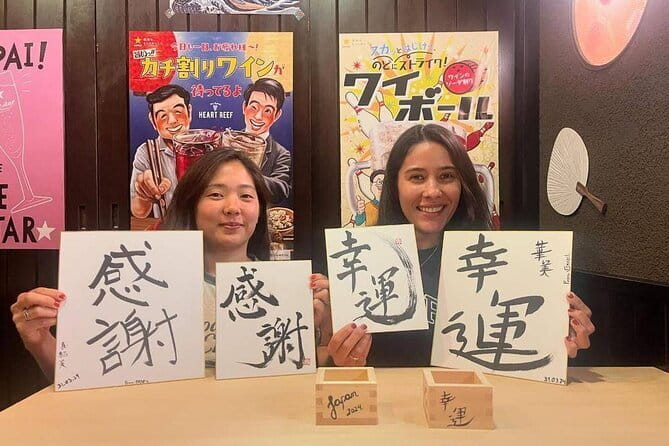
At $30 per person, this is a reasonably priced cultural activity for Tokyo, especially because it lasts two hours and includes the English guide, calligraphy materials, and artwork to take home. You are paying for instruction and a hands-on process, not just a short demonstration.
The value is strongest if you care about learning how the art works. You grind ink, practice several techniques, discuss the meaning of your name, and receive help with the final piece. If you only want a quick souvenir, a shop-bought item will be easier and probably more polished.
The optional T-shirt changes the total cost. Since it is not included, ask about the added price before making your final choice. I would treat the shirt as an extra, not as part of the advertised base value.
The small group also supports the price. With a maximum of 10 people, the class can offer more attention than a large craft demonstration. Solo participants may receive especially close guidance, while families can expect an activity that keeps children involved rather than asking them to sit quietly and watch.
Who will enjoy this class most?
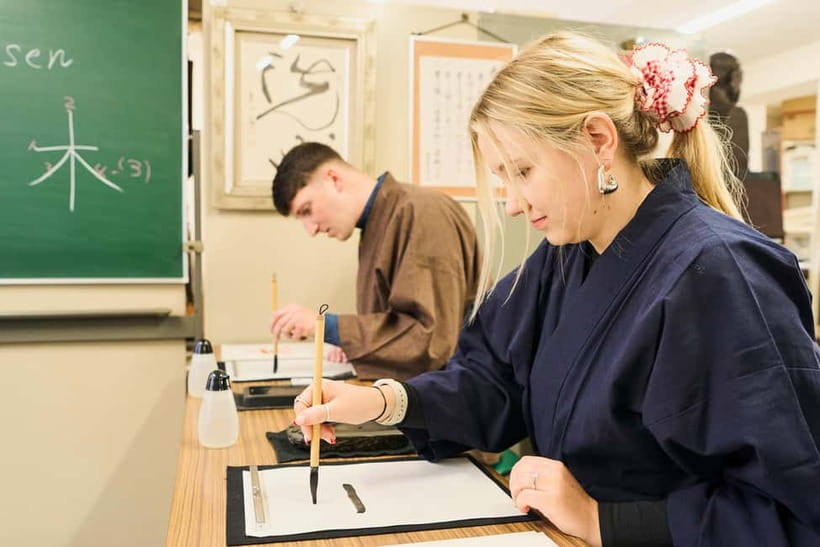
I would recommend this workshop to:
- People interested in Japanese language and writing
- Art lovers who enjoy learning by doing
- Families looking for a calm activity suitable for children
- Couples who want matching or personal souvenirs
- Visitors seeking a cultural activity near Shinjuku
- Anyone who likes meaningful souvenirs more than mass-produced gifts
It also works well for first-time visitors who want cultural context without signing up for a full-day tour. You receive a short introduction to writing systems, brush technique, ink preparation, and Japanese ideas about patience and form.
It may be less suitable if you need a fast, polished result or dislike making mistakes in front of other people. Calligraphy takes concentration, and the final shirt may show every wobble. That is not a flaw in the class, but it is part of the bargain.
Practical details before you book
The activity is in English, with a live guide and a small group capped at 10 people. Starting times vary, so check availability for the date you want. The meeting point is the FamilyMart Okubo Station South Exit Store, not the workshop itself.
Calligraphy supplies are provided for use during the class, and your artwork is included to take home. The original T-shirt is not included. If you are traveling with children, the class is designed to be enjoyable for them, and one session included a toddler who received patient attention.
Cancellation is free up to 24 hours before the activity for a full refund. You can also reserve now and pay later, which helps if your Tokyo schedule is still shifting.
Wear something comfortable and avoid bringing an attitude that demands perfection. The best result is not necessarily the straightest character. It is the one that reminds you how the ink was made, what the kanji means, and how much work went into one brushstroke.
Should you book it?
Yes, if you want a personal Tokyo souvenir and two quiet hours of genuine instruction. The handmade ink, kanji name design, and patient English guidance give this class more substance than a quick photo opportunity.
Book it with clear expectations: the T-shirt costs extra, your brushwork may be imperfect, and the experience is about practice rather than instant mastery. If that sounds appealing, $30 is a fair price for a thoughtful cultural activity close to Shinjuku.
FAQ
Where does the calligraphy workshop meet?
Meet at the FamilyMart Okubo Station South Exit Store, 1-23-21 Hyakunincho, Shinjuku-ku, Tokyo, Japan. The guide holds a sign marked Local Guide Stars.
How long does the activity last?
The workshop lasts two hours. Starting times vary, so check availability when selecting your date.
Is the workshop conducted in English?
Yes. The activity includes a live English-speaking guide who translates and helps explain the calligraphy lesson.
What is included in the price?
The $30 price includes the English guide, calligraphy supplies used during the class, and your own artwork to take home.
Is the T-shirt included?
No. The original T-shirt is not included and is available at an additional cost.
Can children take part?
Yes. The workshop is designed to be enjoyable for children, and the instructor can provide patient guidance during the activity.
How many people are in each group?
The group is limited to 10 participants, allowing the instructor to give individual feedback during brush practice and the final artwork.
Newly reviewed around Tokyo
- Tokyo Asakusa:Calligraphy & Make T-shirt Activity★ 5.0 · 62 reviews
- 1 Hour Travel around Tokyo with a Professional Photographer★ 5.0 · 3 reviews
- Travel Tokyo with Your Own Personal Photographer★ 5.0 · 43 reviews
- Intercity Shuttle, Tokyo to Haneda /Narita /Yokohama /Makuhari★ 5.0 · 5 reviews
- Train in Samurai Swordsmanship and Defeat the Demon in Tokyo★ 5.0 · 5 reviews
- Shuttle Van 6hr Tokyo Tour to-and-from Tokyo, Yokohama and Narita★ 5.0 · 9 reviews
- Kickboxing & Body Training with EX-Pro Fighter★ 5.0 · 4 reviews
- Traditional Japanese Knife Sharpening Class★ 5.0 · 18 reviews
Tokyo Calligraphy Classes, compared.
Let’s experience calligraphy in YANAKA, Taito-ku, TOKYO !!
Read our review →
Calligraphy Workshop & Original T-Shirt Creation
Read our review →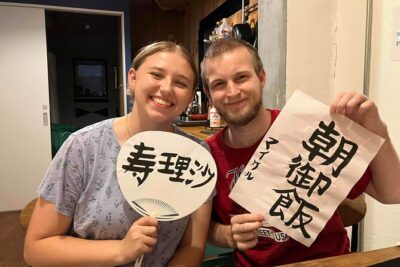
Calligraphy &Make your original folding fan in Asakusa
Read our review →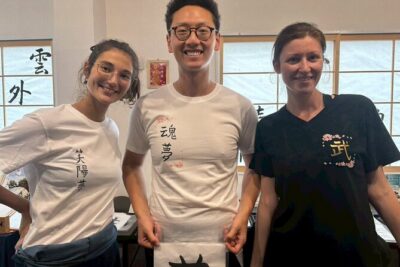
Tokyo Asakusa:Calligraphy & Make T-shirt Activity
Read our review →
Calligraphy Workshop Craft Your Own Art in Asakusa
Read our review →Browse the lists this tour appears in