
Reviewed · TOKYO CALLIGRAPHY CLASSES
Calligraphy Culture SHODO Experience in Tokyo
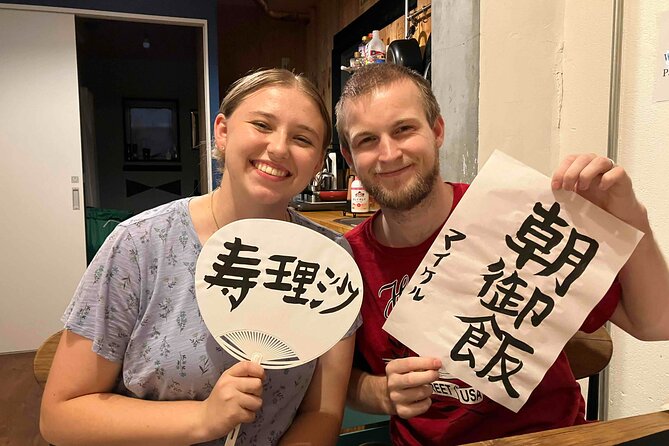
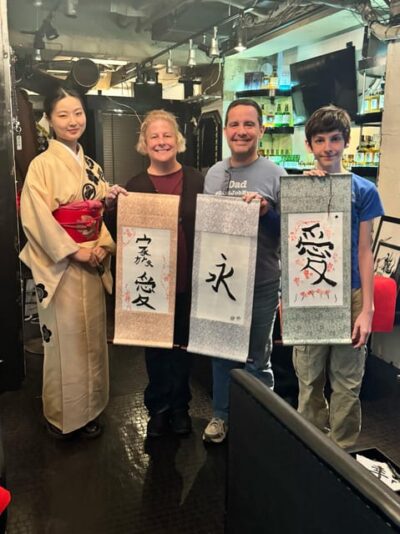
The best part of this Tokyo activity is that you do not just watch Japanese calligraphy. You sit down, hold the brush, learn the basic strokes, and create something personal. You can write your name in katakana or choose a favorite word in kanji, then take the finished piece home on an autograph board.
I like the small maximum of five people, which gives the instructor room to correct your brush and answer questions. I also like the short, useful format: in about 90 minutes, you learn the difference between hiragana, katakana, and kanji while making a souvenir that feels connected to Japan.
The main consideration is the setting. The class is held inside a hostel, with some sessions taking place in a shared kitchen area. One participant found that cooking, laundry, and other activity caused interruptions, so this may not be the quiet art studio you picture.
Key points at a glance
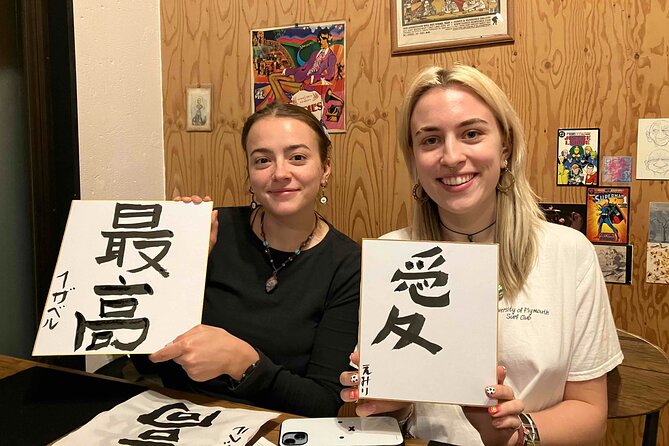
- Write your name in Japanese: Practice katakana, hiragana, or a personal kanji word rather than copying a fixed design.
- Small class size: The group is limited to five people, and some sessions may be private or nearly private.
- Patient English-speaking instruction: Sachie and Zuisen have guided international students through the basics.
- Hands-on from the start: Learn brush grip, posture, lines, and simple forms before creating your final piece.
- A useful Tokyo location: The club is about a five-minute walk from Iriya Station, close to Asakusa and Ueno.
- Take-home keepsake: Calligraphy supplies are included, and your finished work goes home with you.
What the 90-minute shodo lesson is really like
Japanese calligraphy, or shodo, is not simply Japanese lettering with a black brush. The way you sit, hold the brush, begin a stroke, change pressure, and finish a line all affect the result. This class gives you a short, friendly introduction to those basics without asking you to commit to a full art course.
You begin at Tokyo Iriya Shodo Club, located in Taito City at Iriya 2-chome. The meeting point is on the second floor, and the club is about a five-minute walk from Iriya Station. It is also close to the Asakusa and Ueno areas, so you can fit the lesson into a day of sightseeing in northeastern Tokyo.
The activity lasts about an hour and a half. That is enough time to learn the fundamentals and produce a final piece, but not so long that the brush work becomes tiring for a first attempt. You will use the supplied calligraphy materials, so you do not need to bring special equipment.
More Tokyo calligraphy classes:
- Tokyo: Calligraphy on Kanji Fan & Scroll with Drink
★ 5.0 · 210 reviews - Let’s experience calligraphy in YANAKA, Taito-ku, TOKYO !!
★ 5.0 · 127 reviews - Experience all of Japanese culture and Japanese food experience classes “origami, udon, Japanese food, green tea, calligraphy” in 4 hours
★ 5.0 · 105 reviews
First strokes, brush grip, and posture
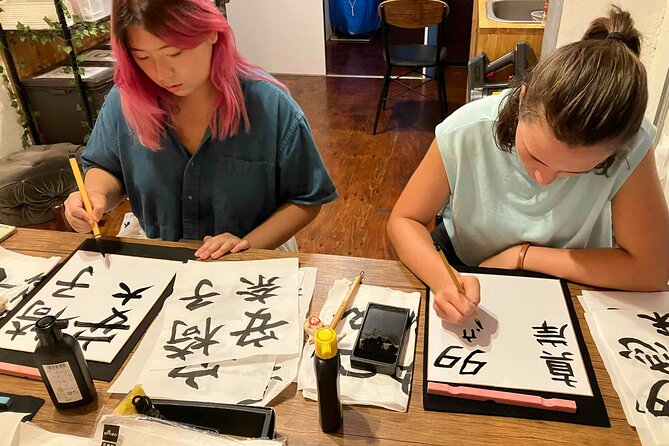
The lesson starts with the building blocks of calligraphy. You learn how to hold the brush, how to sit or position your body, and how to draw basic lines. These details can feel surprisingly important. A brush does not behave like a pencil, and pressing too hard or moving too quickly can change the width and shape of a stroke.
This early practice is where a patient instructor matters. Sachie is described as friendly, encouraging, and willing to work with students who do not consider themselves artistic. Zuisen has also taught the class in English and explained the cultural side of the activity clearly.
You should expect to make imperfect marks at first. That is part of the point. The class is not a test of your handwriting, and you do not need prior Japanese study. The instructor helps you understand the movement before asking you to create something suitable for taking home.
Hiragana, katakana, and kanji in one sitting
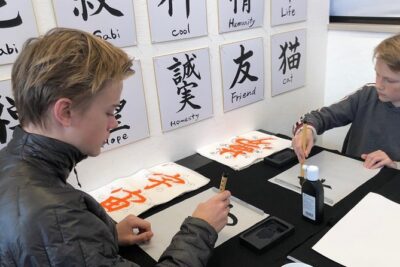
A useful feature of the lesson is that it introduces more than one Japanese writing system. You can learn how hiragana, katakana, and kanji differ, then decide which form suits your chosen word or name.
For many visitors, katakana is the practical choice for writing a foreign name in Japanese. It also makes a fun souvenir because the result can be personal and immediately connected to your identity. One student wrote a name in katakana and found that Google Translate recognized it, which gives you a simple way to check the characters afterward.
Kanji offers a different kind of challenge. A word such as knitting may require several complicated characters, so choosing a favorite idea in kanji can take more thought than simply writing your name. The instructor can guide you through the forms, but you should allow time for practice before committing your final design to the board.
The lesson also helps you see that Japanese writing is not one single alphabet. Each system has its own use and visual character. That small piece of cultural context makes the finished artwork more meaningful.
Choosing your name or favorite word
The personal choice is the heart of the activity. You may write your name in Japanese, choose a favorite word, or work with a kanji expression that appeals to you. The provided information does not specify a fixed list of words, so it is sensible to arrive with one or two ideas in mind.
A short word is likely to be easier to complete neatly in a 90-minute session. If your preferred word has several complex characters, you may spend more time practicing before the final attempt. That is not a problem, but it is worth knowing if you want a polished souvenir.
You can also use the choice to make the activity more personal for your family or group. One person might write a name, another a hobby, and another a word connected to the trip. The class has room for different skill levels because the instructor works with each person individually.
At the end, you write the chosen word on a nice calligraphy board to take home. This is more satisfying than receiving a pre-made souvenir because the marks are yours, including the small variations that show you made them during your time in Tokyo.
A completely different kind of day in Tokyo:
- Mt Fuji and Hakone 1-Day Bus Tour Return by Bullet Train
★ 5.0 · 26,383 reviews - 1-Day Tokyo Bus Tour
★ 5.0 · 14,250 reviews - Tokyo: teamLab Planets TOKYO Digital Art Museum Entry Ticket
★ 4.6 · 9,779 reviews - Mt Fuji & Hakone Cruise, Drum Show Bullet Train 1 Day from Tokyo
★ 4.0 · 7,413 reviews
A small class with real one-to-one attention
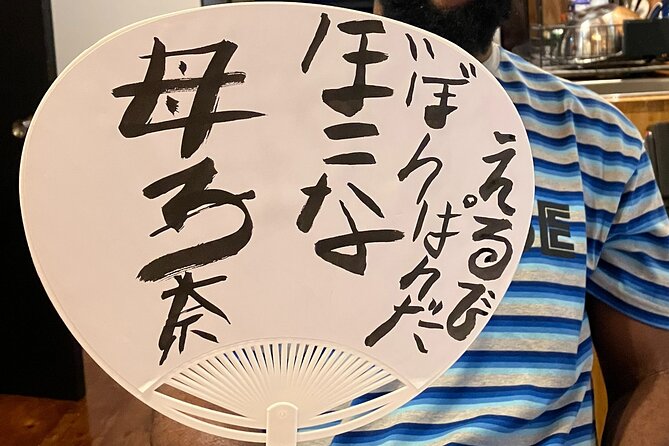
The maximum group size is five. That matters in calligraphy because you need to see the instructor demonstrate a stroke and then receive help with your own hand position and brush movement.
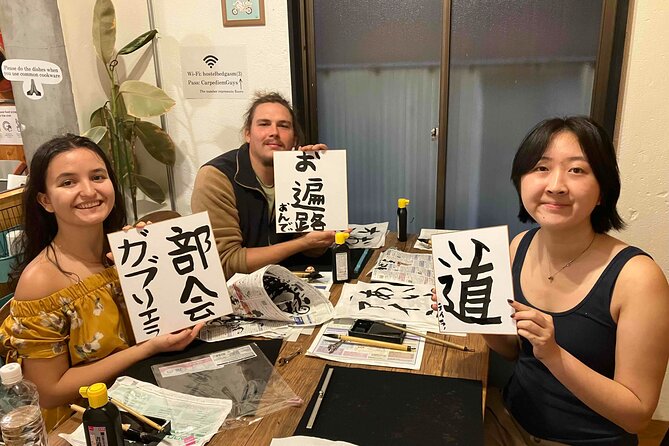
Some sessions may be especially small. One participant had a private lesson, while another group worked with four students. If you are the only person booked, the format can become a personal introduction to shodo rather than a standard group workshop.
Sachie receives especially strong praise for her patience and warm teaching style. She is described as someone who loves the art and wants to share it, while Zuisen is noted for speaking good English and explaining the activity in a calm way. Since instructors may vary, you should not assume a particular teacher unless your booking confirms one, but both names are associated with the experience.
The small-group structure also suits people who feel nervous about making mistakes in front of a large class. You can practice without an audience of twenty people, and the teacher has a better chance of noticing where your brush technique needs help.
The hostel setting: useful, casual, and not perfectly quiet
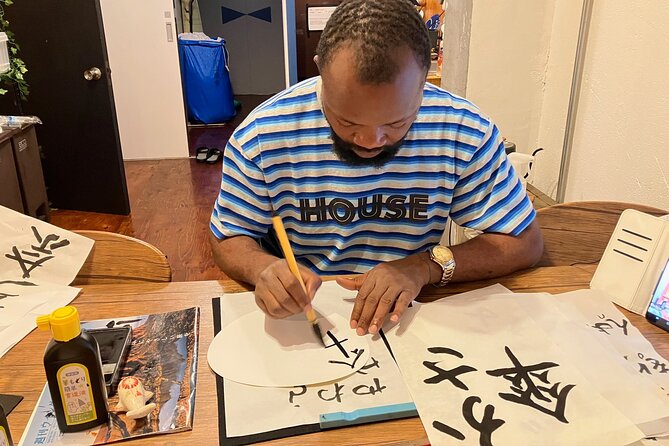
This is not a formal museum workshop or a polished cultural center. The class takes place in a hostel, and one session was held in a shared kitchen area. That gives the activity a local, everyday feel, but it can also mean background activity.
Cooking, laundry, or people moving through the shared space may interrupt the lesson. Most participants appear to have found the relaxed setting suitable, but the complaint is specific and worth taking seriously. If you need a silent room for artistic concentration, this may disappoint you.
I see the setting as a trade-off. The informal room may help the class feel approachable and unpretentious. You are not being placed behind glass or rushed through a staged demonstration. At the same time, the surroundings may not offer the calm atmosphere associated with traditional calligraphy.
The location is at least practical. After class, you can continue toward Ueno or Asakusa, and Taito City gives you a convenient base for exploring older parts of Tokyo. One family combined the lesson with time in the Taito area, which is a sensible use of your day.
Is the $33.03 price good value?
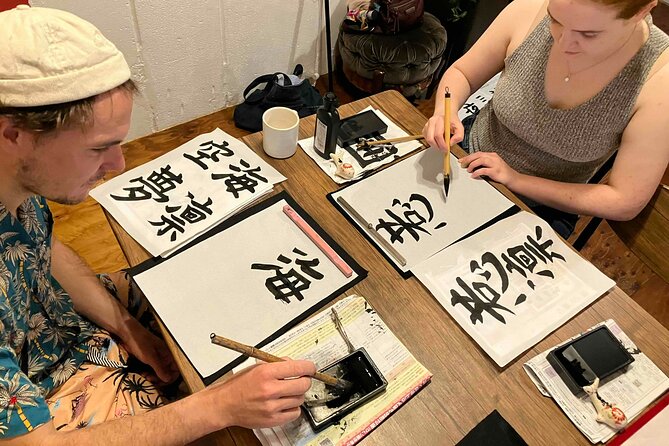
At $33.03 per person, this is a modestly priced cultural activity for Tokyo. The price includes the calligraphy supplies, instruction, and a finished board to take home. You are paying for participation rather than a short demonstration, which improves the value.
The strongest part of the value is the personal instruction. A small class lets you ask questions and receive corrections that would be difficult in a large workshop. If you are interested in Japanese culture but have limited time, 90 minutes gives you a clear introduction without taking half a day from your itinerary.
The value is also tied to what you want from a souvenir. If you prefer a flawless, professionally made item, a shop-bought print may be easier. If you want something you created yourself, the board has more meaning, even if your lines are uneven.
The price does not include a full sightseeing tour, a meal, or transportation. You should think of it as a focused activity to pair with Ueno, Asakusa, or another nearby plan. Its value is highest for people who want a hands-on cultural lesson rather than another place to photograph.
Who will enjoy this activity most
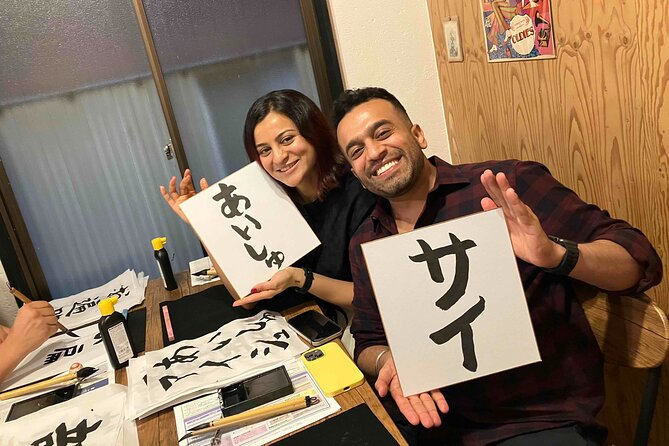
I would recommend the class to first-time visitors who want to try a traditional Japanese art in a manageable format. You do not need to know Japanese, and most people can participate. The instructor-led practice makes it suitable for beginners who are unsure how to start.
Families can also make good use of it. Each person can choose a different name or word, and the final boards give everyone a personal reminder of the trip. Children may need help with patience and brush control, but the supplied information says most participants can take part.
It is also a good choice for solo visitors. A one-person booking may lead to a very personal lesson, rather than an awkward activity designed only for groups. The small class helps keep the mood relaxed.
You may want to skip it if your priority is a quiet, highly formal studio or a long lesson devoted to advanced technique. The class is an introduction, not a serious course in professional shodo. The shared hostel setting may also bother you if interruptions would spoil the experience.
Planning your visit around Iriya, Ueno, and Asakusa
The club is near public transportation and about five minutes on foot from Iriya Station. The meeting point is Tokyo Iriya Shodo Club, Japan, 110-0013 Tokyo, Taito City, Iriya, 2-chome 29-2, second floor.
You should allow enough time to find the entrance and second-floor room. Since the activity takes place inside a hostel, ask inside if you are unsure where to go. This simple tip matters because the workshop may not look like a separate street-level attraction.
The lesson ends back at the meeting point. That makes it easy to continue your day from the same part of Tokyo, with no need to arrange a second pickup point.
Book ahead if your schedule is fixed. The activity is often reserved about 27 days in advance, and the maximum is only five people. You can cancel for a full refund if you do so at least 24 hours before the start time. Changes or cancellations inside that period are not accepted, and the cut-off follows local Tokyo time.
My verdict on this Tokyo calligraphy class
I would book this experience if you want a personal souvenir, a gentle introduction to Japanese writing, and a class small enough for real help from the teacher. Sachie and Zuisen are associated with patient instruction, the materials are included, and the finished board gives you something tangible to carry home.
I would be more cautious if you expect a silent studio or a highly polished cultural venue. The hostel setting can bring interruptions, and the lesson is designed for beginners rather than advanced students.
For most visitors, the combination of hands-on practice, modest cost, short duration, and a personal final piece makes this a good choice. Bring a name or favorite word, arrive ready to make a few messy strokes, and leave with a better sense of how Japanese writing works.
FAQ
Where does the calligraphy experience take place?
It takes place at Tokyo Iriya Shodo Club in Iriya, Taito City, Tokyo. The address is Japan, 110-0013 Tokyo, Taito City, Iriya, 2-chome 29-2, second floor.
How long does the activity last?
The experience lasts approximately 1 hour and 30 minutes.
How far is the club from public transportation?
The club is about a five-minute walk from Iriya Station and is near public transportation.
How many people can join the class?
The activity has a maximum of five participants.
Are calligraphy supplies included?
Yes. Calligraphy supplies are included in the activity.
What can I write during the lesson?
You can write your name in Japanese or choose a favorite word in kanji. The lesson also introduces hiragana, katakana, and kanji.
Do I take my calligraphy home?
Yes. At the end of the lesson, you can take home an autograph board featuring your own work.
Can I cancel for a full refund?
Yes. You can receive a full refund if you cancel at least 24 hours before the experience start time. Cancellations or changes made less than 24 hours before the start are not accepted.
Newly reviewed around Tokyo
- Tokyo Asakusa:Calligraphy & Make T-shirt Activity★ 5.0 · 62 reviews
- Intercity Shuttle, Tokyo to Haneda /Narita /Yokohama /Makuhari★ 5.0 · 5 reviews
- 1 Hour Travel around Tokyo with a Professional Photographer★ 5.0 · 3 reviews
- Travel Tokyo with Your Own Personal Photographer★ 5.0 · 43 reviews
- Train in Samurai Swordsmanship and Defeat the Demon in Tokyo★ 5.0 · 5 reviews
- Shuttle Van 6hr Tokyo Tour to-and-from Tokyo, Yokohama and Narita★ 5.0 · 9 reviews
- Kickboxing & Body Training with EX-Pro Fighter★ 5.0 · 4 reviews
- Tokyo History: Sensoji Temple & Asakusa District Private Tour★ 5.0 · 28 reviews
Tokyo Calligraphy Classes, compared.
Let’s experience calligraphy in YANAKA, Taito-ku, TOKYO !!
Read our review →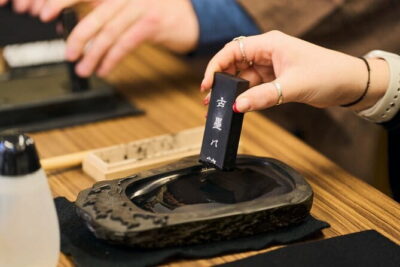
Calligraphy Workshop & Original T-Shirt Creation
Read our review →
Calligraphy Workshop & Original T-Shirt Creation
Read our review →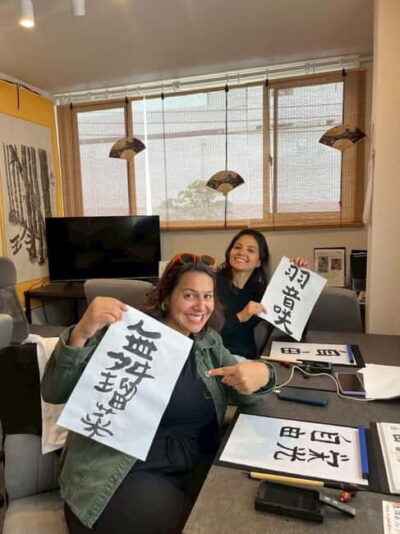
Calligraphy &Make your original folding fan in Asakusa
Read our review →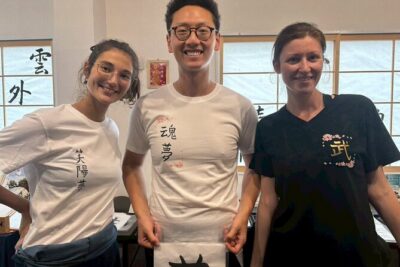
Tokyo Asakusa:Calligraphy & Make T-shirt Activity
Read our review →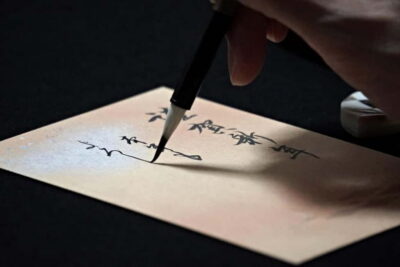
Calligraphy Workshop Craft Your Own Art in Asakusa
Read our review →Browse the lists this tour appears in