
Reviewed · TSUKIJI AND TOYOSU FISH MARKET TOURS
Tokyo: Tsukiji Fish Market Food and Walking tour
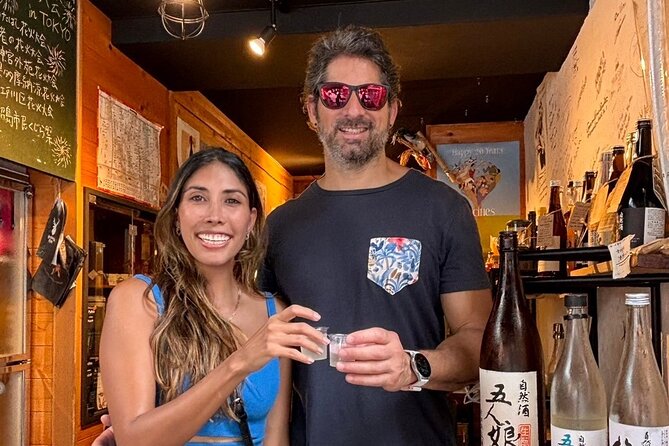
Tsukiji is easy to enjoy and easy to get wrong. The market lanes are crowded, the food choices come fast, and the best stalls are not always the ones with the longest line. This two-hour walk gives you a local Japanese English-speaking guide to point out what matters and help you order without guesswork.
I like the choose-your-own-food format, since you pay only for what you want instead of being locked into a set menu. I also like the small-group limit of 10, which makes it easier to ask questions and keep moving. The main drawback is that food and drinks cost extra, and some people may find the opening temple stop less appealing than going straight to the market.
Key points at a glance
- You control the meal: Pick individual dishes and pay each stall directly.
- Three distinct stops: See Tsukiji Hongwanji Temple, the market area, and Tsukiji Jogai Market.
- Strong guide element: Guides such as Rie, Haydn, Jim, Minori, Shino, and Yayoi help with food choices and market navigation.
- Good for first-time visitors: The market can feel confusing on your own, especially when deciding what is worth the price.
- Budget beyond the ticket: The tour costs $30 per person, but you need extra money for every bite and drink.
- Cash matters: Bring Japanese yen, with about ¥10,000 suggested as a practical food budget.
Why a guide helps at Tsukiji
Tsukiji is no longer the site of Tokyo’s main wholesale fish market and famous tuna auctions. Those wholesale operations moved to Toyosu, but Tsukiji remains a major food district, with shops, counters, restaurants, and food stalls serving the public.
That distinction matters. You are not signing up to watch the old wholesale auction floor. You are signing up for a guided food walk through the market district that continues to supply Tokyo kitchens and visitors with seafood, Japanese snacks, produce, and cooking ingredients.
I like this tour because it treats Tsukiji as more than a place to grab sushi. Your guide can explain the ingredients behind Japanese dishes, point out unfamiliar seafood, and help you understand what you are looking at before you spend money. The market becomes less of a maze and more of a series of small food decisions.
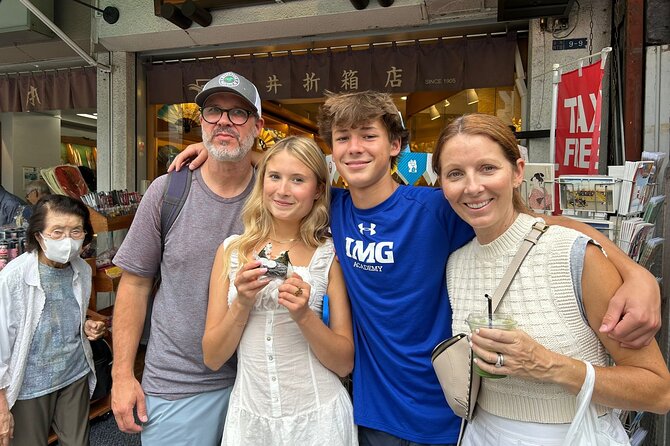
The tour is limited to 10 people, which is a useful size here. You still have to stay alert in crowded lanes, but a small group is easier to gather around a stall than a large coach party. Guides including Rie, Haydn, Jim, Nicholas, Minori, Shino, Sayaka, and Yayoi have all been noted for being friendly, flexible, and good at steering people toward worthwhile tastes.
More Tsukiji and Toyosu fish market tours:
- Tokyo Tsukiji Fish Market Food and Culture Walking Tour
★ 5.0 · 3,184 reviews - Tokyo: Tsukiji Fish Market Guided Walking Tour
★ 4.9 · 1,397 reviews - Tokyo Sushi Making Class in Tsukiji with Professional Chef
★ 5.0 · 1,177 reviews
Starting at Tsukiji Hongwanji Temple
The tour begins at the Starbucks near Tsukiji Station and walks first to Tsukiji Hongwanji Temple. The temple visit takes about 30 minutes, and admission is included.
This is an unusual opening for a food tour. Tsukiji Hongwanji is known for its distinctive architecture, so the stop gives you a cultural introduction before the market food begins. A guide such as Haydn may explain the temple and its place in the neighborhood, while other guides have used the stop to add context about Japanese customs and local history.
I see the temple as a useful bonus if you enjoy culture and architecture. It gives the morning a little shape and helps explain why the surrounding district is more than a row of food stands.
Still, this is the clearest point of possible mismatch. If you booked mainly for seafood and street food, 30 minutes at a temple may feel like time taken from eating. One person specifically found the temple interesting but would have preferred to skip it. If you want an all-food outing, keep that built-in stop in mind before booking.
Eating your way through Tsukiji Fish Market
The main market portion lasts about an hour. This is where the tour earns its keep for many first-time visitors.
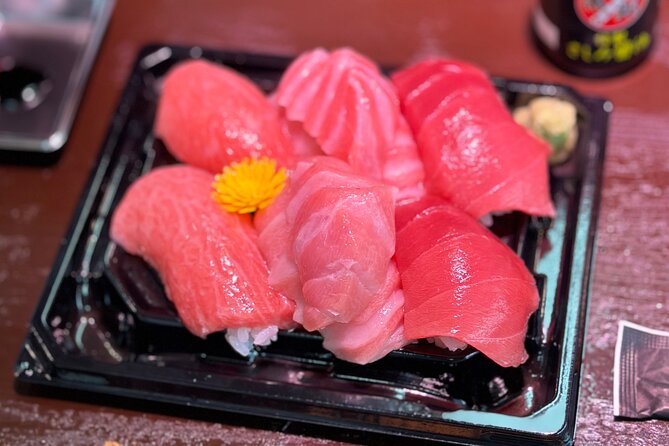
Your guide leads you through the market area and helps you decide what to try. Possible tastes include fresh seafood, sushi, fruit, Japanese omelets, fried fish cakes, eel, sea urchin, and wagyu beef. The exact food is not fixed, which means the experience changes according to your appetite, the stalls you reach, and the choices your group makes.
That flexibility is one of the tour’s best features. You can spend more on a special piece of seafood, keep things modest with smaller snacks, or skip anything that does not appeal to you. Someone who dislikes raw fish is not forced into a sushi-heavy menu, while an adventurous eater can try items such as sea urchin and eel.
The guide also helps with the practical side of eating in a crowded market. You may want to know which stall offers a fair price, which item is worth ordering, or how much food is sensible during a two-hour walk. Guides such as Rie have been especially useful for identifying tourist traps and suggesting places where similar products cost less.
Do not expect the $30 tour price to cover your meal. Food and drinks are not included, and each purchase is your responsibility. A useful working budget is around ¥10,000 in cash, especially if you want to try several items or order premium seafood. You may spend less, but arriving with only the ticket price will leave you unable to take part fully.
Cash is important because at least some food stalls take payment in yen. Bring enough small notes if possible, and remember that you are paying for individual portions rather than receiving one organized meal.
Tsukiji Jogai Market and the public market lanes
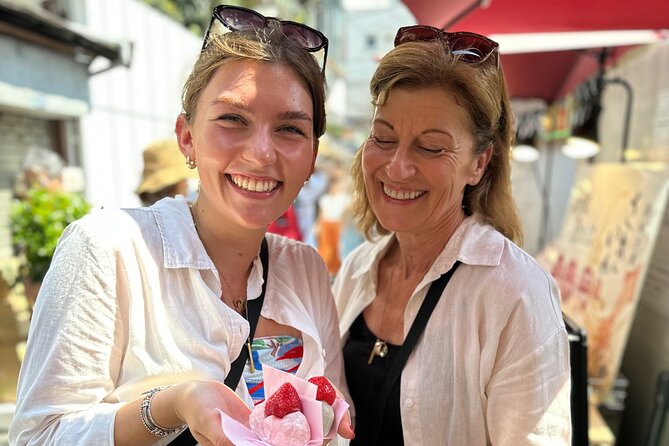
The final 30 minutes are spent in Tsukiji Jogai Market, the outer market area. This section is packed with shops selling seafood, Japanese food products, cooking ingredients, and street food.
For many people, this is the most enjoyable part because it feels open-ended. You can look at fresh seafood, watch vendors prepare food, and compare the many small shops. The guide can explain what products are used in sushi and other Japanese dishes, giving you a better sense of the ingredients behind what you have eaten.
The outer market is also where the tour’s navigation help matters most. You can walk through Tsukiji alone, but it is easy to spend your time following the main flow of people without understanding what you are seeing. A guide can make the area more readable, help you locate specific types of food, and keep the group moving when lanes become tight.
The pace is flexible. The group can discuss what it wants to see and taste, though the two-hour schedule still imposes limits. If your group wants to stop often for food, there will be less time for browsing. If people eat quickly, you may cover more stalls and hear more about the market’s past and present.
More Tokyo walking tours:
- Tokyo: Imperial Palace and Shogun Historical Walking Tour
★ 5.0 · 2,251 reviews - Tokyo: Shinjuku Local Bar and Izakaya Guided Walking Tour
★ 4.9 · 1,794 reviews - Tokyo: Asakusa Walking Tour with Sensoji Temple Visit
★ 4.8 · 1,583 reviews - Tokyo Castle & Imperial PalaceーShogun Walking Tour
★ 4.7 · 1,068 reviews
What the guides add to the experience
The guide is the main reason to book this instead of simply visiting Tsukiji on your own.
Rie is described as energetic and attentive, with a willingness to encourage people to try unfamiliar foods. Haydn has been praised for guiding families through the market and explaining both the temple and the food area. Jim brings a strong focus on Japanese culture, while Minori has been noted for explaining local history and helping people find good food stops.
Other named guides include Nicolas, Nicholas, Shino, Sayaka, and Yayoi. The experience can vary with the person leading your group, but the useful pattern is clear: you get a guide who can explain unfamiliar food, keep the walk moving, and make suggestions based on what you want to eat.
Shino’s background as a chef is particularly relevant for anyone interested in ingredients and preparation. A guide with food experience may be able to give more useful context than someone who simply points at stalls and names dishes.
The guide also acts as a translator of market manners. Tsukiji is a working shopping district, not a stage set built only for sightseeing. Staying with the group, listening when the guide gives instructions, and avoiding blocked shop entrances will help you enjoy the area without getting in the way.
How much value do you get for $30?
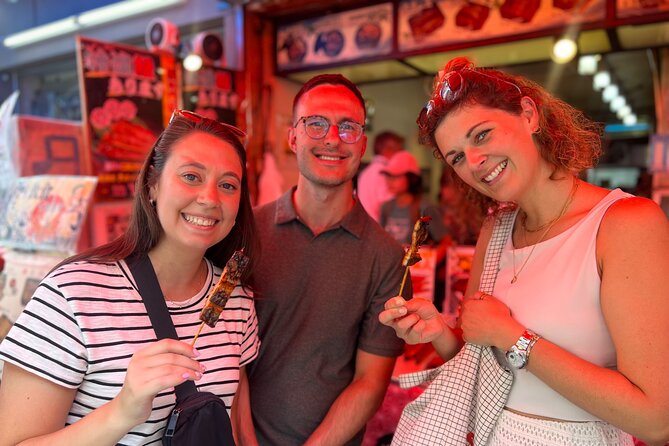
At $30 per person, this is not an expensive Tokyo tour, but its value depends on how much help you want.
The ticket pays for roughly two hours with a local English-speaking guide, the temple visit, and guided access through the fish market and Jogai Market. You are not paying for a full meal, skip-the-line entry, or a fixed tasting menu. You are paying for orientation, explanation, and help making food choices.
That can be good value if you are new to Tokyo or uncomfortable ordering at unfamiliar stalls. The cost may save you from buying an overpriced item simply because you cannot tell what it is, though no guide can guarantee every purchase will be a bargain.
The tour is less useful for confident visitors who already know Tsukiji, speak Japanese, or enjoy wandering markets without a plan. If you have only two hours and want to see as much food as possible, the temple stop may also reduce the value for you.
A current rating of 5 from 1,724 reviews, with 99 percent recommending the experience, suggests that the basic format works well for most people. Still, the strongest results will come when you treat the tour as a guided introduction rather than an all-inclusive meal.
Who should book this Tsukiji walk?
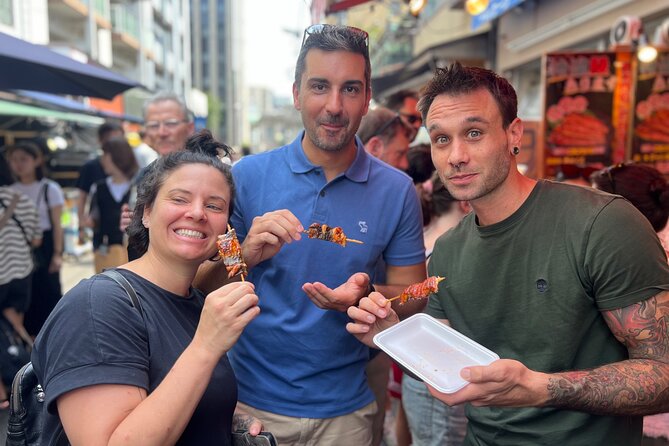
I would suggest this tour to first-time Tokyo visitors who want a gentle introduction to Japanese market food. It is also a good fit for families, since a guide can help adults and children choose manageable portions instead of committing to one large meal.
It suits curious eaters who want to try a few new things but do not know where to begin. Sea urchin, eel, sushi, omelets, fried fish cakes, fruit, and wagyu beef offer a broad range, so you can build your own level of adventure.
It may also suit you if crowds and unfamiliar shopping streets make you uneasy. The market is easier to handle when someone knows the route, understands the stalls, and can answer questions as you go.
I would be more cautious if you have strict dietary needs, though the supplied information does not explain how dietary requests are handled. Ask the provider before booking rather than assuming the guide can arrange substitutions.
This is also not the best choice if you expect a quiet sit-down meal. You will walk, stand, browse, and eat from shops and street food counters. The experience is active but not described as especially strenuous.
Practical details before you go
The meeting point is the Starbucks Coffee near Tsukiji Station at 2-chome 12-8 Tsukiji, Chuo City, Tokyo. The tour ends back at the same meeting point, so you do not need to arrange a separate pickup or figure out a new location afterward.
The activity lasts about two hours. Plan to arrive ready to walk and stand, and wear comfortable shoes. The market is busy, so keep your belongings close and stay aware of other shoppers and vendors.
Your mobile ticket is accepted, and confirmation is provided at booking. The experience is near public transportation, service animals are allowed, and most people can participate.
Free cancellation is available if you cancel at least 24 hours before the start time. Changes or cancellations made within 24 hours are not accepted for a refund, and the cut-off follows Tokyo local time.
My verdict: a smart first taste of Tsukiji
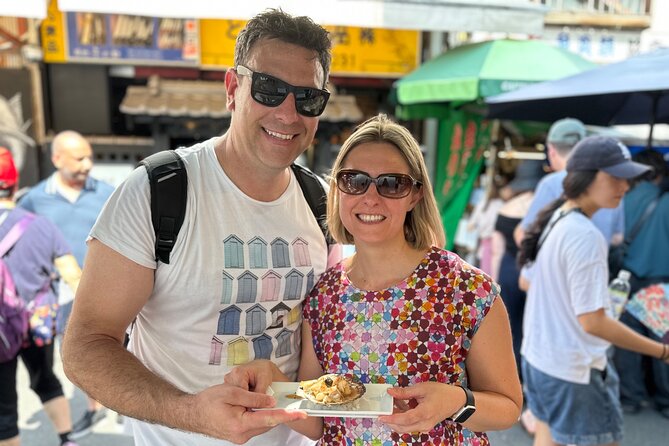
Book this tour if you want help making sense of Tsukiji and prefer tasting several small foods over ordering one formal meal. The flexible food plan, small group, and practical guidance are its strongest points, especially when a guide such as Rie, Haydn, Jim, or Minori helps you avoid poor-value choices.
Skip it if you want only food, since the opening temple stop takes about 30 minutes. Also skip it if you are happy to wander alone and would rather spend the full two hours choosing stalls at your own pace.
For most first-time visitors, I would book it early in a Tokyo stay. You will learn how the market works, discover foods you might otherwise pass by, and still have the option to return later for anything you want to explore more slowly.
FAQ
How long does the Tsukiji food and walking tour last?
The tour lasts approximately two hours.
How much does the tour cost?
The listed price is $30 per person.
Is food included in the tour price?
No. Food and drinks are not included. You choose and pay for the dishes you want to eat.
How much extra money should I bring for food?
One experience detail suggests bringing about ¥10,000 for food purchases. You may spend less or more depending on what you choose.
What foods might I try?
Possible foods include fresh seafood, sushi, fruit, Japanese omelets, fried fish cakes, eel, sea urchin, and wagyu beef.
Where does the tour begin?
It begins at Starbucks Coffee near Tsukiji Station, at 2-chome 12-8 Tsukiji, Chuo City, Tokyo.
Where does the tour end?
The activity ends back at the meeting point.
Does the tour visit Tsukiji Hongwanji Temple?
Yes. The temple is the first stop and takes about 30 minutes. Admission is included.
Does the tour visit Tsukiji Jogai Market?
Yes. The tour includes about 30 minutes in Tsukiji Jogai Market, where shops and stalls sell seafood and Japanese street food.
How many people can join the tour?
The maximum group size is 10 travelers.
Is the tour suitable for most people?
Most travelers can participate, and the tour is near public transportation. Service animals are allowed.
Can I cancel for a refund?
You can cancel at least 24 hours before the experience start time for a full refund. Cancellations or changes made less than 24 hours before the start time are not accepted for a refund.
More Tokyo markets and shopping streets
- Tsukiji Fish Market Guided Tour and Sushi Making with Pro Chef
★ 5.0 · 775 reviews - Tokyo: Tsukiji Fish Market Food and Culture Walking Tour
★ 4.7 · 757 reviews - Tsukiji Fish Market: Street Food & Culture Walking Tour
★ 5.0 · 669 reviews - Tsukiji Fish Market Small-Group Food Walking Tour
★ 5.0 · 621 reviews
More Tokyo food tours
- Tokyo: Shinjuku Food Tour (13 Dishes at 4 Local Eateries)
★ 5.0 · 6,603 reviews - Tokyo: Shinjuku Food Tour (15 Dishes and 4 Eateries)
★ 4.9 · 2,033 reviews - Best of Shinjuku: Izakaya Food Tour (4 Stops, 14+ Tastings)
★ 5.0 · 1,863 reviews - Eat and Drink Like a Local: Tokyo Ueno Food Tour-Taverns&Ramen
★ 5.0 · 957 reviews
Newly reviewed around Tokyo
- Tokyo Asakusa:Calligraphy & Make T-shirt Activity★ 5.0 · 62 reviews
- Intercity Shuttle, Tokyo to Haneda /Narita /Yokohama /Makuhari★ 5.0 · 5 reviews
- 1 Hour Travel around Tokyo with a Professional Photographer★ 5.0 · 3 reviews
- Travel Tokyo with Your Own Personal Photographer★ 5.0 · 43 reviews
- Kickboxing & Body Training with EX-Pro Fighter★ 5.0 · 4 reviews
- Train in Samurai Swordsmanship and Defeat the Demon in Tokyo★ 5.0 · 5 reviews
- Shuttle Van 6hr Tokyo Tour to-and-from Tokyo, Yokohama and Narita★ 5.0 · 9 reviews
- Traditional Japanese Knife Sharpening Class★ 5.0 · 18 reviews
Tsukiji and Toyosu Fish Market Tours, compared.
Tokyo Tsukiji Fish Market Food and Culture Walking Tour
Read our review →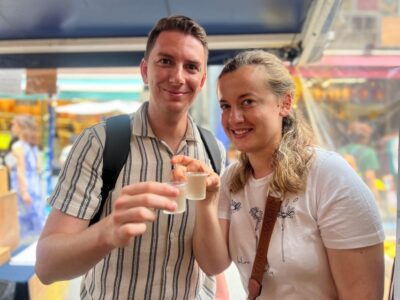
Tokyo Sushi Making Class in Tsukiji with Professional Chef
Read our review →
Tsukiji Fish Market Guided Tour and Sushi Making with Pro Chef
Read our review →Tsukiji Fish Market Food and Culture Walking Tour
Read our review →
Tsukiji Fish Market: Street Food & Culture Walking Tour
Read our review →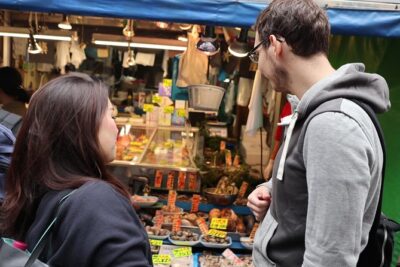
Tsukiji Fish Market Small-Group Food Walking Tour
Read our review →
Tsukiji Fish Market Sushi Making Class with Pro Chef
Read our review →Browse the lists this tour appears in