
Reviewed · TOKYO WALKING TOURS
Tokyo: Asakusa Walking Tour with Sensoji Temple Visit
Asakusa gives you Tokyo’s traditional face in a compact two-hour walk. The route takes you from the huge red Kaminarimon Gate through Nakamise Street and into Sensoji, where a guide explains the incense ritual, temple details, and the stories behind the crowds. I like the mix of Buddhist and Shinto sites, and I like that guides such as Aya, Keiko, Hiroko, and Polina often add practical food and sightseeing tips.
The $22 price is fair for a live English-speaking guide and a focused introduction to one of Tokyo’s best-known districts. The tradeoff is pace: two hours goes quickly, and crowded shopping streets can make it harder to linger or take quiet photographs. Arrive early, since the group will not wait long for latecomers.
Key Points
- Kaminarimon sets the scene: Begin beneath Asakusa’s famous Thunder Gate, beside the giant red lantern.
- Sensoji gets more than a photo stop: Learn how to approach the temple, use incense, and read the site’s religious details.
- Two faith traditions appear in one walk: The route includes both Sensoji Buddhist Temple and nearby Asakusa Shrine.
- Local guides add useful context: Guides including Aya, Keiko, Hiroko, Glenda, Polina, and Loc are noted for clear English, humor, and helpful Tokyo advice.
- Food planning is built in: The walk passes Hoppy Street and shopping arcades, then ends near many places to eat.
- The route is accessible and flexible: The tour is listed as wheelchair accessible, with free cancellation up to 24 hours before departure.
Why Asakusa Makes a Good First Tokyo Walk
Tokyo can feel hard to read at first. The city is enormous, modern, and quick-moving. Asakusa offers a gentler entry point, with a clear walking route and visible connections between religion, shopping, food, and local tradition.
I like this area because the main sights sit close together. You do not spend the tour riding trains between scattered attractions. Instead, you move from the entrance gate to a temple, a shrine, old-style shopping streets, and casual food areas on foot.
That compact route also makes a guided visit useful. You can walk through Asakusa independently, but the meaning of the gate, incense, temple buildings, and shrine customs is easy to miss. A good guide turns familiar-looking structures into places with a purpose.
This tour is especially useful early in a Tokyo stay. Guides such as Keiko and Aya have provided suggestions for restaurants, shops, and other places around the city. That can help you plan the rest of your visit after the tour ends.
More Asakusa and Sensoji tours:
- Tokyo: Japanese Dance Cabaret Theater Asakusa-Kaguwa Ticket
★ 4.8 · 2,270 reviews - Tokyo: Meiji Shrine, Asakusa, Skytree Bus Tour and Cruise
★ 4.7 · 1,986 reviews - Tokyo: Roll and Authentic Sushi Making Class in Asakusa
★ 4.9 · 1,957 reviews
Meeting at the Red Thunder Gate
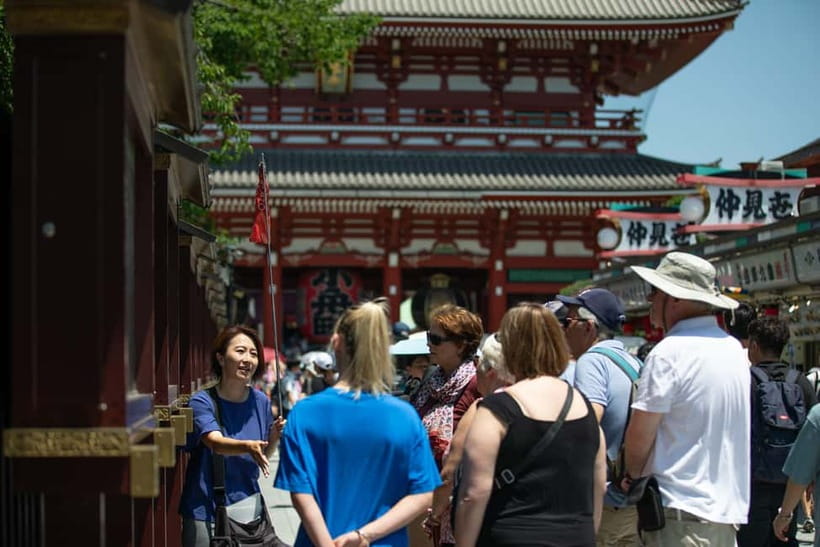
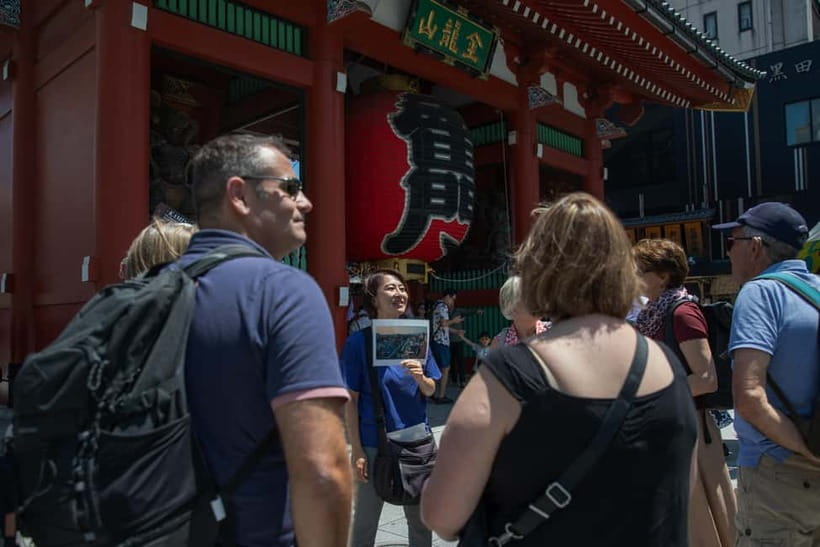
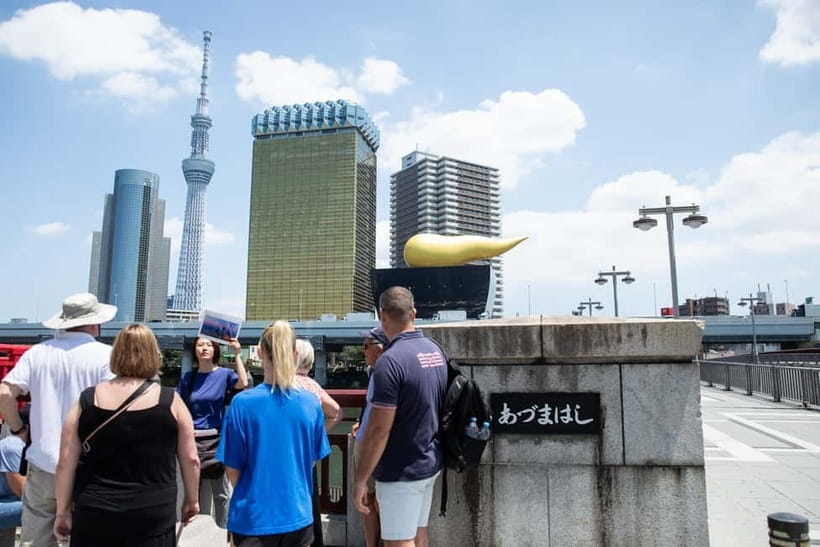
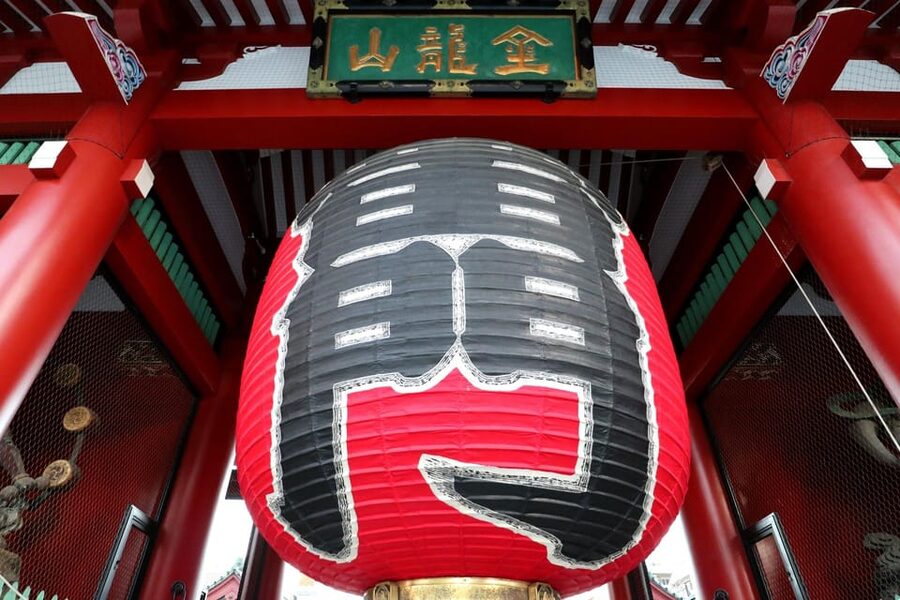
The tour begins at Kaminarimon, the Thunder Gate. Your guide waits on the left side of the gate near Tokiwado Kaminari-okoshi Honpo, holding a sign for the tour.
Give yourself extra time to find the meeting point. Kaminarimon is a busy public landmark, and the surrounding area can be crowded. The instructions are specific, but arriving just before the start is safer than trying to locate the guide at the last second.
The gate itself is a strong opening. Its large red lantern creates one of Asakusa’s most recognizable views, and it frames the approach to Sensoji. The scheduled guided explanation here lasts about 10 minutes, enough to establish the role of the gate before you continue toward the temple.
This is also where the tour begins to feel different from a simple photo stop. The guide can explain what you are looking at and point out details that blend into the busy street scene. Guides have been described as clear, friendly, and attentive to the pace of the group, which matters in a crowded place.
Nakamise Street and the Walk Toward Sensoji
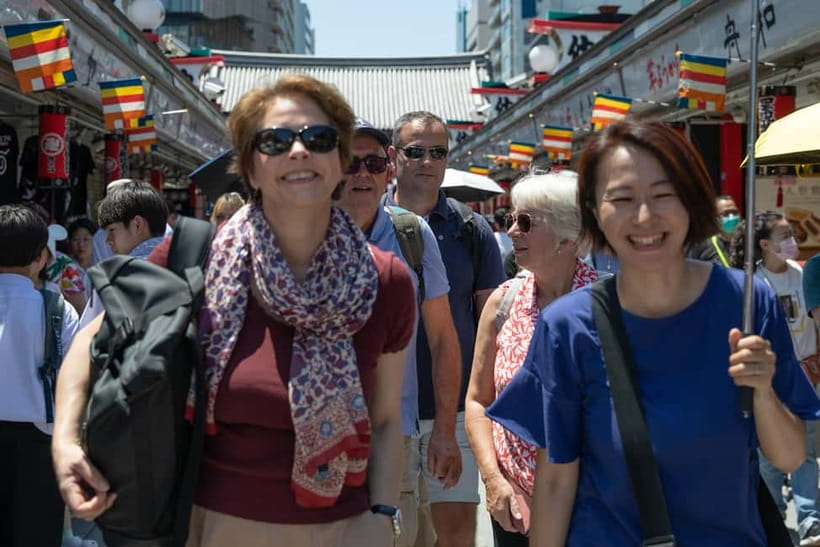
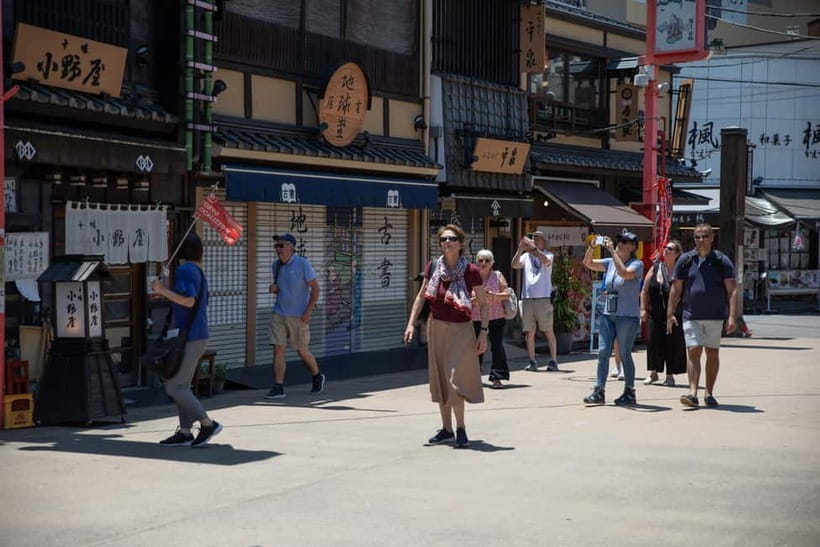
From Kaminarimon, you continue along Nakamise Shopping Street. This is one of Japan’s oldest shopping centers, and the route allows about 15 minutes for a visit and explanation.
Nakamise is lined with traditional crafts, souvenirs, snacks, and small shops. It is a commercial street, so you should not expect a quiet temple approach. Its value is in the connection between everyday shopping and the temple complex. People have been buying goods and food along this approach for generations.
I would treat this part as an orientation walk rather than a serious shopping session. Fifteen minutes is enough to understand the street and notice items you may want to examine later. If you stop at every shop, you will quickly fall behind.
The guide can also help you read the area in a practical way. Several guides, including Polina and Keiko, have given advice about food and local places to visit after the tour. That is useful because Nakamise is easy to pass through quickly without knowing which nearby streets deserve a second look.
Sensoji Temple: Ritual, Details, and Free Time
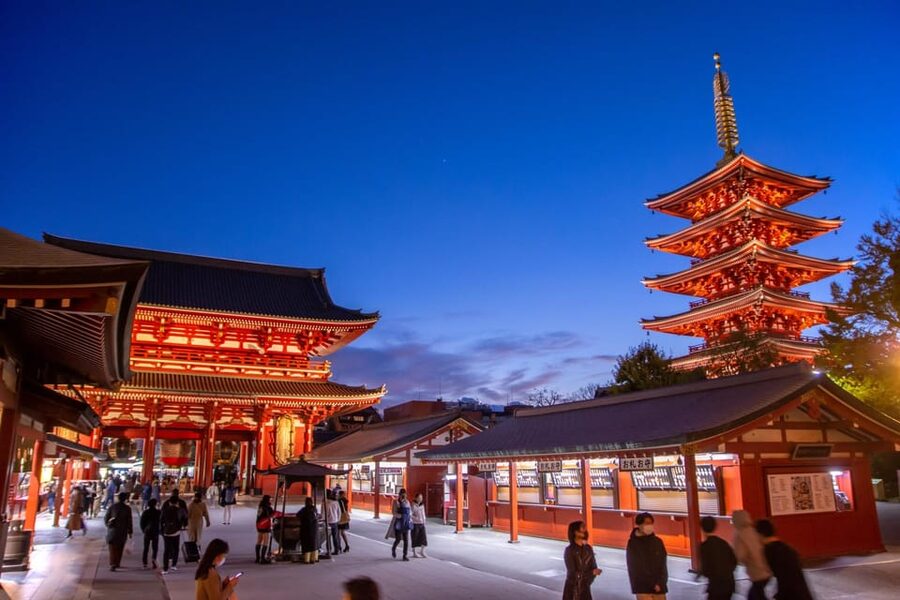
Sensoji is the center of the experience. It is Tokyo’s oldest-established temple and is also described as the city’s oldest Buddhist sanctuary. The planned visit includes a guided explanation, a photo stop, and free time for about 30 minutes.
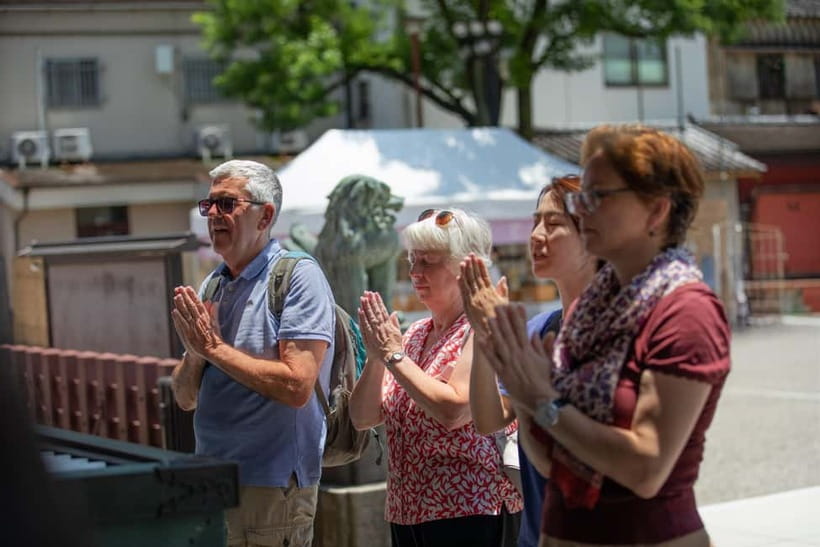
That half hour is not long, but it gives the tour enough room to do more than point at the main hall. Your guide can explain the temple’s religious role, architectural details, and local traditions. You may also learn how the incense ritual works and have time to observe the site for yourself.
Incense is one of the most memorable parts of the visit. Burning incense is not just a visual detail for photographs. The guide explains how to take part, allowing you to approach the ritual with more awareness and respect.
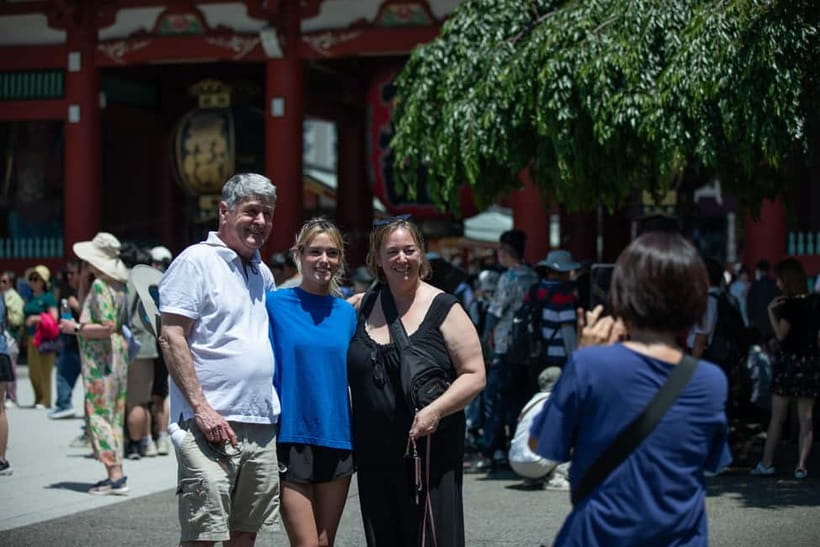
The site can be crowded, especially around the main approach and popular photo points. That is the main limitation here. You are seeing one of Tokyo’s best-known religious sites, not a secluded place. A guide helps you use the time well, but you should not expect long periods of silence or solitude.
Guides named Aya, Hiroko, Keiko, and Glenda have been singled out for explaining the temple’s traditions and answering questions. Their different styles vary, but the common benefit is clear: you receive cultural context while standing in the place itself, rather than trying to reconstruct it later from a guidebook.
Make use of the free time. Take photographs, look closely at the temple details, and ask about anything you do not understand. If children are with you, a guide such as Keiko may make the visit easier by pointing out details that hold their attention and adjusting the pace.
More Tokyo walking tours:
- Tokyo Tsukiji Fish Market Food and Culture Walking Tour
★ 5.0 · 3,184 reviews - Tokyo: Imperial Palace and Shogun Historical Walking Tour
★ 5.0 · 2,251 reviews - Tokyo: Shinjuku Local Bar and Izakaya Guided Walking Tour
★ 4.9 · 1,794 reviews - Tokyo: Tsukiji Fish Market Food and Walking tour
★ 5.0 · 1,724 reviews
Asakusa Shrine and Two Religious Traditions
The next major stop is Asakusa Shrine, with about 20 minutes for a visit, photographs, and explanation. This is one of the most useful parts of the route because it places Buddhist and Shinto traditions side by side.
Sensoji and Asakusa Shrine are close, but they are not the same kind of religious site. A guide can explain the difference without turning the walk into a lecture. This comparison gives you a better sense of how several traditions appear together in Japanese daily life.
I like this stop because it adds balance to the temple visit. Sensoji is the headline attraction, while the shrine broadens the picture. You are not simply collecting famous buildings. You are learning how to notice the distinction between them.
The planned 20 minutes is enough for a clear introduction and photographs. As with Sensoji, crowd levels can affect how long you want to stand in one place. Keep your camera ready, but listen closely to the explanation before rushing on.
Hoppy Street and Shin-Nakamise
After the religious sites, the route shifts toward food and local street life. Hoppy Street receives about 10 minutes, followed by another 10 minutes at Shin-Nakamise Shopping Street.
Hoppy Street is associated with casual eateries and the local drinking culture. The tour does not include a meal, so think of this stop as a useful introduction to the area rather than a food tasting. It is a good place to note down restaurants or return later if you want a longer meal.
The walk then continues to Shin-Nakamise, a covered shopping street with more stores and places to eat. This section helps you see another side of Asakusa beyond the temple entrance. It is less about major monuments and more about how the district works as a neighborhood for shopping and dining.
Several guides have ended the walk with restaurant suggestions, especially because the tour often finishes around lunchtime. That timing is convenient. You can ask about places you noticed during the walk and then choose where to eat while the information is fresh.
The final stop is Azuma Bridge. This gives the route a clear endpoint rather than leaving you beside the temple with no idea where to go next. The bridge area also makes a practical handoff point for continuing your Tokyo day.
What the Guides Add to the Experience
The guide is the main reason to book this rather than simply following a map. The sights themselves are free to visit, but the explanations add structure and meaning.
English is the only listed tour language. The guide names associated with the experience include Aya, Keiko, Hiroko, Glenda, Polina, Loc, Miyu, Rio, Mei, Paulina, and Hikoro. Individual assignments can vary, so you should not book expecting one particular person unless the reservation specifically confirms it.
The strongest guide qualities are repeated across the experience: clear English, patience, humor, careful pacing, and useful recommendations. Guides have also been praised for including children, making sure everyone could hear, answering many questions, and bringing extra charts or information.
That human attention matters in Asakusa. The district can be noisy and packed, and the group needs to keep moving. A guide who watches the pace and checks that everyone is included can make the difference between a pleasant walk and a tiring scramble.
You should also use the guide as a local sounding board. Ask about food, shopping, other Tokyo neighborhoods, or customs you expect to encounter later. The tour is short, but a good question can turn a standard sightseeing route into a more personal introduction to Japan.
Is $22 Good Value for Two Hours?
At $22 per person, this is a reasonably priced introduction to Asakusa. You are paying for two hours of guided walking, an English-speaking guide, and a planned route covering the area’s key sights. Entry fees are not listed as part of the package, but the main temple and shrine visit is incorporated into the walk.
You could see these places on your own for less. That option makes sense if you enjoy researching temples, understand local customs, and prefer setting your own pace. The tour earns its price through explanation, navigation, and the chance to ask questions in real time.
I see the best value for first-time visitors, families, and anyone arriving in Tokyo without much background on Japanese religious sites. It is also useful if your schedule is tight and you want a reliable two-hour introduction rather than a long self-guided day.
The value drops if you want extended shopping time or a slow photography walk. Nakamise, Sensoji, Hoppy Street, and Shin-Nakamise could each occupy much more than the allotted time. This tour gives you a guided overview, not a full day in Asakusa.
Free cancellation up to 24 hours before departure and the option to reserve now and pay later make the booking less rigid. The tour is also listed as wheelchair accessible. Since the route passes through busy public streets, it is still sensible to confirm any specific mobility needs before booking.
Who Should Book This Asakusa Walk?
I would recommend it to first-time visitors who want cultural context without committing to a half-day museum tour. The walk is short, central, and varied. You see a famous gate, a major Buddhist temple, a Shinto shrine, old shopping streets, and food areas in one outing.
Families can also benefit. The route changes scenery often, and guides have made an effort to engage younger people. The two-hour length is manageable, though crowded streets and limited time at each stop may not suit children who need frequent breaks.
It also fits well on an arrival day or a morning when you want to stay close to central Tokyo. The end near Azuma Bridge leaves you free to eat lunch in Asakusa or continue elsewhere.
I would choose a self-guided visit instead if you already know the area, want to browse every shop, or prefer a very slow pace. The fixed route and group timing are helpful for some people and restrictive for others.
Practical Tips for a Better Visit
Arrive early at Kaminarimon and look for the guide on the left side near the Tokiwado shop. The guide carries a tour sign, but late arrivals may miss the group because it cannot wait long.
Wear comfortable shoes. The experience lasts two hours and includes several shopping streets, temple grounds, and public walkways. Bring a small bag for anything you buy, but remember that the main purpose is walking and listening.
Keep some free time after the tour. The itinerary moves quickly, and you may want to return to Nakamise, spend longer at Sensoji, or eat near Hoppy Street. The route is a strong introduction, but it cannot replace a relaxed afternoon.
Finally, ask questions. The most useful part of this tour may not be the facts delivered at the main gate. It may be the small explanation that helps you understand a ritual, choose a restaurant, or feel more comfortable at the next temple on your Japan trip.
Should You Book It?
Book this tour if you want a clear, friendly introduction to Asakusa for $22. The route covers the essential sights, the English-speaking guides add cultural meaning, and the food advice at the end can help shape the rest of your day.
Skip it if you prefer complete independence or want to spend most of your time shopping and taking photographs. For everyone else, especially first-time visitors, families, and short-stay tourists, two guided hours is a practical way to understand why Asakusa remains one of Tokyo’s most rewarding traditional districts.
FAQ
Where does the Asakusa walking tour begin?
The tour begins in front of Kaminarimon Gate. The guide waits on the left side near Tokiwado Kaminari-okoshi Honpo and holds a sign for the tour.
Where does the tour finish?
The tour finishes at Azuma Bridge after visiting Kaminarimon, Nakamise Shopping Street, Sensoji Temple, Asakusa Shrine, Hoppy Street, and Shin-Nakamise Shopping Street.
How long does the tour last?
The walking tour lasts two hours. Starting times vary, so you need to check availability when booking.
What language is the tour offered in?
The tour is offered in English with a live English-speaking guide.
Is the tour wheelchair accessible?
Yes. The activity is listed as wheelchair accessible.
Can I cancel the tour for a full refund?
Yes. You can cancel up to 24 hours in advance for a full refund. You can also reserve now and pay later.
Newly reviewed around Tokyo
- Tokyo Asakusa:Calligraphy & Make T-shirt Activity★ 5.0 · 62 reviews
- Intercity Shuttle, Tokyo to Haneda /Narita /Yokohama /Makuhari★ 5.0 · 5 reviews
- 1 Hour Travel around Tokyo with a Professional Photographer★ 5.0 · 3 reviews
- Travel Tokyo with Your Own Personal Photographer★ 5.0 · 43 reviews
- Train in Samurai Swordsmanship and Defeat the Demon in Tokyo★ 5.0 · 5 reviews
- Shuttle Van 6hr Tokyo Tour to-and-from Tokyo, Yokohama and Narita★ 5.0 · 9 reviews
- Kickboxing & Body Training with EX-Pro Fighter★ 5.0 · 4 reviews
- Traditional Japanese Knife Sharpening Class★ 5.0 · 18 reviews
Tokyo Walking Tours, compared.
Tokyo Tsukiji Fish Market Food and Culture Walking Tour
Read our review →
Imperial Palace and Shogun Historical Walking Tour
Read our review →
Shinjuku Local Bar and Izakaya Guided Walking Tour
Read our review →
Tokyo Castle & Imperial PalaceーShogun Walking Tour
Read our review →
Browse the lists this tour appears in