
Reviewed · TSUKIJI AND TOYOSU FISH MARKET TOURS
Tokyo: Tsukiji Fish Market Guided Walking Tour
Tsukiji is easiest to enjoy when someone helps you make sense of it. This two-hour walk pairs Tsukiji Hongwanji Temple with the outer market, where you can sample seafood, tamago, wagyu beef, eel, sweets, and more without having to guess which stalls deserve your time.
I like the small groups, limited to 10 people, and the freedom to buy only what appeals to you. I also like the practical help from guides such as Jim, Rie, Yayoi, Haydn, and Sayaka, who explain the food and help you order. The catch is simple: food is not included, and some market specialties can cost more than expected, so bring cash and choose carefully.
Key points at a glance
- Temple first: Start with about 15 minutes at Tsukiji Hongwanji, a striking place to learn about local beliefs and architecture.
- A guided route through the stalls: Your guide helps you handle the market’s maze of seafood, produce, dried goods, sweets, and cooked food.
- Choose your own bites: Food is optional at every stop, so you can spend little, try widely, or avoid ingredients you do not want.
- Small-group format: With no more than 10 people, it is easier to ask questions and stay together in crowded lanes.
- Useful cultural context: The walk covers market history, Japanese cooking, seafood traditions, ingredients, and eating customs.
- Good value at $22: The tour fee covers the guide, photos, and free-entry sights, while you pay only for the food you select.
Why Tsukiji works better with a guide
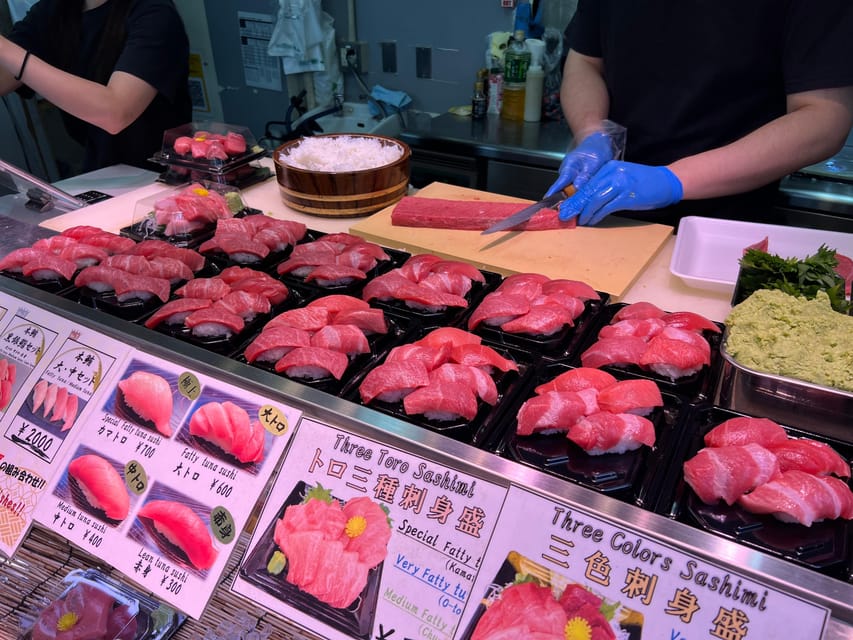
Tsukiji Outer Market is not a single hall with a neat row of numbered counters. It is a dense collection of food shops and stalls selling fresh seafood, vegetables, dried goods, snacks, sweets, seasonings, and prepared food. For a first visit, that variety can be exciting and confusing at the same time.
A guide gives the market some shape. Instead of wandering past unfamiliar ingredients, you can ask what something is, how it is used, and whether it is worth trying. The guides also help with ordering and payments, which matters when menus are brief, prices are unclear, or you are not sure how a stall works.
The strongest part of this experience is the mix of explanation and tasting. You are not simply shown a market and left to take pictures. You learn why certain ingredients matter in Japanese cooking, then see them in front of you and decide what to eat.
The English-speaking guides vary by date. Names that appear in the tour operation include Jim, Rie, Yayoi, Haydn, Nicolas, Minori, Sayaka, Joe, Shino, Miko, and Kiwa. Their styles differ, but the useful pattern is consistent: they point out worthwhile stalls, explain local food, and keep the group moving through a busy area.
More Tsukiji and Toyosu fish market tours:
- Tokyo Tsukiji Fish Market Food and Culture Walking Tour
★ 5.0 · 3,184 reviews - Tokyo: Tsukiji Fish Market Food and Walking tour
★ 5.0 · 1,724 reviews - Tokyo Sushi Making Class in Tsukiji with Professional Chef
★ 5.0 · 1,177 reviews
Meeting at Tsukiji Station
The walk begins at the Starbucks in front of Tsukiji Station. Your guide waits near the bench outside, which gives you a clear landmark in an area that can otherwise feel crowded and confusing.
The starting point is practical. You can arrive by subway, meet the guide, and begin on foot. The first walk takes about five minutes, so there is no long transfer or coach ride to deal with.
This is a morning-friendly activity if you want to see Tsukiji before spending the rest of your day elsewhere in Tokyo. The exact start time varies, so you need to check availability when booking. Wear shoes that are comfortable for walking and keep your belongings close in crowded lanes.
Tsukiji Hongwanji in 15 minutes
The first formal stop is Tsukiji Hongwanji, a temple with detailed carvings and a calm interior. You spend about 15 minutes here with the guide before heading toward the market.
That short visit gives the food walk a useful cultural frame. Japanese food is not separate from custom, religion, presentation, and seasonal habits. At the temple, your guide can explain local traditions and the area’s background before you move on to ingredients and stalls.
Do not expect a long temple tour. Fifteen minutes is enough for an introduction, a look at the architecture, and a few questions, but not an in-depth study of the site. That is fine for most people. The point is to add context without taking too much time from the market.
Some guides also include nearby shrines or temples as they lead you around the area, though the clearly listed temple visit is Tsukiji Hongwanji. The exact commentary and route can depend on your guide.
The first market walk: getting your bearings
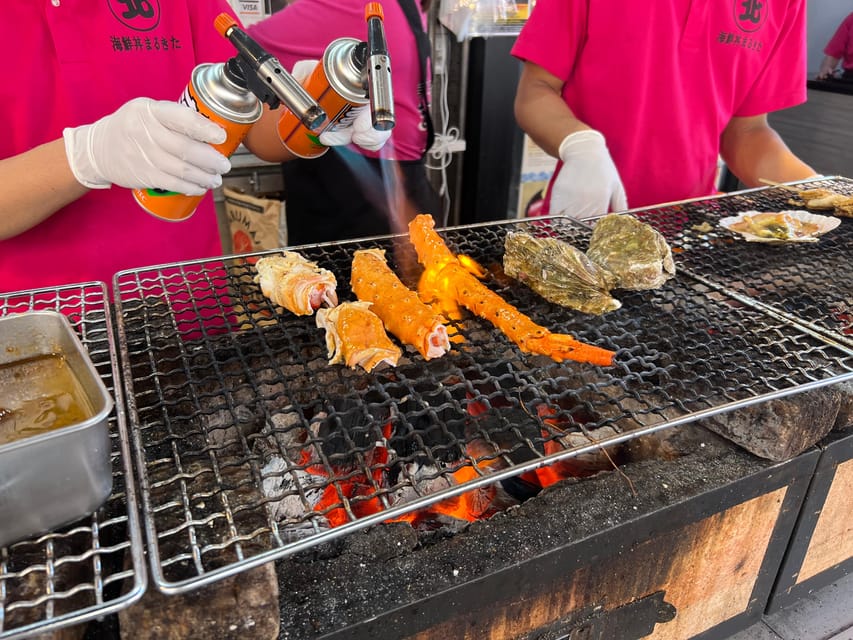
After another five-minute walk, you reach Tsukiji Outer Market. The main market portion lasts about 100 minutes in total, shown as two 50-minute guided market segments.
This is when a guide earns the $22 fee. The lanes can be hard to read at first, especially when several stalls sell similar foods. Your guide can point out different types of fish, dried seafood, vegetables, spices, sweets, and other ingredients that may mean little to you at a glance.
The food focus is broad. You might be shown specialty seafood, fatty tuna, oysters, sea urchin, eel, wagyu beef, tamago, sushi, nuts, dried fish, shrimp, scallops, matcha items, and traditional sweets. The exact selection is not a fixed menu, which is one of the tour’s better features.
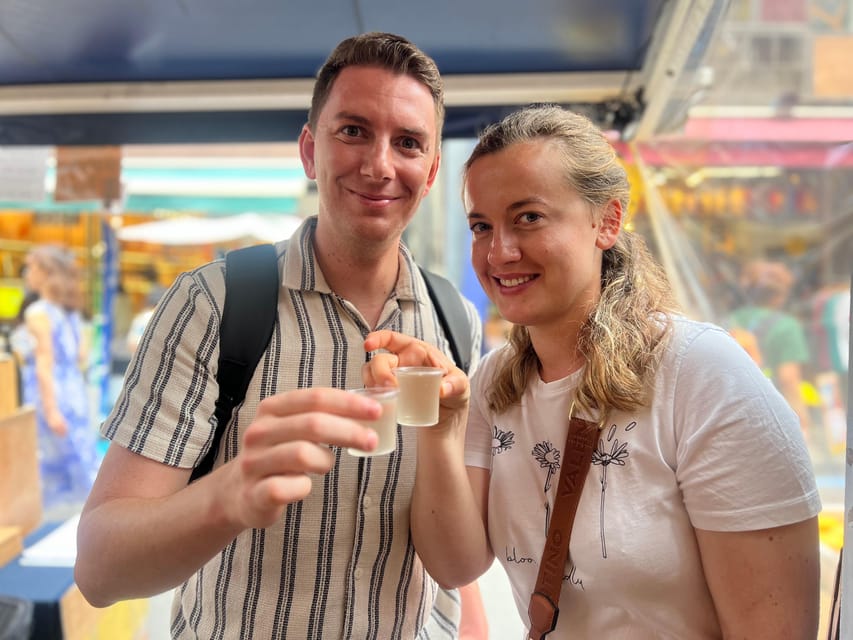
You can decide what suits you. If seafood is not your thing, you might choose beef, eggs, sweets, or other non-seafood items. One person can try sea urchin while another sticks to tamago. That flexibility also helps if you have strong food preferences or want to control your spending.
More Tokyo walking tours:
- Tokyo: Imperial Palace and Shogun Historical Walking Tour
★ 5.0 · 2,251 reviews - Tokyo: Shinjuku Local Bar and Izakaya Guided Walking Tour
★ 4.9 · 1,794 reviews - Tokyo: Asakusa Walking Tour with Sensoji Temple Visit
★ 4.8 · 1,583 reviews - Tokyo Castle & Imperial PalaceーShogun Walking Tour
★ 4.7 · 1,068 reviews
Tasting without a fixed menu
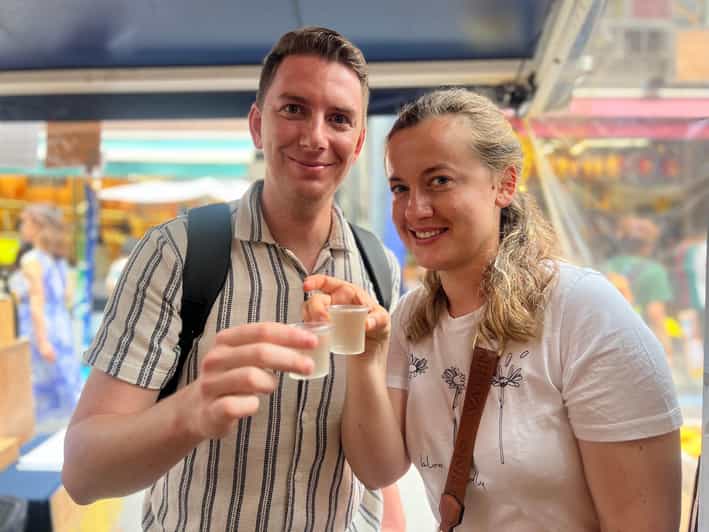
Food and drinks are not included in the tour fee. You buy what you want directly at the stalls, so bring cash.
This arrangement has two sides. It keeps the basic price low and means you do not pay for food you do not want. It also means the final cost depends on your appetite. A few modest tastings may keep the outing affordable, while premium seafood, wagyu, or larger portions can raise the bill quickly.
Some stalls offer free samples, and guides may take you to places where you can taste small bites before deciding what to purchase. Free samples are a pleasant bonus, but you should not count on them as a full meal.
Sharing small plates with the group can make the tasting more varied and less expensive per person. Still, you should ask about the price before ordering if a product looks especially luxurious. Market food is not always cheap simply because it is served from a small stall.
The strongest food advantage is choice. You can try a little of several things instead of committing to one set course. That is particularly helpful if you are curious about Japanese food but unsure how adventurous you want to be.
What you learn about Japanese ingredients
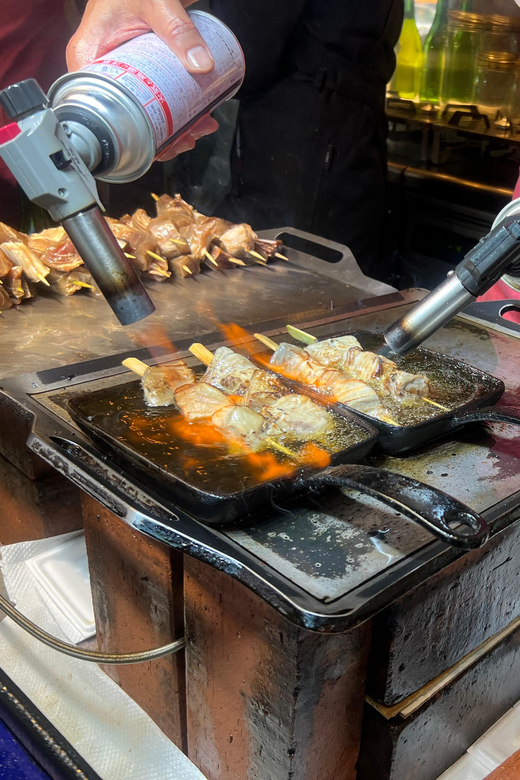
The guide does more than identify fish. You get an introduction to ingredients used in Japanese cooking and an explanation of how food traditions connect with daily life.
You might learn about the difference between fresh and dried seafood, the role of seasonal products, the way fish is prepared, or how an ingredient is commonly served. The supplied tour details emphasize rare seafood, specialty spices, and other products that are essential to Japanese cuisine.
This is where the walk becomes more than a snack crawl. You begin to understand why the market matters to Tokyo’s food culture. A stall selling dried fish or unusual produce is not just selling something odd for tourists to photograph. It may represent an ingredient that belongs in a soup, rice dish, seasoning blend, or household pantry.
Guides such as Haydn, Jim, Minori, and Rie have been praised for explaining history and traditions in clear English. Names and personalities vary, but the tour is designed around conversation, so ask questions. If you want to know how to use an ingredient at home, what to bring back, or how to spot a food you have already tried, this is the time to ask.
The market’s best practical advantage
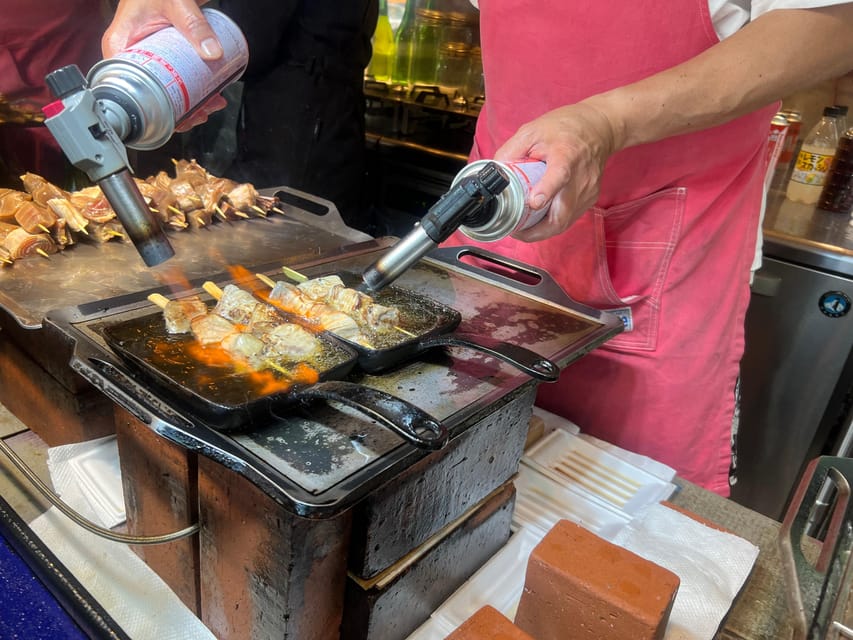
The market can be overwhelming if you do not know where to stop. A guide reduces that pressure by choosing a route and recommending particular stalls.
That does not mean every stop will suit everyone. You may prefer different foods from your guide, or you may want more time to browse on your own. The benefit is that you can see good options first, then return later if you have extra time.
Guides also help with ordering. This is useful when you want to try a food but cannot easily explain your preference, or when you need help selecting an amount. Sayaka, in particular, has been praised for helping guests order while still allowing them to choose what they wanted.
The small group matters here. A maximum of 10 people is not private touring, but it is manageable. You can hear explanations more easily than in a large group, and the guide has a better chance of noticing when you have fallen behind or need help.
How the two-hour schedule feels

The timing is brisk but sensible. About 15 minutes goes to the temple, roughly 10 minutes to walking between the meeting point, temple, and market, and about 100 minutes to the outer market.
That leaves enough time for several food stops without turning the tour into a long, slow meal. You should not expect to inspect every lane or shop. Tsukiji is too broad for that in two hours.
The pace may feel quick if you want to stop at every stall. On the other hand, a guide-led route prevents you from losing an hour simply trying to decide where to begin. You finish near the Starbucks at Tsukiji Station, making it easy to continue sightseeing or return to your hotel.
The tour includes photos taken during the walk. Treat that as a pleasant extra rather than the main reason to book. The real value is the route, explanations, and help choosing food.
Is $22 good value?
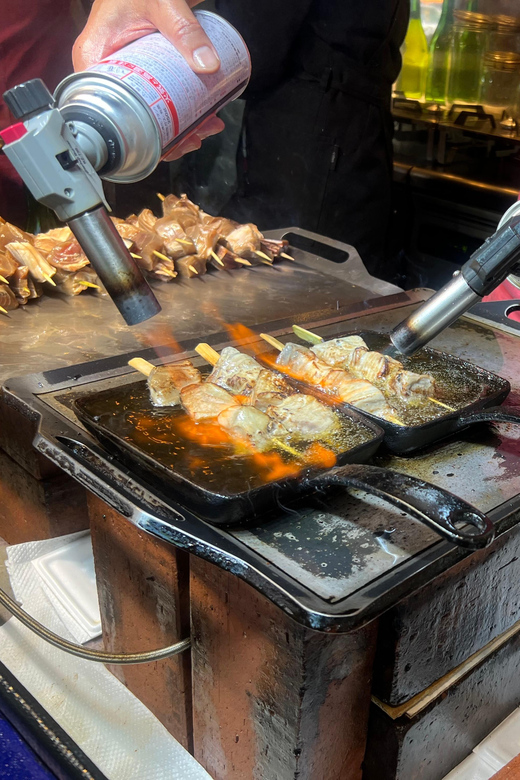
At $22 per person, this is a reasonable price for a two-hour English-language walking tour with a small group. Entry to Tsukiji Fish Market and Tsukiji Hongwanji is free, so you are mainly paying for the guide’s time, route planning, explanations, and assistance at the stalls.
I think the value is strongest for a first visit. If you already know Tsukiji well, speak Japanese, and enjoy making your own food discoveries, you may prefer to wander independently. You can enter the market without paying a tour fee.
For most first-time visitors, the guide can save time and reduce the risk of buying something unsuitable or missing the foods you came to try. You also avoid the common problem of seeing many choices but not knowing which ones fit your budget or interests.
Remember to add a food budget. The tour price does not cover tastings, drinks, or purchases. Some guests enjoy premium tuna, wagyu, oysters, or sea urchin, while others keep costs down with smaller snacks and free samples. Bring enough cash to give yourself a choice, but do not feel obliged to buy at every stop.
Who should book this Tsukiji walk?
I would recommend this tour to a first-time Tokyo visitor who wants food, local context, and a clear introduction to Tsukiji in one morning. It also suits people who are curious about Japanese ingredients but feel unsure about ordering at unfamiliar stalls.
Families and mixed groups may appreciate the flexible food system. One person can choose sweets, another can try seafood, and nobody has to accept a fixed menu. Food-sensitive guests should still explain their needs clearly to the guide and vendor before ordering.
It is also a good match for people who enjoy conversation. The experience depends on the guide’s explanations, recommendations, and help navigating the market. If you want a silent photography walk or a formal cooking class, this is not that.
The main drawback is the extra cost of food and the possibility of crowded conditions. The market can be busy even on a weekday morning, and two hours is not long enough for a leisurely stop at every stall. You should arrive ready to walk, share space, and make quick choices.
Final call: book it or go alone?
Book this tour if Tsukiji feels like a place you might enjoy but do not quite know how to approach. For $22, you get a small group, an English-speaking guide, a temple visit, market history, ingredient advice, photos, and practical help with food choices.
Go alone if you already have a detailed food plan, want to browse at your own pace, or prefer not to pay for guidance at a market with free entry. If you do book, bring cash, keep your food choices flexible, and consider taking the tour early in your Tokyo stay. The guide’s recommendations can help shape the rest of your eating plans.
FAQ
Where does the Tsukiji Fish Market tour meet?
You meet your guide at the Starbucks located in front of Tsukiji Station. The guide waits in front of the bench at Starbucks.
How long does the tour last?
The walking tour lasts two hours. The schedule includes about 15 minutes at Tsukiji Hongwanji and roughly 100 minutes in Tsukiji Outer Market, plus short walks between stops.
Is food included in the $22 price?
No. Food and drinks are not included. You choose and pay for any tastings or purchases at the market stalls.
How much cash should I bring?
The activity information specifically advises bringing cash. The amount you need depends on how much you choose to eat, since premium items such as seafood and wagyu can cost more than smaller snacks.
Is the tour conducted in English?
Yes. The tour has a live English-speaking guide.
How large is the group?
The activity is limited to 10 participants, making it a small-group walking tour.
Are entry fees included?
Yes. Entry to Tsukiji Fish Market and Tsukiji Hongwanji Temple is free, and the guided tour includes access to both locations.
More Tokyo markets and shopping streets
- Tsukiji Fish Market Guided Tour and Sushi Making with Pro Chef
★ 5.0 · 775 reviews - Tokyo: Tsukiji Fish Market Food and Culture Walking Tour
★ 4.7 · 757 reviews - Tsukiji Fish Market: Street Food & Culture Walking Tour
★ 5.0 · 669 reviews - Tsukiji Fish Market Small-Group Food Walking Tour
★ 5.0 · 621 reviews
Newly reviewed around Tokyo
- Tokyo Asakusa:Calligraphy & Make T-shirt Activity★ 5.0 · 62 reviews
- Intercity Shuttle, Tokyo to Haneda /Narita /Yokohama /Makuhari★ 5.0 · 5 reviews
- 1 Hour Travel around Tokyo with a Professional Photographer★ 5.0 · 3 reviews
- Travel Tokyo with Your Own Personal Photographer★ 5.0 · 43 reviews
- Train in Samurai Swordsmanship and Defeat the Demon in Tokyo★ 5.0 · 5 reviews
- Shuttle Van 6hr Tokyo Tour to-and-from Tokyo, Yokohama and Narita★ 5.0 · 9 reviews
- Kickboxing & Body Training with EX-Pro Fighter★ 5.0 · 4 reviews
- Traditional Japanese Knife Sharpening Class★ 5.0 · 18 reviews
Tsukiji and Toyosu Fish Market Tours, compared.
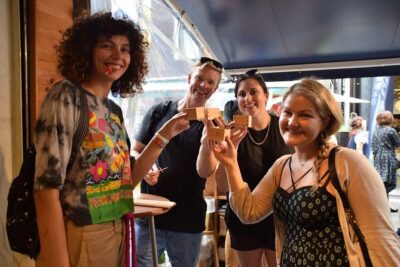
Tokyo Tsukiji Fish Market Food and Culture Walking Tour
Read our review →
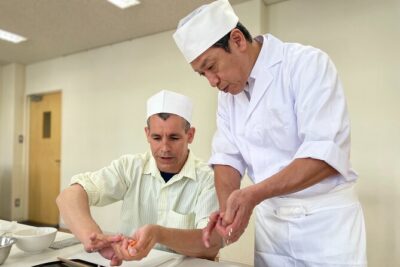
Tokyo Sushi Making Class in Tsukiji with Professional Chef
Read our review →
Tsukiji Fish Market Guided Tour and Sushi Making with Pro Chef
Read our review →Tsukiji Fish Market Food and Culture Walking Tour
Read our review →
Tsukiji Fish Market: Street Food & Culture Walking Tour
Read our review →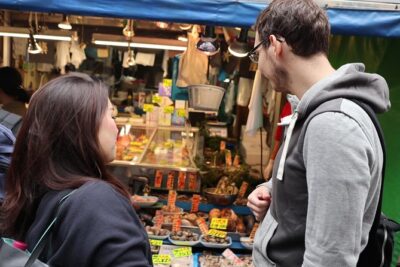
Tsukiji Fish Market Small-Group Food Walking Tour
Read our review →
Tsukiji Fish Market Sushi Making Class with Pro Chef
Read our review →Browse the lists this tour appears in