
Reviewed · TSUKIJI AND TOYOSU FISH MARKET TOURS
Tokyo: Tsukiji Fish Market Food and Culture Walking Tour
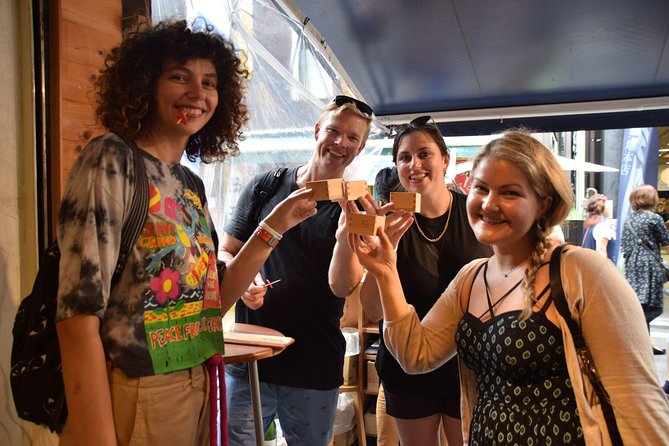
Tsukiji is best understood with something in your hand and a guide at your side. This three-hour walk takes you through the outer market, where stalls sell fish, shellfish, omelets, fruit, tea, and hot snacks. The final seafood bowl or sushi meal gives the morning a proper finish.
I like the small groups, capped at eight, and the mix of street bites with useful food advice. Guides such as Shun, Nazu, Miki, and Kenji have been praised for making the crowded lanes easier to handle and explaining shrine manners, vendor customs, and what to buy.
The main catch is the market calendar. Some shops are closed on Wednesdays, Sundays, public holidays, and other market-closure days, so the food selection can change. You also need comfortable walking shoes, and this is not a good fit for wheelchair users, vegans, vegetarians, or anyone needing halal or gluten-free food.
Key points at a glance
- Wagyu is the headline bite: The high-grade beef skewer is one of the most praised tastings and may be the tour’s best-value food moment.
- The final meal changes by day: You receive either sushi or a fresh seafood bowl, with a fish-cutting demonstration sometimes included.
- The group stays small: Tours run for 2 to 8 people, which helps your guide manage the market crowds and answer questions.
- You begin at Tsukiji Honganji Temple: The meeting point adds a useful cultural introduction before the food stalls.
- Market days matter: Omelet, fish cake, and fruit tastings may not be available when the relevant shops are closed.
- Plan for a full morning of walking and eating: This is a guided food crawl, not a quick tasting stop.
Starting at Tsukiji Honganji Temple
Your meeting point is the main gate of Tsukiji Honganji Temple, formally listed as 浄土真宗本願寺派 築地本願寺. This is a practical place to begin because it gives you a clear landmark beside the market rather than asking you to search for a particular stall.
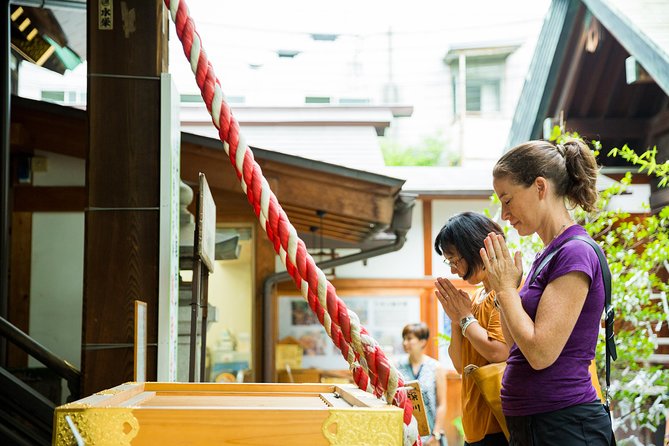
Some guides include a short look at the temple and explain local customs, including the cleansing ritual before entering a shrine or temple area. That small introduction helps you read the neighborhood better. Tsukiji is not only a place to eat. It is also a working food district shaped by religious sites, wholesale trade, restaurant buying, and generations of small vendors.
Arrive ready to walk. The tour covers a moderate amount of ground, and the market lanes can be crowded. Comfortable shoes matter more than stylish ones here. A camera is useful, but keep it out of the way when you are near vendors and other shoppers.
More Tsukiji and Toyosu fish market tours:
- Tokyo Tsukiji Fish Market Food and Culture Walking Tour
★ 5.0 · 3,184 reviews - Tokyo: Tsukiji Fish Market Food and Walking tour
★ 5.0 · 1,724 reviews - Tokyo: Tsukiji Fish Market Guided Walking Tour
★ 4.9 · 1,397 reviews
The first 30 minutes in the Tsukiji Outer Market
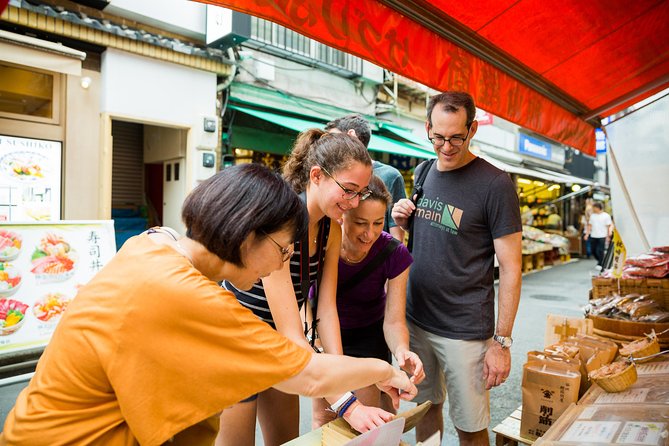
The tour begins with an introduction to the outer market, then moves into a longer food-focused walk. The outer market is the public-facing part of Tsukiji, made up of narrow lanes and small shops selling ingredients, cooked food, kitchen goods, and snacks.
Your guide helps you make sense of the maze. That has real value, especially if this is your first visit to Tokyo. It can be hard to tell which stall is selling something intended for a quick bite, which one supplies restaurants, and which one is mainly a retail shop.
The market is also a place where the working rhythm matters. Top chefs come here to select fresh ingredients, and the guide explains why certain products attract professional buyers. You will hear about fish, shellfish, preparation methods, seasonal produce, and the way Japanese food culture places importance on freshness and presentation.
This first section lasts about 30 minutes, but the tour then returns to the market for roughly two and a half hours of walking and tastings. In practice, the market visit feels like one extended experience rather than two separate stops.
Wagyu, tamagoyaki, fish cakes, and fruit
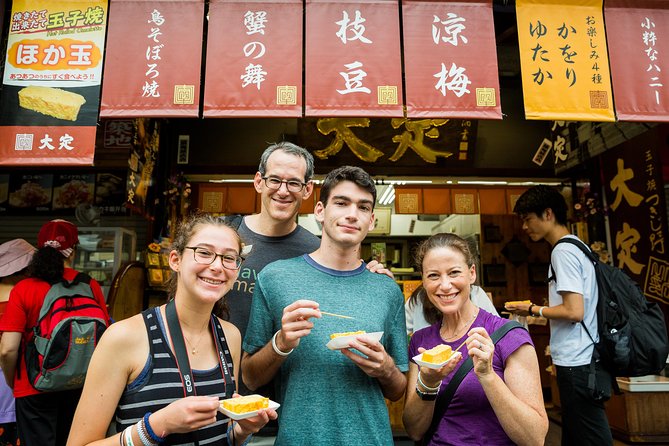
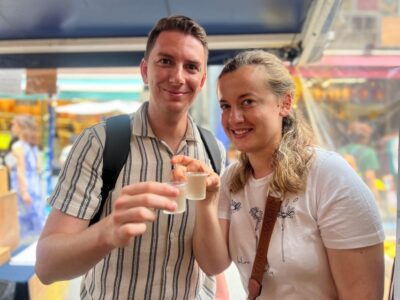
The included tastings are varied enough to show several sides of Japanese food. You can expect a high-grade Wagyu beef skewer, a Japanese omelet, fresh fish cakes, seasonal fruit, and either sushi or a seafood bowl depending on the day.
The Wagyu skewer is often the star. It is a useful taste of why quality beef costs more in Japan, and it gives you something hot and savory early in the walk. Several people have singled it out as the best bite of the morning, with one person returning after the tour to buy another.
The Japanese omelet, or tamagoyaki, offers a different lesson. It is soft, lightly sweet, and made in a style quite different from a Western breakfast omelet. Fish cakes add another texture and show how seafood is used beyond raw slices and grilled fillets.
Seasonal fruit may sound simple beside Wagyu and sushi, but it is part of the point. Fruit in Japan is often treated as a carefully selected food rather than an afterthought. Availability depends on the season and the open shops, so do not expect the exact same fruit on every departure.
Your guide may also point out other foods to buy along the way. The set menu is included, but you can usually purchase extra items if something catches your eye. Previous stops have included oysters, sea urchin, squid, matcha ice cream, strawberries, tea, and other market snacks. These additional purchases are your responsibility, so carry a little extra money if you want to follow your appetite.
One practical note matters here: on Wednesdays, Sundays, public holidays, and other market-closure days, the shops providing the omelet, fish cake, and fruit may be closed. That means the included selection can be reduced or adjusted. The tour still operates on those days, but the market will not have its full range.
The seafood bowl or sushi finish
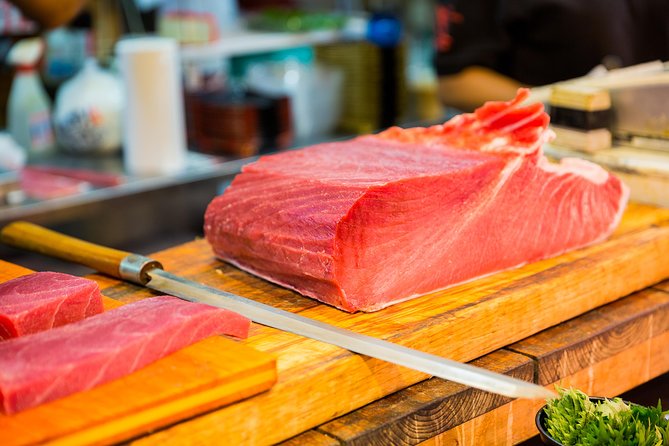
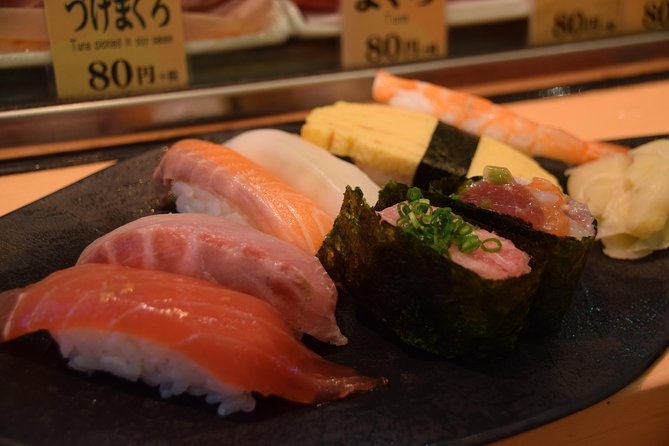
The final stop is a restaurant meal rather than another quick stall sample. Depending on the day and the available arrangement, you receive either sushi or a seafood bowl.
The seafood bowl is more than a final snack. It gives you a chance to sit down, slow the pace, and eat fresh fish as a proper meal. Some guides arrange a demonstration in which a sushi chef cuts and prepares the fish before serving it. That adds a useful visual lesson to the meal, especially if you have never watched a professional handle a whole fish.
The serving choice is not fixed. You cannot book the tour expecting one exact dish every time. On some departures, sushi is served; on others, the seafood bowl is the finish. If a restaurant closes unexpectedly and cannot provide the planned meal, an alternative is offered.
By this point, you are unlikely to be hungry. The tour includes enough small bites that the final meal works best as a conclusion rather than a surprise lunch. If you want to eat a large breakfast beforehand, I would keep it light.
More Tokyo walking tours:
- Tokyo: Imperial Palace and Shogun Historical Walking Tour
★ 5.0 · 2,251 reviews - Tokyo: Shinjuku Local Bar and Izakaya Guided Walking Tour
★ 4.9 · 1,794 reviews - Tokyo: Asakusa Walking Tour with Sensoji Temple Visit
★ 4.8 · 1,583 reviews - Tokyo Castle & Imperial PalaceーShogun Walking Tour
★ 4.7 · 1,068 reviews
What the guides add to the experience
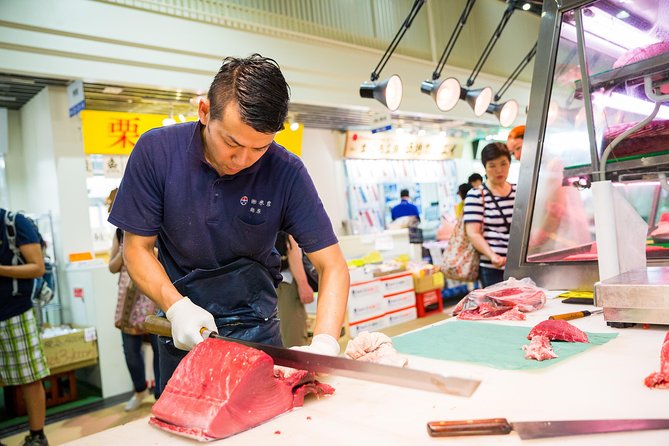
The food is the draw, but the guide makes the tour practical. The market can be crowded, and Japanese food stalls do not always explain themselves in English. A good guide turns unfamiliar items into something you can understand and choose with confidence.
The English-speaking guides have different personalities, but several names have received especially warm praise. Shun has been described as friendly, entertaining, and strong on food and cultural explanations. Nazu has helped people understand the market’s past while making vendor interactions easier. Miki, Kenji, Nori, Yuki, Luna, and Yoshiko have also led well-received departures.
You should not assume that you can request a particular guide, but the names give you an idea of the style available. The best guides do more than point at food. They explain shrine etiquette, show you how to select tea, answer questions about ingredients, and suggest other places to visit in Tokyo.
I also like that the small group makes conversation possible. With only 2 to 8 people, the guide can slow down for a question or help someone who is unsure about trying an unfamiliar item. One guide even adjusted the pace for a person who walked slowly, though you should still be comfortable with a moderate amount of walking.
Crowds, rain, and the best time to go
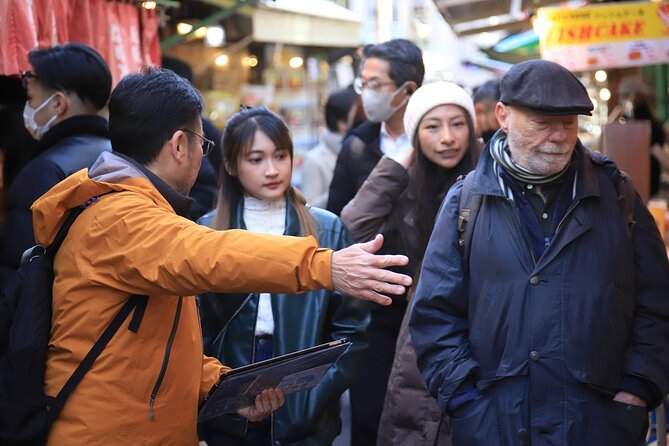
Tsukiji is a working market and a popular sightseeing stop. Expect narrow lanes, people carrying purchases, food smells, and moments when it is difficult to hear. A rainy morning can make things harder because umbrellas take up space and muffle the guide’s voice.
An early Saturday departure can be especially crowded. If your schedule allows, a midweek morning may feel easier, but check the market closure days first. The ideal day is not simply the quietest day. You also want the stalls serving the full food menu to be open.
The tour runs for three hours, so it is a useful first activity in Tokyo. It gives you an introduction to local food, teaches you how the market works, and leaves you time afterward to return to stalls you want to explore. One smart plan is to take notes during the walk, then use the remaining time to buy tea, fruit, kitchen goods, or another snack.
Rain does not automatically ruin the experience. The market still operates in wet weather when the shops are open, but you should bring suitable clothing and accept that the lanes may feel tighter. The tour does not provide a leisurely indoor food hall experience.
Is $96 a fair price?
At $96 per person, this is not the cheapest way to eat at Tsukiji. You can buy individual snacks yourself for less, and independent visitors pay only for what they choose.
The price makes more sense if you value guidance, translation, and a planned tasting route. Your fee includes the walking tour, an English-speaking local guide, Wagyu, the final sushi or seafood bowl, Japanese omelet, seasonal fruit, and fried fish cake. You also avoid the guesswork of deciding which stall to try first.
The small group is important to the value. A tour of 2 to 8 people is more personal than a large food walk, and it gives you a better chance to ask questions. It also helps when the market becomes crowded or confusing.
I would not book this simply because you want a cheap meal. I would book it if you want an organized introduction to Tsukiji and would otherwise feel unsure about ordering, finding the right stalls, or understanding what you are eating.
Alcohol is not listed among the included items. If you choose sake or beer along the way, expect to pay separately. One person felt those drinks should have been covered, so keep the included menu and extra purchases clear in your mind.
Who should book this Tsukiji food walk?
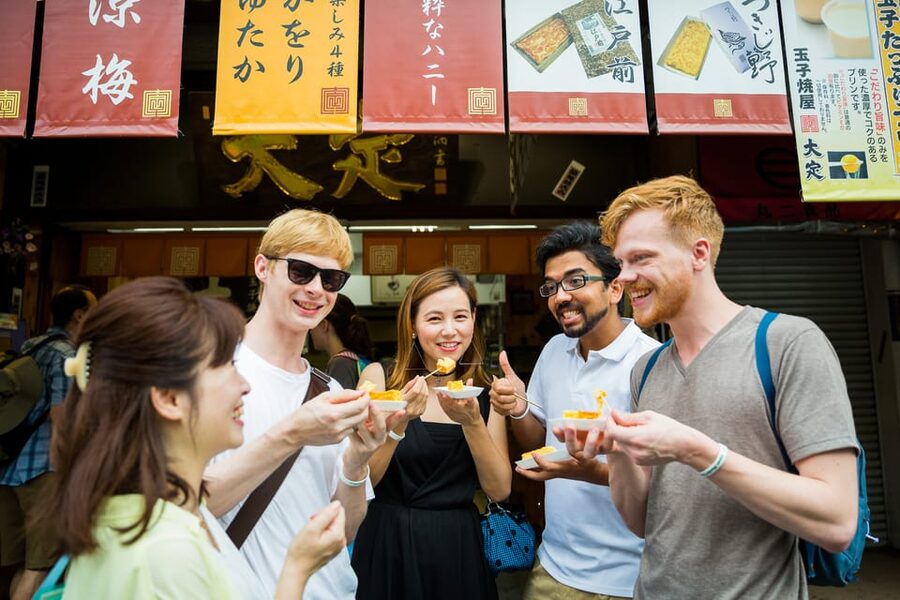
This tour suits first-time visitors to Tokyo who want a gentle introduction to Japanese market food. It is also useful for people who enjoy trying unfamiliar dishes but prefer a guide to explain what is on the plate.
You will get the most from it if you:
- Enjoy seafood, beef, omelets, fruit, and prepared snacks
- Want cultural context along with food
- Prefer a small group to exploring alone
- Are comfortable walking for three hours
- Want a planned meal at the end
- Have room in your budget for extra market purchases
It is a poor match for vegans and vegetarians because the included menu centers on meat, fish, and seafood. The tour cannot accommodate vegetarian, vegan, halal, or gluten-free requests. It is also not suitable for wheelchair users or people with mobility impairments.
The minimum drinking age in Japan is 20, but drinking is not required for the tour. Children can join only if the food and walking suit them, and meals for infants are not included.
Should you book it?
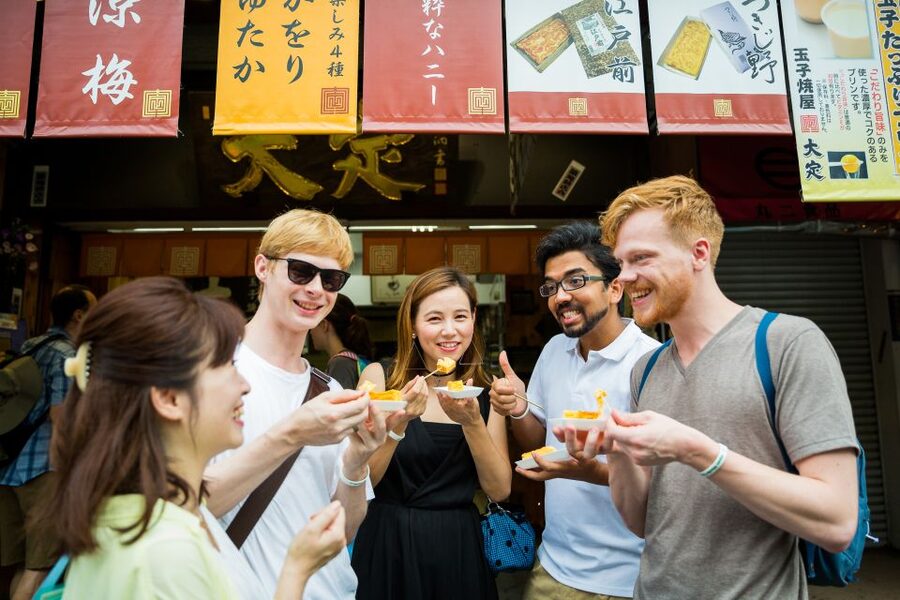
I would book this tour if you want to understand Tsukiji rather than simply pass through it. The Wagyu skewer, market snacks, and final sushi or seafood bowl make the morning satisfying, while the guide gives you the context that is hard to gain on your own.
The decision is less clear if you are an experienced Tokyo food shopper, have strict dietary needs, or want complete freedom to choose every dish. You should also check the date carefully. A tour on a closed market day can still be enjoyable, but some of the promised tastings may not be available.
For most first-time visitors who eat seafood and want a friendly, organized start to Tokyo, the $96 price is reasonable. Choose a day when the market is fully open, wear good shoes, and leave extra time afterward for the stall you will almost certainly want to revisit.
FAQ
Where does the Tsukiji food tour start?
The meeting point is the main gate of Tsukiji Honganji Temple, listed in Japanese as 浄土真宗本願寺派 築地本願寺.
How long does the tour last?
The tour lasts three hours. About 30 minutes is set aside for the first outer-market visit, followed by about two and a half hours of guided walking and food tasting.
What food is included?
The included menu features high-grade Wagyu beef skewers, either a fresh fish bowl or sushi, Japanese omelet, seasonal fruit, and fried fish cake.
Will I receive sushi or a seafood bowl?
The final meal depends on the day. You may receive sushi or a seafood bowl.
Is the tour available in English?
Yes. The tour includes a live English-speaking guide.
What happens on Wednesdays and Sundays?
The fish market wholesale area is closed on Wednesdays, Sundays, and other market-closure days. Some shops in the outer market may also be closed, so the Japanese omelet, fish cake, and fruit may not be available.
Can the tour accommodate dietary restrictions?
No. Vegetarian, vegan, halal, and gluten-free requests cannot be accommodated.
How much walking is involved?
There is a moderate amount of walking through the market. Comfortable shoes and comfortable clothing are recommended, and the tour is not suitable for wheelchair users or people with mobility impairments.
More Tokyo markets and shopping streets
- Tsukiji Fish Market Guided Tour and Sushi Making with Pro Chef
★ 5.0 · 775 reviews - Tsukiji Fish Market: Street Food & Culture Walking Tour
★ 5.0 · 669 reviews - Tsukiji Fish Market Small-Group Food Walking Tour
★ 5.0 · 621 reviews - Tokyo: Tsukiji Fish Market Sushi Making Class with Pro Chef
★ 4.9 · 506 reviews
More Tokyo food tours
- Tokyo: Shinjuku Food Tour (13 Dishes at 4 Local Eateries)
★ 5.0 · 6,603 reviews - Tokyo: Shinjuku Food Tour (15 Dishes and 4 Eateries)
★ 4.9 · 2,033 reviews - Best of Shinjuku: Izakaya Food Tour (4 Stops, 14+ Tastings)
★ 5.0 · 1,863 reviews - Eat and Drink Like a Local: Tokyo Ueno Food Tour-Taverns&Ramen
★ 5.0 · 957 reviews
Newly reviewed around Tokyo
- Tokyo Asakusa:Calligraphy & Make T-shirt Activity★ 5.0 · 62 reviews
- 1 Hour Travel around Tokyo with a Professional Photographer★ 5.0 · 3 reviews
- Travel Tokyo with Your Own Personal Photographer★ 5.0 · 43 reviews
- Intercity Shuttle, Tokyo to Haneda /Narita /Yokohama /Makuhari★ 5.0 · 5 reviews
- Train in Samurai Swordsmanship and Defeat the Demon in Tokyo★ 5.0 · 5 reviews
- Shuttle Van 6hr Tokyo Tour to-and-from Tokyo, Yokohama and Narita★ 5.0 · 9 reviews
- Kickboxing & Body Training with EX-Pro Fighter★ 5.0 · 4 reviews
- Traditional Japanese Knife Sharpening Class★ 5.0 · 18 reviews
Tsukiji and Toyosu Fish Market Tours, compared.
Tokyo Tsukiji Fish Market Food and Culture Walking Tour
Read our review →
Tokyo Sushi Making Class in Tsukiji with Professional Chef
Read our review →
Tsukiji Fish Market Guided Tour and Sushi Making with Pro Chef
Read our review →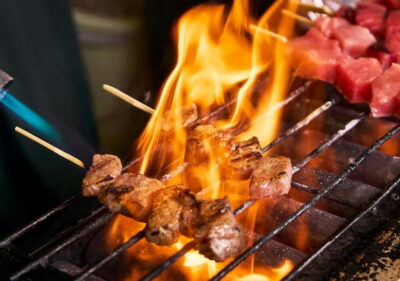
Tsukiji Fish Market: Street Food & Culture Walking Tour
Read our review →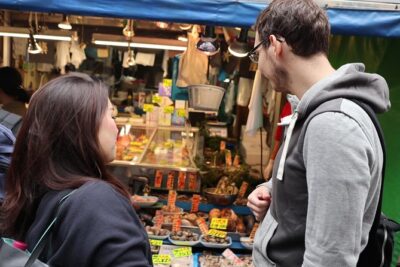
Tsukiji Fish Market Small-Group Food Walking Tour
Read our review →
Tsukiji Fish Market Sushi Making Class with Pro Chef
Read our review →Browse the lists this tour appears in