
Reviewed · TOKYO IMPERIAL PALACE TOURS
Tokyo: Imperial Palace and Shogun Walking Tour
The most interesting thing here is the setting: you walk through the former heart of Edo Castle, where Tokugawa shoguns ruled Japan for more than two centuries. Today, the East Gardens offer koi ponds, clipped trees, moats, stone walls, and quiet paths in the middle of Tokyo.
I like the way the tour connects old power to modern city life, rather than treating the palace as a collection of ruins. I also like the short, manageable route, especially the chance to see Ninomaru Garden and the castle tower base without giving up half a day.
The main consideration is that this is an outdoor walking tour, and much of its value comes from explanation rather than grand surviving buildings. If you want to enter the working Imperial Palace or see lavish palace rooms, this is not that experience.
Key points at a glance
- Walk through Ote-Mon Gate: Enter the former castle complex through its main historic gateway and begin to understand the scale of Edo Castle.
- See where the shoguns held power: The tour explains how the castle grounds worked as Japan’s political center.
- Decode huge defensive walls: Your guide helps you read the stonework, moats, gates, and guard posts as parts of a working fortress.
- Visit Ninomaru Garden: Enjoy one of the tour’s calmest stops, with seasonal planting, ponds, and koi.
- Connect Edo to Tokyo today: Guides such as Tony, Blake, Jim, and Miguel are praised for linking Japanese history with present-day life.
- Get a strong two-hour introduction: The $16 price is modest for a live English guide, especially if this is your first visit to Tokyo.
What this Imperial Palace walking tour really offers

Tokyo’s Imperial Palace can be confusing at first. The name suggests an ornate royal residence, but the public East Gardens are mainly the former grounds of Edo Castle, the fortress and seat of the Tokugawa shogunate.
That difference matters. You will not spend two hours touring imperial rooms. Instead, you will walk through the outer parts of a former military and political center, seeing foundations, gates, moats, gardens, and guardhouses. The appeal comes from learning how the site functioned and why it mattered.
I see this as a history walk with a peaceful garden setting. The scenery is pleasant, but the guide supplies the missing pieces: who used each area, how access was controlled, how the shoguns governed, and how Japan moved from feudal rule toward the modern state.
The experience costs $16 per person and lasts two hours. That makes it a useful first-day activity, particularly if you want some historical context before visiting other parts of Tokyo. A self-guided walk through the East Gardens costs you less in money, but you may miss the meaning behind the walls and foundations.
More Imperial Palace tours in Tokyo:
- Tokyo: Imperial Palace and Shogun Historical Walking Tour
★ 5.0 · 2,251 reviews - Tokyo: Imperial Palace Japanese History Walking Tour
★ 4.9 · 987 reviews - Imperial Palace East Garden and Edo Castle Walking Tour in Tokyo
★ 5.0 · 510 reviews
Meeting at Wadakura Fountain Park
The tour starts in front of Starbucks at Kokyo Gaien Wadakura Fountain Park, near coordinates 35.6830391, 139.7614181. This gives you a clear public meeting point before the group heads toward the palace grounds.
I would arrive early enough to identify the café and guide without rushing. The supplied information does not give a group size, so you should expect a shared walking tour rather than a private experience unless your booking says otherwise.
The walk returns to the same Starbucks meeting point at the end. That is useful in central Tokyo because you finish where you began, rather than having to work out a new station or meeting place after the tour.
English is the only listed tour language. The activity is wheelchair accessible, though you should still confirm any personal mobility needs when booking because the route includes historic outdoor areas and garden paths.
Ote-Mon Gate: the right place to start

The first major stop is Ote-Mon Gate, with about ten minutes of guided explanation. This is a fitting introduction because a castle gate tells you immediately that Edo Castle was built for control and defense, not simply for beauty.
Your guide can point out how the approach, entrance, and surrounding defenses worked together. The large gateway also helps you picture the old castle as a huge compound rather than a single building.
This is one of the places where a guide earns the ticket price. A quick photograph of a gate is easy. Understanding who could pass through, why access was restricted, and how the castle protected the shogun gives the structure real meaning.
The stop is brief, so do not expect an extended architectural lecture. It functions as the opening chapter, setting up the political and military story that continues inside the gardens.
Imperial Palace grounds and the shift from shogun to emperor
The next section covers the Imperial Palace area for about 15 minutes. Here, the guide explains the relationship between the old Edo Castle grounds and the Imperial Palace used by Japan’s imperial family today.
This is where the tour makes its most useful historical connection. The site did not lose its political importance when the Tokugawa period ended. Power changed hands, the country moved toward a modern government, and the old castle grounds took on a new role.
I like tours that explain those transitions instead of presenting Japanese history as a list of isolated dates. The guides are repeatedly praised for making the story understandable, answering questions clearly, and connecting past events with Tokyo as you see it now.
Tony is especially noted for linking Japanese history to the city’s modern layout and everyday life. Jim Allen is praised for adding unusual details and making the history accessible to different ages. These names matter because the quality of a live history tour depends heavily on delivery, not only on the route.
More Tokyo walking tours:
- Tokyo Tsukiji Fish Market Food and Culture Walking Tour
★ 5.0 · 3,184 reviews - Tokyo: Shinjuku Local Bar and Izakaya Guided Walking Tour
★ 4.9 · 1,794 reviews - Tokyo: Tsukiji Fish Market Food and Walking tour
★ 5.0 · 1,724 reviews - Tokyo: Asakusa Walking Tour with Sensoji Temple Visit
★ 4.8 · 1,583 reviews
Hyakunin Bansho Guardhouse and the human side of security

The Hyakunin Bansho Guardhouse receives about ten minutes. Its name relates to a guard unit of one hundred men, and the stop gives you a closer sense of how carefully the castle was watched.
A guardhouse is less visually dramatic than a garden or tower foundation, but it brings the old political system down to a human scale. This was a place where people stood watch, checked movement, and helped protect the shogun’s compound.
You can expect the guide to explain the daily work and purpose of the guard post rather than simply point it out. That extra context helps you understand why the castle had so many gates, turns, walls, and controlled entrances.
If you are mainly interested in flowers and scenic photographs, this may feel like a slower section. If you enjoy details about samurai administration and castle life, it is one of the more useful stops.
Fujimi-yagura and the logic of the castle walls
The tour spends about 15 minutes at Fujimi-yagura, a turret associated with the castle’s defensive system. From here, the guide continues explaining how observation points, walls, moats, and elevated positions protected the compound.
The massive stone walls are among the most striking physical features of the East Gardens. Their size can be impressive, but their purpose becomes clearer when you learn how they shaped movement and made an attack difficult.
This is the part of the walk where you should listen for practical details. Look at the slope of the stones, the thickness of the wall, and the way entrances are positioned. The guide helps you read these not as random old masonry, but as a carefully planned defense.
The historic walls also provide some of the tour’s best photo subjects. Still, the route is not designed as a long photography stop. You will have time to look and take pictures, but the guide keeps the group moving toward the next section.
The East Gardens and the lost castle tower

The Imperial Palace East Gardens are the main setting for the tour, with around 30 minutes devoted to walking and explanation. This is the point where the mood shifts from fortress to garden.
You will see open lawns, mature plantings, old foundations, and quiet paths. The contrast is part of the experience. A place built to protect political power now feels calm, ordered, and public.
One major highlight is the remains of the castle tower base. The tower itself is gone, but the foundation shows the scale of the structure that once rose above the compound. Your guide can help you imagine the missing building without pretending that the ruins are more complete than they are.
I like this stop because it rewards both kinds of visitors. You can enjoy the gardens as a peaceful break from Tokyo, or you can focus on the military and political story beneath the scenery.
The East Gardens are also where the two-hour timing becomes clear. You get enough space to slow down, but not enough to wander every path or examine every plant. If you want a long, unhurried garden visit, plan to return independently another time.
Ninomaru Garden and the koi ponds
Ninomaru Garden receives about 30 minutes and is likely to be the most relaxing part of the tour. It is associated with the shogun’s inner garden and combines carefully arranged plantings, ponds, bridges, and seasonal color.
Koi move through the ponds, adding a quiet focal point to the visit. The water and garden design create a marked contrast with the heavy gates and stone defenses seen earlier.
This stop also shows that the shogun’s world was not only about military control. Formal gardens offered space for beauty, ceremony, and reflection within the castle complex. The setting helps balance the harder political story.
The garden changes with the season, so the exact visual experience depends on when you visit. The tour description points to seasonal beauty rather than promising a specific bloom or color display, so keep your expectations flexible.
You may also appreciate the pace here. Several guides, including Blake and Sneha, are praised for keeping the walk comfortable and making room for questions or a short break. One account specifically notes time to sit and buy a drink from a vending machine, which can be welcome during a warm or tiring day.
What the guides add to the experience

The strongest feature of this tour is the live English explanation. A guide turns a pleasant garden walk into a connected story about samurai, shoguns, imperial rule, and modern Japan.
The guide roster varies, so you cannot choose from the names mentioned in the supplied information unless your booking allows it. Tony is often praised for being organized, clear, personable, and generous with Tokyo suggestions. Blake is described as patient, interactive, and good at bringing the gardens to life.
Jim is praised for keeping teenagers interested and for sharing unusual facts. Miguel is described as easygoing and strong on palace history. Other guides named in the feedback include Izzy, Embla, Thomas, Manny, Mayumi, Lasse, Michi, Dylan, and Sneha.
You should not expect a scripted performance from every guide. The experience appears to benefit from guides who answer questions and adjust their explanations to the group. That is valuable if you want advice about food, nearby sights, or other places to visit in Japan.
The practical lesson is simple: listen actively and ask questions. The route is fixed, but the conversation can make the tour feel more personal.
Is $16 good value for two hours?
At $16, this is inexpensive for a guided activity in central Tokyo. You are paying mainly for interpretation, organization, and a live English-speaking guide rather than admission to an elaborate indoor attraction.
I think the value is strong if you would otherwise walk through the gardens without knowing what the gates, guardhouse, walls, and foundations meant. The guides repeatedly receive praise for making the site understandable, which is exactly where a walking tour can justify its cost.
The value is less clear if you already have a firm grasp of Edo-period history or prefer exploring alone. You can enjoy the gardens at your own speed without a group, and the tour’s two-hour schedule limits how long you can pause for photographs.
The booking terms also reduce the risk. You can cancel up to 24 hours ahead for a full refund, and the reserve-now, pay-later option lets you hold a place without paying immediately. Starting times vary, so check availability for your chosen date.
Who should book this tour?
I would recommend it to first-time visitors who want a clear introduction to Tokyo’s political past. It also suits anyone who enjoys gardens but wants more than scenery, and families may find the short duration easier than a full-day history excursion.
It is a good match for visitors who want to understand the difference between Edo Castle, the Imperial Palace, and the East Gardens. It can also help you get oriented early in a Tokyo visit, since guides often provide suggestions for nearby food and later activities.
The tour may be less suitable if you want access to the Imperial Palace interior, an extended samurai demonstration, or a deep architectural study. The surviving buildings are limited, and the route focuses on outdoor sites and explanation.
You should also plan around the weather. The activity takes place outside, and the experience includes walking between several stops. An umbrella was loaned to one family during a rainy tour, but you should not rely on that being available for everyone.
Should you book the Imperial Palace and Shogun Walking Tour?
Book it if you want a compact, affordable way to understand why the Imperial Palace grounds matter. The best parts are the explanations at Ote-Mon Gate, the guardhouse, Fujimi-yagura, the castle tower base, and Ninomaru Garden, all tied together by the story of Japan’s changing centers of power.
I especially recommend it for a first Tokyo visit, when the city can feel enormous and its history hard to place. Two hours gives you a useful foundation without taking over your day.
Skip it if your priority is palace interiors, private access, or a completely independent garden visit. For everyone else, the $16 price, wheelchair accessibility, English guide, flexible booking terms, and consistently strong guide feedback make this a sensible introduction to old Edo at the center of modern Tokyo.
FAQ
How long does the Imperial Palace and Shogun Walking Tour last?
The tour lasts two hours, including the guided walk through the East Gardens and the listed historic stops.
What language is the tour conducted in?
The tour is conducted in English with a live English-speaking guide.
Where does the tour meet?
The meeting point is in front of Starbucks Kokyo Gaien at Wadakura Fountain Park. The listed coordinates are 35.6830391, 139.7614181.
Where does the tour finish?
The tour returns to the starting point at Starbucks Kokyo Gaien Wadakura Fountain Park.
What places are included on the walking route?
The route includes Ote-Mon Gate, the Imperial Palace grounds, Hyakunin Bansho Guardhouse, Fujimi-yagura, the Imperial Palace East Gardens, Ninomaru Garden, and the castle tower base area.
Is the tour wheelchair accessible?
Yes, the activity is listed as wheelchair accessible.
How much does the tour cost?
The listed price is $16 per person.
Can I cancel the booking or pay later?
You can cancel up to 24 hours in advance for a full refund. The reserve-now, pay-later option allows you to book without paying immediately.
Newly reviewed around Tokyo
- Tokyo Asakusa:Calligraphy & Make T-shirt Activity★ 5.0 · 62 reviews
- Intercity Shuttle, Tokyo to Haneda /Narita /Yokohama /Makuhari★ 5.0 · 5 reviews
- 1 Hour Travel around Tokyo with a Professional Photographer★ 5.0 · 3 reviews
- Travel Tokyo with Your Own Personal Photographer★ 5.0 · 43 reviews
- Train in Samurai Swordsmanship and Defeat the Demon in Tokyo★ 5.0 · 5 reviews
- Shuttle Van 6hr Tokyo Tour to-and-from Tokyo, Yokohama and Narita★ 5.0 · 9 reviews
- Kickboxing & Body Training with EX-Pro Fighter★ 5.0 · 4 reviews
- Traditional Japanese Knife Sharpening Class★ 5.0 · 18 reviews
Tokyo Imperial Palace Tours, compared.

Imperial Palace and Shogun Historical Walking Tour
Read our review →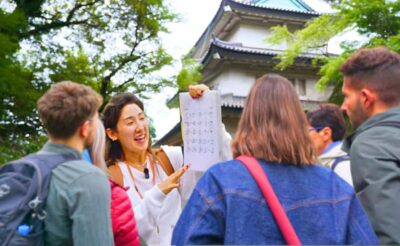
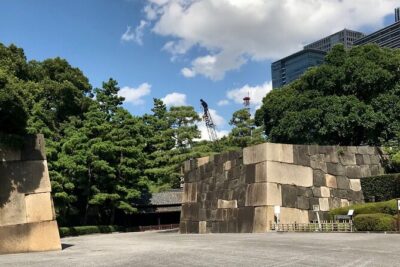
Imperial Palace East Garden and Edo Castle Walking Tour in Tokyo
Read our review →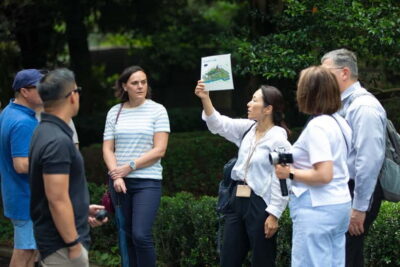
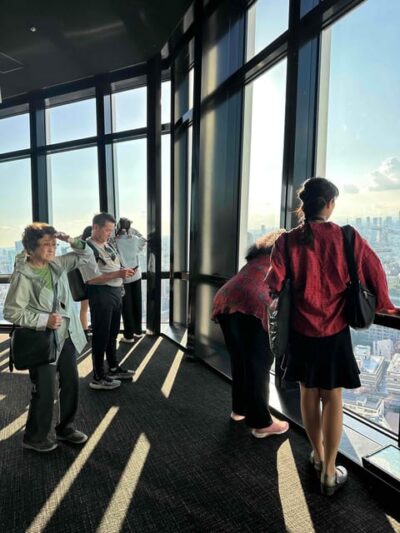
Imperial Palace, Sensō-ji Temple, & Tokyo Tower Tour
Read our review →
Tokyo Castle, Imperial Palace, Shogun & Garden Walking Tour
Read our review →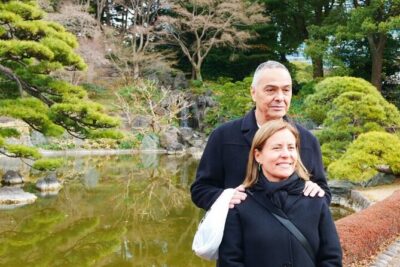
Edo Castle & East Garden of the Imperial Palace Tour
Read our review →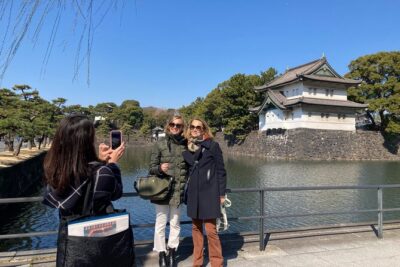
Tokyo Private Tour! Edo Castle & Imperial Palace East Gardens
Read our review →Browse the lists this tour appears in