
Reviewed · TOKYO IMPERIAL PALACE TOURS
Imperial Palace East Garden and Edo Castle Walking Tour in Tokyo
Tokyo’s Imperial Palace grounds tell two stories at once: the present-day home of Japan’s imperial family and the former site of Edo Castle, the power center of the shoguns. This small-group walking tour helps you read the ruins, gardens, moats, and old castle spaces instead of simply strolling past them.
I like the low price, about $25 per person, and the way a good guide adds meaning to otherwise quiet stone walls and empty foundations. The guides, including Kenta, Sato, Kei, Glenda, Miko, and others, are praised for clear English, humor, visual aids, and thoughtful pacing. The main caution is timing: plan for the full two and a half hours, not a quick one-hour outing, and expect hills and a fair amount of walking.
Key points to know before booking
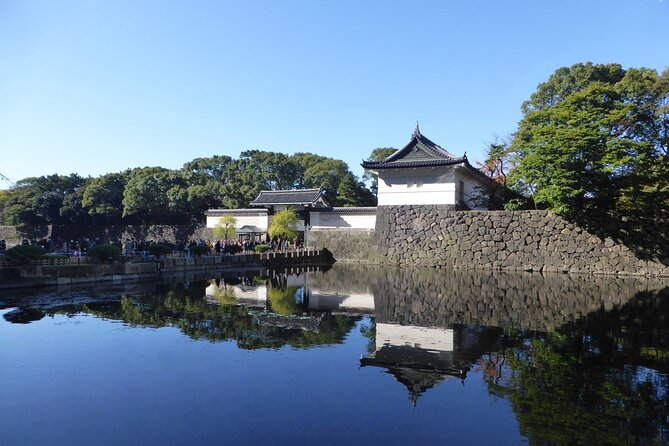
- Edo Castle is the real focus: You explore former castle grounds, ruins, gardens, ponds, and historic sites rather than entering palace rooms.
- Wadakura Fountain Park starts the tour: This polished public park offers an easy meeting point and a calm introduction to the Imperial Palace area.
- The group is limited to 12 people: That gives you a better chance to hear the guide and ask questions.
- Guide quality matters here: Kenta, Sato, Kei, Glenda, Miko, Kaz, and others have been praised for clear explanations, humor, visuals, and personal attention.
- Allow the full 2.5 hours: The tour can run close to its stated duration, which matters if you have a tight Tokyo schedule.
- The palace interiors are off-limits: You see the surrounding grounds and East Gardens, not the interior of the Imperial Palace buildings.
Why Edo Castle makes this tour worthwhile
If you only walk around the Imperial Palace on your own, you may see attractive trees, walls, and broad open spaces without understanding what they once meant. The guide gives those remains a purpose. You learn about the samurai government, shoguns, emperors, castle life, and the changing role of the imperial family.
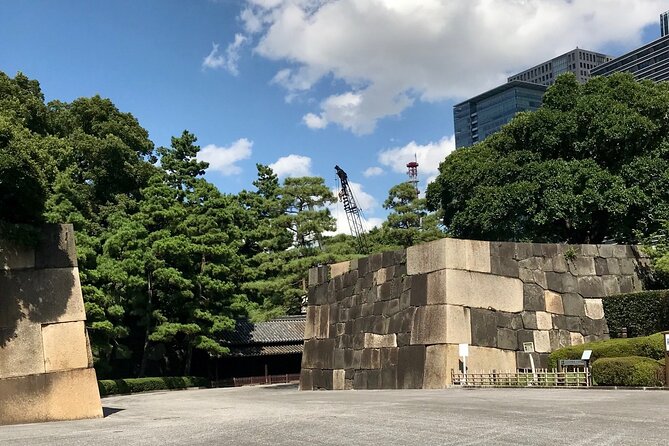
Edo Castle was once at the center of political power in Japan. Today, the site is much quieter. That contrast is part of the appeal. You are not touring a restored palace packed with furniture and displays. You are walking through a living public garden where history appears in foundations, stonework, gates, planted areas, and the shape of the grounds.
I especially like this kind of tour for a first visit to Tokyo. It gives you a clear introduction to the Edo period and the imperial institution without asking you to spend half a day inside a museum. A strong guide also helps connect the past to present-day Japan.
Still, keep your expectations realistic. The East Gardens are pleasant rather than spectacular at every turn. One section may offer a lovely pond or carefully arranged planting, while another is simply an open lawn, wall, or ruin. If you want grand palace interiors, ornate rooms, or a long list of famous works of art, this is not that experience.
More Imperial Palace tours in Tokyo:
- Tokyo: Imperial Palace and Shogun Historical Walking Tour
★ 5.0 · 2,251 reviews - Tokyo: Imperial Palace Japanese History Walking Tour
★ 4.9 · 987 reviews - Tokyo: Imperial Palace and Shogun Walking Tour
★ 4.9 · 935 reviews
Starting at Wadakura Fountain Park
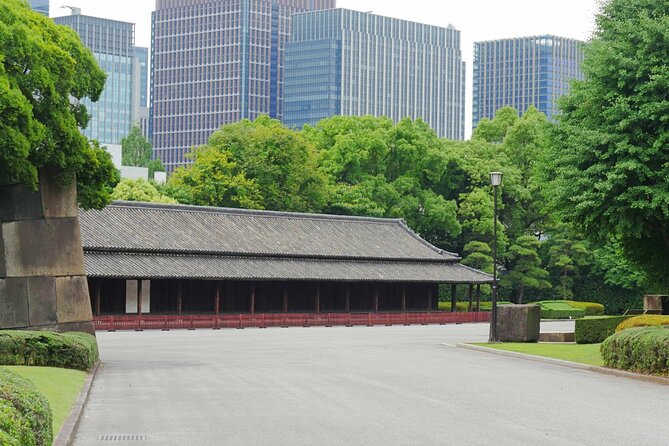
The meeting point is Starbucks Coffee at Wadakura Fountain Park, 3-1 Kōkyogaien in Chiyoda City. This is a useful place to begin because it is near public transportation and gives you a recognizable landmark in a large central Tokyo district.
The park itself is more than a place to wait. It was first built in 1961 to mark the wedding of Emperor Akihito and Empress Michiko. It was redesigned and reopened in 1995 for the wedding of Crown Prince Naruhito and Crown Princess Masako.
You spend about 30 minutes here. The fountains and open design offer a gentle start before the longer walk. Your guide can introduce the setting, explain the connection to the imperial family, and help you get oriented around the palace district.
This stop is not a major sightseeing destination by itself, so do not judge the whole experience by the opening half hour. Its value is practical and historical. It gives you a clear meeting place, a chance to meet the group, and an early look at how modern public spaces around the palace reflect Japan’s monarchy.
The mobile ticket is convenient, but you should still arrive with enough time to find the Starbucks and guide. The supplied meeting details identify the exact location, yet large Tokyo districts can feel confusing if you arrive at the last moment.
Walking through the East Gardens
The East Gardens make up the main part of the tour, with about two hours devoted to the former castle grounds. This is where the guide’s storytelling becomes most useful.
The gardens include the old Honmaru area, castle remnants, ponds, traditional plantings, and the Ninomaru Garden. You may see carp in the water, carefully kept greenery, and stone structures that are easy to miss without explanation. In spring, cherry blossoms can add color. Autumn may bring foliage, although seasonal displays are not guaranteed.
That last point matters. A garden tour does not promise flowers in bloom or bright autumn color. One October visit, for example, had plenty of greenery but little fall color and no notable flowers. The gardens can still be attractive, but the experience depends partly on the season and your own interest in quiet design.
The path is described as an easy walk by some visitors, but it is not completely flat. Expect some hills and, at times, steep paths. One useful detail is that the route has been described as having hills but no stairs. Comfortable shoes are essential, especially because the tour lasts roughly 150 minutes.
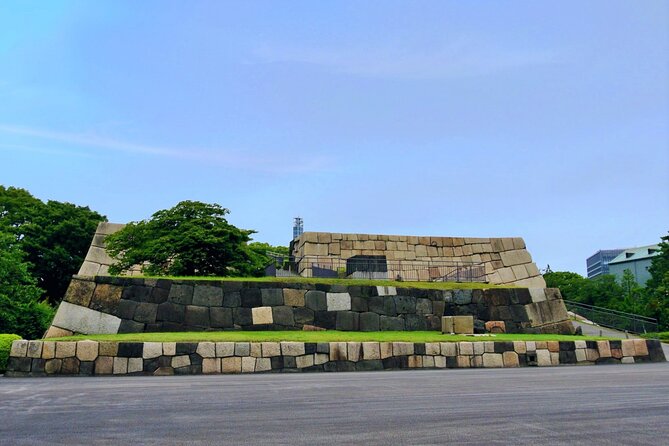
The gardens work best when you enjoy details. You might pause at a castle foundation, look across a pond, study a wall, or hear why a particular area mattered during the Edo period. The guide turns these pauses into lessons about rank, defense, daily life, and political power.
What the guides add to the experience
This tour depends heavily on the guide, and the feedback points to a consistent strength: clear, friendly explanation. Names that have received especially warm praise include Kenta, Sato, Kei, Glenda, Miko, Miki, Kaz, Satoko, Miyu, and Loc.
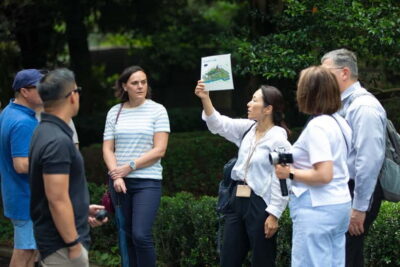
Kenta is described as energetic, funny, and well prepared, sometimes using pages and visual material to explain the former castle tower and grounds. Sato is praised for giving just the right amount of information and answering questions. Kei has been noted for maintaining a thoughtful pace in the rain and finding more sheltered places for discussion.
Glenda is singled out for clear English and explanations connecting emperors, shoguns, samurai, and the palace gardens. Miko is praised for using photos while discussing the castle grounds and former tower. These details matter because the site itself has limited visible structures. Visual aids and a well-organized story can make a major difference.
The group maximum is 12 people. That is small enough for questions and personal attention, while still allowing you to meet other people. It is not a private tour, so your pace and interests will be shared with the group.
The tour can also suit families. A guide has been praised for being patient with children, and another helped arrange a wheelchair when a participant became tired and dizzy. Service animals are allowed, and most people can take part, but you should still consider the hills and length of the walk if mobility is a concern.
More Tokyo walking tours:
- Tokyo Tsukiji Fish Market Food and Culture Walking Tour
★ 5.0 · 3,184 reviews - Tokyo: Shinjuku Local Bar and Izakaya Guided Walking Tour
★ 4.9 · 1,794 reviews - Tokyo: Tsukiji Fish Market Food and Walking tour
★ 5.0 · 1,724 reviews - Tokyo: Asakusa Walking Tour with Sensoji Temple Visit
★ 4.8 · 1,583 reviews
What you do not see
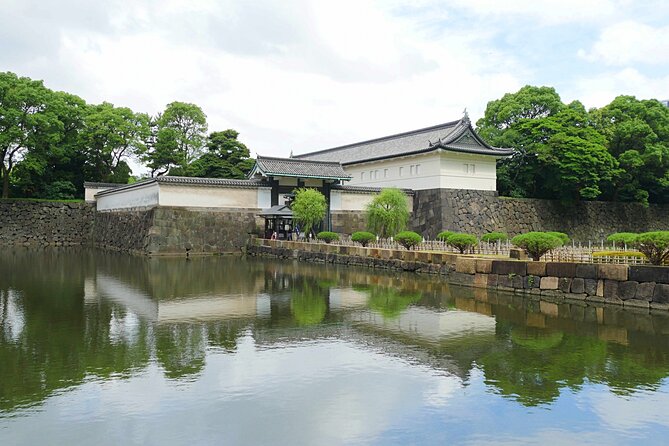
The most important limitation is simple: you do not enter the Imperial Palace buildings. Public access to the palace interior is not part of this experience. The tour takes place in the East Gardens and surrounding grounds.
That may disappoint you if you picture polished rooms, imperial apartments, or indoor exhibits. The tour is about the site, not the residence itself. You see the outdoor setting, castle remains, gardens, and places connected with the palace and Edo Castle.
I think this limitation is fair as long as you know it before booking. The grounds provide more historical material than many first-time visitors expect, but the experience remains an outdoor walk. On a wet day, weather can affect your enjoyment, even if the guide adjusts the pace or chooses more protected places to talk.
The activity requires good weather. If poor conditions force cancellation, you are offered another date or a full refund. For your own comfort, check the forecast and avoid treating this as a casual indoor backup plan.
Is $25 a good value?
At about $25, this is a strong value if you want historical context and a guided introduction to central Tokyo. Admission to the listed stops is free, so you are mainly paying for the guide’s time, organization, explanations, and help interpreting the site.
That is important here. You can enter the East Gardens without paying an admission fee, but you cannot recreate the guide’s commentary simply by walking in. The value is highest for first-time visitors, people interested in Japanese history, and anyone who wants a structured start to a Tokyo sightseeing day.
The price is less compelling if you prefer to wander alone, already know the Edo period well, or want a fast photo stop. You also need to budget your time. This is not a quick orientation. A full 2.5-hour outing may affect lunch plans, museum reservations, or train connections.
Snacks are not included, so bring water or eat before you arrive. The tour returns to the original meeting point, which makes it easier to continue sightseeing in the palace district afterward.
How to plan your morning
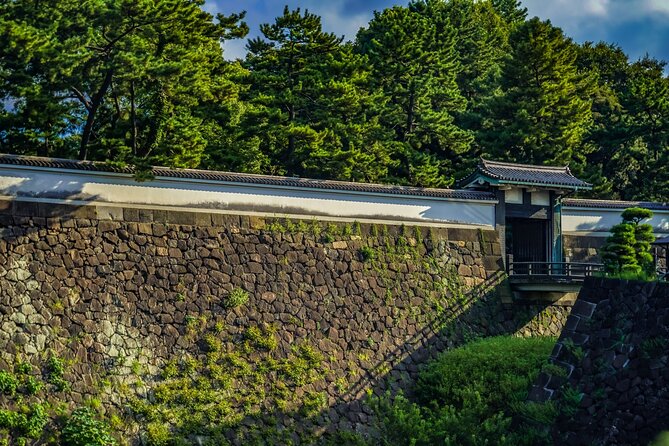
Wear comfortable walking shoes. The route includes hills and may feel longer than the distance suggests because the group stops often for explanations and questions.
Arrive at the Starbucks in Wadakura Fountain Park with your mobile ticket ready. Keep the full duration open in your schedule. One useful planning mistake to avoid is assuming that a walking tour near the palace will finish in an hour or so.
The best season depends on what you want. Spring may bring cherry blossoms, while autumn can offer changing leaves. Neither is guaranteed, and the gardens remain primarily a place for greenery, ponds, old stonework, and calm city-center walking.
I would pair this tour with another Tokyo activity later in the day rather than immediately before a fixed reservation. The guide may keep a good pace, but the experience is designed to be unhurried enough for history and questions.
Who should book this Imperial Palace walk?

I recommend it most strongly to first-time Tokyo visitors who want a readable introduction to the city’s political and imperial past. It is also a good choice for anyone who enjoys gardens, ruins, and stories about samurai and shoguns more than indoor museum displays.
Families may appreciate the friendly guides and manageable group size, though parents should prepare children for a long outdoor walk. History fans will get the most from the explanations of Edo Castle, the former tower, the emperor’s role, and the layout of the grounds.
You should think twice if you dislike walking, need a fully flat route, or expect to enter the palace. The gardens are attractive, but they are not filled with dramatic monuments at every step. The experience succeeds through context and storytelling.
At 98 percent recommended and a 4.9 rating from 510 ratings, the tour has a strong record. More important for your decision, the praise centers on guide quality, clear English, humor, visual explanations, and the small group. Those are exactly the features that matter most at a largely outdoor historical site.
Should you book it?
Book this tour if you want the Imperial Palace grounds to make sense, not just look nice in photos. For $25, a maximum of 12 people, and about two and a half hours with a local English-speaking guide, it offers a useful introduction to Edo Castle and modern imperial Tokyo.
Skip it if you want palace interiors, a short stroll, or guaranteed flowers and autumn color. Go in with comfortable shoes, a flexible schedule, and realistic expectations about the quiet, open nature of the gardens. Do that, and this is an inexpensive way to give one of Tokyo’s most important sites a human story.
FAQ
Does the tour enter the Imperial Palace buildings?
No. The tour does not enter the Imperial Palace buildings. It visits the East Gardens and surrounding grounds, with historical explanations and photo opportunities.
How long does the tour last?
The tour lasts approximately 2 hours and 30 minutes. You should plan for the full stated duration.
Where does the tour begin?
It begins at Starbucks Coffee in Wadakura Fountain Park, 3-1 Kōkyogaien, Chiyoda City, Tokyo 100-0002.
Where does the tour finish?
The activity ends back at the original meeting point.
What places are included?
The tour includes Wadakura Fountain Park and the East Gardens of the Imperial Palace, including areas connected with the Edo Castle ruins.
Is admission included?
Admission tickets to the listed stops are free, and all fees and taxes are included in the tour price.
Is a guide included?
Yes. An English-speaking local guide is included.
How large is the group?
The tour has a maximum of 12 participants.
Is the walk difficult?
The route is a walking tour with some hills and, according to the available details, no stairs. Comfortable shoes are recommended.
What happens if the weather is poor?
The experience requires good weather. If it is canceled because of poor weather, you are offered another date or a full refund. You can also cancel for a full refund up to 24 hours before the start time.
Newly reviewed around Tokyo
- Tokyo Asakusa:Calligraphy & Make T-shirt Activity★ 5.0 · 62 reviews
- Intercity Shuttle, Tokyo to Haneda /Narita /Yokohama /Makuhari★ 5.0 · 5 reviews
- 1 Hour Travel around Tokyo with a Professional Photographer★ 5.0 · 3 reviews
- Travel Tokyo with Your Own Personal Photographer★ 5.0 · 43 reviews
- Kickboxing & Body Training with EX-Pro Fighter★ 5.0 · 4 reviews
- Train in Samurai Swordsmanship and Defeat the Demon in Tokyo★ 5.0 · 5 reviews
- Shuttle Van 6hr Tokyo Tour to-and-from Tokyo, Yokohama and Narita★ 5.0 · 9 reviews
- Traditional Japanese Knife Sharpening Class★ 5.0 · 18 reviews
Tokyo Imperial Palace Tours, compared.

Imperial Palace and Shogun Historical Walking Tour
Read our review →
Imperial Palace, Sensō-ji Temple, & Tokyo Tower Tour
Read our review →
Tokyo Castle, Imperial Palace, Shogun & Garden Walking Tour
Read our review →
Edo Castle & East Garden of the Imperial Palace Tour
Read our review →
Tokyo Private Tour! Edo Castle & Imperial Palace East Gardens
Read our review →Browse the lists this tour appears in