
Reviewed · TSUKIJI AND TOYOSU FISH MARKET TOURS
[NEW]JPN CULTURE – Buy@Toyosu Market SUSHI Making +TEA +Maid Cafe
The best part of this six-and-a-half-hour experience is that you do not simply look at a Japanese fish market from behind glass. You shop for your own ingredients, then use them in a sushi lunch. I like the small group of up to eight, and I like the clear link between market, kitchen, and table. You see where the food comes from, handle it, and eat it soon after.
The tea session gives the day a second mood: quiet, careful, and traditional. The main drawback is the long schedule and the somewhat unusual market wording, since the meeting point is in Toyosu while several descriptions refer to Tsukiji. Confirm the exact route and optional Maid Café plan before you go.
Key points to know before booking
- You shop for the sushi ingredients at Toyosu Market, rather than only viewing the market from an observation area.
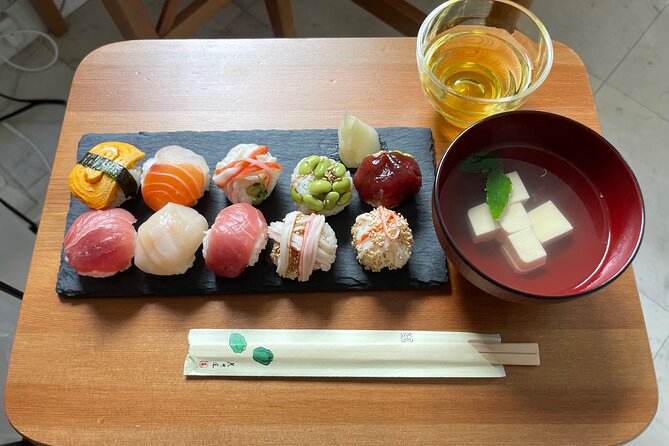
- You prepare four sushi styles: temari, maki, chirashi, and oshi sushi.
- You eat the sushi you make for lunch, with a menu to take home and use later.
- You make Japanese tea sweets before joining a matcha ceremony led by a qualified tea master.
- The group is limited to eight people, which should leave room for questions and hands-on help.
- An optional Akihabara Maid Café visit can extend the day from traditional tea to modern pop culture.
Starting at Shijō-mae Station and Toyosu Market
Your meeting point is Shijō-mae Station at 6 Chome-3 Toyosu, in Koto City. That matters because Toyosu is not the same market area as old Tsukiji. The published descriptions use both Toyosu and Tsukiji when discussing the shopping portion, so I would check your confirmation carefully for the exact walking route and market section.
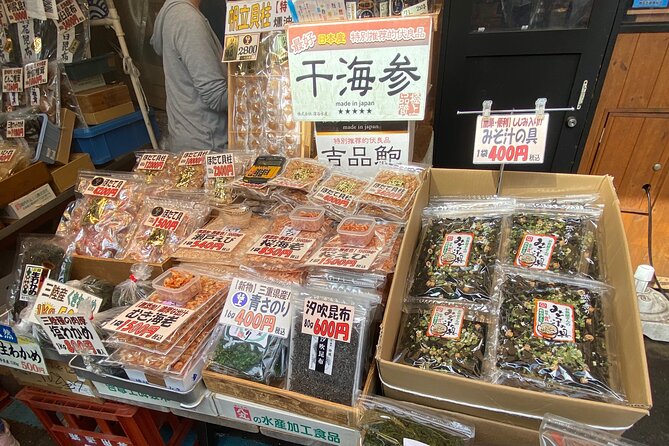
The key idea is access. Most people see Toyosu through designated viewing areas, often separated from the working floor by windows and distance. Here, you are accompanied by a guide with special permission to enter the market area and buy the food you will later prepare.
That changes the feel of the morning. You are not just taking photos of seafood displays. You are choosing neta, the fish and other toppings used for sushi, with your guide. The ingredients are bought the same day, so the market visit has a clear purpose rather than being a detached sightseeing stop.
The market is also a useful introduction to Japanese food culture. You may taste dashi soup and other small items while walking, according to the experience details. These tastes help you notice the base flavors used in Japanese cooking before you sit down to make sushi.
I like this part most for people who want food context, not just a cooking class. A standard sushi lesson can teach technique, but this one begins with the shopping decision. You can ask why one item is chosen, how the ingredients fit the menu, and how fresh seafood moves from market counter to meal.
More Tsukiji and Toyosu fish market tours:
- Tokyo Tsukiji Fish Market Food and Culture Walking Tour
★ 5.0 · 3,184 reviews - Tokyo: Tsukiji Fish Market Food and Walking tour
★ 5.0 · 1,724 reviews - Tokyo: Tsukiji Fish Market Guided Walking Tour
★ 4.9 · 1,397 reviews
Four sushi styles, one practical lunch
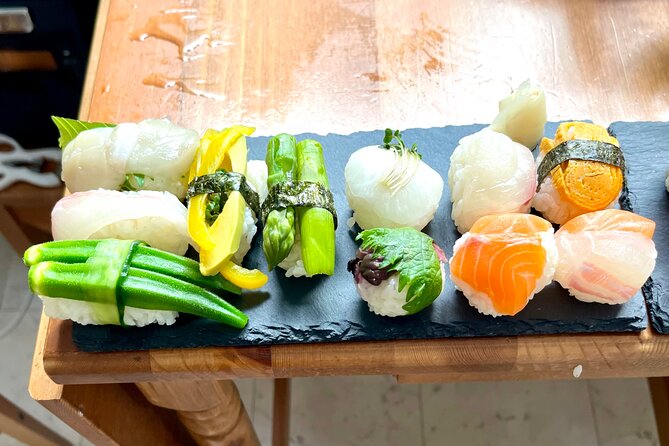
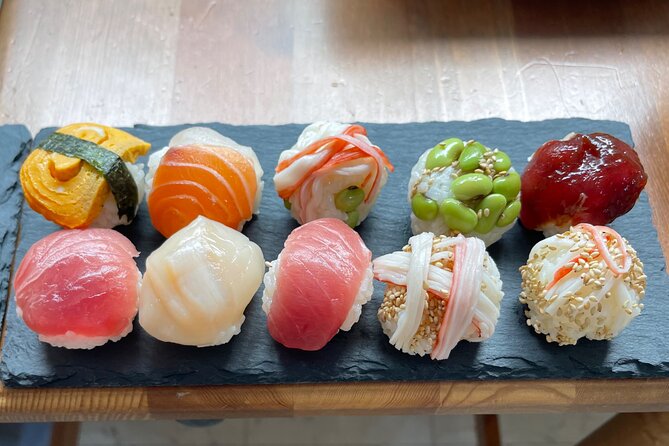
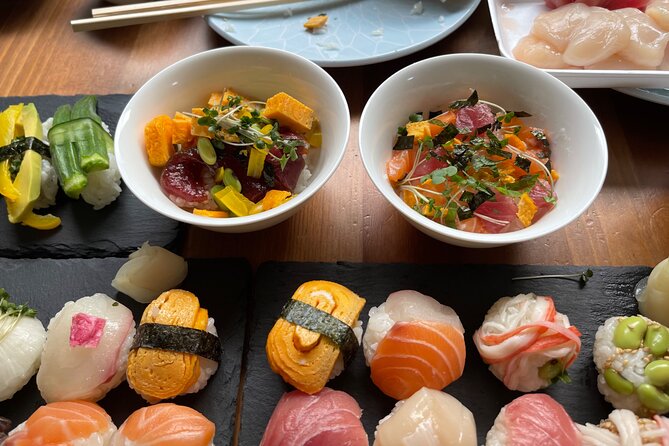
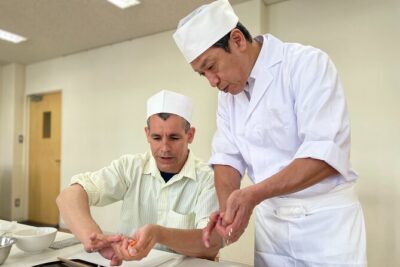
After the market visit, you relocate to a studio for the cooking session. The class covers four forms of sushi: temari, maki, chirashi, and oshi sushi. Each shows a different way of handling rice, toppings, and presentation.
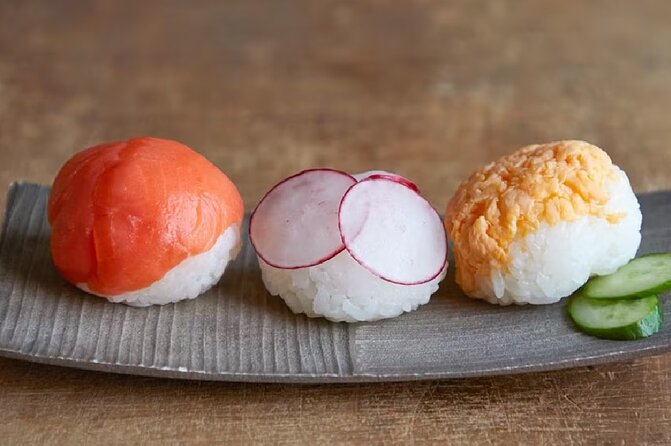
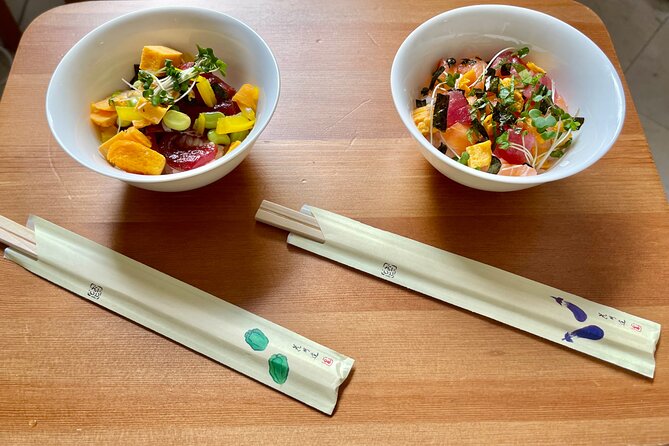
Temari sushi is shaped into small round portions. Maki sushi is rolled, giving you the familiar nori-wrapped form. Chirashi sushi spreads toppings over a bowl of rice, while oshi sushi is pressed into shape. Together, these styles give you more than one party trick to take home.
The class is designed around making lunch, not watching a chef do all the work. You prepare the sushi and then eat what you made. That makes the market purchase feel worthwhile, since the fish is not a sample or a distant demonstration. It becomes your meal.
You are also given a menu so you can repeat the dishes later. This is an important value point. Sushi lessons can be fun but hard to recreate if you leave without quantities or a workable outline. A take-home menu gives you a better chance of holding your own sushi lunch at home.
Do not expect professional sushi-chef training. The focus is on basics and participation. The format suits a first lesson, a family activity, or anyone who wants to understand the structure of Japanese sushi without committing to a formal culinary course.
The small group should help here. With no more than eight people, the guide can watch how you shape, roll, and press the sushi. I would still expect the class to move at a set pace, especially with several styles on the menu. If you want a slow, highly technical lesson focused on one sushi form, this may feel broad rather than deep.
Tea sweets and a formal matcha session
After lunch, the mood changes. You make your own sweets for the tea ceremony, and these serve as dessert. That is a smart order: you prepare the confectionaries first, then use them during the matcha session.
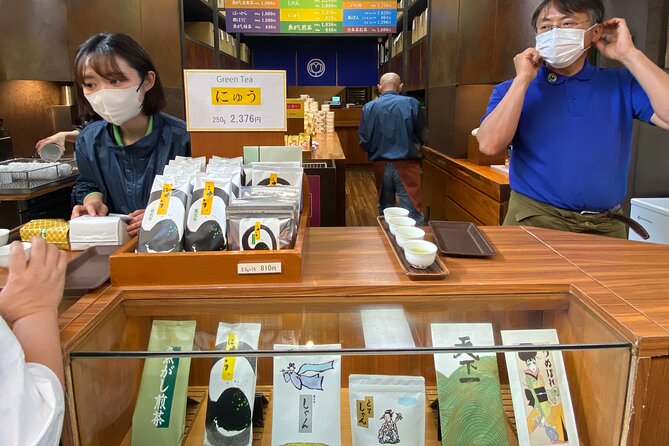
The tea portion is led by a qualified tea master and uses high-grade matcha intended for tea ceremony specialists. You are not simply handed a cup of green tea after the cooking class. The tea has its own setting, rhythm, and etiquette.
For many people, this will be the most unfamiliar part of the day. Sushi making is active and social. Tea ceremony asks you to slow down and pay attention to small movements, presentation, and the relationship between the sweet and the tea.
I like that you make the sweets yourself. It gives you something to do and helps explain why a sweet is served with matcha. The dessert is not an unrelated extra. It belongs to the ceremony and gives the session a more complete shape.
The details of the ceremony format are not specified, so you should not expect a particular school of tea, a certain room design, or a long formal performance. What is clear is that a tea master leads the session and that the matcha is of a high grade. If tea ceremony is a main reason for booking, ask the provider what etiquette and demonstration are included.
The optional Akihabara Maid Café finish
You can add a visit to a Maid Café in Akihabara, or end the main experience after the tea ceremony and continue with your own plans. You are asked to state your choice when booking, so do not assume you can decide at the last minute.
This option gives the day a sharp contrast. The morning and afternoon focus on market food, sushi, sweets, and tea. Akihabara brings in a modern Japanese subculture experience. It is less about traditional customs and more about the themed café style associated with the district.
I see this as an add-on for someone who wants a broad, playful day rather than a tightly focused cooking tour. It may work especially well for first-time visitors who want to connect old and new Japan in one booking. If you prefer a calm, food-centered schedule, skip it and use the remaining time for your own Tokyo plans.
The available information does not specify the café name, the visit length, or what is included in the price. Those details can affect the value, so confirm them before selecting the package. The base experience is easier to assess because its main elements are clear: market shopping, sushi lunch, sweets, and tea.
More Akihabara and anime tours:
- Official Street Go-Kart Tour – Akihabara
★ 5.0 · 1,578 reviews - Tokyo Go Kart: Asakusa, Skytree, and Akihabara **IDP MUST**
★ 5.0 · 988 reviews - Akihabara Anime & Game Adventure Walking Tour (Group or Private)
★ 5.0 · 404 reviews - Tokyo: Gameboy Mod Workshop at Akihabara
★ 5.0 · 253 reviews
What $78.04 buys you
At $78.04 per person, this is not the cheapest cooking lesson in Tokyo. But you are paying for a long, linked experience rather than a short class. The price includes the market visit with a guide, fresh sushi ingredients, hands-on preparation of several sushi types, lunch, tea sweets, and a tea ceremony.
The value is strongest if you would otherwise pay separately for a market tour and a cooking class. You also get the context of buying the food yourself, which many ordinary cooking lessons do not provide. The tea ceremony adds another cultural activity without requiring a second booking.
The group limit improves the calculation. A class capped at eight should feel more personal than a large demonstration, and you have a better chance of getting help with the rice, rolls, or presentation. The guide team has been praised for speaking excellent English and explaining the process clearly. Max and his staff are named in the available information, so English-speaking visitors have a useful point of reference.
Still, price comparisons should include the length of the day and your interests. If you only want to make sushi, a shorter class may cost less. If you want both food and culture, the extra tea session makes this package more useful.
The Maid Café may be part of a different package or an optional upgrade. Check what the $78.04 rate covers before comparing it with other Tokyo activities. The listing does not give enough detail to assume the café is included in the base price.
Timing, transport, and the rhythm of the day
The activity lasts about six hours and 30 minutes, and it starts and ends at the stated meeting point. That is a substantial part of your day. I would avoid scheduling a distant evening reservation immediately afterward, especially if you choose the Akihabara option.
Shijō-mae Station is near public transportation, which makes the start practical. You should allow enough time to reach the station and find the meeting point without rushing. The activity ends back at the meeting point, but the optional Akihabara portion may change how the final transfer works, so ask before booking.
The pace is likely to shift several times:
- Market walking and food shopping come first.
- The studio session adds several hands-on sushi preparations.
- Lunch gives you time to eat what you made.
- Sweet-making and tea ceremony bring a quieter close.
- The Maid Café, if selected, adds another stop after the traditional portion.
That variety is a strength for people who like a full day with several kinds of activity. It can feel long if you prefer a relaxed morning or if you are not interested in both cooking and tea.
Who will get the most from this experience
I would recommend this for first-time Tokyo visitors who want more than a basic sightseeing circuit. It connects a working market, Japanese food preparation, a meal, confectionary making, and tea ceremony in one day.
It is also a good fit for families and small groups. The hands-on format gives children and adults something to do, though the available information does not specify age limits or child pricing. Ask the provider directly if those details matter for your party.
Food-focused visitors should find the market shopping especially useful. You are not only eating sushi, but learning how the ingredients are selected and then used. The menu gives the class lasting value after you return home.
Culture-focused visitors will appreciate the tea master and the matcha session. Keep your expectations measured, however. The experience gives you an introduction to tea ceremony, not a full course in tea history or etiquette.
I would be less likely to choose it for someone who wants a quiet, single-theme activity. The day moves from market shopping to sushi, then sweets, tea, and perhaps a Maid Café. Its appeal comes from the range.
Booking details worth checking
Confirmation is sent within 48 hours, subject to availability. Since the experience is often booked well ahead, reserve early if your Tokyo dates are fixed. The average booking lead time is listed as 160 days, which suggests that leaving this until the last week may not work.
You can cancel for a full refund up to 24 hours before the start time. Changes or cancellations inside that 24-hour window are not accepted for a refund. The activity also requires a minimum number of participants, and if that minimum is not met, you are offered another date or experience, or a full refund.
The ticket is mobile, so you do not need a printed voucher. Bring the booking details on your phone and confirm the meeting point, especially because Toyosu and Tsukiji appear in the supplied descriptions.
Should you book it?
Book this if you want a full Japanese food and culture day, especially one that lets you shop for sushi ingredients instead of only observing a market. The strongest reasons are the eight-person limit, the fresh same-day ingredients, four sushi styles, take-home menu, and tea ceremony led by a qualified tea master.
Skip it if you only want a short sushi class or if a six-and-a-half-hour schedule feels too packed. Before paying, confirm whether the Maid Café is included, how the Toyosu and Tsukiji references apply, and where the optional portion ends.
For the right reader, $78.04 is fair value: you get a meal, practical cooking skills, market access, sweets, and a formal matcha session in one booking.
FAQ
Where does the experience begin?
It begins at Shijō-mae Station, 6 Chome-3 Toyosu, Koto City, Tokyo 135-0061, Japan.
Where does the activity end?
The main activity ends back at the meeting point.
How long does the experience last?
It lasts approximately six hours and 30 minutes.
How many people can join?
The group is limited to a maximum of eight participants.
What kinds of sushi will I make?
You will learn to make temari, maki, chirashi, and oshi sushi.
Is lunch included?
Yes. You eat the sushi you prepare during the session for lunch.
Is the tea ceremony led by a tea master?
Yes. A qualified tea master leads the tea ceremony, using high-grade matcha.
Can I visit a Maid Café?
Yes. An optional Maid Café visit in Akihabara is available. You should state your choice when making the reservation and confirm which package includes it.
More Tokyo markets and shopping streets
- Tsukiji Fish Market Guided Tour and Sushi Making with Pro Chef
★ 5.0 · 775 reviews - Tokyo: Tsukiji Fish Market Food and Culture Walking Tour
★ 4.7 · 757 reviews - Tsukiji Fish Market: Street Food & Culture Walking Tour
★ 5.0 · 669 reviews - Tsukiji Fish Market Small-Group Food Walking Tour
★ 5.0 · 621 reviews
More Tokyo sushi making classes
- Sushi Making Tokyo Roll and Authentic Japanese Sushi Class
★ 5.0 · 3,971 reviews - Tokyo: Roll and Authentic Sushi Making Class in Asakusa
★ 4.9 · 1,957 reviews - Make Sushi and Create Unforgettable Memories in Tokyo
★ 5.0 · 1,413 reviews - Tokyo: Sushi Making Class in a Happi Coat near a Famous Spot
★ 4.9 · 1,377 reviews
Newly reviewed around Tokyo
- Tokyo Asakusa:Calligraphy & Make T-shirt Activity★ 5.0 · 62 reviews
- Intercity Shuttle, Tokyo to Haneda /Narita /Yokohama /Makuhari★ 5.0 · 5 reviews
- 1 Hour Travel around Tokyo with a Professional Photographer★ 5.0 · 3 reviews
- Travel Tokyo with Your Own Personal Photographer★ 5.0 · 43 reviews
- Shuttle Van 6hr Tokyo Tour to-and-from Tokyo, Yokohama and Narita★ 5.0 · 9 reviews
- Kickboxing & Body Training with EX-Pro Fighter★ 5.0 · 4 reviews
- Train in Samurai Swordsmanship and Defeat the Demon in Tokyo★ 5.0 · 5 reviews
- Traditional Japanese Knife Sharpening Class★ 5.0 · 18 reviews
Tsukiji and Toyosu Fish Market Tours, compared.
Tokyo Tsukiji Fish Market Food and Culture Walking Tour
Read our review →
Tokyo Sushi Making Class in Tsukiji with Professional Chef
Read our review →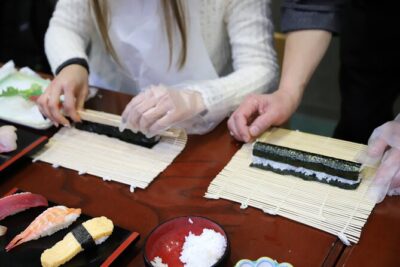
Tsukiji Fish Market Guided Tour and Sushi Making with Pro Chef
Read our review →Tsukiji Fish Market Food and Culture Walking Tour
Read our review →
Tsukiji Fish Market: Street Food & Culture Walking Tour
Read our review →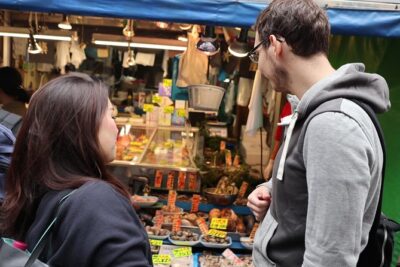
Tsukiji Fish Market Small-Group Food Walking Tour
Read our review →Browse the lists this tour appears in