
Reviewed · TOKYO WALKING TOURS
Akihabara Anime & Game Adventure Walking Tour (Group or Private)
Akihabara is easy to enjoy and surprisingly easy to misunderstand. Behind the giant anime signs and rows of electronics shops is a neighborhood with its own customs, odd corners, and fast-changing pop-culture scene. This tour gives you a local guide, a retro game stop, capsule toys, arcades, and a first taste of maid cafe culture.
I like Super Potato, where old Nintendo and arcade games turn a shop visit into a trip through Japan’s gaming past. I also like the small group size, capped at seven, and the fact that your maid cafe entry and one drink are included. The trade-off is simple: the tour moves through shops and entertainment venues rather than offering a long, formal lesson about anime history.
Key points to know
- Super Potato starts the tour with retro games, including the older consoles and software that shaped Japanese gaming.
- The maid cafe takes about an hour, with entry and one drink included, while food and live performances cost extra.
- The route includes purikura, gachapon, arcades, anime stores, and cosplay-related sights, giving you a broad first look at Akihabara.
- Groups are limited to seven people, so the guide can adjust stops around interests such as anime, manga, or vintage games.
- Guide quality can shape the day, with guides such as Ryo, Seina, Ai, Taka, Yuki, Kenji, and Naoki receiving particular praise for energy and personal attention.
- The tour costs $90.86 per person, which makes the included maid cafe visit and local guidance important parts of the value.
Akihabara in three hours: useful orientation, not a museum tour
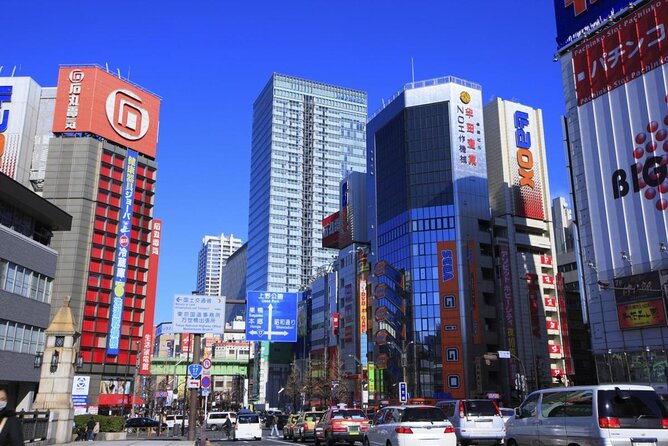
This is a walking introduction to Akihabara’s popular culture. You will not spend the whole afternoon in one large store, and you will not get a formal lecture at every stop. Instead, you move through several places that show how the district works: retro gaming, anime merchandise, capsule toys, arcades, photo booths, and maid cafes.
That format is useful if Akihabara feels confusing when you first arrive. Shops are often stacked across several floors, and the best-known places may be mixed with small stores that are easy to miss. A guide can save you time and explain what you are looking at, especially if you do not read Japanese.
The tour has received a 4.8 rating from 404 ratings, with 96 percent recommending it. Those numbers suggest a strong overall result, but they do not tell the whole story. Some people found the guide highly helpful and enjoyed being taken to places they would not have found alone. Others felt they could have walked around Electric Town without paying for a guide. Your interests and expectations matter a great deal.
More Akihabara and anime tours:
- Official Street Go-Kart Tour – Akihabara
★ 5.0 · 1,578 reviews - Tokyo Go Kart: Asakusa, Skytree, and Akihabara **IDP MUST**
★ 5.0 · 988 reviews - Tokyo: Gameboy Mod Workshop at Akihabara
★ 5.0 · 253 reviews
Meeting at Electric Town Gate
The meeting point is outside the Electric Town Gate of JR Akihabara Station, near the station ticket office and Travel Service Center at 1 Chome-17 Sotokanda. Read the meeting instructions closely before you go, since Akihabara Station has several exits and large underground passages.
The tour ends back at the meeting point. That makes it easy to continue shopping, return to your hotel by train, or explore nearby parts of Chiyoda City afterward.
Arrive with comfortable shoes. The tour includes walking, store visits, stairs, and time in crowded shops. One negative account described confusion over the meeting location, so do not rely on spotting a guide by chance. Confirm the exact meeting instructions and keep your phone available at the start.
Super Potato: a quick trip through gaming history
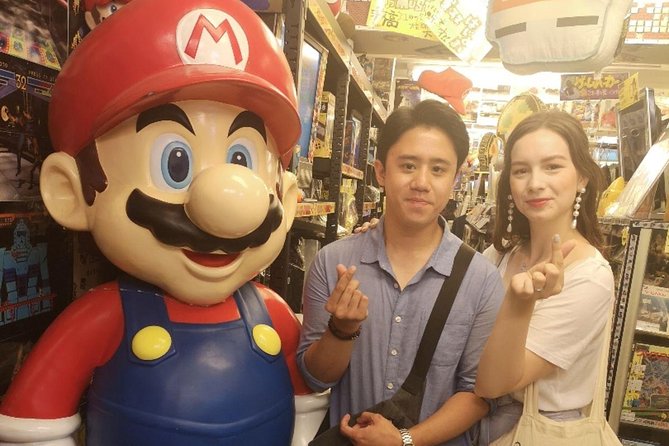
The first stop is Super Potato, a retro video game store and one of the tour’s strongest ideas. You get about 30 minutes here, enough time to see older games, consoles, and arcade-related items without spending the whole tour browsing one shop.
This stop works best if you grew up with Japanese games or want to understand why Akihabara matters to gaming culture. The store connects modern game culture with older systems and titles. Even if you are not a serious collector, the displays give you a clear sense of how much affection Japan has for its gaming past.
Do not expect a guided exhibit with long explanations at every shelf. The value comes from having someone point out items, explain what makes them important, and help you decide what deserves your attention. Guides such as Ryo have been praised for helping people locate specific shops or products, while other guides have been credited with explaining how the area changed over time.
If retro games are your main reason for booking, ask your guide early about your interests. The group may include people focused on anime figures, manga, arcades, or electronics, so a small group gives you a better chance of getting useful suggestions.
Akiba Culture Zone and the many floors of Akihabara
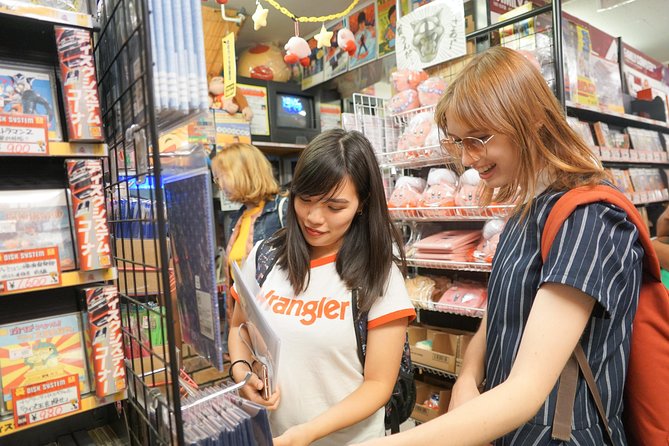
Next comes Akiba Culture Zone, with about 30 minutes for anime goods, idol culture, maid cafe signs, figures, and other parts of Akihabara’s subculture scene. This is where the district can feel most overwhelming. A single building may contain several types of merchandise, with narrow aisles and shops spread over upper floors.
The guide’s job here is less about pointing to one famous object and more about helping you read the area. You can ask about the difference between shops, the kinds of goods aimed at collectors, and where to spend your own free time later.
This stop is also where expectations need managing. Some people have enjoyed being shown shops they would not have found alone. Others felt the merchandise selection was small or too random, with too much time spent walking through cramped stores. If you want a detailed history of anime and manga, say so at the start. The standard route is a practical tour of the district, not a dedicated academic history lesson.
Families should also think about the pace and atmosphere. One guide, Naoki, received praise for adapting the tour to a family with children, including a child with autism. That kind of adjustment is helpful, but the route still runs through crowded, noisy commercial spaces.
More Tokyo walking tours:
- Tokyo Tsukiji Fish Market Food and Culture Walking Tour
★ 5.0 · 3,184 reviews - Tokyo: Imperial Palace and Shogun Historical Walking Tour
★ 5.0 · 2,251 reviews - Tokyo: Shinjuku Local Bar and Izakaya Guided Walking Tour
★ 4.9 · 1,794 reviews - Tokyo: Tsukiji Fish Market Food and Walking tour
★ 5.0 · 1,724 reviews
Gachapon Hall: capsule toys with a short stop

Akihabara Gachapon Hall gets about 15 minutes. Gachapon machines sell small toys and collectibles in capsules, and this stop gives you a quick look at one of Japan’s most popular forms of low-cost entertainment.
The selection can include unusual items, current releases, and character goods. You can try a machine yourself, but the cost of each purchase is not listed as part of the tour, so bring some Japanese yen if you want to play.
Fifteen minutes is enough for an introduction but not enough for a long hunt. If capsule toys are a priority, ask your guide which machines are worth your time. The short stop also keeps the tour moving toward the larger activities.
Heaven’s Gate: your first maid cafe visit

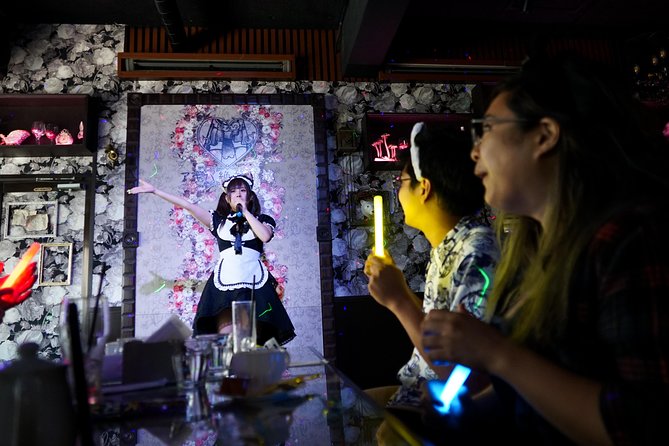
The maid cafe is the main scheduled activity, taking about one hour. Entry and one drink are included, so you do not need to pay a basic admission fee when you arrive. Additional food and drinks cost extra, and a maid live performance costs ¥1,430 per person.
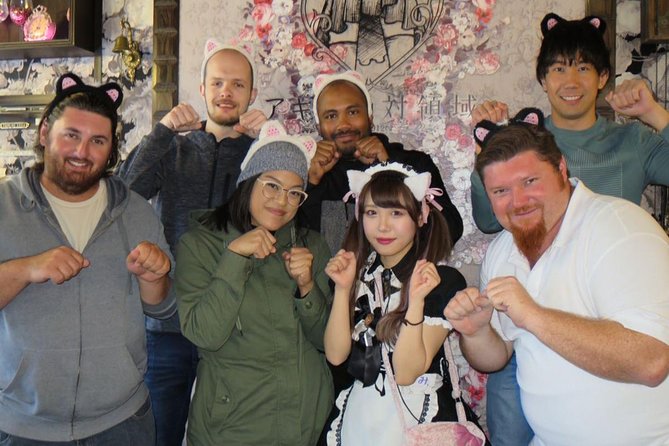
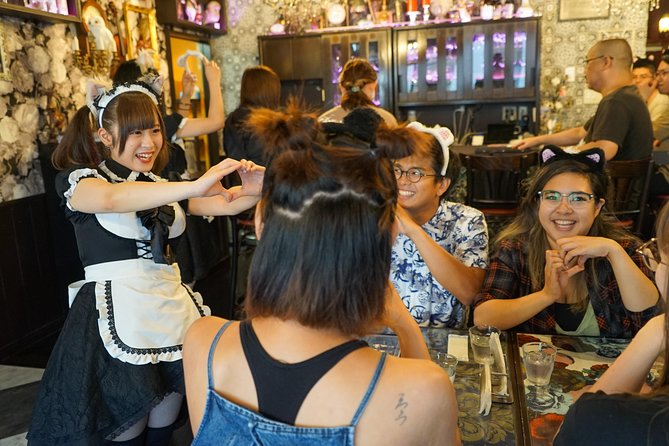
A maid cafe is a performance-based cafe where staff use a playful character style, greetings, and simple rituals as part of the service. For many people, it is the most unfamiliar stop on the route. The guide helps explain what is happening and can make the experience less awkward, especially if you do not know when to participate or what the customs mean.
The cafe can be great fun if you treat it as a piece of Japanese pop entertainment rather than an ordinary coffee shop. It is also a good place to ask questions about the culture around maid cafes. The included drink keeps the cost under control, while the optional food and performance let you choose how much more to spend.
There is one important qualification: the cafe may change depending on the situation. That means the exact venue and atmosphere are not fixed. Some people have found this stop funny and memorable, while others found their cafe visit underwhelming. Your guide and the specific venue will affect the result.
You can also buy a Polaroid photo with a maid. Purikura, the Japanese photo booth experience, is included elsewhere in the tour. These photo activities are a nice fit for friends, couples, and families who want a physical souvenir, but they are optional if you prefer to keep spending down.
Food allergies deserve attention. The operator cannot guarantee an allergy-free meal or meet every dietary restriction because the food is prepared in kitchens outside its control. Substitutions may not always be possible. Tell the operator about restrictions before booking, but do not assume the cafe can safely accommodate them.
Taito Station and the arcade side of Akiba
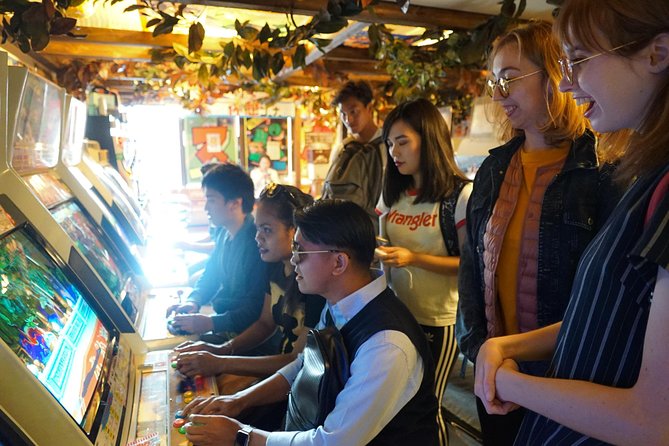
Taito Station Akihabara is about a three-minute walk from Akihabara Station and is marked by a large Space Invaders sign. You get about 25 minutes here, which gives you time to see the arcade atmosphere and try some games.
This stop helps explain why Akihabara is more than shops full of merchandise. Arcades remain part of the district’s character, with games spread across multiple floors and a strong visual presence. If you enjoy vintage arcade machines, ask the guide where the older games are located. Several particularly positive accounts praised arcade visits and older machines, including a classic Marvel vs. Capcom machine.
The time is still limited. You may not get a long turn on your favorite game, and the arcade selection can vary. The point is to sample the setting and learn where to return later, not to spend an entire gaming session here.
Final Akihabara walk: cosplay, vending machines, and last questions
The final 15-minute section is a short look at cosplay or Akihabara’s unusual vending machines. It is a brief ending, but it gives your guide a chance to point out details you might otherwise pass without noticing.
This part is also useful for questions. You can ask where to return for anime figures, which stores suit retro gaming, or how to continue exploring after the tour. Guides such as Yuki have been praised for shaping the route around personal interests, while Taka has helped with translations and reservations.
The tour ends where it began. You may leave with a short list of places to revisit, which is often more useful than trying to cover every building in the district during one guided walk.
What the small group and guide add
The maximum group size is seven. That is small enough for direct conversation, but it does not guarantee the same experience with every guide. The strongest accounts describe guides who were energetic, warm, and flexible.
Seina has been praised for making first-time visitors feel comfortable. Ai has been recognized for anime trivia. Ryo has helped people find specific shops. Taka has assisted with translation and reservations. Kenji has shared local history, while Naoki has adjusted the pace around family needs. These examples show what the tour can offer when the guide takes an active role.
There have also been poor guide experiences. Complaints have included little explanation, a route that felt like being directed from shop to shop, and unprofessional behavior. One serious complaint involved unwanted photographs of children and comments that made a family uncomfortable. The operator responded by acknowledging the concern and saying it would examine its procedures.
I would treat the guide as a major part of the purchase decision. If you want a tightly scripted history tour, this may feel light. If you want help navigating Akihabara, translation support, shop suggestions, and a friendly introduction to maid cafe customs, the right guide can make a real difference.
Is $90.86 a fair price?
At $90.86 per person, this is not a cheap walking tour. You are paying for roughly three hours of guide time, the small group format, maid cafe entry, one drink, a purikura session, and help navigating a district that can be confusing at first.
The included cafe visit is important to the calculation. If you already plan to visit a maid cafe and explore Super Potato, Taito Station, and Akiba Culture Zone on your own, the tour may not save you money. You can walk through Electric Town independently, and many shops do not charge admission.
The price makes more sense if you are visiting Akihabara for the first time, have limited time, or want someone to explain the social side of the district. It is also useful for families and mixed-interest groups. An anime fan can look for figures, a gamer can focus on retro stores, and a curious companion can learn the basics without planning the route.
The 10 or more bookings in the previous month show that the format has steady demand, but demand is not proof of value for every person. Book it for access, context, and time saved, not simply for a list of free shop stops.
Heat, comfort, and practical planning
Summer in Japan can be hot and humid. Bring water, wear a hat, and avoid assuming that the indoor stops will make the whole outing comfortable. You will still walk between buildings, and some shops may be crowded or poorly ventilated.
The activity requires good weather. If poor weather cancels it, you can choose another date or receive a full refund. You can cancel for a full refund up to 24 hours before the start time. Cancellations or changes inside that window are not accepted.
Most people can participate, but the tour operator should know about mobility needs before booking. One account described a serious disagreement about meeting arrangements and accommodation, so be specific about your needs in advance. A group tour cannot simply change its starting point for one person after the meeting time.
Who should book this Akihabara tour?
I would choose this tour for a first visit to Akihabara, especially if you have only one afternoon and want a quick introduction. It suits anime fans, manga fans, retro gamers, arcade fans, and anyone curious about maid cafes but unsure how to begin.
It also works well for parents accompanying children who are more interested in gaming than the adults are. The route offers enough variety to keep a mixed group moving, and a good guide can adjust the emphasis.
I would skip it if you prefer to browse slowly, dislike group pacing, or already know exactly which shops and arcades you want. You may get more value from exploring alone and using the $90.86 for games, collectibles, food, and cafe purchases.
Final verdict: book for orientation and culture
Book this experience if you want a guided first look at Akihabara, with a maid cafe visit built into the price. The small group, retro game stop, gachapon, purikura, arcades, and local guide give you a useful framework for exploring on your own afterward.
Do not book it expecting a detailed anime history seminar or a guaranteed perfect cafe. The route is commercial, fast-moving, and dependent on your guide. For a first-time visitor who wants help making sense of Electric Town, it can be a practical and entertaining start. For an experienced Akihabara shopper, independent wandering may offer better value.
FAQ
How long does the Akihabara Anime and Game Adventure Walking Tour last?
The tour lasts approximately three hours, although the exact duration can vary. The itinerary includes several short shop and arcade stops plus about one hour at a maid cafe.
What is included in the price?
The price includes maid cafe entry, one drink at the maid cafe, a certified MagicalTrip guide, and a Japanese purikura photo booth experience. A Polaroid photo with a maid is available for purchase.
Are food and extra drinks included at the maid cafe?
No. Additional drinks and food are available for purchase. A maid live performance costs ¥1,430 per person.
How large is the group?
The tour has a maximum of seven travelers. A private option is also offered, though the supplied information does not provide a separate private-tour price.
Where does the tour meet and end?
The tour meets near the Electric Town Gate of JR Akihabara Station, by the ticket office and Travel Service Center at 1 Chome-17 Sotokanda, Chiyoda City. It ends back at the meeting point.
Can the maid cafe location change?
Yes. The maid cafe may vary depending on the situation, so the exact venue is not guaranteed.
What is the cancellation policy?
You can cancel up to 24 hours before the start time for a full refund. Changes or cancellations made less than 24 hours before the start time are not accepted. If poor weather causes cancellation, you will be offered another date or a full refund.
Newly reviewed around Tokyo
- Tokyo Asakusa:Calligraphy & Make T-shirt Activity★ 5.0 · 62 reviews
- Intercity Shuttle, Tokyo to Haneda /Narita /Yokohama /Makuhari★ 5.0 · 5 reviews
- 1 Hour Travel around Tokyo with a Professional Photographer★ 5.0 · 3 reviews
- Travel Tokyo with Your Own Personal Photographer★ 5.0 · 43 reviews
- Train in Samurai Swordsmanship and Defeat the Demon in Tokyo★ 5.0 · 5 reviews
- Shuttle Van 6hr Tokyo Tour to-and-from Tokyo, Yokohama and Narita★ 5.0 · 9 reviews
- Kickboxing & Body Training with EX-Pro Fighter★ 5.0 · 4 reviews
- Traditional Japanese Knife Sharpening Class★ 5.0 · 18 reviews
Tokyo Walking Tours, compared.
Tokyo Tsukiji Fish Market Food and Culture Walking Tour
Read our review →
Imperial Palace and Shogun Historical Walking Tour
Read our review →
Shinjuku Local Bar and Izakaya Guided Walking Tour
Read our review →
Asakusa Walking Tour with Sensoji Temple Visit
Read our review →
Tokyo Castle & Imperial PalaceーShogun Walking Tour
Read our review →
Browse the lists this tour appears in