
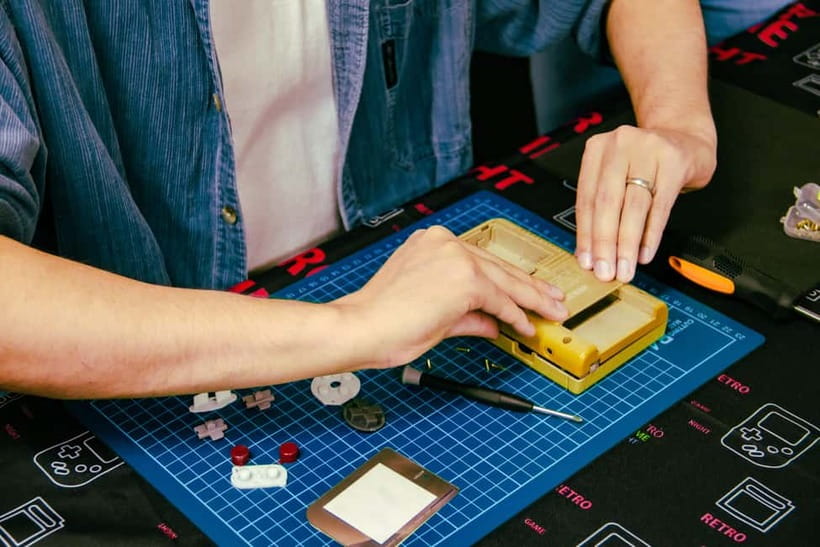
Reviewed · AKIHABARA AND ANIME TOURS
Tokyo: Gameboy Mod Workshop at Akihabara
The best part of this Akihabara workshop is simple: you do not just buy a retro Game Boy, you take one apart and rebuild it in your own colors. The session also includes a lively look at Nintendo’s handheld consoles, so the experience works for both serious fans and people whose main qualification is having once played Tetris under the covers.
I like the small group of up to four, which gives you plenty of help without turning the class into a crowded assembly line. I also like that your finished Game Boy comes with modern upgrades, including a new screen, while keeping the familiar feel of the original DMG-01. The main drawback is the price: at $360 per person, this is a premium souvenir, not a bargain activity.
Key points at a glance
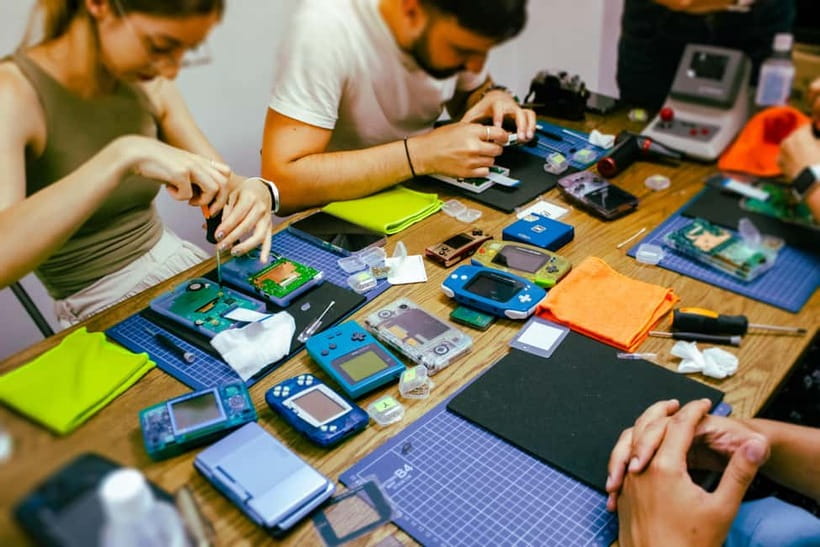
- Build a real DMG-01: Take apart and rebuild a classic Game Boy with guidance from the workshop team.
- Choose nearly every visible detail: Select the shell, buttons, screen surround, power rocker, screen, and color combinations.
- Learn before you build: The session begins with Game Boy and handheld-console history, including hands-on examples of different systems.
- Work in a group of four or fewer: The compact class size makes it easy to ask for help, even if you have never opened electronics.
- Bring home something useful: Your completed Game Boy is tested, functional, and ready for games.
- Plan for stairs: The workshop is on the second floor of the Wakita Building, with no elevator or escalator.
Why this Akihabara workshop feels different from buying a console
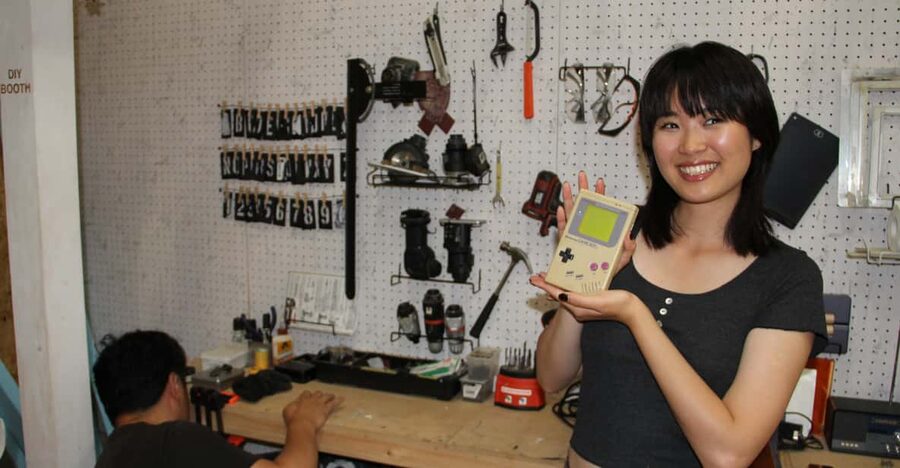
Akihabara is full of places to browse old games and used consoles. That makes it easy to purchase a Game Boy, but buying one and building one are very different souvenirs.
Here, the object you take home carries a story. You selected the colors, handled the parts, learned how the machine works, and watched a familiar gray handheld become your own design. I find that kind of souvenir more satisfying than another boxed item picked up at the end of a shopping day.
The workshop focuses on the original Game Boy, known as the DMG-01, while adding updated parts. You can change the shell, buttons, screen, and other visible details. The upgraded screen is especially useful because it gives the old console a more practical modern display while preserving its classic shape and controls.
The experience is not only for electronics experts. The staff explain each stage clearly and help when a part is stubborn or confusing. You do need to participate, though. This is a hands-on class, not a demonstration where you sit back and watch someone else work.
More Akihabara and anime tours:
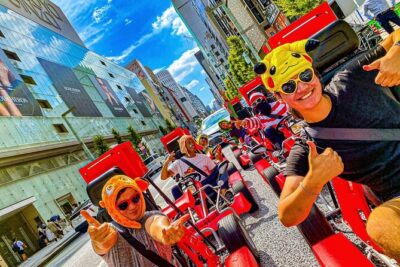
- Official Street Go-Kart Tour – Akihabara
★ 5.0 · 1,578 reviews - Tokyo Go Kart: Asakusa, Skytree, and Akihabara **IDP MUST**
★ 5.0 · 988 reviews - Akihabara Anime & Game Adventure Walking Tour (Group or Private)
★ 5.0 · 404 reviews
Arriving at the Wakita Building
The meeting point is on the second floor of the Wakita Building in Akihabara. Follow the supplied address carefully, since the workshop is not described as a street-level storefront with a large public entrance.
The building has no elevator or escalator. If stairs are difficult for you, this is an important limitation to consider before booking. The activity is therefore not wheelchair accessible.
Once inside, expect a compact workshop setting designed for a maximum of four participants. That number matters. You can look closely at the parts, ask questions as you go, and get individual help instead of waiting for an instructor to circulate through a large room.
The instructors speak English and Japanese. Names connected with the workshop include Gabi, Franz, Shio-san, and Ro. The team’s appeal comes through in the way the class is run: friendly, enthusiastic, and comfortable discussing both beginner questions and more technical details.
The opening lesson: from Nintendo history to hands-on hardware
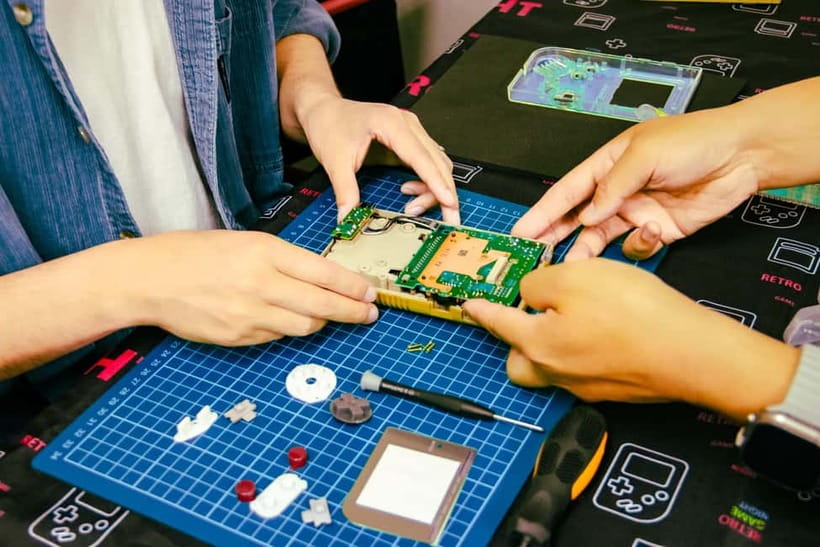
The class begins with an introduction to the Game Boy and the development of handheld gaming. You learn about the machine’s place in Nintendo’s wider line of portable consoles, rather than jumping straight to screwdrivers and loose buttons.
A useful feature is the chance to see different handheld systems in person. The introduction may include actual consoles for a hands-on look, which makes the story easier to follow than a talk supported only by slides.
This part of the session gives the build some context. The Game Boy was not simply a small home console. Its design, battery life, game library, and sturdy construction helped define portable gaming for a generation. You do not need to arrive with that background, but if you grew up with one, the lesson adds a welcome layer of nostalgia.
The pace appears to be relaxed. The class is intended to fit into two hours, but the instruction is structured so you can understand what you are doing before moving on. That is useful for families and mixed groups, where one person may know every Nintendo model and another may be opening a controller for the first time.
Choosing your colors and parts
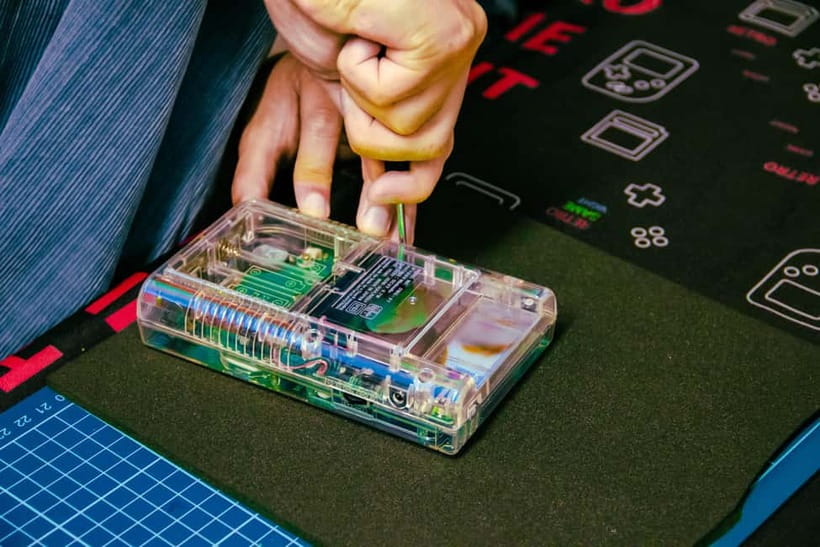
The most creative stage comes before the tools do much work. You choose the visible style of your Game Boy from an assortment of shells, buttons, screen surrounds, and other parts.
You can keep the look close to the original or mix colors for something that Nintendo never sold. One participant created a special color combination using different shades rather than choosing a standard matching set. That freedom is a major part of the fun, but it can also slow you down if you are indecisive.
My practical advice is to think about the whole console before selecting individual pieces. A shell that looks great on its own may need a contrasting button color to make the finished design work. Take your time, compare combinations, and ask the staff for help if you are stuck.
The choices are not limited to the outer shell. You can select the buttons, power rocker, screen surround, and screen. The result can be subtle, colorful, playful, or deliberately odd. Since the workshop has a small class size, you should have room to make those choices without feeling rushed.
For children and teenagers, this stage gives them real control over the project. For adults, it is often the point where a childhood console becomes a personal design object rather than a replica.
More hands-on classes and workshops in Tokyo:
- Sushi Making Tokyo Roll and Authentic Japanese Sushi Class
★ 5.0 · 3,971 reviews - Tokyo: Roll and Authentic Sushi Making Class in Asakusa
★ 4.9 · 1,957 reviews - Tokyo Shinjuku Chopsticks Making Class
★ 5.0 · 1,763 reviews - Tokyo: Sushi Making Class in a Happi Coat near a Famous Spot
★ 4.9 · 1,377 reviews
Taking apart the Game Boy
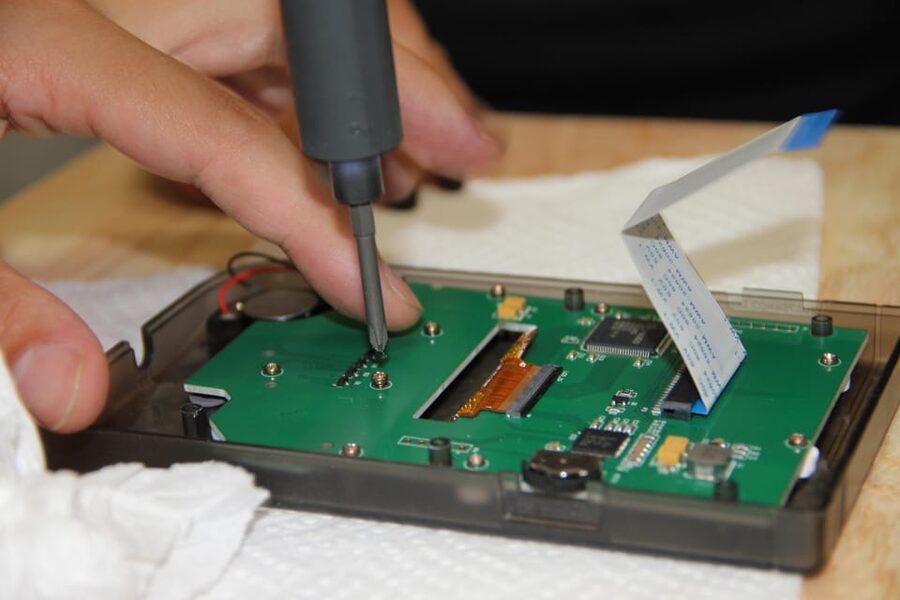
After the introduction and parts selection, you begin disassembly. You work with an original Game Boy and learn how the outer case, buttons, screen, and internal components fit together.
This is where the experience earns its workshop label. You are not simply attaching decorative stickers or choosing a color at a counter. You are handling the console’s actual construction and seeing how a compact handheld was assembled.
You do not need prior electronics experience. The instructors walk you through the steps, double-check the work, and step in when needed. The process is approachable, but it still demands care. Small parts and screws are easy to lose, and you should follow instructions rather than rushing ahead.
The staff can explain the purpose of the components in plain language. If you are interested in electronics, you can ask more technical questions. If you mainly want to make a personalized souvenir, you can concentrate on the build without needing to master every circuit.
That flexibility is one of the activity’s strongest features. A serious retro-gaming fan can ask detailed questions, while a parent or first-time builder can receive patient one-on-one help.
Rebuilding with a new screen and custom case
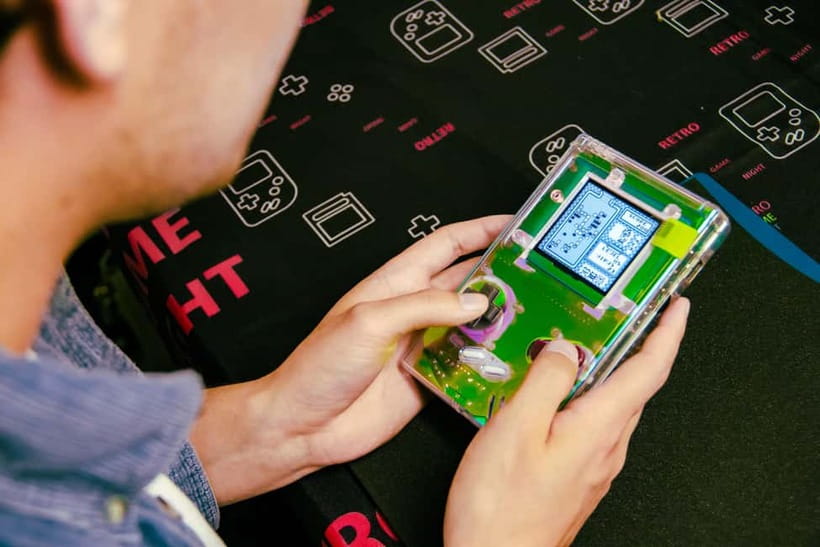
Once the old parts are separated, you begin putting the console back together with your chosen components. The finished unit uses a modernized board and updated materials, according to the experience details and participant accounts.
The screen upgrade is a particularly meaningful improvement. The original Game Boy display is part of its identity, but a newer backlit screen makes the console easier to use. You still get the familiar buttons and layout, but the display is more suitable for regular play.
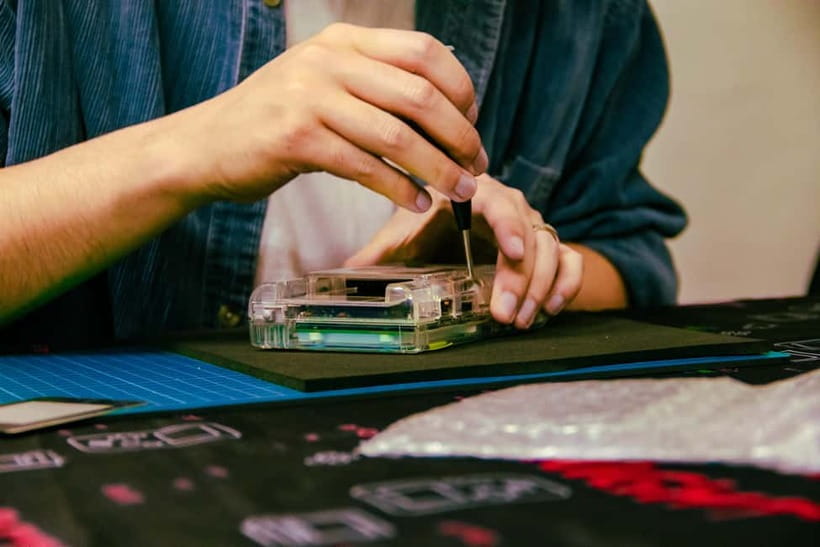
You will assemble the new case, fit the buttons, install the screen surround, and reconnect the relevant parts with guidance from the staff. The instructors check the work along the way rather than waiting until the very end to discover a problem.
That attention matters because the finished item is meant to be played, not just displayed. A beautiful shell is nice, but it is much better when the console works reliably and can go straight into your luggage for the trip home.
The two-hour limit means the class has a clear rhythm. You get enough time to make meaningful choices and perform the build, but this is not an open-ended repair course. If you want to study every technical detail, you could easily wish for more time.
Testing the finished console
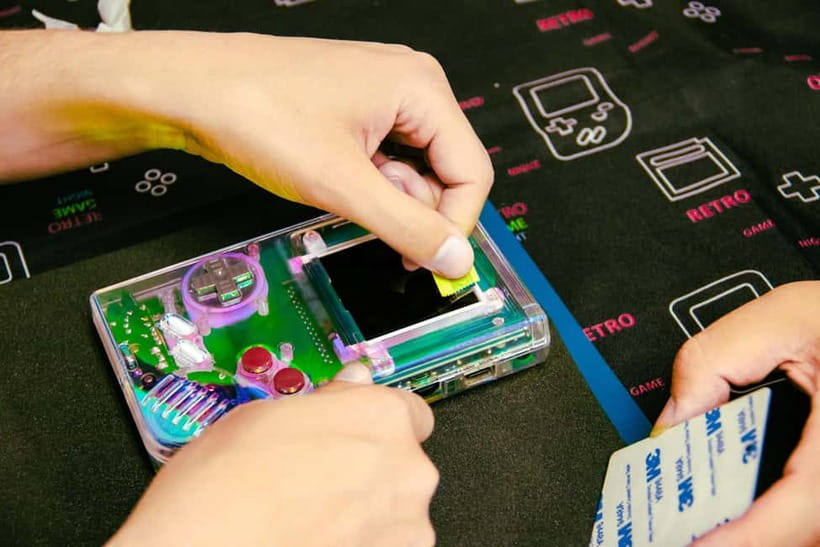
Before you leave, the Game Boy is checked to make sure it functions. This final test is essential because it confirms that the buttons, screen, controls, and internal connections are working together.
The workshop includes the activities, parts, admissions, and expert guidance needed for the build. You are not expected to arrive with a tool kit or source the hardware yourself.
The completed console is more than a decorative object. You can take it home and play games on it. Some participants also received a protective case for storing and displaying the finished Game Boy, although you should confirm what is included when booking because the stated inclusions focus on the build and guidance.
A selection of retro games is also available at the workshop. A 1,000 yen game is included in the activity according to the supplied details from the experience, and additional games can be purchased. The selection includes Japanese and international titles, with familiar choices such as Tetris, Mario, Kirby, and Dr. Mario mentioned by participants.
This is a useful convenience in Akihabara. You can choose a game while the console is fresh in your mind instead of hunting through several shops later. Prices were described as favorable compared with some major Akihabara stores, though game prices and stock can change.
Is $360 a fair price?
The $360 price deserves an honest look. If you compare it with the cost of buying a used Game Boy, this workshop is expensive. A secondhand console by itself can cost much less, especially if you are happy with an ordinary shell and original screen.
You are paying for several things at once:
- A working vintage Game Boy
- New customization parts
- A modernized screen and related upgrades
- The hands-on class
- Staff guidance and testing
- A short history lesson
- A small-group setting
- The chance to choose and assemble the design yourself
The price makes more sense if you value the activity as part of your Tokyo visit. You are not only purchasing hardware. You are paying for access to scarce retro equipment, a prepared selection of parts, expert assistance, and two hours of making something personal.
It is also a strong gift experience for someone who grew up with Game Boy. One family booked it for a partner, and a teenager built a console with individual help from an instructor. Parents and companions can enjoy the setting and play older games even if they are not building a unit themselves, though you should clarify participation arrangements for non-builders.
I would not recommend it to someone who only wants the cheapest playable Game Boy. I would recommend it to someone who wants a story attached to the souvenir and values the making as much as the finished console.
Who will get the most from the two hours?
This is an excellent fit for:
- Nintendo fans and retro-gaming enthusiasts
- People who enjoy electronics, design, and small repair projects
- Adults seeking a nostalgic Tokyo experience
- Families with older children and teenagers
- Couples looking for a shared activity
- Visitors who prefer a personal souvenir to ordinary shopping
You do not need to know Game Boy trivia before arriving. The staff can meet beginners at their level. At the same time, the workshop has enough technical and historical material to keep experienced fans interested.
It is less suitable if you dislike careful hand work, have very limited time in Akihabara, or mainly want to browse rather than build. The stairs also rule it out for wheelchair users and anyone who cannot comfortably reach a second-floor room without an elevator.
The small group is good for solo visitors. You do not need to bring a large party to make the activity worthwhile, and the setup gives you a chance to talk with other people who are interested in games.
Practical booking advice before you go
The session lasts two hours, and starting times depend on availability. I would schedule it when you are not rushing to another appointment. Color selection and the build itself are the heart of the activity, so arriving with time to spare will make the experience more pleasant.
Cancellation is free up to 24 hours before the start time for a full refund. You can also reserve now and pay later, which helps if your Tokyo schedule is still changing.
Remember that the workshop is on the second floor of the Wakita Building, without an elevator or escalator. The instructors work in English and Japanese, and the class is limited to four participants.
Bring a little patience. The goal is not to finish as fast as possible. The best result comes from considering your color choices, following the instructions, and asking questions when you are unsure.
Should you book the Game Boy Mod Workshop?
Book it if you want a hands-on Akihabara memory and like the idea of playing a console you helped create. The strong points are the small group, friendly staff, broad customization choices, modern screen upgrade, and the chance to buy games before you leave.
Skip it if $360 feels too high for a souvenir or if you only want a basic used Game Boy. For the right person, though, the cost covers both a working custom console and a memorable activity with local gaming enthusiasts. That combination is hard to reproduce in an ordinary electronics shop.
FAQ
Where does the Game Boy Mod Workshop take place?
It takes place on the second floor of the Wakita Building in Akihabara, Tokyo. Follow the supplied address to find the entrance.
How long does the workshop last?
The activity lasts two hours. Starting times depend on availability.
How much does the workshop cost?
The listed price is $360 per person.
How many people are in each group?
The group is limited to four participants.
Which languages are spoken?
The instructors speak English and Japanese.
What kind of Game Boy do I build?
You customize a vintage DMG-01 Game Boy with provided parts.
What can I customize?
You can choose the case color, buttons, screen, screen surround, power rocker, and other available parts.
Do I need electronics experience?
No previous experience is stated as a requirement. The staff guide you through taking apart and rebuilding the Game Boy.
Is wheelchair access available?
No. The workshop is on the second floor, and the building has no elevator or escalator.
Can I cancel the booking?
Yes. You can cancel up to 24 hours in advance for a full refund. You can also reserve now and pay later.
Newly reviewed around Tokyo
- Tokyo Asakusa:Calligraphy & Make T-shirt Activity★ 5.0 · 62 reviews
- 1 Hour Travel around Tokyo with a Professional Photographer★ 5.0 · 3 reviews
- Travel Tokyo with Your Own Personal Photographer★ 5.0 · 43 reviews
- Intercity Shuttle, Tokyo to Haneda /Narita /Yokohama /Makuhari★ 5.0 · 5 reviews
- Train in Samurai Swordsmanship and Defeat the Demon in Tokyo★ 5.0 · 5 reviews
- Shuttle Van 6hr Tokyo Tour to-and-from Tokyo, Yokohama and Narita★ 5.0 · 9 reviews
- Kickboxing & Body Training with EX-Pro Fighter★ 5.0 · 4 reviews
- Traditional Japanese Knife Sharpening Class★ 5.0 · 18 reviews
Akihabara and Anime Tours, compared.
Tokyo Go Kart: Asakusa, Skytree, and Akihabara **IDP MUST**
Read our review →
Akihabara Anime & Game Adventure Walking Tour (Group or Private)
Read our review →
Akihabara Tailor-made Private Tour for Anime Fans
Read our review →
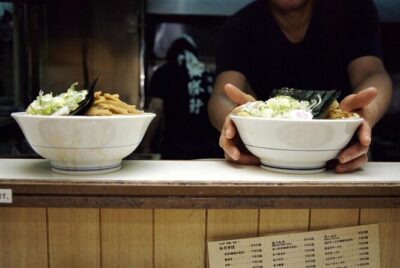
Ramen Making from Scratch +Akihabara Tour –Tokyo Cooking Class
Read our review →
Manga Drawing Workshop Guided by Pro Manga Artist
Read our review →Browse the lists this tour appears in