
Reviewed · AKIHABARA AND ANIME TOURS
Tokyo: Manga Drawing Workshop Guided by Pro Manga Artist
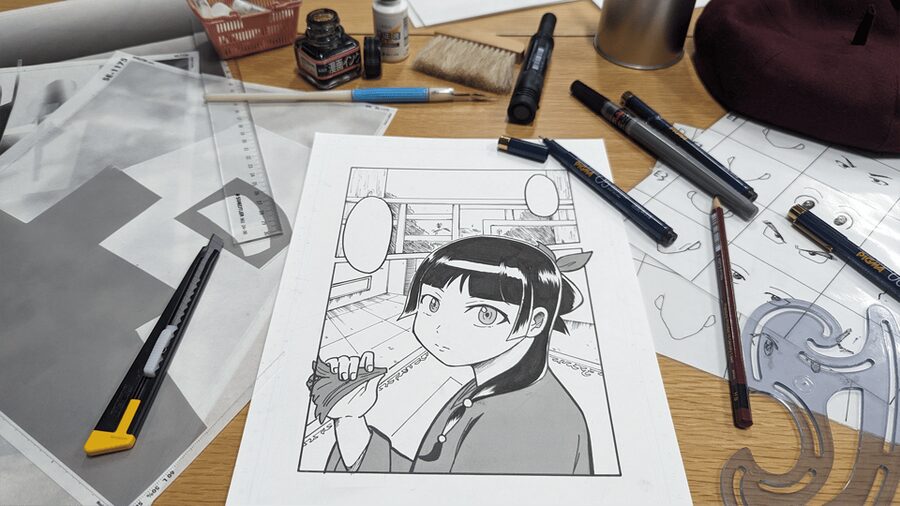
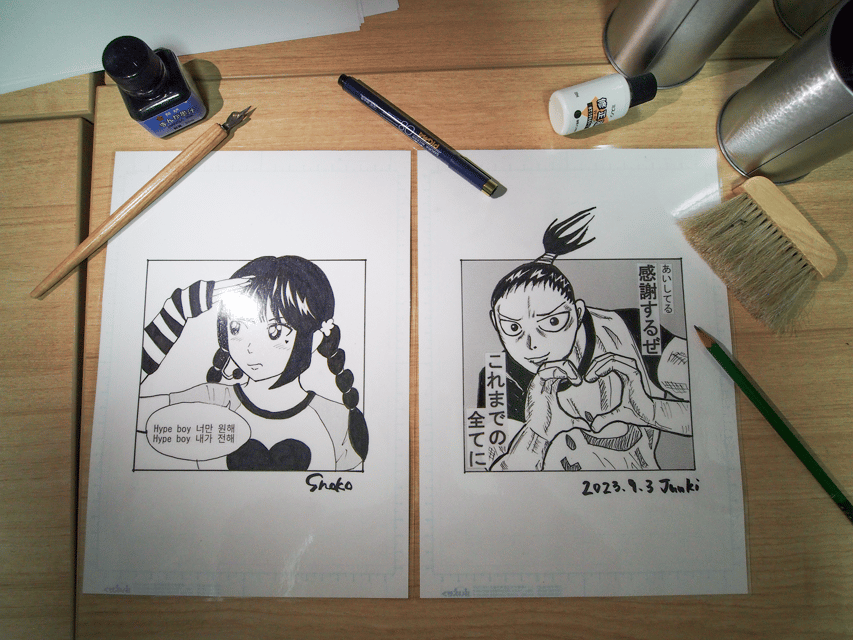
Creating manga in Tokyo is far more hands-on than simply browsing anime shops. In this 150-minute workshop, you follow the same basic steps used by professional artists: idea, rough sketch, pencil draft, ink, solid blacks, screen tones, and speech bubbles. All materials are supplied, so you can arrive with no drawing gear and leave with a finished panel.
I like the small group of up to eight, which gives the artist time to help beginners and answer questions. I also like the interpreter, since the session is not just silent drawing: you can ask about tools, working methods, and the manga business. The main consideration is that the amount of creative freedom can vary. Some sessions offer a lot of guidance, while others may have you tracing or adapting an artist-prepared sketch rather than building every line from scratch.
Key points
- Traditional manga tools: Learn inking, solid blacks, erasing, cutting screen tones, and adding speech bubbles.
- Beginner-friendly instruction: You do not need drawing experience, and children, adults, digital artists, and complete beginners can all take part.
- Small Shibuya setting: The group is limited to eight, making personal help more likely.
- Interpreter included: English and Japanese support lets you ask questions throughout the class.
- Personal keepsake: Your completed panel is laminated or prepared for travel so you can take it home.
- Finding the studio: The black, narrow building can be easy to miss, so allow extra time for the meeting point.
What happens during the 150-minute manga class
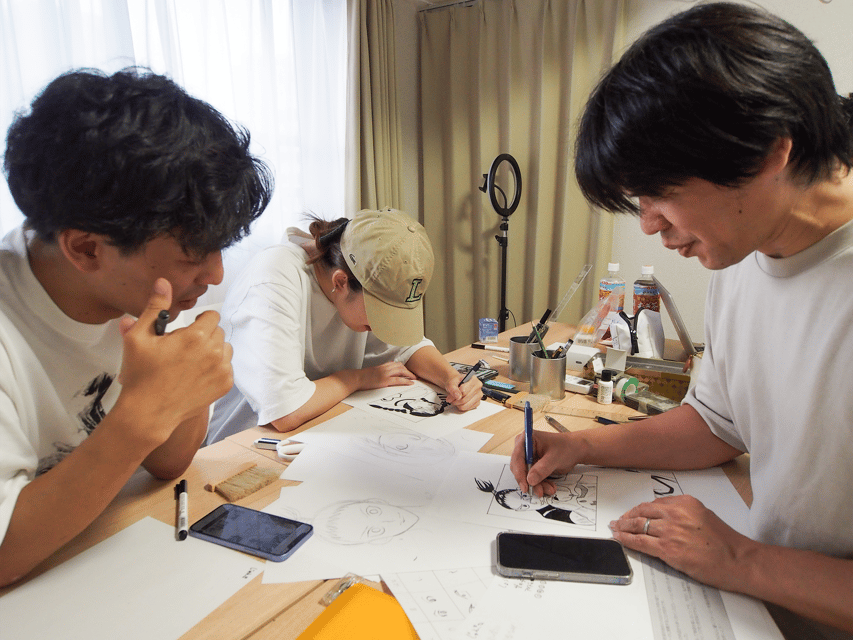
The workshop follows the working order of a manga artist rather than jumping straight into character drawing. That matters because manga is not only about faces and poses. The final effect comes from line weight, framing, black areas, tone, and text working together.
You begin by deciding what to draw. You may choose from sample images or use your own idea, character, face, or pose. Some participants have adapted favorite characters, while others have created personal designs, pets, or original combinations. If your idea is complicated, the artist helps simplify it into something that can be completed during the class.
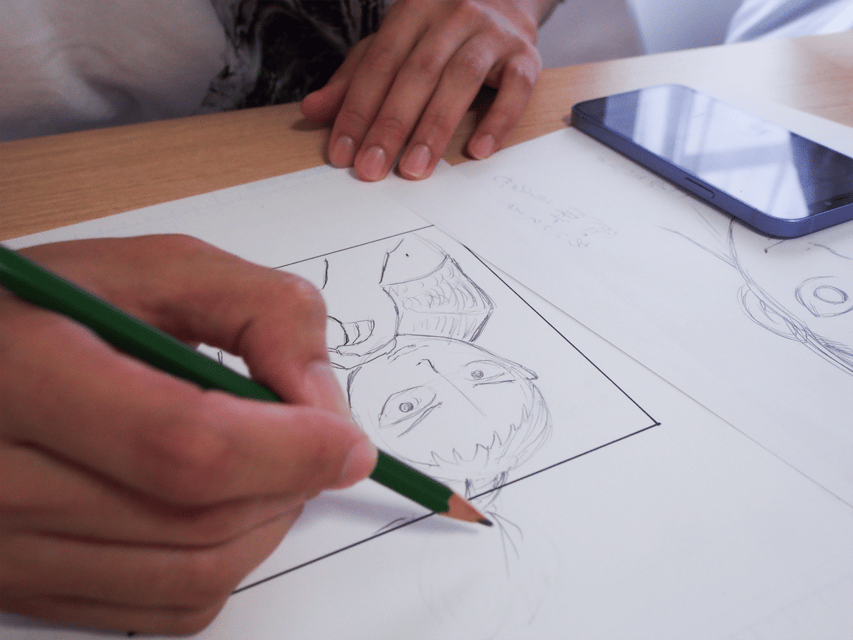
The artist then prepares or demonstrates a rough outline. You use that starting point to shape your panel with a pencil. For a complete beginner, this is reassuring because you are not staring at a blank sheet and hoping a professional-level character appears. For a more experienced artist, the rough stage offers a chance to change the pose, expression, or composition.
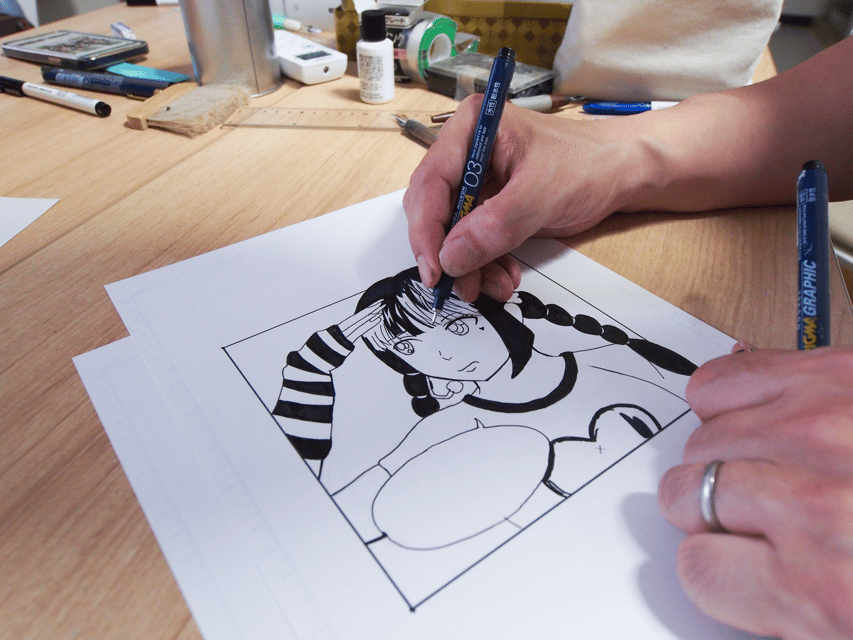
Next comes drafting and inking. You go over the pencil structure with manga tools, learning how clean black lines give the drawing its finished look. The instructor can correct proportions, explain how to handle details, and show you where a stronger line will make the image read better.
You then erase the remaining pencil marks and work on solid black areas. This step can look simple, but it changes the balance of the panel. Hair, clothing, shadows, and backgrounds gain weight, and the image begins to resemble printed manga rather than a pencil sketch.
The most unusual part for many visitors is screen tone. This is a traditional manga material used to create gray areas, texture, shadows, and visual effects. You cut and apply the tone with care, often using a craft knife. It is a tactile process that feels very different from adding gray digitally.
Finally, you add speech bubbles or other comic effects. The panel is then prepared as a keepsake, with the finished artwork laminated in some sessions. You leave with something physical, signed if you wish, and made during your time in Tokyo.
More Akihabara and anime tours:
- Official Street Go-Kart Tour – Akihabara
★ 5.0 · 1,578 reviews - Tokyo Go Kart: Asakusa, Skytree, and Akihabara **IDP MUST**
★ 5.0 · 988 reviews - Akihabara Anime & Game Adventure Walking Tour (Group or Private)
★ 5.0 · 404 reviews
Learning from a professional artist
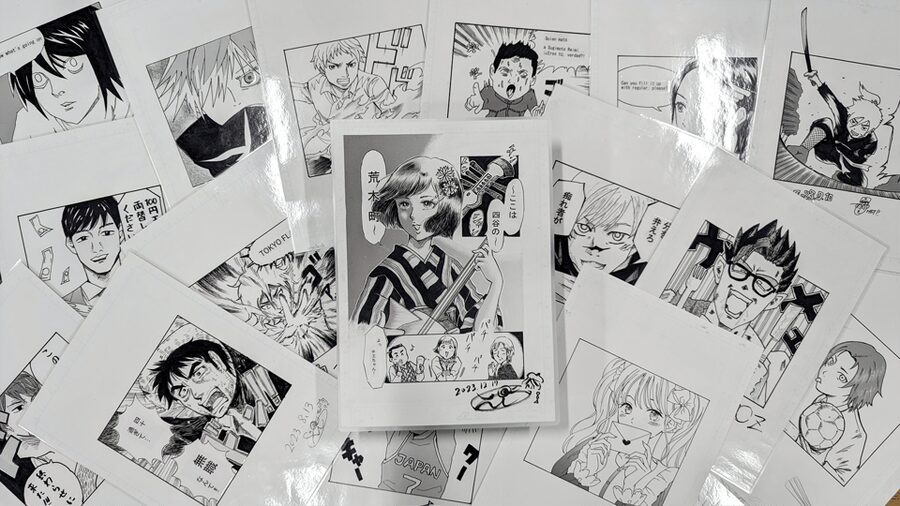
The instructor is a working manga professional with more than 20 years of experience, and the teaching style is patient rather than showy. Artists named in past sessions include Shige Mathumori, Rokkaku-sensei, Kousei-sensei, Hiroshi, and Kamaya Katsuki. The specific artist depends on the date, but the central benefit is the same: you are learning from someone who understands the full production process.
The artists do not only show you how to draw an eye or hair. They explain how the stages connect. A rough sketch must leave room for the ink. Black areas need balance. Screen tones should support the image rather than cover every open space. Speech bubbles must fit the composition.
You can also ask about the working life of a mangaka. Past sessions have included questions about careers, inspiration, tools, and how manga is made. That conversation adds value for fans who want more than a souvenir photo.
The instructor may also create a quick sketch for you. One participant received an impressively fast drawing of two dogs, while others had the artist adapt their chosen characters or ideas. This is a nice extra, but you should book the class mainly for your own panel, not as a guaranteed commissioned drawing.
How much help will you receive?
This class works especially well if you are nervous about your drawing ability. You are guided through each stage, and the professional artist can adjust the level of help to suit the group. Children as young as 10 have taken part successfully, as have adults who felt they could not draw.
The small group is important here. With no more than eight people, the instructor can move around the room, check progress, and give individual suggestions. A completely new artist may need help with every stage, while an experienced artist may want to handle more of the drawing independently.
There is one point to understand before booking. This is not always a fully open studio where you create an entire original manga page without intervention. Depending on the instructor and the design you choose, the artist may provide a rough drawing for you to refine or trace. One participant felt the class offered less independent creation than expected, with the professional doing much of the initial work before the participant added lines, tones, and comic effects.
That approach can be a benefit or a limitation. If you want a polished result and confidence-building support, it helps. If you are an advanced artist hoping for a free-form critique session, ask at the start how much of the panel you will draw yourself.
Why the interpreter makes a difference
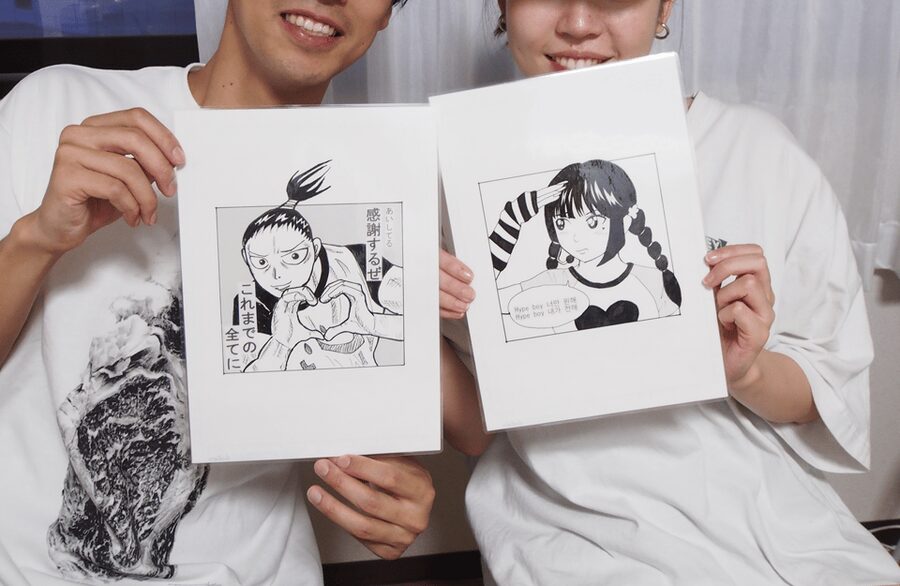
An interpreter is included, with English and Japanese listed as the available languages. This is more useful than a basic translation of instructions. It lets you ask why a tool is used, how the artist approaches a difficult pose, or what traditional screen tones do.
Interpreters have included Hanae, Madoka, Machi, and Ai in past sessions. Their role also helps keep the room relaxed. You can discuss anime, manga careers, Tokyo activities, and your own ideas instead of trying to explain everything through gestures or a translation app.
Communication has not been perfectly effortless in every session. One participant occasionally needed Google Translate, but the included interpreter handled the main teaching clearly. For most people, the language support should be enough to follow the process and ask practical questions.
If you are traveling with family or friends who have different language levels, this is a useful feature. The artist can demonstrate, the interpreter can explain, and everyone can work at a comfortable pace.
More hands-on classes and workshops in Tokyo:
- Sushi Making Tokyo Roll and Authentic Japanese Sushi Class
★ 5.0 · 3,971 reviews - Tokyo: Roll and Authentic Sushi Making Class in Asakusa
★ 4.9 · 1,957 reviews - Tokyo Shinjuku Chopsticks Making Class
★ 5.0 · 1,763 reviews - Tokyo: Sushi Making Class in a Happi Coat near a Famous Spot
★ 4.9 · 1,377 reviews
A good match for families, couples, and solo artists
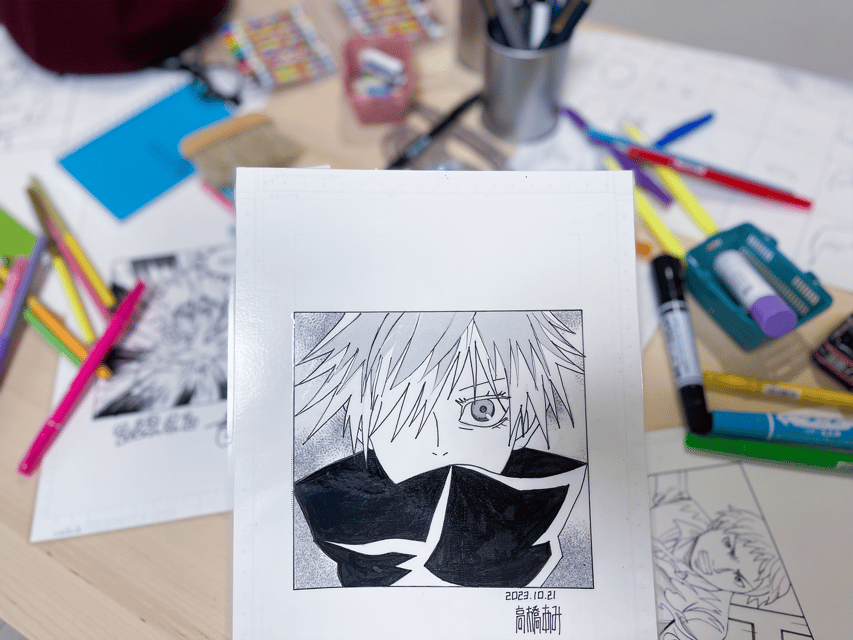
This is a flexible activity because the finished panel can be simple or ambitious. Families can choose different characters and work side by side. Children may enjoy seeing their ideas become a real comic image, while adults often appreciate learning a craft they have only seen on a screen.
Couples can make matching panels or create a shared keepsake from a favorite series. One honeymooning couple planned to frame their finished work at home, which gives you an idea of the souvenir quality. It is more personal than a mass-produced item from a shop.
Solo visitors also fit easily into the format. One person had a private-feeling session after being the only participant that day, with plenty of time to discuss traditional drawing and screen tones. A solo booking may give you more direct contact with the instructor, though the group size changes from session to session.
You do not need to be a dedicated anime fan. The process itself is enjoyable, and the artist can help turn a simple photo or idea into a manga-style panel. Still, fans of series such as One Piece and Naruto will get an extra thrill from learning the tools behind the visual language they already love.
The Shibuya meeting point
The studio is at 6F, Shibuya 3-chome TR Building, 3-8-11 Shibuya, Shibuya-ku, Tokyo. The building is described as black and relatively thin, which is useful because it may not look like a large workshop venue from the street.
Allow extra time to find it. The location has been confusing for some people, especially when crowds or events around Shibuya Crossing make the streets harder to navigate. One family needed help locating the space during a political rally, and the guides assisted them.
The meeting point is in Shibuya, but the activity itself takes place in an indoor studio. You are not moving between several sightseeing stops, so the value comes from the focused class rather than from views or neighborhood commentary. Plan a little buffer before the start instead of arriving at the last minute with your drawing idea still undecided.
The activity is wheelchair accessible. Pickup is not included, and food and drinks are not included, so treat this as a standalone workshop rather than a full half-day tour.
Is $129 a fair price?
At $129 per person, this is not a cheap drop-in art lesson. You are paying for a professional instructor, an interpreter, a small group, all drawing materials, and two and a half hours of guided time in central Tokyo.
The strongest value comes from the finished work and the access to traditional tools. Screen tones, manga ink, and professional paper are not materials most visitors carry on a Japan trip. You also avoid buying a complete set of supplies for a single project, then trying to transport it home.
The price makes more sense if you value instruction and a personal souvenir. It is less convincing if you only want a quick character sketch or a short photo opportunity. You can buy manga merchandise for much less, but it will not have your name, choices, mistakes, and finished lines in it.
I would compare this with the cost of a standard craft workshop in Tokyo, then ask how much the interpreter and professional guidance matter to you. For a serious fan, family, or couple, the class offers a memorable activity rather than another item in a shopping bag.
Practical booking advice
You can cancel up to 24 hours before the start for a full refund, and the reserve-now, pay-later option lets you hold a place without paying immediately. Starting times vary, so check availability for your date.
Wear something comfortable for sitting and drawing. No supplies are required, and the materials are provided. If you already have a character, pose, pet, or personal idea in mind, bring the reference on your phone. You may also choose from provided samples.
Tell the instructor early if you want more independence. A beginner may prefer a prepared outline, while an artist who normally works digitally may want to handle more of the traditional process. This small conversation can shape the session.
Think carefully about the type of souvenir you want. Your finished piece may be polished because of the instructor’s help, but it may not represent every line being drawn entirely by you. If that distinction matters, ask how the artist will support your chosen design before the drawing begins.
Who should book this workshop?
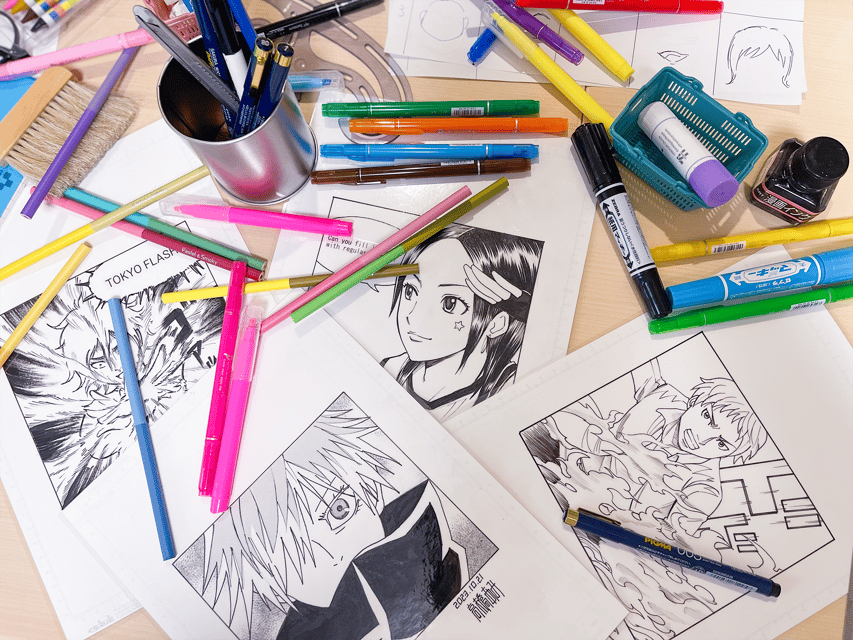
I would book this for anime and manga fans, families with creative children, couples seeking a shared souvenir, and solo visitors who enjoy learning a hands-on skill. It is also a good choice for digital artists who want to try paper, ink, and screen tones.
I would be more cautious if you want a completely independent art lesson or a long critique of your own portfolio. The class is designed to help you complete a manga panel in a short period, so the artist may guide, redraw, or prepare parts of the image to keep you on schedule.
The high rating is understandable because the class combines patient teaching, an interpreter, useful materials, and a finished keepsake. The most praised elements are the instructors’ patience, the clear step-by-step process, and the friendly support from the interpreters. Just set the right expectation: this is a guided manga-making session, not necessarily a blank-page masterclass.
If you want to create something personal in Tokyo and learn why manga looks the way it does, I think it is worth booking. Arrive early, bring a manageable idea, and decide in advance how much help you want. You will have the best time if you treat the finished panel as both a souvenir and evidence of what you learned.
FAQ
How long does the manga workshop last?
The workshop lasts 150 minutes, or two and a half hours.
Do I need drawing experience?
No. Previous drawing skills are not required, and the professional artist guides beginners through the process.
What manga techniques will I learn?
You work through ideation, rough sketching, drafting, inking, filling solid black areas, applying screen tones, and adding speech bubbles.
Are drawing materials included?
Yes. Manga drawing materials are provided, so you do not need to bring supplies.
Is an interpreter included?
Yes. The activity includes an interpreter, and English and Japanese are listed as the available languages.
Where does the workshop meet?
The meeting point is 6F, Shibuya 3-chome TR Building, 3-8-11 Shibuya, Shibuya-ku, Tokyo. The building is black and relatively narrow.
Can I cancel the booking?
You can cancel up to 24 hours in advance for a full refund. A reserve-now, pay-later option is also available.
Newly reviewed around Tokyo
- Tokyo Asakusa:Calligraphy & Make T-shirt Activity★ 5.0 · 62 reviews
- Intercity Shuttle, Tokyo to Haneda /Narita /Yokohama /Makuhari★ 5.0 · 5 reviews
- 1 Hour Travel around Tokyo with a Professional Photographer★ 5.0 · 3 reviews
- Travel Tokyo with Your Own Personal Photographer★ 5.0 · 43 reviews
- Train in Samurai Swordsmanship and Defeat the Demon in Tokyo★ 5.0 · 5 reviews
- Shuttle Van 6hr Tokyo Tour to-and-from Tokyo, Yokohama and Narita★ 5.0 · 9 reviews
- Kickboxing & Body Training with EX-Pro Fighter★ 5.0 · 4 reviews
- Traditional Japanese Knife Sharpening Class★ 5.0 · 18 reviews
Akihabara and Anime Tours, compared.
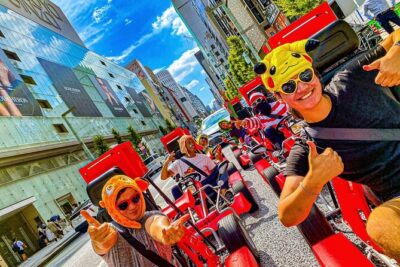
Tokyo Go Kart: Asakusa, Skytree, and Akihabara **IDP MUST**
Read our review →
Akihabara Anime & Game Adventure Walking Tour (Group or Private)
Read our review →

Akihabara Tailor-made Private Tour for Anime Fans
Read our review →
Ramen Making from Scratch +Akihabara Tour –Tokyo Cooking Class
Read our review →Browse the lists this tour appears in