
Reviewed · ASAKUSA AND SENSOJI TOURS
Asakusa: Japanese kitchen knife store visits after history tour
Asakusa’s famous temples are only half the story. This tour connects Senso-ji’s religious past with Kappabashi, the practical shopping street where restaurant operators buy Japanese knives and kitchen gear. It is a smart pairing for anyone who wants more than a quick temple photo.
I like the small maximum of eight people, which gives the guide room to answer questions. I also like the useful ending: you do not just browse knife shops alone, you get help choosing a blade for cooking, gifts, or a serious home kitchen. The main consideration is focus. If knives are your only goal, you may prefer to go straight to Kappabashi and skip the three-hour walking route.
Key points at a glance
- A temple-to-knife route: Begin with Sumida Park, Kaminarimon, Senso-ji, and Asakusa Shrine, then finish in Kappabashi’s kitchen-supply district.
- A genuinely small group: The tour accepts a maximum of eight people, making it easier to ask about both local history and knife buying.
- Guides who adapt: Akiko shortened the sightseeing portion for a couple mainly interested in knives, while Kay, Sue, and Amy received praise for clear explanations and practical help.
- A useful observation deck stop: The Asakusa Culture Tourist Information Center offers a free open terrace with views across the area.
- Headsets for groups of three or more: You can hear the guide clearly even when the group spreads out.
- A one-way morning plan: Meet at 9:30 a.m. near Kaminarimon and finish at Kappabashi, without hotel pickup or drop-off.
Why this Asakusa combination works
Many Asakusa tours stop at Senso-ji and call it a day. This one gives the neighborhood a second act. You start with Tokyo’s oldest temple district, then walk toward Kappabashi, where the subject shifts from worship and old streets to sharpened steel, restaurant tools, and practical Japanese craftsmanship.
That change of mood is the appeal. You get context for the area before facing rows of knives in specialist shops. By the time you reach Kappabashi, you have already seen the streets and landmarks that make Asakusa distinct.
At $78.18 per person, the value depends on your interests. If you want only a guided temple visit, the price may feel high for a route that covers several sights in short visits. If you want a guide, local stories, a small group, and help making a knife purchase, the combination is more useful than paying for a basic sightseeing walk and then trying to shop on your own.
The tour lasts about three and a half hours. That is enough time for a good introduction, but not enough for long visits inside every temple or an unhurried afternoon of shopping. Think of it as a focused morning that leaves you in Kappabashi with the rest of the day still available.
More Asakusa and Sensoji tours:
- Tokyo: Japanese Dance Cabaret Theater Asakusa-Kaguwa Ticket
★ 4.8 · 2,270 reviews - Tokyo: Meiji Shrine, Asakusa, Skytree Bus Tour and Cruise
★ 4.7 · 1,986 reviews - Tokyo: Roll and Authentic Sushi Making Class in Asakusa
★ 4.9 · 1,957 reviews
Starting beside Sumida Park and the Asakusa river
The meeting point is at 2-chōme-20-6 Kaminarimon, Taito City, close to the Kaminarimon area. The first stop is Sumida Park, where the guide explains the role of the river and the origin story connected to Senso-ji.
The tour gives this stop about 15 minutes. That is not enough for a long riverside walk, but it is enough to place Asakusa in its setting and explain why the river matters to the temple’s beginnings. The short stop also keeps the morning moving.
You should arrive ready to walk from the start. Hotel pickup and drop-off are not included, so you need to make your own way to the meeting point. The area is near public transportation, which makes the morning start practical for anyone staying elsewhere in Tokyo.
Views from the Asakusa Culture Tourist Information Center
The next stop lasts about 30 minutes at the Asakusa Culture Tourist Information Center. The guide takes you to the open terrace observation deck on the top floor, where you can look across the district.
This is a useful early stop because it helps you understand the layout before walking through it. From above, the temple quarter, river area, and surrounding streets make more sense than they do at ground level.
There is no admission charge listed for this stop. The visit is also a good break before the denser temple route begins. Do not expect a long sightseeing session, though. The point is orientation and views, not a full museum visit.
Kaminarimon and the approach to Senso-ji
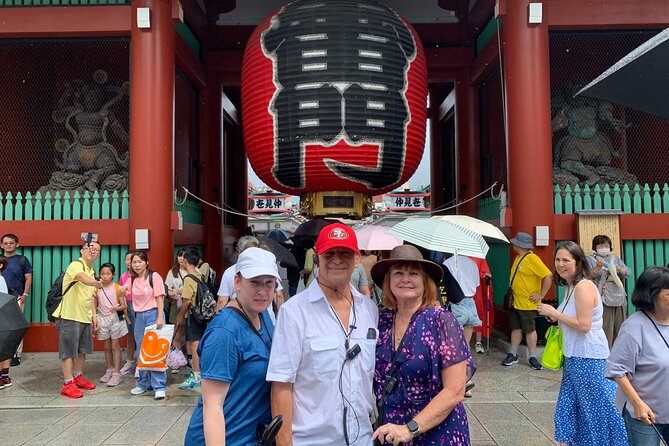
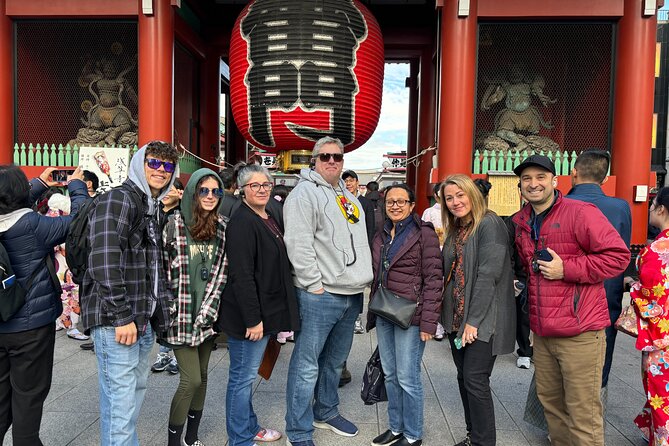
Kaminarimon, or Thunder Gate, marks the entrance to the Buddhist temple and Shinto shrine area. Its large red lantern is one of Tokyo’s most recognizable sights, but the guide adds meaning to what can otherwise become a quick photograph and a crowded walk-through.
The stop lasts about 15 minutes. That makes sense here. The gate is a threshold, not a full attraction you need to occupy for an hour. Your guide can explain how the gate introduces Senso-ji and why this particular entrance has become such a strong symbol of Asakusa.
From there, you continue along Nakamise Shopping Street. The street leads toward Senso-ji and mixes religious access with souvenir shops and a friendly commercial atmosphere. That contrast is part of the experience. The approach to an important temple does not feel solemn all the way through.
You get another 15-minute stop here. If you want to shop for snacks or souvenirs, you should keep your expectations modest. The tour’s purpose is to explain the street and lead you onward, not provide a long shopping break.
More Tokyo markets and shopping streets:
- Tokyo Tsukiji Fish Market Food and Culture Walking Tour
★ 5.0 · 3,184 reviews - Tokyo: Tsukiji Fish Market Food and Walking tour
★ 5.0 · 1,724 reviews - Tokyo: Tsukiji Fish Market Guided Walking Tour
★ 4.9 · 1,397 reviews - Tsukiji Fish Market Guided Tour and Sushi Making with Pro Chef
★ 5.0 · 775 reviews
Hozomon, Senso-ji, and Asakusa Shrine
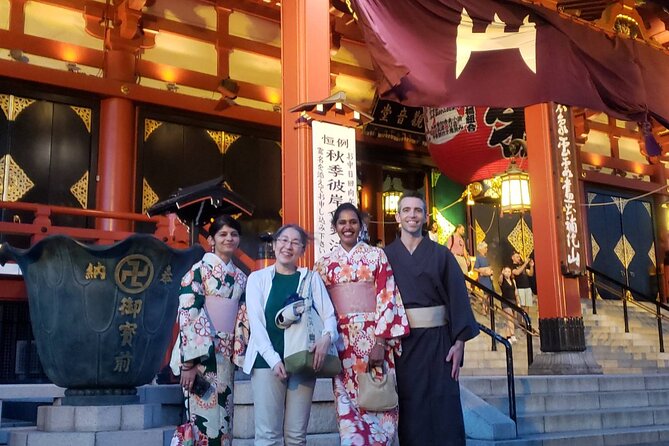
Hozomon is the inner gate leading toward Senso-ji. Its second story houses Buddhist treasures, and its large two-level form gives you a stronger sense of arrival than the first gate alone.
The tour allows about 15 minutes at Hozomon, followed by another 15 minutes at Senso-ji. Senso-ji is Tokyo’s oldest temple and one of the city’s major religious sites. A five-story pagoda stands nearby, adding to the visual weight of the complex.
The guide’s role matters most here. Without context, you may see gates, incense, a pagoda, and a busy courtyard as separate sights. A good explanation connects them and helps you understand why Senso-ji remains central to Asakusa.
Next comes Asakusa Shrine, located beside the temple. The presence of a Shinto shrine next to a Buddhist temple can seem confusing if you expect religious sites to be strictly separate. The guide explains how these two traditions share the same setting and why that arrangement makes sense in Japan.
This portion is educational rather than ceremonial. You are visiting active religious places, so you should follow the guide’s instructions and remain respectful. The schedule gives each major sight a short window, which is useful for a first visit but may feel rushed if you want quiet time for photos or personal reflection.
Denboin Garden and the old entertainment quarter
After the temple grounds, the route moves toward the Denboin Garden area and the traditional entertainment district around Rokku. The scheduled visit is about 30 minutes.
This section adds variety to the morning. Instead of seeing only grand religious buildings, you walk through an older part of Asakusa associated with entertainment and everyday neighborhood life. The guide places the area in a timeline that reaches from the Meiji period to the present.
The route description refers to Sensō-ji Denboin Garden, but the supplied details do not promise a full garden admission or an extended garden tour. Treat this as a guided walk through the area, with the exact amount of garden access depending on the route and conditions that day.
For me, this is an important bridge between the temple quarter and Kappabashi. It keeps the tour from feeling like two unrelated bookings. You move from religious landmarks to the working streets of modern Asakusa.
Kappabashi Street, where the knife shopping begins
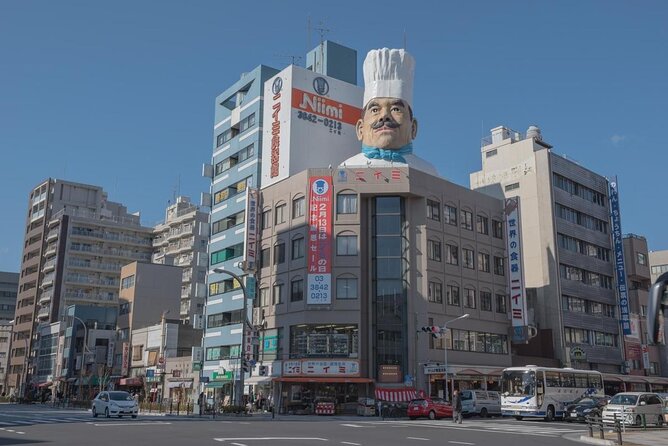
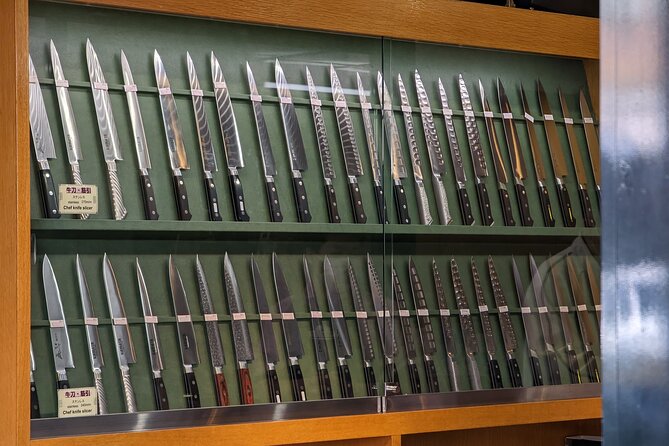
The final and longest stop is Kappabashi Street, also called Kappabashi Dogugai or Kitchen Town. The route ends here after about one hour.
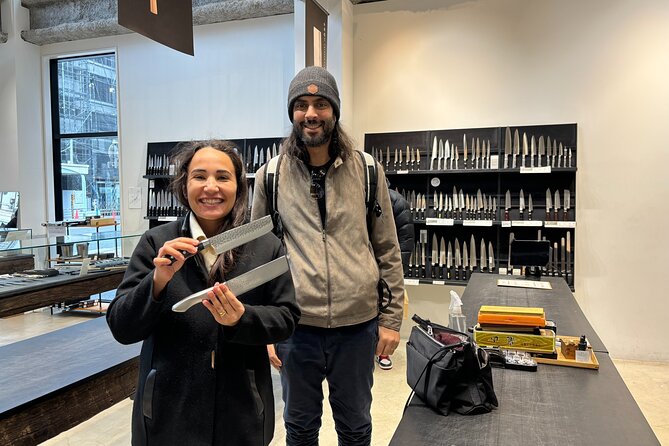
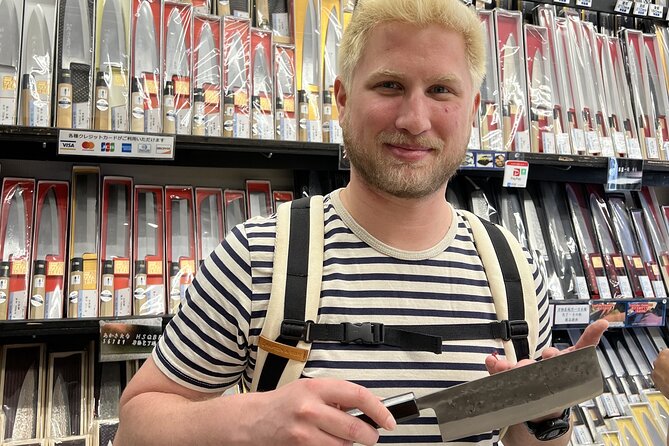
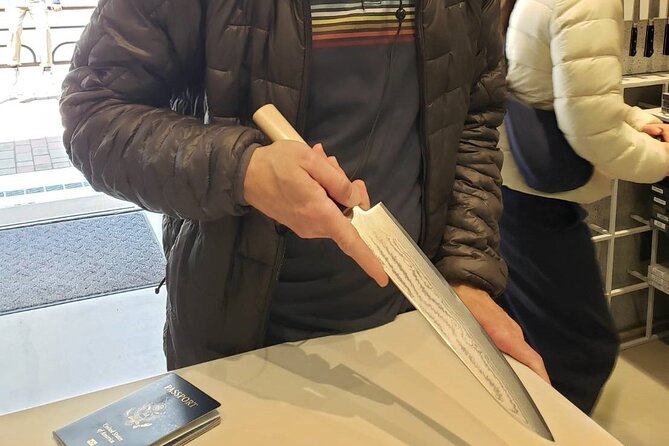
This is the part that sets the experience apart from a standard Asakusa walk. Kappabashi is lined with shops selling equipment used by restaurant operators, including Japanese kitchen knives. You can compare blades, ask questions, and get help narrowing your choice instead of wandering into the first shop with an attractive display.
The tour does not promise a particular knife, brand, price, or purchase. That is useful to remember. The guide can help you shop, but you still need to decide what suits your cooking, budget, and luggage plans.
The one-hour stop is enough for an introduction and a purchase discussion. It may not be enough if you want to compare every shop on the street. If knives are your main purpose, you may want to return later, when you can browse at your own pace.
The practical advice from the guides appears to be a major strength. Kay helped with knife selection, and Amy assisted a couple who bought several knives as gifts for chef friends. Sue also received praise for combining clear Asakusa stories with useful help in Kitchen Town.
Akiko’s flexibility is worth noting. When her couple made clear that knife shopping mattered more than the sightseeing, she shortened the history portion and adjusted the balance. That is exactly the kind of small-group service that makes this format more useful than a fixed large bus tour.
What the small group changes
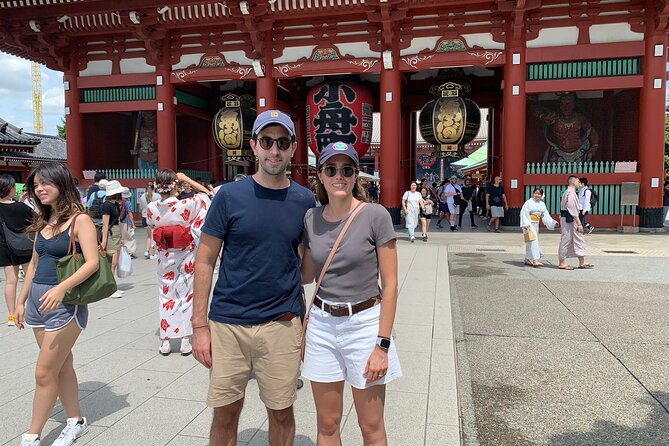
The maximum group size is eight. That does not guarantee a private tour, but it creates a better chance for questions and conversation than a large group moving in a tight pack.
For three or more people, headsets are included so you can hear the guide even from a short distance. This matters at Kaminarimon, Nakamise Street, and the temple grounds, where stopping in one spot may block other people. The headsets also help when the guide is explaining something while the group is spread across a walkway.
The tour has received a 4.9 rating from seven reviews, with strong praise for the guides’ explanations, flexibility, meeting instructions, and knife-shopping help. That is a small review base, so I would not treat the number as a guarantee. The consistent themes are still useful: guide quality is central to the experience, and the best value comes when you use the guide actively.
Ask questions. Tell the guide early if you care more about temple history, neighborhood stories, or knives. The format appears able to adjust, especially when the group is small.
Timing, meeting details, and cancellation
The tour begins at 9:30 a.m. and lasts approximately three hours and 30 minutes. It starts near Kaminarimon and ends at Kappabashi Dougugai, at 3-chōme-18-2 Matsugaya.
That one-way route is convenient if you plan to keep exploring Kappabashi afterward. It is less convenient if you need to return to your hotel in Asakusa immediately, though Kappabashi is adjacent to the area and near public transportation.
Confirmation is provided when you book. The tour is listed as suitable for most people and has a maximum of eight participants. No hotel transportation is included.
Free cancellation is available if you cancel at least 24 hours before the start time. Changes or cancellations made less than 24 hours before the start time are not accepted for a refund, and the cut-off uses Tokyo local time.
Who should book this tour
I would choose this experience if you want a guided introduction to Asakusa and have a real interest in Japanese kitchen knives. It suits food lovers, home cooks, gift shoppers, and anyone who likes pairing major sights with a practical local shopping stop.
It also works well for a first visit to Asakusa. You will see the district’s main landmarks without having to plan the route yourself, then finish somewhere less predictable than another temple courtyard.
I would be more cautious if you have already toured Senso-ji and only want to buy a knife. In that case, go directly to Kappabashi and spend the saved time comparing shops. The same advice applies if you prefer long temple visits, slow photography, or independent shopping.
For most people, the best plan is to treat the tour as a guided orientation, not a complete Asakusa day. Wear comfortable shoes, keep your morning free, and leave room in your luggage if you expect to buy a blade.
Should you book it?
Book this tour if the pairing matters to you: Asakusa stories first, Japanese knife shopping second. The strongest elements are the small group, flexible guides such as Akiko, Kay, Sue, and Amy, and the practical help at Kappabashi.
Skip it if knives are your only reason for visiting or if you want extended time at each temple. At $78.18, the price makes the most sense when you value interpretation, a planned route, and buying advice, not when you simply need directions to Kitchen Town.
FAQ
How long does the Asakusa knife shopping tour last?
The tour lasts approximately three hours and 30 minutes.
What time does the tour start?
It starts at 9:30 a.m.
Where does the tour begin?
The meeting point is 2-chōme-20-6 Kaminarimon, Taito City, Tokyo 111-0034, Japan.
Where does the tour end?
It ends at Kappabashi Dougugai, at 3-chōme-18-2 Matsugaya, Taito City, Tokyo 110-0036, Japan.
What sights are included?
The route includes Sumida Park, the Asakusa Culture Tourist Information Center, Kaminarimon, Nakamise Shopping Street, Hozomon, Senso-ji Temple, Asakusa Shrine, the Sensō-ji Denboin Garden area, and Kappabashi Street.
Is hotel pickup included?
No. Hotel pickup and drop-off are not included.
How many people can join the tour?
The maximum group size is eight people.
Are headsets provided?
For a group of three or more, headsets are provided so each person can hear the guide clearly from a distance.
Does the tour include a kitchen knife?
The tour includes guided shopping help in Kappabashi, but the supplied details do not state that a knife is included in the price.
Can I cancel for a full refund?
Yes. You can cancel at least 24 hours before the experience starts for a full refund. Cancellations or changes made less than 24 hours before the start time are not accepted for a refund.
More history and heritage tours in Tokyo
- Tokyo: Imperial Palace and Shogun Historical Walking Tour
★ 5.0 · 2,251 reviews - Tokyo: Imperial Palace Japanese History Walking Tour
★ 4.9 · 987 reviews - Tokyo: Shinjuku Historical Walking Tour & Secret Backstreets
★ 5.0 · 530 reviews - Yanaka Walking Tour: Historic and Traditional District of Tokyo
★ 5.0 · 530 reviews
Newly reviewed around Tokyo
- Tokyo Asakusa:Calligraphy & Make T-shirt Activity★ 5.0 · 62 reviews
- Intercity Shuttle, Tokyo to Haneda /Narita /Yokohama /Makuhari★ 5.0 · 5 reviews
- 1 Hour Travel around Tokyo with a Professional Photographer★ 5.0 · 3 reviews
- Travel Tokyo with Your Own Personal Photographer★ 5.0 · 43 reviews
- Train in Samurai Swordsmanship and Defeat the Demon in Tokyo★ 5.0 · 5 reviews
- Shuttle Van 6hr Tokyo Tour to-and-from Tokyo, Yokohama and Narita★ 5.0 · 9 reviews
- Kickboxing & Body Training with EX-Pro Fighter★ 5.0 · 4 reviews
- Traditional Japanese Knife Sharpening Class★ 5.0 · 18 reviews
Asakusa and Sensoji Tours, compared.

Japanese Dance Cabaret Theater Asakusa-Kaguwa Ticket
Read our review →
Meiji Shrine, Asakusa, Skytree Bus Tour and Cruise
Read our review →
Roll and Authentic Sushi Making Class in Asakusa
Read our review →
Asakusa Walking Tour with Sensoji Temple Visit
Read our review →
Tokyo Panoramic 1 Day: Meiji Shrine, Asakusa, Odaiba and SKYTREE®
Read our review →
Tokyo Go Kart: Asakusa, Skytree, and Akihabara **IDP MUST**
Read our review →
Asakusa, Skytree & Akhihabara Go-Kart City Experience
Read our review →Browse the lists this tour appears in