
Reviewed · ASAKUSA AND SENSOJI TOURS
Tokyo Asakusa Rickshaw Tour
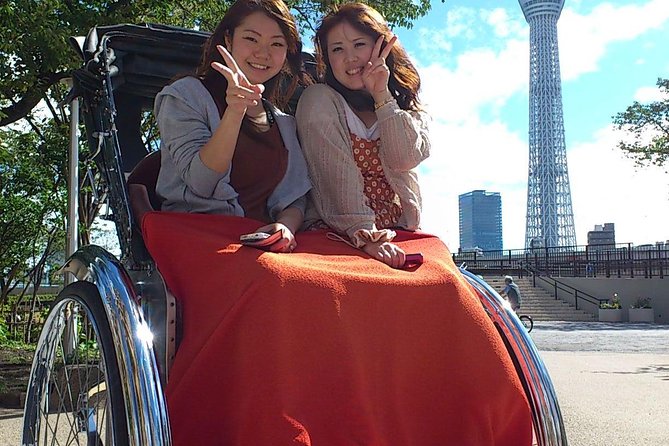
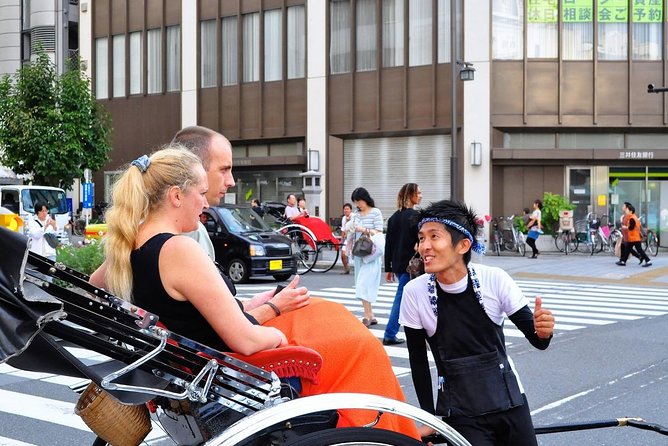
A rickshaw gives you a street-level look at Asakusa’s old Tokyo character, from Edo-era facades and tiny shrines to the broad Sumida River and the Tokyo Skytree. Your driver pedals, handles the route, explains local customs, and often takes photos along the way. I like the flexible route and the personal attention. I also like how much ground you can cover without being shut inside a bus.
The main consideration is space. Each rickshaw is only 29.1 inches wide, so two adults sit close together. The 30-minute option can only cover part of the area, and even longer rides may skip some stops if you choose a particular drop-off point. Guides such as Koko, Micchy, Taisei, Yusuke, Kei, Nene, and Takumi have been praised for energy, humor, cultural explanations, and photo help.
Key points to know before booking
- Choose your sightseeing focus: Ask for shrines, old streets, anime-related sights, gardens, river views, or entertainment history.
- Expect a private ride: Only your group participates, with a maximum of two adults per rickshaw.
- Allow time for a real overview: A 45-minute ride can introduce Asakusa, while two or three hours gives the route room to breathe.
- Look for the small details: Ushijima Shrine’s unusual three-part gate, Imado Shrine’s cat figures, and Matsuchiyama Shoden’s radish symbols are easy to miss on foot.
- Plan for the weather: The ride requires good weather, though coverings, rugs, and seat warmers may be available in cooler or wet conditions.
- Book extra rickshaws when needed: Two adults may fit, but a separate rickshaw can be more comfortable and must be arranged ahead of time if required.
Why a rickshaw works so well in Asakusa
Asakusa is one of Tokyo’s best districts for a moving introduction. It combines Buddhist temples, Shinto shrines, old shopping streets, former theaters, modern businesses, and river scenery within a fairly compact area.
On foot, you can certainly see the main sights. But you may miss the quieter lanes and the connections between them. From the raised seat of a rickshaw, you get a clear view over parked bicycles, storefronts, gardens, and passing pedestrians. You can also stop without the effort of navigating every turn yourself.
The experience is private, not a large group outing. That matters in Asakusa, where your interests may differ from those of another group. Tell the driver if you want photos, religious sites, local stories, old entertainment districts, or a broad first look at the neighborhood.
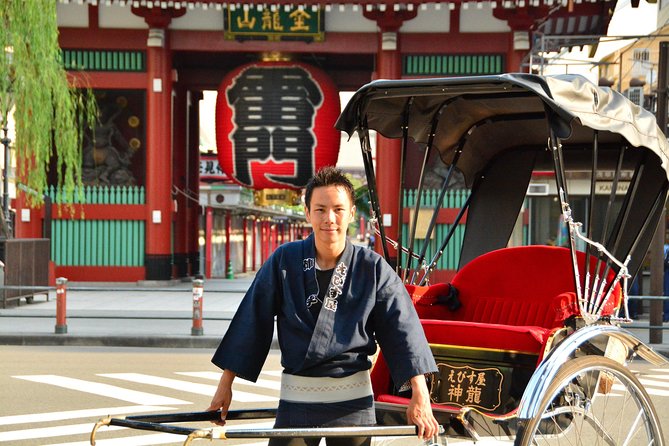
The driver is part guide, part navigator, and part photographer. Several drivers, including Koko, Taisei, Micchy, Yusuke, and Takumi, have been singled out for friendly conversation and strong English. Language availability depends on the day, so request English or Japanese when booking.
More Asakusa and Sensoji tours:
- Tokyo: Japanese Dance Cabaret Theater Asakusa-Kaguwa Ticket
★ 4.8 · 2,270 reviews - Tokyo: Meiji Shrine, Asakusa, Skytree Bus Tour and Cruise
★ 4.7 · 1,986 reviews - Tokyo: Roll and Authentic Sushi Making Class in Asakusa
★ 4.9 · 1,957 reviews
Starting outside Asakusa Station
You make your own way to 1-chōme-1-4 Asakusa, near Asakusa Station. This is a useful starting point because the neighborhood’s major sights are close by, and public transportation serves the area.
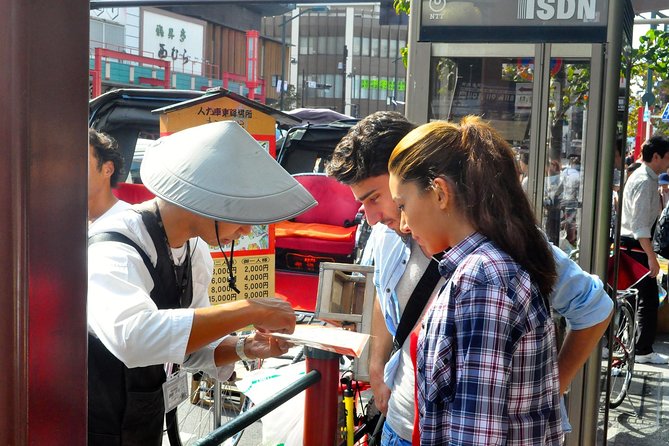
After meeting your driver, you climb into the rickshaw and discuss what matters most to you. This conversation is important. The full list of possible sights is long, but a short ride cannot include everything. If you have only 30 minutes, ask for a tight route with one or two photo stops. For a 45-minute or one-hour ride, you can expect a better mix of streets, temples, and views.
The rickshaw holds up to two adults. Children aged five and under can ride free on an adult’s lap, with up to two small children allowed with two adults. A child using one of the two seats must be booked as an adult.
Edo-era streets and the quieter side of Asakusa
One part of the route passes a historic street lined with shopfronts and housing facades recalling the Edo period. This is where the ride feels less like a checklist of famous Tokyo sights and more like a neighborhood tour.
You might see old-style details beside ordinary modern life. That contrast is one of Asakusa’s charms. The district is not a preserved museum. Businesses operate, residents live here, and traditional buildings share space with new construction.
A second unusual stop may be the raccoon-themed street. Small raccoon figures appear along the route, giving the area a playful local identity. This is a good example of why a guide helps. Without an explanation, you could pass through without understanding why the figures are there or how the street fits into the district.
The route may also pass Asakusa’s old entertainment quarter. Rokku Street was once a major center for cinemas and theaters before the war. Another venue still serves as a focal point for comedy and shows. This part of Asakusa adds a social and theatrical layer to the temples and shrines.
Ushijima Shrine and its three-part gate
Ushijima Shrine is one of the tour’s more distinctive stops. Your driver can explain why its entrance has three openings rather than the single opening common at many Shinto shrines.
You have about 15 minutes here on the relevant route. Admission is not charged separately, but the shrine is not guaranteed on every short option. Ask for it when you want more religious and cultural context rather than only famous photo stops.
This is also a good place to slow down. A shrine visit is not just a quick look at a building. Your guide can explain the difference between Shinto and Buddhism, which becomes especially useful later when you visit sites connected to both traditions.
A completely different kind of day in Tokyo:
- Mt Fuji and Hakone 1-Day Bus Tour Return by Bullet Train
★ 5.0 · 26,383 reviews - 1-Day Tokyo Bus Tour
★ 5.0 · 14,250 reviews - Tokyo: teamLab Planets TOKYO Digital Art Museum Entry Ticket
★ 4.6 · 9,779 reviews - Mt Fuji & Hakone Cruise, Drum Show Bullet Train 1 Day from Tokyo
★ 4.0 · 7,413 reviews
The Sumida River and Tokyo Skytree view
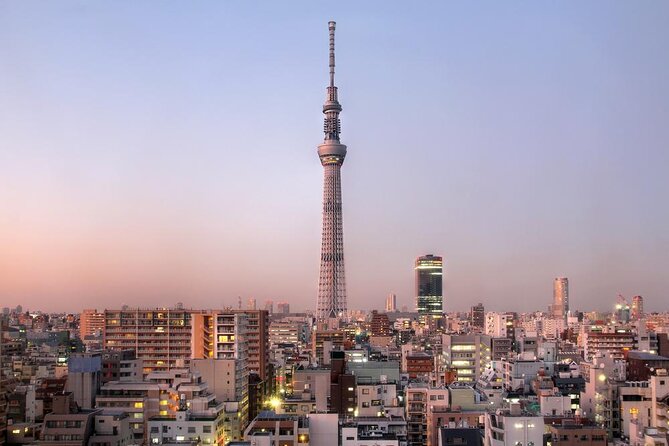
The river section gives the ride a welcome change of pace. From across the Sumida River, you get a clean view toward Tokyo Skytree, one of the tour’s strongest photo opportunities.
Sumida Park runs along the river and becomes especially appealing during cherry blossom season. In spring, the trees add color to the riverside route. At other times, the park offers a place to pause, sit, and take a break from the denser streets around Sensoji.
I would not treat this as only a transport segment. The river helps you understand Asakusa’s position in Tokyo. The district’s older religious and entertainment areas sit beside major modern landmarks, and the Skytree makes that contrast easy to see.
If photography matters to you, tell the driver early. The ride includes several possible photo stops, and the guide may help position you and your companions. Drivers such as Yusuke and Taisei have been praised for taking especially good pictures, sometimes including the driver in the frame.
Honryuin Matsuchiyama Shoden and its radishes
Honryuin Matsuchiyama Shoden is a Buddhist temple connected with the wider Sensoji temple complex. Its most memorable detail is the number of radishes displayed around the temple and painted on its lanterns.
That unusual symbol gives the visit a useful entry point into Buddhist imagery and local belief. Instead of simply hearing dates and names, you get a story tied to something you can immediately see.
The temple stop lasts about 15 minutes on the longer route, and admission is not included as a separate ticket. It is the sort of place that benefits from a guide’s explanation. Without context, the radishes may look like decoration. With context, they become a clue to the temple’s identity.
The approach may involve a hill or uneven ground, so this stop can feel different from the smooth ride through the streets. The rickshaw does not enter temple grounds or the Sensoji area, so you get out and explore on foot where required.
Imado Shrine and its beckoning cats
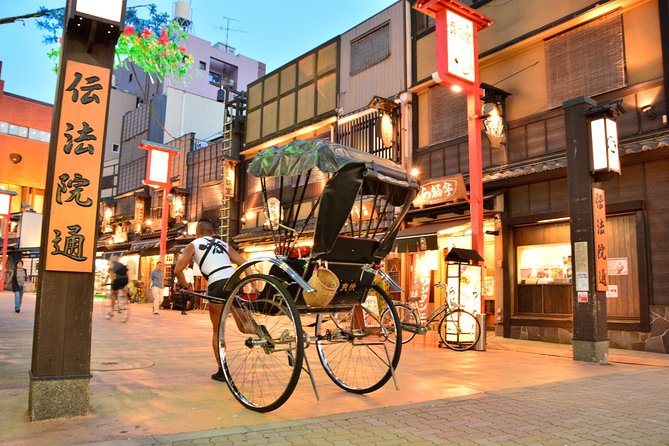
Imado Shrine brings a lighter, more playful mood. It features cat figures, especially manekineko, the familiar beckoning cat associated with good fortune.
This is a strong choice for families, photographers, and anyone who enjoys the quirky side of Japanese culture. It also pairs well with Ushijima Shrine and Honryuin Matsuchiyama because the three stops show different religious traditions and visual styles within a short area.
The stop is listed at about 15 minutes, with no separate admission ticket included. As always, the exact route depends on the duration you choose. If you book a short ride, you will need to prioritize.
Sensoji, Asakusa Shrine, and the limits of the rickshaw
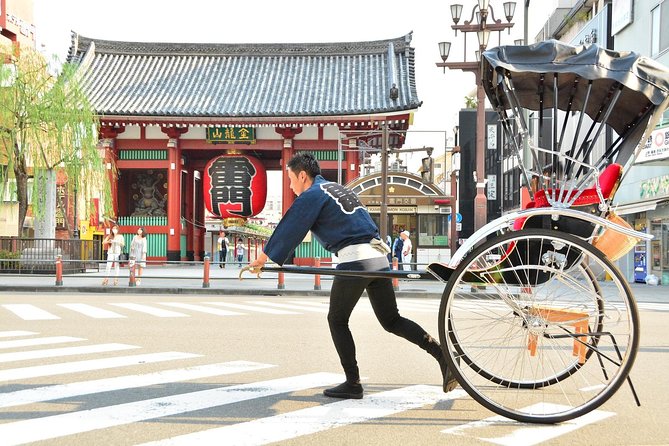
The bright gate leading toward Sensoji is one of Asakusa’s familiar sights. You may also visit Asakusa Shrine, a Shinto shrine located on the grounds associated with the impressive Sensoji temple.
This is a particularly useful area for learning how Shinto and Buddhism coexist in Japan. Your driver can explain the distinction between the two traditions and how they share this important religious setting.
There is one practical restriction: rickshaws are not permitted inside the Sensoji and Asakusa temple area, including the temple buildings, grounds, and Nakamise shopping street. You will walk through those parts rather than ride through them. That is not a flaw, but you should know it before expecting a continuous ride past every major temple feature.
The area can also be crowded, especially around the main gate and shopping street. A rickshaw may bring you close to the action, but it cannot remove the need to walk through the busiest sections.
Asahi Beer Headquarters and modern Tokyo
The Asahi Beer Headquarters provides one of the route’s sharpest modern contrasts. Its golden flame-shaped feature is easy to recognize across the river and makes a memorable city photograph.
This stop helps keep the tour from becoming only a temple circuit. Asakusa is a working part of Tokyo, with offices, shops, restaurants, and major commercial buildings beside shrines and old houses.
You may not spend long here. It is mainly a visual landmark and photo point rather than a visit inside the company headquarters. Still, it adds scale to the ride and gives you another angle on the Tokyo Skytree and riverfront.
How much time should you book?
The listed duration ranges from 30 minutes to about three hours. Choose based on how you want to use the ride.
A 30-minute option is best for a quick orientation, a first look at Asakusa, or a short activity between other plans. It will not cover every landmark. Ask the driver to build a compact route around your top priority.
A 45-minute ride can provide a more satisfying introduction. You have time for a mix of old streets, a shrine, and a river or Skytree viewpoint. It is still short enough to fit into a busy Tokyo schedule.
An hour or more gives you room for conversation and extra stops. A two or three-hour ride suits you if Asakusa is a major part of your day and you want to include several shrines, the entertainment district, the river, and photo pauses.
The route is customizable, but customization does not mean every stop fits into every option. Confirm your priorities before the ride begins. Your preferred finishing point can also affect the route, and destinations outside the rickshaw stand may carry an extra drop-off charge.
Price, comfort, and practical value
At $42.90 per person, the ride costs more than simply walking around Asakusa. You are paying for the rickshaw, a private driver-guide, route planning, local explanation, and help with photographs.
I think the value is strongest for a first visit, a short stay, or a family group that wants an easy overview without joining a bus. It also works well when one person in your group tires easily but still wants to see several parts of the district.
The price is less compelling if you prefer to move slowly on foot, spend long periods inside temples, or shop along Nakamise Street. The rickshaw introduces you to the area, but it does not replace independent time at Sensoji or the neighborhood’s shops.
Comfort deserves honest attention. Two adults can fit, but the seat is narrow. If you are broad-shouldered or simply want more personal space, book one rickshaw per person. If two people do not fit comfortably and an extra rickshaw was not booked in advance, another English-speaking rickshaw may not be available that day.
The drivers have shown they can handle families and changing needs. One ride included an eight-month-old child, with the driver stopping when the family needed to adjust. That said, you should still discuss your group’s needs before setting off.
Weather, clothing, and the best match for this tour
The experience requires good weather. If conditions force a cancellation, you can choose another date or receive a full refund. You can cancel for a full refund up to 24 hours before the start time, but changes made within 24 hours are not accepted.
Rain does not always make a ride impossible if the operator continues. Some equipment can help keep you dry and warm, and one guide was praised for handling a rainy outing with care. Still, you should not book this as a guaranteed all-weather activity.
Wear clothes that let you sit comfortably for the full ride. In cooler weather, ask about the available rugs and seat warmers. In warm weather, remember that you are outdoors for the duration, with little control over shade.
This tour suits couples, families with young children, first-time visitors, photographers, and anyone who wants local stories with their sightseeing. It is less suited to people who dislike close seating, want total control of the walking route, or need a fully accessible vehicle experience.
Should you book the Asakusa rickshaw tour?
I would book it early if you want a personal introduction to Asakusa, especially since it is commonly reserved well ahead of the date. The strongest version is a private ride of at least 45 minutes, with Ushijima Shrine, a river view, and one or two unusual stops selected in advance.
Book the short option if you mainly want the experience and a quick look around. Choose two or three hours if you want the driver’s cultural explanations to shape your day and you have room for several stops.
The most important choices are simple: request your preferred language, be realistic about the narrow seat, reserve extra rickshaws if needed, and tell the driver what you care about. If you do that, the ride offers a fun and efficient way to connect Asakusa’s shrines, old streets, river views, and modern Tokyo in one outing.
FAQ
Where does the Tokyo Asakusa Rickshaw Tour start?
The meeting point is outside Asakusa Station at 1-chōme-1-4 Asakusa, Taito City, Tokyo 111-0032, Japan.
How long does the rickshaw tour last?
Available durations range from 30 minutes to about three hours. The landmarks included depend on the option you select and the time available.
Can I choose what I see?
Yes. The tour can be customized around your interests. Tell your guide whether you want shrines, old streets, gardens, entertainment history, river views, or photo stops.
How many people fit in one rickshaw?
A maximum of two adults can ride in one rickshaw. Up to two children aged five or under may ride with two adults if the children sit on an adult’s lap.
Is the rickshaw allowed inside Sensoji Temple?
No. Rickshaws cannot enter the Sensoji and Asakusa temple area, including the temple buildings, grounds, and Nakamise shopping street.
What happens if the weather is poor?
The experience requires good weather. If the operator cancels because of poor conditions, you can receive a full refund or choose another date.
Newly reviewed around Tokyo
- Tokyo Asakusa:Calligraphy & Make T-shirt Activity★ 5.0 · 62 reviews
- Intercity Shuttle, Tokyo to Haneda /Narita /Yokohama /Makuhari★ 5.0 · 5 reviews
- 1 Hour Travel around Tokyo with a Professional Photographer★ 5.0 · 3 reviews
- Travel Tokyo with Your Own Personal Photographer★ 5.0 · 43 reviews
- Kickboxing & Body Training with EX-Pro Fighter★ 5.0 · 4 reviews
- Train in Samurai Swordsmanship and Defeat the Demon in Tokyo★ 5.0 · 5 reviews
- Shuttle Van 6hr Tokyo Tour to-and-from Tokyo, Yokohama and Narita★ 5.0 · 9 reviews
- Traditional Japanese Knife Sharpening Class★ 5.0 · 18 reviews
Asakusa and Sensoji Tours, compared.
Japanese Dance Cabaret Theater Asakusa-Kaguwa Ticket
Read our review →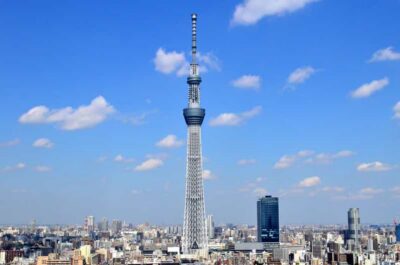
Meiji Shrine, Asakusa, Skytree Bus Tour and Cruise
Read our review →
Roll and Authentic Sushi Making Class in Asakusa
Read our review →
Asakusa Walking Tour with Sensoji Temple Visit
Read our review →
Tokyo Panoramic 1 Day: Meiji Shrine, Asakusa, Odaiba and SKYTREE®
Read our review →
Tokyo Go Kart: Asakusa, Skytree, and Akihabara **IDP MUST**
Read our review →
Asakusa, Skytree & Akhihabara Go-Kart City Experience
Read our review →
Matcha Making Experience with Mochi Sweets in Asakusa
Read our review →Browse the lists this tour appears in