
Reviewed · TOKYO TEA CEREMONY EXPERIENCES
Tokyo: Matcha Making Experience with Mochi Sweets in Asakusa
Making matcha is the point here, not just watching a tea ceremony. In one hour, you learn where matcha comes from, test yourself with a lighthearted quiz, then whisk your own bowl with traditional tools before drinking it with Japanese sweets. I especially like the hands-on format and the fact that you can sit comfortably rather than kneel.
I also like the location: the class is one minute from Asakusa Station, close to Tokyo Skytree and the old-fashioned sights of eastern Tokyo. English-speaking instructors such as Mana, Ken, Hayato, Hiyo, and Midori keep the mood easy and social. The main consideration is time. At only one hour, this is a friendly introduction, not a full tea ceremony or a long cooking class.
What makes this matcha class worth your time
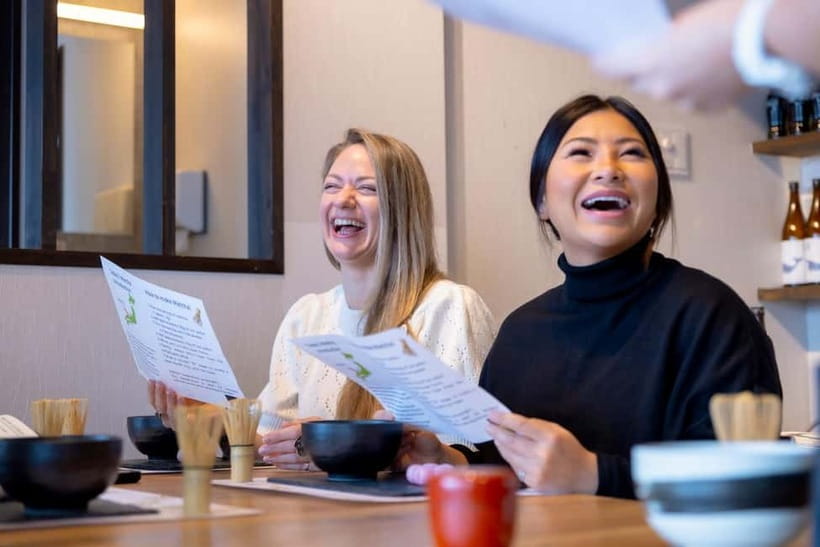
- You whisk the tea yourself: The instructor demonstrates the technique, then you prepare your own matcha with traditional equipment.
- The history comes with a quiz: Short explanations and a playful quiz make the cultural background easier to remember.
- Japanese sweets are part of the lesson: Matcha is served with mochi or other traditional sweets, giving you a classic bitter-and-sweet pairing.
- The class is seated and in English: Clear instructions make it suitable for many ages and for anyone who would rather not kneel.
- Asakusa adds context: You can place the tea experience beside Senso-ji, Kaminarimon, and the Tokyo Skytree area.
- Solo visitors fit in well: The shared class setup gives you a simple way to meet people from different countries.
A practical matcha introduction in Asakusa
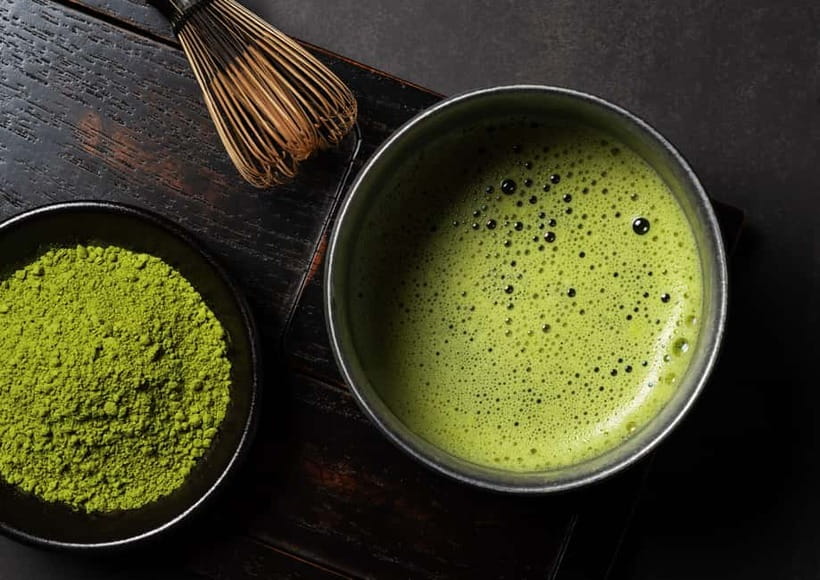
Tokyo offers endless food activities, but this one has a useful advantage: it gives you something to do with your hands. You are not simply served a cup and told a few facts. You learn how to whisk matcha, taste the result, and leave with a better sense of what makes the drink different from ordinary green tea.
The class takes place in the Relink KAMINARIMON building, on the sixth floor, about one minute from Asakusa Station. That makes it easy to fit between sightseeing stops. You can visit the area around Kaminarimon Gate and Senso-ji before class, then walk toward the river or Tokyo Skytree afterward.
I would plan this as a compact cultural stop rather than the main event of your day. The one-hour length is a strength if your Tokyo schedule is tight. It is also a limitation if you want a formal ceremony with long explanations, elaborate movements, or a quiet setting built around ritual.
The atmosphere appears designed to be friendly and accessible. You can expect English instruction, a seated activity, visual material, and direct practice. The instructors use humor and questions to keep the session moving, which helps families and first-time tea drinkers stay involved.
More Asakusa and Sensoji tours:
- Tokyo: Japanese Dance Cabaret Theater Asakusa-Kaguwa Ticket
★ 4.8 · 2,270 reviews - Tokyo: Meiji Shrine, Asakusa, Skytree Bus Tour and Cruise
★ 4.7 · 1,986 reviews - Tokyo: Roll and Authentic Sushi Making Class in Asakusa
★ 4.9 · 1,957 reviews
From matcha history to a light quiz
The first part sets the scene. Your instructor explains the origins of matcha and its place in Japanese food and tea culture. You also get an introduction to tea etiquette and the meaning behind some of the preparation steps.
This is where the quiz helps. Instead of receiving a long speech about tea, you get a chance to guess, answer, and react. That small change matters. You are more likely to remember a fact when you have had to think about it, even for a moment.
The staff names vary by session. Mana is praised for bringing energy and humor to the class, while Ken is described as engaging with children and adults alike. Hayato has led sessions covering matcha history, preparation, and etiquette. Hiyo, Yui, Honoka, Midori, and other instructors have also guided classes.
You should not expect every class to have the same instructor, so it is best to focus on the format rather than a particular personality. The common thread is English guidance, a relaxed tone, and a clear effort to make the subject approachable.
Learning the whisking technique
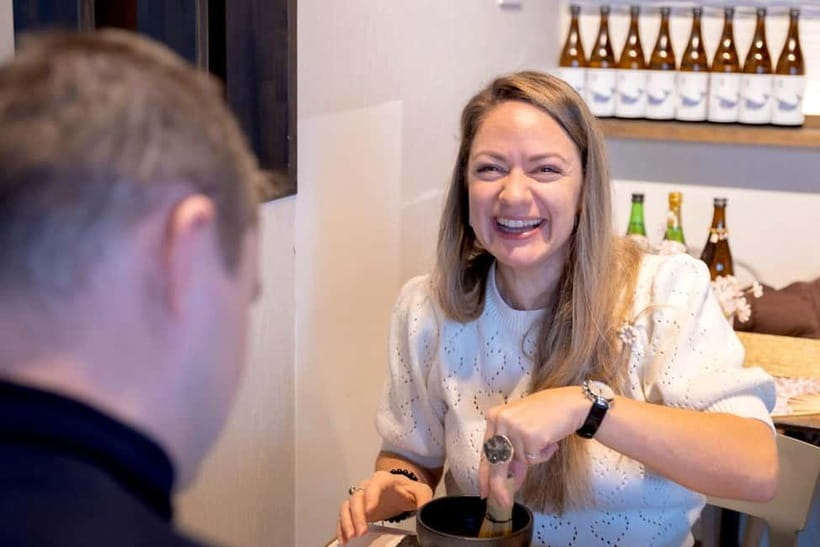
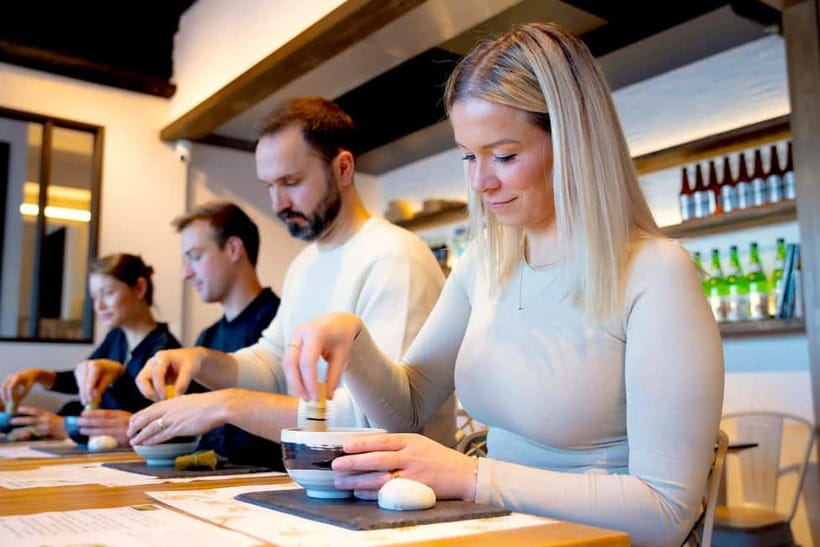
The practical heart of the class is the preparation. Your instructor demonstrates how to use the traditional whisk and other tea tools, then you follow along and make your own bowl.
This is more useful than it might sound. Matcha preparation is simple in principle, but the whisking motion affects the texture and foam. You get a chance to see the process at close range, copy it yourself, and adjust with help if needed.
The activity does not require previous experience. That makes it a good choice if you have only tried matcha in a café, or if you know it mainly from sweets and flavored drinks. You do not need to arrive with any special skill.
The class also corrects a common expectation. Matcha is not normally sweetened with sugar in this setting. The tea has a strong, grassy, slightly bitter character, and the Japanese sweets provide the sweetness. One useful tip is to taste the matcha as served before deciding how you feel about it. The pairing is part of the lesson.
You will probably enjoy this section most if you like practical demonstrations. If you prefer simply drinking tea in silence, the quiz and group participation may feel more active than expected. The instructors keep the tone light, but this is still a class.
Mochi sweets and the taste of the tea
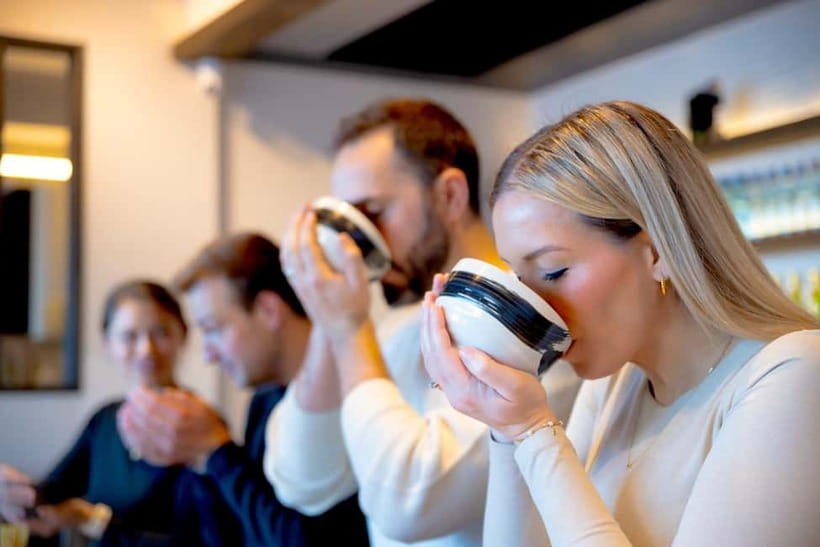
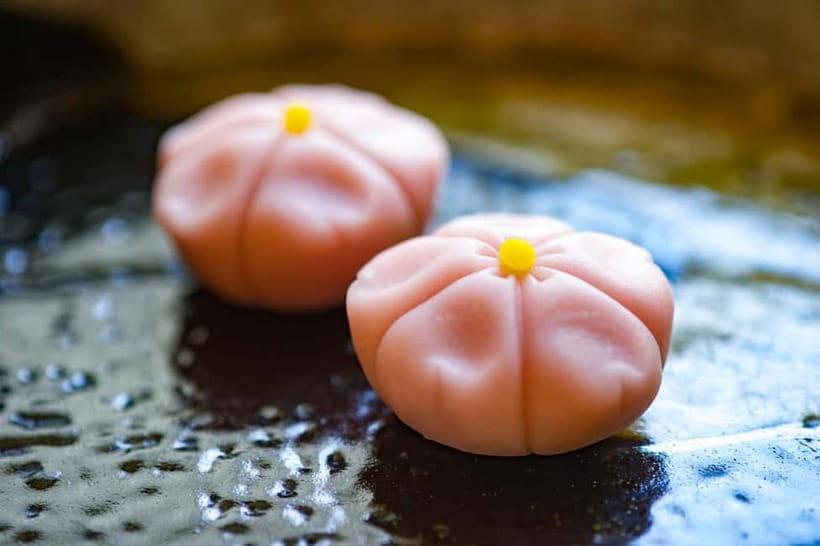
After you prepare the matcha, you drink it with traditional Japanese sweets. Mochi is listed in the experience title, and the sweets are meant to balance the tea rather than compete with it.
That contrast gives the tasting a clear purpose. Matcha can taste intense on its own. A soft, sweet bite changes the next sip and helps you understand why tea is often served with confectionery.
The food is included in the $22 price, along with the ingredients, instructor, and cooking class. You are not paying only for a beverage. You are paying for a short lesson, hands-on use of the equipment, a tasting, and the chance to ask questions in English.
I would still keep your expectations sensible. This is not a full meal, and the supplied information does not promise a large selection of sweets. Think of it as a traditional accompaniment to your tea, not a substitute for lunch.
Some sessions also offer the chance to buy matcha-making equipment afterward. That can be useful if you enjoy the technique and want to repeat it at home, though the purchase is not part of the activity.
More Tokyo tea ceremonies:
- Matcha Making Class in Tokyo with Authentic Japanese Sweets Set
★ 5.0 · 744 reviews - Tokyo: Traditional Tea Ceremony with a Tea Master
★ 5.0 · 528 reviews - Dynamic Tokyo: Tokyo Tower, Tea Experience, Bay Cruise Day Tour
★ 4.5 · 521 reviews - Tokyo: Matcha and Kimono Experience
★ 4.7 · 219 reviews
Why the seated format matters
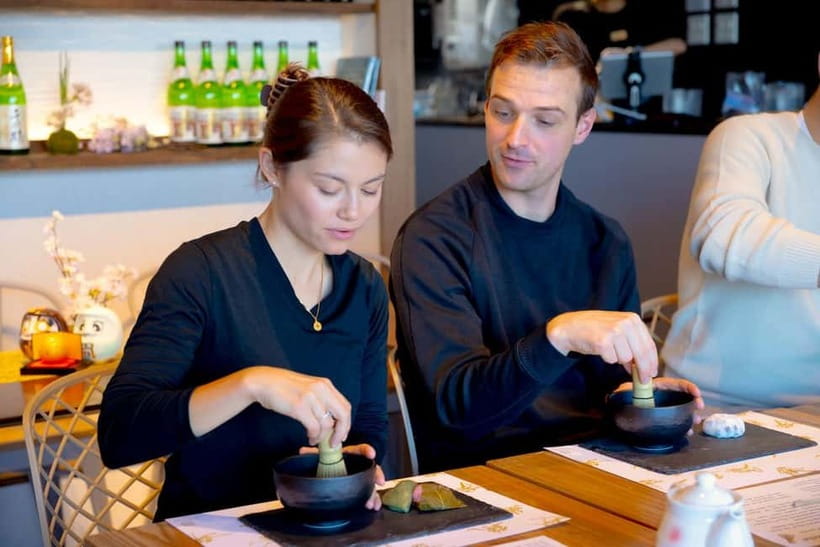
The class takes place in a seated setting. One useful detail from the experience is that you do not need to adopt the traditional kneeling position. That makes the activity easier for anyone who finds kneeling uncomfortable, and it also gives the class a more casual feel.
The format suits mixed-age groups. A 74-year-old parent and a 23-year-old adult were able to enjoy the same one-hour session, and families with children have found the combination of quiz, demonstration, and making process easy to follow.
I would still check the exact setup if you have specific mobility needs, since full accessibility details are not provided. The available information supports a seated class, but it does not promise wheelchair access, lift details, or other facilities.
The English instruction is another practical strength. You are not expected to follow Japanese-only explanations or copy an unfamiliar process without help. The teachers demonstrate each stage and answer questions as the class goes along.
Asakusa makes the setting part of the experience
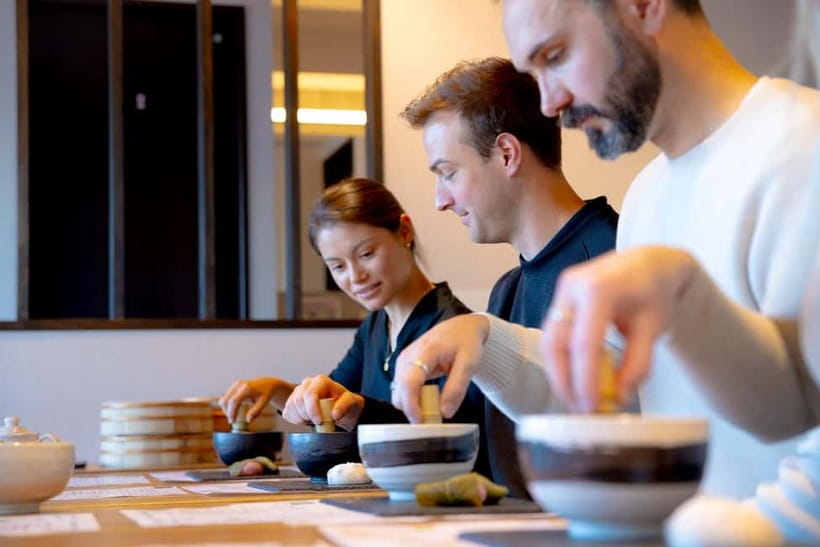
Asakusa is a sensible place for a first taste of Japanese tea culture. The area gives you old Tokyo sights, religious landmarks, shopping streets, and food stalls within a compact part of the city. The class itself is close to Tokyo Skytree, so you can combine it with one of the area’s better-known viewpoints and attractions.
The meeting point is Relink KAMINARIMON building 6F, at 35.710774, 139.7956532. Since it is only about one minute from Asakusa Station, you should allow enough time to identify the building and reach the sixth floor, especially if you are unfamiliar with Tokyo’s station exits.
I like this kind of location because it does not demand a separate cross-city journey. You can build the class into a day of sightseeing instead of treating it as a remote appointment. It also gives the tea lesson a useful setting. After learning about matcha, you can continue through one of Tokyo’s best-known historic districts and notice how old customs and modern city life sit side by side.
The class does not include hotel pickup or drop-off. That is normal for a short city activity, but it matters if you are planning a tightly timed day. You handle your own transport to Asakusa Station.
Is $22 good value?
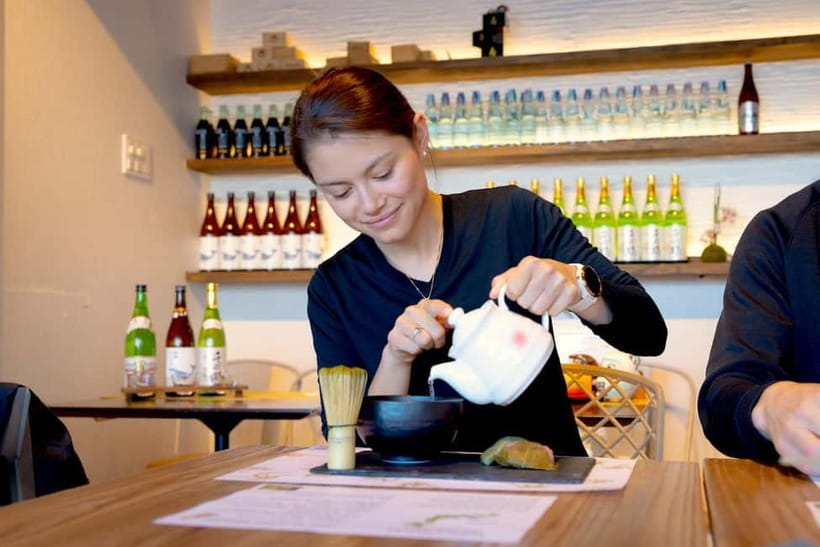
At $22 per person, I consider this a strong value for a one-hour activity in central Tokyo. The price includes the class, ingredients, instructor, matcha, and sweets. You also get an English-language introduction to a part of Japanese culture that can be difficult to understand from a guidebook alone.
The value is highest for first-time visitors. You learn a technique you can repeat, taste matcha in a traditional pairing, and gain enough context to recognize the difference between a tea ceremony, a casual matcha drink, and a modern matcha dessert.
The price is less attractive if you already make matcha regularly or have attended a formal tea ceremony. In that case, the basic explanations may repeat things you already know. The short length also means the lesson cannot cover every detail of tea production or etiquette.
For most visitors, though, the cost is modest compared with a larger Tokyo attraction. It also gives you a quiet hour off your feet, which can be welcome during a packed sightseeing day.
Who should book this experience?
I would recommend it for:
- Families looking for an activity that works across age groups
- Solo visitors who enjoy meeting people in a shared class
- Couples who want a cultural activity beyond temples and shopping
- Matcha fans who want to learn the correct basic preparation
- First-time visitors who prefer clear English instruction
- Anyone needing a seated activity between longer walks
Children appear to enjoy the quiz and the making process, but the available details do not give a minimum age. If you are booking for very young children, confirm the age policy before paying.
The class also suits people who do not think they like matcha. You taste the tea in a traditional way and learn why it is paired with sweets. That gives you a fair introduction instead of judging matcha only by a sweet café drink.
I would choose a different experience if your priority is a formal, silent tea ceremony, a long meal, or a detailed lesson about tea farming. This class is social, brisk, and practical.
Timing, cancellation, and booking tips
The duration is one hour, with different starting times depending on availability. I would place it before or after your main Asakusa sightseeing rather than between two distant Tokyo appointments.
You can cancel up to 24 hours in advance for a full refund. The reserve-now-and-pay-later option also helps if your schedule is still changing. That flexibility is useful in Tokyo, where weather, crowds, and transport plans can alter a day quickly.
The meeting point is close to the station, but do not treat one minute as a guarantee that you will walk straight in. Tokyo buildings can be easy to miss, and the class is on the sixth floor. Keep the address and coordinates available on your phone.
The activity is offered in English. Ingredients and the instructor are included. Hotel pickup and drop-off are not.
My verdict on the atmosphere and teaching
The strongest part of this experience is the teaching style. The instructors do not leave you to figure out the whisking alone, and they use humor to make the cultural material less formal. That helps the class feel welcoming without stripping away the traditional elements.
I also value the mix of explanation and action. You learn a little, answer a question, watch a demonstration, then try the technique yourself. That rhythm keeps the hour from becoming a lecture.
The class seems especially good for people who want a low-pressure introduction. You can ask questions, make your own tea, and enjoy the sweets without needing to know the rules in advance. The staff are there to guide you rather than test you.
The tradeoff is that the relaxed approach may not satisfy someone looking for a strict ceremony. The activity is presented as matcha making with cultural context, not as a complete formal tea-school lesson. Knowing that before you book will help you enjoy it for what it is.
Should you book the Asakusa matcha class?
Book it if you want an affordable, English-language activity that fits neatly into a Tokyo day. The one-hour format, station-side location, seated setup, traditional tools, and included sweets make it easy to add to an Asakusa itinerary.
I would particularly choose it for a family, a solo visit, or a first meeting with matcha. You leave with a basic technique, a better understanding of tea etiquette, and a clear memory tied to one of Tokyo’s most historic districts.
Skip it if you want a long and solemn tea ceremony, a substantial meal, or advanced instruction. For everyone else, $22 buys a friendly, useful introduction with very little risk and plenty of flavor.
FAQ
Where does the matcha experience take place?
It takes place at Relink KAMINARIMON building 6F, about one minute from Asakusa Station. The coordinates are 35.710774, 139.7956532.
How long does the activity last?
The matcha-making experience lasts one hour.
How much does it cost?
The listed price is $22 per person.
Is the class taught in English?
Yes. The instructor language is English, and English-speaking local staff guide the activity.
Do I need previous matcha-making experience?
No. The class is designed for beginners, and the instructor demonstrates the technique before you try it yourself.
What is included in the price?
The price includes the cooking class, ingredients, and instructor. Matcha and Japanese sweets are part of the tasting experience.
Is hotel pickup included?
No. Hotel pickup and drop-off are not included. You make your own way to the meeting point in Asakusa.
Can solo visitors join?
Yes. Solo visitors are welcome, and the shared class format allows you to take part with other people.
Can families join the activity?
Yes. Families are welcome, and the class includes a quiz, demonstrations, and hands-on preparation that can suit different ages. A minimum age is not provided.
Can I cancel for a refund?
Yes. You can cancel up to 24 hours in advance for a full refund. A reserve-now-and-pay-later option is also available.
More Dessert Tours in Tokyo
- Make Traditional Nerikiri Sweets & Matcha experience in Shibuya
★ 5.0 · 130 reviews - Private Mochi Sweets Making class near Shibuya area
★ 5.0 · 93 reviews - Japanese Traditional Sweets making and Tea Ceremony
★ 4.7 · 50 reviews - Tokyo Local Food Tour: Noodles, Skewers, Dumplings, Sweets
★ 5.0 · 48 reviews
Newly reviewed around Tokyo
- Tokyo Asakusa:Calligraphy & Make T-shirt Activity★ 5.0 · 62 reviews
- Intercity Shuttle, Tokyo to Haneda /Narita /Yokohama /Makuhari★ 5.0 · 5 reviews
- 1 Hour Travel around Tokyo with a Professional Photographer★ 5.0 · 3 reviews
- Travel Tokyo with Your Own Personal Photographer★ 5.0 · 43 reviews
- Shuttle Van 6hr Tokyo Tour to-and-from Tokyo, Yokohama and Narita★ 5.0 · 9 reviews
- Kickboxing & Body Training with EX-Pro Fighter★ 5.0 · 4 reviews
- Train in Samurai Swordsmanship and Defeat the Demon in Tokyo★ 5.0 · 5 reviews
- Traditional Japanese Knife Sharpening Class★ 5.0 · 18 reviews
Tokyo Tea Ceremony Experiences, compared.
Matcha Making Class in Tokyo with Authentic Japanese Sweets Set
Read our review →
Dynamic Tokyo: Tokyo Tower, Tea Experience, Bay Cruise Day Tour
Read our review →
Tea Ceremony Workshop in Tokyo by the Experienced Instrucor
Read our review →
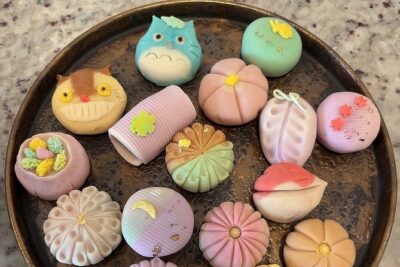
Make Traditional Nerikiri Sweets & Matcha experience in Shibuya
Read our review →Browse the lists this tour appears in