
Reviewed · TOKYO WALKING TOURS
Yanaka Walking Tour: Historic and Traditional District of Tokyo
Yanaka gives you a side of Tokyo that high-rise districts cannot. You walk past wooden homes, temple gates, graveyards, small studios, and local shops, with the city noise fading behind you. I especially like the quiet residential streets and the way guides such as Charlotte, Michiko, and Mana connect customs, religion, and everyday life.
I also like that the tour leaves room for human moments: a sweet shop, a café in a former bathhouse, a clothing store, or an old building you might otherwise pass. The main drawback is simple: three and a half hours on foot, including up to 40 minutes in the cemetery, can feel long in hot, humid, or rainy weather.
Key points to know before you book
- Yanaka Cemetery is a major part of the walk: Expect about 40 minutes among more than 7,000 graves and historic family sites.
- The guides shape the experience: Charlotte, Michiko, Mana, Keita, Kiyo, and others are praised for clear English, local knowledge, patience, and flexible pacing.
- The route mixes major stops with small discoveries: Temples, shrines, galleries, old buildings, cafés, sweets, and neighborhood shops all fit into the afternoon.
- The tour is designed for a small group: Booking information lists a maximum of eight participants, with another note allowing up to 10 people per booking.
- The price reflects personal guidance: At $72.96 per person, you pay for about 3.5 hours of interpretation rather than entrance to a major paid attraction.
- Wear good walking shoes: The route is active, and guides may adjust the pace or add rest stops when conditions require it.
Why Yanaka feels different from central Tokyo
Yanaka is one of the best places in Tokyo to see how the city can feel when the towers and traffic fall away. Its lanes pass through an older residential district shaped by temples, shrines, small businesses, and cemeteries. The setting is not a staged historical park. People still live, shop, worship, and work here.
The tour begins at Nippori Station, a practical meeting point with good public transport access. From there, your guide leads you through Yanaka rather than asking you to decode a map on your own. That matters in a district where the pleasure comes from small details: an unusual gate, a family altar, a workshop sign, or a narrow lane that does not appear on a typical first-time Tokyo route.
I like this as an early Tokyo activity because it gives you useful cultural context. Guides explain the difference between Buddhist temples and Shinto shrines, local customs, Japanese manners, and the area’s links to the Edo and Meiji periods. If this is your first day in Japan, the tour can help you understand things you will encounter later at larger temples and shrines.
More old Tokyo walks around Yanaka:
- The Old Quarter of Tokyo – Yanaka Walking Tour
★ 4.5 · 590 reviews - Tokyo: Old Quarter Yanaka Walking Tour
★ 4.8 · 406 reviews - Tokyo:Stroll in Old traditional culture towns~Yanaka & Nezu
★ 4.9 · 186 reviews
Tennoji Temple and the first quiet pause
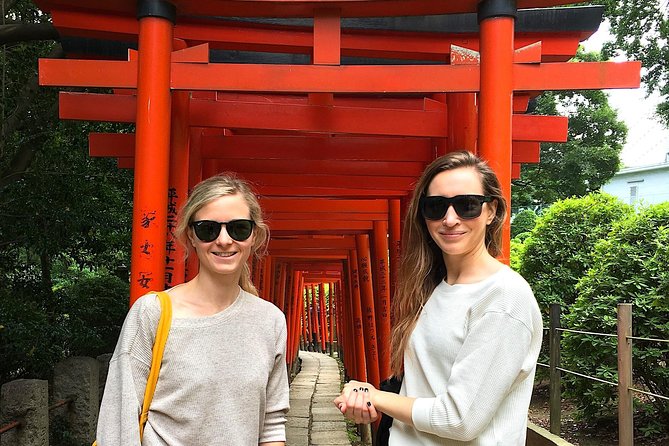
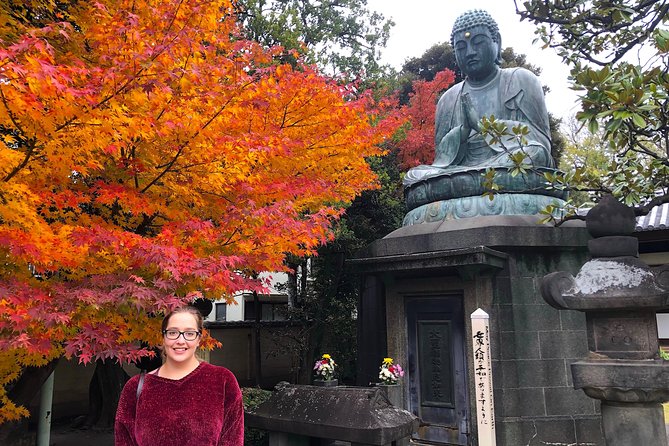
Tennoji Temple sits beside Yanaka Cemetery and dates to 1274. You enter through an old wooden gate into a garden setting, a sharp change from the station area. The grounds include a bronze Buddhist statue, described as dating from the Edo period.
This is not a vast temple complex with a long list of buildings. Its appeal is the calm setting and the chance to learn how a Buddhist temple works within the neighborhood. Your guide can explain the meaning of the objects and rituals you see, which is more useful than simply taking photographs and moving on.
Allow about 20 minutes here. That is enough time for a clear introduction without turning the visit into a formal religious lecture. If you already have several large temple visits planned in Tokyo, this smaller stop gives you a different scale and mood.
Yanaka Cemetery, a historic district in its own right
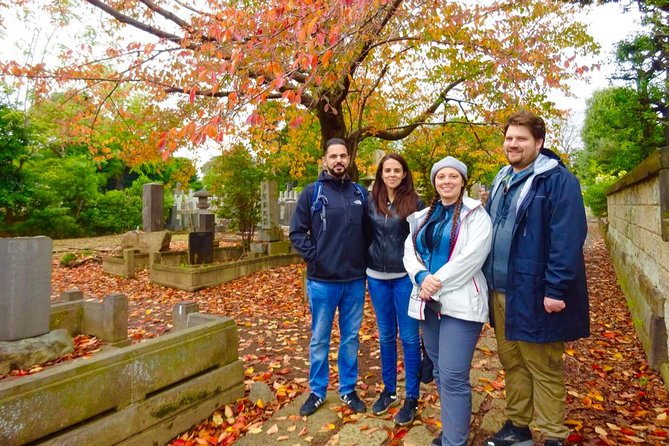
The cemetery is one of the tour’s most distinctive stops. It covers roughly 100,000 square meters and contains more than 7,000 graves. You spend about 40 minutes here, so this is not a quick walk past a gate.
Some people will find the cemetery fascinating. Others may feel that the time is too long, especially after visiting several temples. One participant specifically felt that the front end lingered here more than necessary. I would treat that as a useful warning: book this tour because you are interested in how burial grounds, religious sites, and city neighborhoods connect, not because you want a rapid checklist of attractions.
The cemetery also helps explain Yanaka’s character. It is not cut off from daily life. Streets, trees, temple grounds, family grave sites, and homes sit close together. Guides may discuss notable people and the area’s connection with Japan’s last shogun, a detail that gives the walk extra historical focus.
Spring is particularly attractive here because cherry blossoms can line the paths. Still, the experience does not depend on blossoms. The cemetery’s age, scale, and position inside a living neighborhood make it worthwhile in other seasons too.
Optional tea, local objects, and old buildings
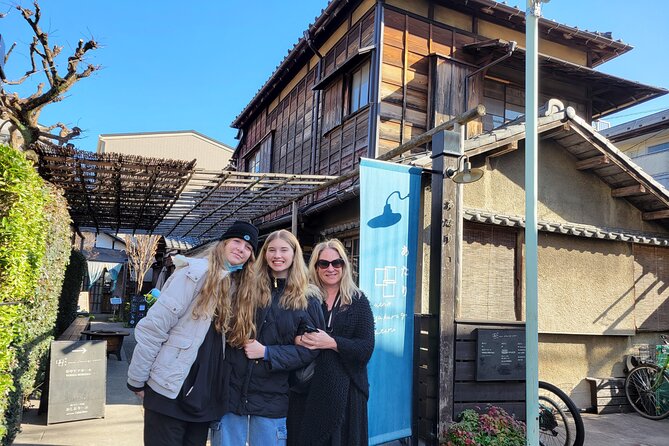
The route can include several optional or time-dependent stops. At Gallery Okubo, you may have the chance to sit on tatami mats for a Japanese tea ceremony. The tea costs ¥1,000 and is not included in the tour price.
This is a good add-on if you want a hands-on cultural activity rather than another explanation from the guide. It does require extra time and money, so ask how it fits your schedule before settling in. The tour can also be extended for ¥3,000 per group, per hour, paid in cash.
The Shitamachi Customs Museum and Exhibit Hall offers another possible change of pace. Its displays focus on the culture of Shitamachi, or downtown Tokyo, using objects that were actually used in daily life. I would especially favor this stop on a hot or rainy day, if it is open and fits the route.
Afternoon departures may include SCAI The Bathhouse, a contemporary art gallery inside a former public bath. The building keeps the feel of old Tokyo while showing modern art, making it a more unusual stop than a standard gallery visit. The visit is brief, about 15 minutes, but it adds variety to a route otherwise focused on temples and streets.
Another afternoon stop is Edokoro Alan West, a traditional art studio in a former auto body garage. The setting reflects Yanaka’s habit of putting old and new uses side by side. These afternoon stops are not guaranteed for a morning departure, so choose your start time based on your interests.
More Tokyo walking tours:
- Tokyo Tsukiji Fish Market Food and Culture Walking Tour
★ 5.0 · 3,184 reviews - Tokyo: Imperial Palace and Shogun Historical Walking Tour
★ 5.0 · 2,251 reviews - Tokyo: Shinjuku Local Bar and Izakaya Guided Walking Tour
★ 4.9 · 1,794 reviews - Tokyo: Tsukiji Fish Market Food and Walking tour
★ 5.0 · 1,724 reviews
The old shrine and the difference between Shinto and Buddhism
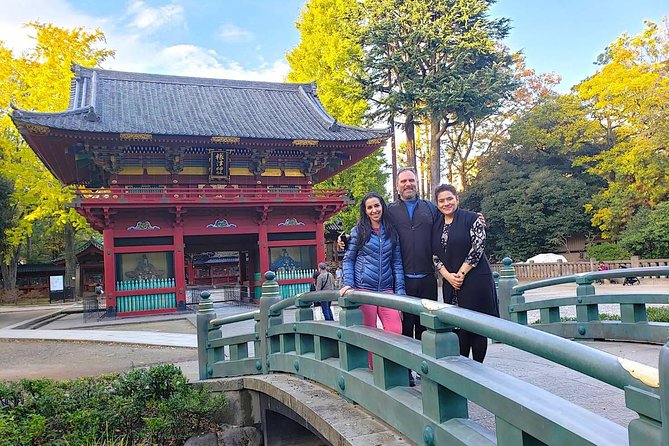
The route includes one of Japan’s oldest shrines, set among large trees, flowering azaleas, ponds, paths, and painted wooden structures. Reviews of the experience identify this as Nezu Jingu, although the supplied itinerary describes the stop without naming it directly.
This is one of the places where a guide adds real value. The buildings and grounds are easy to admire, but the customs can be less obvious. Your guide can help you understand how a Shinto shrine differs from a Buddhist temple, how to behave respectfully, and what you are looking at without reducing the visit to a list of dates.
The shrine also gives the walk a visual lift after the cemetery. Depending on the season, azaleas and greenery add color, while the ponds and trees offer a welcome pause. One guide, Muchan, was praised for explaining both religions and for taking the time to stop in air-conditioned places during a very hot day. That kind of practical care matters more than a polished speech when you are walking for hours.
Yanaka Ginza, snacks, and the final stretch
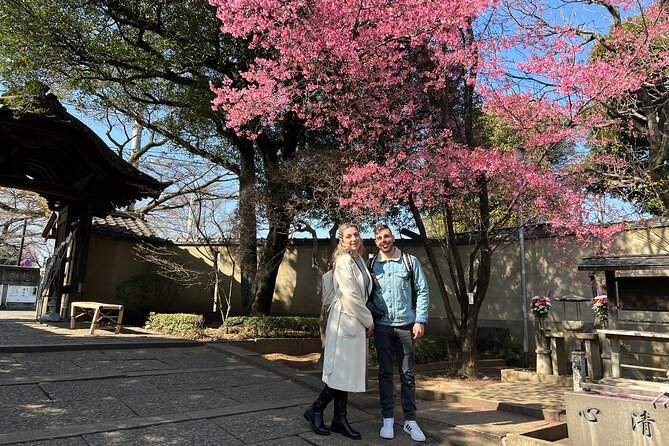
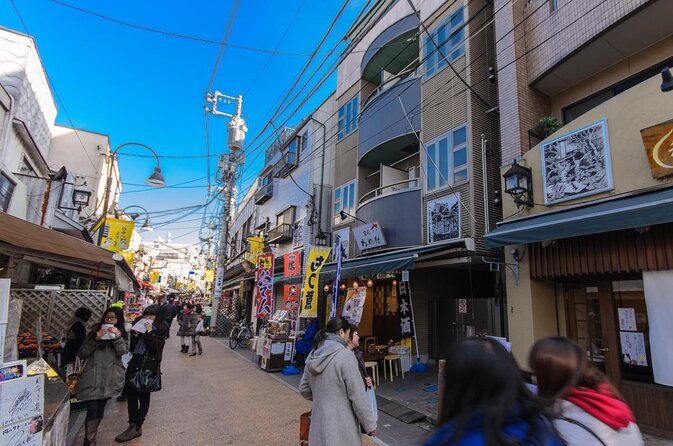
The tour ends back at the meeting point after a final visit to Yanaka Ginza Shopping Street. Plan on about 30 minutes here. This is the most social and food-focused part of the walk, with small shops, local snacks, and a strong Shitamachi feel.
You should arrive hungry enough to sample something, since food and drinks are not included. Guides may point out sweets, rice cakes, bakeries, sake, or other local specialties. One walk included stops at a bakery, a rice cake shop, and a store selling clothing made from geisha fabric. These details turn the final section into more than a shopping stop.
The street can also be a good place to ask your guide what to buy and how to eat it. You are not simply being sent off to browse. The point is to see how a neighborhood shopping street serves local life, rather than to visit a polished department store.
The walk finishes at Nippori Station, not at a separate attraction. That makes it easy to continue sightseeing or return to your hotel, though you should not count on hotel pickup unless you arrange it for an additional fee.
What the guides add to the experience

The strongest part of this tour is the guide-to-guest connection. Different guides bring different strengths, but the names that appear repeatedly include Charlotte, Michiko, Mana, Keita, Kiyo, Kaori, Mutsuko, Muchan, and Satsuki.
Charlotte is noted for clear English, safety awareness, and solid explanations of history and local ways. Michiko is praised for knowing the area well, helping with train stations, and sharing typical sweets. Mana is described as friendly and attentive, with the ability to interpret conversations inside old Yanaka buildings. Kaori adjusted the pace for shopping, refreshments, and rest.
The guides also take photographs of tour participants, which is a small but useful inclusion. It means you can sometimes get a picture of your group without asking a stranger. Do not expect every guide to follow the exact same route or storytelling style. That flexibility is part of the appeal, but it also means the experience can vary with the person leading it.
I would tell your guide what interests you at the beginning. Ask for more architecture if that is your priority. Ask about food, religion, the last shogun, local customs, or old Tokyo homes. The tour works best as a conversation, not as a fixed lecture.
Is $72.96 a fair price?
At $72.96 per person, this is not a bargain walk in the pay-nothing sense. The included value is the English-speaking guide, about 3.5 hours of attention, small-group organization, photos, and interpretation at places that are mostly free to enter.
You are not paying for admission to a major museum or a formal tea ceremony. The optional tea at Gallery Okubo costs extra, food and drinks are extra, and hotel pickup costs extra. The price makes the most sense if you want help noticing and understanding things you would likely miss alone.
A private tour would normally offer more control, but this experience can sometimes feel nearly private when booking numbers are low. The advertised limits are small, with a maximum of eight participants listed in the details and a maximum of 10 people per booking elsewhere in the information. If group size matters to you, confirm the exact number before booking.
Group discounts are available, though the amount is not specified. The tour also offers mobile tickets and free cancellation up to 24 hours before the start time. Changes or cancellations inside that window are not accepted, so do not book it as a loose placeholder in a tightly changing schedule.
Weather, walking, and the best start time
You need moderate physical fitness for this experience. Comfortable walking shoes are essential, and you should plan for three and a half hours on your feet. Guides may slow the pace, add rests, or find air-conditioned stops, but the route remains a walking tour.
Rain does not automatically end the experience. One tour continued in difficult weather and was still considered worthwhile, but another booking dispute shows the practical risk of choosing a fixed date during severe conditions. Since changes inside 24 hours are not accepted, check the forecast before that deadline.
Summer requires extra care. Several participants had hot and humid conditions, while Muchan carried bug spray and cooling spray and added indoor breaks. Bring water and dress for the season, even though those items are not formally listed as inclusions.
Choose the 9:00 a.m. start if you want cooler conditions and a quieter beginning. Choose 2:00 p.m. if the art gallery, Alan West studio, and late-day Yanaka Ginza atmosphere appeal to you. The afternoon route may be more varied, but the heat can be harder in summer.
Who should book this Yanaka walk?
I would choose this tour if you want old Tokyo rather than a parade of famous landmarks. It suits a first day in Japan because the guide explains manners, religion, history, food, and neighborhood life in one outing.
It also works well near the end of a Tokyo stay, especially if you have already seen the major temples and want a slower district with homes, cemeteries, small shops, and local character. Families and older visitors should be comfortable with the walking time before booking, and anyone with mobility concerns should ask the operator for details.
I would skip it if your main goal is shopping, nightlife, or grand architecture. I would also think twice if you dislike cemeteries or prefer quick stops. The cemetery receives a substantial share of the walk, and several temple and shrine visits can feel repetitive if you have already scheduled many similar sites.
Should you book it?
Book this tour if you want a friendly guide to explain the parts of Tokyo that do not come with a large sign or a famous viewpoint. The combination of Tennoji Temple, Yanaka Cemetery, the old shrine, neighborhood businesses, optional cultural stops, and Yanaka Ginza gives you a rounded look at daily life in old Tokyo.
The best reason to book is the guide. People such as Charlotte, Michiko, Mana, Keita, and Kaori bring the local detail, answer questions, adjust the pace, and sometimes open doors to places you would not find alone. The main caution is the physical commitment and the long cemetery section.
For a small-group experience at $72.96, I consider it good value when you want context and conversation, not just sightseeing. Wear comfortable shoes, choose the start time carefully, and leave room for a snack at Yanaka Ginza.
FAQ
Where does the Yanaka walking tour start?
The tour starts at Nippori Station, at 2 Chome-19 Nishinippori, Arakawa City, Tokyo 116-0013, Japan.
Where does the tour finish?
The activity ends back at the meeting point at Nippori Station.
How long does the experience last?
The scheduled duration is approximately 3 hours and 30 minutes.
What start times are available?
The stated start times are 9:00 a.m. and 2:00 p.m. You need to provide your preferred starting time when booking.
What is included in the price?
The price includes an English-speaking guide, all listed fees and taxes, and photographs of tour participants.
Are food and drinks included?
No. Food and drinks are not included. Snacks and beverages at Yanaka Ginza or other stops are paid for separately.
Is the tea ceremony included?
No. The optional tea ceremony at Gallery Okubo costs ¥1,000 and is not included in the tour price.
How many people can join the tour?
The booking information lists a maximum of eight participants for the activity and also states a maximum of 10 people per booking. Confirm the final group size when you reserve.
What is the cancellation policy?
You can cancel up to 24 hours before the start time for a full refund. Cancellations or changes made less than 24 hours before the experience are not accepted.
More history and heritage tours in Tokyo
- Tokyo: Imperial Palace Japanese History Walking Tour
★ 4.9 · 987 reviews - Tokyo: Shinjuku Historical Walking Tour & Secret Backstreets
★ 5.0 · 530 reviews - Mt. Fuji Heritage Tour: Traditional Villages, Lakes & Shrine
★ 4.5 · 509 reviews - From Tokyo: Nikko World Heritage Site Private Full-Day Trip
★ 4.9 · 243 reviews
Newly reviewed around Tokyo
- Tokyo Asakusa:Calligraphy & Make T-shirt Activity★ 5.0 · 62 reviews
- Intercity Shuttle, Tokyo to Haneda /Narita /Yokohama /Makuhari★ 5.0 · 5 reviews
- 1 Hour Travel around Tokyo with a Professional Photographer★ 5.0 · 3 reviews
- Travel Tokyo with Your Own Personal Photographer★ 5.0 · 43 reviews
- Train in Samurai Swordsmanship and Defeat the Demon in Tokyo★ 5.0 · 5 reviews
- Shuttle Van 6hr Tokyo Tour to-and-from Tokyo, Yokohama and Narita★ 5.0 · 9 reviews
- Kickboxing & Body Training with EX-Pro Fighter★ 5.0 · 4 reviews
- Traditional Japanese Knife Sharpening Class★ 5.0 · 18 reviews
Tokyo Walking Tours, compared.
Tokyo Tsukiji Fish Market Food and Culture Walking Tour
Read our review →
Imperial Palace and Shogun Historical Walking Tour
Read our review →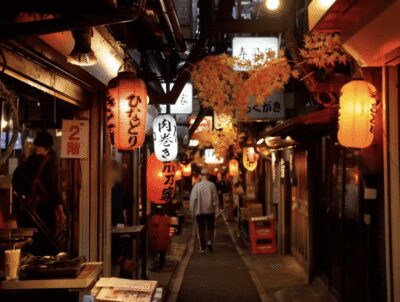
Shinjuku Local Bar and Izakaya Guided Walking Tour
Read our review →
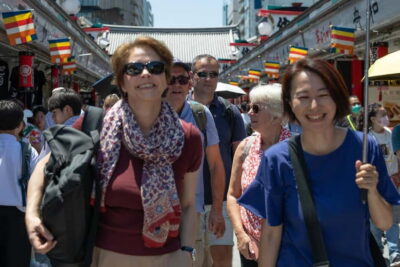
Asakusa Walking Tour with Sensoji Temple Visit
Read our review →
Tokyo Castle & Imperial PalaceーShogun Walking Tour
Read our review →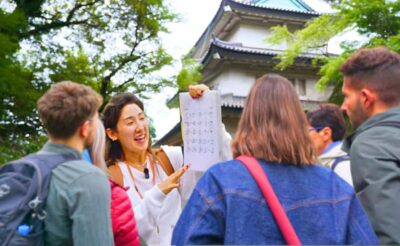
Browse the lists this tour appears in