
Reviewed · MOUNT FUJI DAY TRIPS FROM TOKYO
Mt. Fuji Heritage Tour: Traditional Villages, Lakes & Shrine
Mt Fuji is the star, but this $50 day trip gives you much more than a quick mountain photo. You’ll visit a thatched-roof village, spring-fed ponds, a lakeside park and one of Japan’s most famous shrine views, all without piecing together several local buses.
I especially like the variety of scenery and the careful pacing. You get cultural sights, seasonal color and classic Fuji viewpoints in one long day, while guides such as Sia, Kazi and Wanting have been praised for clear instructions and friendly help. The main drawback is the 10-hour schedule: traffic can cut into sightseeing time, and clouds may hide Fuji altogether.
Key points to know
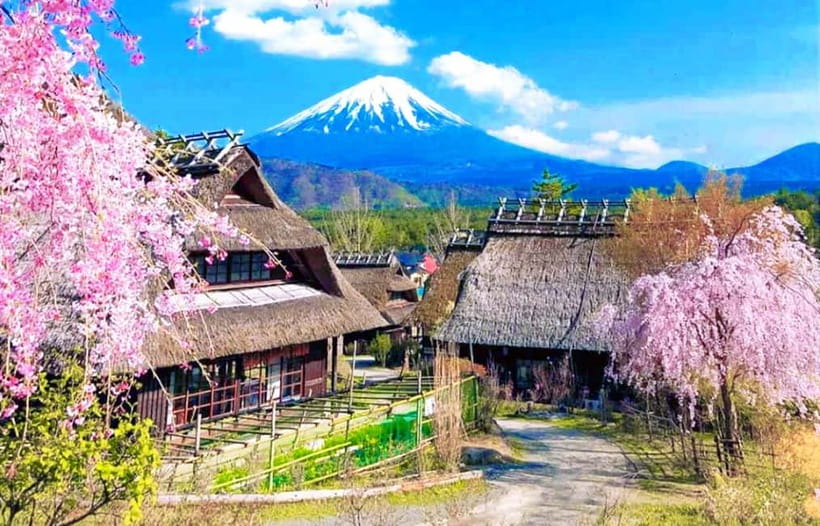
- Saiko Iyashi no Sato Nenba offers traditional thatched houses and Fuji views, with snacks and optional ninja costumes.
- Oishi Park and the Maple Corridor change with the season, from lavender in summer to autumn foliage.
- Arakura Sengen Shrine and Chureito Pagoda require stairs, but reward you with Japan’s classic pagoda-and-Fuji view.
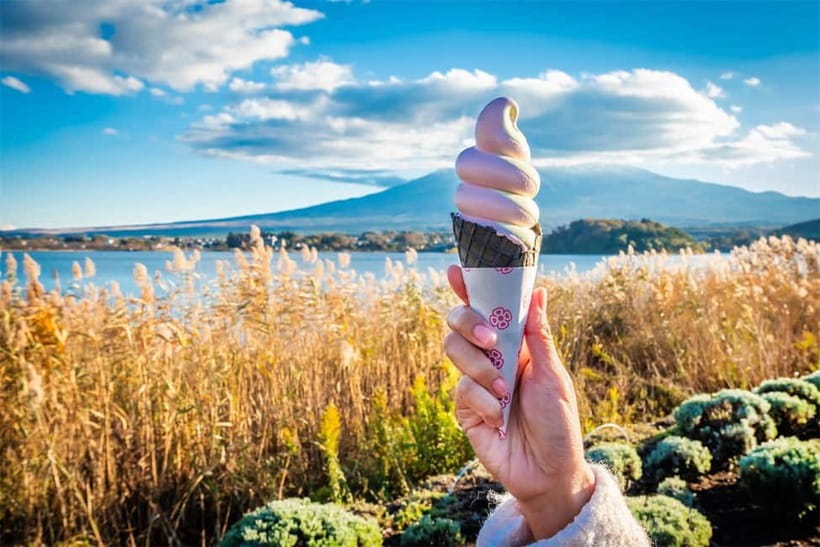
- Oshino Hakkai is a quieter final stop, known for eight clear spring ponds and local treats such as wasabi ice cream.
- Lunch costs extra, so bring food, carry cash or use the restaurant suggested by your guide.
- Weather and traffic matter: Fuji may be hidden, and weekend delays can make the return to Tokyo late.
Why this Mt Fuji day trip works so well
Many Mt Fuji excursions focus on one lake or one lookout. This one builds a fuller picture of the area. You see how the mountain shapes village life, shrine worship, farming, tourism and seasonal celebrations.
The route begins and ends in Tokyo, with coach travel of about two and a half hours each way. That is a lot of sitting, but it also saves you from changing trains and buses across the Fuji Five Lakes region. At $50 per person, the transport alone gives this trip useful value, especially if you want several famous stops in one day.
You should think of this as a scenic sampler rather than a slow regional tour. You will have enough time to walk, take photos and look around at each stop, but not enough time to linger over every shop or explore each site in depth.
More Mount Fuji day trips from Tokyo:
- Mt Fuji and Hakone 1-Day Bus Tour Return by Bullet Train
★ 5.0 · 26,383 reviews - Mt Fuji & Hakone Cruise, Drum Show Bullet Train 1 Day from Tokyo
★ 4.0 · 7,413 reviews - Tokyo Mt Fuji 5th St & Hakone Cruise Bus Tour w/Bullet Train
★ 4.4 · 5,024 reviews
Saiko Iyashi no Sato Nenba and its thatched roofs
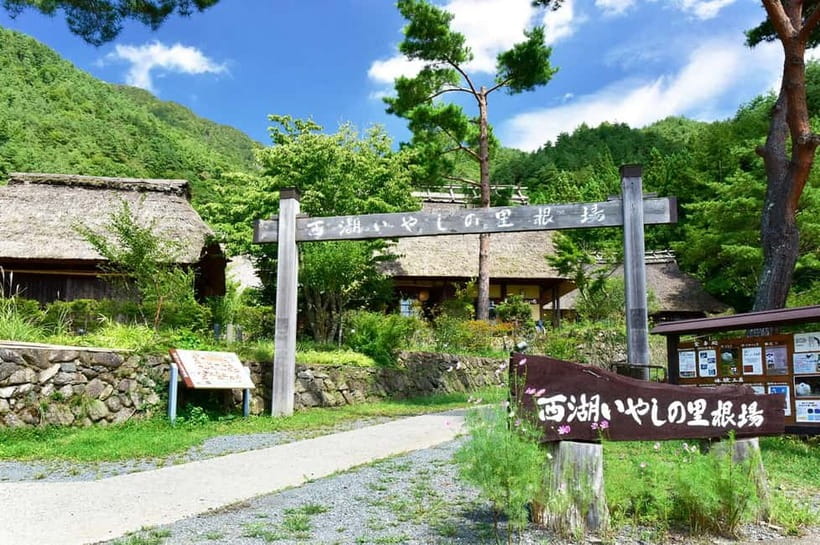
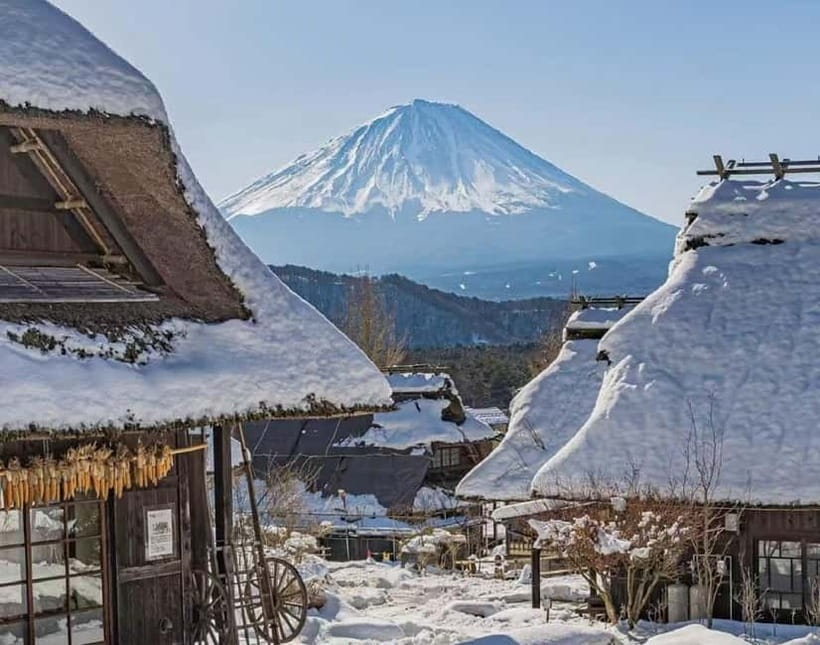
The first major stop is Saiko Iyashi no Sato Nenba, a reconstructed traditional village near Lake Saiko. Its thatched-roof houses give you a strong sense of old rural Japan, and Mt Fuji can appear behind them when the weather cooperates.
This is one of the most distinctive stops because the view combines architecture and mountain scenery. Instead of another open lookout, you can frame Fuji through village buildings, gardens and rooflines. Photographers should arrive ready to work quickly, since the visit lasts about an hour.
You can also buy Japanese snacks near the entrance. An optional ninja costume rental adds a playful touch to photos, though it costs extra and is not part of the tour price. I would treat that as a fun extra rather than a reason to book the trip.
Cloud cover can change the mood here. Even if Fuji disappears, the village still gives you traditional buildings and a pleasant walk. The mountain view is the bonus, not the only reason to stop.
Lake Kawaguchi, Oishi Park and seasonal color
After the village, the coach continues toward Lake Kawaguchi. The lake area is one of the region’s main viewing points, and Oishi Park gives you a broad, open setting for photos.
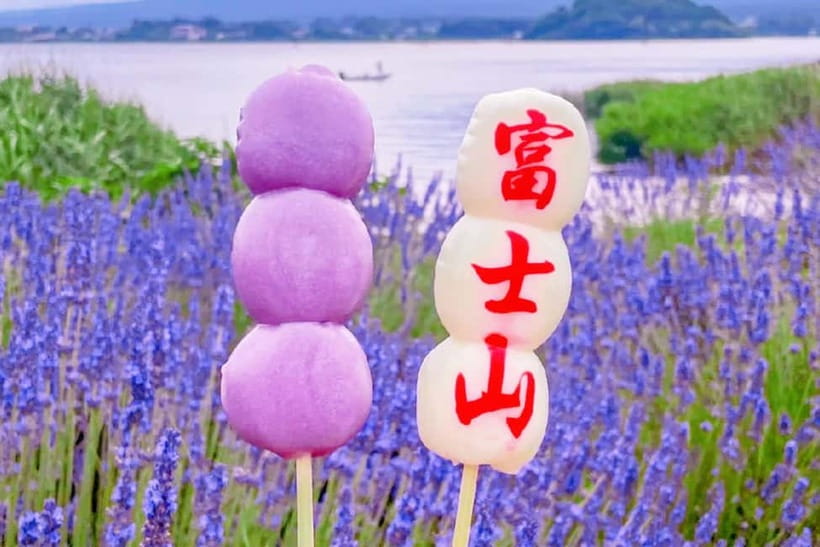
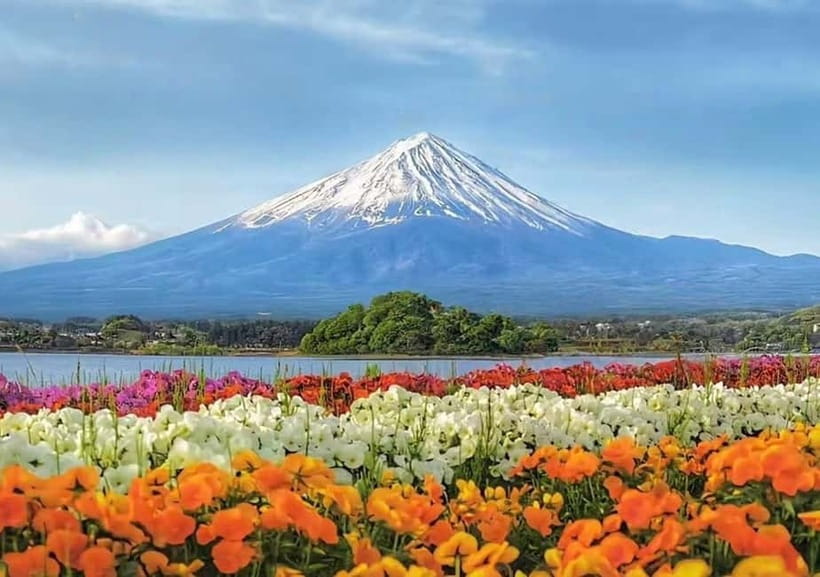
Oishi Park is especially appealing if you choose your date around the plants. Summer brings lavender fields, while autumn brings red broom grass and cooler colors. The park is not simply a place to point your camera at Fuji. It gives you flowers and lake views in the same frame, which makes the stop feel different from the shrine and village visits.
You get about 40 minutes at Oishi Park. That is enough for a walk and photographs, but you will need to keep an eye on the meeting time. The stop can feel short if you want to browse every corner or buy food.
There is an important seasonal change to understand. During peak autumn foliage, listed as October 26 through November 20, the tour visits the Maple Corridor instead of Oishi Park. The Maple Corridor is famous for its fiery fall leaves framing snow-capped Fuji, but you should not expect both locations during that period.
This seasonal swap is sensible, since autumn color is the main reason to visit the corridor. If flowers matter more to you, choose a summer date. If red and gold leaves matter more, late October to mid-November is the better window, though weather and crowd levels can affect the day.
The stair climb to Arakura Sengen Shrine

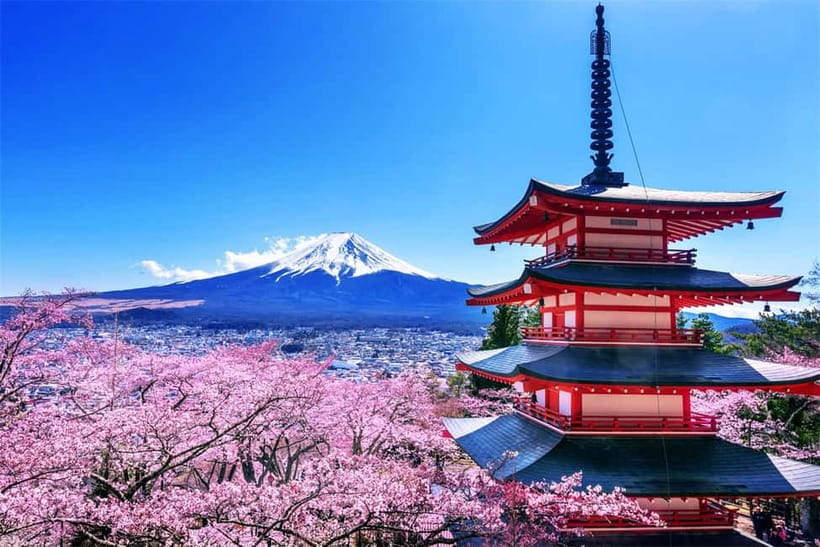
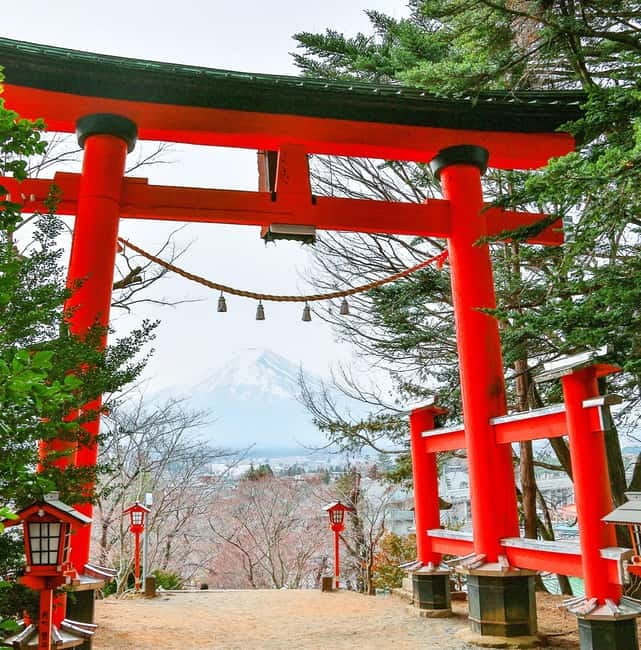
The next section brings you to Arakurayama Sengen Park, home to Arakura Fuji Sengen Shrine and Chureito Pagoda. This is the photograph many people associate with Mt Fuji: a red-and-white pagoda in front of the mountain.
You reach the view by climbing steps. The walk is manageable for many people, but it is still a real climb, so comfortable shoes are important. The shrine sits along the route, giving you a quieter cultural pause before or after the main viewpoint.
The listed time includes about 40 minutes at Arakurayama Sengen Park, followed by shorter visits to the shrine and pagoda. That means the schedule is built around the famous photograph rather than a long temple visit. You may want to take your photos first, then use any remaining time to look at the shrine area.
One useful tip is to arrange a goshuin before climbing if you want one. A visitor reported a 20-minute wait for the stamp, which left too little time afterward. This is exactly the kind of small timing issue that can matter on a shared coach tour.
The view is never guaranteed. Fuji can be covered by cloud even when the surrounding sites look bright. Still, the pagoda, shrine and hilltop setting make this one of the strongest cultural stops on the route.
More history and heritage tours in Tokyo:
- Tokyo: Imperial Palace and Shogun Historical Walking Tour
★ 5.0 · 2,251 reviews - Tokyo: Imperial Palace Japanese History Walking Tour
★ 4.9 · 987 reviews - Tokyo: Shinjuku Historical Walking Tour & Secret Backstreets
★ 5.0 · 530 reviews - Yanaka Walking Tour: Historic and Traditional District of Tokyo
★ 5.0 · 530 reviews
Oshino Hakkai and the clear spring ponds
Oshino Hakkai is the final major sightseeing stop. Here, eight spring ponds are fed by melted snow from Mt Fuji, creating clear water and reflective views.
The atmosphere is different from Lake Kawaguchi. Instead of a wide lake and open mountain vista, you get small ponds, traditional buildings and water that draws your attention close to the ground. It is a calmer way to finish the sightseeing portion of the day.
You have about 70 minutes here, the longest stop on the route. That gives you time to walk between the ponds, take photos and look at local food stalls. Try freshly made rice crackers if you want something familiar, or wasabi ice cream if you enjoy unusual regional flavors.
Oshino Hakkai is also a useful place to spend your remaining cash. Credit cards may not be accepted at some locations, so carry Japanese yen. Shops at the attractions operate independently from the tour, and purchases are your own responsibility.
A long coach day with useful guidance
The coach is the practical heart of this experience. The distances around Mt Fuji add up, and the route would be awkward to manage by public transport in a single day. You can rest between stops instead of studying bus timetables or worrying about parking.
The return journey to Tokyo takes about two and a half hours in normal conditions. Weekend and holiday traffic can make it longer, so I would not schedule a flight, timed attraction or important dinner immediately afterward.
Guides speak English, Japanese or Traditional Chinese. The group may receive explanations in several languages, so the amount of commentary in your preferred language can vary. Guides named Sia, Kazi, Wanting, Alex, Rachel and Feng have been praised for keeping people together, explaining meeting points and helping with timing.
That practical support matters more than a nonstop lecture. Sia, in particular, was praised for sending clear meeting information, pointing out bathrooms and keeping a large multigenerational group on schedule. Kazi was noted for staying organized and helping passengers through an unexpected bus problem. Wanting was praised for language skills and personal attention.
The amount of background information may vary by guide. If you want a detailed lesson on Fuji geology or Japanese religious history, this may feel lighter than a specialist tour. If you mainly want clear directions, good photo locations and a smooth day, that is a strength.
Lunch, snacks and what to carry
Lunch is not included. The schedule includes a 40-minute restaurant break, and the guide may suggest a place, but you can also bring food or buy something at the attractions.
I would bring a small lunch or at least snacks. It gives you more control and avoids using your limited break to make a decision. If you choose the suggested restaurant, understand that the menu may be convenient rather than the culinary highlight of the day.
Water is also worth carrying. Comfortable shoes are essential for the shrine steps and walking between the village, parks and ponds. Cash is important for snacks, small purchases and places that do not take cards.
A small bag is easier than bulky luggage, though one person specifically reported that two large suitcases were accepted on the bus. Do not assume this will always be convenient for the group. Ask before booking if luggage is a major concern.
The real value of the $50 price
At $50, this is an inexpensive way to cover a large area around Mt Fuji. The price includes the coach, driver, guide, parking and admission to Saiko Iyashi no Sato Nenba. You still pay for food, optional costume rental and personal purchases.
The strongest value comes from the number of different stops. A self-guided day would require planning transport between Saiko, Lake Kawaguchi, Arakura and Oshino. You would also need to account for return connections to Tokyo. Here, those logistics are handled for you.
The tradeoff is flexibility. You cannot stay longer at the Maple Corridor, skip a shop or wait indefinitely for Fuji to appear. You follow a shared schedule, and the guide may shorten, adjust or cancel stops if traffic or conditions require it.
For a first visit to the Mt Fuji area, I think the price is fair. For a second visit, you may prefer a slower stay in Kawaguchiko, especially if you want hiking, museums or long lakeside walks.
Weather, crowds and the Fuji gamble
Mt Fuji is famously changeable from the ground. A clear morning can turn cloudy by afternoon, and a gray day can briefly reveal the summit. The tour cannot control this, so check the forecast and book with realistic expectations.
Several people had clear views from some stops but not all. That is normal for this region. Your best approach is to enjoy the village, shrine, ponds and seasonal plants even if the mountain stays hidden.
Autumn dates can be especially attractive, but they also bring the possibility of heavier traffic. The tour specifically shifts from Oishi Park to the Maple Corridor during the October 26 to November 20 foliage period. Confirm the seasonal plan when selecting your date.
The most praised part of the experience is not only the scenery. It is the human organization. Guides have been described as kind, patient, punctual and good with families, including groups with young children and three generations. That can make a crowded, long day feel much easier.
Who should book this tour
I would recommend this tour if you are staying in Tokyo and want one efficient day around Mt Fuji. It suits first-time visitors, families, photographers who want several classic views and anyone who does not want to manage regional transport.
It is also a good fit if you value a guide who can explain meeting points and keep the day moving. The multilingual format helps international groups, although commentary may be shared across languages.
You should think twice if you use a wheelchair, since the activity is not suitable for wheelchair users. It may also disappoint you if you want a quiet, unhurried visit or a guaranteed view of Fuji. The shrine stairs, coach time and weather risk are part of the deal.
Should you book the Mt Fuji Heritage Tour?
Book it if your priority is seeing many of the area’s best-known sights for $50 in one day. The thatched village, Chureito Pagoda, Lake Kawaguchi and Oshino Hakkai give you a useful range of scenery, while the guide and driver remove much of the planning work.
Choose a date carefully. Summer offers lavender at Oishi Park, while late October to mid-November favors the Maple Corridor. Bring lunch, water, cash and good shoes, and leave your evening open in case traffic delays the return.
If Fuji appears, the day can deliver the postcard views you came for. If clouds roll in, you still have a solid cultural and scenic outing, provided you accept that this is a busy shared tour rather than a private mountain retreat.
FAQ
How long does the Mt Fuji Heritage Tour last?
The tour lasts about 10 hours. Coach travel takes roughly two and a half hours each way between Tokyo and the Mt Fuji area.
Where does the tour start and finish?
The listed meeting and drop-off point is Tokyo Mode Gakuen at 1-chōme-5-1 Marunouchi. The exact meeting point may vary depending on the option booked.
What languages are available?
Live guides are available in English, Japanese and Traditional Chinese. Explanations may be given in several languages during the shared group tour.
Is lunch included?
No. You can bring your own food, buy lunch at the attractions or use a restaurant suggested by the guide.
Is Mt Fuji always visible?
No. Weather can block the mountain, so a clear Fuji view is not guaranteed. Check the forecast before you go.
What happens at the Maple Corridor in autumn?
During the stated peak foliage period of October 26 through November 20, the tour visits the Maple Corridor instead of Oishi Park.
Do I need cash?
Yes. Cash is recommended because some locations may not accept credit cards. It is useful for snacks, local food, souvenirs and optional purchases.
Is the tour suitable for wheelchair users?
No. The activity is not suitable for wheelchair users, and the visit to the pagoda includes stairs.
What should I bring?
Bring comfortable shoes, water and cash. Arrive at the meeting point 15 minutes early, since late arrivals and no-shows are not refunded.
Newly reviewed around Tokyo
- Tokyo Asakusa:Calligraphy & Make T-shirt Activity★ 5.0 · 62 reviews
- Intercity Shuttle, Tokyo to Haneda /Narita /Yokohama /Makuhari★ 5.0 · 5 reviews
- 1 Hour Travel around Tokyo with a Professional Photographer★ 5.0 · 3 reviews
- Travel Tokyo with Your Own Personal Photographer★ 5.0 · 43 reviews
- Train in Samurai Swordsmanship and Defeat the Demon in Tokyo★ 5.0 · 5 reviews
- Shuttle Van 6hr Tokyo Tour to-and-from Tokyo, Yokohama and Narita★ 5.0 · 9 reviews
- Kickboxing & Body Training with EX-Pro Fighter★ 5.0 · 4 reviews
- Traditional Japanese Knife Sharpening Class★ 5.0 · 18 reviews
Mount Fuji Day Trips from Tokyo, compared.
Mt Fuji and Hakone 1-Day Bus Tour Return by Bullet Train
Read our review →
Mt Fuji & Hakone Cruise, Drum Show Bullet Train 1 Day from Tokyo
Read our review →
Tokyo Mt Fuji 5th St & Hakone Cruise Bus Tour w/Bullet Train
Read our review →
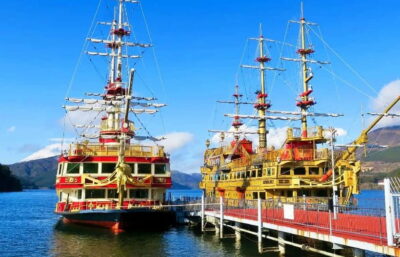
Mt. Fuji Tour, Hakone Ropeway, Owakudani, Lake Ashi
Read our review →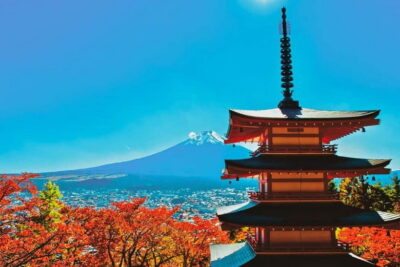
Mt.Fuji,Kawaguchiko Oishi Park,Arakurayama Sengen Park
Read our review →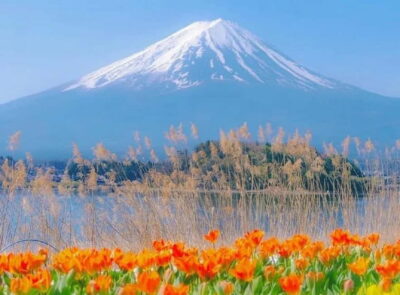
Mt Fuji Top 5 Spots Day Tour: Arakurayama Park,Oshino Hakkai
Read our review →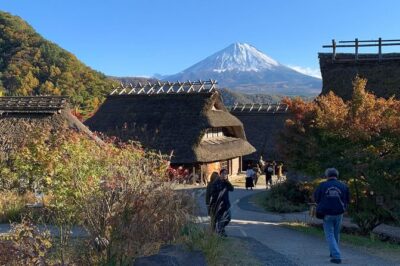
Private Tour to Mt. Fuji and Hakone (Fully Licenced Operator)
Read our review →Browse the lists this tour appears in