
Reviewed · TSUKIJI AND TOYOSU FISH MARKET TOURS
Tokyo Sushi Making Class in Tsukiji with Professional Chef
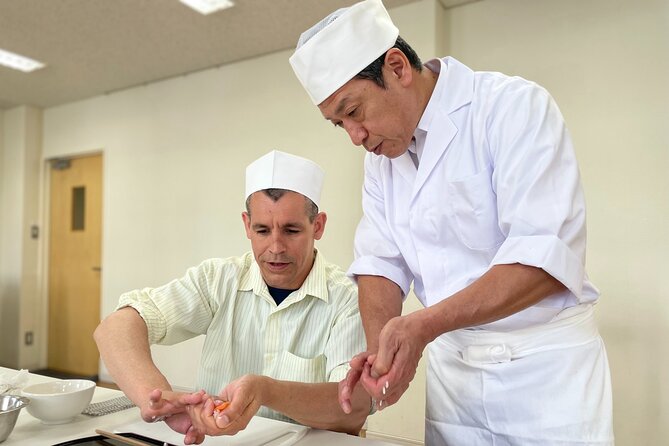
A fish-cutting demonstration is the star of this short Tokyo food class. In a traditional Japanese building near Tsukiji, a professional sushi chef shows you how a fish is prepared, explains Japanese knives, and then guides you through five kinds of nigiri and one rolled sushi.
I like two things right away: you eat what you make, so the class doubles as lunch, and the English-speaking host stays close to the chef to explain each step. Guides and chefs named in past sessions include Yuko, Yoko, Yugo, Tanaka, Kate, Kanon, Emma, Nao, AJ, Miky, and Ishi. The exact team can vary.
The main drawback is the short format. At about 90 minutes, this is an excellent introduction rather than a full cooking course. The room is on the third floor with stairs only, and the group can reach 20 people, so you should not expect a quiet private lesson.
Key points at a glance
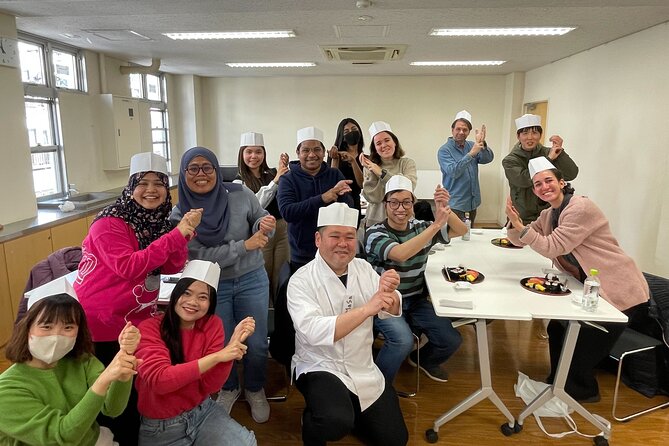
- Five nigiri and one maki roll: You make six pieces or styles of sushi and eat them as your lunch.
- A real fish-preparation demonstration: The chef shows how fish is cut and explains the knives used for sushi.
- Tsukiji setting: The class is in a traditional building near Tsukiji Fish Market, Tsukiji Outer Market, and Tsukiji Nippon Fish Port Market.
- English support throughout: An English-speaking host translates and helps you follow the chef’s instructions.
- Good for first-timers and families: Children as young as 7 have taken part, and beginners receive hands-on help.
- A compact Tokyo activity: The 90-minute schedule fits neatly into a morning or afternoon around Tsukiji.
What this Tsukiji sushi class is really like
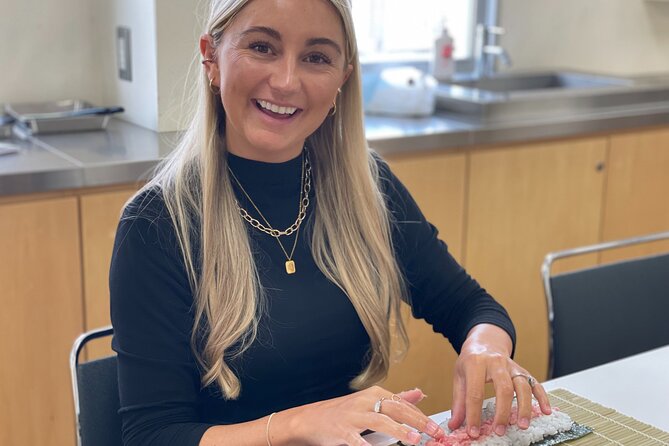
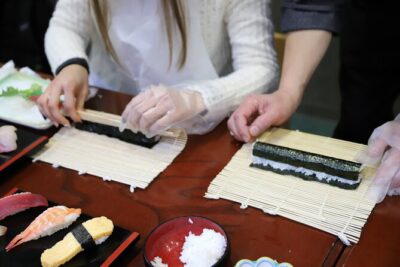
This is not a lecture followed by a quick photo opportunity. You sit at a worktable, watch the chef, handle the ingredients, and copy the techniques with help nearby. The pace is brisk, but the class is built for beginners.
The setting adds something important. You are not in a polished hotel kitchen or a large international cooking school. The classroom is in a traditional Japanese building close to the market, with the local feel that makes Tsukiji such a useful place for a food lesson.
You can expect an English-speaking host to explain the chef’s instructions. Past sessions have featured hosts such as Yuko, Yugo, and Kanon working alongside chefs such as Tanaka and Kate. Names and staff assignments may change, but the format remains the same: the chef demonstrates, the host explains, and you practice.
The finished meal includes five different nigiri sushi and one rolled sushi. That is enough food to feel like lunch, though you may want to arrive with a little room in your stomach. One useful feature is that the chef prepares another piece while you eat your own creations, including freshly prepared wasabi.
More Tsukiji and Toyosu fish market tours:
- Tokyo Tsukiji Fish Market Food and Culture Walking Tour
★ 5.0 · 3,184 reviews - Tokyo: Tsukiji Fish Market Food and Walking tour
★ 5.0 · 1,724 reviews - Tokyo: Tsukiji Fish Market Guided Walking Tour
★ 4.9 · 1,397 reviews
The fish-cutting demonstration and sushi basics
The class begins with a professional demonstration of fish preparation. This is one of the more unusual parts of the activity, since you get to see the careful steps that come before a piece of fish reaches a sushi counter.
The chef explains how Japanese knives are used and shows the fish being cut for sushi. The point is not to turn you into a sushi chef in one sitting. Instead, you get a clearer sense of why knife work, portion size, and clean handling matter.
You also learn what sushi means in practical terms. The lesson covers the difference between nigiri and the rolled style, along with the correct order for making each one. Several sessions have included a little background on sushi and its origins in Edo, the former name for Tokyo.
That history is brief, but useful. It gives the food some context before you start shaping it. If you already eat sushi often, the knife demonstration and preparation details will likely be more interesting than the basic explanation. If sushi is new to you, the introduction helps you understand what you are making.
Making five nigiri by hand
Nigiri looks simple: a small mound of rice with fish on top. It is not quite as easy as it looks. The rice needs to hold together without being crushed, and the fish must sit neatly on top.
The sushi master demonstrates the hand movements slowly, then lets you try. You receive guidance as you work, so you do not need previous kitchen experience. The goal is not perfect restaurant-level precision. It is to learn the basic shape and understand how a sushi chef handles rice and fish.
You make five different nigiri pieces. This gives you several chances to improve. Your first piece may be a little loose or oversized, while the later ones often look more orderly. The staff is used to beginners, including children, and the mood is encouraging rather than strict.
The ingredients are fresh and sourced from the market, and proper sushi tools and tableware are supplied by local shops. That matters because this is not simply a rice-shaping craft activity. You are working with the ingredients and equipment used for the finished meal.
Rolling one sushi roll
The second practical lesson covers rolled sushi, often called maki. Here the challenge changes. You need to place the filling sensibly, spread or shape the rice, and roll everything firmly enough to hold together without squeezing out the contents.
The chef demonstrates the process, and the host helps explain the order of steps. You then make your own roll. This part is often easier for families because the result is visible right away, even if the shape is not perfect.
You should expect assistance, not a test. Staff members step in when needed and help you create a plate that looks presentable. Several people have found the class useful enough to repeat the basic techniques at home, though you would need your own ingredients and tools after leaving.
More Tokyo sushi making classes:
- Sushi Making Tokyo Roll and Authentic Japanese Sushi Class
★ 5.0 · 3,971 reviews - Tokyo: Roll and Authentic Sushi Making Class in Asakusa
★ 4.9 · 1,957 reviews - Make Sushi and Create Unforgettable Memories in Tokyo
★ 5.0 · 1,413 reviews - Tokyo: Sushi Making Class in a Happi Coat near a Famous Spot
★ 4.9 · 1,377 reviews
Eating your handmade sushi for lunch
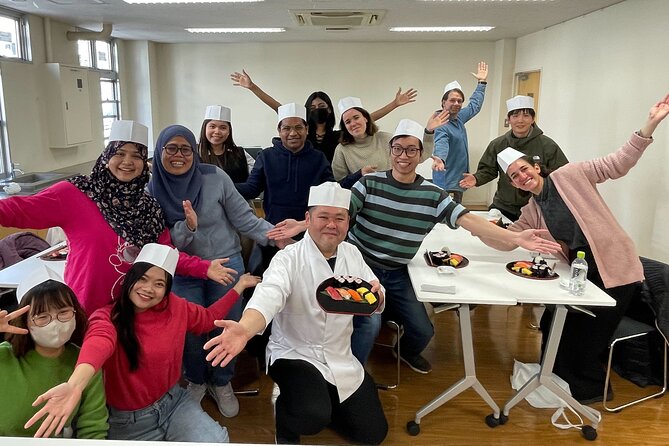
The best part comes at the table. You eat the nigiri and roll you have just made, turning the class into a light lunch rather than an activity that leaves you searching for food afterward.
The fish is fresh and the sushi is prepared with ingredients from the market. The chef also makes another piece while you eat, using wasabi that is prepared as fresh as possible. That small extra touch lets you compare your work with the chef’s technique without making your own efforts feel like a failure.
This is also where you can appreciate the value of the class. At the listed price of $49.74 per person, you are paying for instruction, fresh ingredients, market-area access, an English-speaking host, professional guidance, and a meal. A single restaurant lunch may cost less, but it will not give you the knife demonstration or the practical skill.
The value is strongest if you want more than food. If you only want to eat excellent sushi, Tsukiji has other options. If you want a short lesson that ends with lunch, the price is reasonable for Tokyo.
Three Tsukiji stops around the class
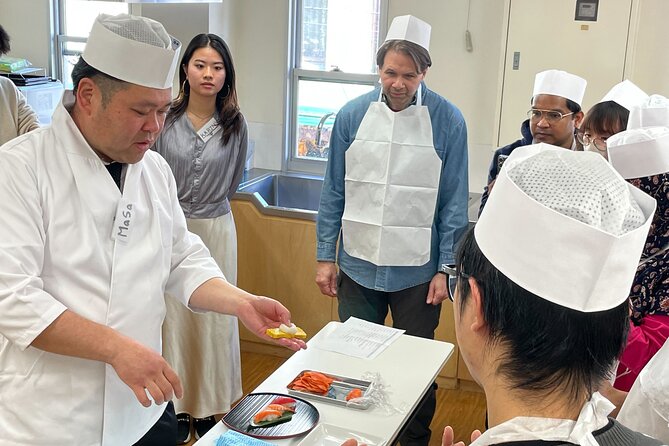
The activity is tied to three places in the Tsukiji area: Tsukiji Fish Market, Tsukiji Jogai Market, and Tsukiji Nippon Fish Port Market. The classroom itself is near the market area, so the location works well as part of a larger morning or afternoon in Tsukiji.
Tsukiji Fish Market gives the class its food context. This is where the lesson’s market-sourced ingredients and fish preparation make sense. You are learning about sushi in one of Tokyo’s best-known seafood districts rather than in a disconnected classroom.
Tsukiji Jogai Market, also known as the Outer Market, is useful before or after class. The activity does not include a hotel pickup, transportation, or a separate market meal, so you make your own way there. Plan extra time if you want to browse food shops around the class.
Tsukiji Nippon Fish Port Market adds another market reference to the route. The supplied schedule lists it as a stop, but the core experience remains the sushi lesson itself. Do not book this expecting a long guided market tour with extensive shopping time.
The market area is a major strength, but it can also make timing less predictable. If the class runs beyond its scheduled end, the provider asks you to mention any appointment or plan immediately afterward. I would avoid booking a tight connection or timed attraction right after the lesson.
Why the class works for families
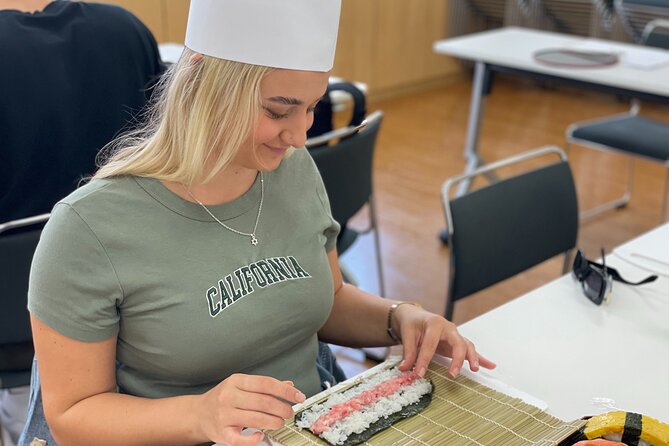
This is one of the better Tokyo food activities for a family that wants everyone involved. Children from about 7 to 12 have taken part, and making their own food can encourage them to try sushi or sashimi they might otherwise ignore.
The task is hands-on without being too long. Ninety minutes is enough time to learn, make, and eat without asking younger children to sit through a half-day course. Staff members help with the practical steps, and the class has a friendly tone.
Parents should still consider the stairs. The classroom is on the third floor of a traditional building, and there is no elevator listed. The group size can reach 20, so families seeking individual attention should book with realistic expectations.
English instruction and the role of the host
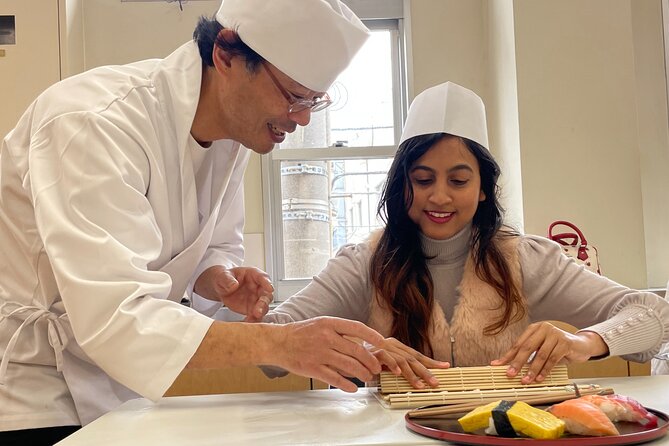
The English-speaking host is not just there to greet you. The host helps translate the chef’s explanations and keeps the instructions clear as the class moves from demonstration to practice.
Past sessions have included Yuko, Yoko, Yugo, Kanon, Emma, and other hosts. Participants have especially appreciated clear translation, personal help, and the easygoing support during the hands-on section. Chef names have included Tanaka and Kate, among others.
Because the chef and translator work as a pair, you get both technical instruction and language support. That is important in a sushi class, where small hand movements are hard to understand from a distance. Still, the class may feel less personal when the group is full.
Timing, meeting point, and practical matters
The class lasts about one hour and 30 minutes and ends back at the meeting point. You make your own way to:
千社額棟 4-chōme-16-2 Tsukiji, Chuo City, Tokyo 104-0045, Japan
The activity is near public transportation, but hotel pickup and drop-off are not included. I would leave enough time to find the building, since the classroom is in a local traditional structure rather than an obvious major attraction.
You receive confirmation when booking, and the ticket is mobile-friendly. Cancellation is free up to 24 hours before the start time. Cancellations or changes inside that window are not accepted for a refund.
Tell the provider about food allergies when you reserve. The team tries to accommodate allergy-related requests, but cannot promise every request. Halal and kosher requirements are not accommodated, so you should contact the provider before booking if food restrictions are important.
Who should book this experience
I would choose this class if you:
- Want to learn sushi basics without giving up half a day
- Enjoy food activities with a cultural setting
- Are visiting Tsukiji and want a planned activity near the market
- Are traveling with children who like making their own food
- Want English instruction from a host who can translate the chef’s demonstration
- Prefer an activity that includes lunch
I would think twice if you need a private class, cannot manage stairs, have strict halal or kosher requirements, or want advanced knife training. This is a beginner lesson, not professional chef education.
It is also not the right choice if you want a long market walk. The market stops give the class a strong setting, but the main event is making and eating sushi.
Is the Tsukiji sushi class worth booking?
Yes, for most sushi fans, this is a good-value Tokyo activity. The price includes fresh ingredients, instruction from a sushi master, English support, tools, and six pieces or styles of sushi that you prepare and eat yourself.
The strongest reasons to book are the fish-cutting demonstration, the hands-on practice, and the convenient 90-minute schedule. The biggest cautions are the stairs, possible group size of 20, limited time, and food restrictions that cannot be accommodated.
Book it if you want to leave Tsukiji with more than a full stomach. You will not become a master sushi chef in one short session, but you will understand the basic process, enjoy a fresh lunch, and have a useful skill to try at home.
FAQ
How long does the Tokyo sushi-making class last?
The class lasts approximately one hour and 30 minutes.
Where does the class meet?
The meeting point is 千社額棟 4-chōme-16-2 Tsukiji, Chuo City, Tokyo 104-0045, Japan.
Where does the activity end?
The activity ends back at the meeting point.
What sushi will I make?
You will make five different nigiri sushi and one rolled sushi.
Is lunch included?
Yes. You eat the sushi you make during the class, so your handmade sushi serves as lunch.
Is the class taught in English?
An English-speaking host assists with the class and translates the professional sushi chef’s instructions.
Do I need previous sushi-making experience?
No. The class is designed as an introduction, and the chef guides you through the process step by step.
Is the classroom accessible by elevator?
No elevator is listed. The classroom is on the third floor in a traditional Japanese building with stairs only.
Can children take the class?
The experience is suitable for families, and children from 7 to 12 have taken part. Adult supervision and comfort with the hands-on activity are still important.
Can the class accommodate allergies or halal and kosher requests?
You should report allergies when booking. The provider will try to help with allergy-related requests, but cannot guarantee accommodation. Halal and kosher requests are not accommodated.
Is hotel pickup included?
No. You make your own way to the meeting point, and hotel pickup and drop-off are not included.
Can I cancel for a refund?
You can cancel for a full refund up to 24 hours before the experience start time. Cancellations and changes made less than 24 hours before the start time are not accepted for a refund.
More hands-on classes and workshops in Tokyo
- Chopstick Making Workshop in Ginza
★ 4.8 · 1,366 reviews - Tokyo: Samurai Sword & Archery Class from Samurai Descendant
★ 5.0 · 603 reviews - Tokyo Chopstick Making Workshop with Artisan
★ 5.0 · 466 reviews - Tokyo Tsukiji Fish Market Tour and Sushi Making Lesson
★ 5.0 · 390 reviews
More Tokyo cooking classes
- Tokyo Shinjuku Chopsticks Making Class
★ 5.0 · 1,763 reviews - Ramen & Gyoza Cooking Class in Tokyo with Local Supermarket Visit
★ 5.0 · 823 reviews - Matcha Making Class in Tokyo with Authentic Japanese Sweets Set
★ 5.0 · 744 reviews - Tokyo: Tsukiji Fish Market Sushi Making Class with Pro Chef
★ 4.9 · 506 reviews
Newly reviewed around Tokyo
- Tokyo Asakusa:Calligraphy & Make T-shirt Activity★ 5.0 · 62 reviews
- Intercity Shuttle, Tokyo to Haneda /Narita /Yokohama /Makuhari★ 5.0 · 5 reviews
- 1 Hour Travel around Tokyo with a Professional Photographer★ 5.0 · 3 reviews
- Travel Tokyo with Your Own Personal Photographer★ 5.0 · 43 reviews
- Train in Samurai Swordsmanship and Defeat the Demon in Tokyo★ 5.0 · 5 reviews
- Shuttle Van 6hr Tokyo Tour to-and-from Tokyo, Yokohama and Narita★ 5.0 · 9 reviews
- Kickboxing & Body Training with EX-Pro Fighter★ 5.0 · 4 reviews
- Traditional Japanese Knife Sharpening Class★ 5.0 · 18 reviews
Tsukiji and Toyosu Fish Market Tours, compared.
Tokyo Tsukiji Fish Market Food and Culture Walking Tour
Read our review →

Tsukiji Fish Market Guided Tour and Sushi Making with Pro Chef
Read our review →Tsukiji Fish Market Food and Culture Walking Tour
Read our review →
Tsukiji Fish Market: Street Food & Culture Walking Tour
Read our review →
Tsukiji Fish Market Small-Group Food Walking Tour
Read our review →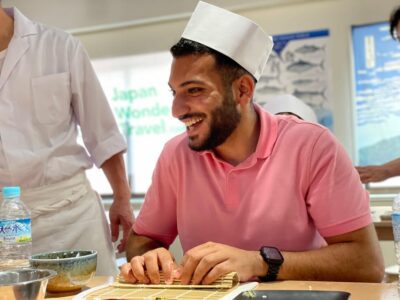
Tsukiji Fish Market Sushi Making Class with Pro Chef
Read our review →Browse the lists this tour appears in