
Reviewed · TOKYO IMPERIAL PALACE TOURS
Imperial Palace to Tokyo Station Historical Walking Tour
Tokyo’s Imperial Palace area hides an entire chapter of Japan’s past in plain sight. In about two and a half hours, you move from Edo Castle ruins and samurai guardhouses to the restored red-brick façade of Tokyo Station, with a local guide explaining what you are seeing along the way.
I like two things here. First, the route gives you both peaceful gardens and central Tokyo architecture, instead of keeping you in one historic enclosure. Second, the small maximum of 12 people should make it easier to ask questions. Guides including Naoki, Masa-san, Mitsuko Shirai, and Ms. Futami are praised for being patient, friendly, and well informed.
The main consideration is access. The Inner Palace is not open to the public, and the East Gardens may be affected by holidays or closures. You also need to walk for most of the 2.5-hour tour, with no food or drinks included.
Key points to know before booking
- See Edo Castle without entering the Inner Palace: Stone walls, gate ruins, a guardhouse, a watchtower, and a keep model bring the former castle to life.
- The route connects old and new Tokyo: You finish among Marunouchi skyscrapers and at Tokyo Station’s restored 1914 red-brick exterior.
- A guide adds the missing context: The castle ruins can look like piles of stone without an explanation of their military and political role.
- The group is capped at 12 people: That is a useful size for questions and for keeping the walk together.
- The price is $39.09 per person: The value comes mainly from the guide’s interpretation, not from included admissions, since the listed stops are free.
- Plan around the weather and your footwear: Much of the experience takes place outdoors on foot, with no meal or drink included.
Why this walk gives Tokyo’s center a clear story
Many first-time Tokyo visits split history and modern city life into separate outings. This walk links them in a logical way. You begin near the Imperial Palace, where the Tokugawa shoguns once ruled from Edo Castle, then finish at Tokyo Station, a symbol of Japan’s later push toward a modern national capital.
That change is the real appeal. You are not simply checking off a garden, a gate, and a railway station. You are following Tokyo’s transformation from fortified castle town to imperial capital and major business center.
The tour begins at Starbucks Coffee in Wadakura Fountain Park, at 3-1 Kōkyogaien in Chiyoda City. The meeting point is near public transportation and easy to identify, but you should still allow time to find the café and meet the guide before the start.
The fee is $39.09 per person. Since the tour includes a local guide but no meals, drinks, or paid admissions, I would judge the price by the quality of the explanation. If you want dates, names, and stories to make the stones meaningful, it is a reasonable fee. If you only want to walk through the gardens on your own, you can see the listed sites without paying for admission.
More Imperial Palace tours in Tokyo:
- Tokyo: Imperial Palace and Shogun Historical Walking Tour
★ 5.0 · 2,251 reviews - Tokyo: Imperial Palace Japanese History Walking Tour
★ 4.9 · 987 reviews - Tokyo: Imperial Palace and Shogun Walking Tour
★ 4.9 · 935 reviews
Wadakura Fountain Park and the first palace views
Wadakura Fountain Park is a gentle opening. Built in 1961 to mark the marriage of Emperor Akihito, it has fountains and open areas near the palace grounds. You spend only about five minutes here, so think of it as a meeting and orientation point rather than a full park visit.
This is a useful start because it places you in the middle of Tokyo while giving you a calm view before the castle remains begin. Your guide can also explain the relationship between the open public gardens, the palace grounds, and the surrounding government district.
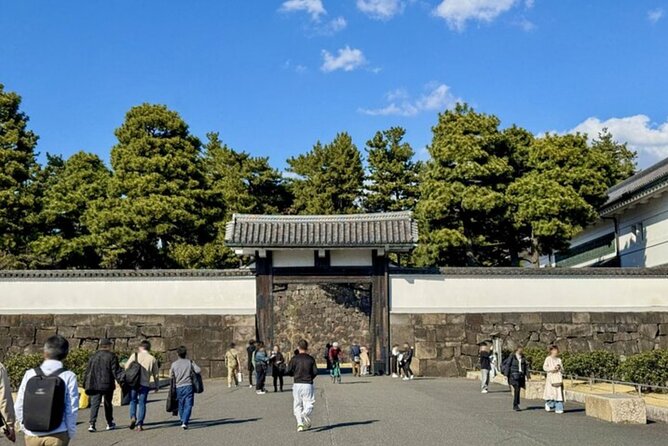
From here, the walk goes to Ōte-mon Gate, the main entrance to the Imperial Palace East Gardens. The gate once served Edo Castle and gives you an immediate sense of scale. Its heavy construction and formal approach help you picture how carefully access to the castle was controlled.
You spend about 10 minutes at the gate. That may sound brief, but a guide can use the stop well by explaining its defensive purpose and its place in the castle plan. On your own, you might take a photograph and move on without noticing why the gate mattered.
Gate ruins and the hundred-samurai guardhouse
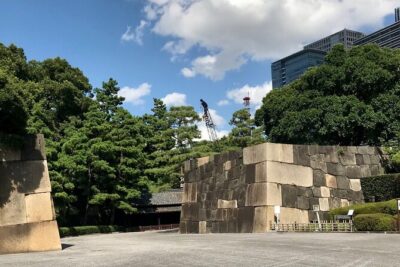
The Ote-San’no Gate ruins are a short stop, about five minutes. What remains is not a complete building, so this part depends heavily on the guide’s explanation. The stones show how the castle used layers of entrances and defenses rather than one simple doorway.
Next comes the Hyakunin Bansho Guardhouse, where a hundred samurai were assigned to protect the castle’s inner sections. You get about 10 minutes here. The name and function make this one of the more memorable stops for anyone interested in the social order of the Edo period.
I especially like this point in the route because it moves beyond famous names and pretty scenery. You begin to see the castle as a working political and military compound, filled with rules about who could pass, where they could go, and how security was maintained.
Ninomaru Garden and Suwa-no-chaya
The Ninomaru Garden brings a different mood. Its winding paths, ponds, and seasonal plants offer a quieter picture of the former castle grounds. You have about 10 minutes to walk and look around, though the amount of time you spend lingering may depend on the group and the guide’s pace.
The garden is not just a break from stone walls. Japanese gardens use carefully arranged views and controlled movement, and this setting gives your guide a chance to explain the cultural side of the palace grounds. You may also find that the garden looks quite different depending on the season.
The next stop is Suwa-no-chaya, a historic teahouse. The building is not operating as a public teahouse, so do not arrive expecting a tea service or a snack. Its value is visual and historical, adding a reminder that the castle was also a place of ceremony, culture, and formal hospitality.
Food and drinks are not part of the tour. If you want a snack or coffee, buy it before the walk or plan to eat after reaching Tokyo Station.
More Tokyo walking tours:
- Tokyo Tsukiji Fish Market Food and Culture Walking Tour
★ 5.0 · 3,184 reviews - Tokyo: Shinjuku Local Bar and Izakaya Guided Walking Tour
★ 4.9 · 1,794 reviews - Tokyo: Tsukiji Fish Market Food and Walking tour
★ 5.0 · 1,724 reviews - Tokyo: Asakusa Walking Tour with Sensoji Temple Visit
★ 4.8 · 1,583 reviews
Plum Tree Hill and the old castle keep
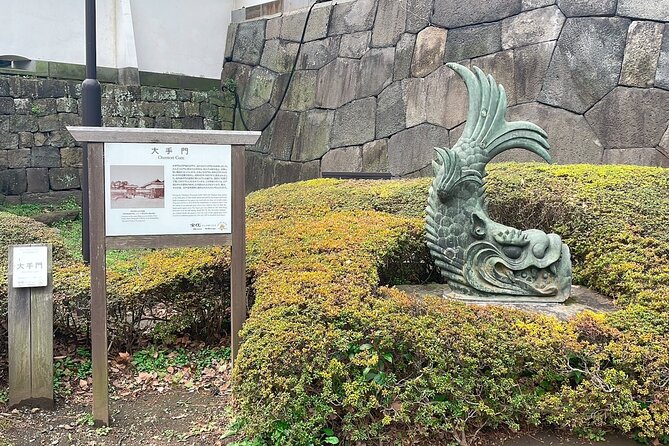
Bairinzaka, or Plum Tree Hill, takes about five minutes. The area is planted with plum trees, which can be especially attractive when they bloom. Outside that season, it is still part of the garden route, but the floral display will not be at its strongest.
The walk then reaches the Takehashi Gomon ruins, connected with the former main keep of Edo Castle. The original keep is gone, but the surviving foundations and walls show how large and powerful the Tokugawa shogunate’s central compound once was.
This is where the guide’s role becomes particularly important. A stone base does not automatically communicate the size or political weight of the structure that once occupied it. With a clear explanation, you can connect the remaining masonry to the shogunate’s system of rule.
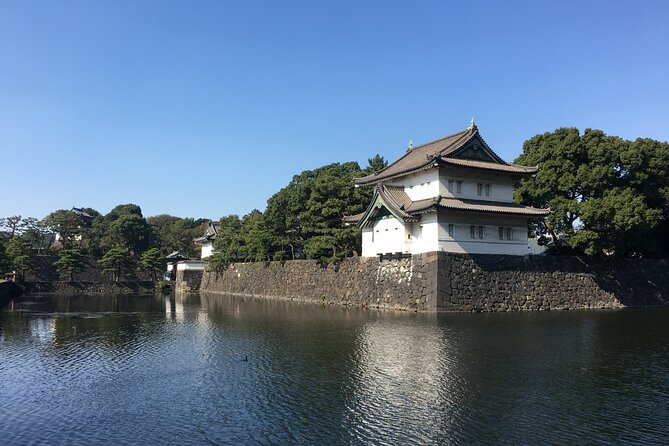
The Fujimi-yagura is one of the few remaining Edo Castle watchtowers. You spend around 10 minutes here. It was used for surveillance and defense, and its preserved form offers a more complete sense of the castle’s military design than a ruin alone.
The name refers to viewing Mount Fuji, though the supplied tour details focus on its defensive role. I would treat this as a good place to ask questions about how watchtowers worked and how the castle’s various layers fit together.
The restoration model and Honmaru grounds
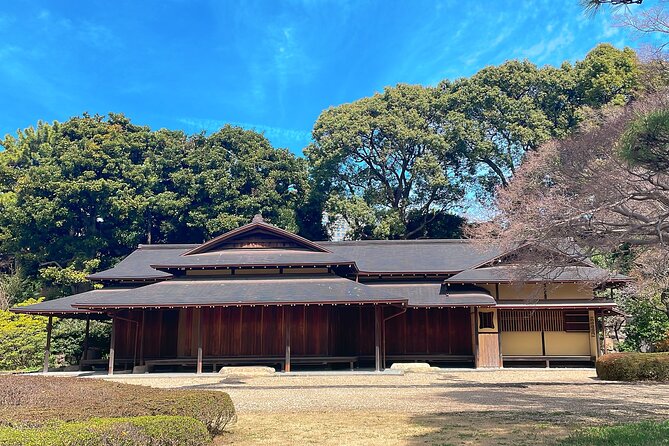
The Edo Castle keep restoration model gives you a useful visual aid. The original main keep, or Tenshukaku, was lost, but the scale model reconstructs its appearance from historical records and drawings.
This stop lasts about five minutes, yet it may be one of the most helpful on the route. The model lets you compare the modest remains underfoot with the much larger structure that once dominated the site. If you are visiting with teenagers, this tangible comparison may hold their attention better than a long explanation of dates and political titles.
Honmaru was the central compound of Edo Castle. It served as the main residence and political headquarters of the Tokugawa shogunate. The buildings are no longer intact, but the open grounds let you picture where the core of power once operated.
You spend about 10 minutes here. The site rewards attention, but it is not a preserved palace interior. If you want rooms, furnishings, or a full reconstruction, this tour will not provide them.
Kokyo Gaien and the palace exterior
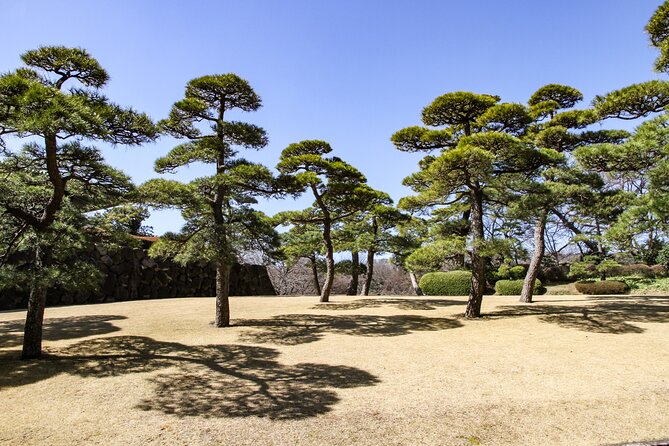
The route leaves the East Gardens and continues to Kokyo Gaien National Garden. This broad open area gives you clearer views toward the palace’s outer structures and Nijubashi Bridge.
You have about five minutes here, with time for photographs and a look back at the palace setting. The open space is a useful contrast to the enclosed garden paths. It also helps explain why the Imperial Palace remains such a visible part of central Tokyo despite being closed off in many areas.
You will not enter the Inner Palace. That is an important point to understand before booking. The experience focuses on public gardens, exterior views, historic remnants, and the surrounding districts.
One past tour experience was affected by a holiday, making the inside of the palace unavailable while the group could still see gates, bridges, and exterior buildings. Since access can vary, check the date and meeting instructions carefully and keep your expectations focused on the public areas.
Marunouchi architecture on the way to Tokyo Station
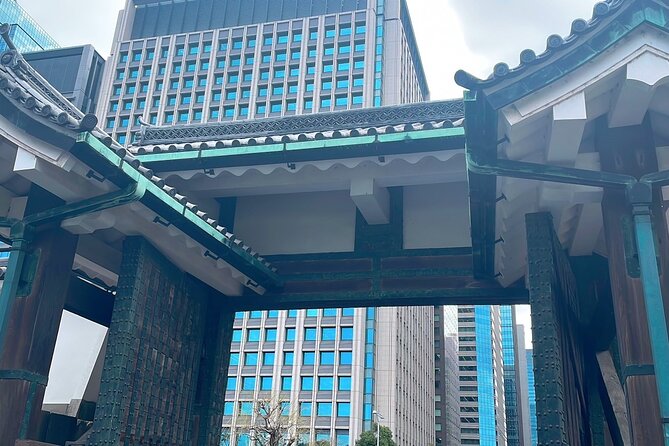
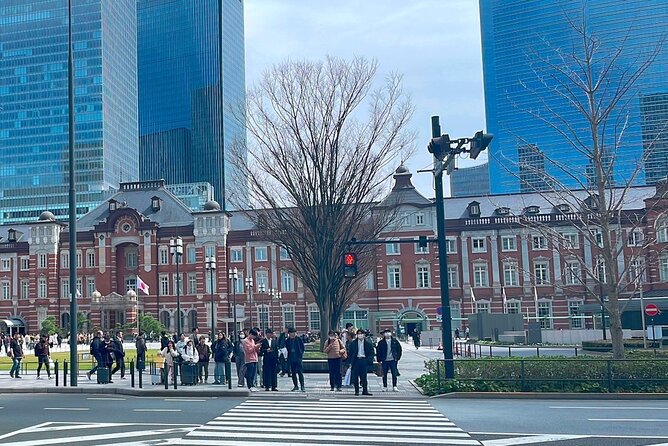
The walk through Marunouchi changes the tone again. This is one of Tokyo’s best-known business districts, with modern towers, older buildings, shops, restaurants, and public art along the route.
The tour details do not assign a fixed stop time to this section, so your guide’s pace and the group’s interests matter. You may get more architectural commentary here, or the group may move steadily toward the station. If modern city design interests you, ask the guide about the contrast between Marunouchi’s older buildings and newer skyscrapers.
This part also gives the tour practical value. You are not ending in an isolated monument. You arrive in a district where you can continue sightseeing, shop, eat, or catch a train.
Tokyo Station and the final 20 minutes
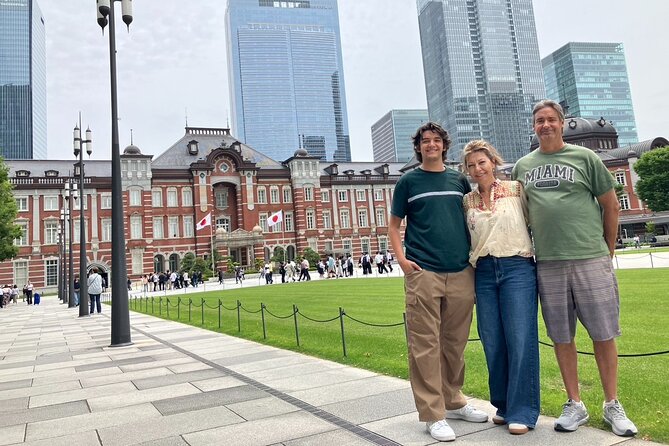
Tokyo Station is the finish and receives about 20 minutes. Its red-brick exterior was restored to its 1914 appearance, creating a strong visual link with Japan’s modernizing period.
Inside, the station is much more than a place to board a train. Shops, restaurants, and other services make it a convenient place to continue your day. The tour ends here, and the guide can help with directions or suggestions for dining and onward travel.
I like this ending because it gives the walk a clear final image. You start with Edo Castle’s gates and defenses, then finish at a grand railway station built for a different era of Japanese power and connection.
Do not expect a private museum-style visit or extended interior tour of the station. The listed time is short, and the focus is on the exterior and the station’s role in Tokyo’s development.
Who will get the most from the $39.09 fee
This tour suits you best if you want history explained in plain language while walking outdoors. It is a good match for first-time visitors, families, and anyone who wants to connect palace grounds with the modern city rather than spend the whole morning at one site.
The small group limit of 12 is helpful. Several guides, including Masa-san, Naoki, Mitsuko Shirai, and Ms. Futami, are described as friendly, patient, responsive, and able to answer questions. That matters here because the ruins need interpretation, and a good guide can adjust the explanation for adults, children, or teenagers.
Families may find the mix especially useful. The guardhouse, watchtower, castle model, and station can give younger visitors several different kinds of sights instead of one long garden walk.
You should think twice if you have limited walking tolerance, want to enter the Inner Palace, or prefer a food-focused outing. The route includes many outdoor stops, and refreshments are your responsibility.
The tour offers free cancellation up to 24 hours before the start time. Changes or cancellations made later are not accepted for a refund. Most people can participate, service animals are allowed, and the tour operates near public transportation.
Should you book this Imperial Palace walking tour?
Book it if you want a guided introduction to Tokyo’s political center, with a route that moves from samurai-era defenses to the red-brick railway station. At $39.09, the fee is fair for a small guided group and two and a half hours of context, especially if this is your first visit.
Skip it if your priority is entering the palace, spending a full day in gardens, or receiving food and drinks as part of the price. The best reason to choose this walk is not admission access. It is the guide’s ability to make gates, stones, gardens, and city buildings tell one connected story.
FAQ
How long does the Imperial Palace to Tokyo Station tour last?
The tour lasts approximately 2 hours and 30 minutes.
How much does the tour cost?
The listed price is $39.09 per person.
Where does the tour begin?
It begins at Starbucks Coffee in Kokyo Gaien Wadakura Fountain Park, 3-1 Kōkyogaien, Chiyoda City, Tokyo 100-0002, Japan.
Where does the tour end?
The tour ends at Tokyo Station, 1 Chome-9 Marunouchi, Chiyoda City, Tokyo 100-0005, Japan.
Is admission included?
The listed stops have free admission, and the tour includes a local guide. Food, drinks, and access to the Inner Palace are not included.
Can I enter the Inner Palace?
No. Access to the Inner Palace is not open to the public as part of this experience.
What sites are included in the walk?
The route includes Wadakura Fountain Park, Ōte-mon Gate, Ote-San’no Gate ruins, Hyakunin Bansho Guardhouse, Ninomaru Garden, Suwa-no-chaya, Bairinzaka, Takehashi Gomon ruins, Fujimi-yagura, the Edo Castle keep model, Honmaru, Kokyo Gaien National Garden, Marunouchi, and Tokyo Station.
How many people can join the tour?
The tour has a maximum of 12 participants.
Is the tour suitable for most people?
Most people can participate, and service animals are allowed. The experience is a walking tour lasting about two and a half hours.
Can I cancel for a full refund?
Yes. You can cancel at least 24 hours before the experience start time for a full refund. Cancellations and changes made less than 24 hours before the start time are not accepted.
More history and heritage tours in Tokyo
- Tokyo: Shinjuku Historical Walking Tour & Secret Backstreets
★ 5.0 · 530 reviews - Yanaka Walking Tour: Historic and Traditional District of Tokyo
★ 5.0 · 530 reviews - Mt. Fuji Heritage Tour: Traditional Villages, Lakes & Shrine
★ 4.5 · 509 reviews - From Tokyo: Nikko World Heritage Site Private Full-Day Trip
★ 4.9 · 243 reviews
Newly reviewed around Tokyo
- Tokyo Asakusa:Calligraphy & Make T-shirt Activity★ 5.0 · 62 reviews
- Intercity Shuttle, Tokyo to Haneda /Narita /Yokohama /Makuhari★ 5.0 · 5 reviews
- 1 Hour Travel around Tokyo with a Professional Photographer★ 5.0 · 3 reviews
- Travel Tokyo with Your Own Personal Photographer★ 5.0 · 43 reviews
- Train in Samurai Swordsmanship and Defeat the Demon in Tokyo★ 5.0 · 5 reviews
- Shuttle Van 6hr Tokyo Tour to-and-from Tokyo, Yokohama and Narita★ 5.0 · 9 reviews
- Kickboxing & Body Training with EX-Pro Fighter★ 5.0 · 4 reviews
- Traditional Japanese Knife Sharpening Class★ 5.0 · 18 reviews
Tokyo Imperial Palace Tours, compared.

Imperial Palace and Shogun Historical Walking Tour
Read our review →
Imperial Palace East Garden and Edo Castle Walking Tour in Tokyo
Read our review →
Imperial Palace, Sensō-ji Temple, & Tokyo Tower Tour
Read our review →
Tokyo Castle, Imperial Palace, Shogun & Garden Walking Tour
Read our review →
Edo Castle & East Garden of the Imperial Palace Tour
Read our review →Browse the lists this tour appears in