
Reviewed · TSUKIJI AND TOYOSU FISH MARKET TOURS
Tokyo: Tsukiji Fish Market Sushi Making Class with Pro Chef
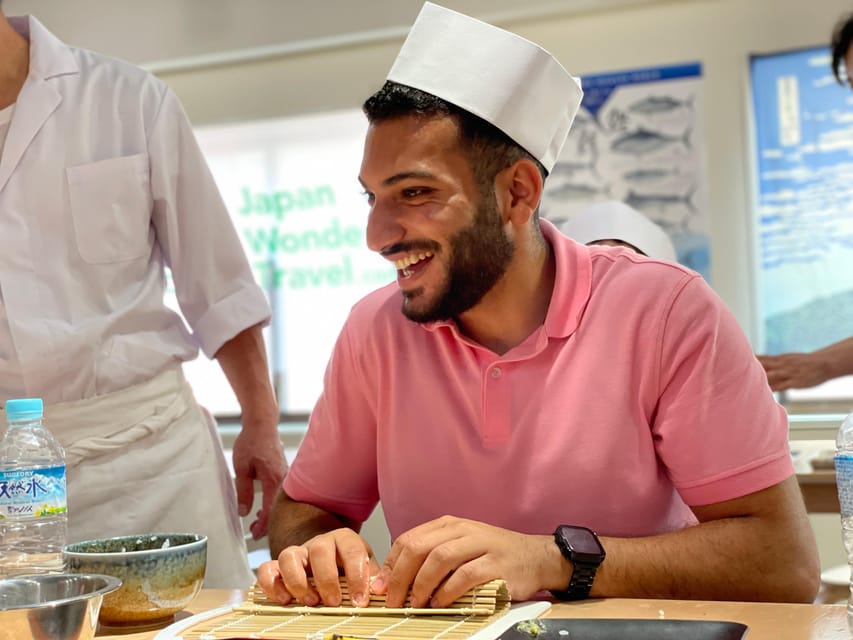
Tsukiji is the right place to learn sushi. In a traditional Japanese room above the outer fish market, you watch a professional chef prepare fish, handle Japanese knives, and shape sushi before making your own. The class is hands-on, friendly, and aimed at beginners, not aspiring restaurant chefs.
I like the fresh Tsukiji ingredients and the chance to use proper sushi tools instead of kitchen substitutes. I also like the small-group feel reported by many participants, with hosts such as Yuko, Satoko, AJ, and Micky helping everyone follow the chef’s instructions. The main drawback is practical: the room is on the third floor with stairs only, and the class cannot accommodate vegan, vegetarian, halal, kosher, or gluten-free diets as a standard request.
Key points to know before booking
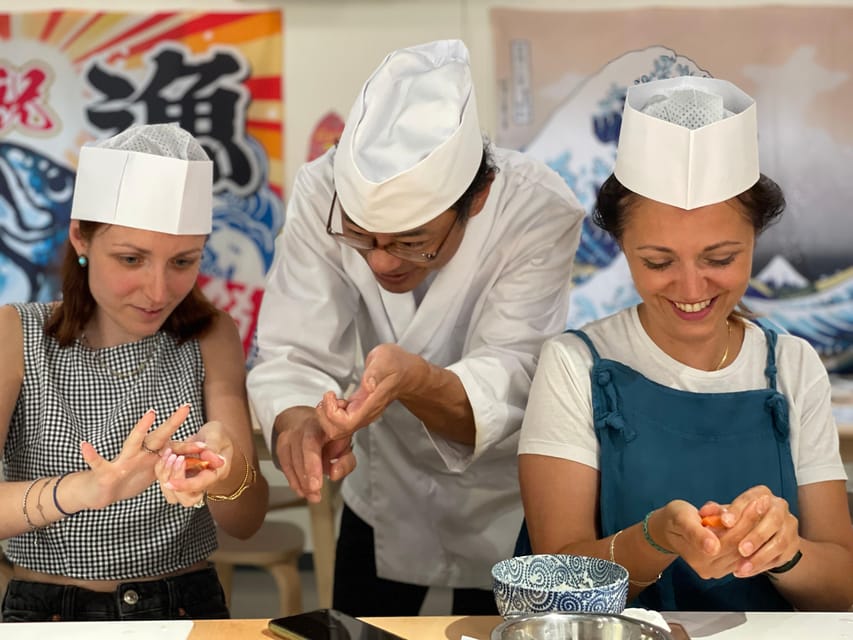
- You make five pieces of sushi: four different nigiri and one maki roll, then eat your work.
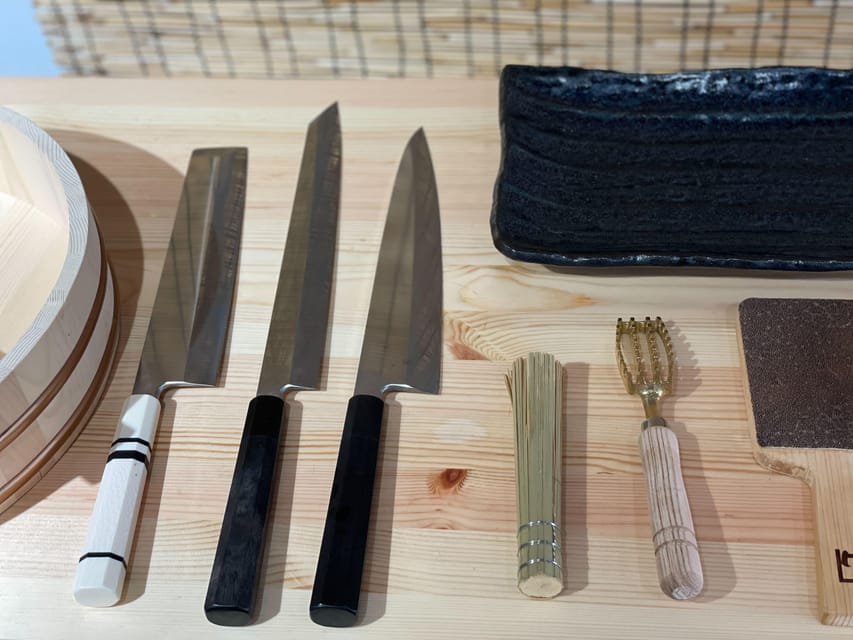
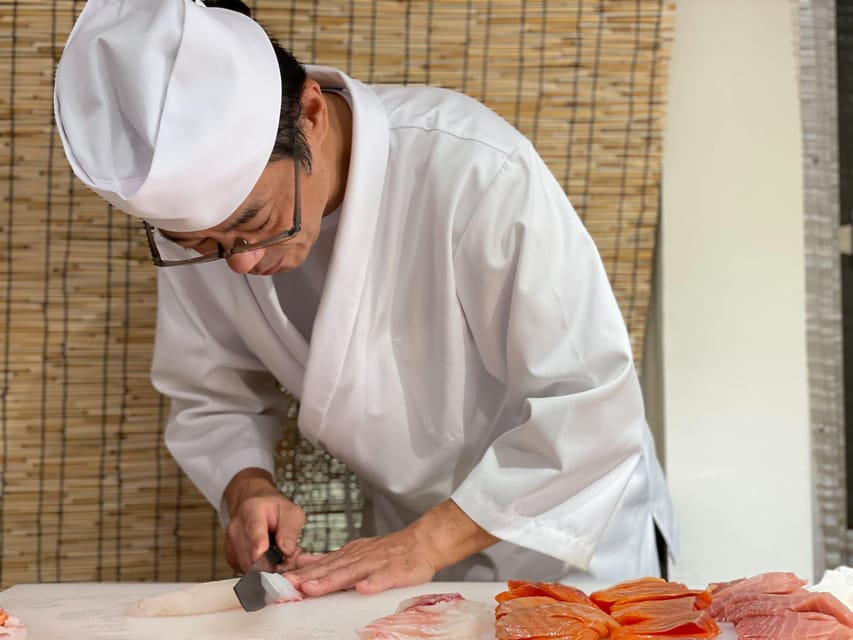
- A professional chef demonstrates fish preparation: the lesson includes a fish disassembly show and an introduction to Japanese knives.
- The setting is right in Tsukiji’s outer market: you can explore before or after, though market guidance depends on the option booked.
- English support is built in: the host interprets the chef’s instructions and helps you step by step.
- The meal includes more than your own sushi: the chef prepares additional sushi, with dashi soup and green tea.
- The class suits families and first-timers: children under four are not accepted, and younger children need to be able to pay attention.
A sushi lesson in the heart of Tsukiji
The best feature here is the setting. Tsukiji is no longer Tokyo’s main wholesale fish market, but its outer market remains a busy food district filled with seafood shops, small restaurants, kitchen stores, and food stalls. Your classroom is in a traditional Japanese building tucked among that activity.
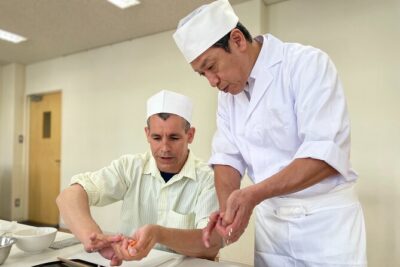
You do not simply sit down at a table and copy a recipe. The session begins with the sushi chef showing how fish is prepared for sushi. That fish-cutting demonstration gives you a better sense of the skill behind a piece of nigiri. You also learn about Japanese knives, including why the chef’s movements matter.
This is useful context. Sushi can look simple, but the work is in the rice, the knife cuts, the amount of fish, and the pressure used to shape each piece. The chef’s demonstration lets you see those details before you attempt your own.
The room is described as a classic Japanese-style space. It is on the third floor, reached only by stairs, so you need to be comfortable climbing. The meeting point can vary by booking option, and the activity may last anywhere from 90 minutes to four hours. Read the exact option carefully, especially if you are choosing between a class alone and a format that includes a market walk.
More Tsukiji and Toyosu fish market tours:
- Tokyo Tsukiji Fish Market Food and Culture Walking Tour
★ 5.0 · 3,184 reviews - Tokyo: Tsukiji Fish Market Food and Walking tour
★ 5.0 · 1,724 reviews - Tokyo: Tsukiji Fish Market Guided Walking Tour
★ 4.9 · 1,397 reviews
From fish preparation to your first nigiri
After the demonstration, the chef explains what sushi is and how the main styles differ. You work on nigiri, the hand-formed sushi with fish over rice, and maki, the rolled type wrapped in seaweed.
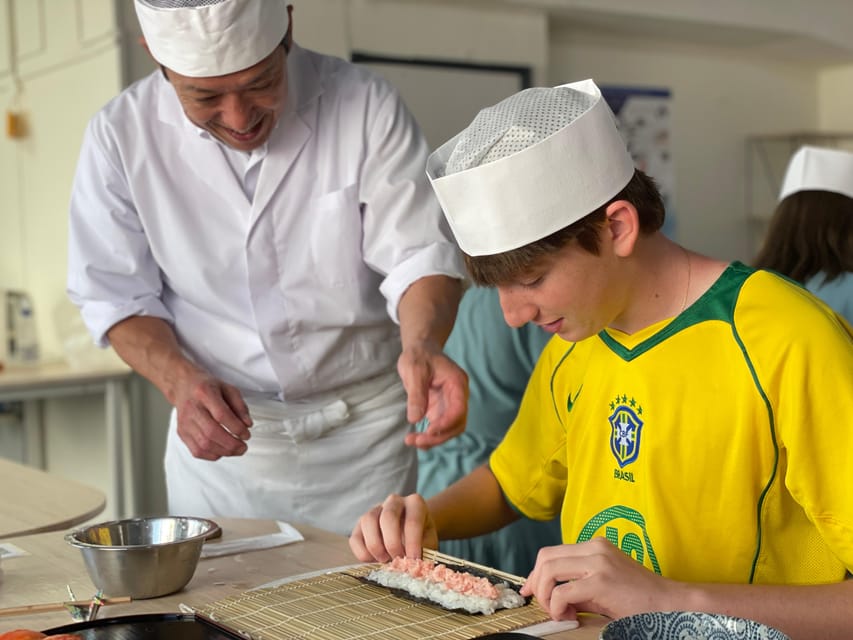
The instructor shows the proper order of each step. You learn how to handle the rice, place the topping, and shape the sushi without crushing it. The host translates and repeats instructions in English, which matters because sushi technique is easier to learn when you can ask about small hand movements.
You make four different nigiri sushi and one maki sushi. That is enough variety to keep the class interesting without turning it into a rushed production line. It also gives you several techniques to try at home.
The strongest part of the lesson is the personal help. Names vary by session, but chefs including Tanaka, Kate, Koro, Kana, and Ike have been praised for clear demonstrations and patient teaching. Hosts such as Yuko, Satoko, AJ, Shoko, and Micky help bridge the language gap and keep the pace comfortable.
Do not expect to leave with professional sushi-chef skills. This is a beginner class, and the goal is to understand the basic motions and enjoy the food. Still, you get more than a decorative food activity. You see how the chef works, then try the same process with guidance close at hand.
The meal is part of the lesson
Once your sushi is ready, you eat it. This sounds obvious, but it changes the class from a cooking demonstration into a complete meal experience. You can see which pieces look neat, which ones need more practice, and how fresh ingredients affect the final taste.
The chef also makes additional sushi for you. This is one of the most valuable moments because you can compare your beginner’s work with a professional version made at speed. The contrast is entertaining, but it also shows why experienced sushi chefs train for years.
Fresh wasabi is prepared for the meal, and traditional dashi soup and green tea are included. Those additions give you a more complete Japanese dining experience than sushi alone. You are not just learning how to assemble food, you are also seeing how sushi is served and enjoyed.
Several participants who normally avoid raw fish still enjoyed the class, but you should be clear about your own dietary needs before booking. Allergy requests may be considered, yet they are not guaranteed. Vegan and vegetarian diets are specifically not accommodated, and the standard class is not designed for halal, kosher, or gluten-free requirements.
Why the Tsukiji location adds value
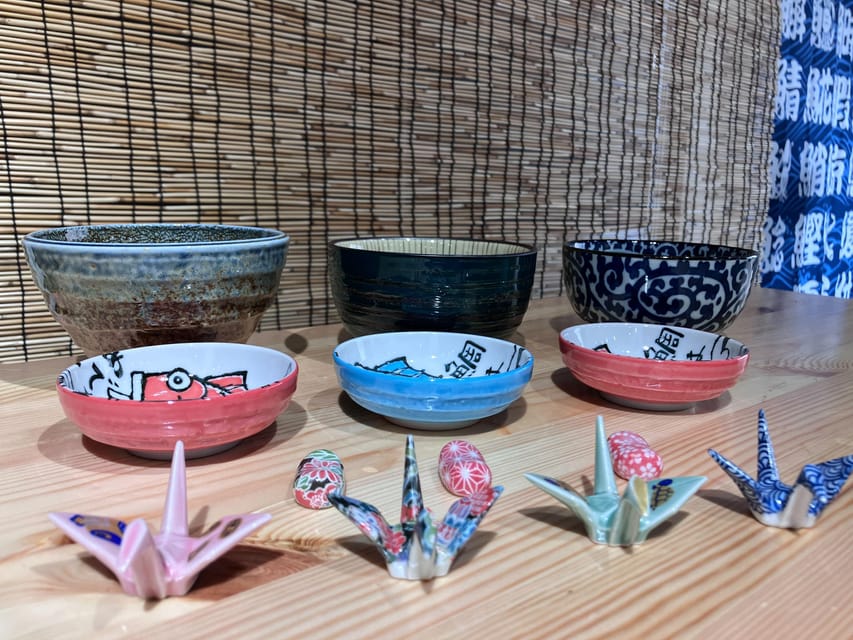
The class costs $63 per person. For 90 minutes of instruction, that is a fair price if you want a focused food activity with a professional chef, ingredients, tableware, tea, soup, and the sushi you make. You are also paying for interpretation and the chance to eat additional chef-prepared sushi.
The value improves if your booking includes a market walk. Some sessions described by participants included a guide showing types of fish, nearby foods, and local shrines. Other information states that guidance through the market is not included, so this is not a standard feature for every option.
That difference matters. If you mainly want to make sushi, choose the shorter class and plan your own Tsukiji visit around it. If you want a broader morning in the district, look for an option that clearly lists a market tour. Do not assume the class price includes a guide through the market.
The location also makes planning easy. You can explore the outer market before or after, browse cooking tools, look at seafood shops, or eat at another market stall. The class itself is not a full market tour unless your selected option says so.
More Tokyo sushi making classes:
- Sushi Making Tokyo Roll and Authentic Japanese Sushi Class
★ 5.0 · 3,971 reviews - Tokyo: Roll and Authentic Sushi Making Class in Asakusa
★ 4.9 · 1,957 reviews - Make Sushi and Create Unforgettable Memories in Tokyo
★ 5.0 · 1,413 reviews - Tokyo: Sushi Making Class in a Happi Coat near a Famous Spot
★ 4.9 · 1,377 reviews
Small groups, family visits, and the pace of the class
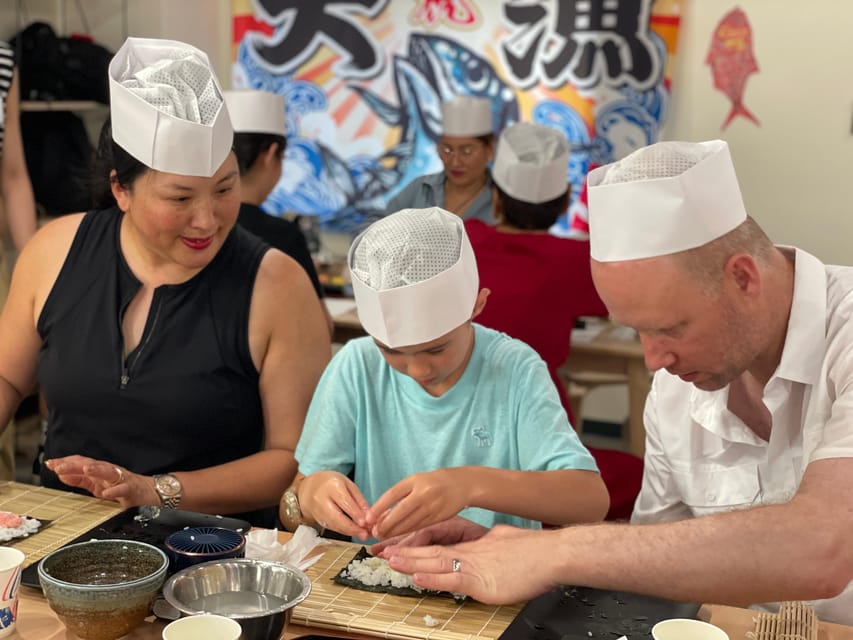
The class works well for solo participants, couples, families, and groups of up to four. One session had only six people, which allowed everyone to hear the chef, ask questions, and receive feedback. Small numbers are especially helpful in a class where hand position and pressure are hard to explain from across a large room.
Families have several reasons to consider it. Children as young as four are excluded, and the activity is not suitable for children who cannot manage stairs. But older children who can listen and follow instructions can take part. Families with children aged nine, ten, and thirteen have found the hands-on format engaging, and one young participant received an origami figure from a staff member.
This is not a loud or frantic food show. You need to watch demonstrations and wait for instructions. The experience will suit children who enjoy making things and asking questions, not children who need constant movement.
The class also works for adults who already love sushi. You may know the difference between nigiri and maki, but the fish preparation demonstration and chef comparison still provide useful detail. Beginners get the clearest benefit, while experienced home cooks can focus on knife work, rice handling, and presentation.
What the hosts add
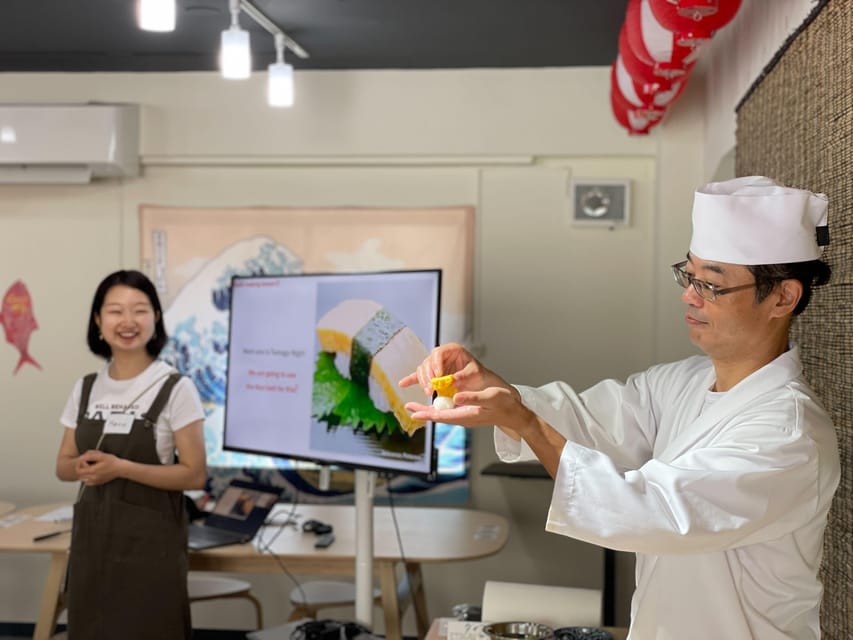
The English-speaking host is more than a translator. The host explains the steps, checks that everyone is following along, and helps create a relaxed atmosphere. This is important in a traditional setting where the chef may focus on demonstration rather than long English explanations.
The names change by day, but several hosts have received especially warm praise for patience and clear English. Yuko has led classes with chefs Tanaka and Koro. AJ has hosted sessions with an upbeat, personal approach. Satoko, Shoko, Micky, Hiro, and Ike have also guided groups through the market or class.
Some hosts add cultural context, including the history of sushi, how to eat it, and a blessing before the meal. Market walks may also include explanations of seafood, other foods sold nearby, and local shrines. These details make the activity feel connected to Tokyo rather than like a cooking class that could take place anywhere.
That said, the quality of the extra market portion depends on the option you book. The reliable core is the sushi workshop with the chef and English host.
Timing and planning your Tsukiji visit
The stated duration ranges from 90 minutes to four hours. That is a wide range, so check the start time and exact length before you pay. A 90-minute class can fit neatly into a morning at Tsukiji. A longer format may include a walking tour or additional time around the market.
Allow extra time beyond the advertised ending. The activity may run late, and you should tell the operator in advance if you have a timed reservation or another appointment afterward. I would not schedule a tight train connection, museum entry, or restaurant booking immediately after.
Wear comfortable clothing and arrive ready to climb stairs. The classroom is on the third floor of a traditional building, with no elevator mentioned. The market itself is a good place to continue your day, so you can avoid crossing Tokyo for another activity right away.
The meeting point may differ by option. Check your booking details closely rather than relying on a general map pin.
What is included and what is not
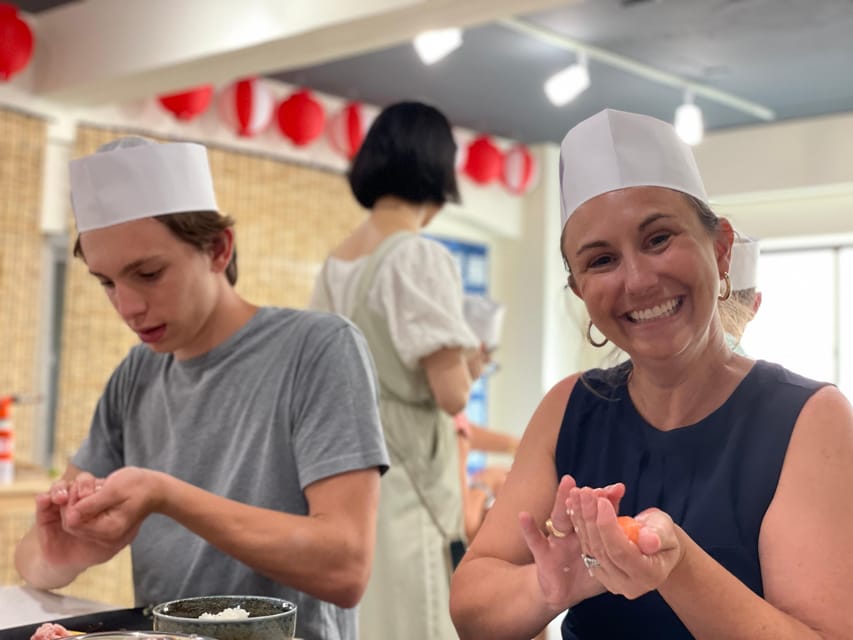
Your booking includes:
- A family-friendly sushi workshop
- An English-speaking host
- A professional sushi master
- Fresh ingredients
- Proper sushi utensils and tableware
- Four different nigiri sushi
- One maki sushi
- Additional sushi prepared by the chef
- Tea and soup
- A hat
Extra food and drinks are not included. Hotel pickup and drop-off are also not included. You are responsible for reaching the meeting point, and market guidance is not included unless your chosen option says otherwise.
The hat is a small but useful touch for photos and helps the class feel like a proper food workshop. The proper utensils matter more. They let you learn with tools suited to the job instead of trying to imitate a sushi chef with an ordinary spoon and blunt kitchen knife.
Who should book this experience
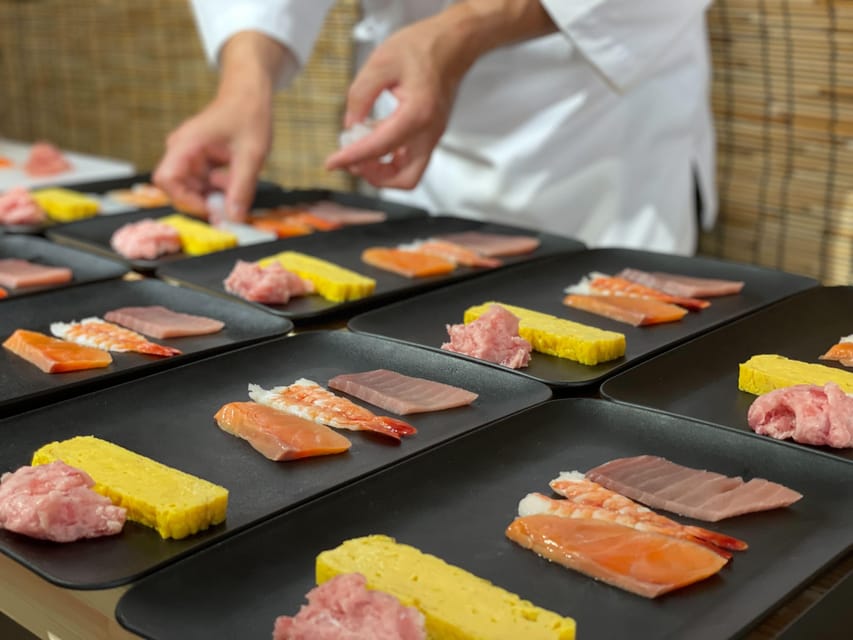
I would choose this class if you want a practical food activity in Tokyo and enjoy eating what you make. It is particularly good for first-time sushi makers, couples, families with attentive school-age children, and solo visitors who want an easy way to meet a small group.
It is also a smart choice if raw fish makes you nervous but you are open to learning. The chef explains the preparation, the ingredients are fresh, and you can ask questions through the English host. Still, the class is built around sushi, so it is not appropriate if you avoid seafood or need strict dietary control.
You should skip it if stairs are difficult, if you use a wheelchair, or if you need vegan, vegetarian, halal, kosher, or gluten-free food. You should also skip it if you want a detailed, guaranteed market tour. In that case, choose only an option that lists the walking portion.
Should you book the Tsukiji sushi class?
Book it if you want to do more than photograph Tokyo’s food culture. You will watch a sushi master prepare fish, make several kinds of sushi yourself, eat the results, and see how far professional technique goes. At $63, the included food and instruction make the price reasonable, especially when a market walk is part of the selected format.
The class is not for every diet or mobility level, and the length varies widely. Check those details first. If they work for you, this is a friendly, practical way to connect a visit to Tsukiji with the food that made the district famous.
FAQ
How long does the sushi-making class last?
The available formats last from 90 minutes to four hours. Check the exact duration and starting time for the option you choose.
How much does the experience cost?
The listed price is $63 per person.
What kinds of sushi will I make?
You will make four different nigiri sushi and one maki sushi.
Is an English-speaking instructor provided?
Yes. An English-speaking host interprets and guides you throughout the class, alongside the professional sushi chef.
Is a market tour included?
Market guidance is not included in every option. Some formats may include a walking tour, so check the details of the specific option before booking.
What food and drinks are included?
You receive the sushi you make, additional sushi prepared by the chef, traditional dashi soup, and green tea.
Can vegetarians or vegans take the class?
No. The activity is not suitable for vegans or vegetarians. Halal, kosher, and gluten-free requests are also not accommodated as standard.
Is the class suitable for children?
Children under four are not accepted. Older children may enjoy the class if they can manage the stairs, listen to instructions, and pay attention.
Is the classroom wheelchair accessible?
No. The classroom is on the third floor of a traditional building with stairs only, and the activity is not suitable for wheelchair users or people with mobility impairments.
More Tokyo markets and shopping streets
- Tsukiji Fish Market Guided Tour and Sushi Making with Pro Chef
★ 5.0 · 775 reviews - Tokyo: Tsukiji Fish Market Food and Culture Walking Tour
★ 4.7 · 757 reviews - Tsukiji Fish Market: Street Food & Culture Walking Tour
★ 5.0 · 669 reviews - Tsukiji Fish Market Small-Group Food Walking Tour
★ 5.0 · 621 reviews
More Tokyo cooking classes
- Tokyo Shinjuku Chopsticks Making Class
★ 5.0 · 1,763 reviews - Tokyo Sushi Making Class in Tsukiji with Professional Chef
★ 5.0 · 1,177 reviews - Ramen & Gyoza Cooking Class in Tokyo with Local Supermarket Visit
★ 5.0 · 823 reviews - Matcha Making Class in Tokyo with Authentic Japanese Sweets Set
★ 5.0 · 744 reviews
Newly reviewed around Tokyo
- Tokyo Asakusa:Calligraphy & Make T-shirt Activity★ 5.0 · 62 reviews
- Intercity Shuttle, Tokyo to Haneda /Narita /Yokohama /Makuhari★ 5.0 · 5 reviews
- 1 Hour Travel around Tokyo with a Professional Photographer★ 5.0 · 3 reviews
- Travel Tokyo with Your Own Personal Photographer★ 5.0 · 43 reviews
- Train in Samurai Swordsmanship and Defeat the Demon in Tokyo★ 5.0 · 5 reviews
- Shuttle Van 6hr Tokyo Tour to-and-from Tokyo, Yokohama and Narita★ 5.0 · 9 reviews
- Kickboxing & Body Training with EX-Pro Fighter★ 5.0 · 4 reviews
- Tokyo History: Sensoji Temple & Asakusa District Private Tour★ 5.0 · 28 reviews
Tsukiji and Toyosu Fish Market Tours, compared.
Tokyo Tsukiji Fish Market Food and Culture Walking Tour
Read our review →
Tokyo Sushi Making Class in Tsukiji with Professional Chef
Read our review →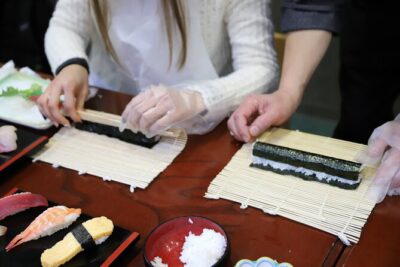
Tsukiji Fish Market Guided Tour and Sushi Making with Pro Chef
Read our review →Tsukiji Fish Market Food and Culture Walking Tour
Read our review →
Tsukiji Fish Market: Street Food & Culture Walking Tour
Read our review →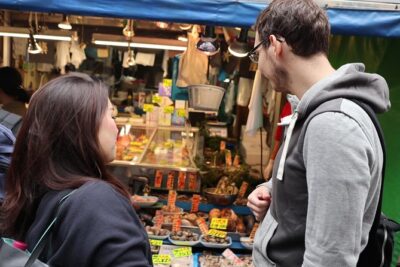
Tsukiji Fish Market Small-Group Food Walking Tour
Read our review →Browse the lists this tour appears in