
Reviewed · TSUKIJI AND TOYOSU FISH MARKET TOURS
Tokyo: Tsukiji Market Guided Tour & Sushi-Making Experience
Tsukiji’s narrow lanes give you a close look at Tokyo’s seafood trade before you sit down to make sushi yourself. The tour pairs market browsing with a hands-on class, so you get both local food culture and a meal you prepare with your own hands.
I like the small group, limited to 10 people, and the clear range of skills covered: nigiri, hosomaki, and gunkanmaki. I also like that the experience includes public transport between Tsukiji and the kitchen, a licensed guide, an instructor, ingredients, and a souvenir kit.
The main caution is value. At $177, this is a costly way to eat sushi, and one guest found the fish quality disappointing and said the market portion did not include selecting or buying tuna. Go for the lesson and access, not for a premium sushi meal.
Key points to know before booking
- Tsukiji Outer Market is the opening act: You walk among seafood, sashimi, seaweed, produce, and specialist shops rather than entering the former wholesale auction site.
- Three sushi styles are taught: The class covers nigiri, thin hosomaki rolls, and gunkanmaki wrapped in nori.
- The group stays small: A maximum of 10 participants gives you a better chance to follow the instructor and ask questions.
- The class takes place near Tokyo Tower: After the market walk, you use public transport to reach a modern sushi kitchen.
- Fish quality may not match restaurant standards: The experience is built around making sushi, not serving an expensive omakase meal.
- The tour takes 225 minutes: Comfortable shoes matter, and you should allow enough time for walking, transit, and hands-on preparation.
Starting at Tsukiji Hongwanji Temple
Meet your English-speaking guide at the entrance of Tsukiji Hongwanji Temple. The temple is only about 30 seconds from Exit 1 of Tsukiji Station on the Hibiya Line, making the meeting point simple to reach by subway.
This is a sensible place to begin. Tsukiji is easier to understand when you first get your bearings, and the temple gives you a clear landmark beside the market streets. You will spend the first part of the tour on foot, so wear shoes that are comfortable for several hours.
The group is limited to 10 people. That size should feel more personal than a large food walk, especially once the class starts. You are not simply watching a demonstration from the back of a crowded room. The exact amount of individual help will depend on the instructor and the group, but the small capacity is one of the better features of the booking.
More Tsukiji and Toyosu fish market tours:
- Tokyo Tsukiji Fish Market Food and Culture Walking Tour
★ 5.0 · 3,184 reviews - Tokyo: Tsukiji Fish Market Food and Walking tour
★ 5.0 · 1,724 reviews - Tokyo: Tsukiji Fish Market Guided Walking Tour
★ 4.9 · 1,397 reviews
Reading Tsukiji through its food stalls
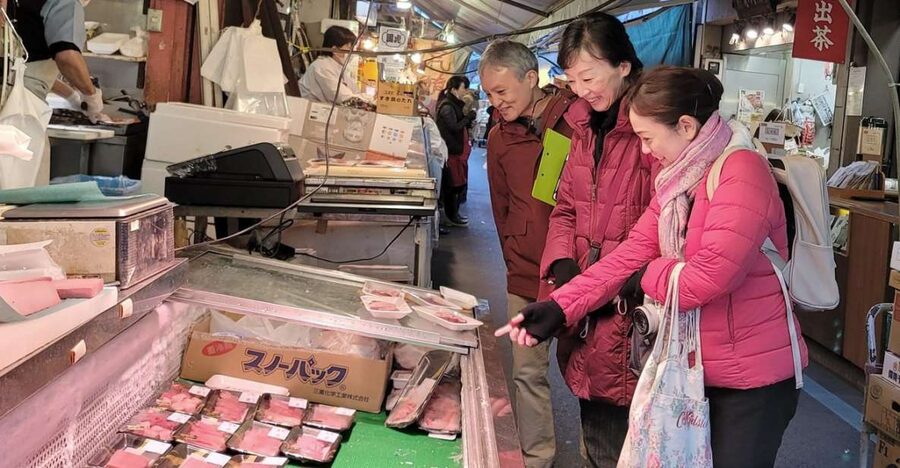
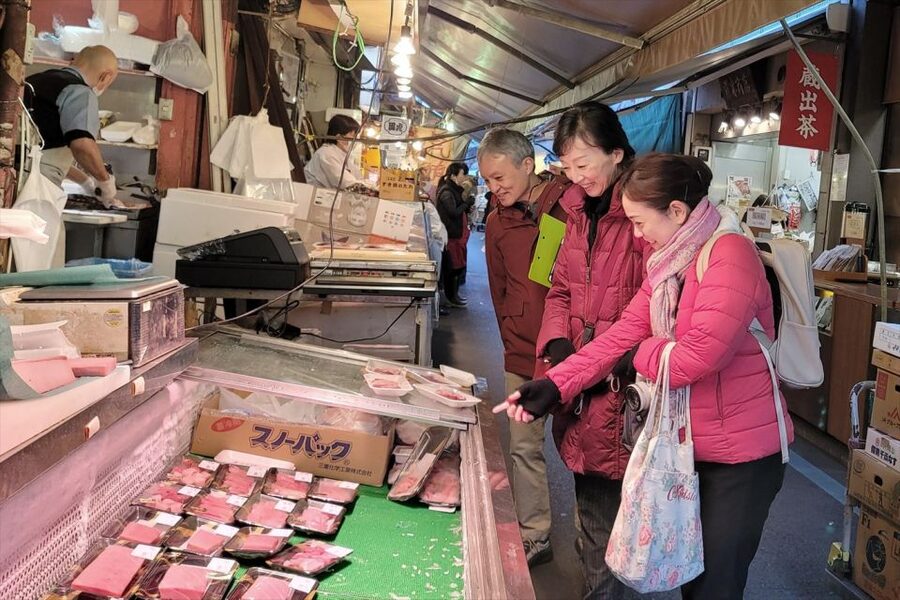
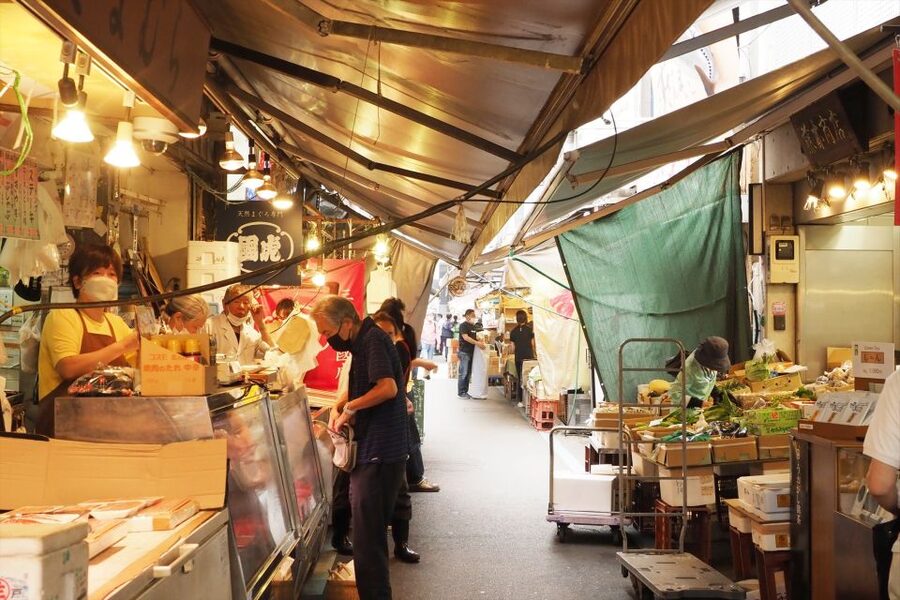
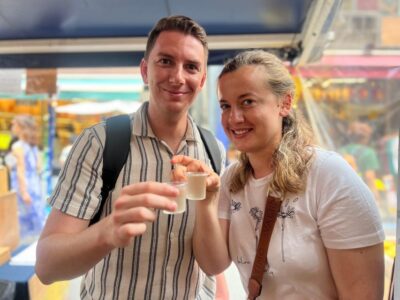
Tsukiji Outer Market is not the same place as the old inner wholesale market, which moved to Toyosu in 2018. The outer market remains a busy food district with shops selling seafood, sashimi, dried seaweed, fruit, vegetables, and cooking supplies.
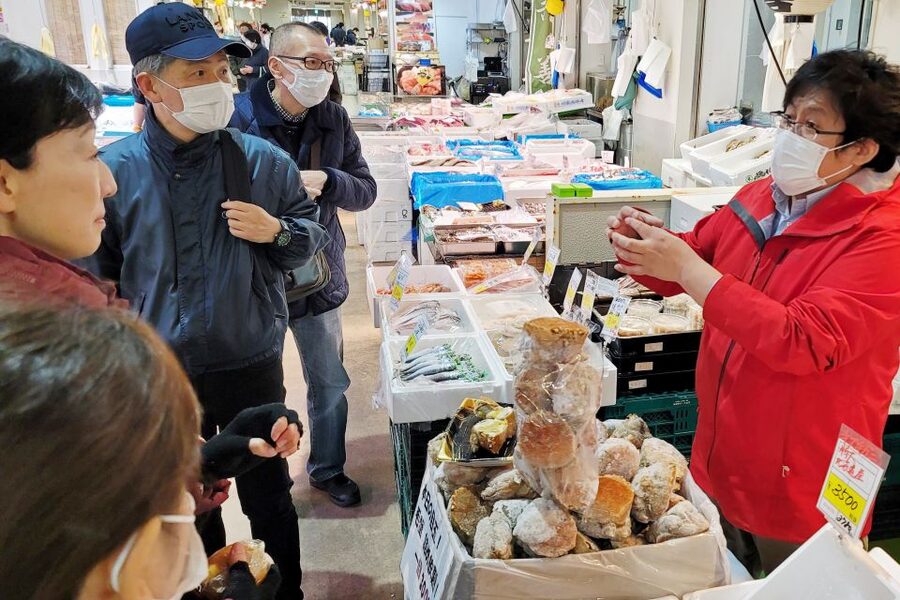
Your guide leads you through narrow alleys and points out how the market works. You may see freshly cut fish, tuna, dried ingredients, and merchants handling their daily trade. The appeal is less about checking off famous sights and more about watching a working food area at close range.
The tour also explains Tsukiji’s past as one of the world’s best-known seafood markets. That background matters because the stalls make more sense when you know how the area served restaurants, cooks, and professional buyers. You will be shown shops where high-end chefs shop for ingredients, including stores associated with Michelin-starred restaurants.
Keep your expectations in line with the wording. This is a guided walk through the market, not a seafood shopping trip. One booking description suggested that participants would learn how to select tuna and purchase fresh fish for the sushi class. In practice, that did not happen for at least one group. You should not assume you will choose the fish used later in the class.
That distinction is important. If your main goal is to buy a specific cut of tuna, compare fish quality, or watch a wholesale sale, this tour may leave you wanting more. If you want context, introductions to market products, and a short guided walk without having to work out the area alone, it makes more sense.
Moving from the market to the sushi kitchen
The next stage uses public transportation from Tsukiji to the cooking facility near Tokyo Tower. The transport is included, but you should still be ready to follow the group through stations and city streets.
This transfer gives the experience a useful change of pace. The market walk shows where Japanese ingredients are sold. The kitchen then turns those ingredients into a practical lesson. It also means this is not a single-location activity, so build in flexibility if the tour runs slightly longer than the stated 225 minutes.
The kitchen is described as a state-of-the-art facility. The available details do not name the building or provide its exact address, but it is near Tokyo Tower. The setting is designed for teaching, which should make the preparation easier to follow than a cramped restaurant counter.
The full duration is about three hours and 45 minutes. That includes meeting the guide, walking through Tsukiji, public transportation, the class, eating your sushi, and learning dining manners. The timing can change with group size, so avoid scheduling a tightly timed attraction immediately afterward.
Making nigiri, hosomaki, and gunkanmaki
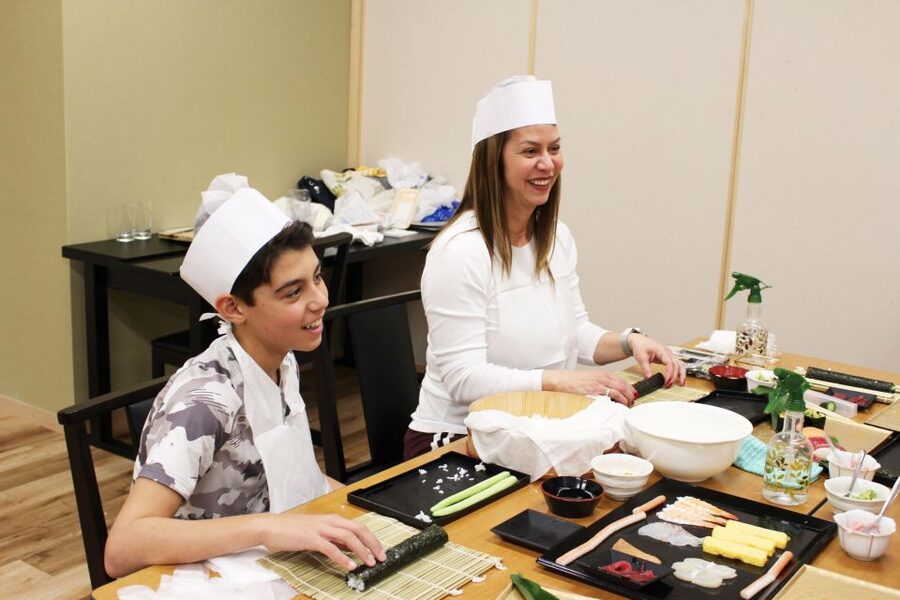
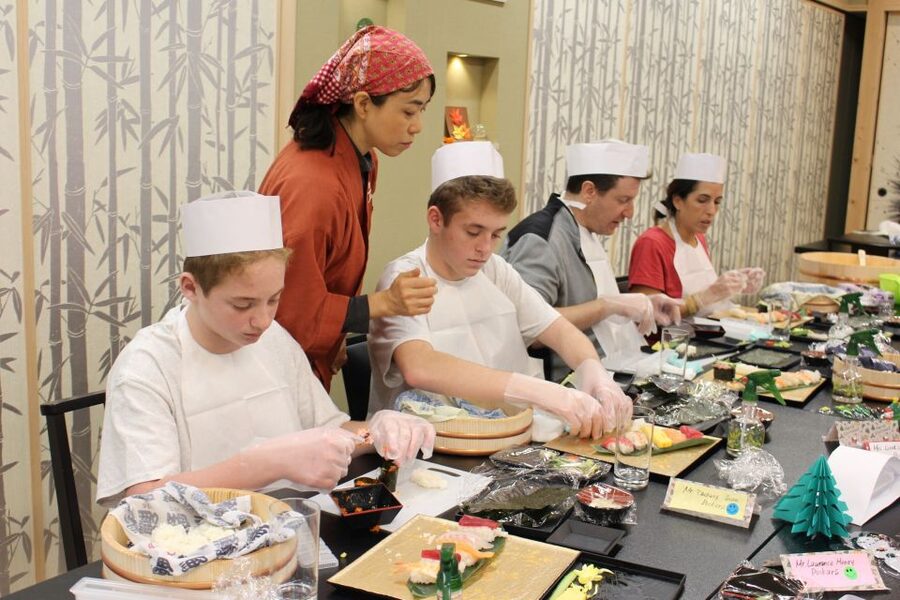
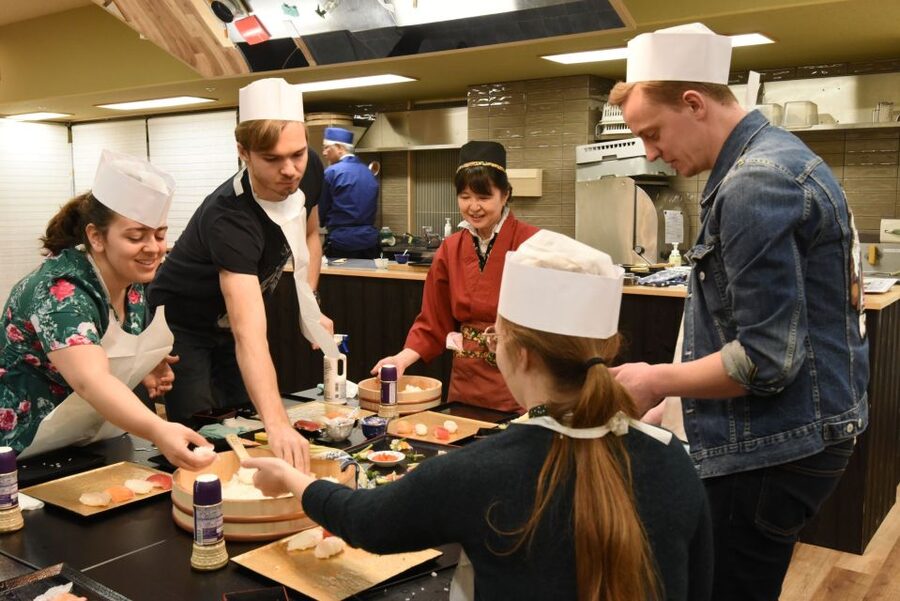
The class teaches three different forms of sushi, each with a different technique.
Nigiri is the familiar hand-formed sushi with a piece of fish or another topping placed over seasoned rice. The lesson gives you a chance to work on shaping and handling the rice without turning the process into a complicated professional course.
Hosomaki is a thin sushi roll. You will work with nori and rice to create a narrow roll, then cut it into pieces. This is a useful contrast to nigiri because it depends on even spreading, controlled filling, and clean rolling.
Gunkanmaki uses nori to form a small wrapped vessel around rice and a soft topping. The shape looks like a little boat, which is where its Japanese name comes from. It is a good third style because it uses a different construction method from both hand-formed nigiri and rolled hosomaki.
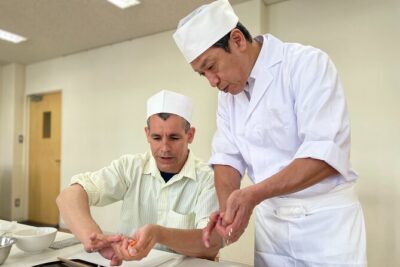
The instructor covers the background of sushi and basic hygiene before you begin. That part is practical, not decorative. Raw fish preparation requires careful handling, and learning the reason behind the steps helps you understand the dish rather than merely copy hand movements.
You then make the sushi under supervision. The outcome will depend partly on your own technique, so uneven rice or imperfect rolls are part of the fun. This is a cooking experience, not a contest. The point is to learn how the pieces are assembled and to eat what you have made.
A licensed instructor leads the class, while a nationally licensed guide handles the market portion. The supplied information does not give their names, so you should not book expecting a particular host. English is the stated language.
More Tokyo sushi making classes:
- Sushi Making Tokyo Roll and Authentic Japanese Sushi Class
★ 5.0 · 3,971 reviews - Tokyo: Roll and Authentic Sushi Making Class in Asakusa
★ 4.9 · 1,957 reviews - Make Sushi and Create Unforgettable Memories in Tokyo
★ 5.0 · 1,413 reviews - Tokyo: Sushi Making Class in a Happi Coat near a Famous Spot
★ 4.9 · 1,377 reviews
Eating your own sushi and learning manners
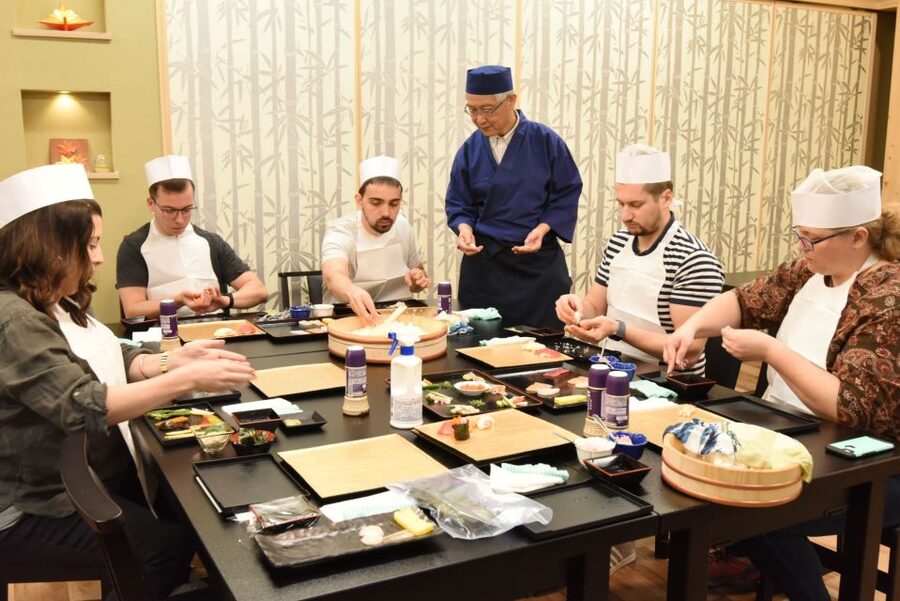
After the preparation, you sit down to eat the sushi you made. A short lesson in Japanese dining etiquette is included, which helps connect the kitchen work with the way sushi is served and enjoyed.
The meal itself is a key point to judge carefully. You are paying for instruction, ingredients, market access, guiding, transport, and a souvenir kit. You are not paying $177 for the equivalent of a high-end sushi tasting menu.
One person who had eaten sushi at many price levels found the fish quality poor and considered the class a weak use of time compared with an omakase meal or a self-guided market visit. That criticism deserves attention, especially if you already know a lot about sushi or are visiting Japan mainly for outstanding fish.
At the same time, the negative experience may not matter as much if your priority is participation. You control part of the final result, and the food is meant to support the lesson. A restaurant will almost certainly give you more polished sushi, but it will not teach you how to shape three styles or let you make the meal yourself.
The included souvenir kit adds a small practical touch. The supplied information does not specify its contents, so do not assume it includes special knives, premium ingredients, or equipment. Think of it as a reminder of the class rather than a major part of the value.
Is $177 a fair price?
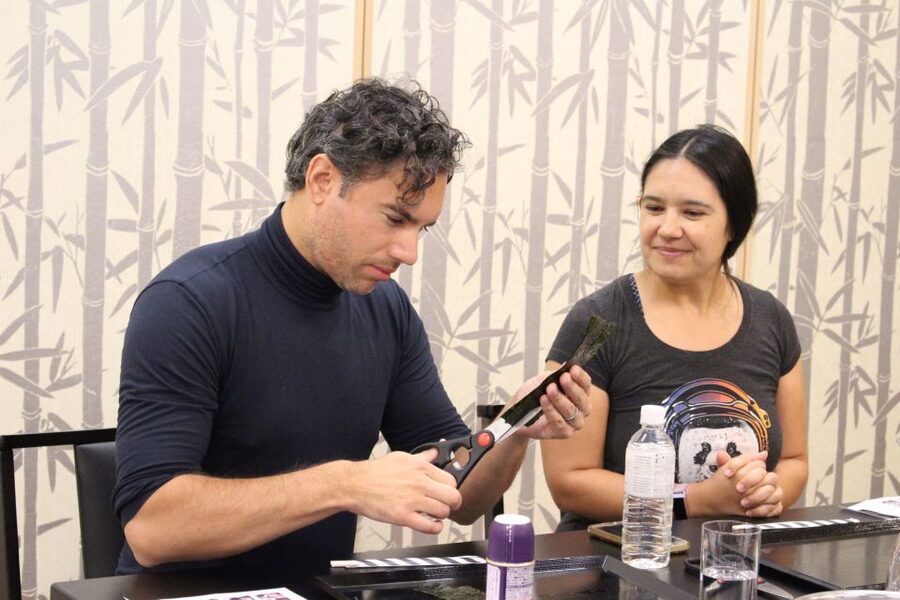
The cost is $177 per person, which puts this well above a simple Tsukiji walk or an ordinary cooking lesson. The price becomes easier to justify if you value several services at once: a guide, a small group, a market orientation, public transport between locations, an instructor, ingredients, the meal, and a souvenir.
The strongest value is convenience. You do not need to research the market, figure out which food shops matter, locate a cooking school, or handle the transfer yourself. You also get a structured introduction in English, which can be useful if you want more explanation than a casual visit provides.
The weakest value is the food itself. If you are comparing the experience with an omakase meal, this will likely lose on fish quality and polish. One person specifically found that an excellent sushi restaurant could offer a better meal for a similar cost.
I would book this for the activity rather than the menu. You are buying access to a guided food district and a supervised lesson. If the idea of eating restaurant-quality sushi is your main reason for booking, spend the money at a well-chosen sushi counter instead.
Who will get the most from this experience?
This suits a first-time visitor who wants a clear introduction to Japanese food culture without arranging separate activities. The market walk gives you context, while the class gives the day a practical purpose.
It also works well for couples, families with older children, and small groups of friends who enjoy making food together. The small capacity should help the group stay involved, although the activity is not suitable for babies under one year.
You should have enough mobility for the market walk, public transportation, and time on your feet. The information describes the activity as wheelchair accessible but also says it is not suitable for people with mobility impairments. Those statements do not fully match, so contact the provider before booking if you have access needs and need a clear answer about the route, stations, and kitchen setup.
Most dietary restrictions and requirements can be accommodated. Tell the provider in advance rather than waiting until the class begins. The available details do not explain which substitutions are possible, so ask specific questions if you cannot eat raw fish, seafood, seaweed, or other standard sushi ingredients.
Bad weather can cancel the activity. That matters because the market portion is outdoors and involves walking between areas. The booking allows free cancellation up to 24 hours in advance, and you can reserve now and pay later, which gives you some room to adjust a changing Tokyo schedule.
My verdict on the Tsukiji and sushi combination
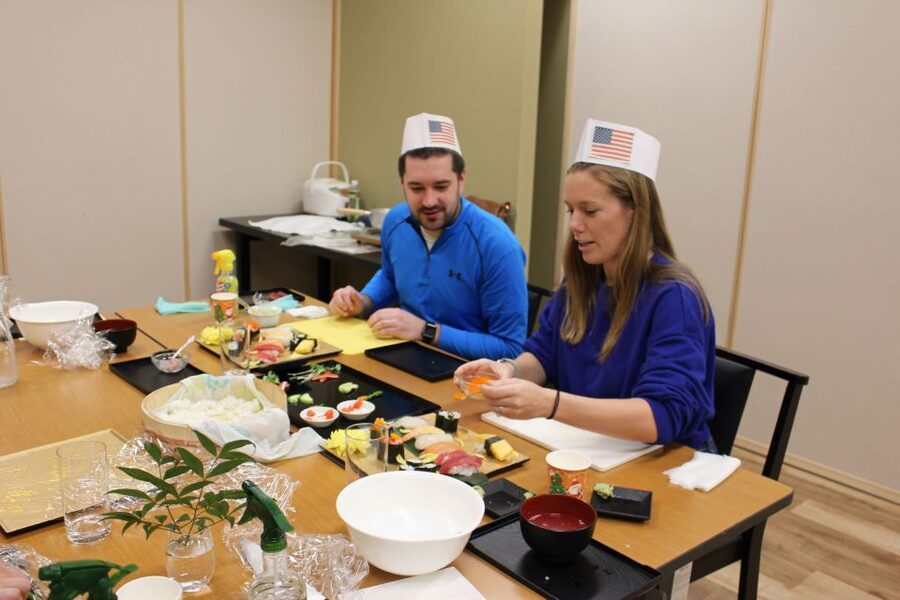
The best part of this experience is the combination of places and skills. You start among real food shops in Tsukiji, learn how the district serves Tokyo’s cooks, then move to a dedicated kitchen and make three types of sushi. The guides and instructor have also been praised as friendly and enjoyable, and the overall rating is 4.4 from 11 reviews.
The main limitation is that the tour does not appear to deliver a tuna-selection or fish-buying experience. The market walk is observational, and the final sushi may not satisfy someone seeking premium seafood.
Book it if you want a guided, small-group introduction to Tsukiji followed by a hands-on sushi lesson, and you are happy to pay for instruction and convenience.
Skip it if your top priority is the finest sushi in Tokyo, a wholesale fish experience, or the lowest-cost way to see the market. In that case, explore Tsukiji on your own and reserve the budget for a sushi restaurant.
FAQ
Where does the tour meet?
Meet your guide at the entrance of Tsukiji Hongwanji Temple. The temple is about a 30-second walk from Exit 1 of Tsukiji Metro Station on the Hibiya Line.
How long does the experience last?
The stated duration is 225 minutes, or about three hours and 45 minutes. The timing can change depending on the number of participants.
What types of sushi will I make?
You will learn to make nigiri, hosomaki, and gunkanmaki sushi.
Is transportation included?
Yes. Public transportation from Tsukiji to the sushi kitchen is included.
Is the tour conducted in English?
Yes. An English-speaking live guide leads the experience, and a licensed instructor teaches the sushi class.
Are ingredients included?
Yes. Sushi ingredients are included, along with a sushi souvenir kit.
Can dietary restrictions be accommodated?
Most dietary restrictions and requirements can be accommodated. You should provide those details before the activity.
What should I bring?
Wear comfortable shoes. You will walk through the market and use public transportation before the cooking class.
Can I cancel the booking?
You can cancel up to 24 hours in advance for a full refund. The experience also offers a reserve-now, pay-later option.
More Tokyo markets and shopping streets
- Tsukiji Fish Market Guided Tour and Sushi Making with Pro Chef
★ 5.0 · 775 reviews - Tokyo: Tsukiji Fish Market Food and Culture Walking Tour
★ 4.7 · 757 reviews - Tsukiji Fish Market: Street Food & Culture Walking Tour
★ 5.0 · 669 reviews - Tsukiji Fish Market Small-Group Food Walking Tour
★ 5.0 · 621 reviews
Newly reviewed around Tokyo
- Tokyo Asakusa:Calligraphy & Make T-shirt Activity★ 5.0 · 62 reviews
- Intercity Shuttle, Tokyo to Haneda /Narita /Yokohama /Makuhari★ 5.0 · 5 reviews
- 1 Hour Travel around Tokyo with a Professional Photographer★ 5.0 · 3 reviews
- Travel Tokyo with Your Own Personal Photographer★ 5.0 · 43 reviews
- Train in Samurai Swordsmanship and Defeat the Demon in Tokyo★ 5.0 · 5 reviews
- Shuttle Van 6hr Tokyo Tour to-and-from Tokyo, Yokohama and Narita★ 5.0 · 9 reviews
- Kickboxing & Body Training with EX-Pro Fighter★ 5.0 · 4 reviews
- Traditional Japanese Knife Sharpening Class★ 5.0 · 18 reviews
Tsukiji and Toyosu Fish Market Tours, compared.
Tokyo Tsukiji Fish Market Food and Culture Walking Tour
Read our review →
Tokyo Sushi Making Class in Tsukiji with Professional Chef
Read our review →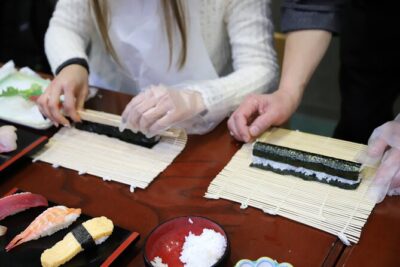
Tsukiji Fish Market Guided Tour and Sushi Making with Pro Chef
Read our review →Tsukiji Fish Market Food and Culture Walking Tour
Read our review →
Tsukiji Fish Market: Street Food & Culture Walking Tour
Read our review →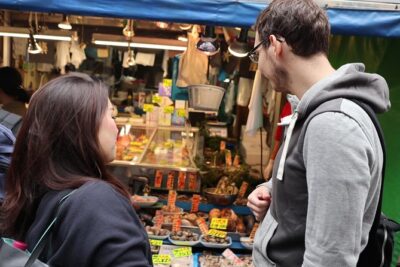
Tsukiji Fish Market Small-Group Food Walking Tour
Read our review →Browse the lists this tour appears in