
Reviewed · TOKYO TRADITIONAL CRAFT WORKSHOPS
Chopstick Making Workshop in Ginza
Making chopsticks in Ginza turns a simple souvenir into a hands-on woodworking project. You choose the wood and length, shave the blanks with a plane, sand the tips, and finish the pair with oil. It takes real arm work, but the result is useful, personal, and ready to take home that day.
I like the wide choice of woods, including five included options and 19 higher-grade woods available for an extra fee. I also like the patient English-speaking instruction. Staff members such as Tina, Waka, Kotoha, Shion, and Koko have been singled out for clear guidance and friendly help.
The main consideration is effort. Planing the wood takes more strength than you might expect, and a busy session can make it harder to get help at once. Check the price of upgraded wood before choosing, since most options cost more than the base rate.
Key details before you book
- You make the chopsticks from start to finish: Plane, sand, oil, and collect your finished pair the same day.
- Choose from 24 wood types: Five are included, while 19 specialty woods carry an additional charge.
- Two lengths are available: You can select the size that suits you rather than accepting a standard pair.
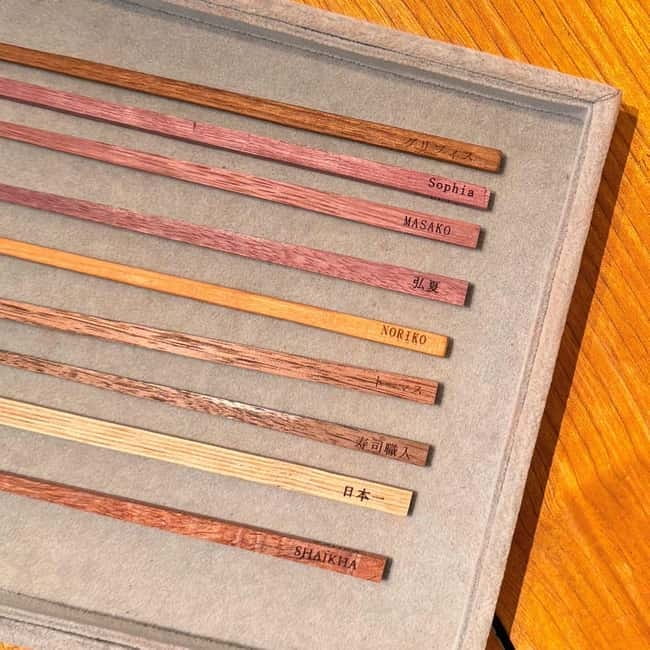
- Engraving adds a personal touch: Add your name or a favorite phrase in Japanese or your own language for ¥1,100 per pair.
- The class takes about one hour: You can work at a steady pace, though careful sanding or a second pair may take longer.
- It is central and accessible: The workshop is at 2-9-13 Ginza, Chuo-ku, Tokyo, and the activity is wheelchair accessible.
Why this Ginza workshop makes a better souvenir
Tokyo offers no shortage of things to buy. Chopsticks are easy to pack, inexpensive to use, and tied to daily life in Japan. This workshop adds the part a shop-bought pair cannot offer: you shape the object yourself.
I like souvenirs that do not sit untouched in a suitcase. These chopsticks are made for regular meals, so you can keep using them at home and remember your time in Tokyo without setting aside a special display space.
The workshop also gives you a small lesson in wood and finish. You see how a rough blank changes as you remove material, soften the corners, smooth the tips, and apply oil. It is a short process, but it gives you a clear sense of how much work goes into a simple wooden utensil.
The location in Ginza helps if you want a craft activity that fits neatly into a day of city sightseeing. The address is in central Tokyo, and the one-hour duration leaves room for shopping, lunch, or another nearby stop. You do not need to give up an entire afternoon.
More things to do in Ginza:
- Tokyo: Art Aquarium Museum GINZA Entry Ticket
★ 4.5 · 278 reviews - Official Japan Go-Kart Through Tokyo Bay / Ginza (IDP Required)
★ 4.5 · 71 reviews - Private Ginza Architecture Walking Tour
★ 5.0 · 50 reviews
Choosing between 24 woods and two lengths
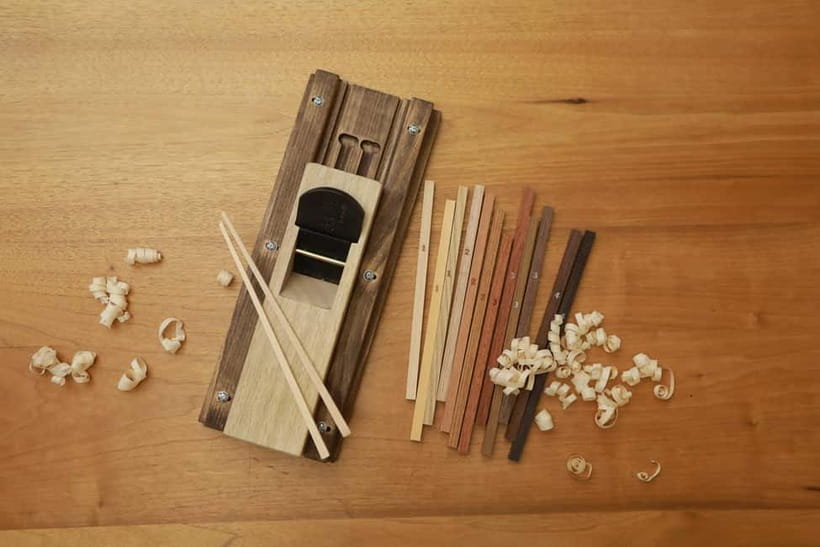
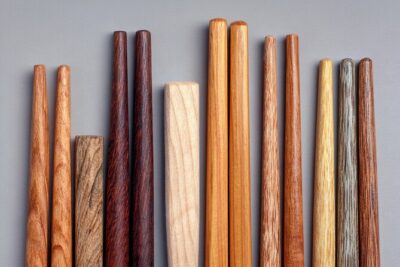
Your first important decision is the wood. Five types are included in the base experience. The other 19 are higher-grade choices and require an additional payment.
The exact surcharge depends on the wood, so ask before you commit to an upgrade. This is the one part of the pricing that deserves careful attention. Some people arrive expecting every displayed wood to be included, then find that specialty choices cost extra.
The higher-grade selections can be part of the fun, especially if you already care about the appearance or feel of the finished pair. Oak and beech have been popular choices, while olive has been described as attractive but harder to work. That gives you a useful rule: a more unusual or dense wood may look special, but it can also demand more pressure from the plane.
You also choose between two lengths. That matters for comfort and use, especially if you are making a pair for a child or want a certain feel at the table. If you are uncertain, ask the English-speaking staff to explain the difference before you begin.
I would choose the wood with both appearance and effort in mind. If you want the smoothest first experience, an included or easier-to-plane option makes sense. If you want the pair to feel especially distinctive, a specialty wood may be worth the surcharge and extra work.
Planing the chopsticks takes genuine effort
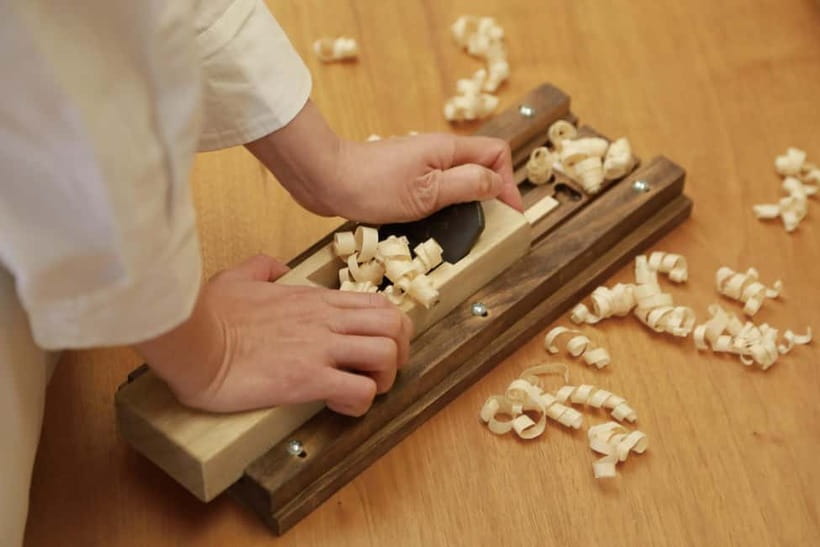
Once you choose your wood, the active part begins. You place the blanks on a stand and use a hand plane to remove material. This is not a decorative demonstration where you watch someone else do the work. You hold the tool, apply pressure, and gradually shape the wood.
The first few strokes can feel awkward. You need enough force to move the plane across the wood, but control matters more than speed. One person described the work as a workout for the core and triceps, which is a useful warning for anyone expecting a completely relaxing craft class.
The staff show you the method and remain available in English and Japanese. They can correct your technique and help when the tool or wood feels unfamiliar. Beginners are welcome, but you should expect to learn by doing rather than simply following a short, effortless craft activity.
Wood grain also affects the process. A pair may plane easily on one side and resist on another. The chopstick can sometimes flip as you work, which can leave you unsure which side should face up. Pay attention to the instructor’s demonstration and ask for help rather than forcing the tool.
The goal is not to rush. You are removing small amounts and watching the shape develop. The workshop is designed to fit into one hour, but staff have allowed people extra time when they wanted to refine the finish. If you are very particular about smoothness, plan your schedule with some flexibility.
Sanding is where the finish takes shape
After planing, you use sandpaper to smooth the tips and corners. This stage looks simple, but it controls how comfortable the chopsticks feel in your hand and against your fingers.
I would spend time here rather than treating sanding as an afterthought. A hurried pair can still be attractive, but careful sanding gives you a smoother result and helps remove rough spots left by the plane. It is also the stage where you can fine-tune the shape without taking away too much material.
The process rewards patience. One participant spent around two hours making a second pair and focusing on precision sanding. That is not the standard one-hour visit, but it shows that the workshop can accommodate people who want to work more slowly or make another pair at an extra cost.
You do not need advanced woodworking skills. The instructors break the process into clear steps, and the tools are supplied. Still, you will get more from the class if you enjoy practical work and do not mind repeating a motion until the surface feels right.
More Tokyo craft workshops:
- Tokyo Shinjuku Chopsticks Making Class
★ 5.0 · 1,763 reviews - Kintsugi Experience: Art of Golden Joinery in Tokyo
★ 5.0 · 467 reviews - Tokyo Chopstick Making Workshop with Artisan
★ 5.0 · 466 reviews - Authentic Pure Gold Kintsugi Workshop with Master Taku in Tokyo
★ 5.0 · 217 reviews
Oil gives the pair its finished look
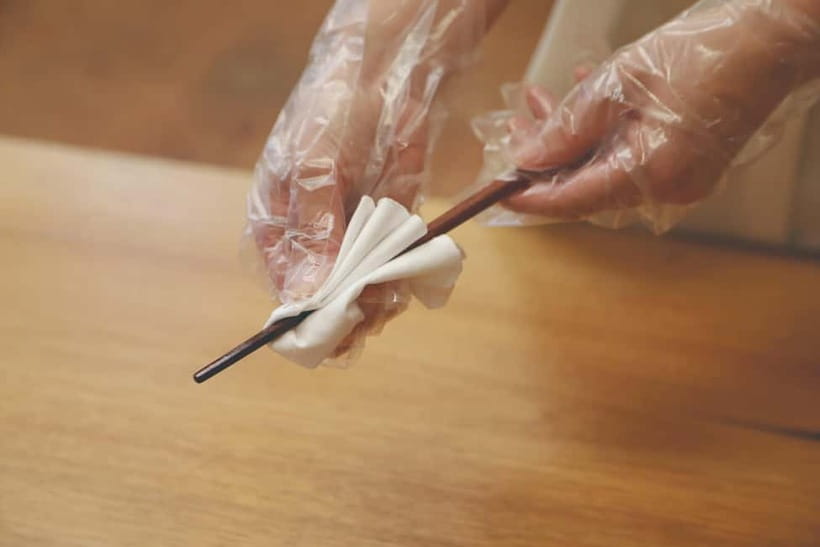
The final step is applying oil. This protects and polishes the wood, bringing out the appearance of the grain and giving the chopsticks a finished feel.
This is a small but important part of the experience. Without the oil, your work would still look like a shaped wooden blank. With it, the pair feels like a complete utensil that belongs in your kitchen.
The workshop focuses on the material and finish, not just the novelty of shaving a stick. The woodworking company handles the wood selection and processing in-house, and that focus comes through in the structure of the class. You are not simply decorating a factory-made pair. You are working on a piece of wood and finishing it for regular use.
You can take the finished chopsticks home on the same day. That makes them an easy addition to your luggage and removes the uncertainty of waiting for shipping.
Engraving turns a useful item into a keepsake
Name engraving is optional and costs ¥1,100 per pair. You can add your name or a favorite phrase in Japanese or your native language.
The engraving is done with a high-performance laser designed to put gentle stress on the wood. Staff can help translate a name or phrase into Japanese if you want a more local touch. This makes engraving especially appealing for families, couples, and birthday celebrations.
If you are making more than one pair, remember that the fee applies per pair. A family making several sets can add a noticeable amount to the total, so decide before the workshop whether personalization matters to you.
I think engraving is most worthwhile if the chopsticks are a gift or mark a particular trip. The plain finished pair is already personal because you made it. Engraving adds a clear memory and makes it easier to tell one pair from another at home.
English help is a real strength
English-speaking staff assist throughout the activity, and the listed instructor languages are English and Japanese. Clear instruction matters here because the tools require correct pressure and direction.
Several instructors have been praised by name. Tina helped one family through a birthday session, while Waka was noted for teaching the process from start to finish with patience and enthusiasm. Kotoha, Shion, and Koko have also been recognized for their care during the workshop.
The staff may be helping people at different stages at the same time. During busy periods, you might wait briefly for individual assistance, especially if several people are struggling with harder wood. That is worth knowing if you prefer constant one-on-one instruction.
The overall format remains beginner-friendly. You do not need to bring tools or materials, and the guide fee of ¥1,000 is included in the experience price. The instructors can explain each step, but you still need to take an active role and ask when something is unclear.
Price, extra costs, and overall value
The advertised price is $25 per person. That includes the workshop, tools, materials, English-speaking assistance, and access to five included wood types.
The price is fair for a one-hour activity that produces something you can use. You are paying for instruction, workspace, materials, and the chance to make a pair rather than buy one ready-made. The value improves if you appreciate practical souvenirs or want a memorable activity instead of another shopping stop.
Budget for possible extras:
- Specialty wood from the 19 higher-grade options costs more.
- Name or phrase engraving costs ¥1,100 per pair.
- An additional pair costs extra if you decide to continue beyond the standard project.
Ask about the wood price before you start planing. One criticism of the experience has been that the different wood prices were not always clear to every participant. Confirming the amount takes only a moment and avoids a surprise when you finish.
You can also compare the finished item with the cost of a shop-bought pair. A cheaper pair is easy to find, but it will not carry your work, your chosen wood, or your engraving. If those details matter, the workshop earns its price. If you only want basic chopsticks, shopping will be cheaper and faster.
Who will enjoy this most
This is a good match for couples, families, older children, teenagers, and anyone who likes making practical objects. It worked well as a 12th birthday activity, and older teenagers and young adults have also enjoyed the hands-on work.
Children need enough strength and attention to handle the plane safely. The listed restrictions say the activity is not suitable for children under three or people over 70. The work can also be tiring for anyone with limited arm strength, so consider the physical effort before booking.
I would recommend tying back long hair. One participant found the class more sporty than expected, and loose hair is not helpful around hand tools or wood shavings.
The workshop is wheelchair accessible, but the supplied information does not explain the exact workbench setup. If you need a particular seating arrangement, confirm it when booking.
This is less suitable for someone who wants a passive, polished activity with no chance of frustration. You will need to plane, sand, make small corrections, and possibly wait for assistance during a busy session.
Practical planning for your Ginza visit
The meeting point is 2-9-13 Ginza, Chuo-ku, Tokyo. Check the address carefully before setting out. One participant arrived at the wrong address, so do not rely only on a vague memory of the Ginza district.
The standard duration is one hour. A typical visit follows this order:
- Choose your wood and length.
- Place the chopstick blanks on the stand.
- Plane the wood to shape.
- Sand the tips and corners.
- Apply oil.
- Add optional engraving and take the finished pair home.
The sequence is simple, but your pace can vary. Easy wood and confident planing may fit neatly into the hour. Dense wood, careful sanding, a second pair, or engraving may take longer.
Cancellation is free up to 24 hours in advance, and you can reserve now and pay later. Those terms help if your Tokyo schedule is still changing. Starting times vary, so check availability when you choose a date.
Should you book this chopstick workshop?
Book it if you want a useful souvenir with a story behind it, enjoy making things with your hands, or need a short family activity in central Tokyo. The combination of wood choice, real planing, patient English help, same-day collection, and optional engraving gives the hour more substance than a simple souvenir purchase.
Think twice if you dislike physical work, need a guaranteed one-hour finish, or want every wood option included in the base rate. The specialty woods and engraving can raise the final cost, and a busy class may not offer instant help at every moment.
For most visitors, I would choose one of the included woods for a first pair, confirm the upgrade prices, and add engraving only if the chopsticks are a gift or birthday keepsake. That approach keeps the cost under control while preserving the best part of the experience: taking home something you shaped yourself.
FAQ
How long does the chopstick-making workshop last?
The standard activity lasts one hour. Careful sanding, a second pair, or other personal choices may take longer.
How many wood types can I choose from?
You can choose from 24 types of wood and two lengths. Five wood types are included, while the other 19 are higher-grade options with an additional charge.
Is engraving included in the price?
No. Engraving is optional and costs ¥1,100 per pair. You can engrave a name or favorite phrase in Japanese or your native language.
Can I take the chopsticks home the same day?
Yes. You can take your finished chopsticks home after the workshop.
Is English assistance available?
Yes. English-speaking staff assist during the activity, and instruction is available in English and Japanese.
Who cannot take part in the activity?
The activity is listed as unsuitable for children under three and people over 70. It is also wheelchair accessible.
More hands-on classes and workshops in Tokyo
- Sushi Making Tokyo Roll and Authentic Japanese Sushi Class
★ 5.0 · 3,971 reviews - Tokyo: Roll and Authentic Sushi Making Class in Asakusa
★ 4.9 · 1,957 reviews - Tokyo: Sushi Making Class in a Happi Coat near a Famous Spot
★ 4.9 · 1,377 reviews - Tokyo Sushi Making Class in Tsukiji with Professional Chef
★ 5.0 · 1,177 reviews
Newly reviewed around Tokyo
- Tokyo Asakusa:Calligraphy & Make T-shirt Activity★ 5.0 · 62 reviews
- Intercity Shuttle, Tokyo to Haneda /Narita /Yokohama /Makuhari★ 5.0 · 5 reviews
- 1 Hour Travel around Tokyo with a Professional Photographer★ 5.0 · 3 reviews
- Travel Tokyo with Your Own Personal Photographer★ 5.0 · 43 reviews
- Train in Samurai Swordsmanship and Defeat the Demon in Tokyo★ 5.0 · 5 reviews
- Shuttle Van 6hr Tokyo Tour to-and-from Tokyo, Yokohama and Narita★ 5.0 · 9 reviews
- Kickboxing & Body Training with EX-Pro Fighter★ 5.0 · 4 reviews
- Traditional Japanese Knife Sharpening Class★ 5.0 · 18 reviews
Tokyo Traditional Craft Workshops, compared.
Kintsugi Experience: Art of Golden Joinery in Tokyo
Read our review →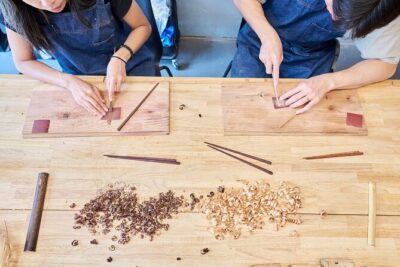
Authentic Pure Gold Kintsugi Workshop with Master Taku in Tokyo
Read our review →
Private Handmade Ring Workshop Activity in Tokyo Shibuya
Read our review →
Kintsugi Workshop Class in Shibuya, Tokyo with mon cadeau
Read our review →Browse the lists this tour appears in