
Reviewed · TSUKIJI AND TOYOSU FISH MARKET TOURS
Tokyo’s Must-Sees: 5-hour Tsukiji, Akihabara & Asakusa Tour
Tokyo packs three very different worlds into this five-hour route: Tsukiji’s food stalls, Akihabara’s anime shops, and Asakusa’s old temple district. A certified MagicalTrip guide keeps the day moving and explains what you are seeing instead of leaving you to decode the city alone.
I like the included two or three market tastings and the fact that lunch is part of the plan. I also like the small maximum of seven people, plus the handy photo service, which lets you enjoy the walk instead of constantly raising your phone.
The trade-off is pace. You cover a lot of ground, use trains, and walk through crowded areas with only short breaks. This is a strong first look at Tokyo, but it is not a slow, in-depth visit to any one neighborhood.
Key points to know before booking
- Tsukiji starts the day with food: You get two or three included tastings of seafood or local market specialties.
- Akihabara gets the most time: The two-hour, 10-minute stop includes Super Potato, Akiba Cultures Zone, and more game and anime culture.
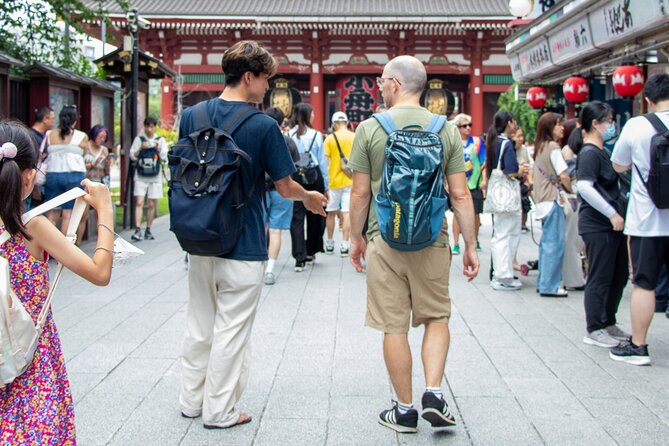
- Asakusa finishes with lunch: You visit Kaminarimon Gate and Senso-ji Temple, then eat in the old town.
- The group is kept small: The tour has a maximum of seven people, which gives you a better chance to ask questions.
- Photos are included: Your guide takes pictures during the tour and sends them to you afterward.
- Bring 390 yen for trains: Train fares are not included, though an IC card can be used.
Three Tokyo neighborhoods in one well-packed morning
This tour is built for the person who looks at a Tokyo map and thinks, How will I fit all that in? Tsukiji, Akihabara, and Asakusa sit in different parts of the city and offer very different moods. Seeing them in one outing saves planning time and gives you a useful first read on the capital.
The route begins at 9:30 a.m. outside Tsukiji Honganji Temple and ends in Asakusa after lunch. You move between stops by train and on foot, with the train cost of 390 yen paid separately. The group can include up to seven people, so it has more structure than a private tour but should feel less unwieldy than a large coach group.
I see this as a first-day orientation tour. You get food, shopping culture, religious sites, neighborhood context, and local transport in a single half-day. You will not see every corner of these districts, but you will leave knowing which areas deserve a longer return visit.
More Asakusa and Sensoji tours:
- Tokyo: Japanese Dance Cabaret Theater Asakusa-Kaguwa Ticket
★ 4.8 · 2,270 reviews - Tokyo: Meiji Shrine, Asakusa, Skytree Bus Tour and Cruise
★ 4.7 · 1,986 reviews - Tokyo: Roll and Authentic Sushi Making Class in Asakusa
★ 4.9 · 1,957 reviews
Starting at Tsukiji Honganji Temple
The meeting point is the main gate of Tsukiji Honganji Temple, at 3-chōme-15-1 Tsukiji. That is a useful start because the temple gives you a calm, distinctive opening before the market crowds take over.
The temple is under the jurisdiction of Nishi Honganji Temple in Kyoto. Your guide spends about 20 minutes here, introducing the site and helping you understand how to behave in a Japanese temple. Admission is free.
This short stop matters because it sets the tone for the day. You are not simply being led from one photo stop to another. You begin with a place of worship, then learn how the surrounding district developed as a food center.
You should arrive early. The tour must start on time, and you cannot join later or receive a refund if you miss the group. Tokyo public transport is reliable, but stations can be large and confusing, so give yourself extra time to find the correct exit.
Tsukiji market, with food in the middle of the visit
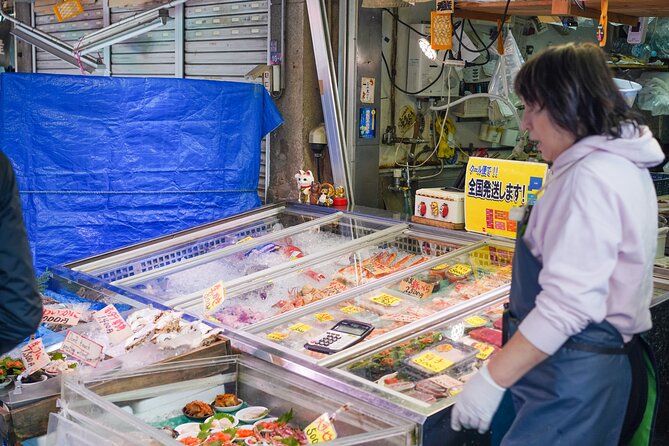
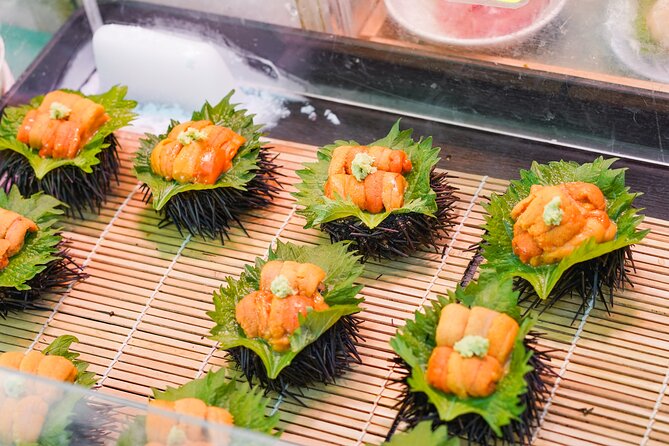
The Tsukiji Fish Market is the first major stop, and you have about an hour to walk through it. The former wholesale market functions are no longer all concentrated here, but the district remains a major place for seafood, prepared foods, snacks, and kitchen-related shopping.
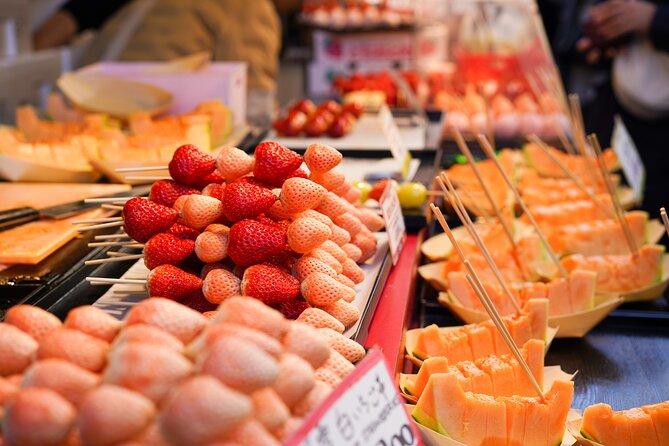
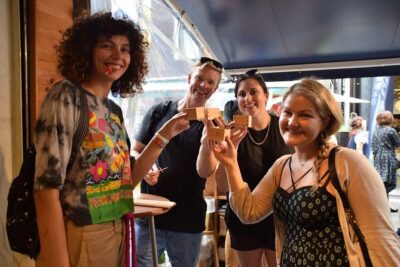
The best part of this stop is that you are not left to guess what is worth trying. Two or three food samplings are included, with fresh seafood and local specialties forming the center of the visit. That makes the market more useful for a first visit, especially if you are unsure what to order or how a particular item is normally eaten.
Your guide can also help you avoid spending the whole hour in a single lane. The market is sensory and crowded, with many sights, smells, and sounds competing for attention. Stay close to the group, keep bags under control, and wear shoes you can walk in comfortably.
Additional food and drinks cost extra. This is worth remembering because Tsukiji can easily turn into an expensive grazing session. The included tastings give you a starting point, but you may want to budget more if a particular snack catches your eye.
Akihabara for games, anime, and modern Tokyo
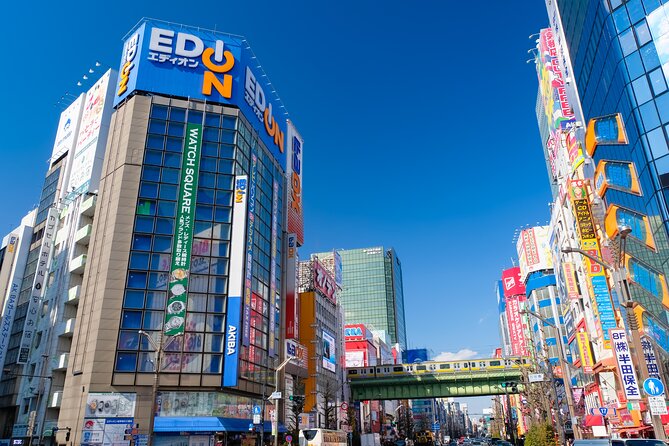
After Tsukiji, the tour heads to Akihabara, where you spend about two hours and 10 minutes. This is the longest stop, and rightly so. Akihabara is not just a shopping street. It is a useful window into Japan’s game, anime, manga, and character culture.
The route includes Super Potato and Akiba Cultures Zone, along with other stops in the area. Super Potato is especially appealing if you like classic video games, while Akiba Cultures Zone gives you a broader look at the stores and interests that shape the district.
I appreciate the extra time here. A brief photo stop would reduce Akihabara to signs and bright storefronts. Two hours allows you to look around, ask questions, and get a sense of why the neighborhood matters to fans of Japanese popular culture.
Still, you should set your expectations correctly. The tour does not promise a shopping spree or a long personal browsing session. You are moving as a group, and the guide is trying to give you a broad introduction. If one store matters greatly to you, make a note of it and return independently after the tour.
The route also includes travel through Ueno before the next stage. The point is less about a formal Ueno sightseeing stop and more about using the city as a local would, transferring between districts rather than staying inside a sightseeing bubble.
More Tsukiji and Toyosu fish market tours:
- Tokyo Tsukiji Fish Market Food and Culture Walking Tour
★ 5.0 · 3,184 reviews - Tokyo: Tsukiji Fish Market Food and Walking tour
★ 5.0 · 1,724 reviews - Tokyo: Tsukiji Fish Market Guided Walking Tour
★ 4.9 · 1,397 reviews - Tokyo Sushi Making Class in Tsukiji with Professional Chef
★ 5.0 · 1,177 reviews
Kaminarimon Gate and the older side of Tokyo
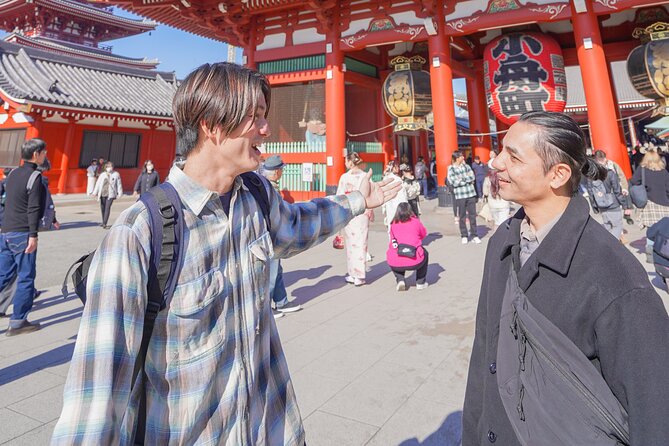
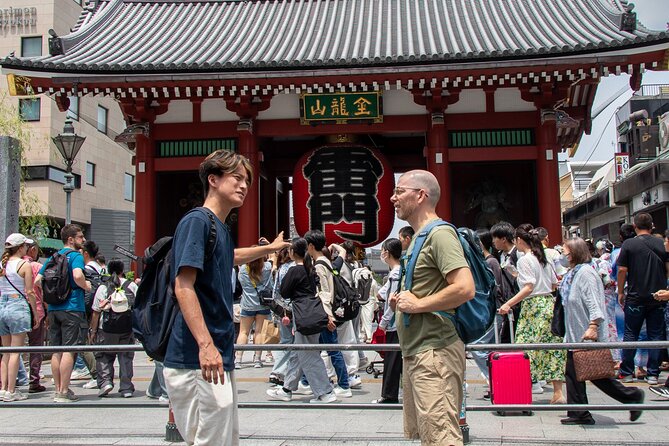
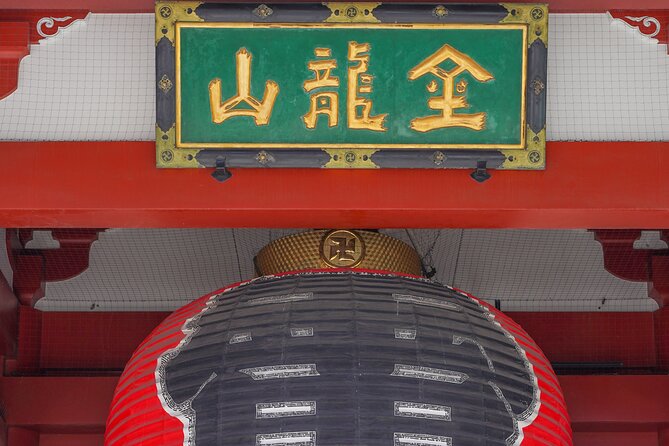
The Asakusa portion begins with Kaminarimon Gate, one of the district’s best-known entrances. From here, you enter an older part of Tokyo, where traditional architecture, temple customs, and long-established shopping streets create a sharp contrast with Akihabara.
The stop at Kaminarimon lasts about 30 minutes. That gives you time to look at the gate and begin walking toward Senso-ji Temple without rushing through the area in a few minutes.
Asakusa is a good final district because it slows the visual rhythm of the day. Tsukiji is about food and trade. Akihabara is about modern entertainment and collecting. Asakusa gives you religious spaces and an older town feel.
The area can be very busy, so keep your belongings close and listen for instructions when the group moves. If you want quiet temple photos, this schedule may not deliver them. The value here is seeing Asakusa as an active part of Tokyo, not as an empty stage set.
Senso-ji Temple and lunch in Asakusa
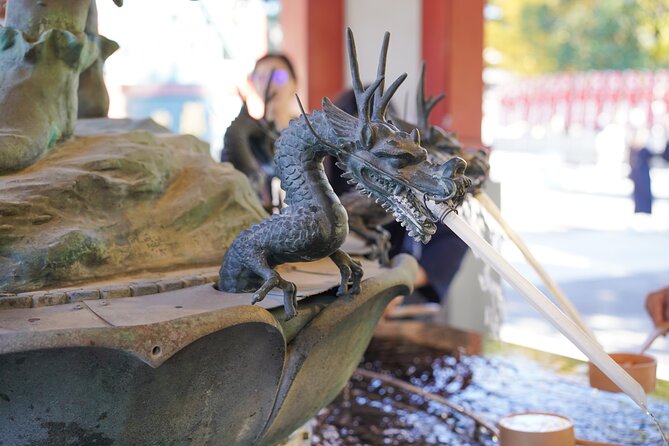
Senso-ji is described as Japan’s oldest temple, and the tour gives you about 20 minutes to walk around and learn how to pray at a Japanese temple. That short lesson is useful. Temple etiquette can feel uncertain when you are visiting for the first time, and a guide can explain the basic steps without making the moment awkward.
The temple stop is followed by lunch in Asakusa. Lunch is included, and vegetarian or vegan food can be arranged if you request it in advance. You must provide dietary information or allergy details at least one day before the tour. Same-day requests cannot be accommodated, and the food is prepared in kitchens outside the tour company’s control, so allergy-free meals cannot be guaranteed.
This is one of the tour’s practical strengths. After several hours of walking and public transport, you do not have to stop and search for a restaurant while keeping up with a group. You can finish with a proper meal in the district rather than leaving hungry.
The lunch is not a substitute for choosing your own restaurant in Asakusa. If you have a very specific food preference, allergy, or dining goal, confirm that the arranged meal will suit you before booking. For most people, though, included lunch makes the day easier and gives the route a clear finish.
What the guide adds to a fast-moving day
A certified guide is important on a tour like this because the neighborhoods are easy to visit superficially. A guide can explain the difference between a temple and a shrine, help with market foods, point out the purpose of Akihabara shops, and keep the group on schedule.
Kenji led one especially personal outing when he was the only participant, turning the planned group route into a more flexible introduction to Tokyo. Hana was also praised for being informative and pleasant while handling a full day of busy places and food stops.
You should not book expecting a private tour. The normal maximum is seven people, and the pace is shared. But that small cap gives you a better chance to ask a question than you would on a large bus tour. It also helps the guide manage market walking, train transfers, and temple visits.
The photo service is another thoughtful touch. Your guide takes pictures and sends them to you, so you can spend more time looking at the city. It will not replace every photo you want, but it removes some of the pressure to document every stop yourself.
Is $101.74 a fair price?
At $101.74 per person, this is not a bargain sightseeing walk. The value depends on how much you would otherwise pay for convenience, guidance, tastings, lunch, and planning time.
You receive a five-hour guided route, two or three market tastings, lunch, guide-taken photos, and a certified guide. The three neighborhoods are also linked for you, including the necessary train travel. Only the 390 yen train fare, extra food, and extra drinks are outside the advertised inclusions.
I think the price makes the most sense if you have limited time in Tokyo or do not feel comfortable organizing your first market visit and neighborhood transfers. It is less compelling if you already know the city, prefer long unstructured shopping sessions, or want to spend an entire day in one district.
Group discounts may improve the value for people booking together. The mobile ticket also makes the booking simple, but the important practical detail is still timing: be at Tsukiji Honganji Temple before 9:30 a.m., not at 9:30 on the dot.
Walking, weather, and who should book
This tour is suitable for people of all ages, but it is not recommended for anyone with mobility issues. You walk through several districts, use public transport, and take only a few short breaks. If walking is difficult, a private tour is the better choice because the pace can be adjusted.
Tokyo’s weather can also change the experience. Summer temperatures may reach 40°C, while winter lows can fall to -5°C. Wear suitable clothing, bring water in hot weather, and choose supportive shoes. The tour may be canceled for unsafe weather, in which case you are offered another date or a full refund.
I would recommend this for first-time visitors, short-stay visitors, families with enough stamina for a five-hour outing, and anyone who wants a guided introduction to food, pop culture, and traditional Tokyo in one morning. I would be more cautious if you dislike crowds, need long sitting breaks, or want a relaxed photography tour.
Free cancellation is available up to 24 hours before the start time. Changes or cancellations inside that window are not accepted for a refund.
Should you book this Tokyo tour?
Book it if you want a compact, guided introduction to three very different Tokyo districts and you value having food and lunch arranged. The small group, included tastings, and guide-taken photos add real convenience, while the route gives you clear ideas for later independent visits.
Skip it if your priority is deep shopping time in Akihabara, a quiet temple visit, or a slow market breakfast. This is a brisk sampler, not a leisurely neighborhood study.
For many first visits, the mix is exactly the point. You get Tsukiji’s food culture, Akihabara’s games and anime, and Asakusa’s temples before lunch, with a guide helping you make sense of the changes along the way.
FAQ
How long does the tour last?
The tour lasts approximately five hours, starting at 9:30 a.m. and ending in Asakusa after lunch.
Where does the tour start?
It starts at the main gate of Tsukiji Honganji Temple, at 3-chōme-15-1 Tsukiji, Chuo City, Tokyo 104-0045.
Where does the tour end?
The tour ends in Asakusa, Taito City, Tokyo 111-0032, after lunch.
Is lunch included?
Yes. Lunch is included and takes place in Asakusa.
Are vegetarian and vegan meals available?
Yes, vegetarian and vegan options are available if requested in advance. You should provide the request at least one day before the tour.
Are food tastings included?
Yes. The tour includes two or three food samplings at Tsukiji Fish Market. Additional food and drinks are not included.
Are train fares included?
No. Train fees cost 390 yen and are paid separately. You can use an IC card for the trains.
How large is the group?
The tour has a maximum of seven people.
Is the tour suitable for people with mobility issues?
The tour is not recommended for people with mobility issues because it involves walking and only a few short breaks. A private tour is recommended if walking is difficult.
What happens if the weather is unsafe?
If unsuitable weather causes cancellation, you are offered a different date or a full refund.
More Akihabara and anime tours
- Official Street Go-Kart Tour – Akihabara
★ 5.0 · 1,578 reviews - Tokyo Go Kart: Asakusa, Skytree, and Akihabara **IDP MUST**
★ 5.0 · 988 reviews - Akihabara Anime & Game Adventure Walking Tour (Group or Private)
★ 5.0 · 404 reviews - Tokyo: Gameboy Mod Workshop at Akihabara
★ 5.0 · 253 reviews
Newly reviewed around Tokyo
- Tokyo Asakusa:Calligraphy & Make T-shirt Activity★ 5.0 · 62 reviews
- 1 Hour Travel around Tokyo with a Professional Photographer★ 5.0 · 3 reviews
- Travel Tokyo with Your Own Personal Photographer★ 5.0 · 43 reviews
- Intercity Shuttle, Tokyo to Haneda /Narita /Yokohama /Makuhari★ 5.0 · 5 reviews
- Train in Samurai Swordsmanship and Defeat the Demon in Tokyo★ 5.0 · 5 reviews
- Shuttle Van 6hr Tokyo Tour to-and-from Tokyo, Yokohama and Narita★ 5.0 · 9 reviews
- Kickboxing & Body Training with EX-Pro Fighter★ 5.0 · 4 reviews
- Traditional Japanese Knife Sharpening Class★ 5.0 · 18 reviews
Tsukiji and Toyosu Fish Market Tours, compared.
Tokyo Tsukiji Fish Market Food and Culture Walking Tour
Read our review →
Tokyo Sushi Making Class in Tsukiji with Professional Chef
Read our review →
Tsukiji Fish Market Guided Tour and Sushi Making with Pro Chef
Read our review →Tsukiji Fish Market Food and Culture Walking Tour
Read our review →
Tsukiji Fish Market: Street Food & Culture Walking Tour
Read our review →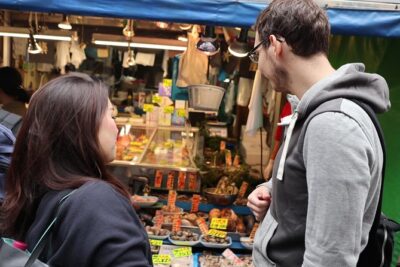
Tsukiji Fish Market Small-Group Food Walking Tour
Read our review →Browse the lists this tour appears in