
Reviewed · TOKYO WALKING TOURS
Asakusa: 2-Hour History Walking Tour & Local Food Tasting
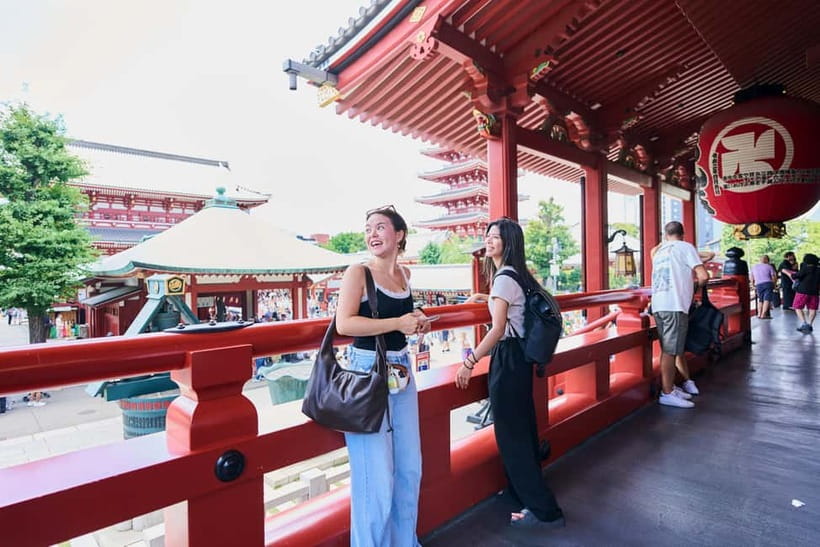
Asakusa gives you old Tokyo in a compact, easy-to-follow walk. This tour centers on Senso-ji, the city’s oldest temple, then adds local snacks and small specialty shops that show how the neighborhood still serves everyday interests, from cooking knives to Japanese tableware.
I like the clear mix of history and food, and I like that the route includes practical shopping stops rather than only famous sights. The main consideration is that this is a two-hour walking tour, with food and drinks purchased separately, so comfortable shoes and a little cash matter.
Key points at a glance
- Senso-ji dates back to 628: Learn why this temple has been part of Tokyo life for more than 1,400 years.
- Asakusa Shrine sits beside the temple: See how Buddhist and Shinto traditions share the same neighborhood.
- Local snacks are part of the route: Try sweet or savory treats, with purchases handled separately.
- Knife shopping has a professional angle: Visit renowned knife shops suited to cooks and serious food lovers.
- Samurai, ninja, and tableware shops add variety: The route offers small souvenirs beyond the usual temple photos.
- The price is low for a guided introduction: At $16 per person, this is an affordable way to get oriented in Asakusa.
Why Asakusa works so well for a short history walk
If you have only a little time in Tokyo, Asakusa is a sensible place to spend it. The neighborhood brings together a major temple, a Shinto shrine, traditional food, and shops with a strong connection to Japanese culture. You do not need a long train ride between unrelated sights. The experience stays in one historic district.
That compact design is useful on a first visit. A local guide can explain what you are looking at while you move through the streets, instead of leaving you to sort out temple customs and local background from signs. The tour is conducted in English, and it begins and ends at the same meeting point, which keeps the plan simple.
The price also makes the tour easy to fit into a larger Tokyo schedule. At $16 per person, you are paying for a guided introduction, not a full meal or a private cultural lesson. Since snacks, drinks, and shopping cost extra, the best value comes from the explanations and the route itself.
More Asakusa and Sensoji tours:
- Tokyo: Japanese Dance Cabaret Theater Asakusa-Kaguwa Ticket
★ 4.8 · 2,270 reviews - Tokyo: Meiji Shrine, Asakusa, Skytree Bus Tour and Cruise
★ 4.7 · 1,986 reviews - Tokyo: Roll and Authentic Sushi Making Class in Asakusa
★ 4.9 · 1,957 reviews
Starting by the Kaminarimon Police Box

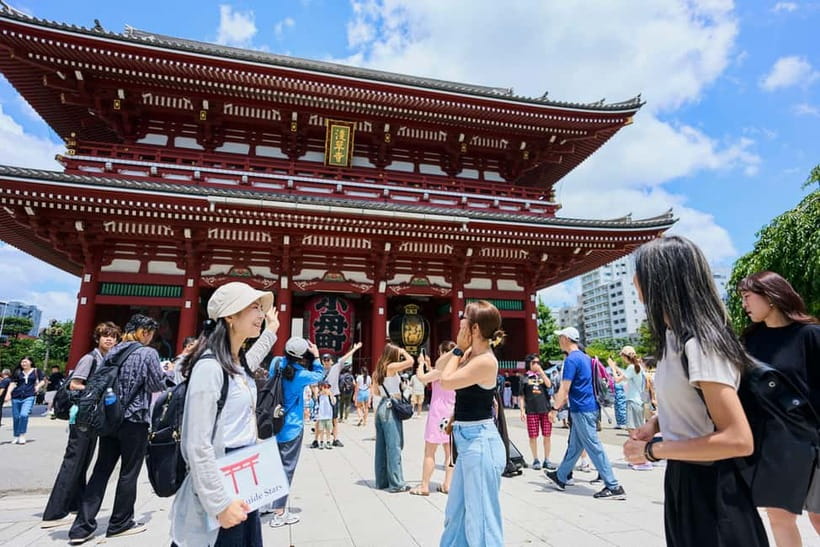
You meet in front of the Kaminarimon Police Box at Asakusa Station. Look for a guide holding a sign marked Local Guide Stars. This is a practical meeting point because it places you near one of Asakusa’s best-known entrances and avoids the confusion of arranging hotel pickup.
The meeting instruction is specific, so use it as written rather than simply waiting somewhere around the station. The tour finishes back at the same point. That return is helpful if you plan to continue exploring, catch a train, or meet someone in the area afterward.
Bring comfortable shoes. Two hours on foot is not a marathon, but temple grounds, shopping streets, and pauses at several stops can make poor footwear feel like a bad decision. You should also dress for the weather, since the route takes place outdoors and conditions may change.
Senso-ji and 1,400 years of Asakusa history
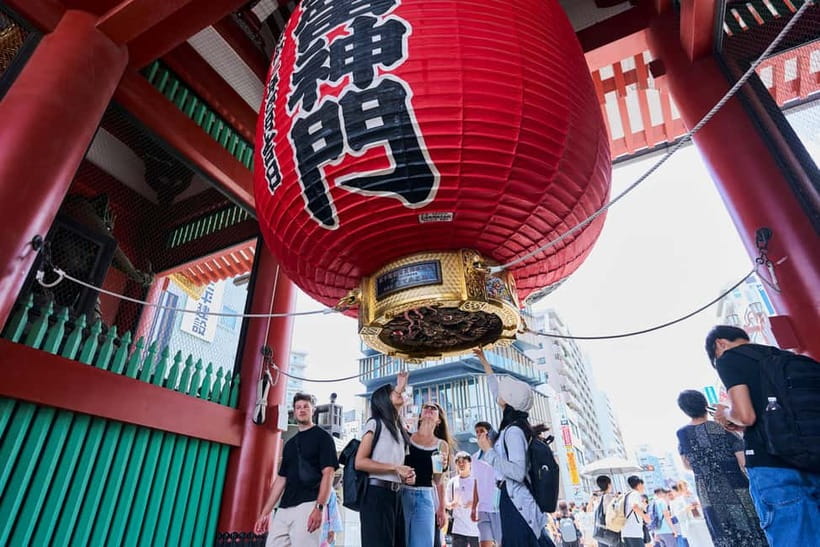
The main stop is Senso-ji, described as Tokyo’s oldest temple and built in 628. It has been loved for more than 1,400 years and was once protected by samurai. Those details give the temple more weight than a quick photo stop. You are seeing a place tied to the early story of the city and to centuries of religious life.
The guide’s role matters here. A temple can look impressive while remaining confusing if you do not know what you are seeing or how the site fits into Japanese history. This walk gives you a chance to ask questions and hear the background in plain English as you move through the grounds.
You may also feel like making a small offering or drawing an omikuji, a fortune-telling paper. These are not included costs, and the temple does not accept cashless payment for them. Carry some yen if you want that choice. You do not need to pay anything extra to take the tour, but cash gives you more freedom once you arrive.
The temple can be the most meaningful part of the route for anyone interested in religious buildings, Japanese history, or traditional customs. The drawback is that the tour cannot turn a 1,400-year story into a full history course in two hours. You will receive an introduction, not an exhaustive study of Senso-ji.
Seeing Buddhism and Shinto side by side
Right next to Senso-ji is Asakusa Shrine. The pairing is one of the clearest reasons to take this walk with a guide. You can move from a Buddhist temple to a Shinto shrine within the same historic area and learn how the two traditions coexist in Japan.
For a first-time visitor, this helps clear up a common source of confusion. The two sites are close together, but they are not simply two versions of the same thing. A guide can point out the difference in context and explain why both remain important parts of Japanese life.
This part of the tour is especially useful if you want cultural background rather than a checklist of landmarks. You are not only seeing an old building. You are learning how different religious traditions have shared space over time.
The information provided does not specify the exact amount of time spent at each site, so do not expect a fixed lecture at every gate or structure. The pace is built around a two-hour neighborhood walk, with food and shopping included.
More Tokyo walking tours:
- Tokyo Tsukiji Fish Market Food and Culture Walking Tour
★ 5.0 · 3,184 reviews - Tokyo: Imperial Palace and Shogun Historical Walking Tour
★ 5.0 · 2,251 reviews - Tokyo: Shinjuku Local Bar and Izakaya Guided Walking Tour
★ 4.9 · 1,794 reviews - Tokyo: Tsukiji Fish Market Food and Walking tour
★ 5.0 · 1,724 reviews
Tasting local food in the old streets
Food gives the walk a more personal feel. Instead of treating Asakusa as a collection of monuments, the tour points you toward local favorites and traditional treats enjoyed in the neighborhood over generations. You may try something sweet or savory, depending on the guide’s recommendations and what appeals to you.
The food is not included in the $16 price. Think of the tasting as a chance to buy small portions along the way, not a sit-down meal. This arrangement keeps the base price low and lets you decide how much to eat and spend.
I like this setup because it gives you control. You can choose a snack that suits your appetite, save room for later, or spend a little more on something that catches your eye. It also makes the food stop feel connected to the streets around you rather than separated into a formal restaurant visit.
You should budget for your own food and drinks. The tour includes the guide’s local picks, but not the purchases themselves. If you have dietary restrictions, the supplied information does not promise specific alternatives, so ask the guide directly before choosing what to buy.
Professional knife shops for cooks and curious shoppers
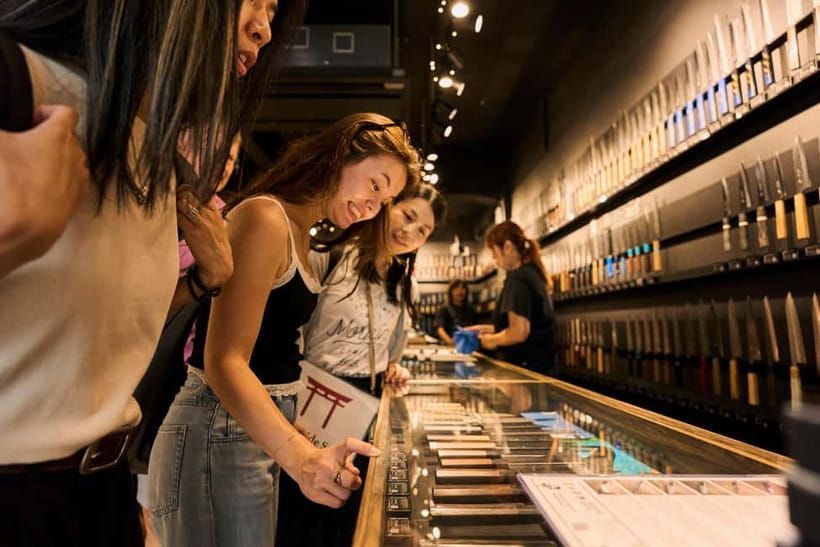
The route includes a visit to renowned knife shops with a professional focus. This is a useful stop if you cook, collect kitchen tools, or want a souvenir with a clear connection to Japanese food culture.
The phrase pro-level matters. These are not presented as ordinary gift shops filled only with decorative items. You may find tools intended for serious kitchen use, though the supplied details do not name specific brands, knife types, prices, or shipping services. If you plan to buy, ask about care, sharpening, luggage packing, and any restrictions that apply to carrying a knife home.
Even if you do not purchase anything, the stop adds a practical side to the tour. You see an aspect of Japanese craftsmanship tied to daily work and cooking, not only to temples and historic stories.
This is also one place where your shopping goals can affect the value. If you have no interest in kitchen tools, you may prefer the food and temple portions. If you love cooking, the knife stop could be one of the strongest reasons to book.
Samurai and ninja goods with a playful side
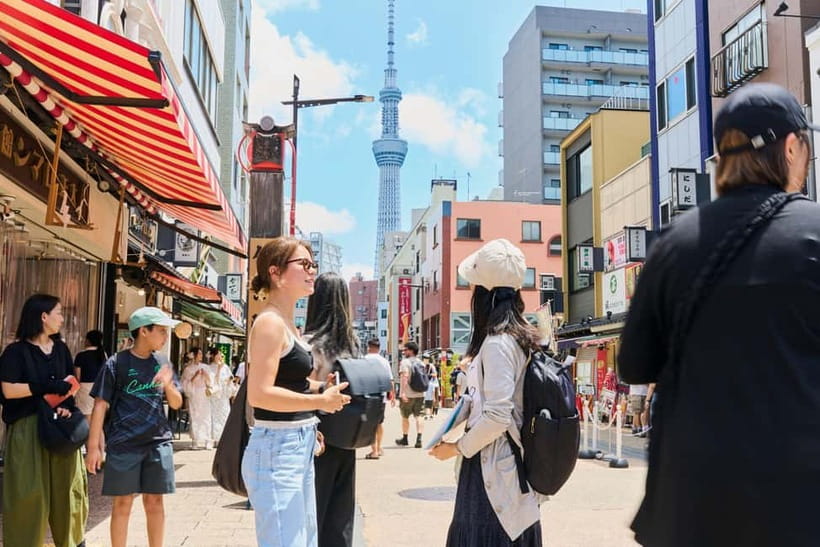
The tour also visits a store selling samurai swords and ninja gear. This brings a lighter, more entertaining note to the route. The shop should appeal to families, pop culture fans, and anyone looking for a distinctly Japanese souvenir.
The description does not say that you receive a demonstration, handle weapons, or learn martial arts. Treat it as a shopping visit, not a training session or historical performance. That distinction helps keep expectations realistic.
The stop works well because it balances the serious temple history. After learning about Senso-ji and Asakusa Shrine, you get a chance to browse items connected with popular images of Japan. Some people will find the store fun; others may see it as less essential than the temple or food stops.
Japanese tableware for useful souvenirs
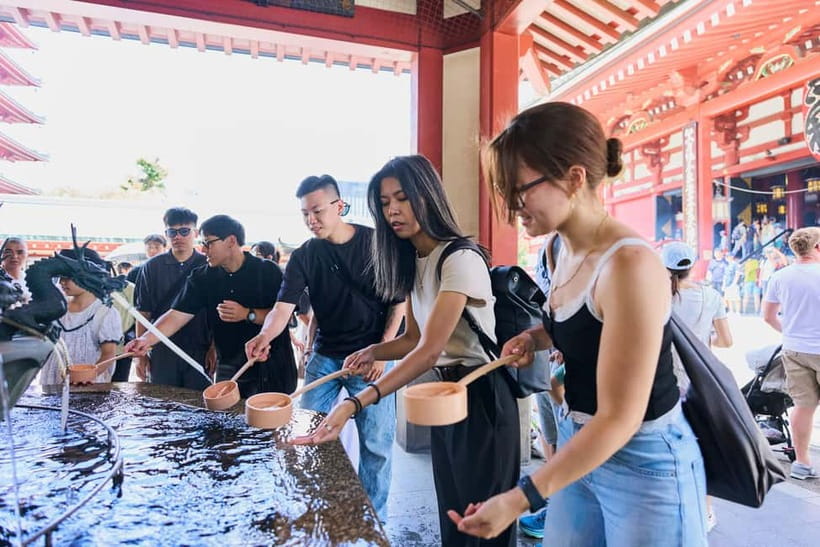
A cute Japanese tableware shop rounds out the shopping portion. This may be the most practical souvenir stop for you if you prefer dishes, small serving pieces, or household items over clothing and novelty goods.
The exact products, prices, and selection are not specified, so you should not book expecting one particular item. Still, the stop gives you another way to connect the neighborhood with ordinary Japanese life. Tableware can be a more useful reminder of a trip than a generic token, provided you have room to pack it safely.
Taken together, the three shopping stops create a good range: professional cooking tools, samurai and ninja-themed goods, and tableware. You can browse without needing to buy at every location. The guide’s top picks help you focus your limited time, though purchases remain your responsibility.
What the $16 price really covers
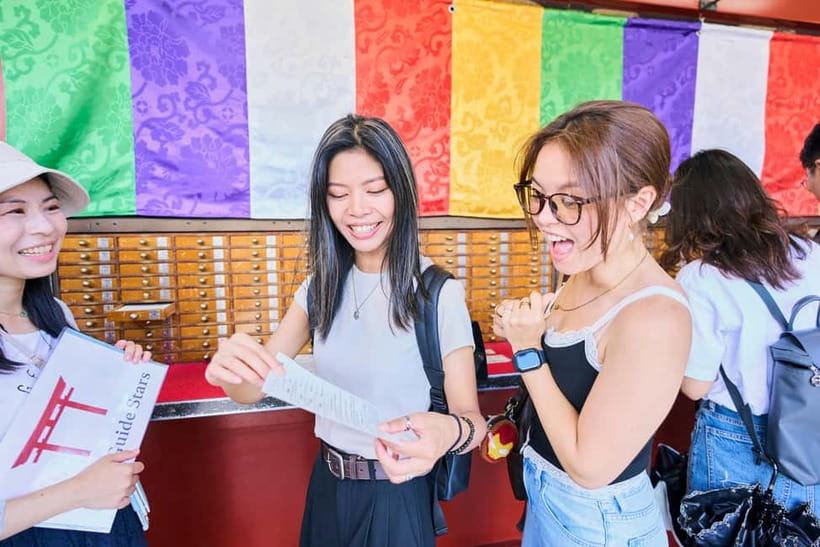
At $16 per person, this is an inexpensive guided walk for Tokyo. The price covers an English-speaking local guide, the neighborhood route, the temple and shrine context, local food recommendations, and visits to the specialty shops.
It does not cover meals, drinks, temple offerings, omikuji, or anything you buy. That is normal for a low-cost walking experience, but you should factor those extras into your day. A small amount of cash is wise because cashless payment is not accepted for temple offerings and fortune papers.
The tour provides the most value if you want an introduction rather than a private or highly specialized experience. You get a local framework for Asakusa, then you can return to the places that interest you most. If you already know the district well or want a long food crawl, the short length may feel limited.
There are currently four submitted ratings, with a perfect 5 out of 5 overall score. That is encouraging, but it is still a small sample, and the only written comment available is a brief positive reaction. I would treat the rating as a good sign, not as proof that every part will suit every person.
Who should book this Asakusa walk
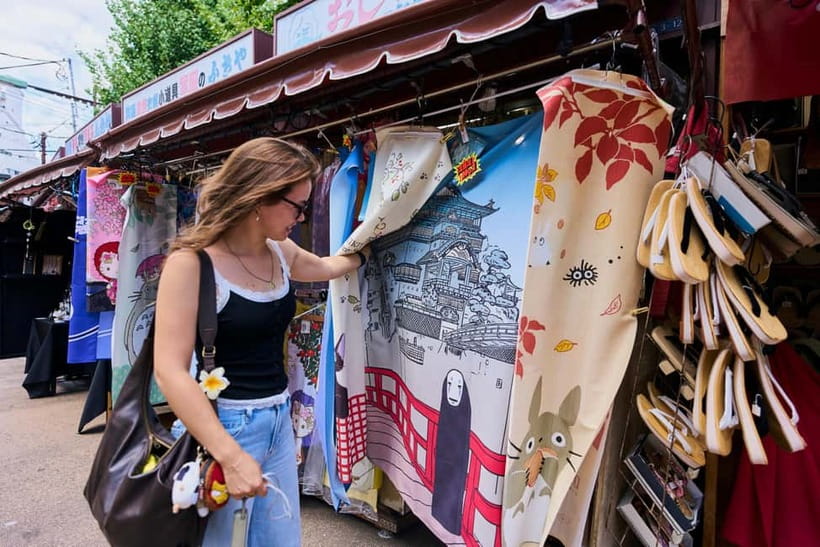
I would recommend this tour to first-time visitors who want a straightforward introduction to one of Tokyo’s oldest neighborhoods. It also suits people who like combining history, snacks, and small shops rather than spending two hours inside a single museum.
Families may appreciate the variety. A temple, local food, samurai and ninja goods, and colorful tableware give the walk several different points of interest. The route may also work for solo visitors who want local direction without paying for a private tour.
Food lovers and home cooks have two extra reasons to consider it: the guide’s recommended local eats and the professional knife shops. You should book with realistic expectations, though. This is not a full meal, a cooking class, or a detailed knife-buying consultation.
The tour may be less suitable if you dislike walking, need guaranteed indoor activities, or want a long, quiet temple visit. It also may not satisfy someone looking for a full-day history tour. The experience is short by design, and its strength is variety.
Practical details before you go
Meet at the Kaminarimon Police Box by Asakusa Station and find the Local Guide Stars sign. The activity ends at the same meeting point, so you can plan your next stop from there without arranging a separate return transfer.
Wear comfortable walking shoes and prepare for changing weather. Bring some cash for offerings, omikuji, snacks, and any purchases. Hotel pickup and drop-off are not included, and the tour is offered in English.
You can reserve now and pay later, which helps if your Tokyo plans are still shifting. Cancellation is available up to 24 hours before the activity for a full refund. Those flexible terms are useful when you are building a busy city itinerary.
Should you book this Asakusa tour?
Book it if you want a low-cost, well-rounded first look at Asakusa. The strongest reasons are the combination of Senso-ji and Asakusa Shrine, the local food tasting, and the chance to browse shops that reflect cooking, Japanese traditions, and everyday tableware.
Skip it if you want a full meal, a private guide, a deep specialist history lesson, or a mostly indoor activity. For $16 and two hours, though, it offers a sensible introduction with enough variety to help you decide what deserves more of your time in Asakusa.
FAQ
How long does the Asakusa walking tour last?
The tour lasts two hours and ends back at the original meeting point.
Where does the tour begin?
Meet in front of the Kaminarimon Police Box at Asakusa Station. The guide will hold a Local Guide Stars sign.
Is the tour offered in English?
Yes. The listed tour language is English.
Are food and drinks included?
No. Meals and drinks are not included, so you should pay separately for any snacks or beverages you choose.
Do I need to bring cash?
Cash is recommended. You might want to make a temple offering or draw an omikuji, and cashless payment is not accepted for those activities.
What should I wear for the tour?
Wear comfortable walking shoes and be prepared for changing weather. The experience is a two-hour outdoor walking tour.
More history and heritage tours in Tokyo
- Tokyo: Imperial Palace Japanese History Walking Tour
★ 4.9 · 987 reviews - Tokyo: Shinjuku Historical Walking Tour & Secret Backstreets
★ 5.0 · 530 reviews - Yanaka Walking Tour: Historic and Traditional District of Tokyo
★ 5.0 · 530 reviews - Mt. Fuji Heritage Tour: Traditional Villages, Lakes & Shrine
★ 4.5 · 509 reviews
More Tokyo food tours
- Tokyo: Shinjuku Food Tour (13 Dishes at 4 Local Eateries)
★ 5.0 · 6,603 reviews - Tokyo: Shinjuku Food Tour (15 Dishes and 4 Eateries)
★ 4.9 · 2,033 reviews - Best of Shinjuku: Izakaya Food Tour (4 Stops, 14+ Tastings)
★ 5.0 · 1,863 reviews - Eat and Drink Like a Local: Tokyo Ueno Food Tour-Taverns&Ramen
★ 5.0 · 957 reviews
Newly reviewed around Tokyo
- Tokyo Asakusa:Calligraphy & Make T-shirt Activity★ 5.0 · 62 reviews
- Intercity Shuttle, Tokyo to Haneda /Narita /Yokohama /Makuhari★ 5.0 · 5 reviews
- 1 Hour Travel around Tokyo with a Professional Photographer★ 5.0 · 3 reviews
- Travel Tokyo with Your Own Personal Photographer★ 5.0 · 43 reviews
- Train in Samurai Swordsmanship and Defeat the Demon in Tokyo★ 5.0 · 5 reviews
- Shuttle Van 6hr Tokyo Tour to-and-from Tokyo, Yokohama and Narita★ 5.0 · 9 reviews
- Kickboxing & Body Training with EX-Pro Fighter★ 5.0 · 4 reviews
- Traditional Japanese Knife Sharpening Class★ 5.0 · 18 reviews
Tokyo Walking Tours, compared.
Tokyo Tsukiji Fish Market Food and Culture Walking Tour
Read our review →
Imperial Palace and Shogun Historical Walking Tour
Read our review →
Shinjuku Local Bar and Izakaya Guided Walking Tour
Read our review →
Asakusa Walking Tour with Sensoji Temple Visit
Read our review →
Tokyo Castle & Imperial PalaceーShogun Walking Tour
Read our review →
Browse the lists this tour appears in