
Reviewed · ASAKUSA AND SENSOJI TOURS
Asakusa: 3.5-hour Big-picture History Walk
Asakusa is one of the few parts of Tokyo where sacred worship and everyday pleasure sit side by side. This 3.5-hour walk uses that contrast to explain Japan’s long isolation, its sudden opening to the West, the shared life of Shinto and Buddhism, and the old entertainment district that once drew Tokyo’s crowds.
I especially like the way the route links famous places to bigger ideas. The Tokyo Cruise pier introduces Japan’s connection with the wider world, while Sensō-ji and Asakusa Shrine show how two religions can share the same worshippers. I also like the small-group limit of eight, the traditional snacks, and guides such as Taka, Yasu, Ai, and Yoko, who are praised for adjusting the walk to personal interests.
The main consideration is pace. You cover several sites in 210 minutes, with a moderate amount of walking and time spent standing outdoors. This is a history-focused tour, not a slow food crawl or a simple photo stop, and people with mobility problems may find it difficult.
Key points to know before you book
- Japan’s opening to the world takes center stage: Learn why Japan restricted foreign contact, why the Netherlands kept trading privileges, and how 19th-century Japanese art influenced French painters.
- Shinto and Buddhism are explained together: The route shows how the two faiths have shared Japanese daily life rather than existing in separate boxes.
- Sensō-ji is only part of the story: You also visit Asakusa Shrine, Yōgō-dō Pavilion, old shopping lanes, and Hoppy Street.
- The old entertainment district adds a human touch: Former theaters, cinemas, and working-class pubs reveal Asakusa’s secular side.
- A small group makes questions easier: Up to eight participants, with headsets for groups of three or more.
- The practical extras are useful: Fresh traditional snacks are included, and free cancellation is available up to 24 hours before the start.
Why this Asakusa walk gives you more than temple photos
Many first visits to Asakusa follow a familiar pattern: photograph Kaminarimon, walk through Nakamise, admire Sensō-ji, and move on. You will do those things here, but the guide keeps asking a more useful question: Why does this place matter?
That approach changes the neighborhood from a string of attractions into a readable piece of Japan. The walk explains how a feudal society managed foreign contact, how religious customs overlapped, and why Asakusa became both a spiritual center and a major entertainment quarter.
The experience costs $88 per person. That is more than a self-guided visit, of course, but the value comes from the structure and the English explanations. You are paying for three and a half hours of context, not for admission tickets to a long list of attractions. The small group also gives you a fair chance to ask about architecture, gardens, Japanese customs, or details that catch your eye.
The guide team matters here. Ai has been praised for caring for the group when cold rain arrived. Yasu, Yoko, Satchi, Akiko, Jun Chan, and Taka have all led highly rated walks, with Taka receiving particular praise for handling crowds, pointing out toilets before they became urgent, and tailoring the route for people more interested in history and architecture than shopping.
More Asakusa and Sensoji tours:
- Tokyo: Japanese Dance Cabaret Theater Asakusa-Kaguwa Ticket
★ 4.8 · 2,270 reviews - Tokyo: Meiji Shrine, Asakusa, Skytree Bus Tour and Cruise
★ 4.7 · 1,986 reviews - Tokyo: Roll and Authentic Sushi Making Class in Asakusa
★ 4.9 · 1,957 reviews
Meeting by Asakusa Station and starting at the river
The meeting point is in front of the Burger King beside Exit 4 of Asakusa Station on the Ginza Line, marked G19. Step outside Exit 4 rather than waiting inside the station. This is a useful detail because Asakusa has several stations and exits, and a little advance orientation saves time.
The walk begins with the Tokyo Cruise Asakusa Pier. The riverfront is a good opening because it places Asakusa within Tokyo’s wider network of movement and trade. Here the guide introduces Japan’s relationship with the outside world, including the long period when foreign contact was tightly controlled.
You will hear why Japan chose the Netherlands as its only European trading partner during its isolation. That point is especially useful because it turns a broad textbook subject into a practical question about diplomacy, commerce, and survival. The route also connects Japan’s eventual opening to the West with the influence of Japanese art on French Impressionist painters.
The pier section lasts about 15 minutes. It is short, but it gives the rest of the walk a clear frame. Instead of treating Asakusa as an isolated old quarter, you begin by thinking about how Japan connected itself to the world.
The information center and a rooftop view of modern Tokyo
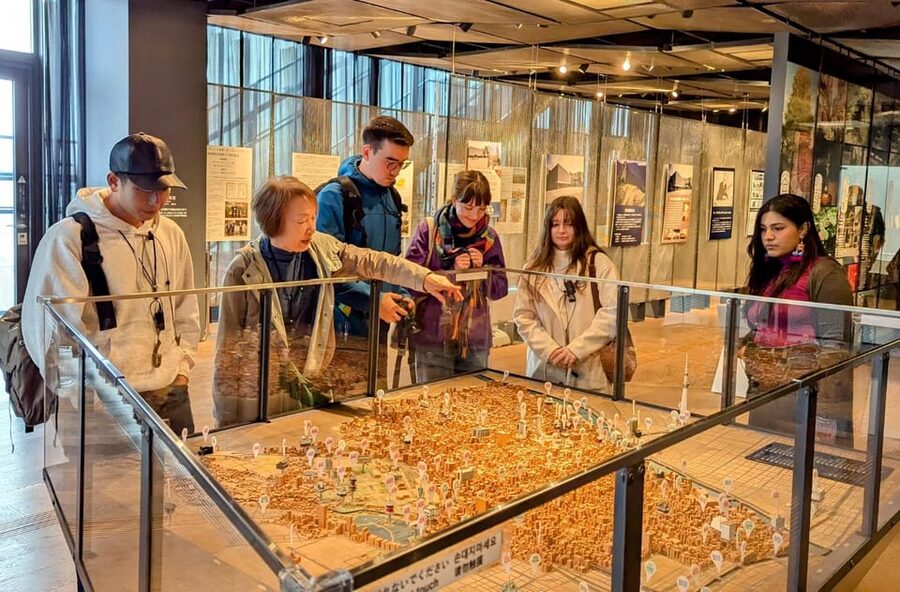
The Asakusa Culture Tourist Information Center receives about 30 minutes of guided attention. Its contemporary design offers a sharp contrast with the temple district, and the building itself becomes part of the lesson.
One particularly useful feature is the view from the upper levels. You get a wider look at the streets, the temple precinct, and the modern city beyond. The view helps explain Asakusa’s position in Tokyo rather than leaving you focused only on the nearest gate.
The modern setting also supports one of the walk’s main themes: East meets West without Japan simply becoming a copy of the West. The tour uses design, city planning, language, and customs to point out both differences and surprising similarities in the way people in Japan and Europe have thought about the world.
You should expect the guide to explain rather than rush you through the building. Architecture-minded visitors may especially enjoy this stop. If your main goal is shopping, the information center may feel less exciting, but it gives the walk much of its big-picture value.
Kaminarimon and the first lesson in Asakusa’s public face
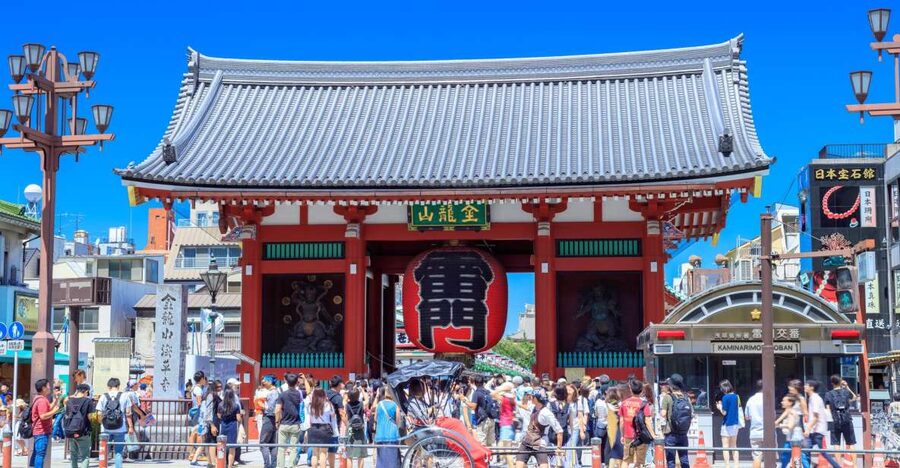
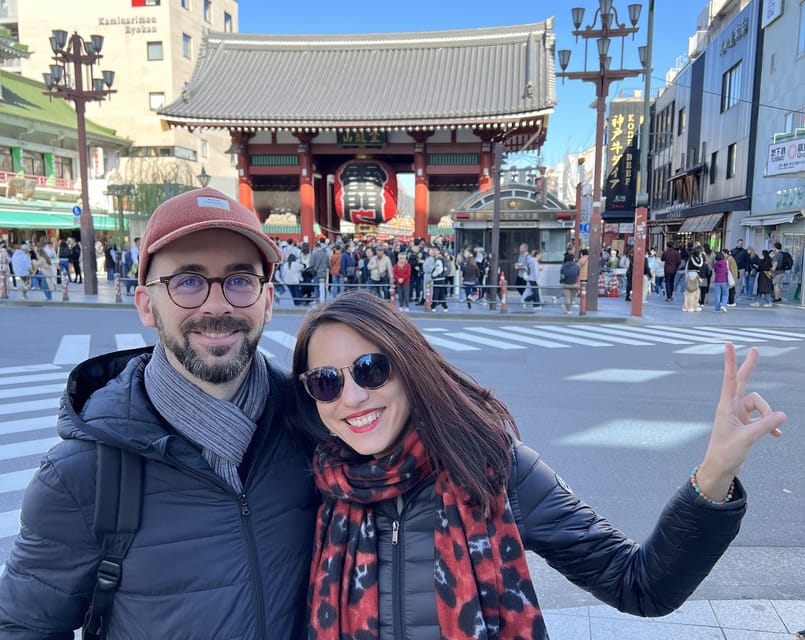
Kaminarimon, the Thunder Gate, is one of Asakusa’s most recognizable sights. The tour spends about 15 minutes here, enough time to place the gate in the religious and civic life of the district before moving into Nakamise Shopping Street.
This is a good moment to notice how quickly Asakusa changes character. The gate is grand and ceremonial, while the approach is crowded with movement, food, souvenirs, and photo stops. The guide uses that shift to introduce the tension between the sacred and the everyday.
That contrast continues for the rest of the walk. You are not asked to treat the temple grounds as a museum sealed away from ordinary life. Instead, the tour shows how worship, commerce, food, entertainment, and neighborhood routines have occupied the same area for generations.
More history and heritage tours in Tokyo:
- Tokyo: Imperial Palace and Shogun Historical Walking Tour
★ 5.0 · 2,251 reviews - Tokyo: Imperial Palace Japanese History Walking Tour
★ 4.9 · 987 reviews - Tokyo: Shinjuku Historical Walking Tour & Secret Backstreets
★ 5.0 · 530 reviews - Yanaka Walking Tour: Historic and Traditional District of Tokyo
★ 5.0 · 530 reviews
Nakamise Shopping Street, where commerce leads toward worship
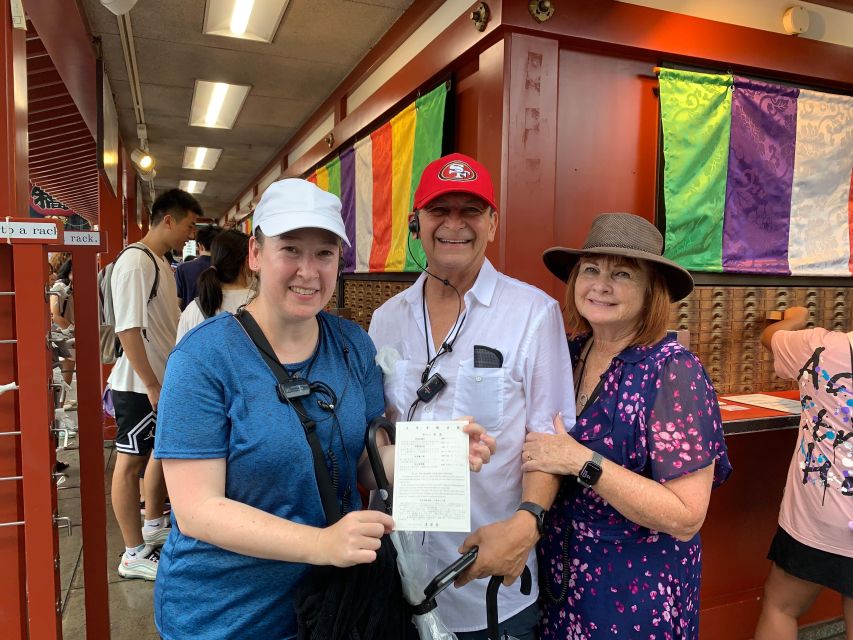
Nakamise gets roughly 30 minutes. The street runs toward Sensō-ji and is lined with shops selling snacks, souvenirs, and traditional goods. The route does not treat it as a mandatory shopping break, which is helpful if you are not interested in buying things.
Taka, one of the guides, has been praised for moving through shopping areas without pressuring people to shop. That is worth noting because Nakamise can easily turn a history walk into a retail stop. Here, the shops are part of the explanation: they show how visitors have long approached the temple through a commercial corridor.
You may be offered a selection of freshly made Japanese traditional snacks and sweets during the tour. This is a small inclusion, but it makes sense in this setting. Food gives you a direct way to connect with the everyday side of the district, especially after hearing about temples, gates, and religious customs.
Crowds can be heavy around Nakamise. A guide helps by keeping the group together and showing you where to focus, but you should still expect a lively pedestrian area rather than a quiet lane.
Hōzōmon Gate and Sensō-ji’s long religious story
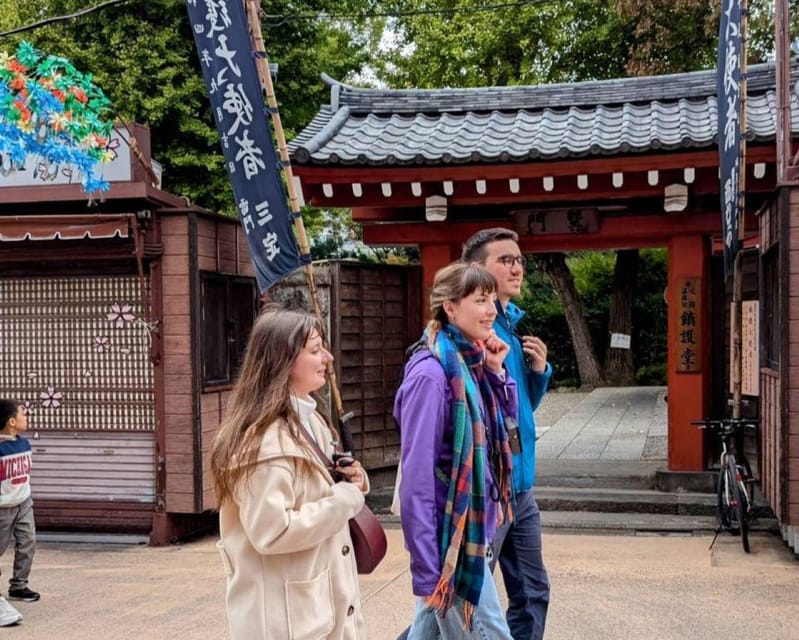
The Hōzōmon Gate follows Nakamise, with about 15 minutes for guided explanation. It creates another pause before the main temple grounds and gives you a chance to look closely at the layered entrances, large structures, and movement of worshippers.
Sensō-ji receives the longest stop, about 45 minutes. That time is well used because the temple is not treated as a quick landmark. The guide explains how Buddhism fits into Japanese life and how it has lived alongside Shinto for more than a thousand years.
The key idea is not that one religion replaced the other. The tour explains how the two traditions have complemented each other, often sharing the same worshippers and serving different needs in daily life. This is one of the strongest reasons to choose the walk if Japanese religion feels confusing from the outside.
You will also get help reading the setting itself. Gates, worship spaces, ritual gestures, and the relationship between buildings become easier to understand when the guide supplies the background. You are still free to enjoy the visual details, but you are less likely to mistake one tradition for another.
Sensō-ji can be crowded, and the tour operates in all weather. Wear shoes that can handle several hours on city streets and temple surfaces. A rain jacket or umbrella is sensible in wet weather, since the walk continues rather than moving indoors for long periods.
Asakusa Shrine and Yōgō-dō Pavilion show shared worship
Asakusa Shrine receives about 15 minutes. Its presence beside Sensō-ji makes it an excellent place to discuss the relationship between Shinto and Buddhism. You do not need prior religious knowledge. The guide builds the explanation from what you can see, then connects it to ordinary Japanese practice.
This stop also makes the tour’s central religious point more concrete. Instead of hearing that Japan has two major faiths in an abstract lecture, you see how closely related sacred spaces can exist within the same neighborhood.
The route then continues to Yōgō-dō Pavilion for another 15-minute visit. This adds another quiet religious setting after the larger temple and shrine. The change in scale helps you notice that Asakusa’s spiritual life is not limited to the famous main buildings.
For me, the value of these shorter stops is their rhythm. The walk does not stay in one grand temple complex for all 210 minutes. It alternates between major sights, smaller religious spaces, city streets, and entertainment lanes.
Nishi-sandō and the Edo-period mood
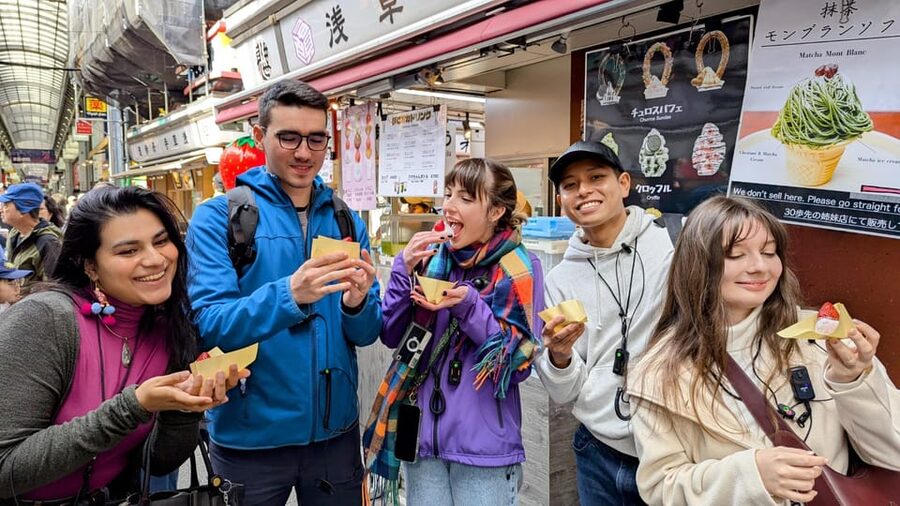
Asakusa Nishi-sandō Shopping Street is a 15-minute visit with time for walking and sightseeing. Compared with Nakamise, it offers a quieter, more nostalgic atmosphere. This is where the tour shifts from major public landmarks to the feel of older neighborhood life.
The guide uses the street to take you back toward Edo-period Japan. You will not literally enter a preserved historical village, so keep your expectations realistic. The appeal lies in the atmosphere, the scale of the street, and the way the guide helps you imagine an older city behind the modern one.
This part is useful after the formal temple explanations. You can focus on small details and see how a historic district continues to function as a living place rather than a stage set. If you enjoy old streets, traditional design, and the feeling of stepping into another period, this may be one of your favorite parts.
Mokubakan and Asakusa’s entertainment years
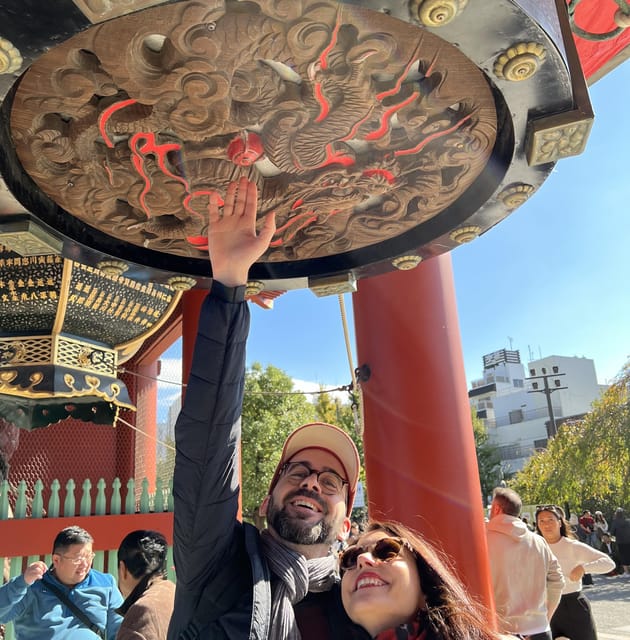
Asakusa Mokubakan receives about 15 minutes. The stop brings the area’s entertainment past into view, including the cinemas, vaudeville theaters, and performance halls that once made Asakusa a major leisure center.
Before Shinjuku and Shibuya took the spotlight, Asakusa was one of Tokyo’s best-known entertainment districts. That history adds needed balance to the temple story. People came here not only to pray, but also to eat, watch performances, meet friends, and enjoy the city.
The guide also uses the area to explore a wider point about human nature. People move back and forth between the sacred and the secular, often within the same afternoon. Asakusa makes that pattern easy to see because the temple grounds sit so close to streets built around food, drink, theater, and pleasure.
Hoppy Street and the working-class side of Asakusa
The final stop is Hoppy Street, another 15-minute visit. Its narrow lane and old-style Japanese pubs show a different side of the district from the polished temple approach.
The area is linked with postwar working-class energy and resilience. You get a glimpse of the social life that grew around inexpensive drinks, casual meals, and neighborhood conversation. The tour does not turn this into a pub crawl, but it does explain why the street matters.
This is also where the walk’s themes come together. Asakusa can be solemn at Sensō-ji, commercial on Nakamise, nostalgic on Nishi-sandō, and rowdy around Hoppy Street. Those qualities are not contradictions to be tidied away. They are the reason the neighborhood feels like a useful introduction to Tokyo.
The tour ends after this sequence of historic and everyday places. You may want to stay in Asakusa afterward for dinner. The walk gives you enough orientation to continue exploring on your own, although the tour itself does not include hotel pickup or drop-off.
How the guide, group size, and equipment affect the experience
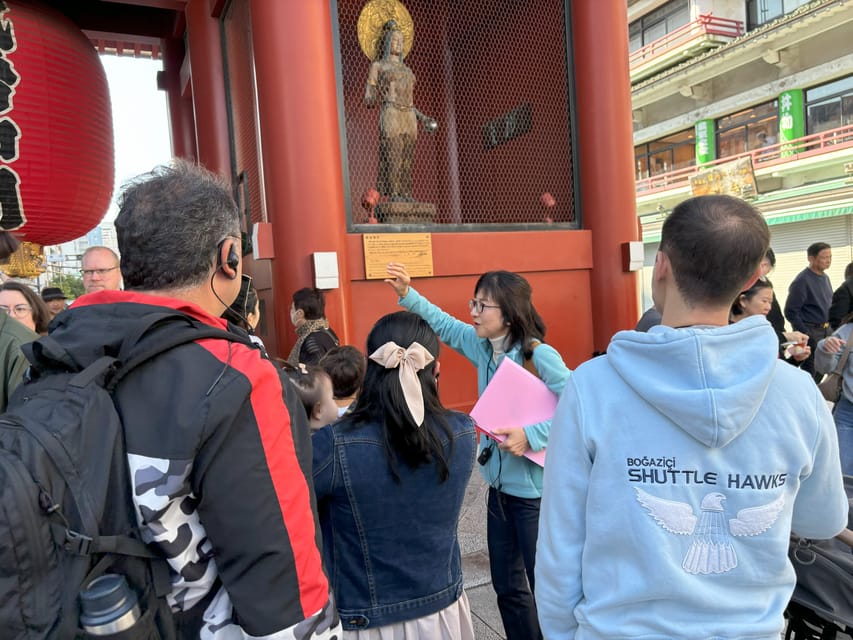
The group is limited to eight people, which is a strong fit for streets that can become crowded. A smaller party also lets you ask questions without holding up a large crowd. Guides have been praised for answering questions about Japan beyond the immediate route, including architecture, gardening, language, and city history.
Headsets are supplied for groups of three or more. That matters around Nakamise, Kaminarimon, and Sensō-ji, where street noise and crowds can make a normal conversation hard to follow. The tour is conducted in English, with a live guide and English audio support.
Bring water, although vending machines are available. Comfortable shoes are essential, and you should dress for the weather because the walk runs in rain or shine. Children under six may join without charge, but the historical focus is better suited to adults and older children. Families are welcome, but young children may find 210 minutes of walking and listening demanding.
The activity is not suitable for people with mobility impairments. If you have a mobility issue, contact the provider before booking. They say they will do their best to help, but the published information still describes a moderate amount of walking.
Who should book this $88 Asakusa walk?
I would choose this tour if you want a framework for Tokyo rather than a checklist of sights. It works especially well early in a Japan trip, when you want to understand the country’s religious customs, Edo-era roots, foreign connections, and modern contrasts before visiting more places.
It is also a good match for first-time visitors who want an English explanation at the main Asakusa sights. The route is broad enough to cover temples, shrines, shopping, architecture, riverfront history, and nightlife culture without becoming a single-subject lecture.
I would think twice if you want a relaxed stroll with long breaks, extensive food tasting, or plenty of independent shopping time. The itinerary is tightly packed, and the guide’s historical explanations are the main event.
Should you book it?
Book this walk if you value clear context, a small group, and a guide who can connect famous sights to everyday Japan. At $88, it is fair value for 210 minutes of guided history, included snacks, headsets, and a route that reaches well beyond Sensō-ji.
Skip it if you prefer to wander alone, dislike standing in crowded areas, or have difficulty walking for several hours. For everyone else, this is a strong way to meet Asakusa as both a sacred district and an old entertainment quarter, with enough historical background to make the rest of your Tokyo visit easier to understand.
FAQ
Where does the Asakusa history walk start?
The meeting point is in front of the Burger King beside Exit 4 of Asakusa subway station on the Ginza Line, station G19. Step outside Exit 4 to meet the guide.
How long does the tour last?
The tour lasts 210 minutes, or 3.5 hours. Starting times vary, so you should check availability for your preferred date.
What language is the tour conducted in?
The live tour is conducted in English. English audio support is also included.
What is the maximum group size?
The maximum group size is eight participants. Headsets are provided for groups of three or more so you can hear the guide in crowded areas.
Are snacks included?
Yes. The tour includes a selection of freshly made Japanese traditional snacks and sweets. Bottled water is not included, but vending machines are available.
Can children join the walk?
Children younger than six may join without charge. Families are welcome, although the tour’s historical focus and moderate walking are recommended mainly for adults and older children.
More Tokyo walking tours
- Tokyo Tsukiji Fish Market Food and Culture Walking Tour
★ 5.0 · 3,184 reviews - Tokyo: Shinjuku Local Bar and Izakaya Guided Walking Tour
★ 4.9 · 1,794 reviews - Tokyo: Tsukiji Fish Market Food and Walking tour
★ 5.0 · 1,724 reviews - Tokyo: Asakusa Walking Tour with Sensoji Temple Visit
★ 4.8 · 1,583 reviews
Newly reviewed around Tokyo
- Tokyo Asakusa:Calligraphy & Make T-shirt Activity★ 5.0 · 62 reviews
- Travel Tokyo with Your Own Personal Photographer★ 5.0 · 43 reviews
- Intercity Shuttle, Tokyo to Haneda /Narita /Yokohama /Makuhari★ 5.0 · 5 reviews
- 1 Hour Travel around Tokyo with a Professional Photographer★ 5.0 · 3 reviews
- Train in Samurai Swordsmanship and Defeat the Demon in Tokyo★ 5.0 · 5 reviews
- Shuttle Van 6hr Tokyo Tour to-and-from Tokyo, Yokohama and Narita★ 5.0 · 9 reviews
- Kickboxing & Body Training with EX-Pro Fighter★ 5.0 · 4 reviews
- Traditional Japanese Knife Sharpening Class★ 5.0 · 18 reviews
Asakusa and Sensoji Tours, compared.

Japanese Dance Cabaret Theater Asakusa-Kaguwa Ticket
Read our review →
Meiji Shrine, Asakusa, Skytree Bus Tour and Cruise
Read our review →
Roll and Authentic Sushi Making Class in Asakusa
Read our review →
Asakusa Walking Tour with Sensoji Temple Visit
Read our review →
Tokyo Panoramic 1 Day: Meiji Shrine, Asakusa, Odaiba and SKYTREE®
Read our review →
Tokyo Go Kart: Asakusa, Skytree, and Akihabara **IDP MUST**
Read our review →
Asakusa, Skytree & Akhihabara Go-Kart City Experience
Read our review →Browse the lists this tour appears in