
Reviewed · TOKYO TEA CEREMONY EXPERIENCES
Tokyo Small-Group Ramen, Gyoza & Matcha Class with a Pro Chef
Tokyo is at its best when you get past the restaurant counter and learn what is in the bowl. This two-hour class in Zoshigaya takes you through dashi, miso ramen, gyoza, and matcha, with dinner served at the end. The small group is limited to four people, so the chef can answer questions and adjust the pace.
I like the practical recipes and the English-speaking instruction. I also like the location, just one train ride from Shibuya and close to Ikebukuro’s shopping and Kishimo Shrine. The main catch is important: this class cannot accommodate vegetarian, vegan, halal, or gluten-free diets.
Key points to know before booking
- Four-person maximum: You get a more personal lesson than in a large cooking studio.
- Ramen starts with dashi: The class covers a basic Japanese stock before moving to miso ramen.
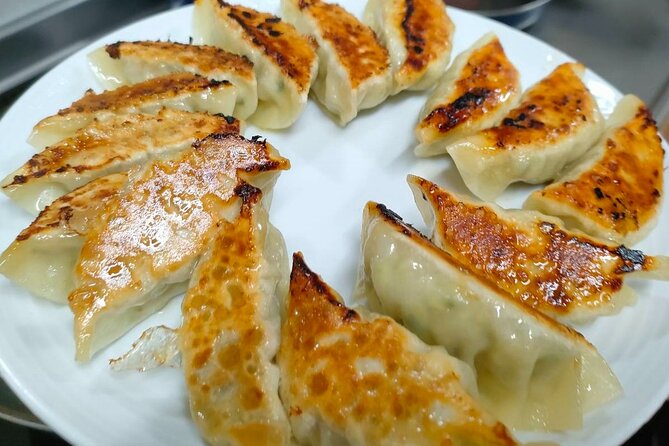
- Gyoza is part of dinner: You learn the techniques behind juicy dumplings, not just how to eat them.
- Matcha completes the meal: Prepare green tea and enjoy it with seasonal Japanese sweets.
- Recipes and photos are included: You leave with instructions for cooking the dishes at home and photos from the class.
- Dietary limits are firm: No vegetarian, vegan, halal, or gluten-free menu is available.
Cooking Japanese comfort food in a four-person class
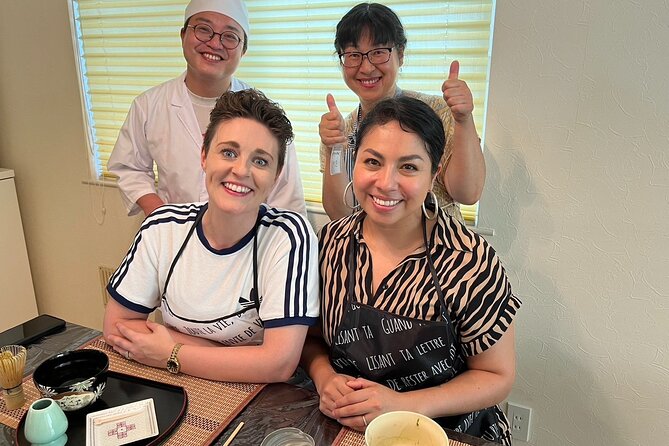
The appeal here is simple: you do not just sit down to eat ramen. You learn how several familiar Japanese dishes come together.
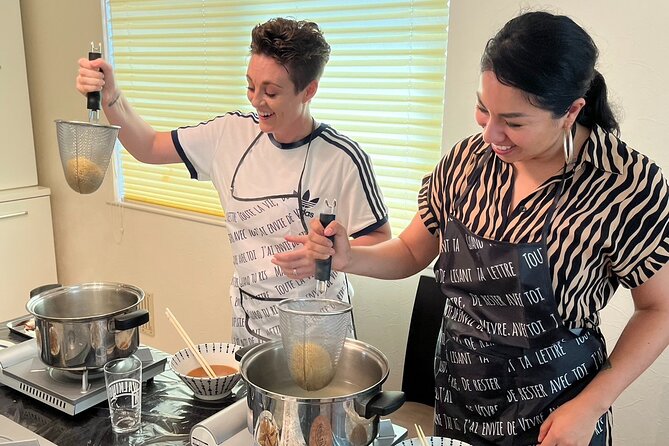
The chef begins with dashi, the stock that forms the base of much Japanese cooking. That makes this more useful than a class focused only on assembling noodles and toppings. You get a look at the first layer of flavor, then use it in a miso ramen preparation.
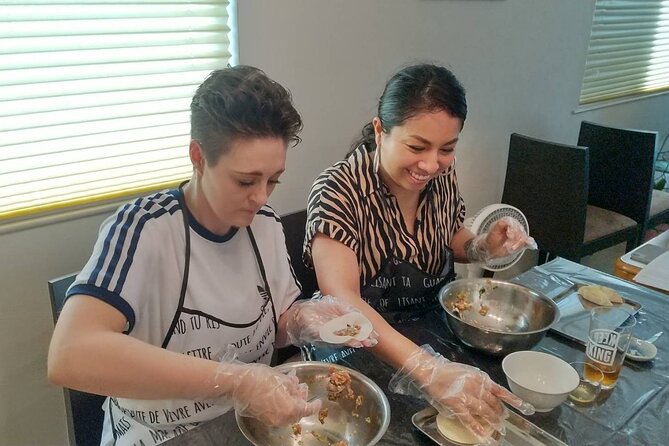
The lesson also includes gyoza. These dumplings look easy until you try to fill and fold them neatly. With a small group, you can ask about the filling, folding method, and cooking process as you work. The chef speaks English and explains the ingredients and techniques in a clear, easy-to-follow way.
You then prepare matcha and serve it with Japanese sweets. This gives the class a second rhythm. Ramen and gyoza are hands-on and savory, while the tea portion is quieter and more closely tied to Japanese tea customs.
The full meal includes miso ramen, gyoza, matcha, and Japanese sweets. It is enough to make the two-hour class feel like both a lesson and dinner.
More Tokyo tea ceremonies:
- Matcha Making Class in Tokyo with Authentic Japanese Sweets Set
★ 5.0 · 744 reviews - Tokyo: Traditional Tea Ceremony with a Tea Master
★ 5.0 · 528 reviews - Dynamic Tokyo: Tokyo Tower, Tea Experience, Bay Cruise Day Tour
★ 4.5 · 521 reviews
What happens during the two-hour lesson
The exact order can depend on the chef and the pace of the group, but the class is built around several clear stages.
Starting with dashi and ramen technique
Dashi matters because it teaches you to think about flavor before adding the main seasoning. The class presents it as a practical base rather than an abstract cooking lecture.
You then move toward miso ramen. Miso gives the broth a savory, rounded taste, and the class lets you see how it fits into the finished bowl. Since you receive take-home recipes, you can try the dish again in your own kitchen instead of relying on memory.
This is especially helpful for anyone who has cooked instant ramen but wants to understand the difference between noodles, broth, and seasoning. You will not leave with a restaurant apprenticeship, but you should gain a clearer sense of how a bowl is built.
Preparing juicy gyoza
Gyoza adds a different skill set. The work is more about balance and handling: filling the wrappers, folding them, and cooking them so the dumplings stay juicy while developing a pleasing texture.
The class is designed for participation. You are not simply watching the chef prepare a perfect batch while you wait for dinner. The four-person limit should make it easier to get direct help if your folds go crooked or your filling needs adjusting.
A family group can work well here. The format suits different ages and cooking backgrounds, including a group with grandparents and a 19-year-old food enthusiast. You do not need to arrive as an expert, and the chef is there to answer questions as you work.
More Tokyo ramen tours and classes:
- Eat and Drink Like a Local: Tokyo Ueno Food Tour-Taverns&Ramen
★ 5.0 · 957 reviews - Ramen & Gyoza Cooking Class in Tokyo with Local Supermarket Visit
★ 5.0 · 823 reviews - Tokyo: Ramen Tasting Tour with 6 Mini Bowls of Ramen
★ 4.9 · 432 reviews - Tokyo: Easy Ramen Cooking Experience in Kabukicho, Shinjuku
★ 4.6 · 321 reviews
Preparing matcha with Japanese sweets
The matcha portion broadens the class beyond noodles and dumplings. You prepare your own green tea, then enjoy it with seasonal Japanese sweets.
Do not expect a long formal tea ceremony. The information describes a matcha experience within a cooking class, so the emphasis is on preparing and tasting the tea rather than a full ceremonial performance. That is a sensible fit for a two-hour lesson.
For you, this means the class offers a small but useful look at two sides of Japanese food culture: everyday comfort food and a more deliberate tea setting. The sweets also provide a pleasant change after the savory meal.
Why the small group matters
A maximum of four participants is one of the strongest features. Many cooking classes put a large group around a demonstration counter, which can leave you craning your neck or waiting for help.
Here, the chef can work at each person’s pace. That matters most during gyoza folding and any step where a small mistake can affect the final result. It also gives you room to ask about ingredients, substitutions, or techniques without losing the thread of the class.
The tradeoff is that a small class may feel more personal and less anonymous. If you prefer to quietly watch from the back, this format asks you to take part. For most people booking a cooking lesson, that is likely a benefit, but it is worth knowing.
The available rating is 5 out of 5 from 12 reviews, with 100 percent recommending the experience. That is a small sample, so I would not treat it as a guarantee. Still, the recurring strengths are clear: the food is enjoyable, questions receive answers, and the schedule is respected. For a short class in Tokyo, staying on time is valuable.
A useful location near Ikebukuro and Zoshigaya
The meeting point is at 3-chōme-1-7 Zōshigaya, Toshima City, Tokyo 171-0032. The class ends at the same place.
The description places the classroom in Zoshigaya, with access from Ikebukuro and a direct route from Shibuya on the Fukutoshin Line. The ride from Shibuya passes near Meiji Shrine and Shinjuku, making the class reasonably easy to fit into a day spent in western or central Tokyo.
Plan your route carefully. Tokyo station names and neighborhoods can be confusing, and the meeting point is not described as being directly inside a major station. Give yourself enough time to find the classroom rather than arriving at the last minute.
After class, Ikebukuro gives you plenty to do. The area has Animate, the Pokémon Center, and electronics shops. Near the classroom, Kishimo Shrine has red torii gates and offers a calmer place for a short walk.
That combination is useful. You can pair the class with shopping and pop culture in Ikebukuro, or take a quieter shrine stroll before heading back into the city. The activity itself does not include transportation, guiding around Ikebukuro, or a shrine visit, so treat those as optional plans on your own.
Is $104.51 a fair price?
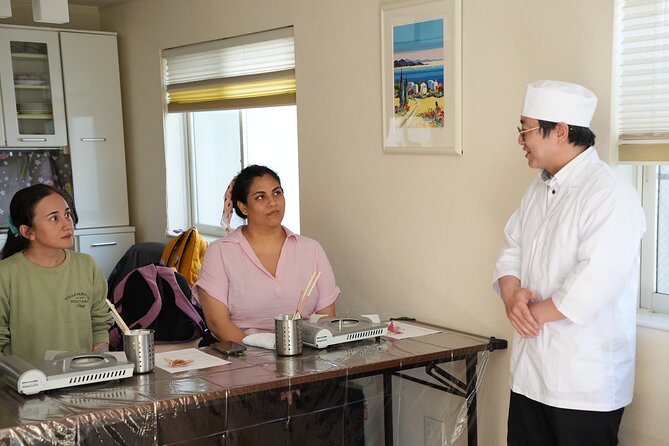
At $104.51 per person, this is not a bargain meal. You are paying for more than the food, though. The price includes a roughly two-hour guided lesson, dinner, matcha, Japanese sweets, an apron, recipes, and photos from the class.
The four-person limit improves the value. A larger class could cost less per person, but it would usually give you less direct contact with the chef. Here, the price makes more sense if you want to learn techniques you can repeat at home, not simply eat ramen once.
The recipe sheets are important. Ramen and gyoza involve several steps, and it is easy to forget quantities or sequence after a busy class. Having written instructions gives the experience a longer life.
The included photos are another small benefit. The activity promises to provide them as a thank you, so you do not need to spend the class trying to document every stage yourself.
Extra drinks cost 500 yen each, payable in cash. The options are a 180-milliliter serving of Hakkaisan sake or a 350-milliliter Kirin Ichiban Shibori beer. These are optional, and no soda is included.
I would judge the price this way: it is reasonable for a compact, private-feeling food lesson in Tokyo, especially if you value instruction and recipes. If you only want a cheap dinner, choose a ramen shop instead.
Who should book this cooking class?
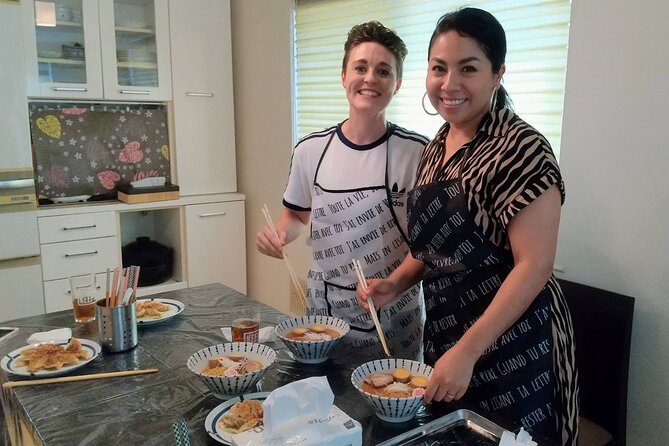
This class fits you best if you want to cook, ask questions, and eat the results. It is a good match for couples, friends, families, and small groups with different levels of kitchen experience.
It also works for food-focused visitors who want to understand Japanese dishes beyond the restaurant menu. The class connects stock, seasoning, dumplings, tea, and sweets in one short session, so you get variety without committing half a day.
The activity can suit a multigenerational group. The experience has already worked for grandparents traveling with a 19-year-old foodie, and the chef’s pace-based instruction should help bridge age and skill differences.
I would be more cautious if you have strong dietary needs. No vegetarian, vegan, halal, or gluten-free menu is available, and the provider says dietary restrictions cannot be accommodated. Do not assume that a substitution will be possible.
It is also less suitable if you want a formal tea ceremony, a long cultural lecture, or an extensive market visit. The tea segment is part of a cooking class, not a separate ceremony. The focus remains on making and eating ramen and gyoza.
Practical details that can affect your day
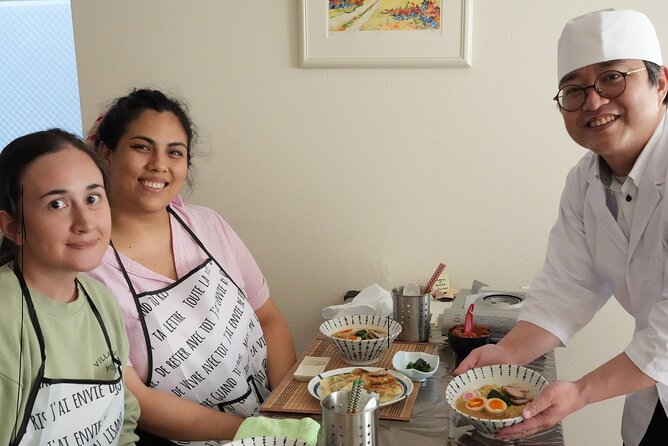
You receive a mobile ticket, and confirmation is sent within 48 hours of booking, subject to availability. The class is near public transportation, but private transportation is not included.
The activity requires a minimum number of participants. If it is canceled because that number is not met, you are offered another date or experience, or a full refund.
You can cancel for a full refund up to 24 hours before the start time. Changes or cancellations made less than 24 hours before the start time are not accepted, and the cut-off uses Tokyo local time.
Wear something comfortable enough for cooking. Aprons are provided, which helps protect your clothes, but an apron does not eliminate the risk of splashes. Since the class ends at the meeting point, you can plan your next stop from there without arranging a return transfer.
Final call: book it if you want skills, not just dinner
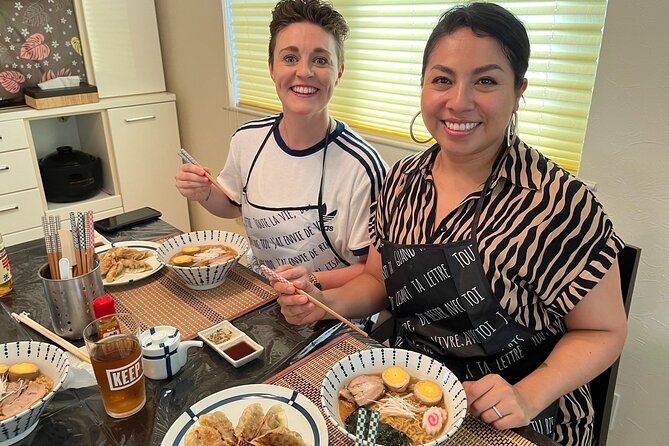
I would book this class if you want a short, focused introduction to Japanese home cooking with real participation. The strongest reasons are the four-person limit, English-speaking instruction, practical recipes, and the mix of savory cooking with matcha and sweets.
I would skip it if you need a vegetarian, vegan, halal, or gluten-free menu, or if your main goal is an inexpensive meal. For everyone else, $104.51 buys a useful cooking lesson, a full dinner, and a convenient starting point for exploring Ikebukuro and Zoshigaya.
FAQ
Where does the cooking class meet?
It meets at 3-chōme-1-7 Zōshigaya, Toshima City, Tokyo 171-0032, Japan.
Where does the activity end?
The class ends back at the meeting point.
How long does the class last?
The experience lasts approximately two hours.
How many people can join the class?
The activity has a maximum of four participants.
Is the instruction given in English?
Yes. An English-speaking guide explains the ingredients and cooking techniques.
What food and drink are included?
The class includes dinner with miso ramen and gyoza, plus matcha tea and Japanese sweets.
Are recipes provided after the class?
Yes. Take-home recipes are included.
Are alcoholic drinks available?
Yes. Sake and beer are available for an additional 500 yen each, payable in cash. Soda is not included.
Can the class accommodate vegetarian, vegan, halal, or gluten-free diets?
No. The provider cannot accommodate vegetarian, vegan, halal, or gluten-free menus.
More hands-on classes and workshops in Tokyo
- Sushi Making Tokyo Roll and Authentic Japanese Sushi Class
★ 5.0 · 3,971 reviews - Tokyo: Roll and Authentic Sushi Making Class in Asakusa
★ 4.9 · 1,957 reviews - Tokyo Shinjuku Chopsticks Making Class
★ 5.0 · 1,763 reviews - Tokyo: Sushi Making Class in a Happi Coat near a Famous Spot
★ 4.9 · 1,377 reviews
Newly reviewed around Tokyo
- Tokyo Asakusa:Calligraphy & Make T-shirt Activity★ 5.0 · 62 reviews
- 1 Hour Travel around Tokyo with a Professional Photographer★ 5.0 · 3 reviews
- Travel Tokyo with Your Own Personal Photographer★ 5.0 · 43 reviews
- Intercity Shuttle, Tokyo to Haneda /Narita /Yokohama /Makuhari★ 5.0 · 5 reviews
- Train in Samurai Swordsmanship and Defeat the Demon in Tokyo★ 5.0 · 5 reviews
- Shuttle Van 6hr Tokyo Tour to-and-from Tokyo, Yokohama and Narita★ 5.0 · 9 reviews
- Kickboxing & Body Training with EX-Pro Fighter★ 5.0 · 4 reviews
- Traditional Japanese Knife Sharpening Class★ 5.0 · 18 reviews
Tokyo Tea Ceremony Experiences, compared.
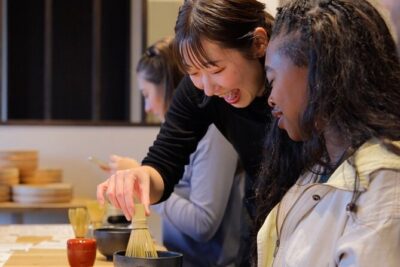
Matcha Making Class in Tokyo with Authentic Japanese Sweets Set
Read our review →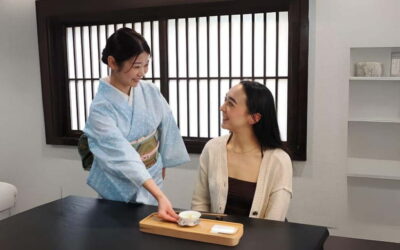
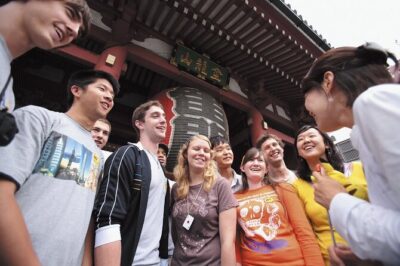
Dynamic Tokyo: Tokyo Tower, Tea Experience, Bay Cruise Day Tour
Read our review →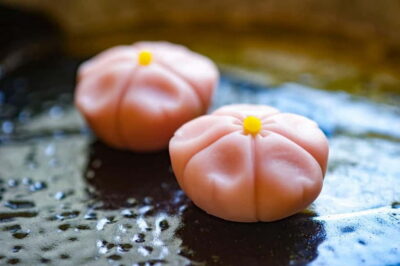
Matcha Making Experience with Mochi Sweets in Asakusa
Read our review →
Tea Ceremony Workshop in Tokyo by the Experienced Instrucor
Read our review →
Browse the lists this tour appears in