
Reviewed · ASAKUSA AND SENSOJI TOURS
Asakusa: A Big-picture History Walk to Know Japan
Asakusa is often treated as a quick temple stop. This walk gives it a bigger job: explaining how Japan moved from a closed shogunate to a modern country, while showing how Buddhism and Shinto have shared the same ground for 1,000 years. I like the way the guide uses visible places, gates, statues, and river views to make complicated history easier to follow.
I especially like two things. First, the route connects ukiyo-e to European Impressionism, a surprising link you can understand while walking Nakamise. Second, the explanation of Buddhist and Shinto practice is clear enough for first-time visitors. The main consideration is pace: two hours covers a lot, and the tour involves a moderate amount of walking and standing.
Key points to know before you book
- The Sumida River sets up Japan’s opening to the world, including the Edo shogunate’s restricted foreign trade and Admiral Perry’s arrival.
- Buddhism and Shinto are explained side by side, so the temple and shrine visits make more sense.
- Nakamise becomes an art lesson, with a look at Buddhist objects and the influence of Japanese woodblock prints in Europe.
- The route stays compact, moving through Asakusa’s main sights without spending hours crossing Tokyo.
- Guides such as Choco, Sachi, Amy, Yoko, and Kay have received especially warm praise for clear explanations and family-friendly presentation.
- Traditional snack tastings and headsets for groups of three or more add practical value, though one person found the headset sound occasionally echoey.
Why this Asakusa walk is more than a temple visit
The clever idea here is to use Asakusa as a small map of Japan. You are not simply pointed toward a famous gate and told when it was built. At each stop, the guide adds a piece of the country’s story: religion, trade, art, politics, foreign influence, and daily custom.
That makes this a good first-day activity in Tokyo. You leave with a framework for later sightseeing. A Buddhist temple will not look like just another ornate building, and a Shinto shrine will not feel like a second version of the same thing.
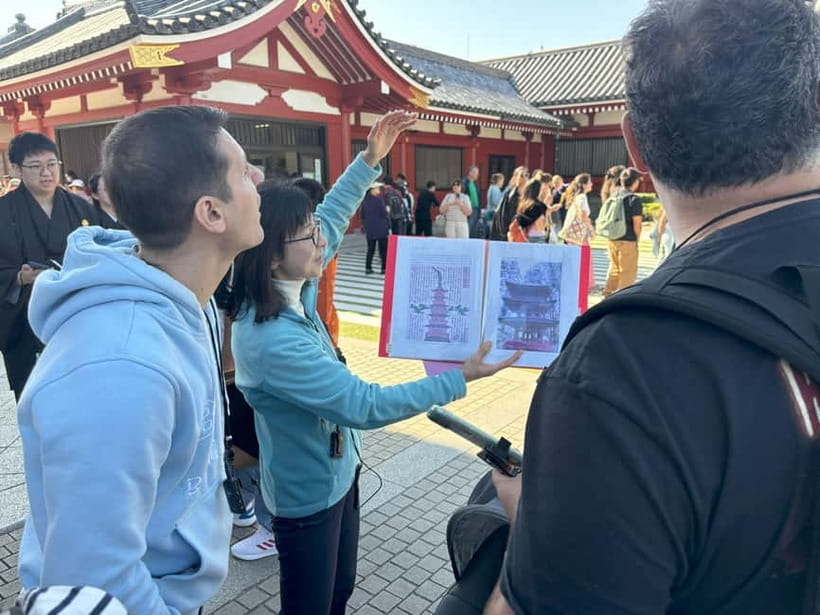
The English-speaking guide leads the walk in a teaching style, using explanations, comparisons, and sometimes printed images. Amy was praised for bringing prints to help explain her points, while Sachi was noted for keeping a 13-year-old engaged. Choco also handled both adults and children well, including a young visitor who enjoyed the fortune-telling activity near the temple entrance.
The tour has a strong educational aim, but it is not a classroom on wheels. The route is short, the stops are familiar, and the subjects are tied to what you can see around you.
More Asakusa and Sensoji tours:
- Tokyo: Japanese Dance Cabaret Theater Asakusa-Kaguwa Ticket
★ 4.8 · 2,270 reviews - Tokyo: Meiji Shrine, Asakusa, Skytree Bus Tour and Cruise
★ 4.7 · 1,986 reviews - Tokyo: Roll and Authentic Sushi Making Class in Asakusa
★ 4.9 · 1,957 reviews
Starting by the Sumida River and Asakusa Pier
The meeting point is in front of the Burger King beside Exit 4 of Asakusa subway station on the Ginza Line, station G19. Step outside Exit 4 rather than waiting underground. This is a simple meeting place, but give yourself enough time to find the correct exit in the station.
The first formal stop is Tokyo Cruise Asakusa Pier, where the group spends about 15 minutes. The river gives the guide room to explain Japan’s long period of restricted contact with foreign countries.
You learn why the Edo shogunate limited outside contact for more than 200 years, why the Netherlands was allowed to maintain a trading connection, and how Admiral Perry’s arrival pushed Japan to reopen. The point is not just to memorize dates. The guide links that change to the Tokyo you see now.
The riverfront also provides a useful setting for discussing Odaiba’s former gun batteries and the Statue of Liberty replica facing the Pacific. These details show how modern Tokyo still carries reminders of its encounter with foreign powers.
This part may be the least visually dramatic stop if you are expecting a grand monument. Its value is context. You begin to see Japan’s modern identity as a result of pressure, choice, adaptation, and trade, rather than as an isolated story.
Getting the religious basics at the Culture Tourist Information Center
Next comes the Asakusa Culture Tourist Information Center, with about 15 minutes of explanation. This is where the guide lays out the difference between Buddhism and Shinto before you enter the sacred sites.
That preparation matters. Many first-time visitors see a temple and shrine as similar places with similar rituals. The guide explains how the two traditions differ, how they overlap, and why both remain part of Japanese life.
You will hear the basic visual and practical clues that help you tell them apart. This makes the later stops more useful because you are not trying to absorb every symbol at once. You have a simple set of ideas to carry with you.
The guide also explains how prayer differs in Buddhism and Shinto. That is one of the most useful parts of the walk for someone who wants to behave respectfully without copying a ritual blindly.
Reading the dragons at Kaminarimon
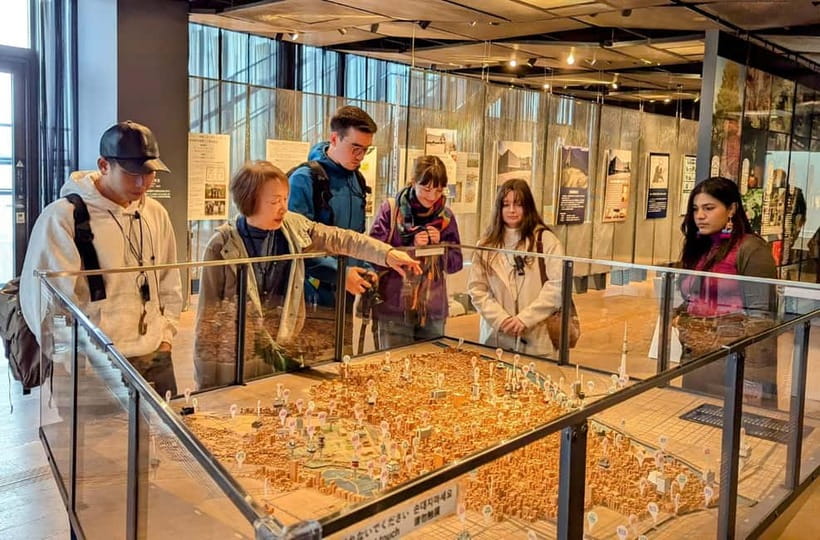
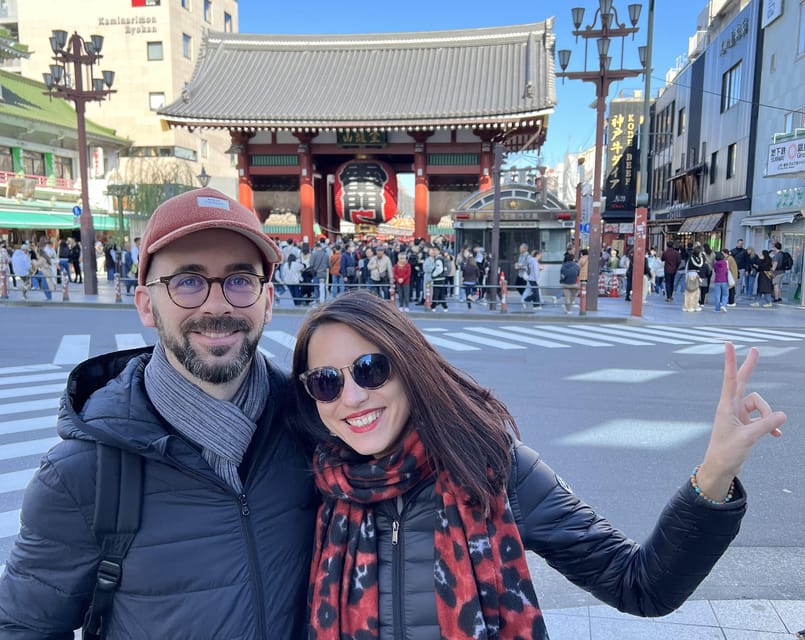
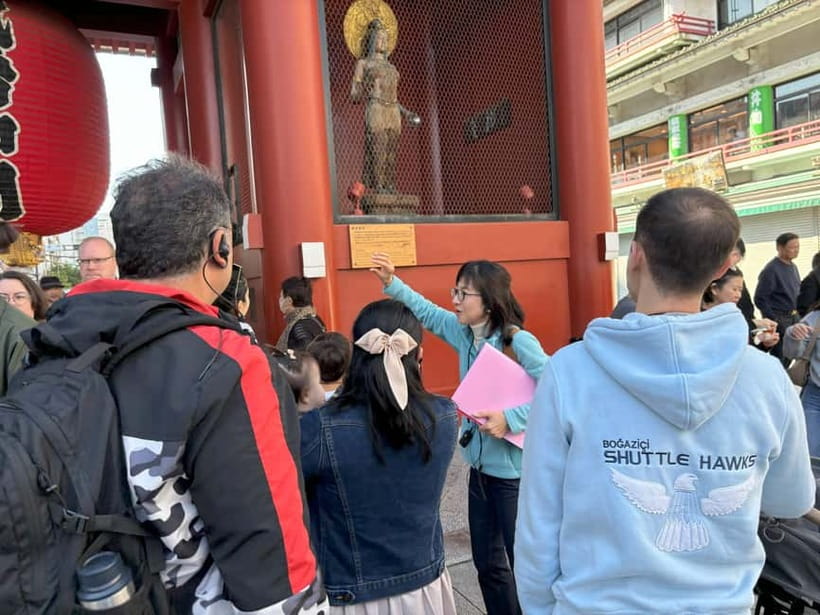
Kaminarimon, the Thunder Gate, is one of Asakusa’s instantly recognizable sights. The enormous red lantern and guardian figures make it a natural photo stop, but the tour uses it for a lesson in symbolism.
Here you compare Japanese and Western dragons. The contrast is memorable because the two traditions give dragons almost opposite roles. A Western dragon is often treated as a dangerous creature to defeat, while the Japanese dragon is linked to water and protection.
This is a small subject, but it shows how easily visitors can misread a symbol by carrying assumptions from home. The guide’s job is to make the difference visible and easy to remember.
Kaminarimon can be crowded, especially around the lantern and gate entrance. You may need to listen carefully while people pass around the group. That is one reason the headsets help when the group has three or more participants.
More history and heritage tours in Tokyo:
- Tokyo: Imperial Palace and Shogun Historical Walking Tour
★ 5.0 · 2,251 reviews - Tokyo: Imperial Palace Japanese History Walking Tour
★ 4.9 · 987 reviews - Tokyo: Shinjuku Historical Walking Tour & Secret Backstreets
★ 5.0 · 530 reviews - Yanaka Walking Tour: Historic and Traditional District of Tokyo
★ 5.0 · 530 reviews
Walking Nakamise with ukiyo-e in mind
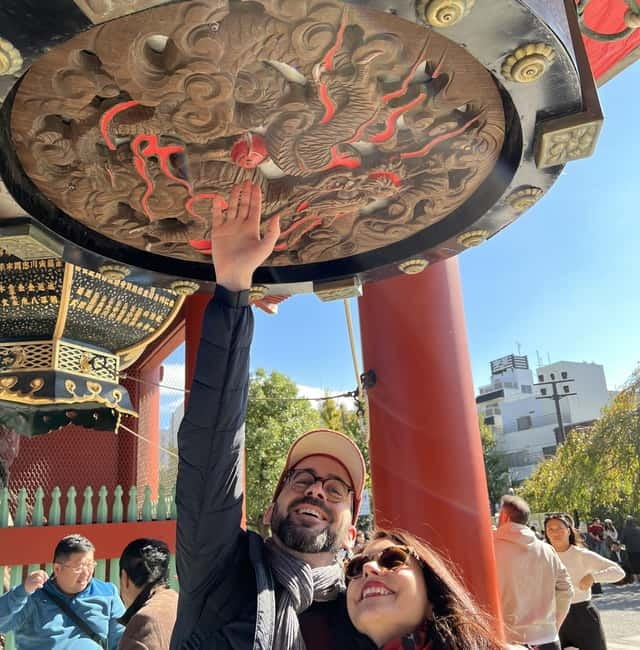
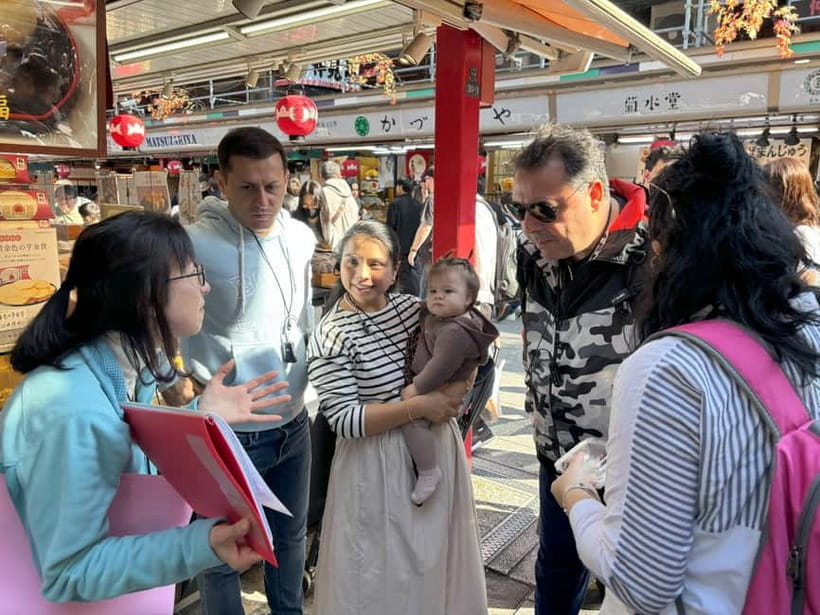
The walk along Nakamise Shopping Street lasts about 30 minutes, the longest portion of the route. This is one of the best sections for combining daily life, souvenirs, religion, and art.
Nakamise is one of Japan’s oldest shopping streets, leading toward Senso-ji. The stalls sell traditional items and snacks, but the guide keeps the focus on what the street reveals about Asakusa’s connection to temple life and popular culture.
One lesson centers on the vajra, also called tokko, a Buddhist ritual object. The guide explains the meaning behind this kind of symbol rather than leaving you with a quick label. That is useful because the object can look decorative when separated from its religious setting.
The bigger surprise is ukiyo-e woodblock printing. These prints eventually reached Europe and influenced Western Impressionist painters. You may already know famous Japanese prints from art books, but the explanation helps you understand how they changed ideas about composition, viewpoint, line, and everyday subject matter.
This is also the point where the tour can feel most crowded. Nakamise is a working shopping street, not a quiet museum corridor. Keep your group together, watch your footing, and listen for the guide’s instructions before stopping for photographs or snacks.
Traditional snack tastings are included. The specific snack is not stated, so do not book this expecting a particular sweet or regional specialty. Think of it as a small taste of the street rather than a food tour.
Hozomon and the surprising medieval comparison
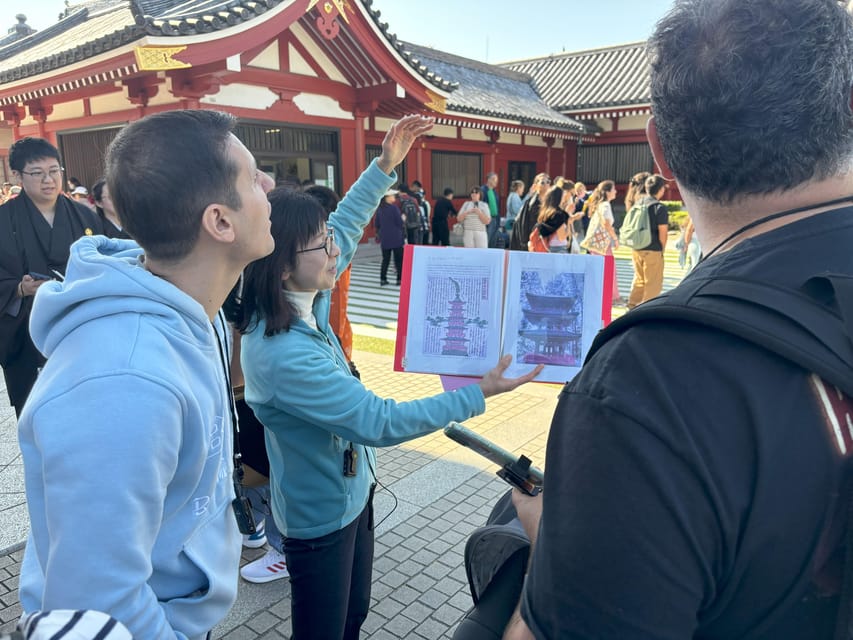
Hozomon Gate gives the guide another 15-minute teaching stop. The focus here is a comparison between medieval Japan and Europe.
The interesting point is that people in Japan and Europe had more similar ways of thinking 1,000 years ago than you might expect. This does not mean the societies were identical. It means the guide asks you to look past the usual East-versus-West split and notice shared human concerns, religious ideas, social structures, and ways of explaining the world.
That comparison helps correct a common travel mistake: treating Japan as completely separate from every other historical tradition. Asakusa’s buildings and rituals are distinct, but people still faced familiar questions about faith, authority, morality, protection, and community.
The gate is also a practical transition point. From here, you move into the temple grounds, where the discussion becomes more directly religious.
Senso-ji, Japan’s oldest Buddhist temple
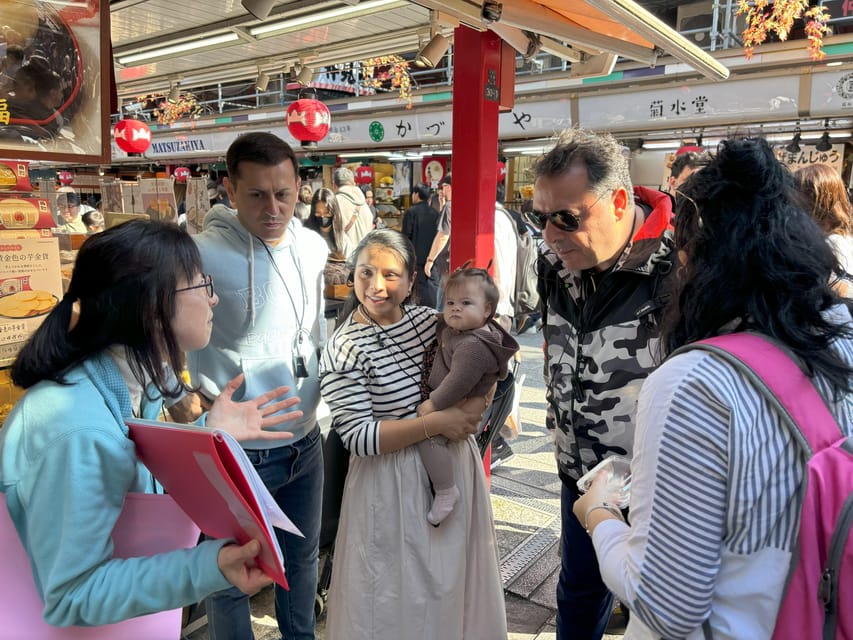
Senso-ji receives about 15 minutes, though the surrounding approach and earlier explanations make it one of the tour’s central subjects. It is identified as Japan’s oldest Buddhist temple, and the guide uses it to explain both Buddhist practice and the relationship between medieval Japan and Europe.
The most valuable part is learning how to look at the temple as more than a photogenic building. The guide explains why the site matters, how Buddhist worship differs from Shinto prayer, and how its long history fits into the wider story of Japan.
You may also learn about the fortune-telling activity near the entrance. This became a memorable moment for one family’s eight-year-old, so children can connect with the temple through something hands-on even though the tour is mainly designed around history.
Senso-ji is a working religious site and a major sightseeing stop. Expect people taking photos, praying, shopping, and moving through the grounds. The guide helps you approach the area respectfully, something Kay was especially praised for explaining.
Do not expect a long private visit inside a quiet temple hall. The tour is about orientation and meaning. If you want extended time for prayer, photography, or independent exploration, plan to return after the walk.
Asakusa Shrine and 1,000 years of shared ground
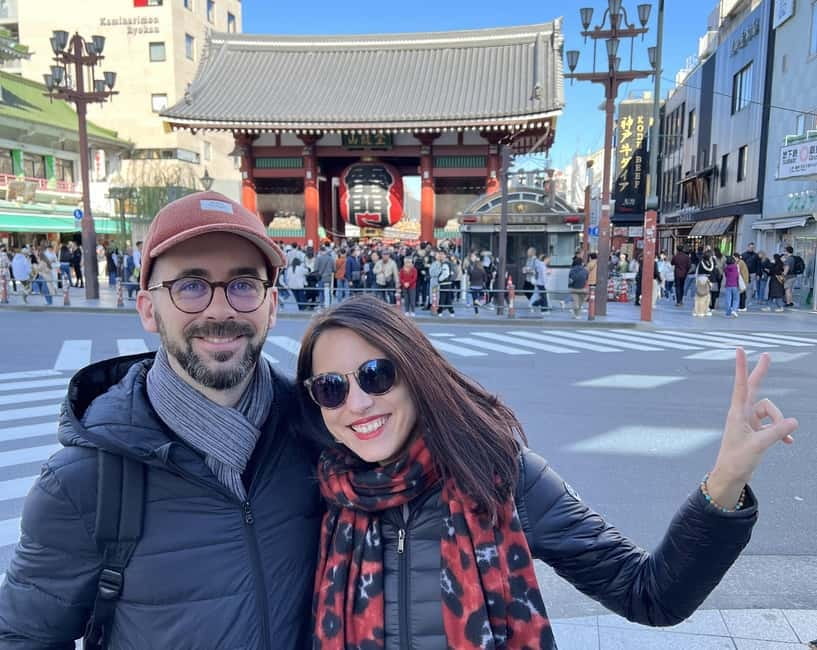
The final stop is Asakusa Shrine, reached after the Buddhist temple. This is where the tour’s central religious lesson comes together.
The shrine and Senso-ji stand on the same grounds, with a shared history stretching back more than 1,000 years. To many visitors, the coexistence is surprising because modern categories often separate Buddhism and Shinto more sharply than Japanese religious life traditionally did.
The guide explains why a Shinto shrine and Buddhist temple could share worshippers, land, and local history. This is not just an abstract idea. You can see the two traditions close together, then use the guide’s explanation to understand what you are seeing.
Asakusa Shrine also gives the walk a quieter final note than the shopping street. The group ends with a practical understanding of how to approach shrines respectfully and how Japanese religious life can include both traditions.
The tour can also benefit from local timing. During Sanja Matsuri, Alison’s guide adapted the visit so the group could better understand the mikoshi parade. Festival conditions are not guaranteed, but if your date overlaps a major event, the guide may help connect what is happening around you to the site’s history.
Guide quality, headsets, and family fit
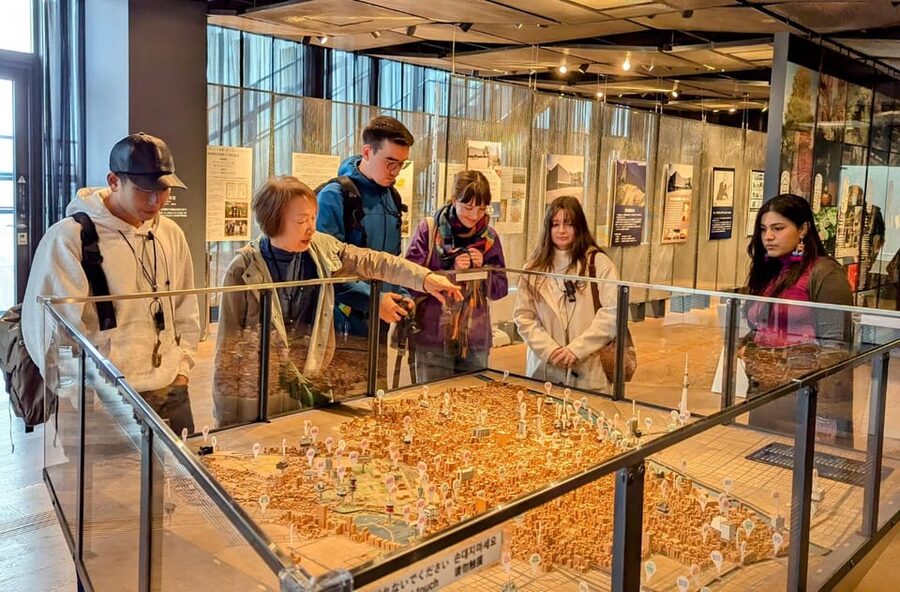
The strongest part of this experience is the guide. The names praised most often include Choco, Sachi, Sachiko, Amy, Yasu, Yoko, and Kay. You are not guaranteed a particular person, but the pattern is clear: the tour depends heavily on a guide who can explain big subjects in plain English and adjust to questions.
Sachi received particular praise for keeping teenagers interested, while Choco worked well with adults and younger children. Yoko was described as cheerful and informative, and Kay added local insight about Asakusa and respectful shrine behavior.
Groups of three or more receive headsets so you can hear while standing near busy sights. One person found the sound slightly echoey at times. That is worth knowing if you are sensitive to audio equipment, but the headsets are still useful in crowded public spaces.
Children younger than six may join free. The tour is recommended mainly for adults because of its historical focus, but families are welcome. I would choose it for children who enjoy stories, questions, or visual details rather than for very young children who need constant movement.
What $58 buys you in two hours
At $58 per person, this is not the cheapest way to walk around Asakusa. You can visit many of the same public places on your own without paying an admission fee.
The value comes from the structure. In two hours, you get a certified English-speaking guide, a clear route, historical interpretation, religious explanations, traditional snack tastings, and headsets for larger groups. You also avoid spending your limited Tokyo time trying to piece together the meaning of each site from separate signs and guidebooks.
The tour is most worthwhile if you want a big-picture introduction. It is less useful if you already know Japanese religious history, the Edo period, and ukiyo-e well, or if you prefer to wander without a fixed pace.
The timing is efficient. Each stop runs about 15 minutes, except Nakamise at 30 minutes. That keeps the walk moving, but it also means you will not have much free time during the tour for shopping or long photo sessions.
Practical details for a comfortable walk
Wear comfortable shoes and bring water. The activity operates in rain or shine, so use weather-appropriate clothing and expect the moderate walking pace to continue in poor weather.
The route is not suited to people with mobility impairments. If you have mobility concerns, contact the supplier before booking, since they will try to help where possible, but the published guidance does not promise full accessibility.
The tour requires a minimum number of participants. If that number is not reached, the operator sends cancellation notice at least 24 hours before departure and provides a full refund.
You can cancel up to 24 hours ahead for a full refund, and the reserve-now, pay-later option keeps you from paying at the time of booking. Check the available starting times because the exact departure schedule can change.
Should you book this Asakusa history walk?
Book it if you want Asakusa to make sense rather than simply look attractive. It is especially useful early in a Japan trip, for families with school-age children, and for anyone unsure about the difference between Buddhist temples and Shinto shrines.
The tour is also a good choice if you enjoy connections between places. The river explains foreign trade, the gate explains dragons, Nakamise explains ukiyo-e, and Asakusa Shrine explains religious coexistence. That chain of ideas gives you more than a checklist of sights.
Skip it if you want a slow photography walk, a food-focused outing, or extended time inside the temple grounds. At $58, the price makes sense only if you value the guide’s explanations and the organized two-hour route.
For most first-time visitors, I would book it near the start of a Tokyo stay. You will see Asakusa again with better questions, better manners, and a clearer sense of how this small district fits into Japan’s larger story.
FAQ
How long does the Asakusa history walk last?
The tour lasts two hours. The route includes several guided stops, with about 30 minutes along Nakamise Shopping Street and roughly 15 minutes at each of the other listed locations.
Where does the tour meet?
Meet in front of the Burger King restaurant beside Exit 4 of Asakusa subway station, G19, on the Ginza Line. Step outside the station at Exit 4.
What language is the tour offered in?
The live tour guide speaks English, and an English audio guide is included.
Are headsets provided?
Headsets are provided for groups of three or more, helping you hear the guide in busy areas. One person found that the equipment sometimes created an echo.
Are children allowed to join?
Yes. Children younger than six may join without charge. The tour is recommended mainly for adults because of its historical focus, but families are welcome.
What happens if the tour is canceled?
The tour may be canceled if the minimum number of participants is not met. The operator will notify you at least 24 hours beforehand, and participants receive a full refund.
More Tokyo walking tours
- Tokyo Tsukiji Fish Market Food and Culture Walking Tour
★ 5.0 · 3,184 reviews - Tokyo: Shinjuku Local Bar and Izakaya Guided Walking Tour
★ 4.9 · 1,794 reviews - Tokyo: Tsukiji Fish Market Food and Walking tour
★ 5.0 · 1,724 reviews - Tokyo: Asakusa Walking Tour with Sensoji Temple Visit
★ 4.8 · 1,583 reviews
Newly reviewed around Tokyo
- Tokyo Asakusa:Calligraphy & Make T-shirt Activity★ 5.0 · 62 reviews
- Intercity Shuttle, Tokyo to Haneda /Narita /Yokohama /Makuhari★ 5.0 · 5 reviews
- 1 Hour Travel around Tokyo with a Professional Photographer★ 5.0 · 3 reviews
- Travel Tokyo with Your Own Personal Photographer★ 5.0 · 43 reviews
- Train in Samurai Swordsmanship and Defeat the Demon in Tokyo★ 5.0 · 5 reviews
- Shuttle Van 6hr Tokyo Tour to-and-from Tokyo, Yokohama and Narita★ 5.0 · 9 reviews
- Kickboxing & Body Training with EX-Pro Fighter★ 5.0 · 4 reviews
- Traditional Japanese Knife Sharpening Class★ 5.0 · 18 reviews
Asakusa and Sensoji Tours, compared.
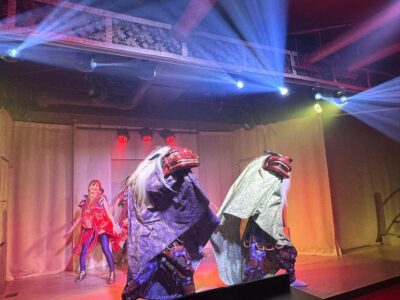
Japanese Dance Cabaret Theater Asakusa-Kaguwa Ticket
Read our review →
Meiji Shrine, Asakusa, Skytree Bus Tour and Cruise
Read our review →
Roll and Authentic Sushi Making Class in Asakusa
Read our review →
Asakusa Walking Tour with Sensoji Temple Visit
Read our review →
Tokyo Panoramic 1 Day: Meiji Shrine, Asakusa, Odaiba and SKYTREE®
Read our review →
Tokyo Go Kart: Asakusa, Skytree, and Akihabara **IDP MUST**
Read our review →
Asakusa, Skytree & Akhihabara Go-Kart City Experience
Read our review →Browse the lists this tour appears in