
Reviewed · TSUKIJI AND TOYOSU FISH MARKET TOURS
Tsukiji Fish Market: Street Food & Culture Walking Tour
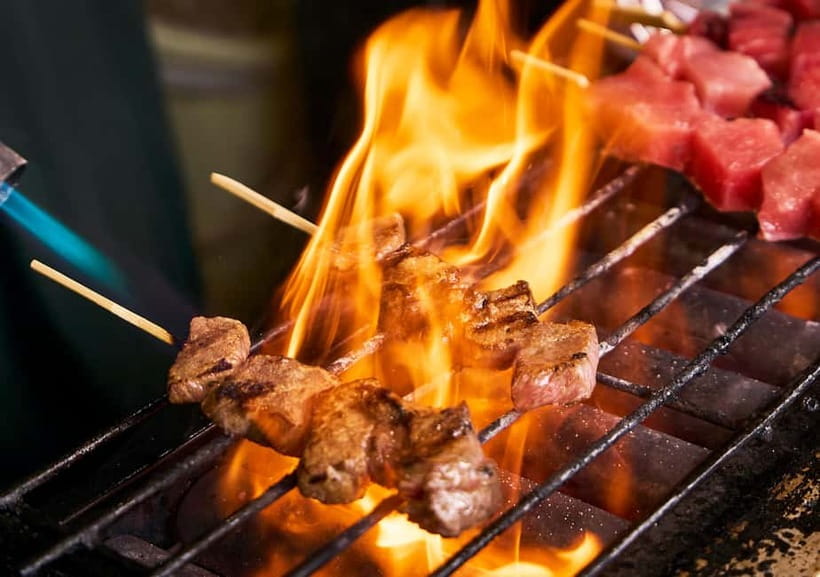
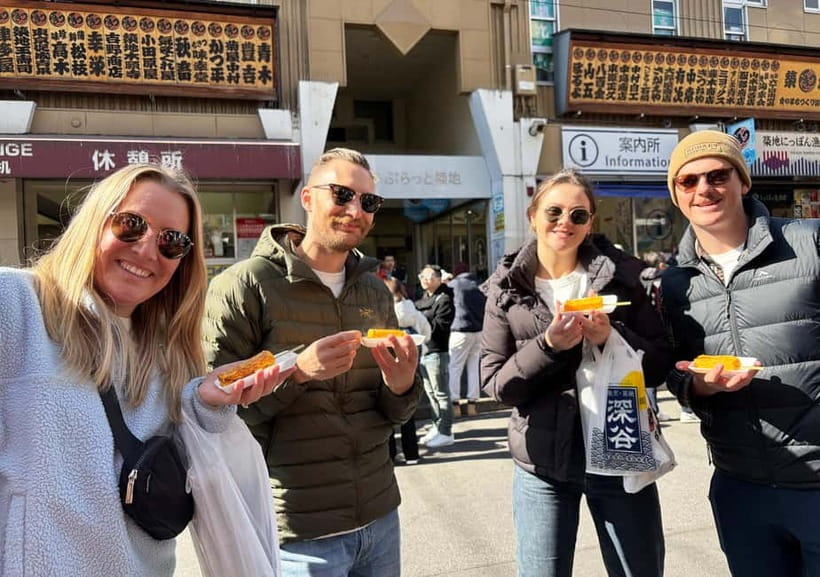
Tsukiji is best understood with something in your hand and a guide beside you. This two-hour walk begins at Tsukiji Hongwanji Temple, then moves into the market for tuna, wagyu, sushi, grilled seafood, and small Japanese bites. The special touch is fresh-grated wasabi, which changes the flavor of familiar foods.
I like the mix of food and culture here. You learn how the market works, how ingredients are used, and how preservation brings out umami. I also like the practical help: guides such as Kawa, Mao, George, Tomo, and Kenny have directed people toward good stalls, explained unfamiliar foods, and helped them avoid wasting money.
The main drawback is the calendar. On Wednesdays, Sundays, and national holidays, about half of the outer market shops may be closed. The tour still operates, but you will see fewer vendors and may miss some food preparation demonstrations.
What makes this Tsukiji walk worthwhile
- Fresh wasabi with market food: The guide’s special wasabi set gives tuna, sushi, and other bites a sharper, more fragrant finish.
- A temple before the food stalls: Tsukiji Hongwanji provides a calm cultural start, with striking architecture and a chance to learn local customs.
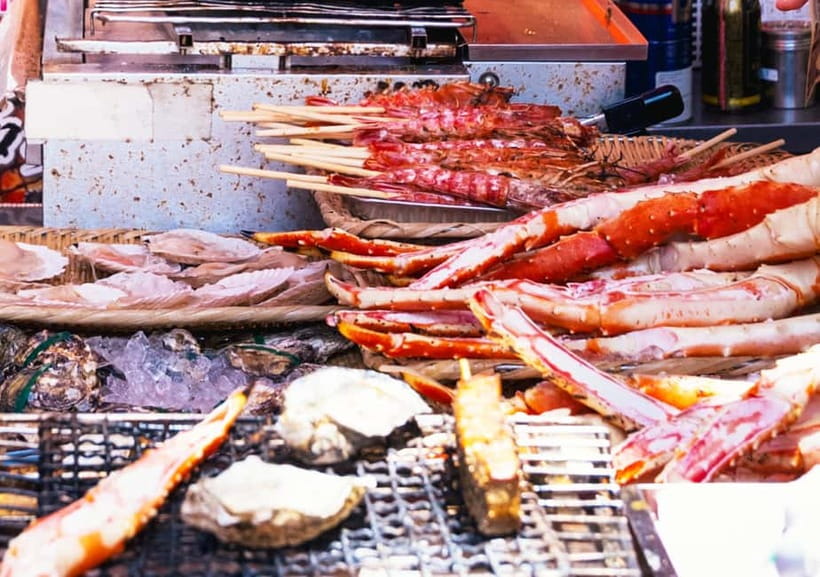
- Choice at the food stops: You can sample foods such as tuna, wagyu, eel, scallops, fish cake, omelet, dumplings, and skewered octopus.
- Food advice you can use later: Guides explain ingredients, cooking methods, shopping choices, and places to return to after the walk.
- A small-group feel: Several bookings have been intimate, sometimes with only one guest, allowing guides to answer questions and adjust suggestions.
- Good value at $22: The price buys two hours of guiding, market orientation, temple context, and food advice. Bring extra cash for anything you decide to buy.
Starting at Tsukiji Hongwanji Temple
The tour begins at Tsukiji Hongwanji Temple, near the market. The meeting point may vary by booking, so check your confirmation carefully. The published coordinates are 35.66661467955698, 139.77199430835137.
You spend about 20 minutes here with your guide. That may sound like a short stop, but it gives the market a useful frame. Instead of treating Tsukiji as just a row of snack counters, you begin with a place of worship and learn about the customs connected with entering temples and shrines.
The building itself is a good reason to arrive on time. Its architecture, carvings, and quiet interior contrast sharply with the food stalls outside. Guides have also explained purification procedures and the proper way to approach religious sites, details that are easy to miss if you simply walk past on your own.
I like this opening because it prevents the tour from becoming a two-hour eating contest. You get a little context before the first bite, and the shift from temple quiet to market activity feels natural.
More Tsukiji and Toyosu fish market tours:
- Tokyo Tsukiji Fish Market Food and Culture Walking Tour
★ 5.0 · 3,184 reviews - Tokyo: Tsukiji Fish Market Food and Walking tour
★ 5.0 · 1,724 reviews - Tokyo: Tsukiji Fish Market Guided Walking Tour
★ 4.9 · 1,397 reviews
The outer market in an 80-minute food walk
The main part of the tour takes about 80 minutes in Tsukiji’s outer market. Your guide leads you through stalls selling seafood, Japanese pantry ingredients, spices, prepared foods, and traditional snacks.
This is where the tour earns its keep. Tsukiji can feel confusing at first because there is no single food hall with a clear route. You may see several versions of the same item, different prices, and long lines without knowing which stop suits you. A local guide gives you a starting point and explains why a certain ingredient matters.
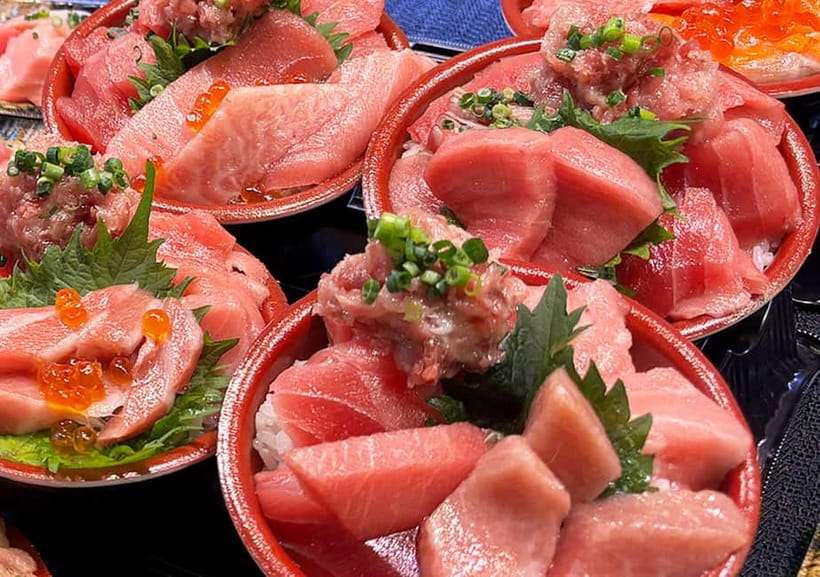
The precise food lineup can change with the market and the day. You might try fresh tuna, sushi, eel, grilled scallops, wagyu, fish cake, omelet, dumplings, or skewered octopus. Some people have also chosen a sashimi bowl after the walk, although that is an additional choice rather than a guaranteed part of the tour.
Do not expect every bite to be included in the $22 booking price. The practical approach is to bring cash and buy the foods you want as you go. That is also an advantage. You can spend modestly, choose only a few tastes, or add more if you are hungry and something catches your eye.
Several guides have been particularly good at matching the food to the person. Kawa has been praised for explaining ingredients and cooking methods while listening to preferences. Mao has helped people try unfamiliar foods without pressure. George has pointed people toward good-value choices, while Tomo has made recommendations based on what each group wanted to eat.
Why the wasabi matters
Fresh wasabi is one of the most distinctive details of this tour. The guide provides a special wasabi set, and some sessions include wasabi grated fresh during the walk.
If you know only the hot green paste served with inexpensive sushi, this can be a useful lesson. Fresh wasabi is treated as a flavoring, not just a blast of heat. It can sharpen tuna and seafood while adding a more delicate aroma. The guide’s explanation helps you notice the difference rather than simply swallowing it with the next bite.
The wasabi also shows the value of having a guide who pays attention to small details. A market tour does not need grand entertainment to be memorable. Sometimes a condiment, explained at the right moment, gives you a better sense of how Japanese cooking balances flavor.
Seeing how Japanese food is made
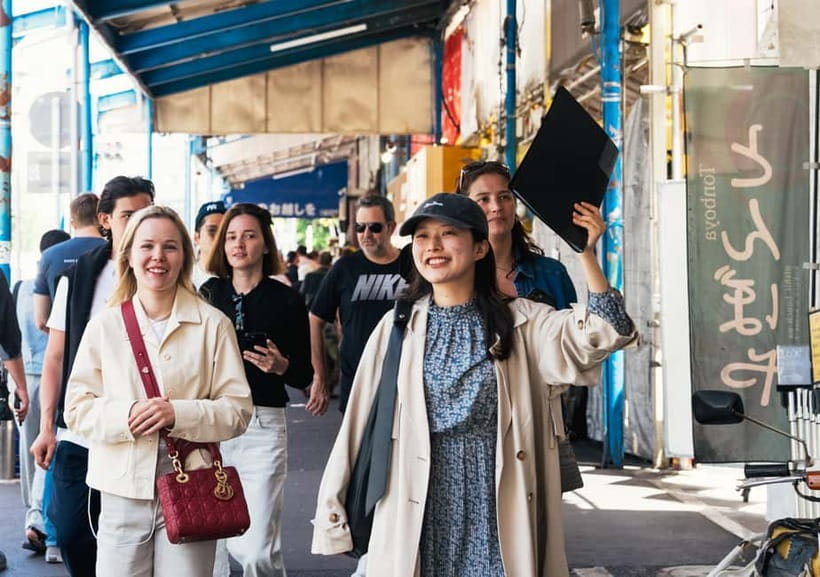
The market walk is not only about eating finished dishes. Guides explain the work behind them, including Japanese craftsmanship, food handling, and traditional preservation methods that strengthen umami.
Some sessions have included a fish-cutting demonstration. This can be one of the most interesting parts of the outing because it turns a familiar food into a display of skill and precision. Market workers and food sellers are not simply passing ingredients across a counter. They are preparing them in ways tied to texture, freshness, and presentation.
The exact demonstration cannot be guaranteed, especially on days when many shops are closed. That is why the day of your visit matters. A Wednesday session may still offer good food and an enjoyable walk, but it can have fewer active stalls and fewer chances to watch preparation in progress.
You also get a chance to ask the questions that do not fit on a menu. What is an ingredient used for? How is it prepared? Which item makes a good snack, and which one is better as a meal? Guides have also helped people choose items to take away for later in their stay.
More Tokyo food tours:
- Tokyo: Shinjuku Food Tour (13 Dishes at 4 Local Eateries)
★ 5.0 · 6,603 reviews - Tokyo: Shinjuku Food Tour (15 Dishes and 4 Eateries)
★ 4.9 · 2,033 reviews - Best of Shinjuku: Izakaya Food Tour (4 Stops, 14+ Tastings)
★ 5.0 · 1,863 reviews - Tokyo Night Foodie Tour in Shinjuku – Seasonal Sushi, Wagyu Beef
★ 5.0 · 1,161 reviews
A closer look at the guides
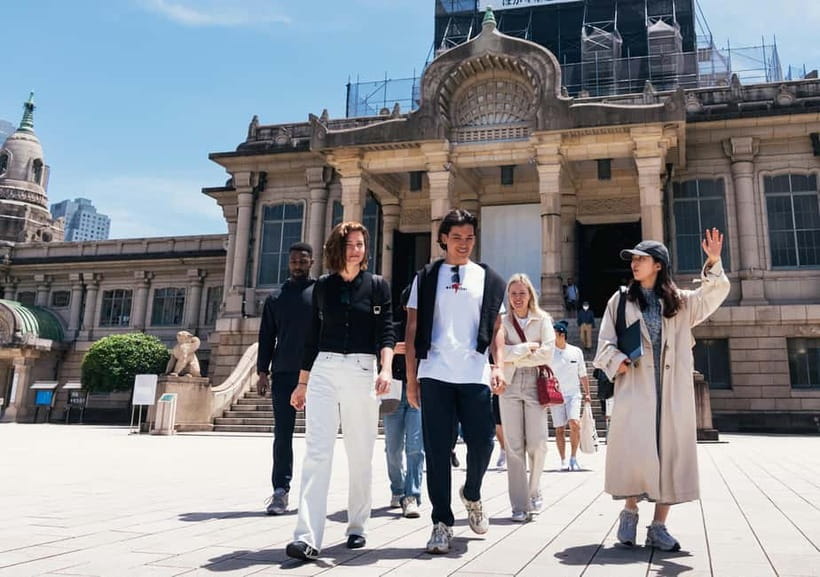
The guide can shape this experience more than the market route does. The English-speaking team includes guides such as Kawa, Mao, George, Tomo, Kenny, Naoto, Daichi, Chihiro, Ayaka, and others.
Kawa has been noted for strong English, careful answers, and attention to individual preferences. George has been especially useful for food suggestions, shopping advice, and explanations of local history. Tomo has a friendly approach and can tailor the tasting route. Kenny has taken photos for some groups and helped keep the experience personal.
That does not mean every session follows the same script. Your guide may choose different vendors depending on opening hours, crowds, your appetite, and the foods available that morning. I see that as a plus. Tsukiji is a working market, not a theater set, so a flexible route makes more sense than a fixed menu.
Small groups are available, and the experience may be especially personal if your booking has only a few people. This is useful if you have food questions, dietary concerns, or simply want to pause at a stall without holding up a large group.
The final 20 minutes and practical advice
After the main tasting section, the tour includes another 20 minutes of guided market time before returning to the temple meeting area. Use this part to ask final questions, note shops you want to revisit, or get suggestions for further browsing.
The tour finishes at one of the listed temple meeting points. Since the starting and ending options are shown as Tsukiji Hongwanji Temple, you are left near the market and can continue exploring independently.
Bring cash. That is the most important practical tip. Food purchases, snacks, and items you may want to take away are handled more easily with cash, and several food stops may require separate payment. Comfortable walking shoes are sensible, although the tour lasts only two hours.
The market can be crowded, and food is often eaten standing up or in compact spaces. You should expect a busy public market rather than a sit-down restaurant meal. If you prefer a slow lunch with a set menu, this is not the right format. If you like trying several small portions, it works much better.
The tour is listed as wheelchair accessible, but market conditions can change from stall to stall. If you need specific access arrangements, contact the provider before booking.
Choosing the right day
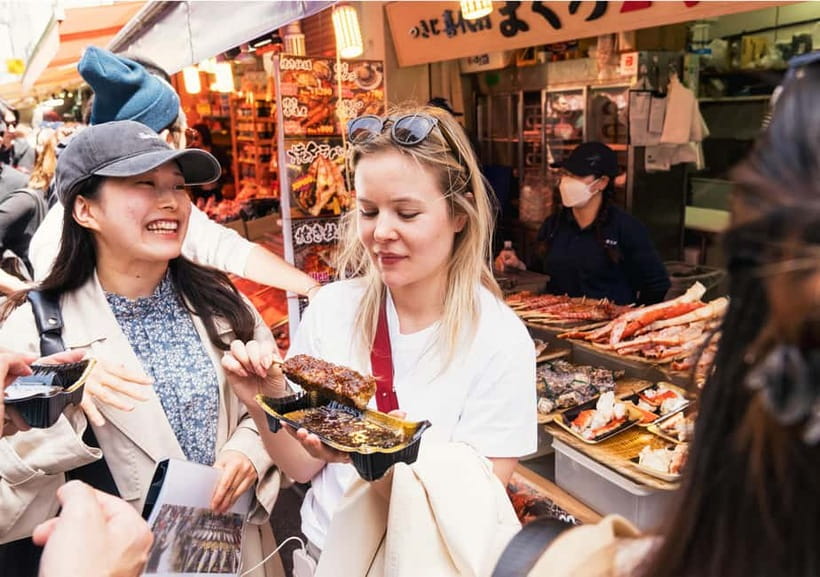
Avoid Wednesdays, Sundays, and national holidays if you want the broadest possible market experience. About half of the outer market shops may be closed on those days.
A closed-shop day does not cancel the cultural value of the walk. You can still visit the temple, walk through the market, taste available foods, and learn from the guide. But you may see fewer vendors, have fewer choices, and miss a fish-cutting or preparation demonstration.
This is an important planning detail, not a minor footnote. If Tsukiji is a major food goal during your Tokyo visit, choose a day when more shops are open. If your schedule only allows a Sunday, the tour can still help you get oriented, but keep your expectations flexible.
Is $22 a good value?
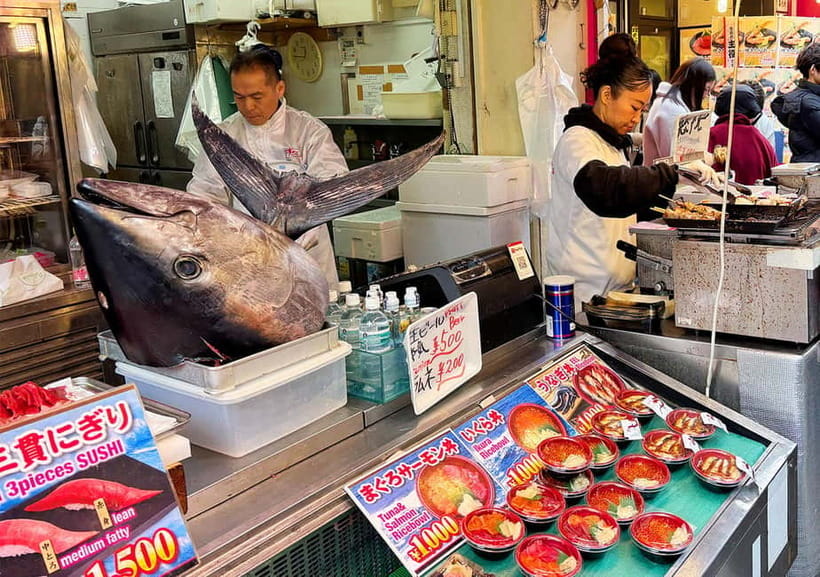
At $22 per person, this is a strong value for anyone who wants more than a self-guided walk. The fee covers two hours with an English-speaking local guide, the temple visit, market orientation, explanations of ingredients and cooking, and a structured route through the outer market.
You should budget extra for food. The useful part is that you control the spending. You can taste a few items or keep buying as long as your appetite and wallet allow. Guides have directed people toward good food at reasonable prices, which can protect you from ordering blindly at a market where prices are not always obvious.
The value is less convincing if you are comfortable researching Tsukiji yourself. One person who enjoyed the outing still felt that a visitor with enough preparation could manage the market independently. That is fair. The market is open to exploration, and a self-guided visit costs only what you choose to eat.
You are paying for speed, judgment, and context. In two hours, a guide can help you find worthwhile food, explain unfamiliar ingredients, answer questions, and point out details you might otherwise walk past. For a first visit, that is often worth more than the ticket price.
Who should book this tour?
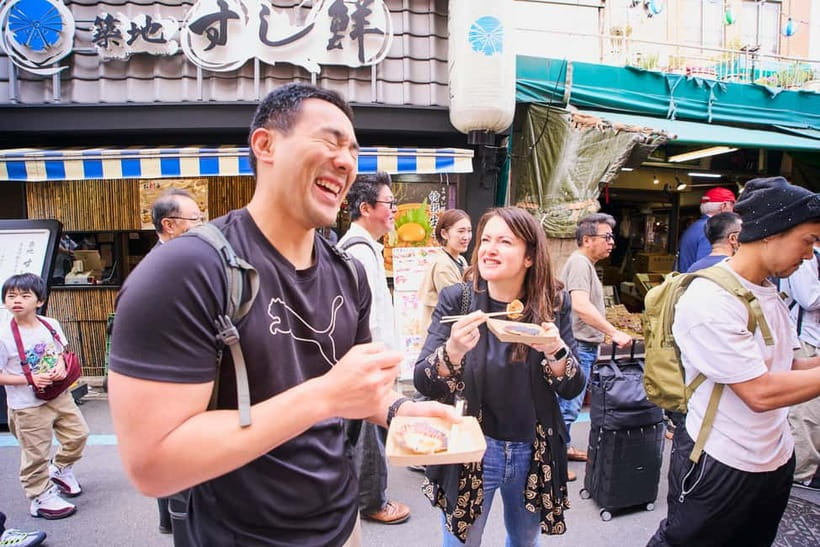
I would recommend it to first-time Tokyo visitors, food-focused visitors, and anyone who wants help choosing from a large number of unfamiliar stalls. It also suits curious eaters who want to try seafood, wagyu, preserved foods, and traditional snacks without ordering at random.
Families and mixed groups may also find it useful because everyone can choose different foods while the guide keeps the route moving. The small-group option helps if you want a more personal pace.
You should think twice if you dislike seafood, have a very restrictive diet, or want a long, formal meal. The tasting selection changes, and seafood plays a central role in the market. The tour is also less attractive if you only have time on a Wednesday, Sunday, or national holiday and are determined to see every stall open.
Free cancellation up to 24 hours before the start gives you some flexibility, and the reserve-now, pay-later option can help while arranging a Tokyo schedule. The activity lasts two hours, with starting times subject to availability.
Should you book the Tsukiji walk?
Book it if you want a guided introduction to Tsukiji rather than simply a stroll through food stalls. The best parts are the combination of temple customs, market history, fresh wasabi, careful food suggestions, and the chance to try small portions of tuna, wagyu, sushi, eel, grilled seafood, and other Japanese specialties.
Choose your day carefully, bring cash, and leave room in your budget for extra tastes. If you do that, this is an inexpensive way to get your bearings, eat well, and return to the market later with more confidence.
FAQ
How long does the Tsukiji Fish Market tour last?
The tour lasts two hours. About 20 minutes are spent at Tsukiji Hongwanji Temple, about 80 minutes in the outer market with food tasting, and a final 20 minutes of guided market time.
What food can I expect to try?
The available food changes, but possible tastings include fresh tuna, sushi, wagyu, eel, grilled scallops, fish cake, omelet, dumplings, and skewered octopus. Fresh wasabi is also a special part of the experience.
Is food included in the $22 price?
The tour includes food tasting, but you should bring cash for food you choose to purchase at the market. You control how much additional food you buy.
What happens if I book on a Wednesday, Sunday, or national holiday?
About half of the Tsukiji Outer Market shops may be closed. The tour still operates, but you may see fewer vendors, have fewer food choices, and miss some preparation demonstrations.
Is the tour offered in English?
Yes. The tour has a live English-speaking guide.
Is the tour wheelchair accessible?
The activity is listed as wheelchair accessible. For specific access needs, contact the provider before booking because market conditions can vary.
More Tokyo markets and shopping streets
- Tsukiji Fish Market Guided Tour and Sushi Making with Pro Chef
★ 5.0 · 775 reviews - Tokyo: Tsukiji Fish Market Food and Culture Walking Tour
★ 4.7 · 757 reviews - Tsukiji Fish Market: Street Food & Culture Walking Tour
★ 5.0 · 669 reviews - Tsukiji Fish Market Small-Group Food Walking Tour
★ 5.0 · 621 reviews
More Tokyo walking tours
- Tokyo: Imperial Palace and Shogun Historical Walking Tour
★ 5.0 · 2,251 reviews - Tokyo: Shinjuku Local Bar and Izakaya Guided Walking Tour
★ 4.9 · 1,794 reviews - Tokyo: Asakusa Walking Tour with Sensoji Temple Visit
★ 4.8 · 1,583 reviews - Tokyo Castle & Imperial PalaceーShogun Walking Tour
★ 4.7 · 1,068 reviews
Newly reviewed around Tokyo
- Tokyo Asakusa:Calligraphy & Make T-shirt Activity★ 5.0 · 62 reviews
- Intercity Shuttle, Tokyo to Haneda /Narita /Yokohama /Makuhari★ 5.0 · 5 reviews
- 1 Hour Travel around Tokyo with a Professional Photographer★ 5.0 · 3 reviews
- Travel Tokyo with Your Own Personal Photographer★ 5.0 · 43 reviews
- Train in Samurai Swordsmanship and Defeat the Demon in Tokyo★ 5.0 · 5 reviews
- Shuttle Van 6hr Tokyo Tour to-and-from Tokyo, Yokohama and Narita★ 5.0 · 9 reviews
- Kickboxing & Body Training with EX-Pro Fighter★ 5.0 · 4 reviews
- Traditional Japanese Knife Sharpening Class★ 5.0 · 18 reviews
Tsukiji and Toyosu Fish Market Tours, compared.
Tokyo Tsukiji Fish Market Food and Culture Walking Tour
Read our review →
Tokyo Sushi Making Class in Tsukiji with Professional Chef
Read our review →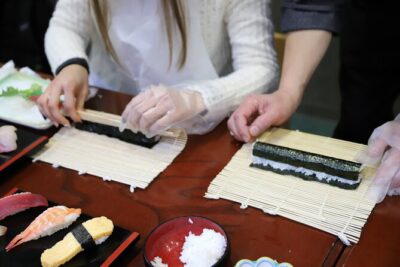
Tsukiji Fish Market Guided Tour and Sushi Making with Pro Chef
Read our review →Tsukiji Fish Market Food and Culture Walking Tour
Read our review →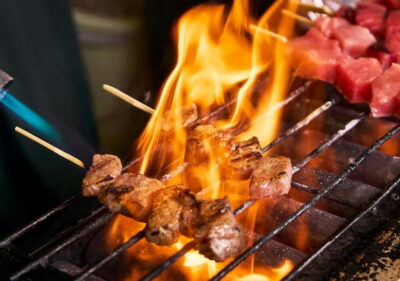
Tsukiji Fish Market: Street Food & Culture Walking Tour
Read our review →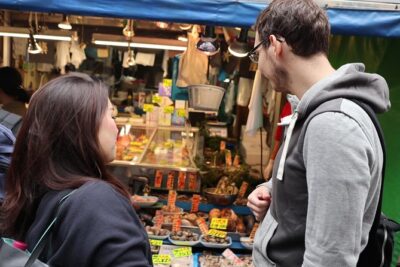
Tsukiji Fish Market Small-Group Food Walking Tour
Read our review →Browse the lists this tour appears in