
Reviewed · TOKYO KIMONO EXPERIENCES
Tokyo: Taishu Engeki Show with Kimono and Sword Lesson
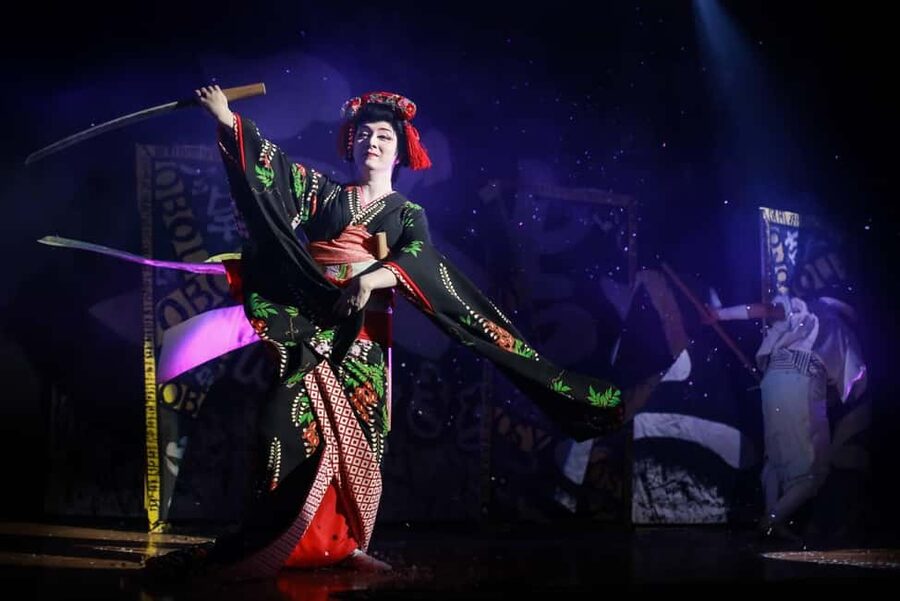
Asakusa’s Taishu Engeki theater offers something many Tokyo cultural stops do not: you watch a professional show, then step into the performance yourself. Expect colorful costumes, emotional music, expressive dance, swordplay, and male actors performing female roles with remarkable grace.
I like the way this combines a real local theater visit with a hands-on lesson, rather than keeping you safely in a seat. I also like the small group size, limited to six people, and the chance to leave with kimono photos instead of only a program leaflet. The main drawback is that the show uses loud sounds and flashing or strobe lights, and the workshop involves physical movement.
Key points at a glance
- Taishu Engeki in Asakusa: Watch an accessible Japanese theater style with dance, drama, music, and choreographed sword fights.
- Two-part cultural experience: The program joins a professional show with a fan dance and samurai sword lesson.
- Kimono and tatami setting: Change into traditional dress before practicing in a separate cultural venue.
- Small-group instruction: Only six participants join, allowing direct help during the workshop.
- Photo memories included: Finish with a commemorative photo session in your kimono.
- Excellent low-cost value: At $12 per person, this is one of the least expensive ways to add live theater and a practical cultural activity to an Asakusa day.
What Taishu Engeki is really like
Taishu Engeki is popular theater built for direct emotional impact. Unlike the formal presentation often linked with Kabuki or Noh, it uses clear body language, strong music, dance, comedy, drama, and action to keep the story moving.
You do not need to understand every spoken line to follow the mood. A dramatic entrance, a sudden sword fight, a graceful fan movement, or a change in music can tell you plenty. That makes this a sensible choice if you want Japanese theater but worry about a language barrier.
The theater style also includes onnagata, in which male performers play female characters. Their costumes, posture, hand movements, and controlled expressions are central to the visual appeal. You may find the performance more theatrical than subtle, but that is part of its charm. Taishu Engeki aims to reach the audience quickly and keep the energy close.
The show takes place at Mokubakan Theater in Asakusa, a venue dedicated to Taishu Engeki since 1977. This is not a staged demonstration made only for tourists. You watch the same type of professional performance enjoyed by local Japanese audiences, in a theater devoted to this art form.
More Tokyo kimono experiences:
- Let’s make kimono !(Kimono is a gift for you
★ 5.0 · 252 reviews - Tokyo: Matcha and Kimono Experience
★ 4.7 · 219 reviews - Tokyo: Asakusa Kimono Dressing and Matcha Experience
★ 4.9 · 173 reviews
Starting at Mokubakan Theater in Asakusa
For the afternoon program, the meeting time is 2:20 p.m. You meet your English or German-speaking program leader in front of Asakusa Mokubakan Theater, at the marked meeting point.
Arrive on time. The schedule is tied to the theater performance, and a late arrival can affect the whole three-hour program. The meeting point is in the heart of Asakusa, so you can pair this activity with nearby sights, but do not count on wandering in from another neighborhood at the last minute.
The theater is the first major part of the experience. Your program leader introduces the venue and explains the basic idea behind Taishu Engeki before you take your seat. This short briefing matters because it gives you a way to watch the show. You can pay attention to the movement, costume, music, and relationship between performers instead of trying to work out every word.
A small token of appreciation is included in the program fee. You are also guided through the Japanese custom of offering a small gift or tip to a favorite performer, known as ohana o okuru. You do not need to guess what to do on your own. The leader helps explain this local practice.
The live show: close, colorful, and highly physical
The performance is the part of the program that gives the workshop its context. You see trained artists handle the same tools you will later practice with, although your own lesson is much simpler and designed for beginners.
Expect expressive dance, dramatic music, colorful costumes, and swordplay. The action is not presented as a technical martial arts class. It is stage combat, with carefully arranged movements meant to look exciting and read clearly from the audience.
The theater setting keeps the show close. You may notice the performers’ steps and jumps in a way that is harder to feel in a large concert hall. That closeness can make the performance feel more immediate, though it also means the sound and movement may feel intense.
The show uses loud sounds and flashing or strobe lights. If you are sensitive to either, contact the operator before booking. These effects are used during the professional theater portion, not during the later workshop, so you can still take part in the kimono, dance, sword, and photo sections if the performance conditions are a concern.
The exact performance content and schedule can change without notice. That is normal for a live theater program, but it is worth remembering if you are planning a tightly timed afternoon.
The short walk to the cultural workshop
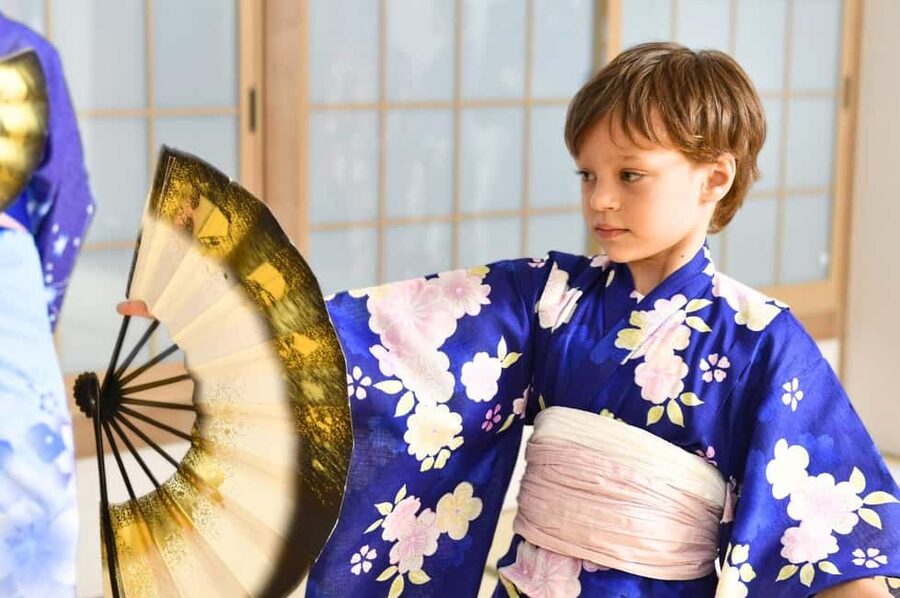
After the performance, you walk for about five to seven minutes to a separate cultural venue. This transfer is short, but it divides the event into two useful halves: first you watch the professionals, then you try selected movements yourself.
At the second venue, you change into a traditional kimono. The clothing is not just a photo prop. It changes how you move. The sleeves, layers, and fitted shape encourage slower gestures and more careful posture, which helps you understand why fan dance depends on control rather than speed.
The workshop takes place in a traditional tatami room. This setting gives the lesson a quieter feel after the lights and sound of the theater. You sit, stand, and practice under the direction of a local professional dancer.
The available information does not provide the instructor’s name, but the teaching is described as patient, friendly, and easy to follow. The lesson is aimed at enjoyment, not difficult choreography. That distinction matters. You are not expected to master a full dance routine or perform a polished sword sequence.
More hands-on classes and workshops in Tokyo:
- Sushi Making Tokyo Roll and Authentic Japanese Sushi Class
★ 5.0 · 3,971 reviews - Tokyo: Roll and Authentic Sushi Making Class in Asakusa
★ 4.9 · 1,957 reviews - Tokyo Shinjuku Chopsticks Making Class
★ 5.0 · 1,763 reviews - Tokyo: Sushi Making Class in a Happi Coat near a Famous Spot
★ 4.9 · 1,377 reviews
Learning fan dance in a kimono
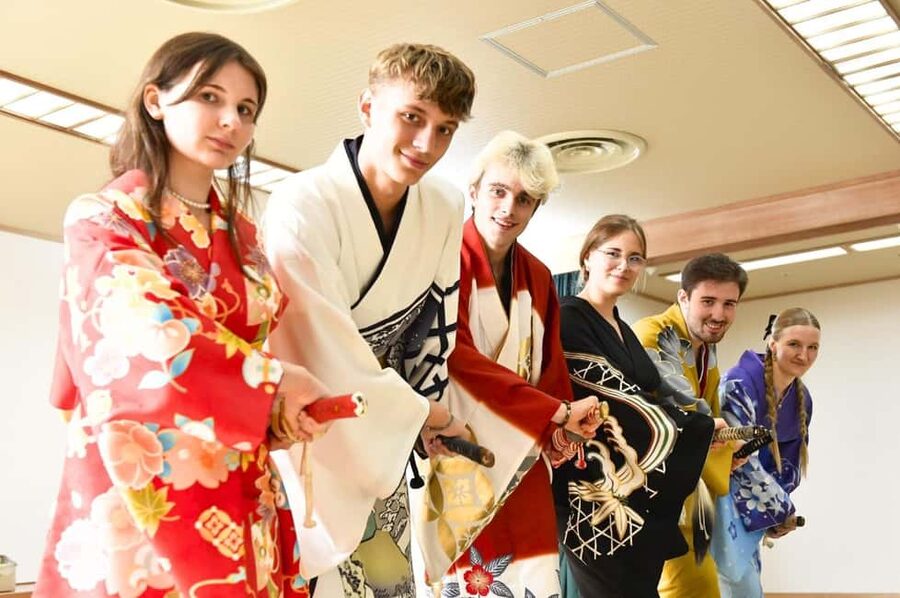
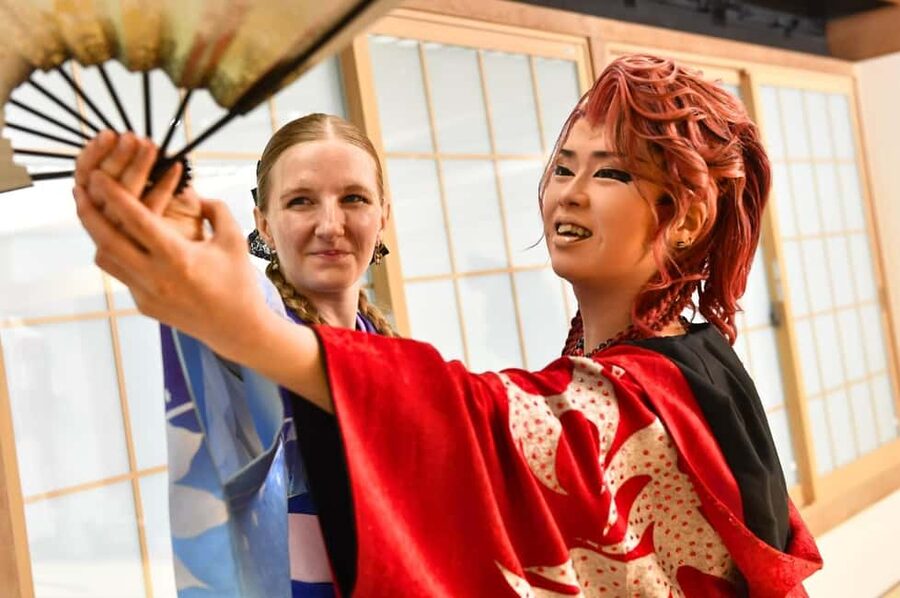
The folding fan lesson introduces you to the graceful side of Taishu Engeki. You learn basic fan movements and stage gestures, with the instructor demonstrating how to hold and move the fan.
This is a good part of the program for people who want a cultural activity without a demanding physical challenge. The movements are beginner-friendly, and the emphasis is on following along and enjoying the performance style.
The kimono adds a practical wrinkle. You need to pay attention to your hands, sleeves, and stance, and you may find the outfit restricts quick movement. That is not a flaw in the activity. It gives you a small sense of the discipline behind traditional dance, where elegance comes from controlled motion.
You also get a chance to see how simple gestures can carry theatrical meaning. A fan can suggest a flower, a breeze, a mood, or a character’s attitude. The lesson will not turn you into a professional dancer, but it does make the show easier to appreciate.
Trying choreographed samurai swordplay
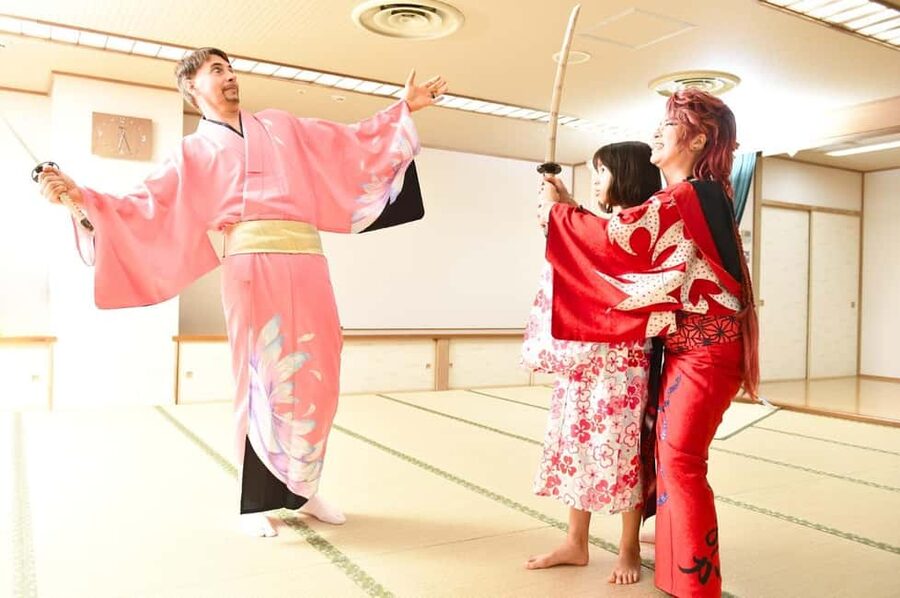
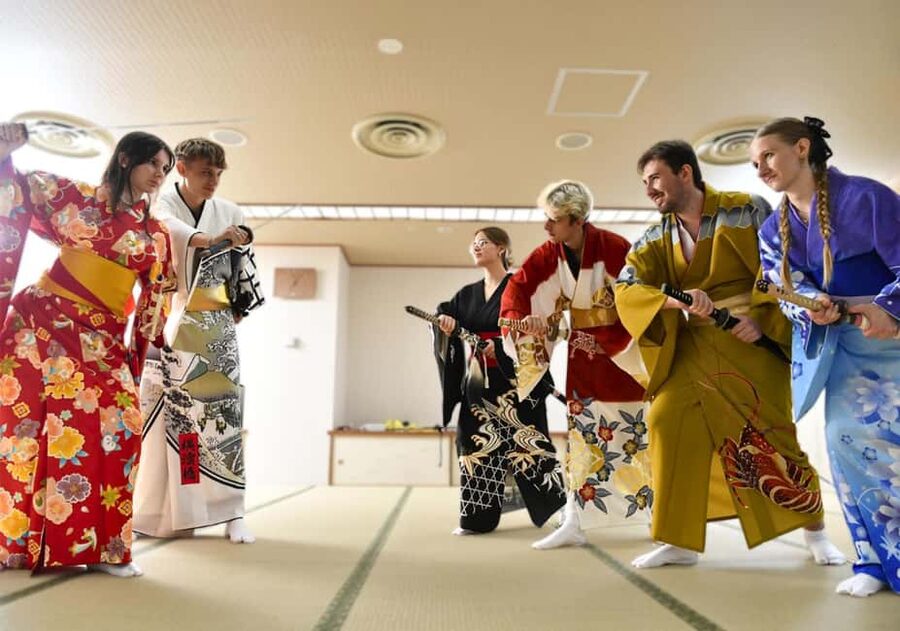
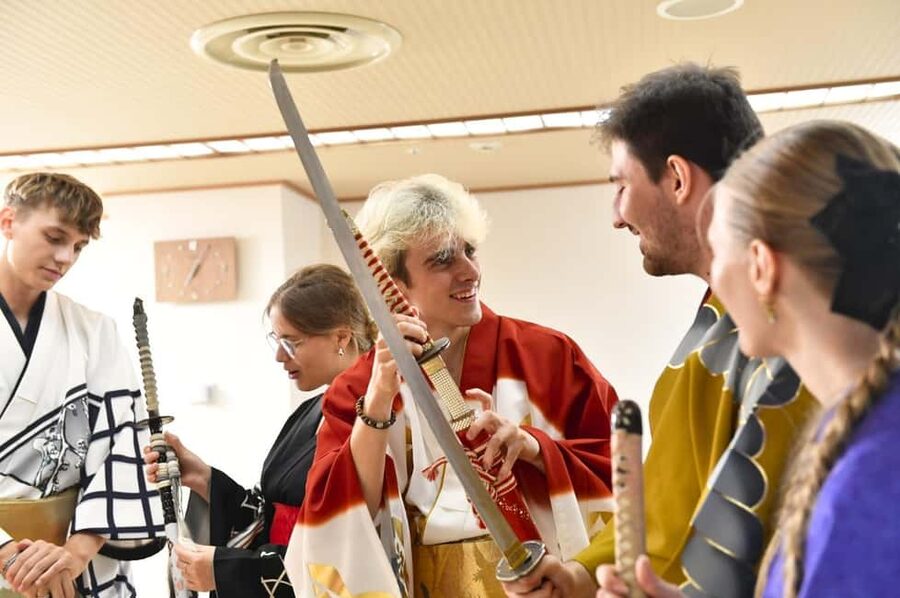
The sword lesson uses choreographed stage movements often described as chanbara, a form of combat dance. You learn a short sequence with a samurai sword, following the instructor’s timing and body positions.
This is theatrical swordplay, not weapons training. The point is rhythm, pose, and presentation. You are learning how a performer creates the impression of a fight while staying within a planned sequence.
The activity is physically active, so tell the staff right away if you feel dizzy, sick, or unwell. Pregnant women should not book this experience. Alcohol and drugs are not allowed.
The sword lesson is one of the strongest reasons to choose this package instead of a theater ticket alone. You get a direct connection between what you saw on stage and what you are now trying to do. The movements are kept accessible, so you do not need previous dance or martial arts experience.
You may feel slightly awkward at first. That is expected. The instructor’s job is to help you keep the sequence simple and enjoyable, not to test your fighting ability. A small group of no more than six gives the teacher room to correct your stance or timing.
Photos that preserve the experience
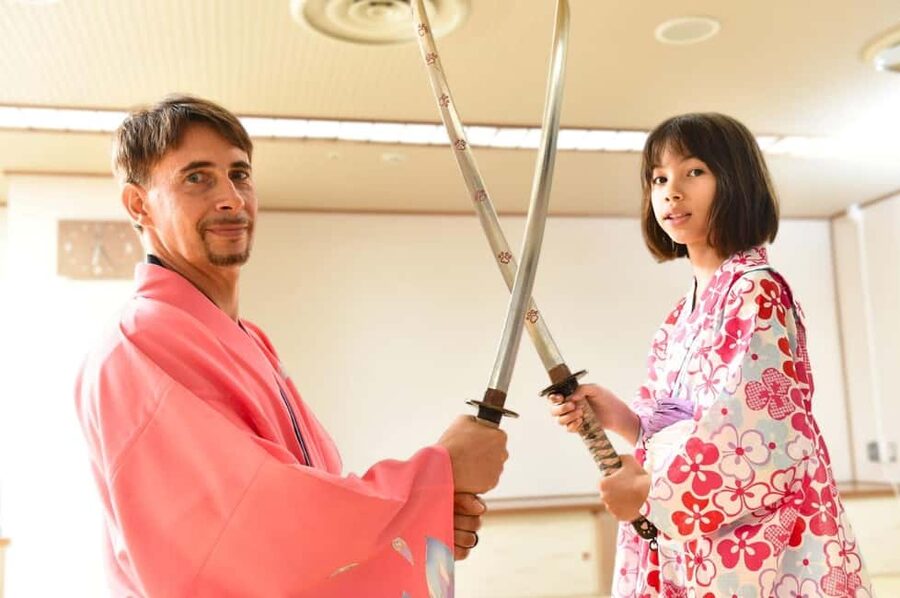
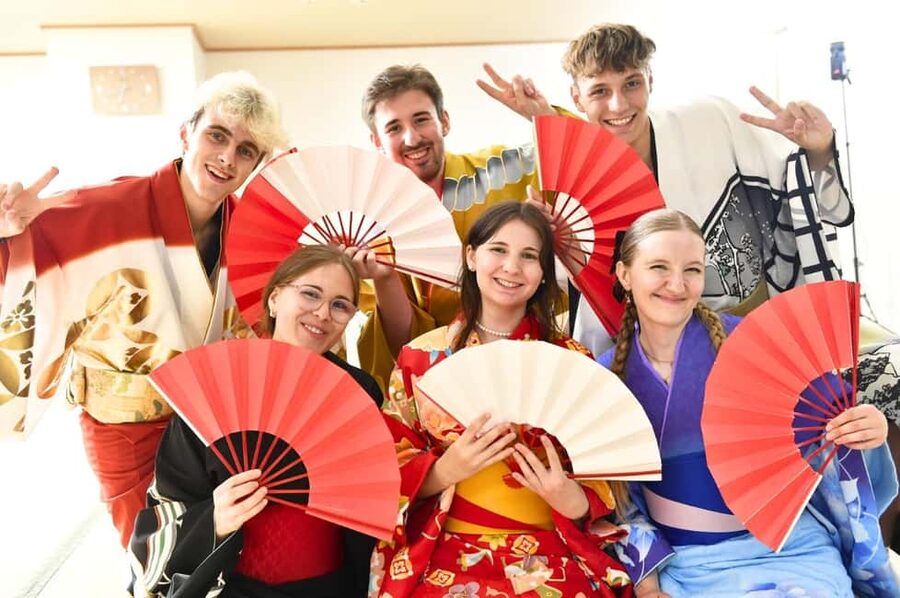
The program ends with a commemorative photo session in your kimono. Staff and the instructor help capture photos and videos, giving you a record of the activity rather than leaving you to rely on a quick phone snapshot.
This final step is especially useful if you are traveling alone or if your group wants pictures with everyone included. It also gives the workshop a clear finish. You have watched the professionals, dressed for the part, practiced with a fan and sword, and then posed in costume.
The photos are a memory of a staged cultural activity, not proof that you became a samurai or traditional dancer. That may sound obvious, but it is the right way to judge the experience. The value is in the access, instruction, and fun, with the photos as a welcome extra.
Afternoon and evening schedules
The afternoon program starts with the theater at a 2:20 p.m. meeting time. You then walk to the workshop, change into kimono, take the lesson, and finish with photos.
The evening program reverses the order. You begin with the cultural workshop, then attend the performance. The evening meeting time is 5:40 p.m., and the meeting point is different: 1 Chome-38-6 Asakusa, Taito City, Tokyo 111-0032.
Check the meeting details carefully when you book. The afternoon meeting point is in front of Asakusa Mokubakan Theater, while the evening program uses the separate address. The coordinates given for the theater meeting point are 35.7143669128418, 139.79486083984375.
The reversed schedule can change the feel of the activity. In the afternoon version, you first see the professionals and then copy some of their movements. In the evening version, you learn the basics before watching the stage show. Both orders make sense, but the timing may matter if you already have dinner plans or other evening activities.
Is $12 a good value?
At $12 per person, the price is unusually low for a three-hour Tokyo activity that includes live theater, a kimono change, instruction from a professional dancer, sword and fan practice, and photos.
The value is strongest if you want several small cultural encounters in one booking. A theater ticket alone would give you the show, but not the kimono or workshop. A costume experience alone would not give you the chance to see Taishu Engeki performed for a local audience.
The fee also includes a small token of appreciation for the theater custom. You may be guided to offer a small gift or tip to a performer you like, so keep in mind that this custom is part of the social experience.
Do not expect a full theatrical education or an extended sword class for this price. The workshop is short and beginner-focused. The show content can change, and the experience is designed as an entertaining introduction rather than a scholarly presentation.
Still, the combination is hard to fault on cost. Even if you are most excited by only one part, the theater, kimono, fan, sword, or photos, the other sections add useful context.
Who should book this Asakusa activity?
I would recommend it to first-time visitors who want a taste of traditional Japanese performance without committing to a formal theater evening. It also suits couples, friends, and solo participants who like being active instead of only watching.
The small group is a good fit if you want direct instruction and a less anonymous class. The activity can work for people who speak English or German, since those are the listed guide languages.
Families should consider the physical movement, light effects, and loud sounds before booking. The experience is not suitable for pregnant women, and anyone sensitive to strobe lighting should contact the operator first.
You should also choose this if you enjoy theatrical traditions that are colorful and openly emotional. If you prefer quiet, highly formal performances with long explanations, Taishu Engeki may feel too energetic. If you want a polished professional show followed by an easy, playful lesson, it fits well.
The operator allows free cancellation up to 24 hours before the start time, and you can reserve now and pay later. Those terms are helpful if your Tokyo schedule is still shifting.
Should you book it?
Book this if you want an affordable, hands-on introduction to Japanese theater in Asakusa. The best parts are the close professional performance, the beginner-friendly fan and sword lesson, the kimono setting, and the small-group attention.
Skip it if flashing lights, loud theater sound, or physical activity are not suitable for you. Also skip it if you want an extended martial arts course or a full traditional dance class.
For most visitors, the $12 price makes this an easy addition to an Asakusa day. You see a real performance, learn enough movement to understand the art from inside, and leave with photos that show more than a standard sightseeing stop.
FAQ
How long does the Taishu Engeki and kimono experience last?
The program lasts three hours. It includes the theater performance, the short walk to the workshop venue, kimono dressing, the fan and sword lesson, and commemorative photos.
Where does the afternoon program meet?
The afternoon program meets in front of Asakusa Mokubakan Theater. The listed theater meeting-point coordinates are 35.7143669128418, 139.79486083984375.
Where does the evening program meet?
The evening program meets at 1 Chome-38-6 Asakusa, Taito City, Tokyo 111-0032. Its meeting time is 5:40 p.m.
What languages are available?
The program leader and instruction are available in English and German.
How many people can join the activity?
The experience is limited to six participants, making it a small-group activity.
Is the workshop suitable for beginners?
Yes. The fan dance and choreographed swordplay are designed as an easy introduction, with the focus on enjoyment rather than difficult choreography.
Are there any health or sensory concerns?
The theater portion uses flashing or strobe lights and loud sounds. The workshop is physically active, and you should tell staff if you feel dizzy, sick, or unwell. The experience is not suitable for pregnant women.
More Tokyo shows and performances
- Mt Fuji & Hakone Cruise, Drum Show Bullet Train 1 Day from Tokyo
★ 4.0 · 7,413 reviews - Tokyo: Sumo Show and Dining Experience
★ 4.8 · 2,742 reviews - the SUMO show
★ 5.0 · 1,960 reviews - Tokyo Shinjuku Sumo Show & Experience with Photo
★ 5.0 · 1,750 reviews
Newly reviewed around Tokyo
- Tokyo Asakusa:Calligraphy & Make T-shirt Activity★ 5.0 · 62 reviews
- Intercity Shuttle, Tokyo to Haneda /Narita /Yokohama /Makuhari★ 5.0 · 5 reviews
- 1 Hour Travel around Tokyo with a Professional Photographer★ 5.0 · 3 reviews
- Travel Tokyo with Your Own Personal Photographer★ 5.0 · 43 reviews
- Kickboxing & Body Training with EX-Pro Fighter★ 5.0 · 4 reviews
- Train in Samurai Swordsmanship and Defeat the Demon in Tokyo★ 5.0 · 5 reviews
- Shuttle Van 6hr Tokyo Tour to-and-from Tokyo, Yokohama and Narita★ 5.0 · 9 reviews
- Traditional Japanese Knife Sharpening Class★ 5.0 · 18 reviews
Tokyo Kimono Experiences, compared.

Tokyo Asakusa: Traditional Kimono Rental Experience at Wargo
Read our review →
Tokyo Authentic Kimono Rental in Asakusa with Photography Option
Read our review →
Kimono Rental inside Shinjuku Gyoen National Garden
Read our review →Browse the lists this tour appears in