
Reviewed · ASAKUSA AND SENSOJI TOURS
Tokyo: Making a Lantern Workshop in Asakusa with a Craftsman
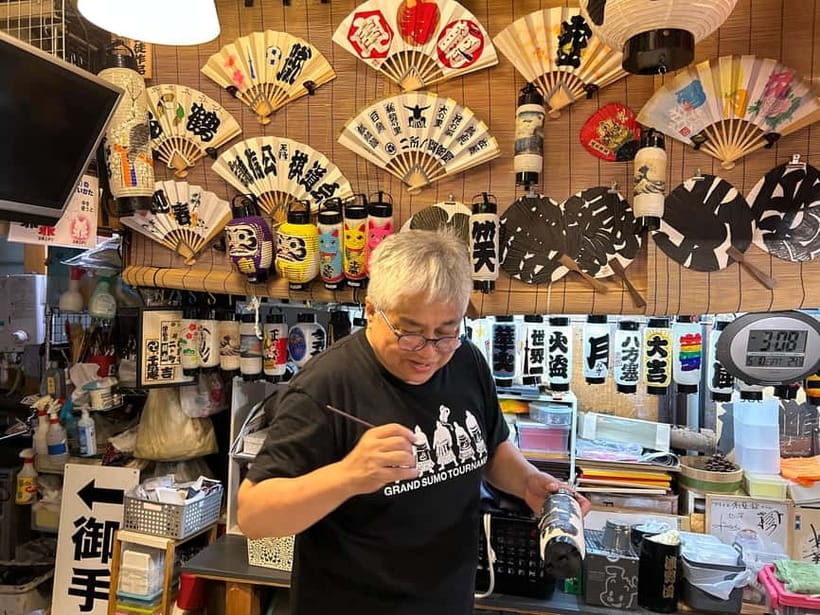
A paper lantern workshop may sound modest, but this one leads you into a 100+ year-old family atelier filled with handmade chochin in many shapes and colors. You learn directly from a Japanese lantern craftsman, work with bamboo and washi paper, and leave with a lantern you made yourself.
I especially like the chance to see the craft up close rather than only buying a finished souvenir. I also like the warm, personal teaching style, with English support from guides such as Rinka, Noriko, or David Park. The main thing to watch is the meeting point: it changes to the Ryogoku Kokugikan area during the three annual Grand Sumo Tournament periods.
Key Points at a Glance
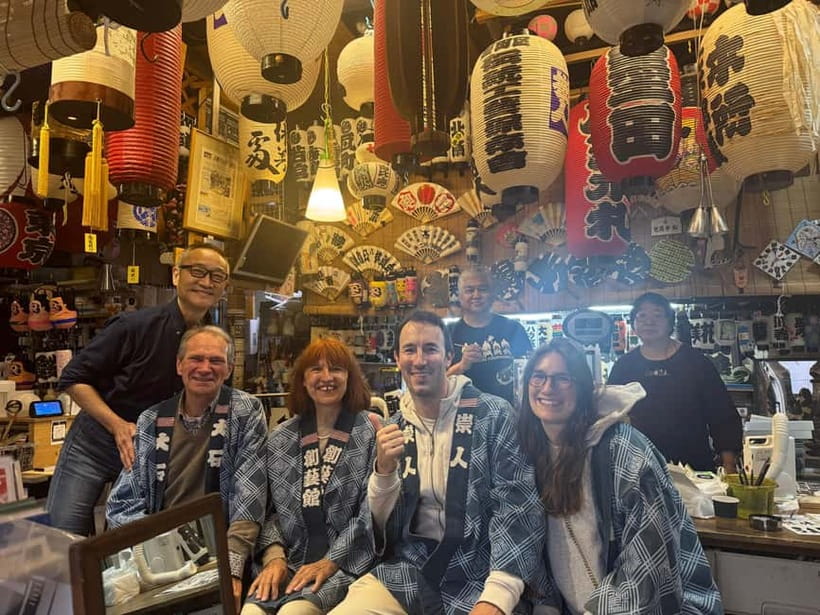
- A working lantern atelier: Make your lantern inside a long-running family workshop surrounded by finished chochin.
- Hands-on traditional materials: Use bamboo, washi paper, glue, brushes, ink, and paint rather than a preassembled craft kit.
- Personal help throughout: The master craftsman and English-speaking guides explain each stage and help with communication.
- A useful two-hour activity: The pace gives you time to build the lantern and work on its calligraphy or painted decoration.
- A practical Tokyo souvenir: Your completed lantern is packaged for taking home, and finished lanterns are available to buy.
- A date-sensitive meeting point: The regular site is in Yokawa, near Tokyo Skytree, but tournament dates use a venue near Ryogoku Kokugikan.
Entering a Traditional Chochin Workshop
The experience begins at a traditional workshop in Sumida City, the part of Tokyo associated with the Tokyo Skytree and the historic Ryogoku district. Inside, lanterns hang around the room in different colors and forms. That setting matters. You are not simply sitting at a modern craft studio with a Japanese theme pasted on the walls. You are working in the environment of a family trade.
The regular address is 2-10-8 Yokokawa, Sumida City, Tokyo, postal code 130-0003. The workshop is near Tokyo Skytree and Oshiage Station, making it easy to combine with a Skytree visit or a walk through eastern Tokyo.
The room itself is part of the lesson. Before you touch the materials, you get a sense of how much work goes into the finished products around you. The lanterns serve as examples, decorations, and a quiet reminder that even a small paper object can require real skill.
During the January, May, and September Grand Sumo Tournament periods in 2026, the workshop moves to 1-3-20 Yokoami, Sumida City, at the Ryogoku Kokugikan area. The special venue is on the first floor. The craft activity remains the focus, but the atmosphere and setting may feel different from the regular family atelier.
Check the address printed with your booking before setting out. This is the most important practical detail in the whole experience, since arriving at the wrong Sumida neighborhood could turn a pleasant craft session into a rushed taxi ride.
More Asakusa and Sensoji tours:
- Tokyo: Japanese Dance Cabaret Theater Asakusa-Kaguwa Ticket
★ 4.8 · 2,270 reviews - Tokyo: Meiji Shrine, Asakusa, Skytree Bus Tour and Cruise
★ 4.7 · 1,986 reviews - Tokyo: Roll and Authentic Sushi Making Class in Asakusa
★ 4.9 · 1,957 reviews
Learning What Makes a Japanese Chochin
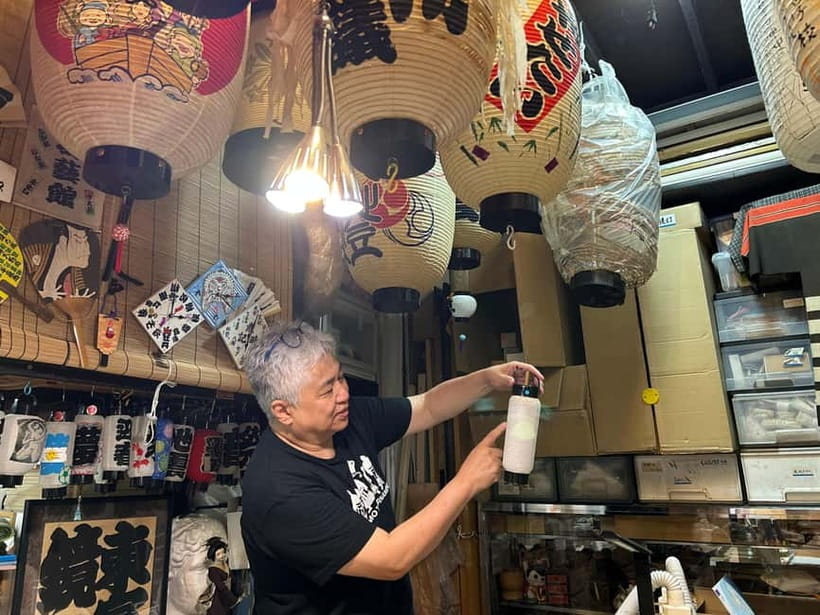
The session starts with an explanation of chochin, the collapsible Japanese paper lantern traditionally made with a bamboo frame and washi paper. You learn about the lantern’s place in Japanese life and the care required to shape, cover, and decorate it.
I like this opening because it gives the activity some context without turning it into a long lecture. You see the finished lanterns first, then begin to understand the materials and techniques behind them. The craft feels more meaningful once you know why bamboo and washi are used.
The master craftsman leads the making process, with help from an English-speaking guide or interpreter. The names of the support guides have varied by session. Rinka has helped explain the process and offered Tokyo suggestions, while Noriko has assisted with communication between participants and the master. David Park has also translated for visitors during instruction.
The teaching style is patient and practical. You do not need previous craft experience, calligraphy training, or Japanese language skills. The guides help keep the activity friendly for solo visitors, families, and people who may feel unsure about making something in front of a skilled artisan.
Building the Lantern with Bamboo and Washi
The hands-on portion uses authentic materials supplied as part of the price. These include bamboo, washi paper, glue, and brushes. Ink or paint may also be involved, so I would wear old clothes or something you would not mind staining.
The lantern-making process is simple enough for children from age 6, but it still offers plenty for adults. You work through the stages with instruction instead of being handed a blank object and told to decorate it. That makes the finished lantern feel personal rather than mass-produced.
The bamboo frame gives the lantern its shape. The washi paper forms the outer surface, and glue helps secure the paper to the frame. You may then add painted decoration or calligraphy, depending on the design and guidance provided during your session.
The calligraphy section deserves extra time. Writing on a curved paper lantern is not the same as writing on a flat sheet, and the shape can make spacing and brush control tricky. Plan to work carefully rather than rushing to finish. The two-hour schedule is useful here because the decoration stage can take longer than expected.
You do not need to produce museum-quality work. The point is to understand the process and make something that carries your own choices. A slightly uneven brushstroke is part of the souvenir’s story. It shows that you made it in Tokyo rather than picking it up from a shop shelf.
A Two-Hour Activity with Room to Work
The full session lasts about two hours. That is long enough to explain the craft, make the lantern, decorate it, and ask questions without making the workshop feel like an all-day commitment.
I would schedule this after a morning of sightseeing, especially if you have been walking around Asakusa, Ueno, or Tokyo Skytree. The activity provides a quieter change of pace. It is creative rather than passive, but you are seated and focused instead of crossing another large Tokyo district on foot.
The two-hour length also helps families. Younger children can take part, though children under 6 cannot join. Older children may enjoy the visible progress as the frame and paper become a finished object. Adults should be ready to help young children with glue, brushes, or careful decoration.
Solo participants fit in well, too. The workshop has a personal setting, and the guides help keep the conversation moving. You are not expected to arrive with a large group or a partner. A handmade activity can be an easier way to meet people than a formal sightseeing tour.
The activity is wheelchair accessible according to the available information. Since the meeting point changes during sumo tournament dates, check the exact venue in advance if access arrangements are especially important to you.
More hands-on classes and workshops in Tokyo:
- Sushi Making Tokyo Roll and Authentic Japanese Sushi Class
★ 5.0 · 3,971 reviews - Tokyo Shinjuku Chopsticks Making Class
★ 5.0 · 1,763 reviews - Tokyo: Sushi Making Class in a Happi Coat near a Famous Spot
★ 4.9 · 1,377 reviews - Chopstick Making Workshop in Ginza
★ 4.8 · 1,366 reviews
Decorating Your Own Lantern
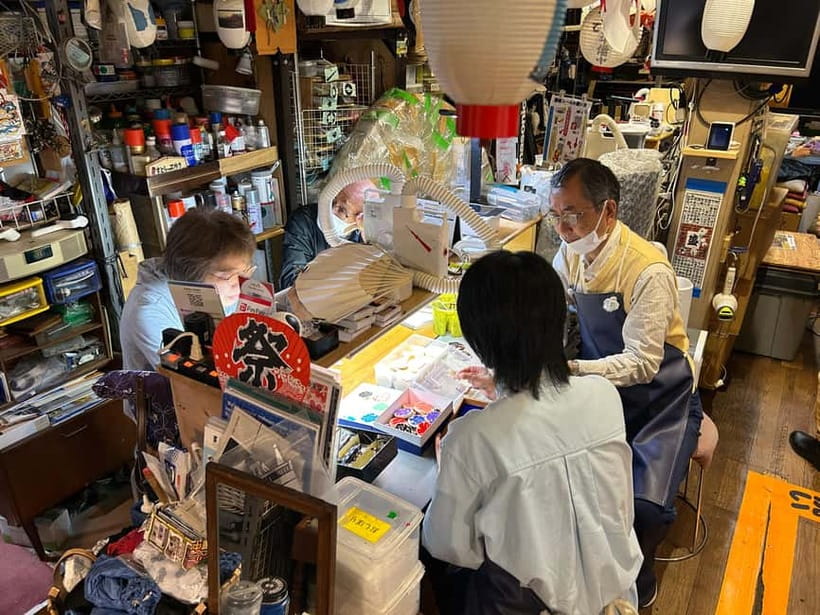
The decorating stage is where the experience becomes distinctly yours. Depending on the session and your design, you may use ink, paint, or calligraphy to add words, symbols, or simple artwork to the paper surface.
This part can be relaxing, but it is not entirely effortless. The paper is delicate, the form is curved, and brushwork can require patience. That is a good reason to ask the guide for help before applying ink. A few minutes of instruction can prevent a large mark from ending up in the wrong place.
The workshop is filled with finished lanterns, so you have plenty of visual examples around you. You can take photos during the activity, provided you follow the instructions of the staff. The colorful surroundings make the session more attractive than a plain classroom craft.
One useful detail is that the completed lantern is packaged so you can transport it home. That matters in Tokyo, where you may still have several days of trains, shopping, and hotel changes ahead. Pack it carefully in your luggage and avoid placing heavy objects on top of it.
You may also buy a professionally made lantern from the master at the workshop. This is separate from the included handmade piece. The purchase can make sense if you want a more polished design as a gift, while your own lantern remains the more personal keepsake.
What the Price Means at $96
At $96 per person, this is not a bargain activity in the same category as a short museum visit or a basic souvenir-making class. The value comes from the setting, instruction, materials, and the finished object you take home.
You are paying for a two-hour lesson with a real lantern artisan, not just for bamboo and paper. The English-speaking support is also important. Without it, the craft could be enjoyable but harder to understand. With a guide such as Rinka or Noriko helping explain the process, you can ask about the materials, the history, and the details of the work.
The included materials are another part of the value. You do not need to buy supplies or prepare anything beyond bringing identification and wearing suitable clothing. Your completed lantern is included, and you can choose to buy an additional professionally made piece only if you want one.
I would consider the price worthwhile for people who value direct contact with Japanese craft and want a souvenir with a personal connection. It is less convincing for someone who only wants a quick activity or a cheap gift. If your main goal is a polished lantern at the lowest cost, buying one may be simpler. If you want to understand how the object is made and take part in the process, the workshop offers more.
Choosing Between Skytree and Ryogoku Dates
The regular workshop location in Yokokawa is the one to expect for most dates outside the sumo tournaments. It is near Tokyo Skytree and Oshiage Station, so you can plan the workshop alongside that area.
For 2026, the special Ryogoku venue applies during these official tournament periods:
- January 11 through January 25
- May 10 through May 24
- September 13 through September 27
The Ryogoku address is listed as 1-3-20 Yokoami, Sumida City, Tokyo, in the Ryogoku Kokugikan area. The activity itself may still be much the same, but do not assume the regular workshop atmosphere. The setting can affect the feel of the visit.
I would allow extra time to find the correct entrance, particularly at the tournament venue. Keep your booking details available, and confirm the date-specific meeting point before leaving your hotel. Transportation is not included, so you are responsible for reaching the site and returning afterward.
Who Will Enjoy This Workshop Most
I would recommend this experience to several kinds of visitors.
Families with children 6 and older get a creative activity that does not depend on a long attention span for a lecture. Children can see the lantern take shape and leave with something they helped make.
Solo visitors get a welcoming, structured activity. The guides help with conversation and translation, and you do not need to arrive with a companion.
Couples and friends can make matching or contrasting lanterns, then compare the results. The workshop works well as a quieter break between sightseeing stops.
Craft-minded visitors will get the most from the detail. You can pay attention to the bamboo, paper, glue, brushwork, and calligraphy rather than treating the class as a quick photo opportunity.
I would be more cautious about booking it for very young children, anyone who dislikes hands-on work, or anyone with a tight schedule immediately afterward. Paint and ink may stain clothing, and careful decoration takes time.
Small Practical Details That Matter
Reservations are required in advance, and the activity offers free cancellation up to 24 hours before the start time. A reserve-now, pay-later option is also available, which helps if you are still arranging a multi-day Tokyo plan.
Bring a passport or other identification. Pets are not allowed, and alcohol and drugs are prohibited. Meals and drinks are not included, so plan to eat before or after the workshop.
The listed languages are Japanese and English. The guide may interpret between you and the master, but the experience remains a craft lesson rather than a full sightseeing tour of Asakusa or Sumida. You should plan other attractions separately.
The workshop is near Tokyo Skytree at the regular venue, but the name Asakusa can make the location sound closer to Senso-ji than it may be. Check the map and station information carefully. Tokyo addresses are precise, and a few blocks can matter when you are arriving for a fixed start time.
Should You Book the Lantern Workshop?
I would book this if you want a handmade Japanese souvenir and prefer meeting the person who makes it to simply buying one. The strongest parts are the family atelier, the real materials, the patient instruction, and the chance to work on calligraphy or painted decoration for a full two hours.
The $96 cost is reasonable for a guided craft session with materials and a completed lantern, though it is higher than a basic craft class. Children under 6 cannot join, and anyone with a packed itinerary should allow enough time for transportation and the hands-on work.
Choose a regular date if you want the traditional atelier setting near Tokyo Skytree. If you book during a sumo tournament, carefully confirm the Ryogoku Kokugikan meeting point. For a personal, creative memory of Tokyo that fits into an afternoon or evening plan, this is a strong choice.
FAQ
Where is the regular lantern workshop held?
The regular workshop is at 2-10-8 Yokokawa, Sumida City, Tokyo, postal code 130-0003. It is near Tokyo Skytree and Oshiage Station.
Does the meeting point change during sumo tournaments?
Yes. During the official January, May, and September 2026 Grand Sumo Tournament periods, the workshop is held at the Ryogoku Kokugikan area at 1-3-20 Yokoami, Sumida City, Tokyo.
When is the special Ryogoku venue used in 2026?
It is used from January 11 through January 25, May 10 through May 24, and September 13 through September 27, 2026.
How long does the lantern workshop last?
The experience lasts two hours.
What materials are included?
The workshop includes bamboo, washi paper, glue, brushes, and other materials needed for the lantern-making activity.
Can I take my lantern home?
Yes. Your completed lantern is included and can be taken home. The lanterns are packaged for transport.
Do I need previous craft experience?
No. The workshop is designed for beginners, and the master craftsman or guide explains the process.
What is the minimum age?
The workshop is suitable for participants aged 6 and older. Children under 6 cannot join.
Is the workshop offered in English?
Yes. The activity is offered in Japanese and English, with an English-speaking guide or interpreter available.
Newly reviewed around Tokyo
- Tokyo Asakusa:Calligraphy & Make T-shirt Activity★ 5.0 · 62 reviews
- Intercity Shuttle, Tokyo to Haneda /Narita /Yokohama /Makuhari★ 5.0 · 5 reviews
- 1 Hour Travel around Tokyo with a Professional Photographer★ 5.0 · 3 reviews
- Travel Tokyo with Your Own Personal Photographer★ 5.0 · 43 reviews
- Train in Samurai Swordsmanship and Defeat the Demon in Tokyo★ 5.0 · 5 reviews
- Shuttle Van 6hr Tokyo Tour to-and-from Tokyo, Yokohama and Narita★ 5.0 · 9 reviews
- Kickboxing & Body Training with EX-Pro Fighter★ 5.0 · 4 reviews
- Traditional Japanese Knife Sharpening Class★ 5.0 · 18 reviews
Asakusa and Sensoji Tours, compared.

Japanese Dance Cabaret Theater Asakusa-Kaguwa Ticket
Read our review →
Meiji Shrine, Asakusa, Skytree Bus Tour and Cruise
Read our review →
Roll and Authentic Sushi Making Class in Asakusa
Read our review →
Asakusa Walking Tour with Sensoji Temple Visit
Read our review →
Tokyo Panoramic 1 Day: Meiji Shrine, Asakusa, Odaiba and SKYTREE®
Read our review →
Tokyo Go Kart: Asakusa, Skytree, and Akihabara **IDP MUST**
Read our review →
Asakusa, Skytree & Akhihabara Go-Kart City Experience
Read our review →Browse the lists this tour appears in