
Reviewed · TOKYO TRADITIONAL CRAFT WORKSHOPS
Mini Origami Lamp and Mizuhiki knot Belt Workshop in Ueno
The best part of this Ueno workshop is that you do not simply watch a Japanese craft demonstration. You make two useful, personal objects: a folding washi lamp and a Mizuhiki knot belt. The lamp closes like a book, so it is far easier to take home than many bulky souvenirs.
I like the private format and the calm, patient instruction from Kaho Shinoda. I also like the small cultural touches, especially learning that Mizuhiki knots carry different meanings, then finishing with Japanese sweets and Kozo, or paper, tea. The main caution is that this is detailed handwork, so it is not suitable for young children or anyone hoping for a quick, hands-off activity.
Key points to know before booking
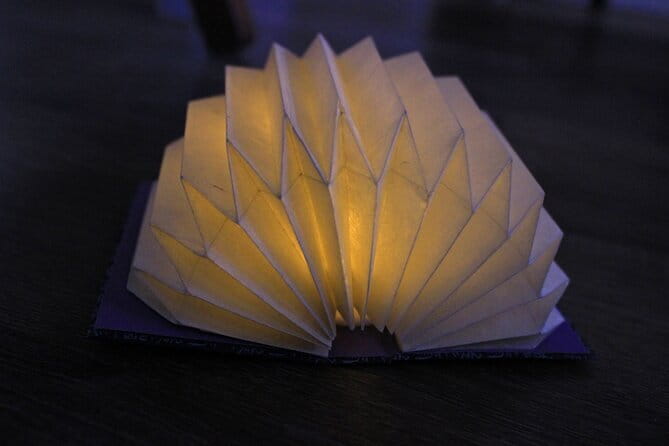
- Two handmade keepsakes: You create a small bellows-style washi lamp and a Mizuhiki knot belt.
- Private instruction: Only your group takes part, giving you time to ask questions and work at your own pace.
- Ueno location: The workshop takes place at Washi Labo TOKYO in Taito City, near public transportation.
- Easy-to-pack design: The lamp folds down like a closed book, a smart feature for carrying it home.
- Tea and sweets included: The session ends with Japanese sweets and a special Japanese paper tea.
- Not for young children: The folding, gluing, and knot work require care and concentration.
Making a washi lamp in Ueno
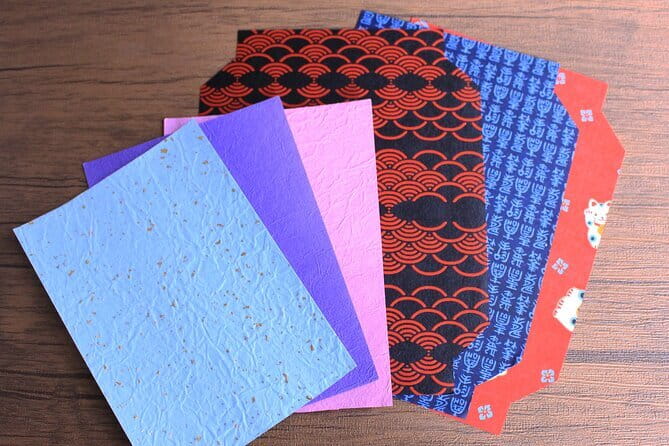
This is a hands-on introduction to washi, the handmade Japanese paper known for being light but durable. At the beginning, you receive a guide document and learn basic facts about the material before starting the lamp.
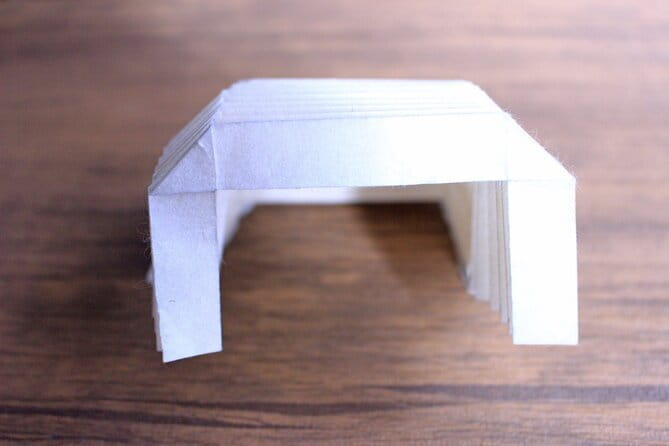
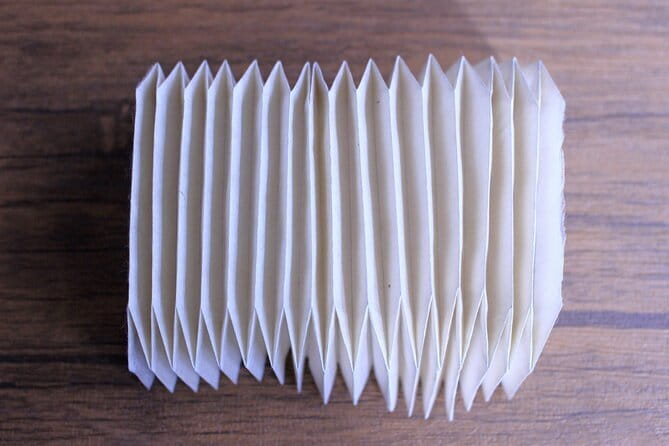
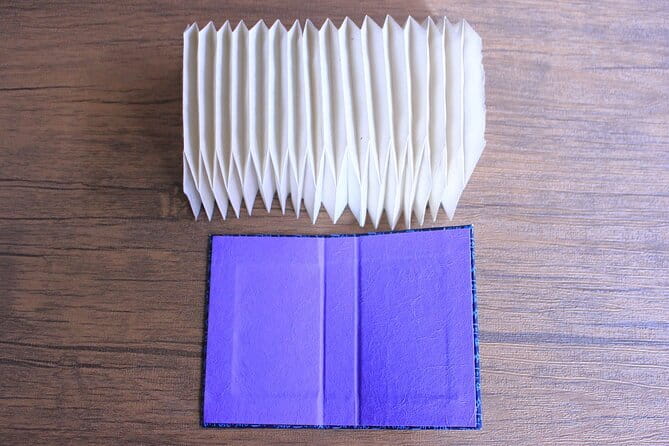
The lamp uses several sheets of handmade washi paper. You fold and glue the sheets into a bellows shape, much like an accordion. When a small lamp is placed inside, the paper glows with a soft, warm light. Close the folds, and the lamp becomes compact, almost like a shut book.
That design matters if you are visiting Tokyo with limited luggage space. Many traditional crafts are lovely but awkward to carry. This one is made with the person taking it home in mind. You can enjoy it as a small light or display it as a paper sculpture.
The work is precise. You need to fold evenly, apply glue with care, and keep the paper in the correct shape while the pieces come together. That is why the class runs for about two and a half hours rather than being a quick craft stop.
I would not book this expecting a polished object to appear with little effort. Your finished lamp will be handmade, and small differences are part of its character. The reward is that you can point to the lamp and say you made it in Tokyo, rather than simply buying it from a shop.
More things to do in Ueno:
- Eat and Drink Like a Local: Tokyo Ueno Food Tour-Taverns&Ramen
★ 5.0 · 957 reviews - Tokyo: Food Tour in Ueno with 10+ Tastings of Japanese Classics
★ 5.0 · 303 reviews - Tokyo Ueno Food Tour Sushi Ramen and Local Favorites
★ 5.0 · 54 reviews
Learning what makes washi special
The workshop gives you more than a set of craft instructions. You get a practical look at the qualities that make washi useful for art and interior decoration.
Washi is light, yet strong enough to hold its shape once folded and glued. Its texture also gives the lamp a softer look than ordinary machine-made paper. When lit, the folds create gentle shadows and warm light.
The guide document helps explain the basics, while personal instruction lets you ask about the parts that feel unclear. That private attention is valuable here. A small mistake in one fold can affect the shape of the whole lamp, and it is much easier to fix the problem while you are still working.
The experience also gives you a better sense of the work behind Japanese paper crafts. You are not only handling paper as a flat sheet. You are learning how paper can be folded, joined, shaped, and turned into an object with a practical use.
Tying a Mizuhiki knot belt
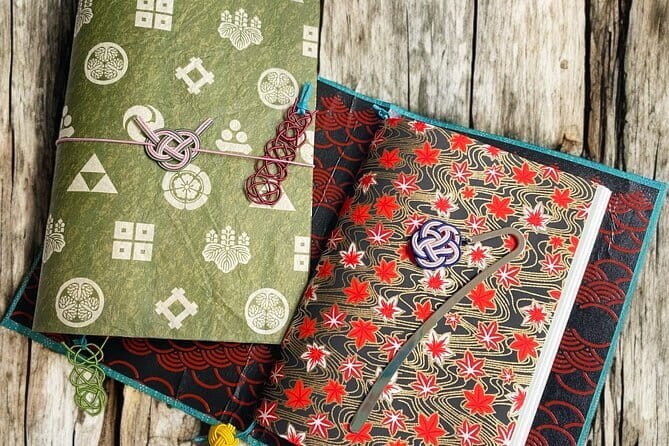
The second project introduces Mizuhiki, a decorative cord made with a twisted washi-paper core wrapped in nylon or film. The cords are colorful and firm enough to hold a knot, but still retain a distinctly paper-based character.
You create a Mizuhiki knot ornament for the belt of the lamp. This adds a decorative finish, but it also introduces an important part of Japanese craft tradition: knots can carry meanings.
That detail makes the activity especially useful if you are interested in Japanese gift customs. Different knots may suggest ideas such as connection, good wishes, or celebration. The exact meaning depends on the form of the knot, so the lesson gives you a cultural reason to pay attention to the shape rather than treating it as decoration alone.
Mizuhiki work can be fiddly. The cords need to be held in the right order, and the knot must be tightened without losing its form. Kaho Shinoda’s patient, step-by-step approach is well suited to beginners, but you should still expect to concentrate.
The belt makes the lamp feel more finished and personal. It is also a separate reminder of the class, so you leave with two related pieces of Japanese craft rather than one project and a few leftover materials.
A private class with room for questions
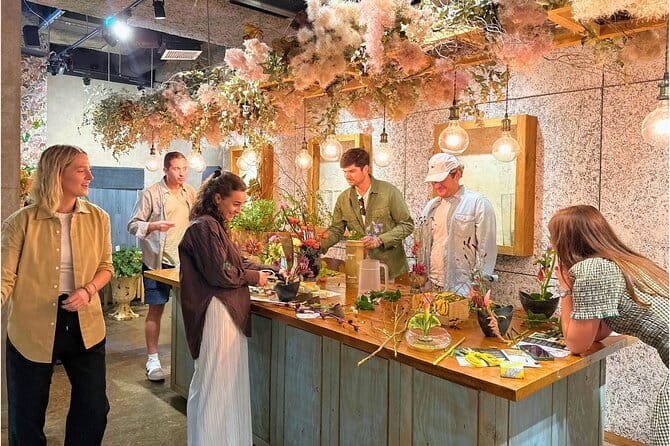
The class is private, so only your group participates. That changes the mood. You do not need to keep up with a large room, and you can ask for another explanation when a fold or knot does not make sense.
Kaho Shinoda leads the workshop at Washi Labo TOKYO. The instruction is designed for beginners, with materials prepared ahead of time and explanations given as you work. The private setup is particularly helpful if people in your group have different levels of experience with paper crafts.
A private class also gives you more space to decide how much you want to focus on technique and how much you want to hear about the meaning behind the materials. If you enjoy the cultural background, ask about the washi and Mizuhiki as you go. If you are focused on producing a neat lamp, you can keep your attention on the project.
The pace is relaxed, but this is not a completely casual drop-in activity. Folding, gluing, and tying all demand care. I would choose this for adults and older children who can work patiently, not for a family looking for a loose, energetic activity for very young children.
More Tokyo craft workshops:
- Tokyo Shinjuku Chopsticks Making Class
★ 5.0 · 1,763 reviews - Chopstick Making Workshop in Ginza
★ 4.8 · 1,366 reviews - Kintsugi Experience: Art of Golden Joinery in Tokyo
★ 5.0 · 467 reviews - Tokyo Chopstick Making Workshop with Artisan
★ 5.0 · 466 reviews
Tea, sweets, and the workshop cat
Once the craft work is complete, the session includes Japanese sweets and tea. The tea is described as Japanese paper tea, and it is also referred to as Kozo tea. Kozo is a plant used in making Japanese paper, so the drink connects naturally with the theme of the workshop.
This closing pause is more than a snack break. After concentrating on folds and knots, sitting down with a sweet and tea gives you time to look at the finished lamp and belt. It also keeps the workshop from feeling like a production line.
There is a cat in the workshop, with KAMI serving as the mascot. If you have a cat allergy, tell the provider before booking or attending. This is a small point, but it can make a real difference to your comfort during a two-and-a-half-hour indoor class.
The tea and sweets add value to the experience, but I would not book the class mainly for refreshments. The main value is the instruction, the materials, and the two objects you make. The food works best as a pleasant cultural finish.
Why the Ueno setting works well
The meeting point is Washi Labo TOKYO, at 2 Ichikawa Building 1F, 3-30-2 Taito, Taito City, Tokyo 110-0016. The workshop is near public transportation, making it a practical choice if you are spending time in the Ueno or Asakusa area.
Ueno is a useful place for a craft activity because you can pair the workshop with other nearby plans. The class gives you a quiet indoor break from sightseeing, especially during hot weather. You can spend the rest of the day around Ueno, or use the session as a slower change of pace between larger attractions.
The activity begins and ends at the same meeting point. That keeps the logistics simple, but you should allow enough time to find the building before the start. The supplied address includes Japanese and Romanized details, so save it on your phone and show it to a taxi driver or use it when checking directions.
The exact stop is simply Ueno, rather than a series of sightseeing locations. That is a benefit if you want to focus on making something. It is a drawback if you expect a guided tour of Ueno or a wider introduction to Tokyo’s craft districts.
Is $107.50 a fair price?
At $107.50 per person, this is not a cheap souvenir-making stop. It is a private class of about two hours and 30 minutes, with all materials, personal instruction, tea, sweets, and two finished craft pieces included.
The price makes more sense if you value the private format. You are paying for time with an instructor, not simply for a kit. The lamp also uses handmade washi, and the Mizuhiki project adds a second skill and finished item.
I see the strongest value in three parts:
- You receive guidance while making the objects, rather than taking supplies home with no support.
- You get a portable lamp and a Mizuhiki ornament with a connection to Japanese tradition.
- You have a quiet, structured activity that works well as a break from sightseeing.
The value is weaker if you only want a quick souvenir or do not enjoy careful handwork. You can buy attractive paper goods in Tokyo for less. This experience earns its price through the making process, the private attention, and the meaning attached to the materials.
The average booking lead time is about 29 days. That suggests you should plan ahead if the class matters to your schedule. I would not leave it until the last day of a Tokyo trip, especially if you want a particular date.
Practical details for a smooth visit
You receive confirmation when you book, and the activity uses a mobile ticket. Keep the ticket and meeting address available on your phone.
The class ends where it starts, at Washi Labo TOKYO. The activity is near public transportation, but the provided information does not specify a station name, so check the route before leaving your hotel.
Most people can participate, but the detailed work changes the age question. The workshop is not suitable for young children. Adults and older children who can follow careful instructions are a better match.
Tell the provider about cat allergies because a cat is present in the workshop. This is not a detail to ignore if you react strongly to cats.
Free cancellation is available if you cancel at least 24 hours before the start time. Cancellations or changes made within 24 hours are not refunded or accepted. If poor weather causes the activity to be canceled, you are offered another date or a full refund.
The activity information says the experience requires good weather, even though the work takes place indoors. Check the provider’s message if the forecast is poor.
Who should book this workshop?
I would recommend it to you if you enjoy making things with your hands and want a souvenir that carries a personal story. It suits couples, friends, solo visitors, and small groups who prefer a private class to a large demonstration.
It is also a good choice if you are staying near Ueno or Asakusa and want an activity that does not require a full day. The two-and-a-half-hour length gives you enough time to learn without taking over your schedule.
This is especially appealing for anyone who likes Japanese paper, home decoration, or gift traditions. The lamp can become a small interior object, while the Mizuhiki knot gives you a starting point for learning more about Japanese decorative cords.
I would skip it if you dislike detailed craft work, have very limited time, or are booking for young children. The process requires patience, and the most satisfying part is the act of making, not simply receiving the finished pieces.
Should you book it?
Book this Ueno workshop if you want a quiet, personal Tokyo experience and are happy to spend two and a half hours folding, gluing, and tying. The combination of washi instruction, a portable lamp, Mizuhiki symbolism, tea, sweets, and private guidance gives the session a clear purpose.
At $107.50, it is best viewed as a guided craft lesson with souvenirs included, not as a bargain activity. If that sounds right for you, reserve ahead and bring your curiosity, patience, and a little room in your luggage for something you made yourself.
FAQ
Where does the workshop take place?
The workshop takes place at Washi Labo TOKYO, 2 Ichikawa Building 1F, 3-30-2 Taito, Taito City, Tokyo 110-0016. It is in the Ueno area and near public transportation.
How long does the activity last?
The workshop lasts approximately two hours and 30 minutes. It begins and ends at the same meeting point.
What will I make?
You will make a small origami-style lamp from handmade washi paper and a Mizuhiki knot ornament for the lamp belt.
Is the workshop private?
Yes. Only your group participates in the activity, so you can receive personalized instruction and ask questions during the projects.
Are tea and sweets included?
Yes. Japanese sweets and Japanese paper tea, also called Kozo tea, are included at the end of the session.
Is the workshop suitable for young children?
No. The detailed folding, gluing, and knot work make this activity unsuitable for young children.
What happens if I need to cancel?
You can receive a full refund if you cancel at least 24 hours before the start time. Cancellations or changes made less than 24 hours before the activity are not refunded or accepted.
More hands-on classes and workshops in Tokyo
- Sushi Making Tokyo Roll and Authentic Japanese Sushi Class
★ 5.0 · 3,971 reviews - Tokyo: Roll and Authentic Sushi Making Class in Asakusa
★ 4.9 · 1,957 reviews - Tokyo: Sushi Making Class in a Happi Coat near a Famous Spot
★ 4.9 · 1,377 reviews - Tokyo Sushi Making Class in Tsukiji with Professional Chef
★ 5.0 · 1,177 reviews
Newly reviewed around Tokyo
- Tokyo Asakusa:Calligraphy & Make T-shirt Activity★ 5.0 · 62 reviews
- Intercity Shuttle, Tokyo to Haneda /Narita /Yokohama /Makuhari★ 5.0 · 5 reviews
- 1 Hour Travel around Tokyo with a Professional Photographer★ 5.0 · 3 reviews
- Travel Tokyo with Your Own Personal Photographer★ 5.0 · 43 reviews
- Train in Samurai Swordsmanship and Defeat the Demon in Tokyo★ 5.0 · 5 reviews
- Shuttle Van 6hr Tokyo Tour to-and-from Tokyo, Yokohama and Narita★ 5.0 · 9 reviews
- Kickboxing & Body Training with EX-Pro Fighter★ 5.0 · 4 reviews
- Traditional Japanese Knife Sharpening Class★ 5.0 · 18 reviews
Tokyo Traditional Craft Workshops, compared.
Kintsugi Experience: Art of Golden Joinery in Tokyo
Read our review →
Authentic Pure Gold Kintsugi Workshop with Master Taku in Tokyo
Read our review →
Private Handmade Ring Workshop Activity in Tokyo Shibuya
Read our review →
Browse the lists this tour appears in