
Reviewed · TOKYO CALLIGRAPHY CLASSES
Tokyo: Calligraphy Workshop Craft Your Own Art in Asakusa
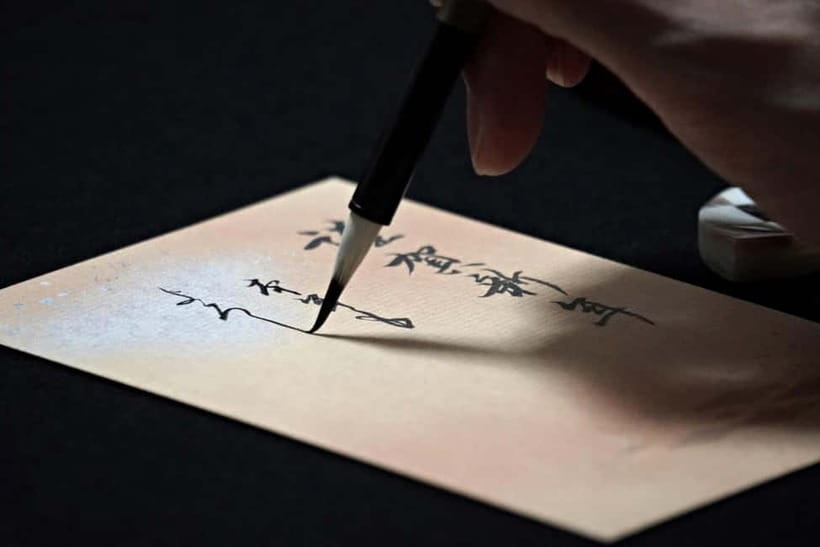
The most appealing part of this Asakusa workshop is that you do not just watch someone write beautiful characters. You practice the strokes yourself, learn why they are made in a certain order, then create a piece you can take home. Mei’s patient teaching and the calm pace make this a good fit even if your handwriting usually looks more like a medical prescription.
I especially like the chance to use both a traditional brush and a modern fude pen, since the two tools give you different levels of control. I also like that your finished work can become a real souvenir, with choices such as a scroll, fan, or hard-backed square. The main consideration is time: the session is advertised at 90 minutes, though some sessions may run to 1.5 or even 2 hours, so it may feel brief if you want advanced practice.
- Practice before creating: You work on brush control, stroke order, and basic techniques before making your final piece.
- Learn with Mei: The English-speaking instructor explains both the craft and its place in Japanese culture.
- Choose your tools: Traditional brushes give you the classic feel, while a fude pen offers added precision.
- Take home useful art: Your finished work may be prepared on a scroll, fan, or hard-backed square.
- Small-group setting: With no more than 10 participants, you should have room for individual guidance.
- Easy rainy-day plan: The indoor workshop offers a quiet cultural activity in central Asakusa.
A Quiet Introduction to Shodo in Asakusa
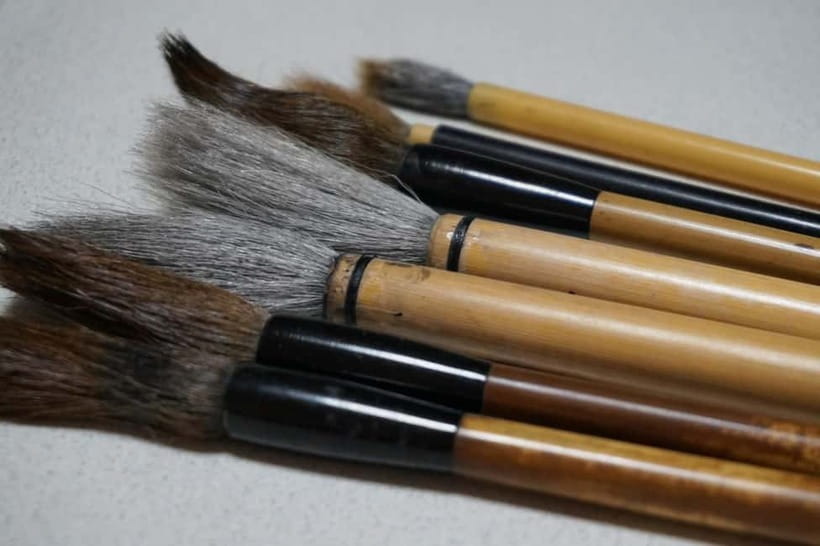
Japanese calligraphy, or shodo, is more than writing a character neatly. It is a practice of pressure, speed, balance, and restraint. A single line can be thin or broad depending on how you hold the brush and how firmly you press.
This workshop gives you a friendly starting point without asking you to arrive with artistic skill. You learn the basic movements first, then use them to make something personal. That order matters. You are not pushed straight into making a final piece before your hand has had time to understand the brush.
The setting is the Tokyo Tourist Lounge Asakusa, on the fifth floor of the building. Transportation to the venue is not included, so you need to make your own way there. Once inside, the activity is focused and contained, which makes it easy to fit into a day of sightseeing around Asakusa.
I like this format because it gives you a pause from Tokyo’s noise and crowds without taking up half a day. You get a cultural activity with a clear beginning, a period of practice, and a finished result.
What Happens During the 90-Minute Class
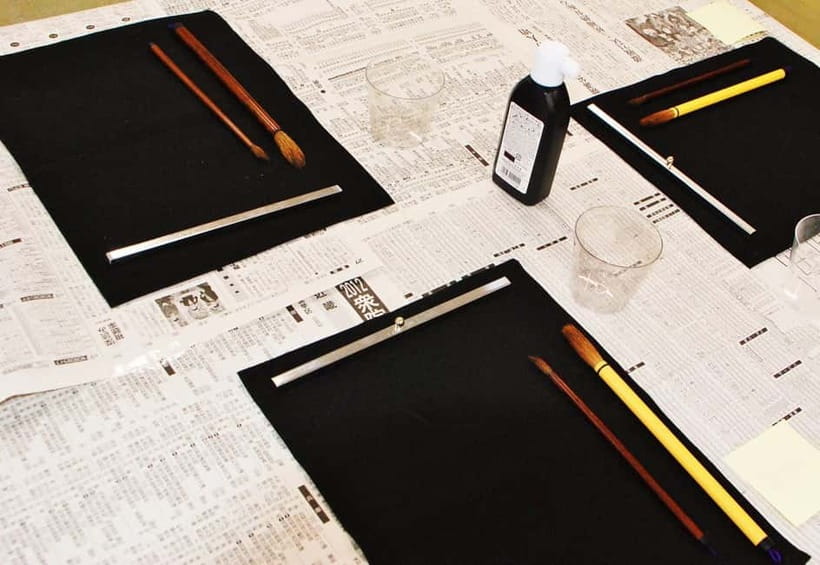
The workshop lasts about 90 minutes, with the stated duration ranging from one to 1.5 hours. Some sessions may take longer when the group needs extra help or practice. That flexibility is useful, especially for children, first-time writers, or anyone who wants more time before committing ink to the final artwork.
More Asakusa and Sensoji tours:
- Tokyo: Japanese Dance Cabaret Theater Asakusa-Kaguwa Ticket
★ 4.8 · 2,270 reviews - Tokyo: Meiji Shrine, Asakusa, Skytree Bus Tour and Cruise
★ 4.7 · 1,986 reviews - Tokyo: Roll and Authentic Sushi Making Class in Asakusa
★ 4.9 · 1,957 reviews
First, Learn How the Brush Behaves
You begin with basic brush control. The instructor shows you how the brush moves, how pressure changes a stroke, and why stroke order matters. This is the part that turns calligraphy from simple copying into a physical skill.
You should expect to make practice marks before working on your chosen characters. That repetition is not filler. It helps you get used to the brush’s soft tip and the way a small change in pressure affects the result.
The fude pen adds another layer. It is a modern brush pen that gives you more control and precision, which can be reassuring if you are nervous about handling a traditional brush. Using both tools lets you compare the classic method with a more forgiving option.
Next, Explore Characters and Meaning
Once you have practiced the basic strokes, you write characters of your choice. The information provided for the workshop does not list a set menu of characters, so you should expect the instructor to help you work with your selection during the session.
This is a useful point to ask about meaning and form. If you are choosing a character for a souvenir, make sure you understand what it means and how it is used. The activity is not just about producing an attractive shape. It is also a chance to connect the written form with Japanese language and culture.
Mei explains the history of calligraphy as part of the lesson. Her English instruction is intended for international visitors, and the class is suitable for beginners with no previous experience.
Finally, Make the Piece You Take Home
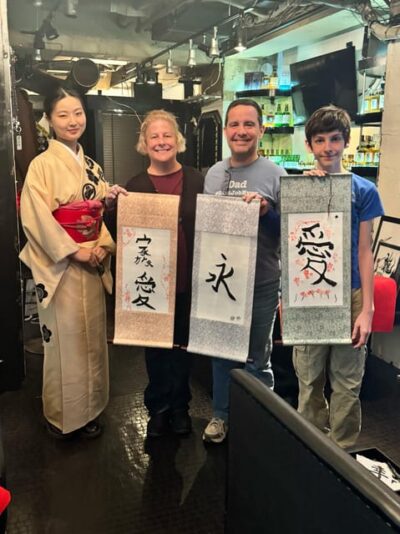
The last part is your finished artwork. You may create a piece on a scroll, fan, or hard-backed square, depending on the format offered in your session. The result gives you something more personal than a shop-bought souvenir because you made it while learning the basic process.
Do not expect museum-quality work after one short class. The value is in making a piece that shows your own progress. The instructor helps you work within your skill level, so your final result should be realistic for the time available.
That is particularly helpful if you are not confident with art. You do not need to produce a perfect professional composition. You need to practice, make thoughtful choices, and finish something you are happy to carry home.
More Tokyo calligraphy classes:
- Tokyo: Calligraphy on Kanji Fan & Scroll with Drink
★ 5.0 · 210 reviews - Let’s experience calligraphy in YANAKA, Taito-ku, TOKYO !!
★ 5.0 · 127 reviews - Experience all of Japanese culture and Japanese food experience classes “origami, udon, Japanese food, green tea, calligraphy” in 4 hours
★ 5.0 · 105 reviews - Tokyo: Calligraphy Workshop & Original T-Shirt Creation
★ 4.9 · 105 reviews
Mei’s Teaching Style Makes the Difference
The instructor, Mei, receives especially strong praise for her patience, clear explanations, and friendly manner. She introduces the strokes and background of the art without making the class feel formal or intimidating.
That matters because calligraphy can look simple from the outside. The characters may have only a few lines, but each line has a proper direction, rhythm, and finish. A good teacher helps you see what your hand is doing instead of simply telling you to copy a model.
Mei also gives people time to practice. This is one of the best features for beginners. You can repeat a stroke, ask for help, and adjust your grip before working on the final piece. If you learn slowly, the lesson is designed to accommodate that rather than rush you along.
Her teaching also includes ideas of patience, focus, and calm. You will not get a full meditation course, but the deliberate movements give the class a peaceful quality. Several people have found it a refreshing break from the pace of Tokyo.
The small-group limit of 10 participants supports this style. It is not a private lesson, but it should allow more contact with the instructor than a large demonstration class. If your group has several beginners, the pace may be shared across different skill levels.
Traditional Brush or Fude Pen?
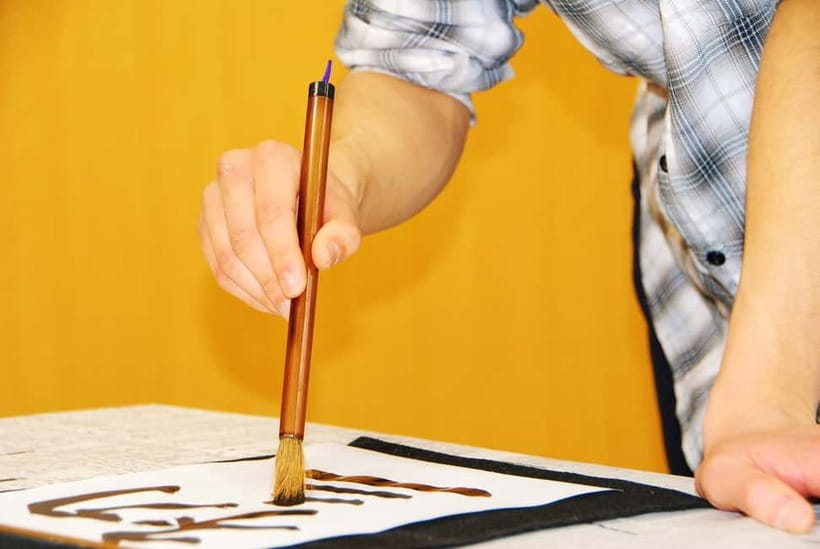
The two writing tools serve different purposes.
A traditional brush gives you the most direct connection to Japanese calligraphy. It responds to pressure and angle, so the width of a line can change as you move. It also demands more control, which is part of the challenge and part of the fun.
The fude pen is more precise and easier to manage. It still has a brush-like tip, but it offers a steadier experience for people who feel uncertain with ink and a soft brush. You can use it to understand stroke shapes before trying to create them with a traditional tool.
I like that the workshop includes both rather than treating the modern pen as a lesser option. You get to feel the difference for yourself. The traditional brush gives you the stronger sense of craft, while the fude pen can help you produce clean lines and build confidence.
If your goal is an authentic introduction, spend time with the brush. If your goal is a neat piece to frame or display, use the tool that gives you the most control. There is value in both approaches.
Choosing a Souvenir With Meaning
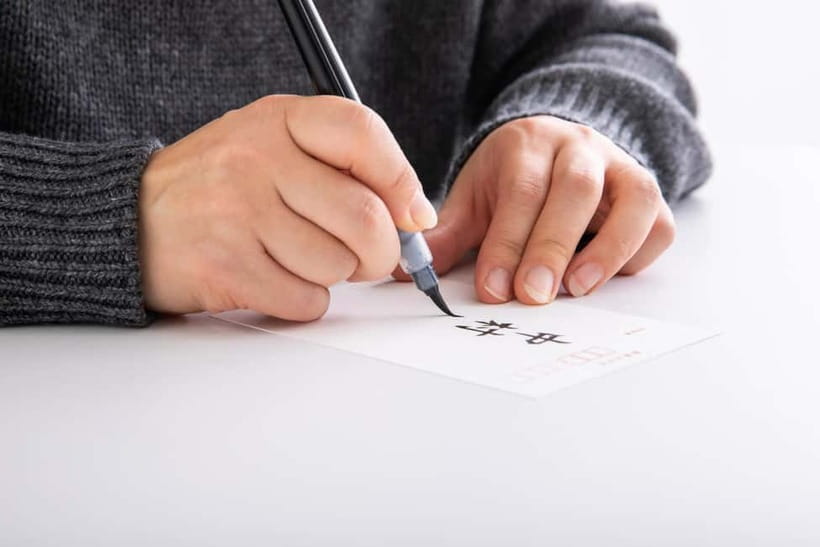
The finished work is a major reason to choose this activity. You leave with a personal piece rather than only photographs of Tokyo.
A scroll can suit a character or phrase that you want to display vertically. A fan gives the artwork a distinctly Japanese shape. A hard-backed square may be easier to store or frame. The exact options can depend on the session, but these formats give you more choice than writing on ordinary practice paper.
Think about where you will keep the piece before you begin. If you are packing light, a compact format may be easier to protect. If you want a wall decoration, a scroll may be the better choice. You can ask Mei for guidance on the format and character combination.
The souvenir will also reflect your skill level. That is not a flaw. A slightly uneven line shows that you made it by hand during a cultural lesson. The best result is not necessarily the most polished one. It is the one that reminds you what you learned and where you made it.
Why the Asakusa Location Works Well
Asakusa is one of Tokyo’s historic districts, so the workshop fits naturally into a day spent exploring the area. You can place it before or after other sightseeing, though you need to plan your own transportation to the Tokyo Tourist Lounge Asakusa.
The workshop itself is indoors and wheelchair accessible. That makes it a useful option in bad weather or on a day when you want less walking. A rainy morning does not have to mean losing a day in Tokyo, and calligraphy gives you a cultural activity that does not depend on clear skies.
The venue is on the fifth floor, so check the building and meeting point carefully before you arrive. The information provided does not include transportation from a hotel or station, so allow enough time to find the building.
Because the activity lasts only about 90 minutes, it is easy to combine with other plans. The tradeoff is that you do not have unlimited time for advanced writing, long cultural discussion, or repeated final attempts. Think of it as a well-structured introduction, not a full course in shodo.
Is the $38 Price Good Value?
At $38 per person, the workshop offers several things in one package: instruction in English, use of the materials, practice time, access to both traditional brushes and a fude pen, and a finished artwork to take home.
That is good value if you want an activity rather than another sightseeing stop. You are paying for guidance and a cultural encounter, not simply for a piece of paper and ink. The instructor’s help is especially important for a craft where small details are difficult to learn from a printed guide.
The price is less compelling if you only want a quick souvenir or a short demonstration. You could buy Japanese stationery or calligraphy goods for less. This workshop makes sense when you want to understand how the writing is made and take part in the process.
The small group also adds value. With a maximum of 10 people, the lesson should feel more personal than a large tourist presentation. You still need to pay for your transportation to the venue, which is not included.
Free cancellation up to 24 hours in advance and the reserve-now, pay-later option give you useful flexibility. Those terms matter in Tokyo, where weather, jet lag, and changing sightseeing plans can affect your schedule.
Who Will Enjoy This Most?
This class suits first-time visitors who want a hands-on cultural activity. You do not need previous calligraphy experience, artistic training, or Japanese language skills.
It also works well for returning visitors who have already seen major sights and want a quieter activity with a local craft focus. The format is suitable for adults and children, though the best experience will depend on each child’s ability to sit, listen, and practice carefully.
Art students and experienced artists can still get something from it. One participant with an art background found the brush skills useful, while the structured instruction gives more advanced makers a chance to study a traditional form rather than simply admire it.
Couples, friends, and families can enjoy comparing their finished pieces. A small group may also suit solo visitors who want an activity with some social contact but do not want a large tour.
You may want to skip it if you dislike careful repetition or want a fast-moving activity. Calligraphy rewards patience. The class is calm and focused, not loud or action-packed.
Practical Tips Before You Book
Plan to arrive with enough time to find the Tokyo Tourist Lounge Asakusa on the fifth floor. Since transportation is not included, check your route before leaving and do not rely on finding the building at the last minute.
Keep your schedule flexible after the class. The listed duration is 90 minutes, but the full workshop can take 1 to 1.5 hours, and some sessions may last longer when extra practice is needed. Avoid booking a tight connection or an important reservation immediately afterward.
Wear something you can relax in while practicing. The supplied information does not state a dress code, but working with ink and brushes is a hands-on activity, so practical clothing is sensible.
Give thought to the character or idea you want to write. You can choose your own characters, and the meaning will make the final piece more personal. If you are unsure, ask Mei for help rather than choosing a character only because it looks attractive.
Finally, do not judge your first attempts too harshly. The point is to learn brush control, not to imitate a master in one sitting.
Should You Book This Calligraphy Workshop?
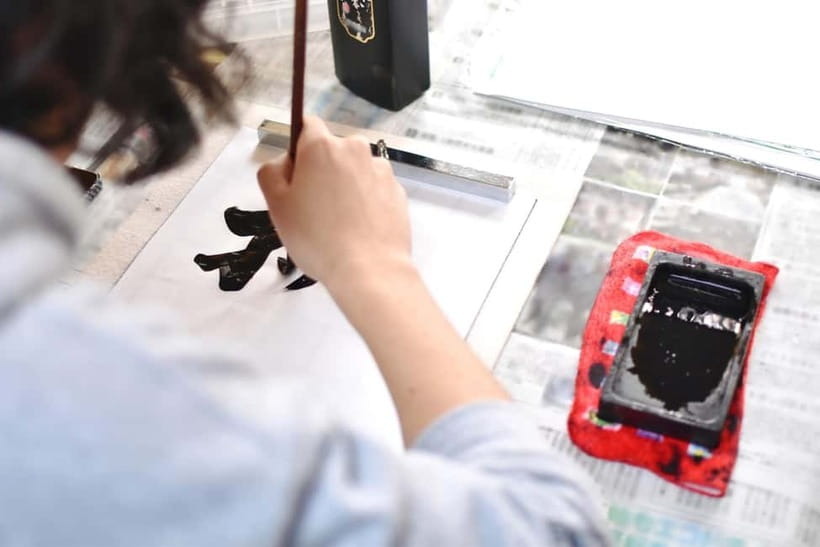
I would book this workshop if you want a calm, beginner-friendly activity with a real object to take home. The combination of Mei’s patient English instruction, practice time, traditional tools, and personal artwork gives the $38 price a clear purpose.
It is particularly good for a rainy day, a break from sightseeing, or anyone interested in Japanese culture beyond temples and food. The small group and wheelchair-accessible venue add practical value.
I would think twice only if your Tokyo schedule is packed or if you want a longer, more advanced calligraphy course. For a 90-minute introduction in Asakusa, though, this is a thoughtful and manageable way to try shodo without needing any previous skill.
FAQ
How long does the calligraphy workshop last?
The workshop lasts about 90 minutes. The stated duration can range from one to 1.5 hours, and some sessions may take longer when participants need extra practice.
Is the workshop suitable for beginners?
Yes. No prior calligraphy experience is required, and the class begins with brush control, stroke order, and basic techniques.
Who teaches the class?
The workshop is taught in English by Mei, an instructor who explains Japanese calligraphy, its history, and the technique behind the strokes.
What tools will I use?
You will use traditional Japanese calligraphy brushes and a modern fude pen, which is a brush pen designed for greater precision.
Do I take home my own artwork?
Yes. The workshop includes a personal calligraphy artwork to take home. Formats may include a scroll, fan, or hard-backed square.
Where is the meeting point?
The meeting point is Tokyo Tourist Lounge Asakusa, located on the fifth floor of the building.
Is transportation included?
No. Transportation to and from the workshop is not included, so you must arrange your own way to the meeting point.
More hands-on classes and workshops in Tokyo
- Sushi Making Tokyo Roll and Authentic Japanese Sushi Class
★ 5.0 · 3,971 reviews - Tokyo Shinjuku Chopsticks Making Class
★ 5.0 · 1,763 reviews - Tokyo: Sushi Making Class in a Happi Coat near a Famous Spot
★ 4.9 · 1,377 reviews - Chopstick Making Workshop in Ginza
★ 4.8 · 1,366 reviews
Newly reviewed around Tokyo
- Tokyo Asakusa:Calligraphy & Make T-shirt Activity★ 5.0 · 62 reviews
- Intercity Shuttle, Tokyo to Haneda /Narita /Yokohama /Makuhari★ 5.0 · 5 reviews
- 1 Hour Travel around Tokyo with a Professional Photographer★ 5.0 · 3 reviews
- Travel Tokyo with Your Own Personal Photographer★ 5.0 · 43 reviews
- Train in Samurai Swordsmanship and Defeat the Demon in Tokyo★ 5.0 · 5 reviews
- Shuttle Van 6hr Tokyo Tour to-and-from Tokyo, Yokohama and Narita★ 5.0 · 9 reviews
- Kickboxing & Body Training with EX-Pro Fighter★ 5.0 · 4 reviews
- Traditional Japanese Knife Sharpening Class★ 5.0 · 18 reviews
Tokyo Calligraphy Classes, compared.
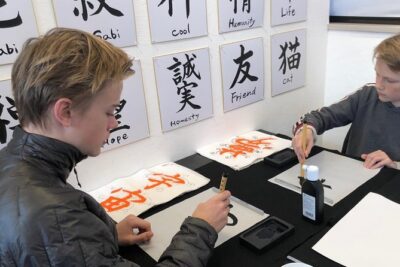
Let’s experience calligraphy in YANAKA, Taito-ku, TOKYO !!
Read our review →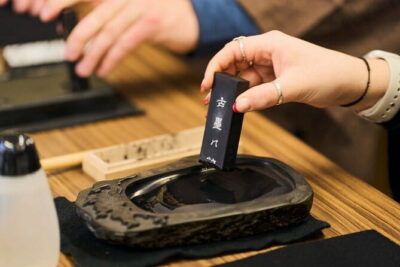
Calligraphy Workshop & Original T-Shirt Creation
Read our review →
Calligraphy Workshop & Original T-Shirt Creation
Read our review →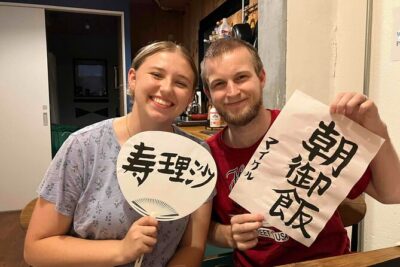
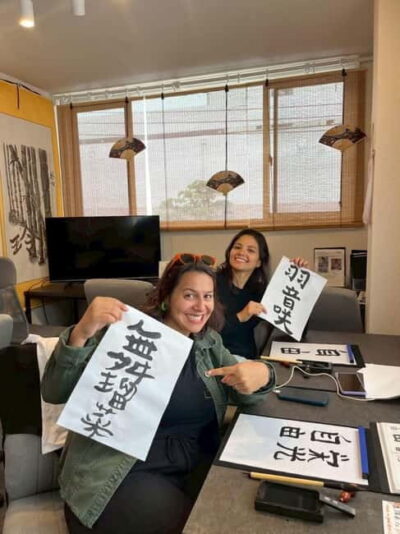
Calligraphy &Make your original folding fan in Asakusa
Read our review →
Tokyo Asakusa:Calligraphy & Make T-shirt Activity
Read our review →Browse the lists this tour appears in