
Reviewed · TOKYO WALKING TOURS
Ueno and Yanaka Culture Art Walking Tour in Old Tokyo
Ueno and Yanaka offer two very different views of Tokyo in one well-planned day. You begin with museums and grand religious sites in Ueno, then walk into Yanaka, where old wooden buildings, small temples, and quiet lanes give the city a gentler feel.
I like the mix of culture and ordinary street life. The National Museum of Nature and Science gives you a clear starting point, while Ameyoko brings you down to street level with shops and places to eat. I also like the way the route ends in Yanaka’s calm lanes and cemetery, far from Tokyo’s busiest crossings.
The catch is simple: this is a long outdoor walking day, lasting about seven and a half hours. Lunch, drinks, and trains are extra, and the group can include up to 15 people. You should arrive ready to walk rather than treat this as a vehicle-based sightseeing trip.
Key points at a glance
- See Ueno’s blue whale and steam locomotive: The National Museum of Nature and Science provides an easy introduction to Tokyo’s cultural district.
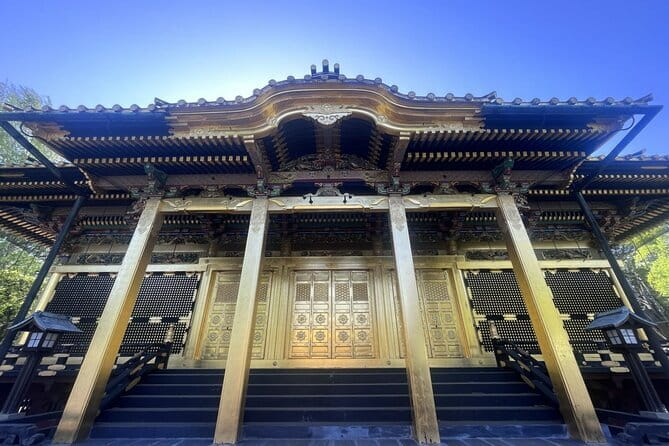
- Explore Ueno Park beyond the main paths: The route includes temples, shrines, a lake, nature, and admission to Toshogu Shrine.
- Take a proper lunch break at Ameyoko: You have time to choose your own food in Ueno’s old shopping and restaurant district.
- Visit an artist’s former home and studio in Yanaka: The museum adds a personal art story to the neighborhood walk.
- Look for cats along Yanaka Ginza: Cat statues and cat-themed goods add a playful touch to this traditional shopping street.
- Finish near Nippori Station: The route ends after Yanaka Cemetery and Sakura-dori, making it useful for continuing your day in Tokyo.
Why Ueno and Yanaka work well together
Many Tokyo sightseeing days focus on neon, department stores, and crowded stations. This route takes a different approach. Ueno gives you large museums, a broad park, religious buildings, and a famous market street. Yanaka feels smaller and more residential, with a slower rhythm and older architectural character.
That change of mood is the main reason I like this experience. You do not spend the whole day looking at one type of attraction. Instead, you move from natural history to Buddhist and Shinto sites, then to food, local shopping, art, and a cemetery.
The route also gives you context that can be hard to get on your own. A guide can point out why a building matters, explain the role of a shrine or temple, and help you understand how Ueno and Yanaka fit into old Tokyo. Beth is specifically named as one guide for this experience, and the tour format allows time for questions about Japan.
You should still know what this day is not. It is not a private tour with a car. It is not a short stroll between two famous sights. The experience uses public transport before and after the tour, but the sightseeing itself takes place on foot.
More old Tokyo walks around Yanaka:
- The Old Quarter of Tokyo – Yanaka Walking Tour
★ 4.5 · 590 reviews - Yanaka Walking Tour: Historic and Traditional District of Tokyo
★ 5.0 · 530 reviews - Tokyo: Old Quarter Yanaka Walking Tour
★ 4.8 · 406 reviews
Starting at Ueno Station and the National Museum
The meeting time is 9:30 am at Ueno Station. The closest access point is the Park Gate exit, and the JR Yamanote Line is the practical rail connection mentioned for reaching the area. Give yourself time to find the correct exit. Ueno Station is large, and arriving early is a sensible way to avoid starting the day in a rush.
The first stop is the National Museum of Nature and Science, with about one hour inside. Your guide introduces the museum and its background, then points out major displays. These include a life-sized blue whale model and a steam locomotive, along with taxidermied animals.
That makes this a useful first stop even if you are not a museum specialist. The displays offer clear visual anchors, and the guide helps you focus on notable parts rather than wandering through a large building without a plan. One particularly useful detail is that the guide can draw attention to the beauty of the museum building itself, not just the objects inside.
Admission to this museum is included. That matters because the $148.93 price is not paying only for walking guidance. You are also receiving entry to selected cultural sites during the day.
One limitation is the short visit. An hour is enough for an introduction and key exhibits, but not for a detailed look at every gallery. If natural history is your main interest, you may wish you had more time. For most people, though, the museum works well as the opening chapter rather than the whole day.
Ueno Park’s temples, shrines, and lake
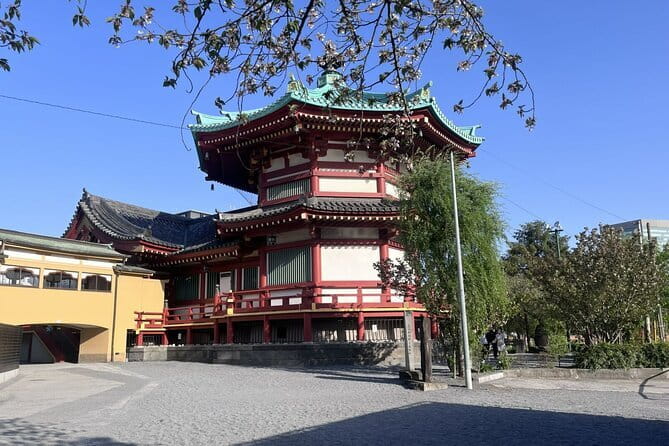
After the museum, the route spends roughly an hour and a half in Ueno Park. This is where the day opens up. Instead of moving from one indoor room to another, you walk through a large public park with temples, shrines, water, and greenery.
The tour includes admission to Toshogu Shrine, one of the included entry fees. The park section also covers other temples and shrines, giving you a chance to compare different religious settings within the same district. The guide’s role is important here because many of these buildings can look like brief photo stops when you do not know what you are seeing.
I like this part for its contrast with central Tokyo. You can pause, take in the lake, and enjoy a quieter setting without leaving the city. The park also gives your feet a change from museum floors and station corridors.
The walk is described as peaceful and relaxed, but it is still a substantial outdoor section. Comfortable shoes are a practical choice, and you should be prepared for weather because the experience does not use a private vehicle. The tour does not promise unlimited free time at each shrine, so people who like to linger for photographs may need to keep an eye on the group’s pace.
Ameyoko for shopping and lunch
The final Ueno stop is Ameyoko Shopping Street, with about one hour and 20 minutes allocated to the area. This is a sharp change of tone. The park is open and reflective; Ameyoko is a busy old shopping district with stores, food, and a more energetic street feel.
The guide gives you background on the area before you have free time for lunch and browsing. That order is helpful. You first learn what makes the district significant, then you can explore with a better sense of place instead of simply treating it as a collection of shops.
Food is not included, so budget separately for lunch and drinks. The break is flexible rather than a fixed meal, which is useful if you want to choose your own food. It also means the final cost of the day depends partly on what you buy.
Ameyoko is a good place to experience Tokyo at street level. You are not being guided only through polished cultural sites. You get time in a working shopping area where people eat, shop, and move through the city. The tradeoff is that the area can feel crowded and noisy, especially compared with Ueno Park. If you prefer quiet streets all day, this is the most hectic section.
More things to do in Ueno:
- Eat and Drink Like a Local: Tokyo Ueno Food Tour-Taverns&Ramen
★ 5.0 · 957 reviews - Tokyo: Food Tour in Ueno with 10+ Tastings of Japanese Classics
★ 5.0 · 303 reviews - Tokyo Ueno Food Tour Sushi Ramen and Local Favorites
★ 5.0 · 54 reviews - Japanese Food Experience Night Tour in Ueno
★ 5.0 · 47 reviews
Yanaka’s art, memory, and old houses
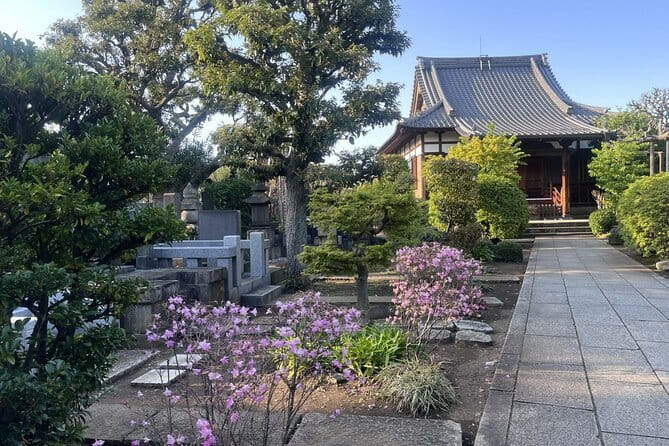
From Ueno, the experience moves into Yanaka, a traditional lower-city neighborhood known for its calmer atmosphere. The first Yanaka stop is a museum connected to a famous Japanese sculptor. The building served as both the sculptor’s workshop and family home.
This is one of the more distinctive parts of the day. You are not simply entering a large public museum. You are seeing art in a place connected to the artist’s daily life and work. The visit lasts about one hour and 10 minutes, giving you enough time for an introduction and a look at the art.
For me, this stop adds a personal scale to the itinerary. The National Museum of Nature and Science shows large public collections. The Yanaka museum offers a closer look at one artist and one household. Together, the two museums make the day feel more balanced.
The exact appeal will depend on your interest in Japanese art and sculpture. If you prefer famous landmarks only, this may feel less immediately dramatic than Ueno Park’s larger sights. If you enjoy places with a direct connection to a person and a neighborhood, it should be a strong stop.
The route’s transition into Yanaka is also part of the experience. You move away from major museum grounds and into an area where small streets and traditional architecture matter as much as formal attractions. This is where the tour earns its focus on old Tokyo.
Yanaka Ginza and the cat-themed streets
The next hour is spent around Yanaka Ginza Shopping Street. This is a smaller, more relaxed shopping area than Ameyoko, and the mood is deliberately local and easygoing.
Yanaka is often associated with cats, and you can look for cat statues and cat-themed goods along the way. That detail gives the walk a light touch. It also gives you something specific to notice as you move through the street rather than simply passing shops.
The guide leads you through the district and explains its character. You have a chance to browse, but this is not presented as a major shopping expedition. The value is in seeing how a traditional neighborhood uses its shopping street as a social center.
You should keep your expectations realistic. There is no promise of a large shopping allowance or a long stop at individual stores. The hour is enough to get a feel for Yanaka Ginza and perhaps pick up a small item, but people who want extended shopping time may find it brief.
I like this section because it is ordinary in the best sense. You are seeing a part of Tokyo that is less polished and less dominated by major attractions. The route still has guidance, but it leaves room for you to notice small details at your own pace.
Yanaka Cemetery and the quiet finish
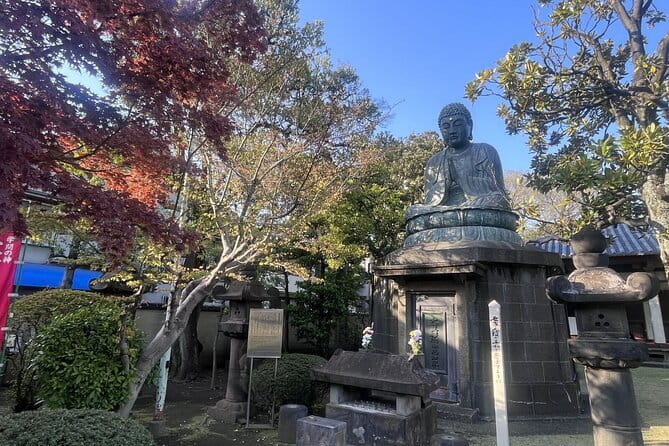
The final section includes a Buddhist temple with impressive Buddha statues, followed by Yanaka Cemetery and Sakura-dori. About an hour is reserved for this part of the route.
The temple provides a quiet place to rest before the cemetery walk. That pause matters after a full day outside. It also keeps the final portion from becoming just another sequence of stops. You have time to enjoy the calm setting and take in the statues.
Yanaka Cemetery offers a different kind of Tokyo experience. It is peaceful and spacious, and the surrounding streets help show why Yanaka feels so different from the city’s modern commercial districts. Walking through a cemetery requires a respectful attitude, of course. This is not a loud sightseeing stop or a place for casual behavior.
Sakura-dori is part of the final walk, and the route ends at Nippori Station. Ending there is practical. You are not returned to Ueno, so you should plan your next move from Nippori rather than assume the day finishes where it began.
This final section may be the most rewarding for people who want a slower look at Tokyo. It is also the point when tired legs are most likely to matter. The full experience lasts about seven and a half hours, and the later walking comes after several earlier stops.
What the $148.93 price includes
At $148.93 per person, this is not a bargain-priced orientation walk. The value comes from the length of the day, the English-speaking guide, the small maximum group size of 15, and included admissions to the museums and Toshogu Shrine.
You are paying for a full cultural route rather than a short neighborhood introduction. The guide helps connect places that might otherwise feel separate: natural history at the museum, religious sites in Ueno, street life at Ameyoko, art in Yanaka, and the quieter spaces near Nippori.
Food and drinks are not included. Neither are trains or transport before and after the tour. Those costs are easy to overlook when comparing prices, so include them in your budget.
I see the price as reasonable for someone who wants a guided full day and values explanation. It is less attractive if you are comfortable navigating Tokyo alone, prefer to choose your own museum pace, or want a short walk with lots of unplanned time.
The maximum group size of 15 is another useful detail. It is not a private experience, but it is limited enough for a guide to answer questions and keep the group together more easily than on a large coach outing.
Who should book this day
I would choose this experience if you want Tokyo beyond its most famous modern districts. It suits people who like museums, temples, neighborhood walks, traditional buildings, and a little time for food and shopping.
It is also a good choice early in a Tokyo visit. Ueno and Yanaka give you useful cultural context, and a guide can help you get your bearings without making you spend the day planning train routes and museum stops.
The route is especially suitable for people who enjoy a mix of organized explanation and free time. You receive guidance at each area, but you also get time to explore Ameyoko and Yanaka Ginza on your own.
I would think twice if you dislike long walks, need frequent private transport, or want a tour built around major photo landmarks. The experience is outdoors for several hours and includes a cemetery, smaller art setting, and ordinary shopping streets. Its appeal is in the overall feel of old Tokyo, not in collecting only headline attractions.
Most people can participate, but you should judge the seven-and-a-half-hour walking schedule honestly. The tour starts at Ueno Station and ends at Nippori Station, so plan your day around that one-way route.
Should you book the Ueno and Yanaka walk?
Book it if you want a thoughtful day that links major cultural sights with quieter neighborhood life. The strongest parts are the guide-led context, Ueno Park’s mix of shrines and nature, the artist’s former home in Yanaka, and the contrast between Ameyoko and Yanaka Ginza.
Skip it if you want a vehicle, a short schedule, or a highly flexible museum day. For everyone else, this is a useful way to see two sides of Tokyo without spending the whole day in the city’s busiest core. Guides such as Beth add the most value by explaining what you are looking at and adjusting the conversation to your questions.
FAQ
Where does the tour start?
The tour starts at Ueno Station, 7 Chome-1 Ueno, Taito City, Tokyo. The start time is 9:30 am, and the Park Gate exit is the closest exit.
Where does the tour finish?
The tour ends at Nippori Station, 2 Chome-19 Nishinippori, Arakawa City, Tokyo.
How long does the experience last?
The tour lasts approximately seven hours and 30 minutes.
Is transportation included during the tour?
The sightseeing is done on foot, and the experience does not use a private vehicle. Trains and transport before and after the tour are not included.
Are museum admissions included?
Yes. Admission fees for the National Museum of Nature and Science and Toshogu Shrine are included.
Is lunch included?
No. Food and drinks are not included. You receive a lunch break at Ameyoko Shopping Street and can choose where to eat.
How large is the group?
The maximum group size is 15 people.
Can I cancel for a full refund?
Yes. You can cancel at least 24 hours before the experience start time for a full refund. Changes or cancellations made less than 24 hours before the start time are not accepted for a refund.
More Tokyo walking tours
- Tokyo Tsukiji Fish Market Food and Culture Walking Tour
★ 5.0 · 3,184 reviews - Tokyo: Imperial Palace and Shogun Historical Walking Tour
★ 5.0 · 2,251 reviews - Tokyo: Shinjuku Local Bar and Izakaya Guided Walking Tour
★ 4.9 · 1,794 reviews - Tokyo: Tsukiji Fish Market Food and Walking tour
★ 5.0 · 1,724 reviews
Newly reviewed around Tokyo
- Sumo Training Watching Experience in Tokyo★ 4.5 · 8 reviews
- Giant Sushi Cooking Class: Make a 1.5m Sushi Roll in Tokyo★ 5.0 · 9 reviews
- 2 Hours Mochi &Nerikiri Making & Matcha Class in Bunkyo★ 5.0 · 21 reviews
- Japanese Sweets (Mochi & Nerikiri) making at a Private studio★ 5.0 · 22 reviews
- Mt Fuji and Kawaguchiko Private Tour★ 5.0 · 10 reviews
- Half-Day Local Tokyo Tour in Adachi Market and Shibamata★ 5.0 · 16 reviews
- Private Full-Day Tour of Tokyo with Hotel Pickup★ 5.0 · 3 reviews
- Urban Geometry with Laurence Bouchard★ 5.0 · 8 reviews
Tokyo Walking Tours, compared.
Tokyo Tsukiji Fish Market Food and Culture Walking Tour
Read our review →
Imperial Palace and Shogun Historical Walking Tour
Read our review →
Shinjuku Local Bar and Izakaya Guided Walking Tour
Read our review →
Asakusa Walking Tour with Sensoji Temple Visit
Read our review →
Tokyo Castle & Imperial PalaceーShogun Walking Tour
Read our review →
Browse the lists this tour appears in