
Reviewed · HALF-DAY
Half-Day Local Tokyo Tour in Adachi Market and Shibamata
Tokyo has a fish market that most tourists never see. At Adachi Fish Market, you can watch the trade in fresh seafood without the crowds and souvenir-shop feel of the city’s better-known markets. Then the tour changes pace in Shibamata, an old-fashioned neighborhood with sweets shops, temple carvings, and a famous bronze statue of Futen No Tora.
I like the small group of no more than eight, which gives guides such as Kaori, Mutsuko, Megumi, and Mana room to answer questions. I also like the simple route: seafood in the morning, a one-way train ride, then historic streets and temple architecture. The main drawback is the early 8 a.m. start and the fact that food and drinks are not included.
Key points at a glance
- Adachi Fish Market is Tokyo’s only specialized marine-products market, offering a less touristy look at the city’s seafood trade.
- The group is limited to eight people, making it easier to hear the guide and ask about unfamiliar fish or customs.
- Shibamata Taishakuten features detailed wood carvings arranged around the main hall, with a garden at Yamamototei adding a quieter finish.
- The route follows a one-way train journey from Senju Ohashi to Shibamata, and that fare is included.
- The four-and-a-half-hour schedule mixes food, local culture, film history, and architecture rather than focusing on one attraction.
- The tour ends at Shibamata Station, so you can continue exploring independently or make your own way elsewhere in Tokyo.
Why Adachi Market makes a better morning than another famous market
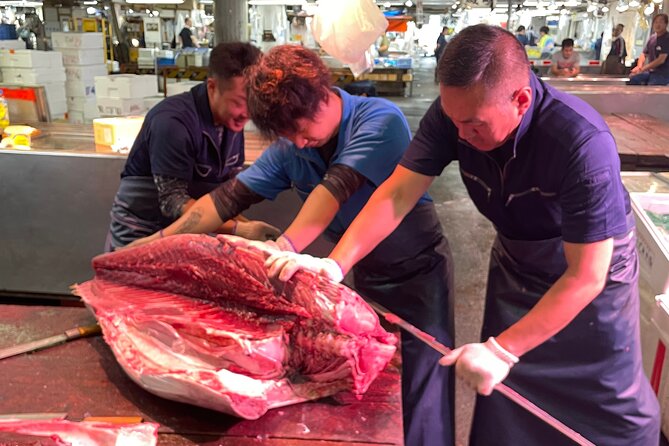
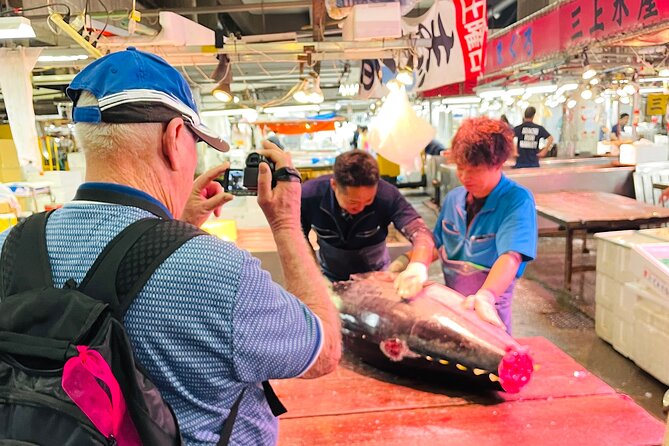
Adachi Fish Market is the reason to choose this tour over a standard Tokyo highlights walk. Tsukiji is famous, but Adachi offers a different kind of morning. It is the only specialized marine-products market in Tokyo, and the focus is on seafood rather than the broad tourist experience often associated with major market districts.
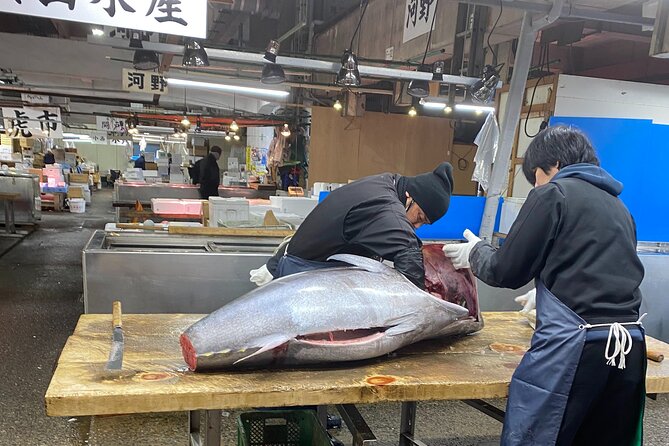
You spend about an hour looking around the market with a guide. Expect stalls selling sashimi, sushi ingredients, and a wide range of seafood. One particularly memorable detail from the experience is the sight of very large tuna, along with the sheer variety of marine products on display.
The guide’s help matters here. If you walk through a seafood market alone, you may recognize tuna or salmon but miss the purpose of other items, the way the market is organized, or the difference between what is sold for home use and what is handled for restaurants. A good guide turns a quick look at fish counters into a lesson about everyday Japanese food culture.
This is a market visit, not a cooking class or a scheduled tasting. Food and drinks are excluded, so do not book it expecting a full breakfast. You may find things that interest you, but the supplied details do not promise tastings or purchases. The value comes from access, context, and the chance to see a side of Tokyo that is easy to miss.
The market portion lasts about one hour. That is enough time to take in the scene without making the entire morning about seafood. If you are especially interested in Japanese cuisine, this will likely be the strongest section. If you are not comfortable around commercial fish stalls, the market may feel less appealing than the temple and old-town sections later in the morning.
More Tokyo markets and shopping streets:
- Tokyo Tsukiji Fish Market Food and Culture Walking Tour
★ 5.0 · 3,184 reviews - Tokyo: Tsukiji Fish Market Food and Walking tour
★ 5.0 · 1,724 reviews - Tokyo: Tsukiji Fish Market Guided Walking Tour
★ 4.9 · 1,397 reviews
The small-group format changes the experience
The tour accepts a minimum of two people and a maximum of eight. That is a useful size for a market, where a large crowd would get in the way and make explanations harder to hear.
I would choose this format over a large coach tour for one simple reason: the experience depends on questions. You may want to ask about a particular fish, a market custom, the meaning of a temple carving, or the connection between Shibamata and Japanese film. With eight people or fewer, the guide has a better chance of responding without holding up a long line.
The guides named in past departures include Kaori, Mutsuko, Megumi, Masayo, Yumi, Mana, Yoshimi, and Fumiko. Their approaches may differ, but the strongest descriptions emphasize clear English, local cultural explanations, patience, and a friendly manner. One guide, Kaori, was praised for speaking clearly and presenting information in an easy-to-follow way. Another, Megumi, was singled out for answering questions during a family group’s visit.
That kind of personal guidance is especially useful for first-time visitors to Japan. Shibamata is not difficult to walk through, but the experience improves when someone explains why a place matters rather than simply naming it.
The train ride from Senju Ohashi to Shibamata
After Adachi Market, the tour continues by train from Senju Ohashi Station toward Shibamata Station. The one-way rail fare is included, which removes one small payment and keeps the route straightforward.
The train transfer is also part of the appeal. You are not being driven between isolated sights in a private vehicle. You move from one part of northeastern Tokyo to another, shifting from a working market district to an older neighborhood beside the Edogawa River.
The start point is at Senju Ohashi Station in Adachi City. You need to get there independently for the 8 a.m. meeting time, since hotel pickup and drop-off are not included. Private transportation by taxi, car, or bus can be arranged for an additional fee, but the standard tour is built around walking and public transport.
That early start is worth considering carefully. It helps you reach the market while the morning is still underway, but it may not suit anyone who prefers a slow hotel breakfast. Allow time to find Senju Ohashi Station and arrive before the meeting time. The tour ends at Shibamata Station, not back at your hotel.
Arriving in Shibamata, an old Tokyo neighborhood
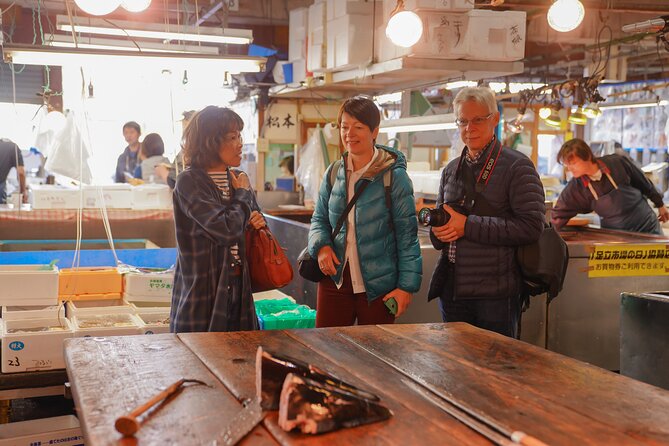
Shibamata offers a sharp change of mood. Located in northeastern Tokyo near the Edogawa River, the area is known for its old-style streets and slower pace. The tour allows about 30 minutes to get oriented before moving through the central sights.
This is not the Tokyo of giant department stores and famous crossings. The appeal is smaller and more human: a traditional shopping street, temple gates, old architecture, and the sense of a neighborhood with its own identity. If you have already visited the major central districts, Shibamata gives you a useful contrast.
The connection to Japanese cinema adds another layer. Shibamata is the fictional home of Futen No Tora, also known as Mr. Tora, from the Otoko wa Tsuraiyo film series. The tour pauses for about five minutes at his bronze statue outside Shibamata Station.
The statue stop is brief, so do not expect a film museum visit or a long discussion of the entire series. Still, it gives the neighborhood a cultural reference point. For Japanese visitors, Tora is a familiar figure. For international visitors, the guide can explain why the character is linked so closely with Shibamata and why the station area is an appropriate place to begin.
A completely different kind of day in Tokyo:
- Mt Fuji and Hakone 1-Day Bus Tour Return by Bullet Train
★ 5.0 · 26,383 reviews - 1-Day Tokyo Bus Tour
★ 5.0 · 14,250 reviews - Tokyo: teamLab Planets TOKYO Digital Art Museum Entry Ticket
★ 4.6 · 9,779 reviews - Mt Fuji & Hakone Cruise, Drum Show Bullet Train 1 Day from Tokyo
★ 4.0 · 7,413 reviews
Walking Taishakuten-Sando for 200 meters
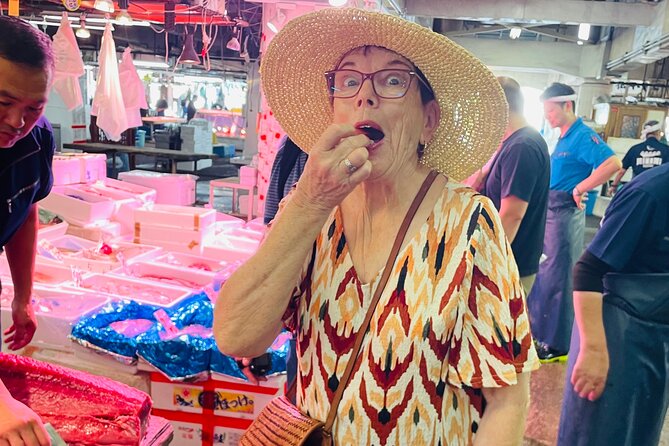
From the station, the route follows Taishakuten-Sando for about 200 meters. This is one of the most enjoyable parts of the tour because the street itself is an attraction.
You pass shops selling Japanese sweets, buckwheat noodles, and other local foods. The street is compact, so you are not facing a long urban march. Instead, you get a short, focused look at a traditional approach road leading to a temple.
The best way to enjoy this section is to look above the shopfronts and notice the older architectural details, then check the food displays and signs at street level. You may find yourself wanting to stop for a snack, but the schedule allows only about 20 minutes here. Since food is not included, ask the guide how much time is practical before buying anything.
This is also where the pace becomes more relaxed. The market is about commerce and food supply. Taishakuten-Sando is about browsing, local sweets, and the approach to a religious site. The two sections work well together because they show different parts of daily life rather than repeating the same kind of attraction.
Taishakuten Temple and its carved stories
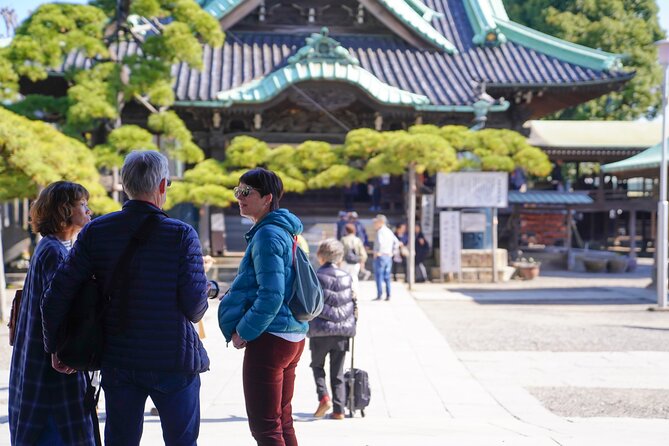
Shibamata Taishakuten, also called Taishakuten Daikyoji Temple, receives about 40 minutes. The main reason to visit is the wood carving.
Intricate carved panels surround the main hall, depicting scenes connected with the Lotus Sutra. The work is detailed enough to reward a slow look. Rather than treating the temple as a quick photo stop, take time to examine the figures, patterns, and layers in the carvings. Your guide can help explain what you are seeing and how the artwork relates to the temple.
The temple entrance is described as included in the tour, along with Yamamototei. Local taxes and the professional guide are also covered. You should still follow the guide’s instructions about where to walk and how to behave at the religious site.
Forty minutes is a reasonable amount of time for the temple grounds and carved panels, though visitors who love religious art may want longer. This is one of the tour’s tradeoffs: you get a broad introduction to Adachi and Shibamata, but the schedule does not allow for an unhurried, independent study of every detail.
Yamamototei brings a Japanese-Western finish
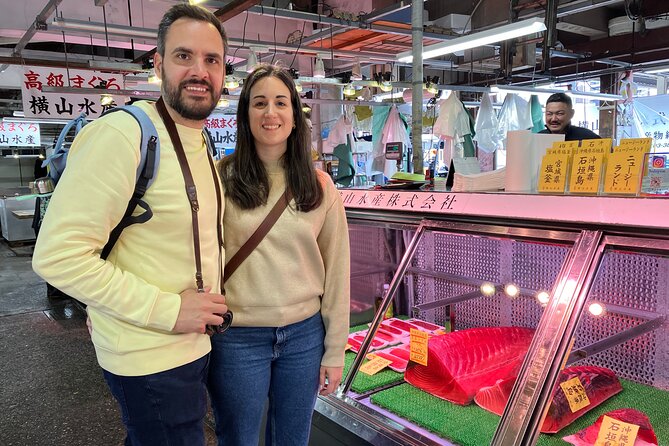
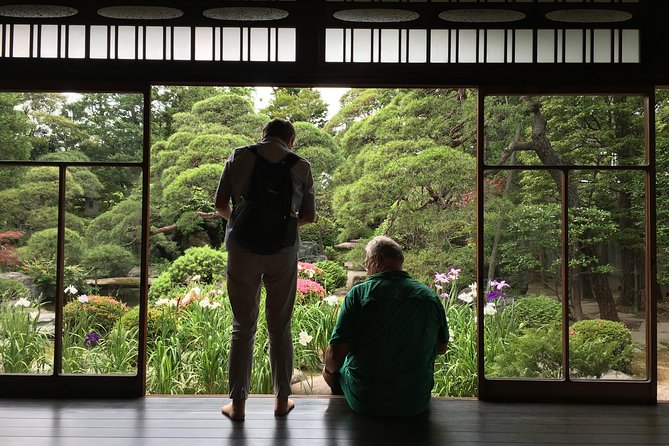
The final major stop is Yamamototei, where the tour spends about 30 minutes. This two-story building combines Japanese design with Western architectural elements. That mix gives the morning a different visual finish after the temple’s religious carvings.
The Nagayamon gate is especially distinctive for its Western-style details. The property also includes a garden associated with ikebana, the Japanese art of flower arranging. Together, the building and garden offer a calmer look at how Japanese and Western influences were combined in domestic and formal spaces.
Yamamototei is a good counterpoint to the market. At Adachi, you are looking at active trade and food. At Yamamototei, you are looking at design, proportion, and the way a building frames a garden. The tour does not force you to choose between modern city life and old architecture. It places both in the same morning.
The stop may be less exciting for children who need constant activity, and the temple carvings may be the main attraction for art-minded visitors. But for anyone interested in buildings, gardens, or cultural change, Yamamototei adds real value to the route.
What the $91.96 price gets you
At $91.96 per person, this is not the cheapest way to spend four and a half hours in Tokyo. The price makes more sense if you place a value on a small group, a professional guide, market interpretation, and the included one-way train fare and entrance fees.
You could reach Shibamata independently for less. You could also visit the shopping street and temple without paying for a guide. The harder part would be getting useful context at Adachi Fish Market and connecting the market visit with the history, film culture, temple art, and architecture of Shibamata.
The tour is also a practical option for a first Tokyo visit when you want something outside the most familiar districts. You are paying for a planned route and for explanations that help separate ordinary details from important ones. If you only want to see a temple and take photos, the cost may feel high. If you want a guided introduction to a less familiar part of the city, it is easier to justify.
Group discounts are available, though the exact savings are not specified. The tour is commonly booked well in advance, with an average booking lead time of about 64 days. That does not mean you must reserve that early, but it is a useful sign that you should not wait until the last morning of a busy Tokyo trip.
Who should choose this half-day tour
I would recommend it most strongly to people who have already seen, or do not care much about, Tokyo’s headline districts. It suits you if you want local food culture, traditional architecture, and a guide who can explain what you are seeing.
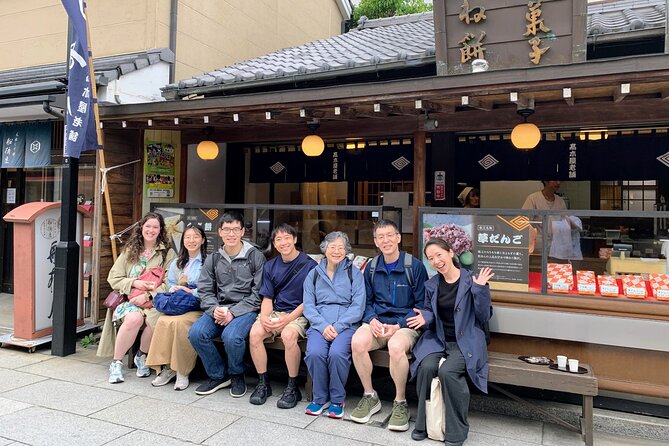
It is also a good match for families and small groups. A group of six has enough space to ask questions without turning the outing into a private tour. The walking is spread across several stops, and the train ride breaks up the route.
Food-focused visitors should give Adachi Market serious consideration. The market is the clear highlight if you want to see seafood and understand more about Japanese eating habits. The tour does not include a meal, so plan your own food afterward or buy something only if the schedule allows.
You may want to skip it if you dislike early starts, have limited mobility for a walking route, or want a completely flexible morning. The exact walking distance is not provided, but the experience includes a market visit, station transfer, shopping street, temple, and garden property. Hotel transfers are not part of the standard package.
Free cancellation is available up to 24 hours before the start time. Cancellations or changes made less than 24 hours ahead are not refunded or accepted, so keep that deadline in mind when making plans.
Should you book the Adachi and Shibamata tour?
Book it if you want to see a working seafood market, a traditional neighborhood, and a temple with unusually detailed carvings in one compact morning. The combination is the real strength. Each stop adds something different, and the small group keeps the experience personal.
I would not book it solely for a food tasting, because food and drinks are not included. I would also avoid it if your schedule cannot handle an 8 a.m. meeting at Senju Ohashi Station.
For most visitors, the best reason to reserve is the chance to understand a less familiar part of Tokyo rather than simply pass through it. The included train fare and entrances help, but the guide’s explanations are what make the $91.96 worthwhile. If that sounds like your kind of morning, this is a thoughtful alternative to another crowded central Tokyo stop.
FAQ
How long does the Adachi Market and Shibamata tour last?
The tour lasts approximately 4 hours and 30 minutes.
What time does the tour begin?
The tour starts at 8:00 a.m.
Where does the tour start?
The meeting point is at Senju Ohashi Station in Adachi City, Tokyo.
Where does the tour end?
The tour ends at Shibamata Station in Katsushika City, Tokyo.
Is the train fare included?
Yes. The one-way train fare from Senju Ohashi Station to Shibamata Station is included.
Are food and drinks included?
No. Food and drinks are not included in the tour price.
More half-day trips in Tokyo
- Half-day Tokyo Afternoon Tour by Hato Bus
★ 4.0 · 269 reviews - Tokyo: A Half-Day Trip Bus Tour in the Morning
★ 4.6 · 236 reviews - Half-day Tokyo Morning Tour by Hato Bus
★ 4.0 · 220 reviews - Tokyo Private Half-Day Tour with a Local – Secrets & Highlights
★ 5.0 · 53 reviews
Newly reviewed around Tokyo
- Ueno and Yanaka Culture Art Walking Tour in Old Tokyo★ 5.0 · 5 reviews
- Sumo Training Watching Experience in Tokyo★ 4.5 · 8 reviews
- Giant Sushi Cooking Class: Make a 1.5m Sushi Roll in Tokyo★ 5.0 · 9 reviews
- 2 Hours Mochi &Nerikiri Making & Matcha Class in Bunkyo★ 5.0 · 21 reviews
- Japanese Sweets (Mochi & Nerikiri) making at a Private studio★ 5.0 · 22 reviews
- Mt Fuji and Kawaguchiko Private Tour★ 5.0 · 10 reviews
- Private Full-Day Tour of Tokyo with Hotel Pickup★ 5.0 · 3 reviews
- Vegan / Vegatarian Ramen Tour★ 4.5 · 5 reviews
Half-Day, compared.
Tokyo Private Half-Day Tour with a Local – Secrets & Highlights
Read our review →
Old and Nostalgic Tokyo: Half-Day Yanaka Walking Tour
Read our review →

Browse the lists this tour appears in