
Reviewed · TSUKIJI AND TOYOSU FISH MARKET TOURS
Tsukiji Fish Market Small-Group Food Walking Tour
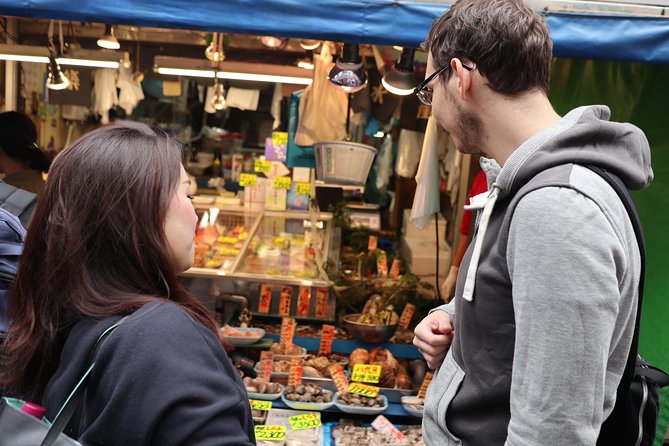
Tsukiji is still one of Tokyo’s best places to eat, but you need to know what you’re actually seeing. The inner wholesale market moved to Toyosu in 2018. This tour takes you through the Tsukiji Outer Market, a maze of food shops, seafood counters, kitchen stores, shrines, and narrow lanes where the old market spirit still hangs on.
I like two things here: the guide turns unfamiliar seafood into something you can understand, and the food is not limited to one big restaurant meal. You might try tamagoyaki, tuna sushi, grilled eel, scallops, crab, dried seafood, and small local snacks before sitting down for lunch. The small group, capped at seven, also makes it easier to ask questions.
The main drawback is the market’s changing identity. If you expect to watch the huge wholesale fish auction or see tons of fish traded in the old inner market, this is not that experience. Food restrictions also require care, since vegan options are unavailable and allergy-free meals cannot be guaranteed.
Key points to know before you book
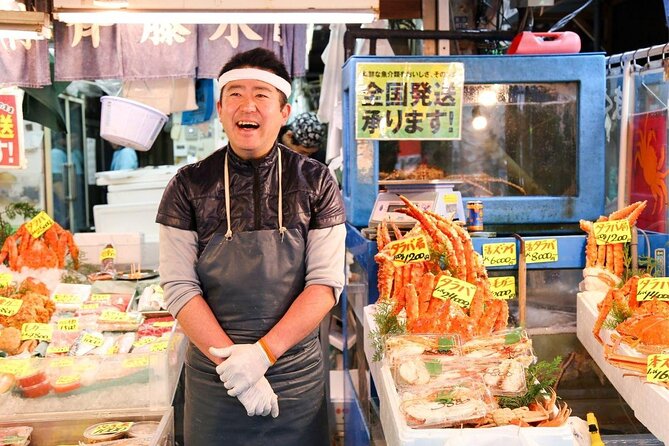
- The wholesale market is now at Toyosu: This tour visits Tsukiji Outer Market, not the former inner wholesale market.
- Come hungry: Tastings can include sushi, tamagoyaki, eel, scallops, crab, dried seafood, and other market snacks, followed by lunch.
- The group stays small: A maximum of seven people suits anyone who wants personal guidance without paying for a private tour.
- Food is only half the story: The route includes a Buddhist temple, Shinto shrine, market history, and a city view.
- Guides shape the experience: Guides such as Kazu, Yuki, Hitomi, Mark, Tiger, Mia, and Mummy have led tours, with much of the value coming from their food knowledge and local advice.
- Plan for heat and tight lanes: Summer can be hot and humid, and some market areas are too narrow for leisurely eating at the stalls.
Tsukiji today, and what this tour really shows you
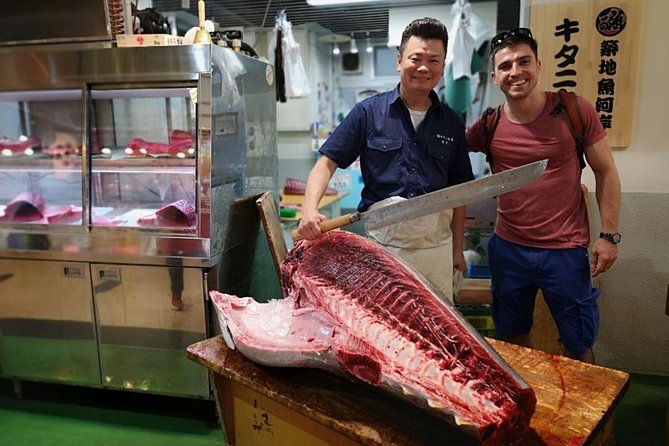
The name Tsukiji still carries enormous weight in Tokyo food culture. For decades, the inner market handled wholesale seafood, including the famous tuna auctions. That section moved to Toyosu in 2018, leaving the Outer Market in Tsukiji as the main public food district.
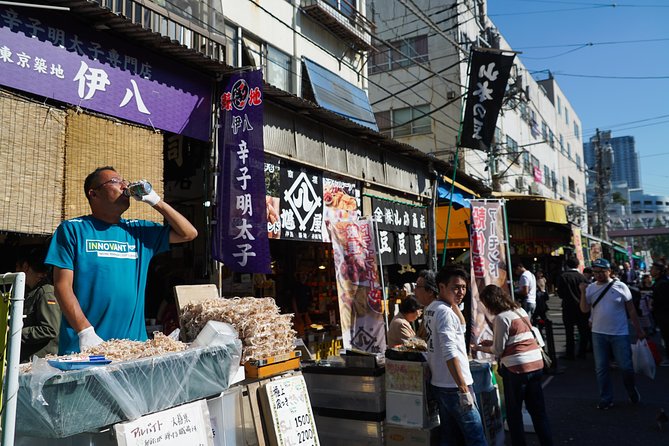
That distinction matters. This tour does not take you into the old wholesale trading floor. Instead, you walk among roughly 460 shops selling seafood, produce, meat, dried goods, seasonings, cooking tools, tableware, and prepared food.
I find that change less disappointing once you know what to expect. The Outer Market is not a museum frozen in time. It is a working shopping district that serves local residents, cooks, restaurant buyers, and curious visitors. You see shopkeepers selling ingredients and utensils, not just souvenir merchandise.
The market can be crowded, and signs in the narrow lanes often ask people not to stop and eat in the middle of the walkway. That is part of the practical lesson. You are visiting a real commercial area, so your guide has to keep the group moving and choose places where food can be eaten without blocking business.
More Tsukiji and Toyosu fish market tours:
- Tokyo Tsukiji Fish Market Food and Culture Walking Tour
★ 5.0 · 3,184 reviews - Tokyo: Tsukiji Fish Market Food and Walking tour
★ 5.0 · 1,724 reviews - Tokyo: Tsukiji Fish Market Guided Walking Tour
★ 4.9 · 1,397 reviews
Meeting at Tsukiji Station
The tour begins outside Tsukiji Station at Exit 1, at 3 Chome-9 Tsukiji. The guide waits there before leading the group toward the market.
Arrive early. The meeting point is near public transportation, but the market has many lanes, signs, and entrances. One useful tip is to ask nearby people or other participants if they are waiting for the same tour. Your mobile ticket and booking confirmation should be ready on your phone.
The walk lasts about three hours in total. Since the tour ends at Shiodome Tower in the Higashi-Shimbashi area, it is worth planning your next stop from there rather than assuming you will return to Tsukiji Station.
The maximum group size is seven. That is a good middle ground. You get the energy of a shared outing, but the group is small enough for the guide to point out seafood, answer questions, and manage food stops without turning the walk into a parade.
The first food stops in the Outer Market
The heart of the tour is eating around the market. Your guide leads you through food stalls and specialty shops, explaining what is available and helping you make sense of ingredients that may be unfamiliar.
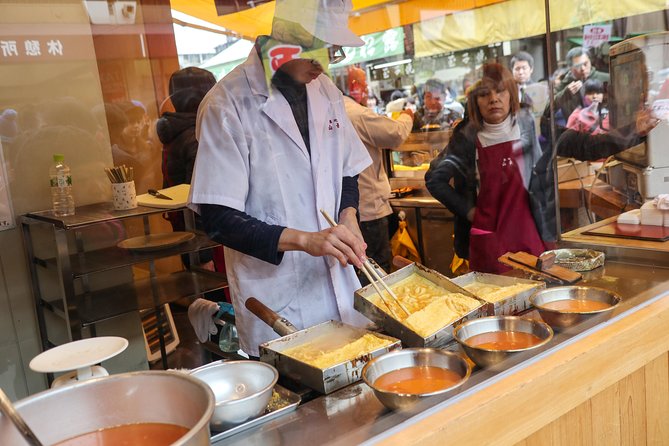
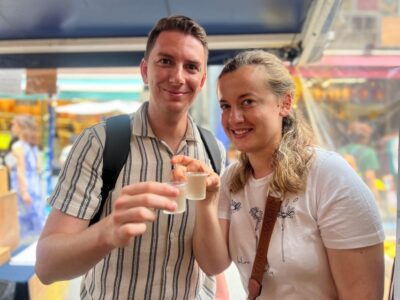
The exact tasting sequence can vary. That is normal in a working market, where lines, shop schedules, and availability change. Stops have included sweet Japanese omelette, tuna nigiri, grilled eel, scallops on a stick, giant crab legs, dried fish, and other local bites.
Tamagoyaki is a particularly useful introduction. This sweet rolled omelette looks simple, but it shows how Japanese food can balance texture, sweetness, and careful preparation. Seafood is presented in many forms here, from raw sushi to grilled or dried products, so you are not limited to one style of eating.
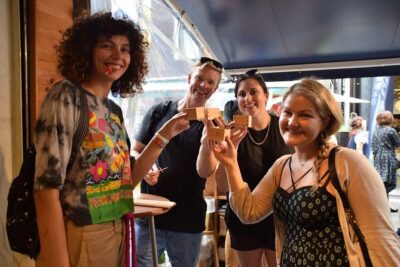
Several people have especially enjoyed the range of samples. The meal is not simply one plate of sushi followed by a walk. You may taste a few substantial items along with smaller snacks, then finish with a sit-down lunch.
Still, do not expect every stop to be a major event. Some samples may be modest, and a popular stall can have a long line. One planned takoyaki stop has been skipped when the wait was too long. That is sensible for a three-hour tour, but it means the exact food list is not fixed.
Fresh seafood lunch in a small local restaurant
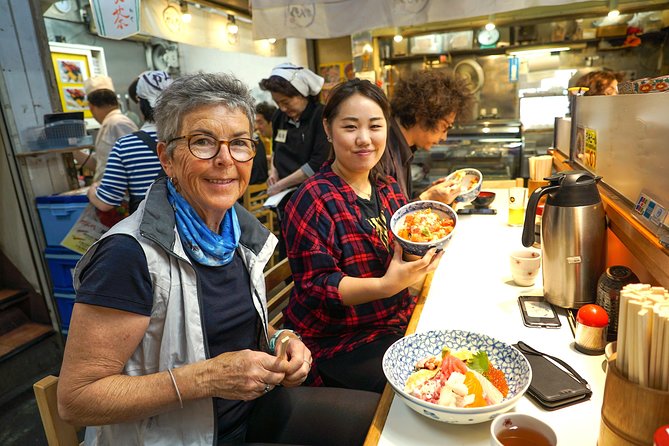
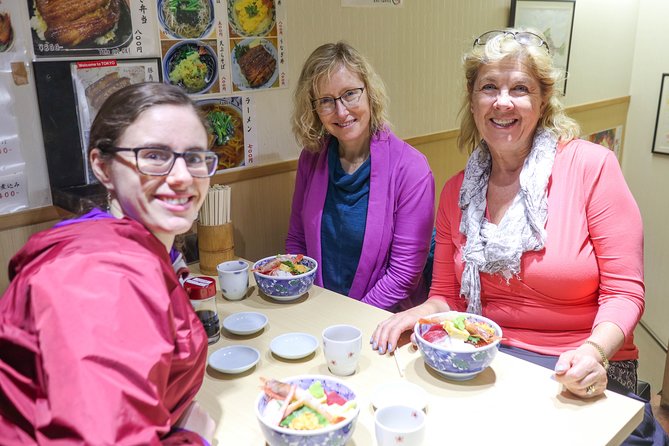
The included lunch gives the tasting portion a proper finish. Rather than eating every bite while standing in the lane, you sit down at a local restaurant and have a fuller seafood meal.
The lunch has been described as a favorite part of the experience, with excellent fish and the chance to choose from available meal options. One important practical detail is that the restaurant may be small, sometimes with booth-style seating. That can feel close and compact, but it also suits the character of Tsukiji.
You should arrive hungry. The market samples can add up quickly, and the lunch is more than a token snack. If you eat a full breakfast beforehand, you may miss the best part of the tour simply because you have no room left.
Food availability can change. The tour provider cannot promise allergy-free preparation, and substitutions may not be possible at every stop. The guide may try to compensate at another location, but you should treat that as an effort rather than a guarantee.
Vegan food is not available on this tour. If you have serious allergies, major dietary restrictions, or need strict control over cross-contamination, this is probably not the right food experience for you.
More Tokyo walking tours:
- Tokyo: Imperial Palace and Shogun Historical Walking Tour
★ 5.0 · 2,251 reviews - Tokyo: Shinjuku Local Bar and Izakaya Guided Walking Tour
★ 4.9 · 1,794 reviews - Tokyo: Asakusa Walking Tour with Sensoji Temple Visit
★ 4.8 · 1,583 reviews - Tokyo Castle & Imperial PalaceーShogun Walking Tour
★ 4.7 · 1,068 reviews
Old Tsukiji Market and the wider food district
The route also covers the area described as the Old Tsukiji Market. Here, the point is not one grand attraction. You are looking at the collection of shops that makes Tsukiji useful: fish sellers, dried goods stores, seasonings, kitchen tools, tableware, fruit, vegetables, and meat.
This section is where a guide adds real value. Without help, you may see rows of Japanese signs and attractive food but miss why a shop matters. A good guide can identify different seafood, explain how items are used, and steer you toward tastes you would probably not select on your own.
Past guides have included Kazu, Yuki, Hitomi, Mark, Tiger, Mia, and Mummy. The strongest guiding style combines food explanations with market history. Kazu, for example, has been praised for taking extra care with a gluten-free visitor, while Mark has focused on identifying seafood and explaining the food culture around it.
That quality can vary by guide. One disappointing experience involved very little explanation and fewer tastings than expected. The tour works best when you ask questions directly: What is this fish? How is it prepared? Is this sweet or savory? Why is this stall popular? A curious group gives the guide more chances to make the market come alive.
Temple, shrine, and a change of pace
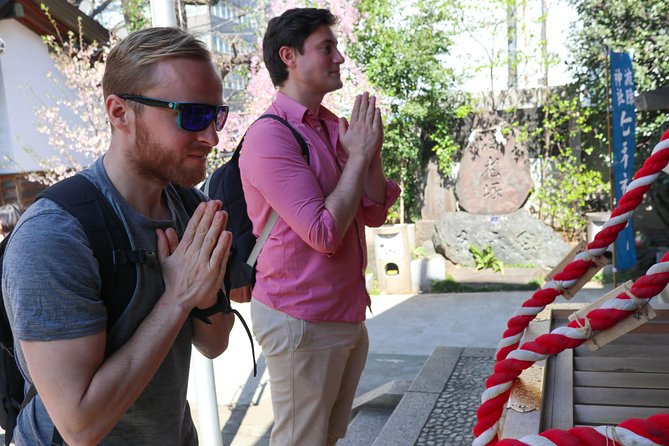
Tsukiji is not only about eating. The route includes a Buddhist temple and a Shinto shrine, adding useful cultural context to what could otherwise be a simple food crawl.
This pause matters. Japanese food is tied to seasons, religious customs, presentation, and daily life. Moving from seafood stalls to a place of worship gives you a different view of the neighborhood and helps explain why Tsukiji is more than a collection of restaurants.
The religious stops also break up the eating. Three hours of constant sampling can become tiring, especially in warm weather. A short visit to a temple or shrine lets you slow down, look around, and learn about Japanese traditions before returning to the market lanes.
The itinerary also includes a city view, described as a view toward Tokyo Bay. It is not the main reason to book the tour, but it gives you a broader sense of where Tsukiji sits within Tokyo. The route finishes at Shiodome Tower, near 1-6-3 Higashi-Shimbashi.
How much value do you get for $87.37?
At $87.37 per person, this is not the cheapest way to eat at Tsukiji. You can buy individual snacks on your own for less. The value comes from combining several tastings, a seafood lunch, a guide, cultural stops, and help navigating the market.
I think the price is reasonable for first-time visitors who want structure. You avoid spending your morning guessing which stall to choose, wondering what a dish is, or losing time in lines that go nowhere. The small group also gives you a better chance to get personal explanations than a large coach tour.
The value is weaker if you already know Tsukiji well, speak Japanese, or mainly want to shop independently. You may prefer to spend the same money selecting your own sushi and snacks at your own pace.
Keep in mind that the number and size of tastings can change. The tour promises food samples and lunch, but not an unlimited feast or a fixed menu. Think of the fee as paying for guided access to the food culture, not simply for the cost of ingredients.
Who will enjoy this three-hour walk?
This tour suits first-time visitors to Tokyo who want an easy introduction to Japanese seafood. It also works well for couples, families with older children, and small groups who prefer a planned morning over wandering without a clear route.
You will get the most from it if you are willing to try unfamiliar food. The market offers more than sushi, and some items may be dried, grilled, sweet, chewy, or strongly flavored. You do not need to love everything, but curiosity helps.
It is also a good choice for anyone who wants more than a meal. The temple, shrine, market history, and city view give the experience some variety. You are not simply moving from one restaurant to another.
I would think twice if your main goal is the wholesale auction. That is at Toyosu, not Tsukiji. You should also reconsider if you need a strictly vegan, allergy-free, or highly controlled diet.
Practical advice for a smoother morning
Wear comfortable shoes. The route uses market lanes, and you may spend time standing while looking at food or waiting for a sample.
Bring water and a hat in summer. Tokyo can be very hot and humid, and heat stroke is a real concern. The market’s tight streets can also feel warmer when crowded.
Keep your phone charged. The tour uses a mobile ticket, and your confirmation may be useful at the meeting point. Arrive early enough to find Exit 1 and confirm that you are in the right place.
Do not plan on lingering over every stall. Some areas have signs asking people not to stop and eat, so follow the guide’s lead. If you want to shop for knives, seasonings, tableware, or packaged food, return after the tour when you can browse without holding up the group.
Free cancellation is available if you cancel at least 24 hours before the local start time. Changes or cancellations inside that window are not accepted for a refund.
Should you book the Tsukiji food tour?
Book it if you want a guided introduction to Tsukiji’s Outer Market, especially if you enjoy seafood and want to taste several Japanese foods without planning every stop yourself. The best parts are the variety of samples, the included lunch, the small group, and guides who can explain what you are seeing.
Skip it if you expect the old wholesale market, a tuna auction, or a fixed list of premium tastings. Tsukiji is now a public food district rather than Tokyo’s main wholesale fish market.
For most first-time visitors who eat seafood, the tour offers a useful balance of food, local culture, and practical guidance. Just arrive hungry, dress for the weather, and book it for the market you will actually see: the lively, changing Outer Market.
FAQ
Where does the tour begin?
It begins at Tsukiji Station Exit 1, at 3 Chome-9 Tsukiji, Chuo City, Tokyo.
Where does the tour end?
The tour ends at Shiodome Tower at 1-6-3 Higashi-Shimbashi, Minato City, Tokyo.
How long does the experience last?
The walking tour lasts approximately three hours.
Is lunch included?
Yes. A fresh seafood lunch at a local market restaurant is included, along with food samples at several shops and stalls.
Does the tour visit the wholesale fish market?
No. The former inner wholesale market moved to Toyosu in 2018. This experience visits the Tsukiji Outer Market.
How many people can join the tour?
The group can have a maximum of seven participants.
Are vegan or allergy-free options available?
Vegan options are not available. Allergy-free meals and dietary substitutions cannot be guaranteed, though the tour provider will try to offer alternatives at other stops when possible.
More Tokyo markets and shopping streets
- Tsukiji Fish Market Guided Tour and Sushi Making with Pro Chef
★ 5.0 · 775 reviews - Tokyo: Tsukiji Fish Market Food and Culture Walking Tour
★ 4.7 · 757 reviews - Tsukiji Fish Market: Street Food & Culture Walking Tour
★ 5.0 · 669 reviews - Tokyo: Tsukiji Fish Market Sushi Making Class with Pro Chef
★ 4.9 · 506 reviews
More Tokyo food tours
- Tokyo: Shinjuku Food Tour (13 Dishes at 4 Local Eateries)
★ 5.0 · 6,603 reviews - Tokyo: Shinjuku Food Tour (15 Dishes and 4 Eateries)
★ 4.9 · 2,033 reviews - Best of Shinjuku: Izakaya Food Tour (4 Stops, 14+ Tastings)
★ 5.0 · 1,863 reviews - Eat and Drink Like a Local: Tokyo Ueno Food Tour-Taverns&Ramen
★ 5.0 · 957 reviews
Newly reviewed around Tokyo
- Tokyo Asakusa:Calligraphy & Make T-shirt Activity★ 5.0 · 62 reviews
- Intercity Shuttle, Tokyo to Haneda /Narita /Yokohama /Makuhari★ 5.0 · 5 reviews
- 1 Hour Travel around Tokyo with a Professional Photographer★ 5.0 · 3 reviews
- Travel Tokyo with Your Own Personal Photographer★ 5.0 · 43 reviews
- Shuttle Van 6hr Tokyo Tour to-and-from Tokyo, Yokohama and Narita★ 5.0 · 9 reviews
- Kickboxing & Body Training with EX-Pro Fighter★ 5.0 · 4 reviews
- Train in Samurai Swordsmanship and Defeat the Demon in Tokyo★ 5.0 · 5 reviews
- Traditional Japanese Knife Sharpening Class★ 5.0 · 18 reviews
Tsukiji and Toyosu Fish Market Tours, compared.
Tokyo Tsukiji Fish Market Food and Culture Walking Tour
Read our review →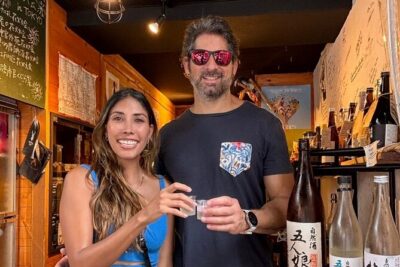
Tokyo Sushi Making Class in Tsukiji with Professional Chef
Read our review →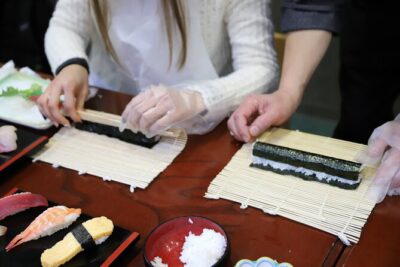
Tsukiji Fish Market Guided Tour and Sushi Making with Pro Chef
Read our review →Tsukiji Fish Market Food and Culture Walking Tour
Read our review →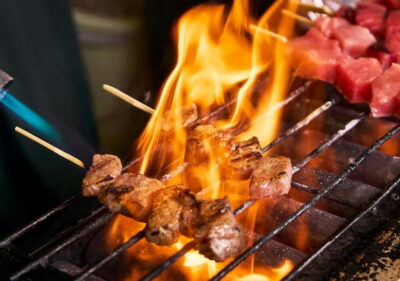
Tsukiji Fish Market: Street Food & Culture Walking Tour
Read our review →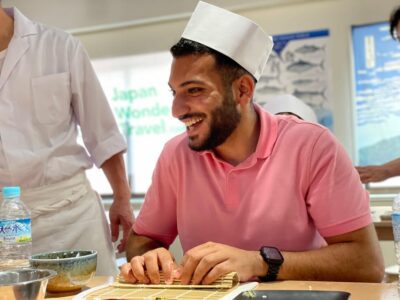
Tsukiji Fish Market Sushi Making Class with Pro Chef
Read our review →Browse the lists this tour appears in