
Reviewed · TOKYO SKYTREE TICKETS
[electric bicycle tour]: 6-hour travel course by electric bicycle Asakusa, Ueno Park, Edo-Tokyo Museum, and Sky Tree. (There is a support car.)
Tokyo is easier to understand when you connect its neighborhoods by bicycle, and this tour links several major sights in one day. You begin at the Edo-Tokyo Museum, then pedal through Ueno and Asakusa on an electric bicycle, with a support car nearby if the riding becomes tiring.
I like the small maximum group of six and the flexible language support, including Japanese, English, Korean, Chinese, and Vietnamese. I also like the practical support car, which can carry your luggage, purchases, and bicycle. The main drawback is the price, $283.17 per person, especially since lunch and the optional Tokyo Skytree visit cost extra.
Key points to know before booking
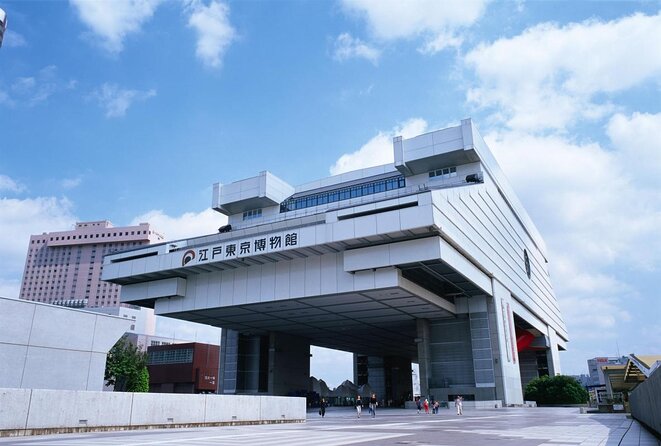
- Six major stops in one day: The route covers the Edo-Tokyo Museum, lunch in Sumida, Ueno Park, Senso-ji, and optional Tokyo Skytree.
- A support car follows the group: You can store luggage and souvenirs in the car, or load your bicycle if you need a break.
- Small groups matter: The tour accepts a maximum of six people, which allows the guide to adjust the pace and answer questions.
- The riding is manageable but not trivial: The longest listed cycling stretch is 30 minutes from Sumida to Ueno Park, with shorter rides between later stops.
- Lunch is not included: You choose from Japanese specialties at Edonoren, but pay for your own meal.
- The tour needs at least two people: If the minimum is not reached, the operator contacts you separately.
A practical way to connect Tokyo’s old neighborhoods
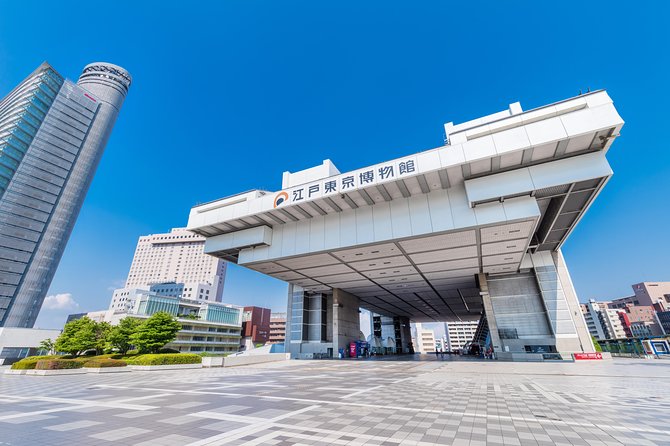
This is not simply a bicycle rental with a map. The guide leads you between major sights and adds short explanations about Japanese history, especially at the Edo-Tokyo Museum and Ueno Park. That matters in Tokyo, where a short ride can take you from old temple grounds to modern city streets without any obvious transition.
The route is also compact by Tokyo standards. Ryogoku, Ueno, Asakusa, and Tokyo Skytree all sit in the northeastern part of the city, so you spend less time crossing Tokyo and more time seeing places. The bicycle gives you a closer view than a train, while the electric assist takes some strain out of the ride.
The tour lasts about six to seven hours. That sounds generous, and it is. You have two hours at the museum, an hour for lunch, about 90 minutes for the ride and walk around Ueno Park, up to an hour at Senso-ji, and an optional stop at Skytree. The schedule may shift with the season, so you should treat the timing as a guide rather than a strict timetable.
The group size is one of the better features. With no more than six people, it should be easier to stay together on the road and ask questions at the stops. The guide may have to keep explanations brief, though. One published rating praised the helpful and flexible guide and the quality of the bicycles, but found the amount of information limited and the time allocation uneven. That is useful context: book this for the route and practical guidance, not as a full academic lecture.
More Tokyo Skytree tickets:
- Tokyo: Meiji Shrine, Asakusa, Skytree Bus Tour and Cruise
★ 4.7 · 1,986 reviews - Tokyo Panoramic 1 Day: Meiji Shrine, Asakusa, Odaiba and SKYTREE®
★ 4.5 · 1,222 reviews - Tokyo Go Kart: Asakusa, Skytree, and Akihabara **IDP MUST**
★ 5.0 · 988 reviews
Starting in Ryogoku at the Edo-Tokyo Museum
The meeting point is near Toei Ryogoku Station, at 1 Chome-5 Yokoami, with the tour start listed nearby at 1-chōme-4-29 Yokoami. Pickup can also be arranged from a hotel lobby within Tokyo’s 23 wards. Bring your voucher and allow enough time to get settled before departure.
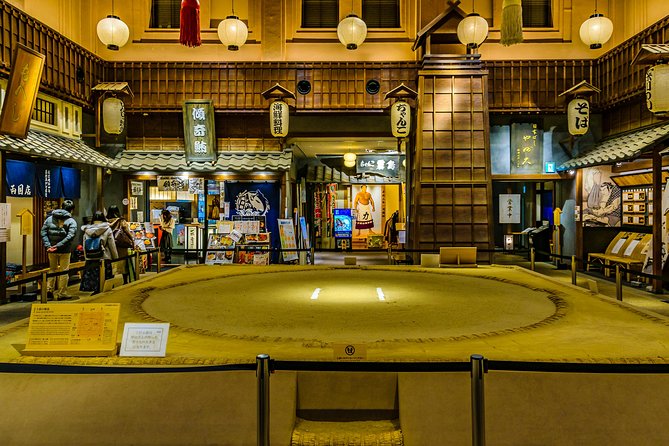
The first major stop is the Edo-Tokyo Museum, where you spend about two hours. The museum is the most information-heavy part of the day. A guide explains Japanese history as you move through the exhibits, giving you a framework for the places you will see later.
That order makes sense. Ueno and Asakusa are not just photo stops when you know something about how Tokyo developed. The museum visit can help you place temples, old districts, and city traditions in context.
Two hours is a useful amount of time, but you should not expect to examine every display in detail. The day still has several stops ahead, and the guide controls the pace. If you prefer a slow museum visit with lots of independent reading, this schedule may feel brisk. If you want a clear introduction before seeing Tokyo by bike, it is a strong opening.
Choosing lunch at Edonoren
Lunch lasts about one hour at Edonoren in the Sumida area. The meal is not included, so plan for an additional expense beyond the tour price.
The available choices cover a wide range of Japanese food:
- Monjayaki and okonomiyaki
- Seafood dishes
- Chanko and seasonal dishes
- Sushi
- Chicken and gamecock dishes
- Tempura
- Fukagawa meshi
- Japanese soba noodles
You can request a reservation in advance. That is worth considering if you have a specific restaurant or meal in mind, since the lunch period is limited to one hour. You may also want to tell the operator about dietary needs before the tour, although the supplied details do not specify special menus.
This stop gives the day a local food focus rather than treating lunch as a quick convenience. Monjayaki is particularly associated with Tokyo, while Fukagawa meshi is a traditional rice dish linked to the city’s old waterfront culture. You choose and pay for your own meal, so the price and length of lunch depend partly on your selection.
The 30-minute ride to Ueno Park
After lunch, you ride the electric bicycles toward Ueno Park for about 30 minutes. This is the longest listed cycling segment, though electric assistance should make it easier than riding a standard city bicycle.
The bicycle is company-owned, and a helmet is listed as an option. I would request one in advance if you want to wear one, rather than assuming it will be provided automatically. Comfortable clothes are recommended, and a backpack is more practical than a shoulder bag while riding.
The support car makes this route more forgiving. If you tire, the bicycle can be loaded into the vehicle. The car can also hold luggage and souvenirs, so you do not have to carry purchases on the bicycle. WiFi, bottled water, coffee or tea, and snacks are included, adding a little comfort to a long day.
You should still think of this as an active sightseeing day. Participants must be at least 11 years old, able to ride a bicycle, at least 135 centimeters tall, no taller than 190 centimeters, and no heavier than 100 kilograms. These requirements are specific, so check them carefully before paying.
More Asakusa and Sensoji tours:
- Tokyo: Japanese Dance Cabaret Theater Asakusa-Kaguwa Ticket
★ 4.8 · 2,270 reviews - Tokyo: Roll and Authentic Sushi Making Class in Asakusa
★ 4.9 · 1,957 reviews - Tokyo: Asakusa Walking Tour with Sensoji Temple Visit
★ 4.8 · 1,583 reviews - Tokyo Asakusa Rickshaw Tour
★ 5.0 · 1,375 reviews
Walking through Ueno Park and Kaneiji
The Ueno section combines a bicycle ride with about an hour on foot. Ueno Park is one of Tokyo’s major public spaces, but the useful part of this stop is the historical explanation. The guide points out places connected with Kaneiji and gives a short account of their past.
This is where the tour’s structure works well. You are not rushing from one famous gate to another. You have time to leave the bicycle, walk, and hear why the area matters. The one-hour walk is long enough to see the main points without turning the day into a full walking tour.
The limitation is that the explanation may be fairly concise. The available rating described the guide as helpful and flexible but noted that there was not much information. If you already know Tokyo’s history and want detailed interpretation at every site, you may want a more specialized museum or temple tour. If you want orientation and a manageable overview, the balance is reasonable.
Riding into Asakusa and entering Senso-ji
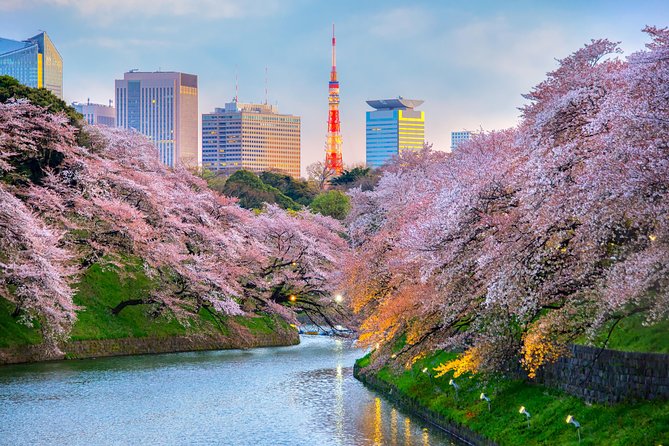
The ride from Ueno Park to Asakusa takes about 15 minutes. That short leg gets you to the day’s most recognizable religious and shopping area without requiring another long walk.
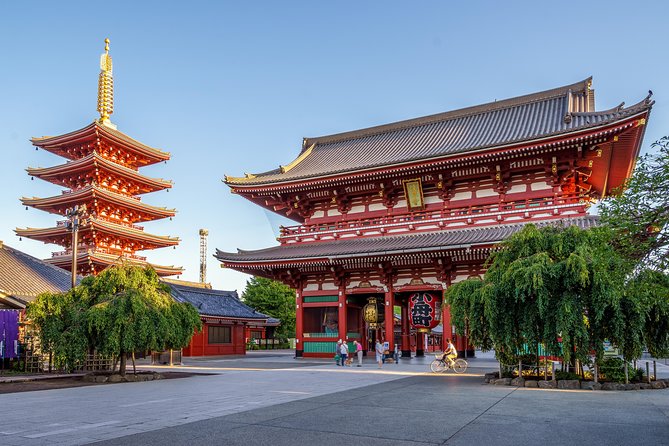
At Senso-ji, the tour begins around Kaminarimon and continues along the shopping street toward the temple. The visit lasts from 30 minutes to one hour, depending on the schedule and season. You get a guided introduction to the approach, the shops, and the temple area rather than simply being dropped at the entrance.
Senso-ji is a good place to have a guide because there is plenty to take in at once: the Kaminarimon gate, the shopping street, temple buildings, and the flow of visitors moving through the complex. The guide can help you understand the sequence of the visit and point out the main features.
Time may feel short here. Asakusa rewards wandering, browsing, and stopping for snacks or small purchases. Since the support car can store souvenirs, you have more freedom to buy something without carrying it on the bicycle. Still, if shopping is a main goal, ask how much free time you will have before the ride continues.
Adding Tokyo Skytree for a final view
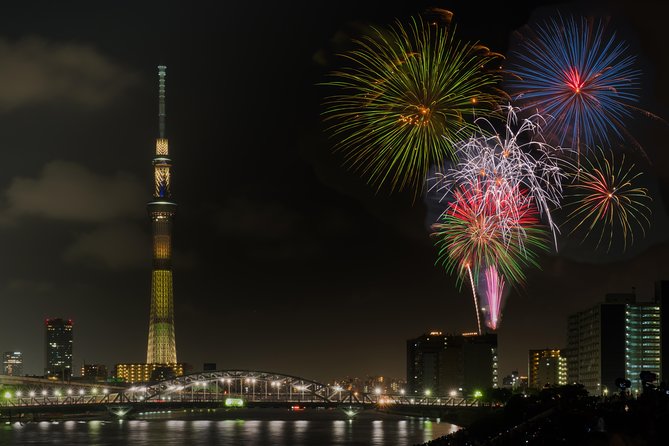
The basic plan ends with Senso-ji in Asakusa. If you wish, the group can continue by electric bicycle to Tokyo Skytree, about 10 minutes away. The optional portion is listed at roughly 30 minutes, and admission to the tower is not included.
This is a convenient add-on because Skytree is close to the route. You can see the modern side of the same part of Tokyo after spending the day with museums, temples, and older neighborhoods. The contrast is one of the better reasons to include it.
Do not assume that the optional stop includes entry to an observation deck. The listed details only confirm the bicycle ride and time at Tokyo Skytree, with admission not identified as included. Ask the operator what the optional plan covers before departure. If your priority is Senso-ji and Asakusa, ending there may keep the day less rushed.
What the $283.17 price really buys
At $283.17 per person, this is an expensive day of sightseeing. Lunch is extra, and so is any Tokyo Skytree admission. The price makes more sense if you value the guide, bicycle use, support vehicle, bottled water, snacks, drinks, luggage storage, and a small group.
The support car is not a minor detail. It reduces the risk of being stuck with a tired rider, heavy bags, or shopping purchases. It also gives the operator more flexibility when the pace needs to change. That kind of backup is useful on a six-hour city ride.
The price is harder to justify if you are comfortable using Tokyo’s trains and exploring independently. Ueno Park, Asakusa, and Tokyo Skytree are all reachable by public transportation, and you would have more control over museum time, lunch, and shopping. You are paying for convenience, local accompaniment, and a connected route rather than for admission-heavy sightseeing.
The small maximum of six helps protect the value. A large bicycle group would be harder to manage in city streets and less pleasant at temples or museum exhibits. Here, the operator can potentially adapt the pace for a family or a mixed group, though the actual language and group composition can vary.
Languages, weather, and useful preparation
The tour is guided mainly in Japanese, with possible support in English, Korean, Chinese, and Vietnamese. Confirm your preferred language when booking. The operator may sometimes combine people from different countries, and private family arrangements are possible if you are coming with relatives.
The tour runs weekly and requires at least two participants. If the minimum is not met, the operator will contact you. Bad weather can also change the plan, so keep your schedule flexible and watch for a message from the operator.
The experience includes free cancellation up to 24 hours before the start time. Cancellations or changes made less than 24 hours before departure are not refunded or accepted. If the operator cancels because the minimum number is not reached, you can choose another date or experience, or receive a full refund.
Buy overseas travel insurance as a sensible precaution. Bicycle insurance is available if you need it, but you must request it. Wear comfortable clothing, bring a backpack, carry your voucher, and check your bicycle eligibility before booking.
Who should book this electric bicycle tour?
I would recommend it to someone visiting Tokyo for the first time who wants a guided route through several eastern neighborhoods without handling every train connection. It also suits families with older children who meet the age and size rules, and people who want a bicycle day but appreciate a support vehicle.
It is less suitable for a serious cyclist seeking a long ride, a museum enthusiast who wants unlimited time, or an independent visitor focused on keeping costs low. The tour gives you an organized overview, not a slow, highly specialized study of each site.
The best reason to book is the combination of movement and context. You see the Edo-Tokyo Museum, pedal through the city, walk Ueno Park, reach Senso-ji, and optionally continue to Skytree. The biggest warning is the price and the possibility that explanations feel brief.
If those trade-offs work for you, this is a practical way to cover Tokyo’s northeastern sights in one day. Ask about the guide language, helmet, lunch reservation, Skytree option, and support-car arrangements before you go. Those answers will determine whether the experience feels well matched to your needs.
FAQ
Where does the tour start?
The listed starting point is near Ryogoku Station in Sumida City, Tokyo. Hotel-lobby pickup is offered within Tokyo’s 23 wards.
Where does the tour finish?
The tour ends in Asakusa, Taito City, Tokyo. The basic plan finishes after the Senso-ji visit.
How long does the experience last?
The tour takes about six to seven hours. Individual stop times can change with the season and schedule.
Is lunch included?
No. Lunch is not included in the tour price. You can choose from dishes such as monjayaki, okonomiyaki, sushi, tempura, soba, and Fukagawa meshi at Edonoren.
Can I visit Tokyo Skytree?
Yes, Tokyo Skytree is an optional continuation after Senso-ji. The bicycle ride takes about 10 minutes, and the optional portion is listed at about 30 minutes. Skytree admission is not listed as included.
What languages can the guide support?
The tour is mainly guided in Japanese, with possible support in Korean, English, Chinese, and Vietnamese. Confirm your preferred language when booking.
Who can ride on the tour?
Participants must be at least 11 years old and able to ride a bicycle. Riders must be between 135 and 190 centimeters tall and weigh no more than 100 kilograms.
What happens if I get tired while cycling?
The support car can carry your bicycle and luggage. It can also store souvenirs and other purchases during the tour.
More Tokyo bike tours
- Tokyo Great Cycling Tour
★ 5.0 · 811 reviews - Tokyo Top Highlights 3h Guided E-bike Tour
★ 5.0 · 714 reviews - 3h Tokyo E-Bike Tour: Hidden Gems, and Local Life with guide
★ 5.0 · 670 reviews - Tokyo: 3-Hour Bike or E-Bike City Highlights Tour
★ 4.8 · 435 reviews
More things to do in Ueno
- Eat and Drink Like a Local: Tokyo Ueno Food Tour-Taverns&Ramen
★ 5.0 · 957 reviews - Tokyo: Food Tour in Ueno with 10+ Tastings of Japanese Classics
★ 5.0 · 303 reviews - Tokyo Ueno Food Tour Sushi Ramen and Local Favorites
★ 5.0 · 54 reviews - Japanese Food Experience Night Tour in Ueno
★ 5.0 · 47 reviews
Newly reviewed around Tokyo
- Tokyo Asakusa:Calligraphy & Make T-shirt Activity★ 5.0 · 62 reviews
- Intercity Shuttle, Tokyo to Haneda /Narita /Yokohama /Makuhari★ 5.0 · 5 reviews
- 1 Hour Travel around Tokyo with a Professional Photographer★ 5.0 · 3 reviews
- Travel Tokyo with Your Own Personal Photographer★ 5.0 · 43 reviews
- Train in Samurai Swordsmanship and Defeat the Demon in Tokyo★ 5.0 · 5 reviews
- Shuttle Van 6hr Tokyo Tour to-and-from Tokyo, Yokohama and Narita★ 5.0 · 9 reviews
- Kickboxing & Body Training with EX-Pro Fighter★ 5.0 · 4 reviews
- Traditional Japanese Knife Sharpening Class★ 5.0 · 18 reviews
Tokyo Skytree Tickets, compared.
Meiji Shrine, Asakusa, Skytree Bus Tour and Cruise
Read our review →
Tokyo Panoramic 1 Day: Meiji Shrine, Asakusa, Odaiba and SKYTREE®
Read our review →
Tokyo Go Kart: Asakusa, Skytree, and Akihabara **IDP MUST**
Read our review →
Asakusa, Skytree & Akhihabara Go-Kart City Experience
Read our review →
Tokyo Skytree Admission Ticket with Tembo Deck and Galleria
Read our review →
1 Day Bus Tour with Meiji-Jingu,Odaiba,lunch&Skytree
Read our review →
Full Tokyo: Meiji Shrine, Imperial Palace, Asakusa & Skytree
Read our review →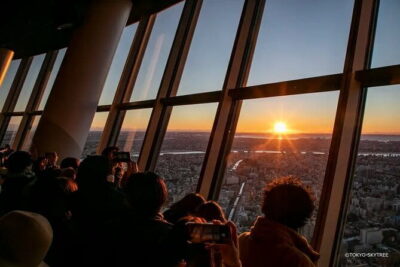
Browse the lists this tour appears in