
Reviewed · TOKYO BIKE TOURS
Tokyo: 3-Hour Bike or E-Bike City Highlights Tour
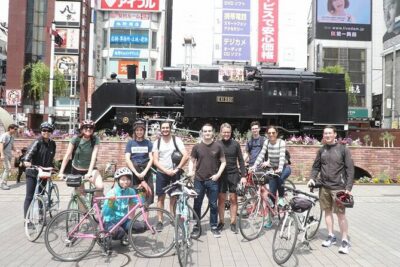
Tokyo is so spread out that a bike gives you a useful first look in just three hours. This route links Zojo-ji Temple, the Imperial Palace, Tokyo Station, Aoyama, and Shibuya, with quieter streets and parks between the big sights. Guides such as Naoki, Atsu, Kosei, and Rikuu add local stories and keep the group moving safely.
I like the 15 to 20-kilometer range because you see far more than you could comfortably cover on foot. I also like the choice of a standard cross bike or e-bike, especially since a few hills and a long ride can catch up with you. The main caution is simple: parts of the route use roads with traffic, so you should already feel comfortable riding a bike.
Key points to know before you book
- A fast introduction to central Tokyo: Cover temples, imperial sights, modern districts, parks, and Shibuya in one morning or afternoon.
- A useful e-bike option: Choose electric assistance if you do not cycle often, lack stamina, or want to save energy for the rest of your day.
- Friendly local guides: English-speaking guides including Naoki, KJ, Tam, Kosei, Atsu, and Rikuu are praised for clear explanations, safety checks, and good conversation.
- A route with real variety: Ride from the calm grounds of Zojo-ji and Chidorigafuchi to neon-lit Shibuya and Cat Street.
- Traffic awareness matters: The tour moves between sidewalks and roads, and one family specifically found road riding more demanding than expected.
- Good value at $45: Bikes, insurance, a guide, and a phone pouch are included, though a helmet costs an extra ¥1,000.
Why a bicycle works so well in Tokyo
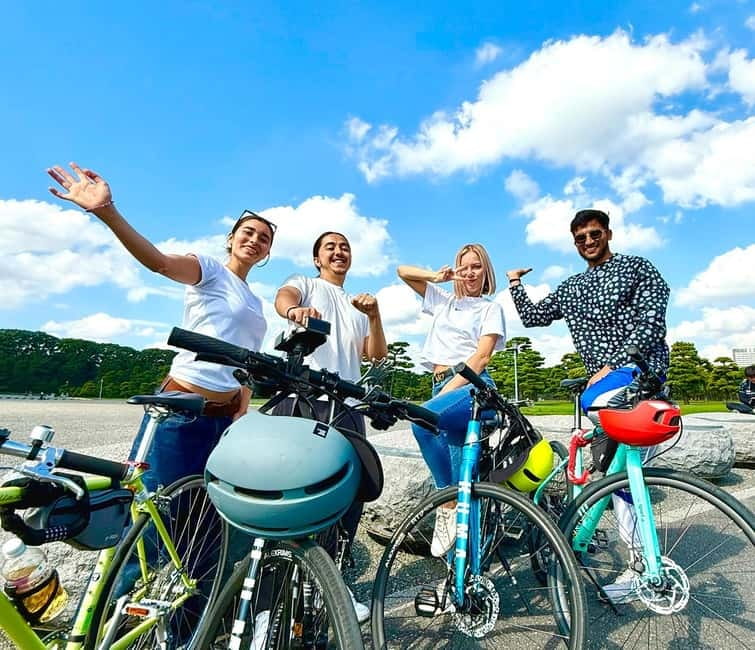
Tokyo can feel easy to navigate on the train and hard to understand at street level. The subway gets you from one district to another, but it hides the small shifts between them. On a bike, you see how a temple precinct gives way to office towers, how a formal park sits beside a major avenue, and how quiet residential streets lead toward Shibuya’s bright signs.
This tour is built for that kind of overview. It does not ask you to spend a long time at one attraction. Instead, you ride, stop for a short explanation or photograph, then continue to the next part of the city.
That pace suits a first or second day in Tokyo. You get your bearings fast and can note places to revisit later. Alli specifically advised doing the tour early in a Tokyo stay, and I agree. The route can help you decide where to return for shopping, food, gardens, or more time at the palace and temple.
The distance is not trivial. Reports place the ride at about 15 kilometers, with one person estimating closer to 20 kilometers. The route is described as relaxed rather than athletic, but you are still on a bicycle for three hours. The e-bike is the sensible choice if you cycle only now and then, especially in hot weather or after a late night.
More Tokyo bike tours:
- Tokyo Great Cycling Tour
★ 5.0 · 811 reviews - Tokyo Top Highlights 3h Guided E-bike Tour
★ 5.0 · 714 reviews - 3h Tokyo E-Bike Tour: Hidden Gems, and Local Life with guide
★ 5.0 · 670 reviews
Starting near Commodore Perry and Shiba Park
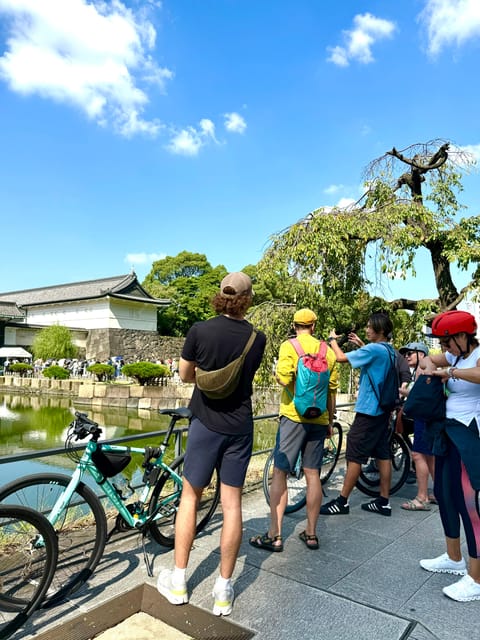
You meet near the Statue of Commodore Perry, about a three-minute walk from Daimon Station’s A6 exit. This is a practical starting point in the Minato area, close to Shiba Park and Zojo-ji Temple.
The first major stop is Zojo-ji, one of Tokyo’s most striking combinations of old and new. The temple grounds offer a traditional setting, while Tokyo Tower rises nearby as a reminder that this is still a modern capital. You get about 15 minutes here for a guided visit and photographs.
That short stop gives you enough time to understand the setting, but not enough for a detailed temple visit. Think of it as an introduction rather than a full cultural tour. Your guide can explain what you are seeing, then you return to the bikes and continue.
The ride through Shiba Park is a pleasant early stretch. It gives you a calmer start before the route reaches the larger government and business districts. Guides are expected to explain local customs and city history in English or Japanese, and several named guides, including Naoki, Kosei, Atsu, and Rikuu, have been praised for making those explanations easy to follow.
From Hibiya Park to the Imperial Palace
Hibiya Park is a brief stop, listed at about three minutes. That sounds short, but the point is to see how central Tokyo makes room for open green space. You will not have time for a long stroll or a leisurely garden visit here. Treat it as a quick pause during the ride.
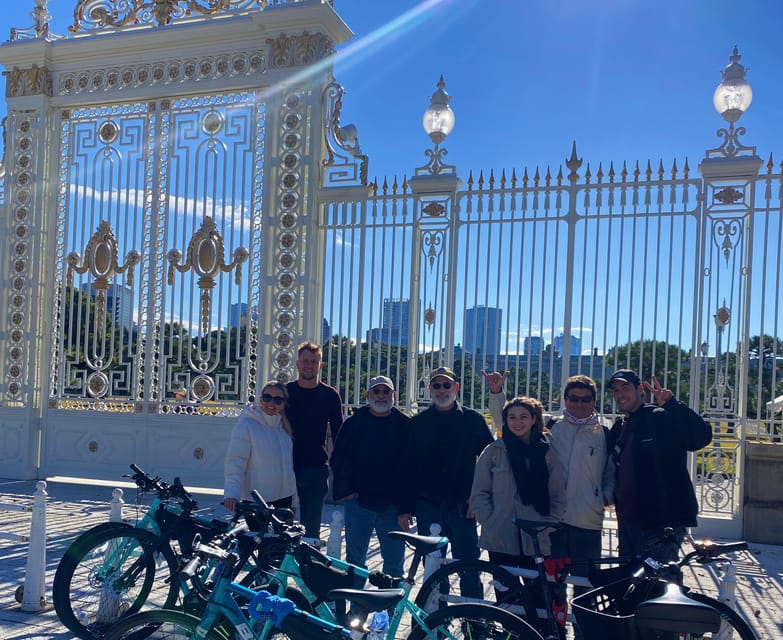
The Imperial Palace area receives more attention, with about 15 minutes for a guided visit and photographs. You are not getting a full palace tour, and the schedule does not promise entry into restricted buildings. The value is in seeing the broad setting and learning why this area remains central to Tokyo’s identity.
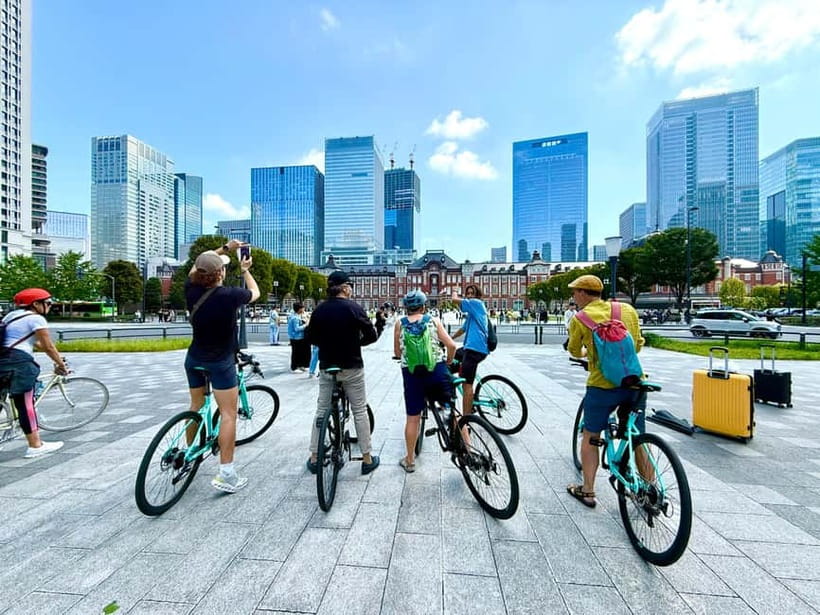
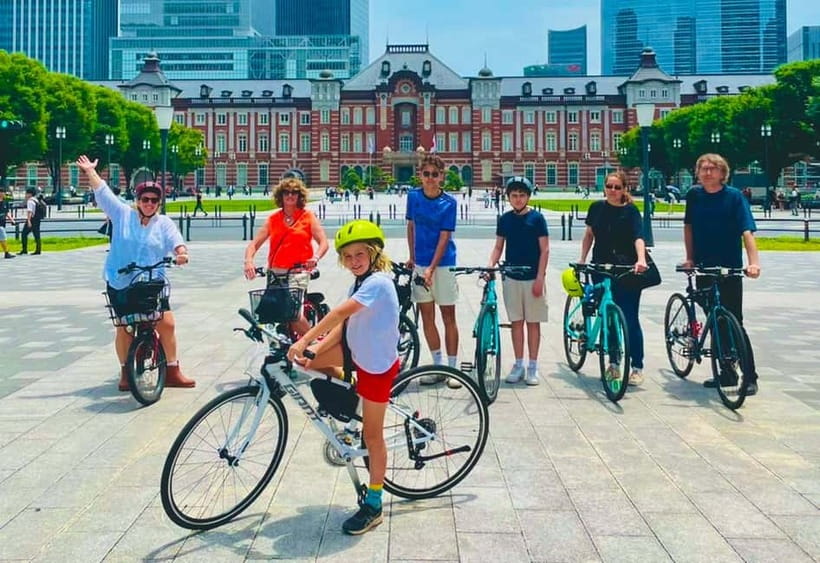
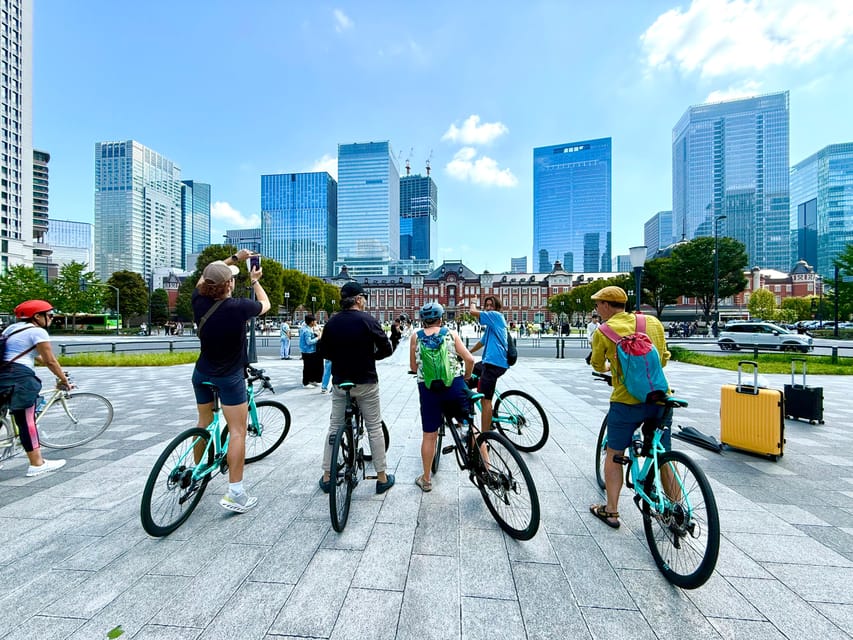
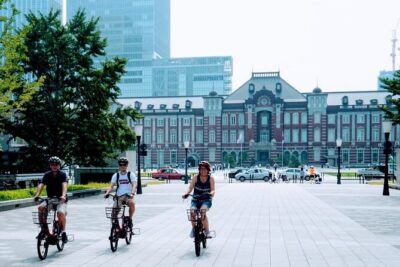
Next comes Tokyo Station, with roughly 10 minutes for photographs and sightseeing. The station’s grand red-brick facade provides a sharp contrast to the glass towers around it. A bike makes the connection between palace grounds and station district feel immediate, rather than turning it into two separate train stops.
You then pass through Ote-mon Gate. This is another brief stop, around five minutes, where you can photograph one of the historic entrances associated with the palace grounds. The stop is compact, but it adds useful visual context to the larger Imperial Palace visit.
Chidorigafuchi offers another five-minute break and photo stop. The moat, trees, and walking paths make this one of the more peaceful sections of the ride. Seasonal scenery can change the feel of the stop, and autumn conditions were particularly pleasant for one group. Still, keep your expectations measured: five minutes is enough for a pause and a picture, not a proper garden visit.
Akasaka Palace and the city’s modern face
The State Guest House Akasaka Palace is a ten-minute photo stop. Its formal architecture gives you a different view of Tokyo from both the temple and palace grounds. This part of the route shows how the city’s ceremonial spaces are woven into ordinary urban streets.
The New National Stadium follows, with about ten minutes for a visit and photographs. It represents Tokyo’s contemporary public architecture and adds a modern sports landmark to a route that has already included temples, moats, and imperial gates.
The sequence works well because it keeps changing character. You are not spending three hours looking at similar buildings. One moment is ceremonial, the next is leafy, then urban, then distinctly contemporary.
There is also a stop described simply as a local special place, with about 15 minutes for a guided visit. Since the exact location can vary, do not book this expecting a named museum or a guaranteed attraction. The useful part is that the guide can take you beyond the most obvious postcard stops and explain a part of Tokyo you might otherwise pass without noticing.
The route may also include a quick convenience-store break. One group enjoyed stopping at 7-Eleven for snacks and getting suggestions about local products. It is a small touch, but it makes the ride feel connected to everyday Tokyo rather than only its major monuments.
A completely different kind of day in Tokyo:
- Mt Fuji and Hakone 1-Day Bus Tour Return by Bullet Train
★ 5.0 · 26,383 reviews - 1-Day Tokyo Bus Tour
★ 5.0 · 14,250 reviews - Tokyo: teamLab Planets TOKYO Digital Art Museum Entry Ticket
★ 4.6 · 9,779 reviews - Mt Fuji & Hakone Cruise, Drum Show Bullet Train 1 Day from Tokyo
★ 4.0 · 7,413 reviews
Aoyama, Cat Street, and the move toward Shibuya
Aoyama St. Grace Cathedral is a brief three-minute sightseeing stop. It is not a long visit, but it contributes to the district’s polished, fashionable feel and gives you another architectural change of pace.
Cat Street follows with about five minutes. The street is associated with independent shops, fashion, and a younger side of Tokyo. A short ride through this area helps explain the transition from formal Aoyama to the louder energy of Shibuya.
You should think of these stops as street-level orientation, not shopping time. Five minutes will not let you browse properly, and the group needs to stay together. If Cat Street interests you, make a note to return later on foot.
The grand finish is Shibuya Crossing, with about ten minutes for photographs and a guided explanation. This is the most instantly recognizable modern scene on the route, and reaching it by bicycle gives you a sense of how the surrounding streets feed into the crossing.
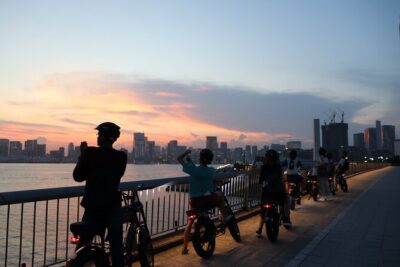
A ride through Shibuya can be especially memorable in the evening, when the signs glow and the district takes on a different look. One evening group particularly enjoyed cycling through Shibuya after dark. Timing is not guaranteed, so do not book solely for a night ride, but an afternoon departure may give you some evening atmosphere depending on the season and schedule.
Tower Records Shibuya is a final short sightseeing and photo stop before the tour ends at the Bell of Peace. The ending location leaves you in a useful part of the city, with Shibuya’s shops, restaurants, and transport links nearby.
Bikes, e-bikes, and how hard the ride feels
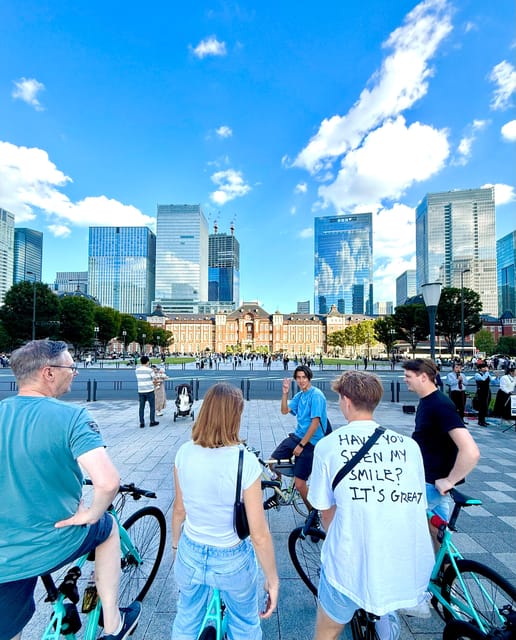
The standard bikes are high-quality cross bikes from Bianchi and Fuji. These are a good match for a city ride because they are lighter and more efficient than a basic rental bicycle. A small pouch mounted on the bike gives you a place for your phone, wallet, or keys, which is more convenient than keeping everything in a pocket.
The e-bike option matters. You still pedal, but electric assistance makes hills and longer stretches easier. Several riders found the e-bikes especially helpful when tired or when facing modest inclines. If you rarely cycle, I would choose the e-bike rather than hope your fitness holds up for the full distance.
You are covered by bike insurance, but helmets are not included. You can rent one on site for ¥1,000 per unit, paid in cash. I would bring the cash and wear one, particularly because the route moves between sidewalks and roads.
A child seat costs ¥3,000 per unit, but the tour is not suitable for children under 12. It is also not suitable for people who cannot ride, pregnant women, or people with back problems. Comfortable clothing, sturdy shoes, and water are sensible choices.
Safety, traffic, and group pace
The strongest practical point is that Tokyo traffic can be manageable, but this is not a traffic-free cycle path. One parent riding with a 14-year-old said the road sections were more stressful than expected. Another rider specifically advised against the tour if you are not comfortable cycling in traffic.
That warning should not put off confident riders. Guides are repeatedly described as attentive, safety-minded, and good at checking the group. Larger bookings may be split into smaller groups, which helps with maneuvering through the city. Private and small-group formats are also available.
You should still be ready to follow instructions, keep a steady pace, and move between different riding surfaces. The guide may lead you along roads, quieter side streets, and sidewalks. Rain does not automatically ruin the experience, but you will be more comfortable with a poncho. A traveler who rode in wet weather recommended buying one at FamilyMart.
Weather matters more than it might on a walking tour. Summer heat can make three hours feel longer, while rain affects visibility and comfort. Spring and autumn are likely to feel easier, but the tour runs across different seasons, so check the forecast and dress for the day.
The guides make the short stops count
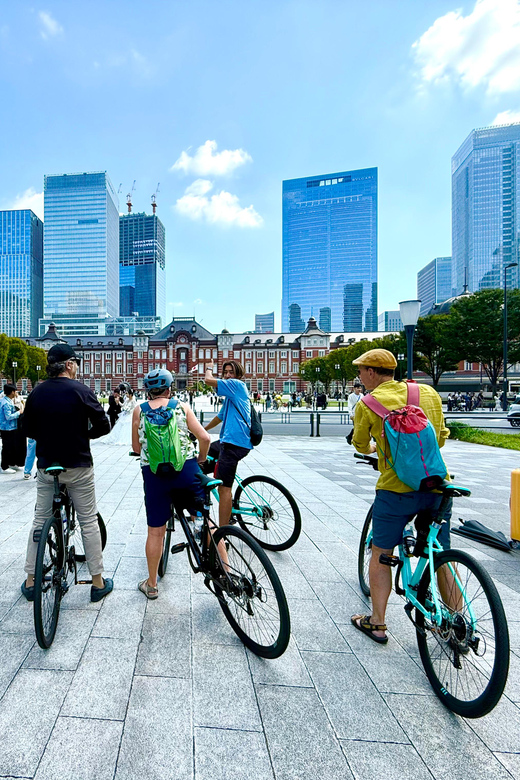
The guide is important because the stops themselves are brief. You need clear explanations that give you a reason to care without turning every pause into a lecture.
Naoki appears often among the guide team and is described as friendly, fun, and attentive to questions. KJ was praised for warmth and enthusiasm, while Kosei was noted for explaining things clearly. Atsu, Rikuu, Tam, Keiji, Tyler, Miguel, and Kay are also named as guides who helped groups feel comfortable and informed.
The style is conversational. One rider described the experience as more sightseeing than a long talking tour, which is a fair description. You will hear stories and local context, but much of the time is spent riding and looking around.
That balance is right for a three-hour city tour. If you want a detailed lecture at every temple, choose a specialist cultural tour. If you want a useful introduction with room for questions and a human connection, this format fits better.
Is $45 a fair price?
At $45 per person, the tour offers solid value if you want transport, equipment, orientation, and local guidance in one package. You are not only paying to borrow a bicycle. You are paying to cover a large part of central Tokyo without planning a route, checking every turn, or worrying about which streets are comfortable to ride.
The included bike insurance, guide, and phone pouch add practical value. The main extra cost is the helmet at ¥1,000, plus ¥3,000 if you need a child seat. Since children under 12 are not suitable for the tour, the child-seat detail may apply only to specific arrangements and should be confirmed when booking.
Free cancellation up to 24 hours before the start and the option to reserve now and pay later give you some flexibility. Starting times vary, so check availability before planning the rest of your day.
Who should book this Tokyo bike tour?
I would choose this tour if you want a broad first look at Tokyo and are happy to trade long visits for many short stops. It works especially well for couples, friends, families with older children, solo visitors, and anyone who wants a guide before exploring independently.
The e-bike makes it suitable for casual cyclists, but not for people who dislike riding near traffic. You should be able to cycle confidently for three hours and handle a route that may reach 15 to 20 kilometers.
Book it early in your stay if possible. You can use the route as a city orientation, then return to Zojo-ji, the palace area, Aoyama, Cat Street, or Shibuya with more time. If you have only one day in Tokyo, it also gives you a broad sample of the city without spending the entire day underground.
Should you book it?
Book this tour if you want to see Tokyo from street level, cover a lot of ground, and enjoy local conversation more than long museum visits. Choose the e-bike if you are unsure about your stamina, and budget for the helmet if you want one.
Skip it if you cannot ride comfortably, dislike sharing roads with traffic, or want deep time inside each attraction. For confident riders, $45 is a reasonable price for three hours of transport, equipment, guidance, and a broad look at Tokyo’s old and new sides.
FAQ
How long is the Tokyo bike tour?
The experience lasts three hours. The route is estimated at roughly 15 to 20 kilometers, depending on the exact ride and conditions.
What areas of Tokyo does the tour visit?
The route includes Zojo-ji Temple, Hibiya Park, the Imperial Palace area, Tokyo Station, Ote-mon Gate, Chidorigafuchi, Akasaka Palace, the New National Stadium, Aoyama, Cat Street, Shibuya Crossing, and Tower Records Shibuya.
Where does the tour begin?
The meeting point is near the Statue of Commodore Perry, about a three-minute walk from Daimon Station’s A6 exit.
Where does the tour finish?
The tour finishes at the Bell of Peace.
Are e-bikes available?
Yes. You can select an e-bike instead of a standard Bianchi or Fuji cross bike. The e-bike is recommended if you do not cycle often or are concerned about stamina.
Are helmets included?
No. Helmets are available on site for ¥1,000 per unit in cash.
Is bike insurance included?
Yes. Bike insurance is included with the experience.
Is the tour suitable for children?
The tour is not suitable for children under 12 years old. A child seat is listed at an additional ¥3,000 per unit.
What should you bring?
Bring comfortable shoes, water, and comfortable clothing. If rain is forecast, a poncho will make the ride easier.
Can I cancel the booking?
You can cancel up to 24 hours in advance for a full refund. The reserve-now-and-pay-later option is also available.
More 3 Hour Experiences in Tokyo
- Tokyo: 3-hour Guided E-Bike Tour of the City’s Hidden Gems
★ 4.8 · 251 reviews - 3-Hour Tokyo Pub Crawl Nightlife Welcome Guided Tour in Shibuya
★ 5.0 · 209 reviews - Tokyo: 3-Hour Bike/E-Bike Tour of the City’s Highlights
★ 5.0 · 209 reviews - 3-Hour Small-Group Sushi Making Class in Tokyo
★ 5.0 · 166 reviews
Newly reviewed around Tokyo
- Tokyo Asakusa:Calligraphy & Make T-shirt Activity★ 5.0 · 62 reviews
- Intercity Shuttle, Tokyo to Haneda /Narita /Yokohama /Makuhari★ 5.0 · 5 reviews
- 1 Hour Travel around Tokyo with a Professional Photographer★ 5.0 · 3 reviews
- Travel Tokyo with Your Own Personal Photographer★ 5.0 · 43 reviews
- Train in Samurai Swordsmanship and Defeat the Demon in Tokyo★ 5.0 · 5 reviews
- Shuttle Van 6hr Tokyo Tour to-and-from Tokyo, Yokohama and Narita★ 5.0 · 9 reviews
- Kickboxing & Body Training with EX-Pro Fighter★ 5.0 · 4 reviews
- Traditional Japanese Knife Sharpening Class★ 5.0 · 18 reviews
Tokyo Bike Tours, compared.
3h Tokyo E-Bike Tour: Hidden Gems, and Local Life with guide
Read our review →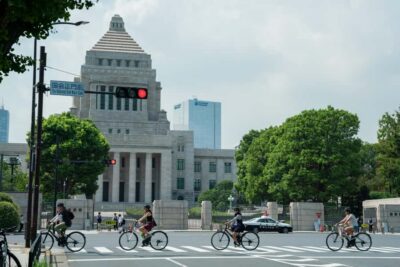
3-hour Guided E-Bike Tour of the City’s Hidden Gems
Read our review →
3-Hour Bike/E-Bike Tour of the City’s Highlights
Read our review →
Tokyo downtown bicycle tour Tokyo Backstreets Bike Tour
Read our review →Browse the lists this tour appears in