
Reviewed · TOKYO BIKE TOURS
Tokyo: 3-Hour Bike/E-Bike Tour of the City’s Highlights
Tokyo is enormous, and this three-hour e-bike ride gives you a quick, useful first look at its major districts. You pedal from the Statue of Commodore Perry near Zojo-ji to Yoyogi Park, passing temples, palace gates, Olympic sites, fashionable Aoyama, and Shibuya Crossing.
I like the smart route, which links places that are spread far apart, and the chance to hear local stories from guides such as Naoki, Rinto, Sho, and Casey. The main catch is traffic: you need a moderate fitness level, and riding through crowded streets and busy junctions can feel tense at times.
Key points at a glance
- See eight major Tokyo areas in three hours: The route covers Zojo-ji, the Imperial Palace, Tokyo Station, Akasaka Palace, the National Stadium, Aoyama, Cat Street, and Shibuya.
- E-bikes make the distance manageable: Pedal assist helps you cover far more ground than you could on foot.
- The ride ends in a useful location: Yoyogi Park is a five-minute walk away, while Shibuya Station is about ten minutes away.
- The route mixes famous sights with city neighborhoods: You pass palace gates and temples, then move through fashion streets and the heart of Shibuya.
- Bring cash for extras: A helmet costs ¥1,000 to rent, and a child seat costs ¥3,000 if arranged at least two days ahead.
- Bad weather can affect the schedule: Raincoats are supplied on rainy days, but the operator may cancel for poor weather and offer another date or a refund.
Why a bike is a smart way to see Tokyo
The great strength of this tour is distance. Tokyo’s top sights are not all clustered together, and a walking tour would spend much of its time moving between them. On a bicycle, you get a changing view of the city as you go: temple grounds give way to palace walls, office districts, shopping streets, and parks.
I especially like this as an opening activity in Tokyo. It helps you understand how the central districts fit together before you return to the places that deserve more time. You may decide that the Imperial Palace gardens, Shibuya, or Aoyama deserves a second visit after seeing it from the saddle.
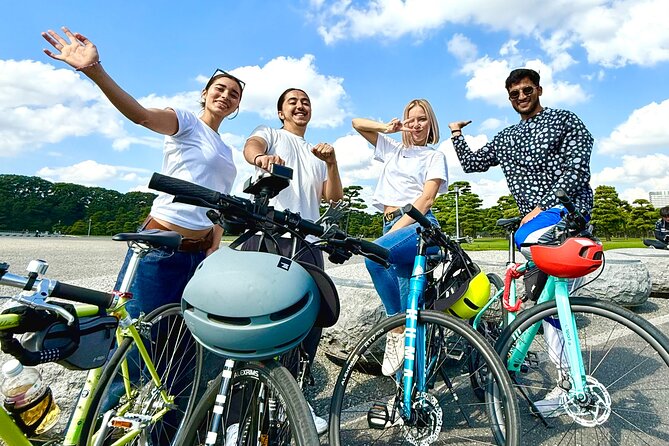
The bicycles include a small pouch for your phone, wallet, and keys, plus bike insurance. Pedal assist is a useful choice if you are not used to cycling long distances or if Tokyo’s summer heat is working against you. The ride is not presented as a hard athletic challenge, but three hours of cycling still requires reasonable fitness.
The route is listed as a private activity, so your own group participates. At some points, you ride on the road and through crowded areas. Guides usually position themselves to keep the group together, and the best guides explain road rules, check on slower riders, and set a comfortable pace. Still, you should feel at ease on a bicycle before booking.
More Tokyo bike tours:
- Tokyo Great Cycling Tour
★ 5.0 · 811 reviews - Tokyo Top Highlights 3h Guided E-bike Tour
★ 5.0 · 714 reviews - 3h Tokyo E-Bike Tour: Hidden Gems, and Local Life with guide
★ 5.0 · 670 reviews
Starting beside Zojo-ji and Tokyo Tower
The meeting point is the Statue of Commodore Perry at 2-chome-2-20 Shibakoen in Minato City. This is near Zojo-ji Temple and Tokyo Tower, but allow extra time to find the exact statue. One rider found the meeting point hard to identify, so do not treat this as a place to locate at the last minute.
Zojo-ji is a fitting first stop. This major Buddhist temple is connected with the Tokugawa shoguns and includes the graves of important military rulers. Its position near Tokyo Tower neatly captures the city’s mix of old and new.
You get about five minutes here, so think of it as a quick orientation and photo stop rather than a temple visit. If you want to study the grounds, gates, or religious art, plan to return later on your own.
The Imperial Palace and Otemon Gate
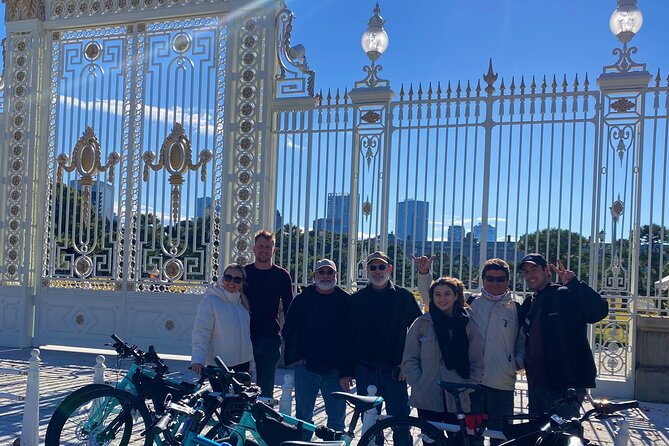
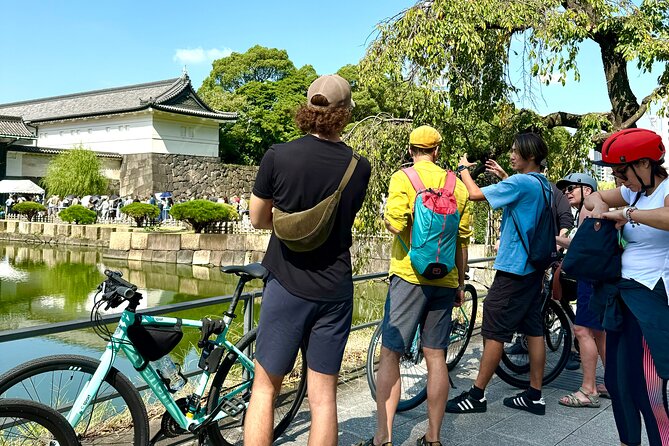
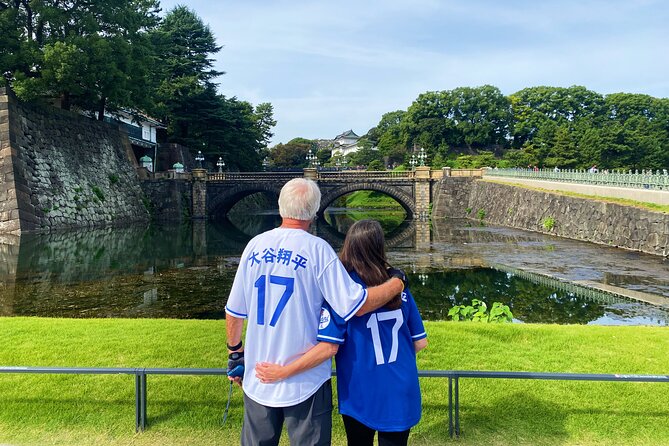
The ride continues to the Imperial Palace, the official residence of Japan’s Emperor. The palace itself is not an ordinary sightseeing building, and access is limited, but the surrounding grounds, walls, bridges, and gates give you a strong sense of the center of Tokyo.
The scheduled stop is about fifteen minutes, followed by another ten minutes at Otemon Gate. This timing lets you take photographs and hear basic background without turning the tour into a long walking visit.
Otemon is one of the most impressive entrances to the palace area. Its heavy wooden construction and stone setting offer a clear contrast with the glass and steel buildings nearby. I like this part of the route because the guide can explain the palace district while you are still seeing it directly, rather than simply pointing it out from a distant bus window.
Do not expect a full palace tour. The value here is the setting, the gate, and the brief context. If imperial architecture is a major interest, use this ride as a preview and return for a longer visit.
Tokyo Station’s red-brick Marunouchi face
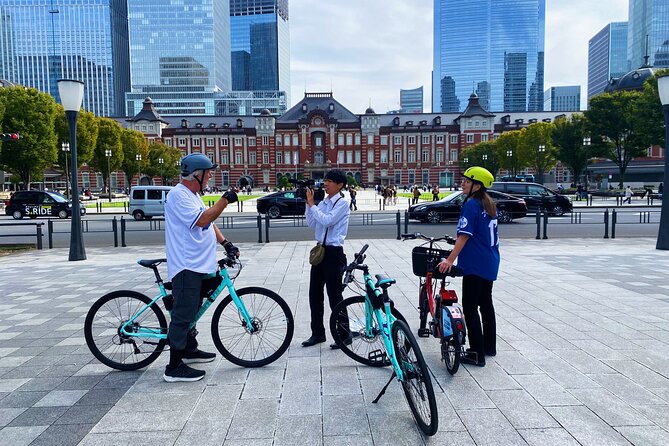
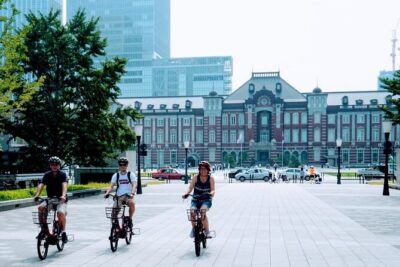
Tokyo Station is one of the city’s most recognizable buildings. Opened in 1914, its red-brick Marunouchi facade gives the central business district a welcome sense of age and character.
You spend about ten minutes at Marunouchi Ekimae Hiroba. The stop is short, but it is enough for photographs and a quick look at the contrast between the historic station and the modern towers behind it.
The tour does not give you time to explore the station’s interior, underground shopping areas, or restaurants. That is a limitation if you are interested in rail travel or architecture. On the other hand, the station is easy to revisit after the ride, especially if you are already using Tokyo Station for transport.
A completely different kind of day in Tokyo:
- Mt Fuji and Hakone 1-Day Bus Tour Return by Bullet Train
★ 5.0 · 26,383 reviews - 1-Day Tokyo Bus Tour
★ 5.0 · 14,250 reviews - Tokyo: teamLab Planets TOKYO Digital Art Museum Entry Ticket
★ 4.6 · 9,779 reviews - Mt Fuji & Hakone Cruise, Drum Show Bullet Train 1 Day from Tokyo
★ 4.0 · 7,413 reviews
Akasaka Palace and the National Stadium
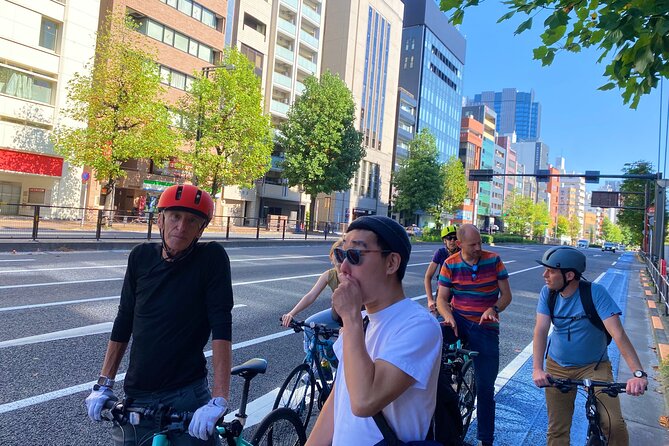
Akasaka Palace was first built as a royal villa and now serves as a state guesthouse. The stop lasts only about five minutes, so you will mainly see the exterior and hear why the building matters.
This is one of the route’s less familiar sights, which makes it useful for getting beyond the usual Tokyo checklist. The grand architecture feels different from the temple, palace, and commercial districts earlier in the ride.
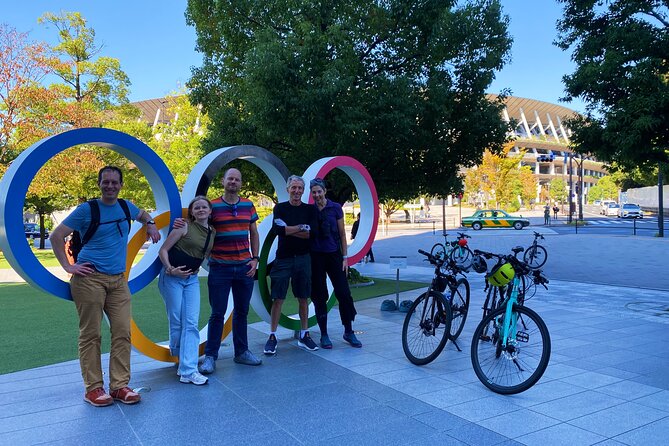
Next comes Japan National Stadium, the main site associated with the 2020 Tokyo Olympic and Paralympic Games. You have about fifteen minutes here. The stadium is a modern landmark, and its broad design gives the ride another change of mood.
The amount of time at both places is limited. If you are hoping to tour inside, check the plan carefully, since this experience focuses on exterior views and short stops. You are paying for the route and local guidance, not extended admission visits.
Aoyama, Cat Street, and Tokyo’s style districts
The ride then moves through Aoyama, known for high-end fashion stores and distinctive architecture. You get about five minutes in the area, but the bigger pleasure is moving through it by bicycle.
From there, the route reaches Shibuya Cat Street, a shopping stretch lined with current fashion brands and vintage stores. This is a good place to notice how Tokyo’s neighborhoods change block by block. You move from formal palace surroundings to a younger, more design-focused part of the city.
Do not expect time for serious shopping. The schedule is built around seeing several districts, not stopping in stores. If Cat Street interests you, note its location and return after the tour when you can walk at your own speed.
Riding through Shibuya Crossing
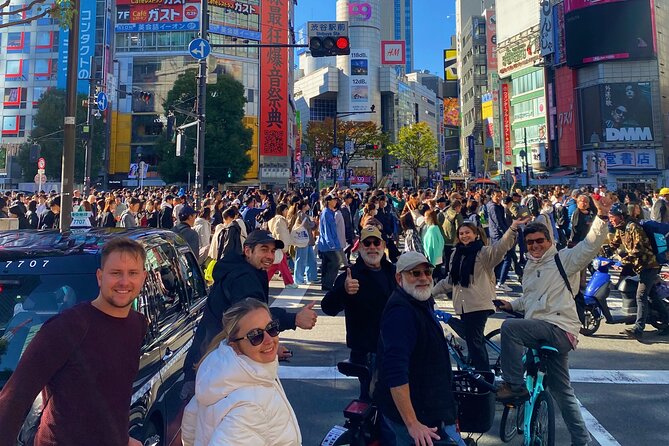
The ride’s most memorable moment for many people is Shibuya Crossing. The stop is listed at about five minutes, and the tour passes through the famous intersection rather than treating it as a long photo session.
Cycling through this area gives you a direct feel for Tokyo’s crowds and traffic patterns. It is also the point where the tour feels least relaxed. You must pay attention, follow the guide, and be comfortable riding around pedestrians and other bicycles.
Some guides, including Naoki, have been praised for explaining road rules clearly and keeping riders together. Rinto has also been singled out for patience and careful support, while Sho and Casey have been praised for friendly, easygoing leadership. Guide assignments can change, so book for the route and format rather than one particular person.
If you want the most dramatic atmosphere, an afternoon ride may finish near dusk or after dark, depending on the season and exact departure. One rider especially liked seeing Shibuya Crossing at night. The schedule does not guarantee a nighttime finish, so ask before booking if that is your main reason for choosing the tour.
Finishing near Yoyogi Park and Harajuku
The official end is near the Bell of Peace in Jinnan, a shopping and dining area between Yoyogi Park and Shibuya. It is about a five-minute walk to Yoyogi Park and roughly ten minutes to Shibuya Station.
This is a practical ending. You can continue into Harajuku, walk through Yoyogi Park, eat in Jinnan, or return toward Shibuya without needing another long transfer. It also gives you a chance to revisit Cat Street or Shibuya on foot.
A short bathroom or rest break may be included between stops, but the ride is still fairly continuous. One rider wanted more planned photo stops, while another appreciated that the guides did not rush the group. The exact balance depends on the guide and the pace of your group.
Guide quality and the pace of the ride
The guides are central to the experience. English and Japanese guiding are offered, and past guide names include Naoki, Hiroto, Sho, Rinto, Rin, Kei, K, Casey, Koce, and Show. Strong guides have been praised for clear English, local pride, useful history, and careful group management.
I would pay close attention to the guide’s role rather than expecting a lecture at every stop. The best value comes while riding between places, when a guide can point out details, explain how districts connect, and help you navigate roads that would be confusing on your own.
The pace appears adjustable within reason. A slower rider was reportedly supported without pressure, and mixed-age groups from about 18 to 70 have completed the route. Even so, you should be able to ride for three hours and manage some traffic. This is not a slow sightseeing trolley.
E-bike comfort, helmets, weather, and safety
The included e-bike is the practical choice for this route. Pedal assist reduces the effort needed to cover the distance, especially in hot weather or when you are not a regular cyclist. Several riders found the ride manageable, but one pointed out that the three hours can be tiring and that the tour does not stop constantly for pictures.
Helmets are not included in the base price. You can rent one for ¥1,000, payable in cash on the activity date. I recommend budgeting for it, particularly if you are not used to urban cycling.
On rainy days, the operator supplies a raincoat. The experience requires good weather, however, and the operator may cancel because of poor conditions. In that case, you are offered another date or a full refund. Since changes made within 24 hours are not accepted and cancellations within 24 hours are not refunded, avoid booking this as a rigid part of a short schedule if the forecast looks uncertain.
Child seats cost ¥3,000, must be arranged at least two days in advance, and require cash on the day. No food or drinks are included, so carry water, especially in warm weather.
Is $63.01 a fair price?
At $63.01 per person, the tour is reasonably priced for a three-hour private ride with bicycle use, insurance, an English or Japanese guide, and a route covering much of central Tokyo. You are also paying for navigation and the ability to connect distant areas without working out every train transfer.
The value is strongest if you have only a short time in Tokyo, are visiting on a long layover, or want a city orientation before exploring alone. One rider used the tour during a 12-hour layover and found it a practical way to see major areas quickly.
The value is weaker if you prefer long visits at each sight, detailed museum-style explanations, or unhurried photography. Add the ¥1,000 helmet fee if you want one, and remember that meals and drinks are extra.
Who should book this Tokyo bike tour?
I would recommend it to confident city cyclists, first-time Tokyo visitors, families with older children, and anyone trying to cover a lot in one morning or afternoon. It is also a good match for people who like learning through movement rather than spending three hours indoors.
I would think twice if traffic makes you nervous, if you have limited cycling experience, or if you want a slow cultural tour. The route includes roads, crowds, and short stops. You will see many places, but you will not fully explore all of them.
Final decision
Book this tour if your goal is to get your bearings quickly and see Tokyo’s major districts in one connected ride. The route is varied, the e-bike reduces the strain, and the finish near Yoyogi Park and Shibuya gives you plenty of options afterward.
Skip it if your priority is depth at one or two sights. For most first visits, though, this is a lively and efficient introduction to Tokyo, with enough local explanation to help you plan the rest of your stay.
FAQ
How long does the Tokyo bike tour last?
The experience lasts approximately three hours, including travel time between stops.
What sights does the route include?
The route includes Zojo-ji Temple, the Imperial Palace, Tokyo Station Marunouchi, Otemon Gate, Akasaka Palace, Japan National Stadium, Aoyama Street, Shibuya Cat Street, and Shibuya Crossing.
Where does the tour start?
It starts at the Statue of Commodore Perry, 2-chome-2-20 Shibakoen, Minato City, Tokyo 105-0011, Japan.
Where does the tour finish?
It ends near the Bell of Peace in Jinnan, between Yoyogi Park and Shibuya. Yoyogi Park is about a five-minute walk away, and Shibuya Station is about a ten-minute walk away.
Is bicycle use included?
Yes. Bicycle use, bike insurance, a mini pouch, and an in-person English or Japanese guide are included.
Does the tour include an e-bike?
The experience is offered as a bike or e-bike tour. Pedal assist is available and is recommended if you want an easier ride across the longer route.
Is a helmet included?
No. Helmet rental costs ¥1,000, and you should bring cash for payment on the activity date.
Can I arrange a child seat?
Yes. A child seat costs ¥3,000, but you must contact the operator at least two days before the activity and bring cash on the day.
What happens if it rains?
Raincoats are supplied on rainy days. If conditions are poor enough for the operator to cancel, you can choose another date or receive a full refund.
Can I cancel the booking?
You can receive a full refund if you cancel at least 24 hours before the start time. Cancellations or changes made within 24 hours are not accepted for a refund.
More 3 Hour Experiences in Tokyo
- Tokyo: 3-Hour Bike or E-Bike City Highlights Tour
★ 4.8 · 435 reviews - Tokyo: 3-hour Guided E-Bike Tour of the City’s Hidden Gems
★ 4.8 · 251 reviews - 3-Hour Tokyo Pub Crawl Nightlife Welcome Guided Tour in Shibuya
★ 5.0 · 209 reviews - 3-Hour Small-Group Sushi Making Class in Tokyo
★ 5.0 · 166 reviews
Newly reviewed around Tokyo
- Tokyo Asakusa:Calligraphy & Make T-shirt Activity★ 5.0 · 62 reviews
- Intercity Shuttle, Tokyo to Haneda /Narita /Yokohama /Makuhari★ 5.0 · 5 reviews
- 1 Hour Travel around Tokyo with a Professional Photographer★ 5.0 · 3 reviews
- Travel Tokyo with Your Own Personal Photographer★ 5.0 · 43 reviews
- Shuttle Van 6hr Tokyo Tour to-and-from Tokyo, Yokohama and Narita★ 5.0 · 9 reviews
- Kickboxing & Body Training with EX-Pro Fighter★ 5.0 · 4 reviews
- Train in Samurai Swordsmanship and Defeat the Demon in Tokyo★ 5.0 · 5 reviews
- Traditional Japanese Knife Sharpening Class★ 5.0 · 18 reviews
Tokyo Bike Tours, compared.
3h Tokyo E-Bike Tour: Hidden Gems, and Local Life with guide
Read our review →
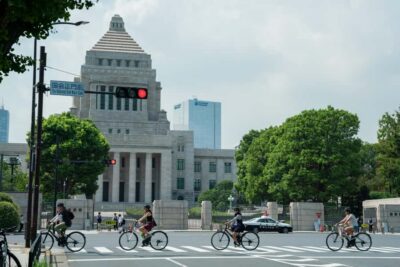
3-hour Guided E-Bike Tour of the City’s Hidden Gems
Read our review →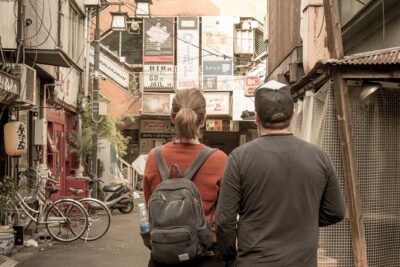
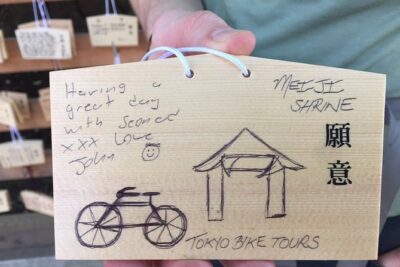
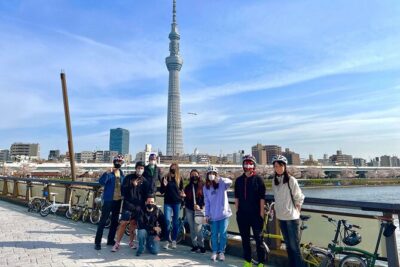
Tokyo downtown bicycle tour Tokyo Backstreets Bike Tour
Read our review →Browse the lists this tour appears in