
Reviewed · TOKYO BIKE TOURS
Tokyo downtown bicycle tour Tokyo Backstreets Bike Tour
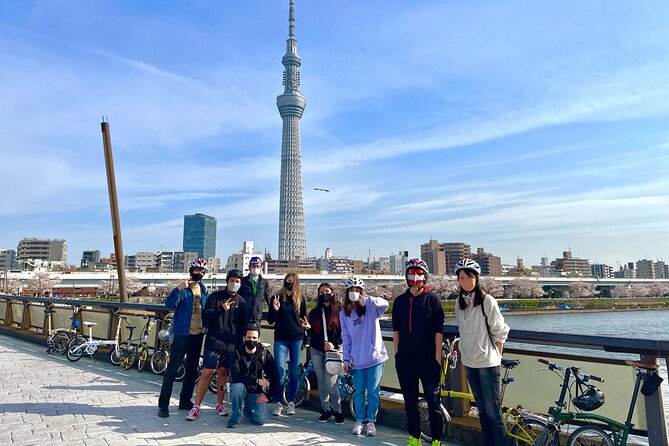
Tokyo reveals its everyday character best away from the big crossings and packed shopping streets. This four-hour ride takes you through eastern neighborhoods around Asakusa, Sumida, and Ryogoku, combining famous sights with small temples, a traditional sweet shop, craft displays, gardens, and old-fashioned shopping streets. The group is limited to six, so guide Takeshi can keep the pace friendly and make sensible route changes.
I like two things in particular. First, a bike lets you cover roughly 15 kilometers in the time a walking tour might take to reach only a few sights. Second, the route includes a sakuramochi stop and local streets where you get a clearer sense of ordinary Tokyo life. The main drawback is the meeting point, which can be a little confusing, and the folding bikes are best suited to riders between 140 and 180 centimeters tall.
Key points to know before you book
- A small-group ride through eastern Tokyo: The maximum group size is six, allowing for a personal pace and questions along the way.
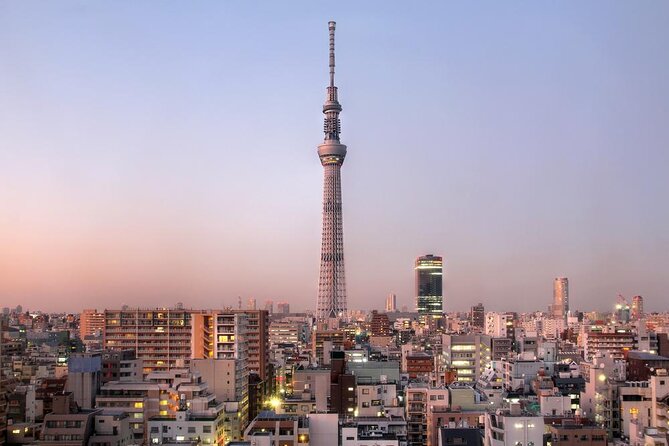
- A route with both icons and local corners: You cycle past Senso-ji and Tokyo Skytree, then visit quiet temples, gardens, craft displays, and neighborhood streets.
- Traditional sakuramochi included: The stop at Yamamotoya adds a tasty piece of local food culture to the sightseeing.
- Folding bikes supplied: The bikes have 14 to 20-inch wheels and suit riders from 140 to 180 centimeters tall.
- Flexible sightseeing: The itinerary can be adjusted to match your interests, within the tour’s four-hour schedule.
- Weather matters: The tour requires good weather, and poor conditions can lead to a rescheduled date or full refund.
Why a bike is a smart way to see eastern Tokyo
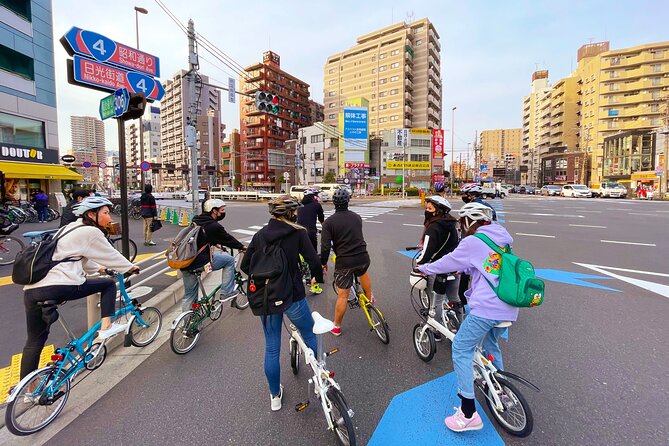
Tokyo is easy to explore by train, but trains tend to move you between major stations rather than through the spaces in between. A bicycle changes that. You can pedal through quieter lanes, pause at a small shrine, and reach several districts without spending half the morning changing trains.
This is not a high-speed cycling outing. The route uses streets described as fairly quiet, and the pace is intended to leave room for photographs and explanations. That makes it a good fit if you want exercise without turning the day into a race.
The ride begins and ends at the Tokyo Backstreets Bike Tour office in Sumida City, near Higashimukojima. The address is inside a shared office called Synapse, so I would allow extra time to locate the entrance. The tour lasts about four hours, and the route may cover around 15 kilometers, depending on the group and the stops.
Guide Takeshi is a central part of the experience. The tour is designed around conversation, local context, and flexibility rather than a fixed script delivered from the front of a large group. If you are interested in food, traditional crafts, temples, or daily life, say so early. The itinerary can be adjusted to give more attention to the subjects that matter most to you.
More Tokyo bike tours:
- Tokyo Great Cycling Tour
★ 5.0 · 811 reviews - Tokyo Top Highlights 3h Guided E-bike Tour
★ 5.0 · 714 reviews - 3h Tokyo E-Bike Tour: Hidden Gems, and Local Life with guide
★ 5.0 · 670 reviews
Yamamotoya and the first taste of sakuramochi
The first stop is Yamamotoya, known for Chomeiji sakuramochi. This traditional sweet consists of red bean paste wrapped in a salt-pickled cherry leaf. It is called a cherry cake, though its texture and flavor are quite different from a Western cake.
The stop takes about 10 minutes, but it gives you a useful introduction to Japanese food customs. The cherry leaf adds a salty note to the sweet bean filling, and the item is tied to the seasonal culture of cherry blossoms even when the trees are not in flower.
A snack is included, along with water. That is a small detail, but it matters on a four-hour ride. You do not need to plan a food stop at the start, and the sakuramochi adds something more memorable than a packaged snack.
Honryuin Matsuchiyama Shoden and Imado Shrine
Next comes Honryuin Matsuchiyama Shoden, a temple connected with Senso-ji and founded in 595. The temple has unusual images of daikon radishes and pouches. The radish represents the human mind caught in ignorance, while the pouch has its own religious meaning.
You may find this stop more interesting than a quick photo visit because the symbols invite an explanation. Tokyo’s major temples can be visually impressive, but a smaller place with distinctive objects often gives you more to ask about. The visit lasts about 20 minutes.
Imado Shrine follows, with about 15 minutes to look around. Founded in 1063, the shrine is associated with relationships and marriage, and it is known for beckoning cats, or fortune cats. These figures are familiar across Japan, but Imado has a special connection with them.
The shrine is a good example of how the tour mixes religious sites with local stories. You are not simply ticking off another temple gate. You are learning why a particular place attracts people hoping for love or marriage, and how a symbol such as the beckoning cat fits into Japanese popular culture.
Traditional crafts in the Edo Taito district
The Edo Taito Traditional Crafts Center provides a different change of pace. Rather than focusing on religion or architecture, this museum displays Japanese handicrafts and shows the care involved in local making traditions.
The stop takes about 20 minutes. That is enough time for a focused look, but not so long that the tour becomes an indoor museum visit. If you enjoy design, woodwork, textiles, or practical objects made by hand, this may be one of the more rewarding stops.
I also like the balance here. A Tokyo sightseeing route can become a string of temples and viewpoints. Adding a crafts center gives you a better sense of the skills used in ordinary objects and the care given to traditional work.
A completely different kind of day in Tokyo:
- Mt Fuji and Hakone 1-Day Bus Tour Return by Bullet Train
★ 5.0 · 26,383 reviews - 1-Day Tokyo Bus Tour
★ 5.0 · 14,250 reviews - Tokyo: teamLab Planets TOKYO Digital Art Museum Entry Ticket
★ 4.6 · 9,779 reviews - Mt Fuji & Hakone Cruise, Drum Show Bullet Train 1 Day from Tokyo
★ 4.0 · 7,413 reviews
Senso-ji by bicycle, then on foot
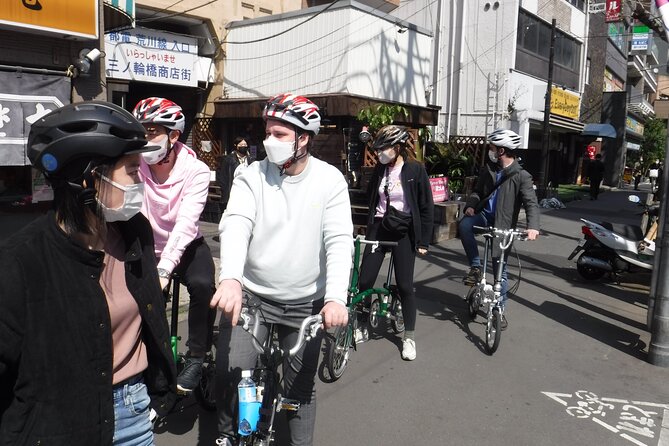
At Senso-ji, you cycle in front of the Kaminarimon gate, leave the bicycles, and walk into the temple area for about 20 minutes. This is the tour’s most famous sight, and it gives you a chance to see one of Asakusa’s major landmarks without trying to ride through the temple grounds.
The short visit means you should not expect a full Senso-ji tour. You will get a look at the gate and temple area, plus an explanation from Takeshi, but the schedule also has many other stops. If Senso-ji is your main priority, tell the guide at the start so you can understand how much time the group can give it.
The bike approach is useful. You see the major entrance from the street, then switch to walking where bicycles would be impractical. This simple change helps the day flow without forcing you to lock up bikes repeatedly in crowded areas.
Kyu Yasuda Garden and the Ryogoku sumo district
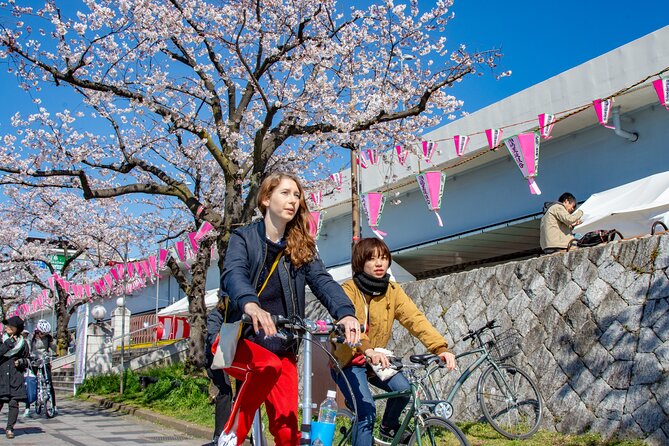
Kyu Yasuda Garden is a traditional Japanese garden built in the 17th century. The walk here lasts about 20 minutes. After the temples and city streets, the garden offers a quieter pause and a chance to notice the design of water, paths, and planted areas.
The garden visit also shows why this tour works better than a simple point-to-point ride. You are not only seeing Tokyo’s famous buildings. You are moving through different types of urban space, from narrow neighborhood roads to a carefully planned historic garden.
The route then continues to Ryogoku Kokugikan, Tokyo’s major sumo stadium. The stop is brief, about five minutes, and is mainly for cycling past and taking photographs. You should not expect to enter the stadium or attend a sumo event as part of this experience.
Still, the location adds useful context. Ryogoku is strongly linked with sumo, and passing the stadium helps place the sport within the city rather than treating it as an isolated cultural show. The short stop keeps the tour moving toward the river and Skytree.
Oyokogawa Water Park and Tokyo Skytree
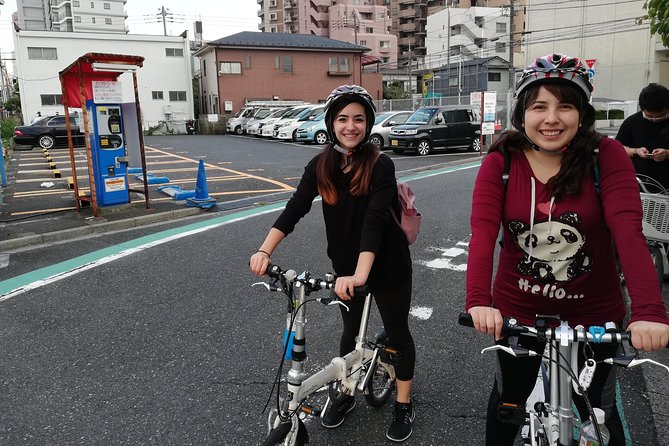
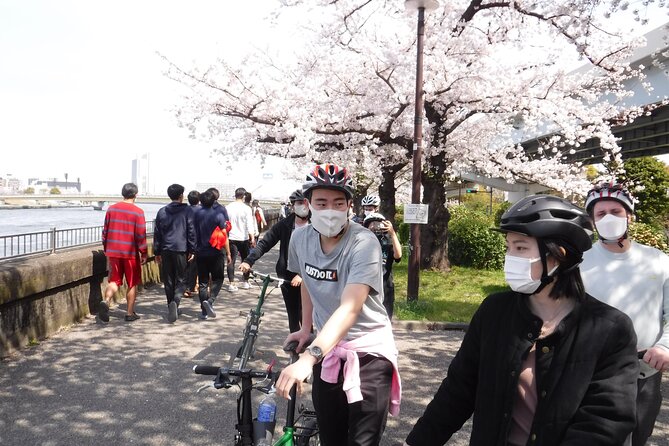
The ride through Oyokogawa Water Park lasts about 30 minutes. This is one of the longer cycling sections, giving you time to enjoy the route rather than stopping every few minutes for a formal explanation.
The park leads toward Tokyo Skytree. You cycle under the tower and stop for about 10 minutes. This is a good photo point, especially if you want a ground-level view rather than the paid observation decks.
The tour does not include admission to Tokyo Skytree. That keeps the price down and makes sense for a four-hour ride, but you should plan a separate visit if you want the panoramic views from above.
Seeing the tower from the bicycle route gives you a different impression of its scale. You are approaching it through local streets and open space, not simply arriving at the station beneath a shopping complex. That contrast is one of the better features of the itinerary.
Kyojima Minami Park and ordinary neighborhood life
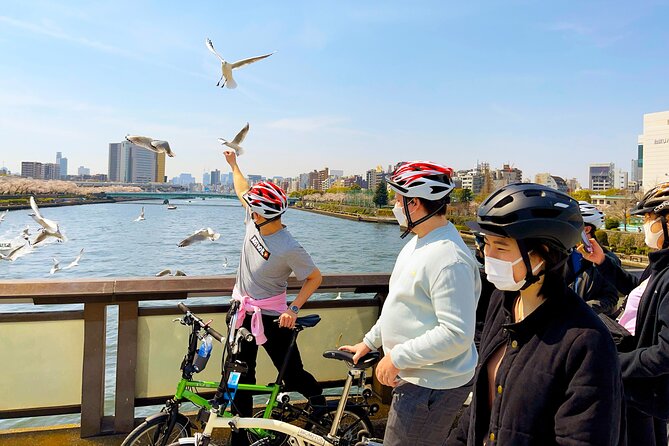
The final major stop is Kyojima Minami Park, with about 30 minutes in an old-fashioned shopping area. This is where the tour moves furthest from standard sightseeing. You see the kind of local streets and small commercial areas that are easy to miss when your schedule is built around Tokyo Station, Shibuya, Shinjuku, and major department stores.
The appeal is not a single grand monument. It is the chance to notice how people live, shop, and move through a neighborhood. The area may feel less polished and less instantly photogenic than the city’s major sights, but that is precisely why it belongs on a backstreets tour.
This stop also gives you a useful final contrast. Earlier, you will have seen Senso-ji, a major temple, and Skytree, a modern landmark known across Japan. Here, the focus shifts to daily routines and local streets. That range makes the ride feel like an introduction to a real district rather than a collection of postcard stops.
Bikes, pace, and practical comfort
The supplied bicycles are folding bikes with 14 to 20-inch wheels. They are intended for people between 140 and 180 centimeters tall. If you are taller than 180 centimeters, contact the operator before booking so the bike choice can be discussed.
Helmets are provided but are not mandatory. I would still wear one, especially if you are not used to cycling in an unfamiliar city. The route is described as easy to follow, and the streets are generally quiet, but traffic conditions can change.
A tandem bike may be available if requested at least three days before the tour date. This can help a family or pair who would prefer not to ride separate bikes, but you need to arrange it ahead of time.
The tour suits most people who can ride a bicycle comfortably. It is not presented as a strenuous athletic ride, and the pace is described as pleasant. Still, four hours in the saddle can feel long if you rarely cycle. Bring comfortable clothing and be ready for the possibility of heat, especially in summer. One account of the tour noted that extreme heat affected the day, even though the group still enjoyed the outing.
Rain is the bigger concern. The experience requires good weather. If conditions force a cancellation, you can choose another date or receive a full refund.
What $65.41 gets you
At $65.41 per person, this tour costs more than renting a bicycle and making your own way around the same districts. The difference is the guide, the route planning, the included bike and helmet, the water and sakuramochi, and the ability to ask questions as you go.
The small group is important to the value. With a maximum of six people, you are not trying to keep up with a large pack or waiting while a guide repeats instructions for twenty people. The route can also be adjusted, which is especially useful for couples, families, or repeat visitors who have already seen the main sights.
You are also paying to avoid the uncertainty of navigating Tokyo by bike. The operator takes you through backstreets that may be difficult to connect on your own, while still reaching major landmarks such as Senso-ji and Skytree.
The price makes the most sense if you value local explanation and want to cover a lot of ground in half a day. If you only want a quick ride or prefer a self-guided outing, it may feel expensive. If you want a friendly introduction to eastern Tokyo, the combination of transport, guiding, and food is fair.
Who should book this ride
I would recommend it most to first-time visitors who want an early sense of Tokyo’s scale and neighborhoods. It can also work well at the start of a trip because the exercise and daylight activity may help you reset after a long flight.
Families are another good match. Children as young as nine have used a tandem bike, while older children rode their own bicycles. The route is described as easy, but you should still make sure everyone in your group is comfortable cycling for several hours.
Repeat visitors may enjoy it even more. If you have already seen the main Tokyo districts, this ride reaches places that are less likely to appear on a standard sightseeing plan. It also suits anyone interested in local food, traditional crafts, religious customs, and ordinary neighborhood life.
I would hesitate if you are much taller than 180 centimeters and cannot confirm a suitable bike, if you dislike cycling in cities, or if your schedule cannot tolerate a weather-related change. I would also choose another activity if your main goal is entering Tokyo Skytree or spending a long time inside Senso-ji, since both are brief stops here.
Should you book Tokyo Backstreets Bike Tour?
Book it if you want a personal, active way to see eastern Tokyo and prefer local streets over a strict list of famous landmarks. The best parts are the small group, Takeshi’s flexible guiding, the sakuramochi tasting, and the mix of temples, crafts, gardens, sumo, Skytree, and neighborhood shopping streets.
Skip it if you want a large sightseeing bus, a strenuous road ride, or extended time at each major attraction. For most visitors who can comfortably ride a bicycle, this is a well-priced half-day introduction to a side of Tokyo that is easy to miss from the train.
FAQ
How long does the Tokyo Backstreets Bike Tour last?
The tour lasts approximately four hours.
Where does the tour start and finish?
It starts and ends at Tokyo Backstreets Bike Tour in Sumida City, at 2-chome 24-14 Higashimukojima, inside the shared office called Synapse.
How many people can join the tour?
The maximum group size is six people.
What kind of bicycles are provided?
The operator provides folding bicycles with 14 to 20-inch wheels. They are suitable for people between 140 and 180 centimeters tall.
Are helmets provided?
Yes. Helmets are provided, although wearing one is not mandatory.
Is food or water included?
Yes. Water and a snack from a traditional sweet shop are included. The route visits Yamamotoya for sakuramochi.
Can the tour be canceled because of weather?
Yes. The experience requires good weather. If it is canceled because of poor weather, you can receive a full refund or choose a different date.
Newly reviewed around Tokyo
- Tokyo Asakusa:Calligraphy & Make T-shirt Activity★ 5.0 · 62 reviews
- Intercity Shuttle, Tokyo to Haneda /Narita /Yokohama /Makuhari★ 5.0 · 5 reviews
- 1 Hour Travel around Tokyo with a Professional Photographer★ 5.0 · 3 reviews
- Travel Tokyo with Your Own Personal Photographer★ 5.0 · 43 reviews
- Train in Samurai Swordsmanship and Defeat the Demon in Tokyo★ 5.0 · 5 reviews
- Shuttle Van 6hr Tokyo Tour to-and-from Tokyo, Yokohama and Narita★ 5.0 · 9 reviews
- Kickboxing & Body Training with EX-Pro Fighter★ 5.0 · 4 reviews
- Tokyo History: Sensoji Temple & Asakusa District Private Tour★ 5.0 · 28 reviews
Tokyo Bike Tours, compared.
3h Tokyo E-Bike Tour: Hidden Gems, and Local Life with guide
Read our review →
3-hour Guided E-Bike Tour of the City’s Hidden Gems
Read our review →
3-Hour Bike/E-Bike Tour of the City’s Highlights
Read our review →
Browse the lists this tour appears in