
Reviewed · TOKYO COOKING CLASSES
Tokyo Washoku 4-hour Cooking Class: From Market to Table
Tokyo cooking classes often begin at a studio with ingredients already measured. This one starts more usefully, at a local supermarket near Iriya Station, where you learn how to choose Japanese vegetables, meat, and other ingredients before cooking them. I like that practical start, and I like that the class gives you recipes to use at home.
The small group, capped at seven people, leaves room for questions and hands-on work. Guides such as April, Yuri, Masai, Alice, and Mihori have earned praise for patient instruction and friendly conversation. The main drawback is the strict start time: arriving more than five minutes late without contacting the operator can mean missing the class without a refund.
Key points to know before booking
- The supermarket visit comes first: Learn how to shop for Japanese ingredients instead of simply cooking with a prepared box.
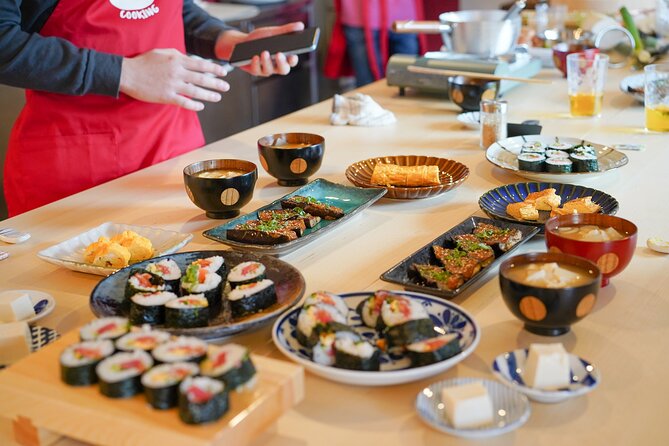
- Four dishes make this a full meal: Prepare makisushi, miso soup, dashimaki tamago, and nasu dengaku.
- You do the work yourself: Practice knife cuts, mixing, rolling, grilling, and other basic cooking methods.
- The group stays small: A maximum of seven people makes it easier to ask questions and get help.
- Sake and beer may be included at the table: Pair drinks with the food after cooking.
- Recipes go home with you: The dishes are meant to be practical enough to recreate in your own kitchen.
Why the supermarket stop matters
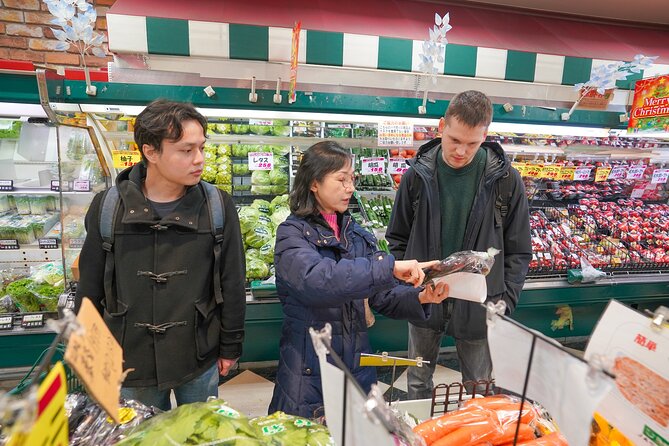
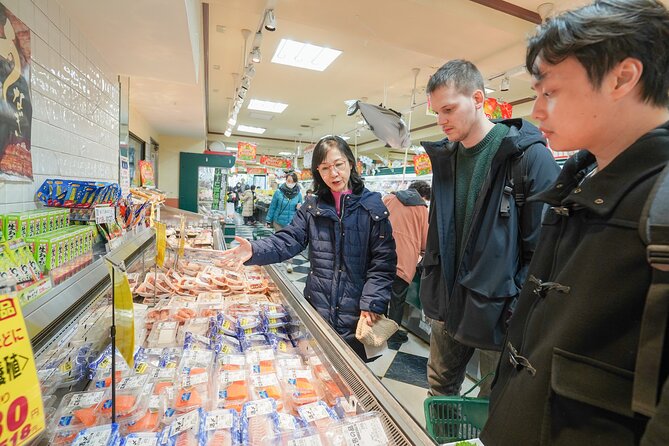
The most useful part of this four-hour experience may happen before you reach the cooking studio. You meet at the FamilyMart at 2-chōme-1-10 Shitaya in Taito City at 10:00 a.m., near Iriya Station, then shop with your guide at a nearby supermarket.
That changes the class from a simple meal-making session into a lesson in everyday Japanese food culture. Your guide helps you read the shelves through the choices that matter: how to select ingredients, recognize Japanese vegetables, and decide what is suitable for the dishes ahead.
I like this because supermarkets reveal ordinary Tokyo better than many sightseeing stops. You see the ingredients people actually buy, not only food arranged for visitors. You also learn a skill that remains useful after the class. When you later encounter miso, eggplant, sushi rice, or unfamiliar produce in Japan, you will have a better idea of what you are looking at.
The shopping portion is not a guided market tour with a long list of historic stops. It is focused and practical. If you want a cooking class with a great deal of sightseeing, this is not the right format. If you want help choosing Japanese ingredients, it is a smart use of the first part of the morning.
More Tokyo cooking classes:
- Tokyo: Roll and Authentic Sushi Making Class in Asakusa
★ 4.9 · 1,957 reviews - Tokyo Shinjuku Chopsticks Making Class
★ 5.0 · 1,763 reviews - Tokyo: Sushi Making Class in a Happi Coat near a Famous Spot
★ 4.9 · 1,377 reviews
From supermarket shelves to the cooking studio
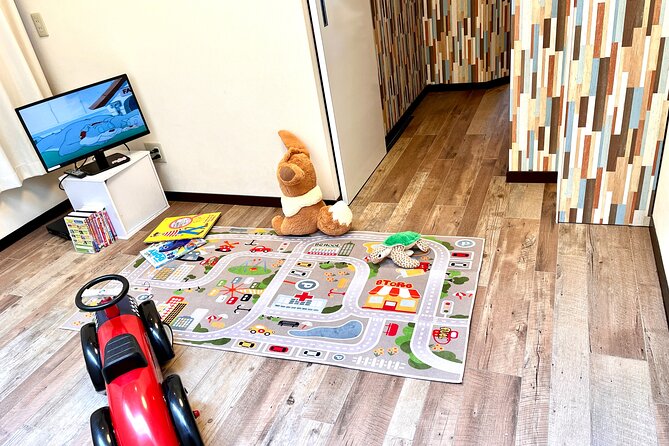
After shopping, you continue to a dedicated cooking studio. The studio has been described as spacious and well arranged, which matters when several people are chopping, rolling sushi, and working around hot equipment.
The activity finishes back at the cooking studio, so you do not need to plan a second pickup point. You may visit Kappabashi Dougu Street on your own afterward, a useful option if you want to look for Japanese kitchen tools once the class has sharpened your interest.
The group can include other participants, with a maximum of seven people. That size should give you more contact with your instructor than a large demonstration class, though the exact feel depends on who books that day. The format is social, and the class has included people from different countries.
Several instructors are named in the feedback connected with this experience. April is praised for encouraging people through each step and for adding beer and sake tasting. Yuri is noted for detailed demonstrations and recipes. Masai is described as patient and good at making comparisons for people who had just arrived in Japan. Alice receives praise for cheerful conversation and for guiding a complete meal. Mihori is associated with clear instruction during both the supermarket visit and cooking.
The guide you receive will vary, but the pattern is consistent: practical instruction, conversation, and help at the work surface rather than a lecture from across the room.
Four Japanese dishes, four different skills
The menu gives you a useful range of Japanese home cooking. You prepare makisushi, miso soup, dashimaki tamago, and nasu dengaku from scratch.
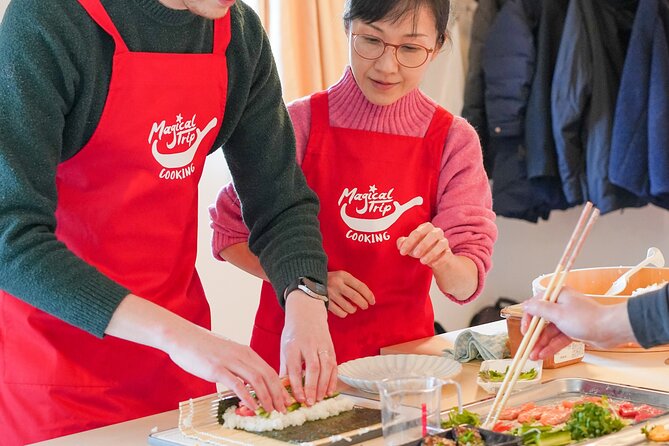
Makisushi gives the class its most familiar dish. You learn the process of preparing and rolling sushi rather than simply eating a finished piece. The work rewards careful handling, and your guide can correct your technique as you go.
Miso soup looks simple, but it teaches the balance of a Japanese meal. It also gives you direct practice with a basic dish that is easy to repeat at home. One participant described the finished soup as the best they had ever had, though your own result will depend on your group and cooking choices.
Dashimaki tamago, the Japanese rolled omelet, adds a different challenge. The egg mixture must be cooked and rolled in stages, so this is more than cracking eggs into a pan. If you cannot eat eggs, the food selection drops from four dishes to three, an important point to consider before booking.
Nasu dengaku introduces eggplant prepared with a savory miso-based style. It gives the class a vegetable dish alongside the sushi, soup, and egg preparation. Together, the four items create a meal with different textures and techniques rather than four versions of the same task.
The menu is especially useful for cooks who want dishes that can be made again at home. The recipes are provided afterward, and the cooking methods are presented as homestyle skills rather than restaurant-only tricks.
How hands-on is the cooking?
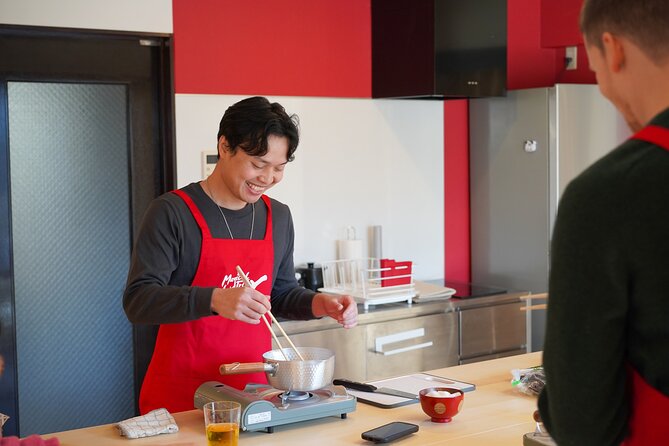
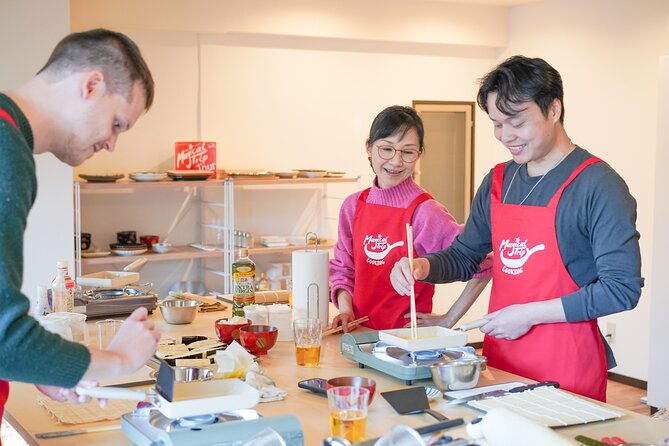
You should expect to chop, prepare, and cook, not simply watch a guide perform each recipe. The class includes traditional Japanese knife and cooking techniques, with instruction on cutting methods and preparation.
That hands-on format is one of the strongest reasons to choose this experience. A demonstration can look easy because someone else is doing the difficult part. Here, you have to handle the ingredients yourself, which makes the lessons more memorable and reveals where you need practice.
The class is also a good place to ask questions. You can ask about ingredients, cooking methods, Japanese food habits, or Tokyo life while you work. The small group helps, though you should still expect to share the instructor’s attention.
The cooking is designed for a friendly setting rather than a formal culinary exam. Teenagers have enjoyed the activity, and the food is described as tasty without being too complicated. That makes it a sensible choice for families with older children, couples, solo visitors, and people who want a social morning without committing to a professional-level course.
A completely different kind of day in Tokyo:
- Mt Fuji and Hakone 1-Day Bus Tour Return by Bullet Train
★ 5.0 · 26,383 reviews - 1-Day Tokyo Bus Tour
★ 5.0 · 14,250 reviews - Tokyo: teamLab Planets TOKYO Digital Art Museum Entry Ticket
★ 4.6 · 9,779 reviews - Mt Fuji & Hakone Cruise, Drum Show Bullet Train 1 Day from Tokyo
★ 4.0 · 7,413 reviews
Food, drink, and the meal afterward
Once the dishes are ready, you sit down and eat together at the studio. The meal gives you time to see how the separate recipes fit into a Japanese table setting.
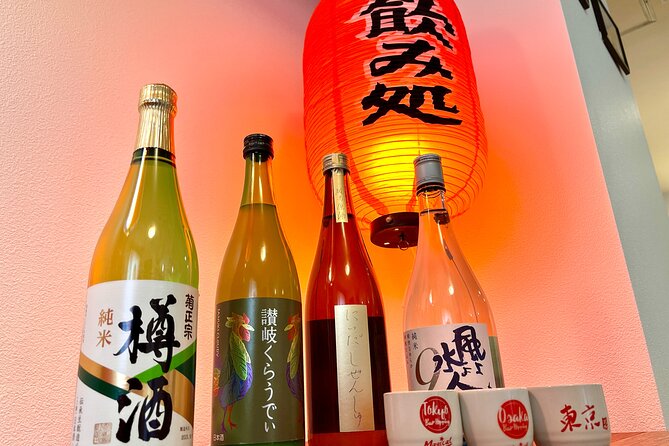
Beer and sake tasting may be part of the experience, and drink pairings can be discussed while you eat. This is a pleasant extra rather than the main reason to book. If you do not drink alcohol, the class description also refers to other drink pairings, but you should ask the operator if you have a specific preference.
The shared meal also creates the relaxed part of the morning. Guides have been praised for conversation and personal stories, including Alice’s cheerful manner and the chance to ask about daily life in Tokyo. You are not only learning a recipe card. You are eating the food you just prepared with the person who taught you how to make it.
Do not expect a long restaurant meal or an open-ended sake tasting. The focus remains on the cooking class, and the drink element supports the meal.
Price, timing, and what you receive for $79.59
At $79.59 per person, the class is priced above a basic group cooking demonstration but offers more than a single recipe. You get roughly four hours, supermarket instruction, a full four-dish meal, a dedicated studio, direct guidance, recipes, and possible beer or sake pairings.
I see the value in the combination. A separate supermarket visit would not normally come with help choosing ingredients, and a restaurant meal would not teach you how to prepare it. The recipes also give the class some value after your Tokyo trip, provided you can find the ingredients at home.
The price makes less sense if you mainly want to eat sushi. You will spend time shopping, chopping, cooking, and cleaning up as part of the learning process. That is the point, but it is worth being clear about it before paying.
The class starts at 10:00 a.m. and lasts about four hours. Plan to arrive early at the FamilyMart meeting point. The operator requires an on-time start, and arriving more than five minutes late without contact can be treated as a cancellation.
Free date or time changes are available up to 24 hours before the start. You can cancel up to 24 hours ahead for a full refund. Changes or cancellations inside that window are not accepted, and a no-show is not refunded. The experience also requires good weather, with a different date or full refund offered if the operator cancels for weather.
Dietary requests need advance notice
Vegan and vegetarian participants are welcome, and the ingredients and cooking process can be arranged for them. You need to tell the operator at least one day before the class. Requests made on the day cannot be accommodated.
The operator cannot guarantee an allergy-free experience. The food is prepared in kitchens that do not belong to MagicalTrip, and substitutions may not always be possible. If you have a serious allergy, contact the provider before booking and explain exactly what you need.
Egg-free diners should note the reduced menu. Since dashimaki tamago is one of the four main dishes, avoiding eggs means choosing three types of food instead of four.
Tokyo weather also deserves attention. The supplied information warns of summer highs reaching 40°C, or 110°F, and winter lows dropping to -5°C, or 20°F. The cooking takes place indoors, but you still spend part of the morning outside traveling between the meeting point, supermarket, and studio. Dress for the season.
Who will enjoy this class most?
I would choose this for you if you want to connect Japanese food with daily life. The supermarket stop is particularly useful for first-time visitors who want to understand ingredients instead of seeing them only on a restaurant menu.
It suits people who enjoy learning by doing. You should be comfortable handling a knife, following instructions, and working around other people. You do not need professional cooking experience, and the recipes are presented as practical enough to repeat at home.
Families with teenagers can get good value from the activity because everyone has something to do. Couples and friends can share the work, while solo participants can meet people from several countries in a small group.
I would be more cautious about booking if you want a quiet private lesson, have complex allergies, dislike alcohol-related activities, or have a tight schedule that cannot tolerate a firm 10:00 a.m. start. The class is also not ideal for anyone who wants a broad tour of Tokyo instead of a focused food experience.
Should you book Tokyo Washoku 4-hour Cooking Class?
Book it if you want more than a meal and less than a formal culinary course. The supermarket visit, four-dish menu, patient guides, recipes, and small group make this a well-rounded way to spend a morning in Tokyo.
The best reason to choose it is the practical sequence: learn how to shop, prepare the food yourself, eat it, and take the recipes home. Just arrive early, report dietary needs at least a day ahead, and remember that the class is about participation. If that sounds like fun, the $79.59 price is fair for four hours of instruction and food.
FAQ
Where does the Tokyo Washoku cooking class meet?
The meeting point is the FamilyMart at 2-chōme-1-10 Shitaya, Taito City, Tokyo 110-0004, Japan, near Iriya Station.
What time does the class start?
The class starts at 10:00 a.m.
How long does the cooking experience last?
The experience lasts approximately four hours.
Where does the activity finish?
The activity finishes back at the cooking studio, which is also the stated end point.
How many people can join the class?
The class has a maximum of seven participants, though other participants may join you.
What dishes will I prepare?
The class includes makisushi, miso soup, dashimaki tamago, and nasu dengaku.
Are vegetarian and vegan participants welcome?
Yes. Vegetarian and vegan arrangements are available if you notify the operator at least one day before the class.
Can the class accommodate allergies?
The operator cannot guarantee an allergy-free experience. You should report allergies and dietary needs at least one day ahead, but substitutions may not always be possible.
What happens if I cannot eat eggs?
Your food selection will be reduced from four types to three.
Can I cancel for a full refund?
Yes, if you cancel at least 24 hours before the experience start time. Cancellations or changes made less than 24 hours before the start are not accepted for a refund or date change.
More hands-on classes and workshops in Tokyo
- Sushi Making Tokyo Roll and Authentic Japanese Sushi Class
★ 5.0 · 3,971 reviews - Chopstick Making Workshop in Ginza
★ 4.8 · 1,366 reviews - Tokyo Sushi Making Class in Tsukiji with Professional Chef
★ 5.0 · 1,177 reviews - Ramen & Gyoza Cooking Class in Tokyo with Local Supermarket Visit
★ 5.0 · 823 reviews
More Tokyo markets and shopping streets
- Tokyo Tsukiji Fish Market Food and Culture Walking Tour
★ 5.0 · 3,184 reviews - Tokyo: Tsukiji Fish Market Food and Walking tour
★ 5.0 · 1,724 reviews - Tokyo: Tsukiji Fish Market Guided Walking Tour
★ 4.9 · 1,397 reviews - Tsukiji Fish Market Guided Tour and Sushi Making with Pro Chef
★ 5.0 · 775 reviews
Newly reviewed around Tokyo
- Tokyo Asakusa:Calligraphy & Make T-shirt Activity★ 5.0 · 62 reviews
- Intercity Shuttle, Tokyo to Haneda /Narita /Yokohama /Makuhari★ 5.0 · 5 reviews
- 1 Hour Travel around Tokyo with a Professional Photographer★ 5.0 · 3 reviews
- Travel Tokyo with Your Own Personal Photographer★ 5.0 · 43 reviews
- Kickboxing & Body Training with EX-Pro Fighter★ 5.0 · 4 reviews
- Train in Samurai Swordsmanship and Defeat the Demon in Tokyo★ 5.0 · 5 reviews
- Shuttle Van 6hr Tokyo Tour to-and-from Tokyo, Yokohama and Narita★ 5.0 · 9 reviews
- Traditional Japanese Knife Sharpening Class★ 5.0 · 18 reviews
Tokyo Cooking Classes, compared.

Roll and Authentic Sushi Making Class in Asakusa
Read our review →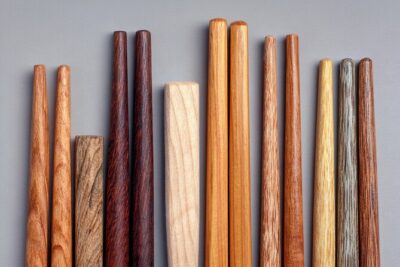
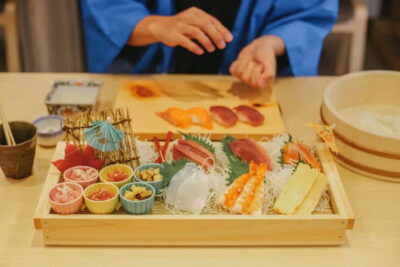
Sushi Making Class in a Happi Coat near a Famous Spot
Read our review →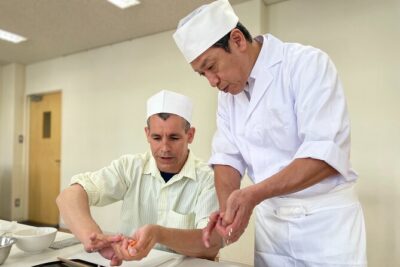
Tokyo Sushi Making Class in Tsukiji with Professional Chef
Read our review →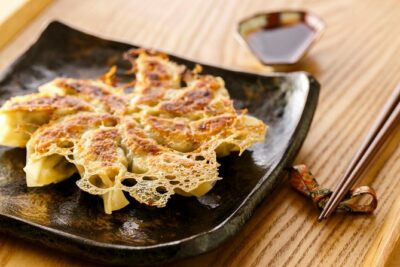
Ramen & Gyoza Cooking Class in Tokyo with Local Supermarket Visit
Read our review →
Matcha Making Class in Tokyo with Authentic Japanese Sweets Set
Read our review →
Tsukiji Fish Market Sushi Making Class with Pro Chef
Read our review →
Browse the lists this tour appears in