
Reviewed · TOKYO SKYTREE TICKETS
Asakusa: TOKYO SKYTREE Exploration after History Tour
Tokyo Skytree is the grand finale, but the best part of this 3.5-hour small-group tour comes first: a guided walk through Asakusa, where a temple, shrine, old shopping street, river, and famous red gate sit close together. You get context instead of just a string of photo stops. Guides including Taka, Junko Yamashita, Sue, and Keiko are praised for clear English, patient answers, and careful explanations.
I like two things here. First, both Skytree observation decks are included, so you do not need to sort out timed admission on your own. Second, the group is limited to eight, with headsets supplied for groups of three or more. The main caution is the firm cancellation rule: Skytree tickets are bought soon after booking, so you cannot cancel or change the date for a refund.
Key points at a glance
- Asakusa before Skytree: Start beside the Sumida River and work through Kaminarimon, Nakamise, Hozomon, Senso-ji, and Asakusa Shrine.
- History with useful comparisons: Your guide connects Japan’s Edo isolation, Buddhism, Shinto, dragons, Buddhist symbols, and ukiyo-e to wider world history.
- Two observation decks included: The ticket covers the upper and lower Tokyo Skytree decks, followed by time for shopping below.
- Small group format: The maximum is eight people, and headsets help you hear the guide in a group of three or more.
- Simple afternoon timing: Meet at 1:30 pm in Kaminarimon and finish at Skytree around 5 pm.
- One extra cost: The train from Asakusa Station to Tokyo Skytree Station costs JPY160 and is not included.
Why this Asakusa and Skytree pairing works
Many Tokyo sightseeing plans split old and new Tokyo into separate outings. This tour joins them neatly. You begin in Asakusa, one of the city’s most important traditional districts, then move to Tokyo Skytree, a very modern symbol of the capital.
That change in scale gives the afternoon a natural shape. On foot, you study gates, incense, religious customs, street commerce, and local stories. Later, you look down on the city from high above. The guide helps connect those two views, so Skytree feels like more than a tall building with an elevator.
I especially like the use of comparisons. You learn about Japan’s long period of isolation and the limited role the Netherlands played in maintaining outside contact. You also hear how Japanese and Western ideas about dragons differ, and how people in Japan and Europe could think in surprisingly similar ways a thousand years ago.
This is not a tour built only around quick photographs. It gives you enough background to understand what you are seeing, while still covering a lot in half a day.
More Tokyo Skytree tickets:
- Tokyo: Meiji Shrine, Asakusa, Skytree Bus Tour and Cruise
★ 4.7 · 1,986 reviews - Tokyo Panoramic 1 Day: Meiji Shrine, Asakusa, Odaiba and SKYTREE®
★ 4.5 · 1,222 reviews - Tokyo Go Kart: Asakusa, Skytree, and Akihabara **IDP MUST**
★ 5.0 · 988 reviews
Starting beside the Sumida River
The tour begins at 1:30 pm near 2-chōme-20-6 Kaminarimon, close to the Asakusa Culture Tourist Information Center and the district’s major sights. The first stop is Sumida Park, beside the river, with about 20 minutes for an introduction to the area.
This is a smart starting point. The river opens the story beyond Asakusa’s temples. Here, your guide explains the Edo shogunate’s policy of keeping Japan closed to much of the outside world for more than 200 years, along with the unusual position of the Netherlands during that period.
You are not simply looking at water and a park. You are getting a short explanation of why modern Japan developed on its own terms before opening to the wider world. That background makes later comments about religion, art, and trade easier to follow.
The park stop is brief, so do not expect a long riverside walk. Its value is the setting and the introduction, not a full park tour.
Religion explained before the temple visit
At the Asakusa Culture Tourist Information Center, you spend about 20 minutes learning the basic difference between Buddhism and Shinto. This preparation matters because the next stops bring you into contact with both traditions.
Japan’s religious sites can confuse first-time visitors. A gate, purification area, incense burner, prayer ritual, Buddhist temple, and Shinto shrine may all appear within a short walk. Without guidance, it is easy to photograph everything and understand little.
The tour gives you a framework before reaching the main religious buildings. You learn why Buddhism and Shinto have different roots and how prayer differs between them. That explanation becomes especially useful at Asakusa Shrine, where the two traditions share the same grounds and a long, intertwined past.
The guide-led format also helps with questions. Sue is praised for speaking clear English, keeping a comfortable pace, and allowing time for questions. That is useful here, since religious customs often need a little explanation rather than a quick label.
Kaminarimon and the story behind the dragons
Kaminarimon, or Thunder Gate, gets about 15 minutes. This is one of Asakusa’s best-known photo points, with its large lantern and strong red-and-black design.
The useful part is not only the gate itself. Your guide explains the difference between Japanese and Western dragons. In many Western stories, dragons are dangerous creatures to defeat. Japanese dragons have a different role and set of meanings, and the contrast gives you a quick lesson in how symbols change from one culture to another.
This stop can be crowded, especially around the lantern, so a guide helps you focus on the details instead of simply trying to find a clear camera angle. The time is short, though. If you want quiet photographs of Kaminarimon, you may need to return on your own.
More Asakusa and Sensoji tours:
- Tokyo: Japanese Dance Cabaret Theater Asakusa-Kaguwa Ticket
★ 4.8 · 2,270 reviews - Tokyo: Roll and Authentic Sushi Making Class in Asakusa
★ 4.9 · 1,957 reviews - Tokyo: Asakusa Walking Tour with Sensoji Temple Visit
★ 4.8 · 1,583 reviews - Tokyo Asakusa Rickshaw Tour
★ 5.0 · 1,375 reviews
Nakamise, where shopping carries history
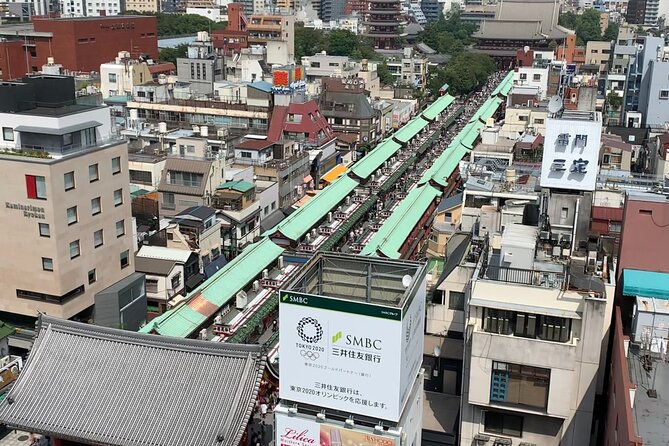
From Kaminarimon, the group walks along Nakamise Shopping Street for about 40 minutes. This is one of the oldest shopping streets in Japan and the busiest commercial stretch of the walk.
The guide uses the street to explain Buddhist symbols, including the vajra, also called tokko, and the influence of ukiyo-e woodblock prints. That is a good way to read the shops and souvenirs with more care. Instead of seeing Nakamise as a line of stores, you begin to notice how religious imagery, popular art, and tourist commerce overlap.
Ukiyo-e also gives you a window into the wider impact of Japanese prints. Their influence reached far beyond their original purpose, changing how artists in other places thought about composition and everyday subjects.
You have 40 minutes here, but this is not presented as a dedicated shopping session. You should expect a guided walk with opportunities to look around, not unlimited time for buying snacks and gifts. If shopping is a major goal, the tour’s fixed schedule may feel brisk.
Hozomon and Senso-ji, the main cultural center
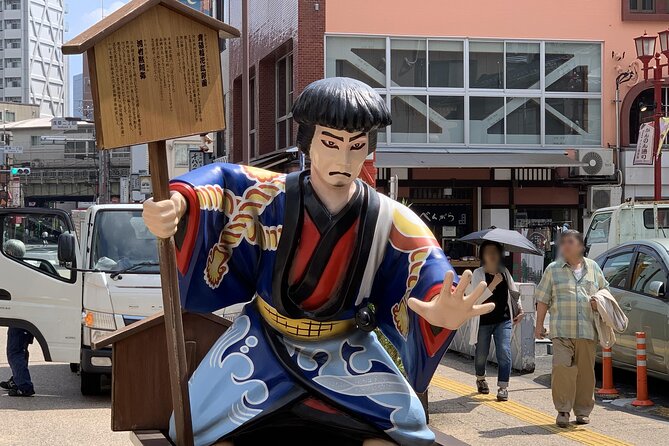
Hozomon is the next gate, with about 15 minutes for another historical comparison. The guide explains how people in Japan and the West shared similar ways of thinking roughly a thousand years ago.
That point helps prevent the tour from presenting Japan as completely separate from the rest of the world. You get a sense of both difference and common ground, which is a more useful way to approach cultural history.
Another short walk brings you to Senso-ji, Tokyo’s oldest Buddhist temple. The stop lasts about 15 minutes. Here, your guide returns to the difference between Buddhist and Shinto prayer, helping you identify what belongs to the temple and what belongs to the shrine next door.
Senso-ji is a major attraction, so the short visit has a clear tradeoff. You receive a focused explanation and see the central site, but you will not have a long period for quiet observation. If you want to explore every corner, return at another time.
Taka is praised for explaining what each building means to the people who use it, not just reciting dates. That approach suits Senso-ji, where the meaning of the place is as important as its age.
Asakusa Shrine and the unusual shared grounds
The final Asakusa stop is Asakusa Shrine, with about 15 minutes. This is one of the most interesting parts of the walking tour because a Shinto shrine and a Buddhist temple occupy the same grounds.
The guide explains how the two traditions lived alongside each other for more than a thousand years. That history gives you a better way to understand the religious mix you see across Japan. The point is not that the traditions are identical. It is that their relationship has changed over time, and the buildings preserve part of that story.
You may also have the chance to pray, as one account of the tour specifically notes. The guide’s role is helpful here because you can ask what to do and why, rather than copying the nearest person without context.
Asakusa Shrine is a fitting end to the walking section. By this point, you have moved from broad national history to symbols, commerce, temple practice, and the relationship between two faiths.
The short train ride to Tokyo Skytree
After Asakusa, you take the train from Asakusa Station to Tokyo Skytree Station. The fare is JPY160 per person and is not included in the tour price.
This transfer is simple, but it is worth planning for. The tour starts at 1:30 pm and lasts about 3 hours 30 minutes, so the schedule is organized rather than open-ended. You do not have to find the route yourself, which is helpful after a walking tour, but the train ride still adds a small out-of-pocket cost.
The tour ends at Tokyo Skytree, not back at the starting point. That is convenient if you want to continue exploring Skytree Town or arrange dinner nearby. It is less convenient if your hotel is in another part of Tokyo and you were hoping for a return transfer.
Tokyo Skytree from both observation decks
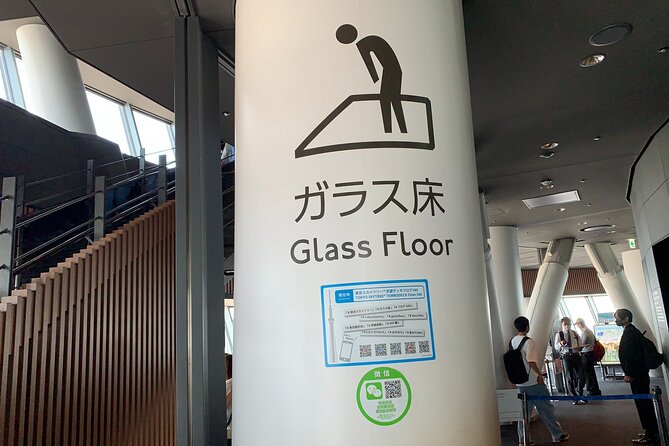
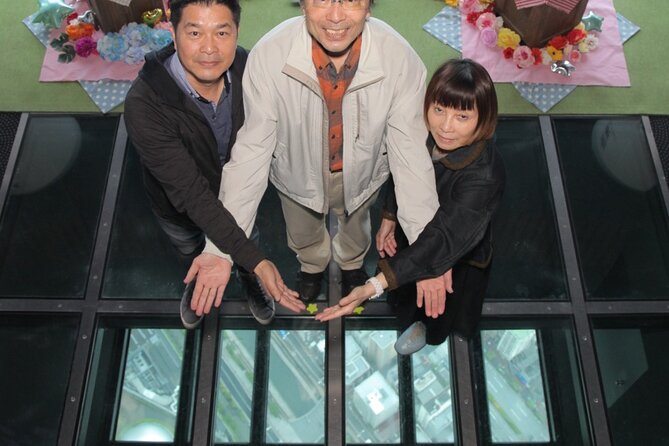
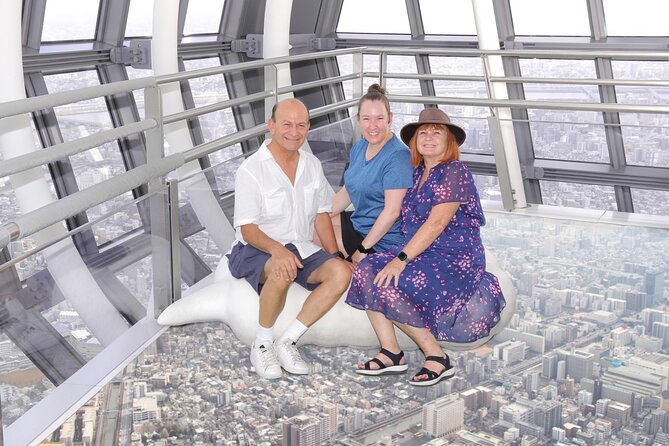
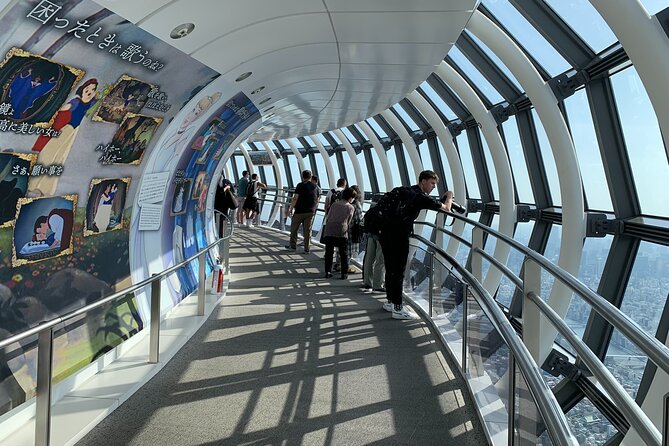
The Skytree portion takes about an hour. Admission to the lower and upper observation decks is included, which is the main financial advantage of the package.
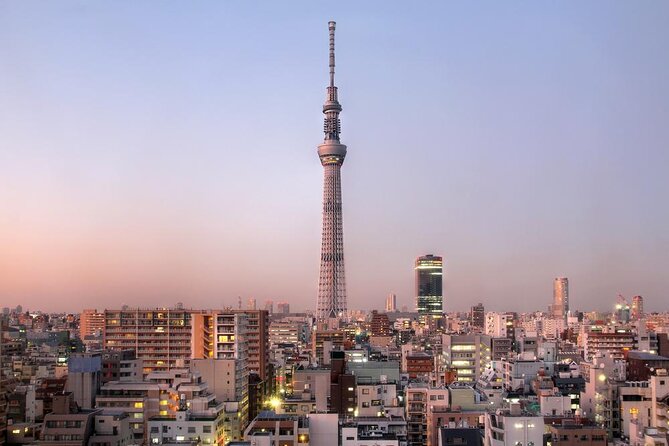
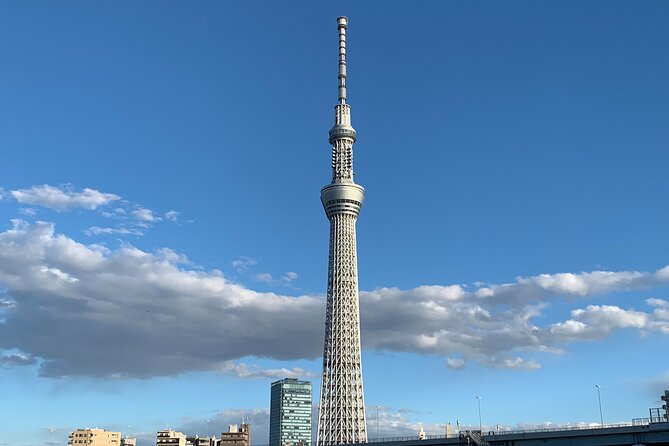
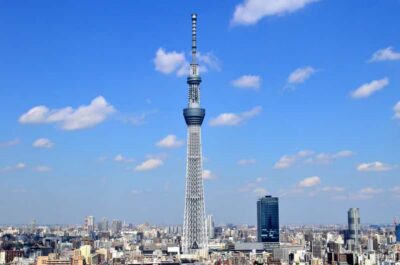
Tokyo Skytree is the tallest building in Japan, and its surrounding complex includes shops and dining. From the observation decks, you get broad views across Tokyo and plenty of photo opportunities. The view is the payoff for the earlier street-level walk, especially after spending the afternoon learning how the city grew around older religious and commercial centers.
Weather matters. On a clear day, the height gives you a very wide view. On a hazy or rainy day, visibility can be limited. One account specifically notes that poor weather affected the experience, so keep expectations flexible. The tour cannot control the sky.
The one-hour visit is enough to see both levels, take photographs, and get a sense of the building. It is not a long free period for shopping and dining. After the guided portion ends, you can continue below at your own expense and make your own way onward.
What the $118.24 price includes
At $118.24 per person, this is not the cheapest way to see Asakusa. The value comes from combining several pieces that can cost time and effort when arranged separately.
You receive a local guide for the walking tour, admission to both Skytree observation decks, and a small group capped at eight. Groups of three or more receive headsets, which can make a real difference around busy streets and large gates.
The price does not include the JPY160 train fare, hotel pickup, hotel drop-off, food, or shopping. Those exclusions are normal for a walking-and-sightseeing experience, but you should budget for the train and anything you buy at Nakamise or Skytree.
I would consider the price fair for someone who wants interpretation and a fixed plan. If you are comfortable reading about Asakusa beforehand, navigating the train, and buying Skytree tickets yourself, you may spend less independently. The tour is paying for guidance, timing, and bundled admission, not simply transportation.
The guides and the small-group experience
The guide is central to the quality of this experience. Taka is praised for explaining the meaning of buildings and answering questions. Junko Yamashita is described as attentive, thoughtful, and clear when handling a large amount of historical material. Sue receives praise for polite presentation, strong English, a relaxed pace, and time for questions. Keiko is noted for researching Asakusa and Skytree carefully and connecting the sights to Japanese culture.
Those details point to the tour’s strongest feature: the human explanation. You are not left to guess why a temple and shrine share a site or what a symbol means.
The maximum group size of eight is small enough for questions, though it is not a private tour. Headsets are supplied for groups of three or more, which helps when the group spreads out along Nakamise or near the gates.
Most people can participate, but you should be ready for several hours of walking, standing, and moving between busy public sites. The tour does not include hotel pickup, so you need to reach the Kaminarimon meeting point on your own.
Who should book this tour
I would choose this tour for a first visit to Tokyo, especially if Asakusa feels hard to decode. It suits families, couples, and small groups who want a guide to handle the sequence and explain customs without rushing through every stop.
It is also a good fit if you want both an old Tokyo experience and a major modern viewpoint in one afternoon. The combination saves you from planning separate transport and Skytree admission.
You may prefer a self-guided visit if you want long temple visits, extensive shopping time, or complete control over the schedule. Photography-focused visitors should also note that the tour gives fixed time at each stop, and weather can affect the Skytree view.
Book only when your date is firm. Tickets are purchased soon after booking, and this experience is non-refundable and cannot be changed for any reason. If the minimum number of participants is not met and the operator cancels, you will be offered another date or experience, or a full refund.
FAQ
Where does the tour start?
It starts at 1:30 pm at 2-chōme-20-6 Kaminarimon, Taito City, Tokyo 111-0034, Japan.
Where does the tour finish?
The tour ends at Tokyo Skytree, at 1-chōme-1-2 Oshiage, Sumida City, Tokyo 131-0045, Japan.
How long does the experience last?
It lasts approximately 3 hours 30 minutes.
Is Tokyo Skytree admission included?
Yes. The ticket includes access to both the lower and upper observation decks.
Is the train fare included?
No. The train from Asakusa Station to Tokyo Skytree Station costs JPY160 and must be paid separately.
How large is the group?
The maximum group size is eight people.
Are headsets provided?
For groups of three or more, headsets are provided so you can hear the guide clearly even when standing farther away.
Can I cancel or change the booking?
No. The experience is non-refundable and cannot be changed for any reason because Skytree tickets are purchased soon after booking. If the operator cancels because the minimum number of participants is not reached, you will be offered a different date or experience, or a full refund.
Should you book the Asakusa and Skytree tour?
Book it if you want a well-organized cultural introduction to Asakusa, clear explanations from a local guide, and Skytree’s two observation decks without handling the details yourself. The strongest reasons are the small group, the thoughtful religious and historical context, and the useful contrast between old Asakusa and modern Tokyo.
Skip it if you need a flexible schedule, dislike firm cancellation terms, or want to spend hours shopping and exploring Senso-ji at your own pace. For everyone else, this is a sensible afternoon plan that gives you both the meaning of Asakusa and the big city view from above.
More history and heritage tours in Tokyo
- Tokyo: Imperial Palace and Shogun Historical Walking Tour
★ 5.0 · 2,251 reviews - Tokyo: Imperial Palace Japanese History Walking Tour
★ 4.9 · 987 reviews - Tokyo: Shinjuku Historical Walking Tour & Secret Backstreets
★ 5.0 · 530 reviews - Yanaka Walking Tour: Historic and Traditional District of Tokyo
★ 5.0 · 530 reviews
Newly reviewed around Tokyo
- Tokyo Asakusa:Calligraphy & Make T-shirt Activity★ 5.0 · 62 reviews
- Intercity Shuttle, Tokyo to Haneda /Narita /Yokohama /Makuhari★ 5.0 · 5 reviews
- 1 Hour Travel around Tokyo with a Professional Photographer★ 5.0 · 3 reviews
- Travel Tokyo with Your Own Personal Photographer★ 5.0 · 43 reviews
- Train in Samurai Swordsmanship and Defeat the Demon in Tokyo★ 5.0 · 5 reviews
- Shuttle Van 6hr Tokyo Tour to-and-from Tokyo, Yokohama and Narita★ 5.0 · 9 reviews
- Kickboxing & Body Training with EX-Pro Fighter★ 5.0 · 4 reviews
- Traditional Japanese Knife Sharpening Class★ 5.0 · 18 reviews
Tokyo Skytree Tickets, compared.
Meiji Shrine, Asakusa, Skytree Bus Tour and Cruise
Read our review →
Tokyo Panoramic 1 Day: Meiji Shrine, Asakusa, Odaiba and SKYTREE®
Read our review →
Tokyo Go Kart: Asakusa, Skytree, and Akihabara **IDP MUST**
Read our review →
Asakusa, Skytree & Akhihabara Go-Kart City Experience
Read our review →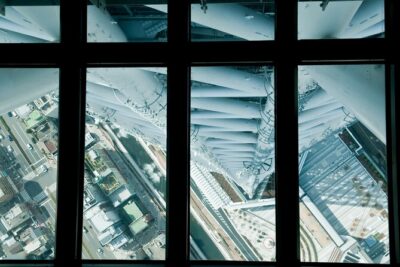
Tokyo Skytree Admission Ticket with Tembo Deck and Galleria
Read our review →
1 Day Bus Tour with Meiji-Jingu,Odaiba,lunch&Skytree
Read our review →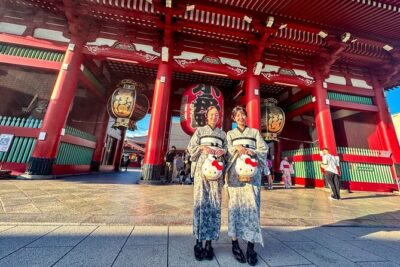
Full Tokyo: Meiji Shrine, Imperial Palace, Asakusa & Skytree
Read our review →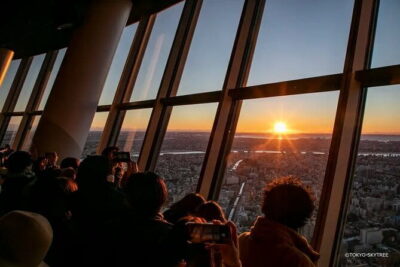
Browse the lists this tour appears in