
Reviewed · TOKYO TRADITIONAL CRAFT WORKSHOPS
Mini Origami Lamp and Mizuhiki knot Belt Workshop in Ueno
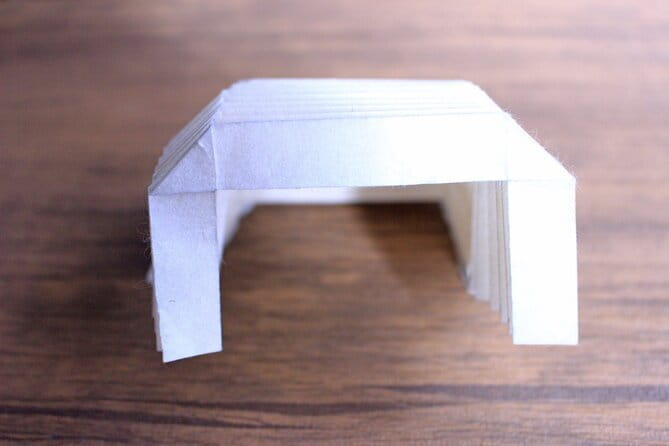
The clever part of this Ueno workshop is that your lamp folds flat like a closed book, then opens into a glowing bellows shape. You work with handmade washi paper, learn why this light, durable material suits both art and home decor, and leave with an object that is genuinely yours.
I like two things right away: the private format gives you room to work at your own pace, and the mizuhiki knot adds meaning beyond decoration. The closing tea and Japanese sweet are also a thoughtful touch. The one concern is skill level. Fine folding, gluing, and assembly may frustrate children or anyone seeking a quick craft, so this is best for ages 10 and up.
Key points at a glance
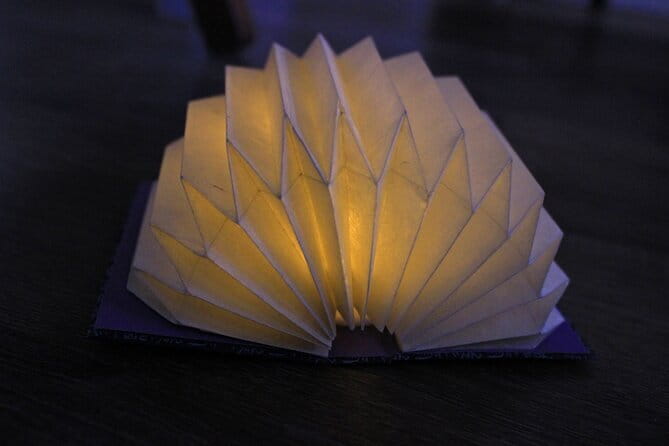
- A lamp that folds flat: Build a washi shade that closes like a book and opens into a warm, bellows-like form.
- Two traditional crafts in one session: Make both an origami lamp and a mizuhiki knot ornament for a belt.
- Meaning behind the knot: Learn how different mizuhiki knots carry messages and why they suit gifts.
- A private 150-minute workshop: You receive direct instruction in Japanese or English rather than working in a large class.
- A gentle finish: Japanese sweets and Japanese paper tea are served at the end.
- A better fit for older children and adults: The detailed handwork is not recommended for children under 10.
Folding washi into a warm, portable lamp
This workshop begins with washi, the handmade Japanese paper at the heart of the activity. You receive a guide document explaining its basics before turning the paper into something useful. That introduction matters because washi is not simply colored craft paper. Its lightness and strength make it suitable for lamps, ornaments, and interior pieces.
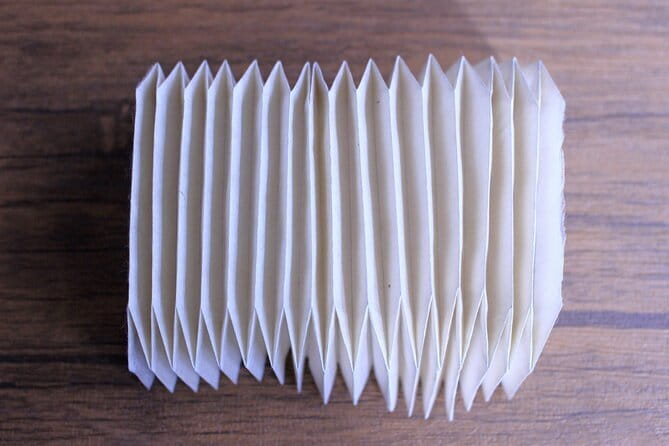
The main project is an origami lamp made from several sheets of washi. You fold and glue the sheets in a bellows-like pattern. Once assembled, the shape can open to form a small lamp shade. When closed, it resembles a book, making it easy to store or carry home.
I like this design because it gives you two objects in one: a flat paper artwork and a lamp with a soft, warm glow. The finished piece is not just something to place in a suitcase and forget. With a small lamp inserted inside, the paper becomes part of your room decor.
You should expect careful work rather than a simple fold-and-go project. The paper needs to be folded accurately, and the glued sections must be fixed together in the right way. The instructor demonstrates how to fold, glue, and assemble the materials, then helps you as you work.
That hands-on guidance is important. The activity description specifically warns that the skills may not suit young children. Even adults should allow themselves time to make small corrections. If your folds are not perfect, the lamp may not open evenly, so patience is part of the experience.
More things to do in Ueno:
- Eat and Drink Like a Local: Tokyo Ueno Food Tour-Taverns&Ramen
★ 5.0 · 957 reviews - Tokyo: Food Tour in Ueno with 10+ Tastings of Japanese Classics
★ 5.0 · 303 reviews - Tokyo Ueno Food Tour Sushi Ramen and Local Favorites
★ 5.0 · 54 reviews
Why the washi lesson adds value
A craft workshop can sometimes feel like a souvenir factory: follow instructions, finish the object, and move on. Here, the washi explanation gives the activity a wider purpose. You learn why this traditional paper works well for art and interior decoration, instead of treating it as a random material supplied for the class.
Washi is light and durable, which explains the lamp’s unusual design. It can be folded into a compact shape but still hold its form when opened. That makes the finished lamp practical for taking home, especially if you are moving between several destinations in Japan.
The guide document is useful after the workshop, too. It gives you a simple reference for the material and the techniques introduced during the session. I would keep it with the lamp, particularly if you want to explain the piece to friends or family later.
The workshop does not promise a museum-level lesson in every kind of Japanese paper. Instead, it gives you a focused introduction tied to something you are making. That balance works well for a two-and-a-half-hour activity.
Making a mizuhiki knot for your belt
The second project is a mizuhiki knot ornament. Mizuhiki is a decorative paper cord with a twisted washi-paper core wrapped in nylon or film. It is used in Japanese decorative traditions, and the knots are not merely pretty shapes. Different knots have meanings and are chosen for particular types of gifts.
You make an ornament for a belt, giving the second project a clear use rather than leaving it as a loose cord sample. The instructor explains the meanings of the knots and how those meanings affect gift-giving. This is one of the most interesting parts of the session because it connects handwork with Japanese social customs.
The knot work also gives the class a different rhythm from the lamp. The lamp asks for repeated folding and gluing. Mizuhiki asks you to handle cords and shape them into a controlled design. You get to compare two paper-based skills in the same sitting.
Expect some concentration here, too. Mizuhiki can look simple once finished, but tying and arranging the cord neatly takes attention. If you want a flawless result on the first attempt, you may need help. The private format is useful because the instructor can focus on your hands and correct the shape as you go.
I especially like the gift connection. Once you understand that a knot can express a particular message, a mizuhiki ornament becomes more than a belt accessory. It can also help you choose or understand Japanese gift wrapping in the future.
A calm private class in Ueno
The activity lasts 150 minutes, or two and a half hours. That is long enough to cover the washi basics, complete both craft projects, and finish with sweets and tea without forcing every step into a rushed block.
You join a private group, which is a major advantage for detailed paper work. In a large class, you might spend time waiting for assistance or struggle to see a demonstration. Here, the instructor can give direct help with folds, glue, and knot placement.
Instruction is available in Japanese and English. That does not turn the craft into a lecture-heavy class. The useful point is that you can ask about the techniques and meanings in English while following a Japanese traditional craft.
The instructor prepares the materials for the projects. You do not need to bring paper, cord, glue, or a tool kit. One participant specifically praised the way the different materials were set up and the clear demonstration of folding, gluing, and fixing everything together.
The tone appears to be relaxed and friendly. One participant singled out the teacher’s helpful manner, while another described the session as relaxing and enjoyable. A mascot cat may also be present, an unusual little feature that adds warmth to the room but should not be treated as the main reason to book.
More Tokyo craft workshops:
- Tokyo Shinjuku Chopsticks Making Class
★ 5.0 · 1,763 reviews - Chopstick Making Workshop in Ginza
★ 4.8 · 1,366 reviews - Kintsugi Experience: Art of Golden Joinery in Tokyo
★ 5.0 · 467 reviews - Tokyo Chopstick Making Workshop with Artisan
★ 5.0 · 466 reviews
The Japanese sweet and paper tea finish
At the end, you receive a Japanese sweet and Japanese paper tea. The tea is presented as a special offering not available elsewhere in the experience description, so this is more than a standard refreshment stop.
I like the timing. After concentrated handwork, sitting down with a small sweet and tea gives you a natural pause to look at your lamp and ornament. It also lets the workshop end as a cultural experience rather than stopping the moment the glue dries.
The refreshments are included in the $106 price. A participant specifically praised the snacks and tea, describing them as very good. Keep your expectations in the right place: this is not a tea ceremony, and the main focus remains paper craft. The food and drink are a pleasant closing detail, not a separate formal performance.
The phrase Japanese paper tea may need clarification when you book or arrive, since the supplied information uses that name without explaining the preparation. You can expect tea served as part of the workshop, but no further details about its ingredients or style are provided.
Is $106 a fair price?
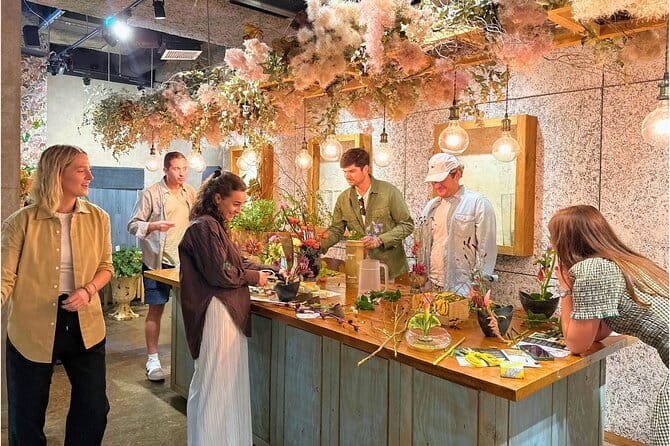
At $106 per person, this is not a budget craft class. The value depends on what you want from your Ueno afternoon.
You receive 150 minutes of private instruction, all materials for two handmade pieces, a washi guide document, Japanese sweets, and tea. You also take home a working lamp and a mizuhiki belt ornament rather than only a small paper sample.
I find the price easier to justify if you value direct teaching and a finished object. The lamp takes more work than a basic souvenir activity, and the knot lesson gives you cultural context that you would not get from simply buying a paper ornament in a shop.
The price is less attractive if you only want a fast, inexpensive activity or if you are mainly looking for a ready-made gift. You are paying for the time, instruction, materials, and private setting. You are also paying for the chance to make an item with your own hands, including the inevitable small imperfections.
For a couple, family group with older children, or friends interested in Japanese design, the private structure can make the cost worthwhile. For a solo visitor on a tight budget, compare it with free sightseeing or a less detailed public craft class before booking.
Who will enjoy this workshop most?
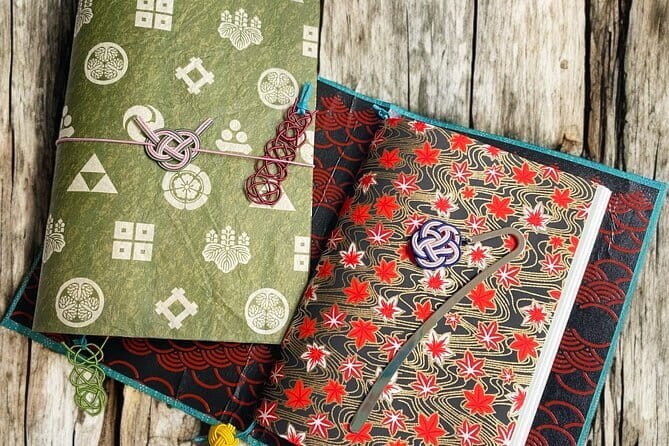
I would choose this experience if you enjoy making things slowly and want a souvenir with a personal story. The lamp is especially appealing if you like home decor, paper design, or objects that pack flat.
It also suits visitors who want cultural context without signing up for a long lecture. You learn about washi through a practical project, then learn about mizuhiki through the meaning of its knots.
This is a good choice for:
- Adults who enjoy careful handwork
- Couples seeking a shared creative activity
- Older children aged 10 and above
- Visitors interested in Japanese traditional crafts
- People who want a useful, handmade souvenir
- Anyone looking for a quieter break in Ueno
I would hesitate to book it for young children under 10. The activity is officially unsuitable for that age group, and the detailed folding, gluing, and knot work may be demanding even with help.
I would also think twice if you dislike precision crafts. The instructor can guide you, but the workshop still requires your attention. This is not an activity where you sit back and watch someone else create the final item.
Practical details before you reserve
The experience takes place in Ueno, in Japan’s Honshu region. The exact meeting address and starting times are not provided here, so check those details before making plans around museums, shopping, or another timed booking.
The session lasts 150 minutes. Give yourself enough time to finish the work rather than scheduling a tight connection immediately afterward. The class includes a closing refreshment, so leaving before the end would mean missing part of the experience.
The group is private. That makes this especially useful for people who prefer personal instruction or want to share the activity with companions rather than strangers.
Japanese and English are offered. The instructor’s name is not provided, but the available feedback points to a teacher who is helpful and attentive. You should still feel free to confirm language needs when reserving.
Cancellation is flexible up to 24 hours before the activity for a full refund. You can also reserve and pay later, which helps if your Ueno plans may change.
How the finished pieces travel home
The lamp’s book-like closed shape is a practical design feature. It should be easier to carry than a fixed paper shade, although you should still protect it from crushing inside luggage. The workshop details do not state whether packaging is supplied, so do not assume a special travel box.
The mizuhiki ornament is smaller and easier to pack. Since it is made for a belt, you can use it as an accessory or keep it as a decorative keepsake.
Your finished pieces may not look exactly like a shop-bought product. That is part of the point. Small variations show where you folded, glued, and shaped the paper yourself. If you want perfect symmetry, ask for help during assembly rather than waiting until the final step.
Should you book the Ueno washi workshop?
Book it if you want a calm, private activity with real handwork, a useful paper souvenir, and a clear connection to Japanese craft traditions. The strongest reasons are the fold-flat lamp, the meaning behind the mizuhiki knots, and the patient instruction in Japanese or English.
Skip it if you need a cheap, quick attraction, are traveling with children under 10, or dislike detailed folding and gluing. At $106, the price asks you to value the making process as much as the finished objects.
For the right person, this is a memorable way to spend two and a half hours in Ueno. You leave with a warm lamp, a decorated belt ornament, a better sense of washi, and a story behind the knot you made.
FAQ
Where does the workshop take place?
The workshop takes place in Ueno, Japan, on Honshu.
How long does the activity last?
The workshop lasts 150 minutes, or two and a half hours.
What will I make?
You will make a traditional-style origami lamp from handmade washi paper and a mizuhiki knot ornament for a belt.
Are all craft materials included?
Yes. The activity includes all materials needed to create the origami lamp and mizuhiki knot ornament.
Is instruction available in English?
Yes. Instruction is available in Japanese and English.
Is this a private workshop?
Yes. The activity is held for a private group.
Are Japanese sweets included?
Yes. Japanese sweets are included and served at the end of the session.
Is tea included?
Yes. The workshop includes Japanese paper tea.
Is the workshop suitable for young children?
No. Children under 10 are not suitable for this activity because it requires detailed craft skills.
Can I cancel for a full refund?
Yes. You can cancel up to 24 hours in advance for a full refund. You can also reserve now and pay later.
More hands-on classes and workshops in Tokyo
- Sushi Making Tokyo Roll and Authentic Japanese Sushi Class
★ 5.0 · 3,971 reviews - Tokyo: Roll and Authentic Sushi Making Class in Asakusa
★ 4.9 · 1,957 reviews - Tokyo: Sushi Making Class in a Happi Coat near a Famous Spot
★ 4.9 · 1,377 reviews - Tokyo Sushi Making Class in Tsukiji with Professional Chef
★ 5.0 · 1,177 reviews
Newly reviewed around Tokyo
- Tokyo Asakusa:Calligraphy & Make T-shirt Activity★ 5.0 · 62 reviews
- Intercity Shuttle, Tokyo to Haneda /Narita /Yokohama /Makuhari★ 5.0 · 5 reviews
- 1 Hour Travel around Tokyo with a Professional Photographer★ 5.0 · 3 reviews
- Travel Tokyo with Your Own Personal Photographer★ 5.0 · 43 reviews
- Kickboxing & Body Training with EX-Pro Fighter★ 5.0 · 4 reviews
- Train in Samurai Swordsmanship and Defeat the Demon in Tokyo★ 5.0 · 5 reviews
- Shuttle Van 6hr Tokyo Tour to-and-from Tokyo, Yokohama and Narita★ 5.0 · 9 reviews
- Traditional Japanese Knife Sharpening Class★ 5.0 · 18 reviews
Tokyo Traditional Craft Workshops, compared.
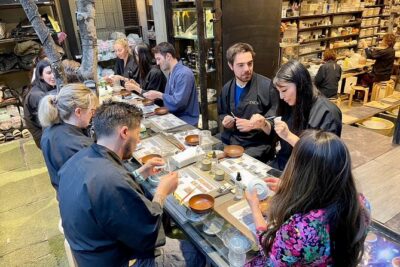
Kintsugi Experience: Art of Golden Joinery in Tokyo
Read our review →
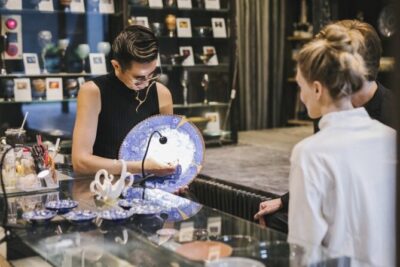
Authentic Pure Gold Kintsugi Workshop with Master Taku in Tokyo
Read our review →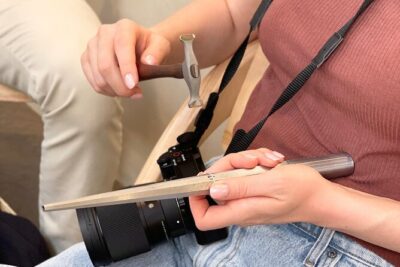
Private Handmade Ring Workshop Activity in Tokyo Shibuya
Read our review →
Browse the lists this tour appears in