
Reviewed · ASAKUSA AND SENSOJI TOURS
Explore Asakusa’s historic landmarks
Asakusa gives you old Tokyo in a compact package: a giant red lantern, a temple courtyard, snack stalls, souvenir shops, and narrow streets lined with casual pubs. This walk takes you from the famous Kaminarimon Gate to Senso-ji Temple, then past the postcard sights into Hoppy Street, where the atmosphere feels more local and informal.
I like the clear introduction to Japanese temple customs, including how to pray and draw a fortune. I also like the small group size, capped at eight, and the practical help with photos, gifts, food, and desserts that guides such as Sachi, Andy, Kayoko, Sunny, and Yoshiko have provided.
The main consideration is pace. The standard walk can finish in 90 minutes, so you will not have long for browsing or eating unless the guide slows down or you continue exploring afterward. The streets can also be crowded, and the tour requires a moderate level of fitness.
Key points to know before you book
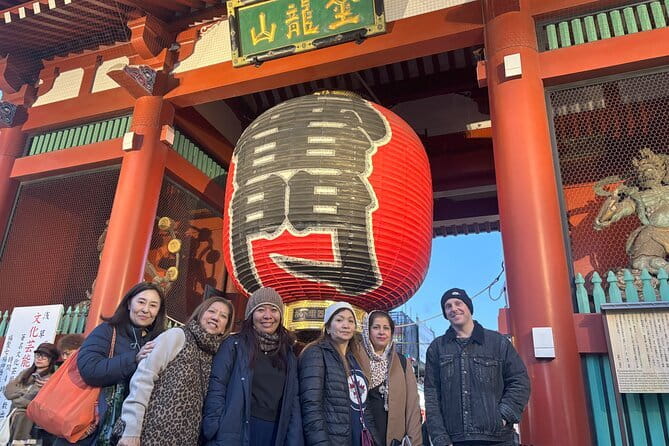
- Kaminarimon Gate begins the story: Start beneath Asakusa’s famous red lantern, with the wind and thunder gods watching from either side.
- Temple etiquette is explained clearly: You learn how to approach Senso-ji, pray, and get a fortune instead of simply taking photographs and moving on.
- The walk goes beyond the main temple: Hanayashiki Street and Hoppy Street add old-Tokyo character, food stops, and post-war atmosphere.
- Small groups make questions easy: With no more than eight people, you have a better chance to ask about customs, shopping, and local food.
- The sushi option adds one hour: Pair the 1.5-hour walk with a class at 12:30 to 13:30 or 15:30 to 16:30.
- The price is modest for a guided orientation: At $35 per person, the value is strongest on a first day in Tokyo, when context and local direction save time.
Why this Asakusa walk works well on your first day
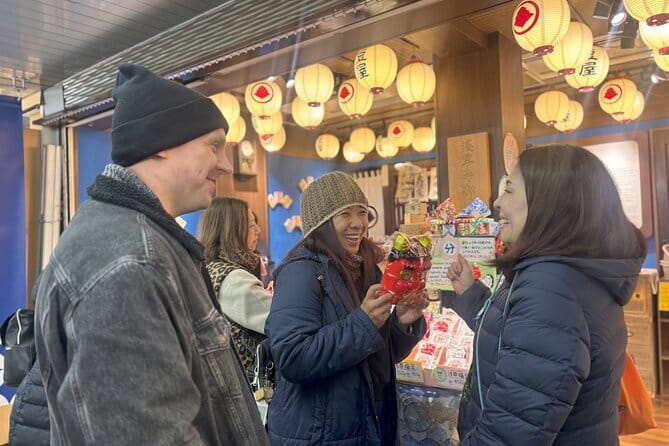
Asakusa is one of the easiest Tokyo districts to enjoy on foot, but it is also easy to reduce it to a few photographs. You see Kaminarimon, walk up Nakamise-dori, look into Senso-ji, and leave without understanding what you just saw. This experience gives those sights a simple frame.
Your guide meets you at the Asakusa Culture Tourist Information Center, at 2-chome-18-9 Kaminarimon. That location puts you close to Kaminarimon Gate, so the tour gets moving quickly instead of spending time on a long transfer. The activity returns to the same meeting point, which makes it easier to plan lunch, shopping, or your next Tokyo stop.
I would use this tour early in a Tokyo visit. The route helps you get your bearings, and the guides have also helped with specific shopping areas and places for lunch, dinner, and dessert. That practical local direction may be worth as much as the historical explanation if you have only a few days in the city.
The group limit of eight is useful here. Asakusa streets are busy, and a large group would make it harder to hear or ask questions. A small group also gives the guide room to take photos, answer individual questions, and adjust the conversation to your interests.
More Asakusa and Sensoji tours:
- Tokyo: Japanese Dance Cabaret Theater Asakusa-Kaguwa Ticket
★ 4.8 · 2,270 reviews - Tokyo: Meiji Shrine, Asakusa, Skytree Bus Tour and Cruise
★ 4.7 · 1,986 reviews - Tokyo: Roll and Authentic Sushi Making Class in Asakusa
★ 4.9 · 1,957 reviews
Kaminarimon Gate and the first Tokyo photo
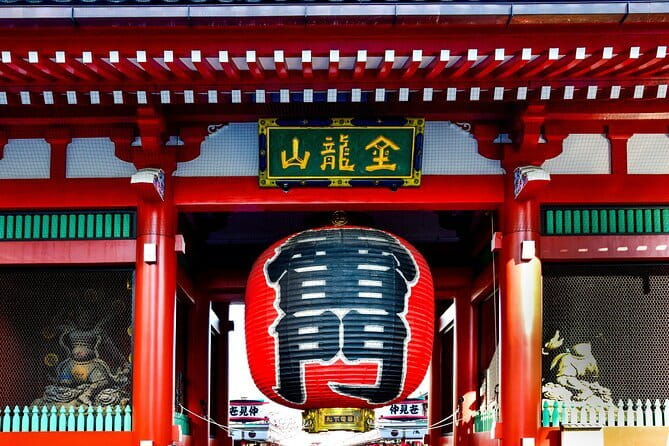
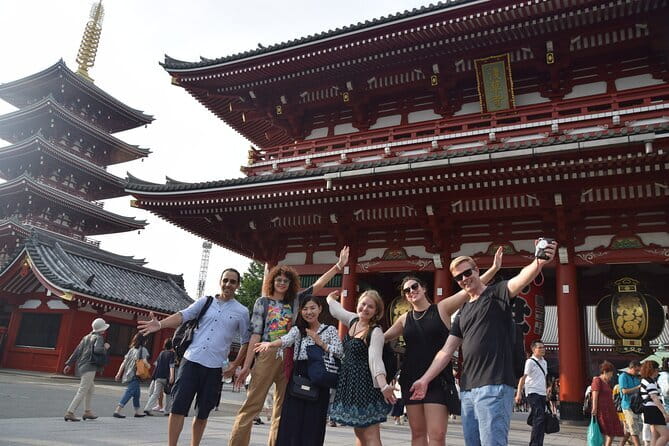
Kaminarimon means Thunder Gate, and it is the natural opening scene. The huge red lantern hangs in the center, while statues of Fujin, the wind god, and Raijin, the thunder god, guard the sides. You get one of Asakusa’s essential photographs here, but the guide adds the background that a quick stop alone cannot provide.
The planned visit lasts about 10 minutes. That is enough to hear the basic story, look closely at the gate, and take photographs, but not enough for a long pause if the area is packed. Keep your camera ready and stay aware of people moving around you.
This is also where a guide can help you read the place correctly. Kaminarimon is not just a decorative entrance. It introduces the religious precinct ahead and sets up the transition from a busy commercial street to Senso-ji’s temple grounds.
Nakamise-dori, snacks, souvenirs, and shopping advice
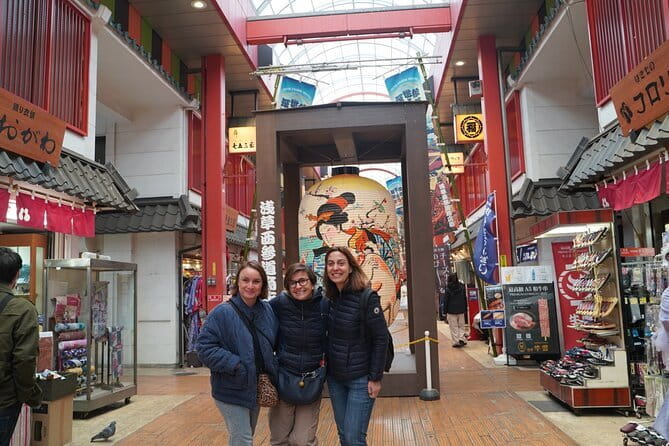
From Kaminarimon, you walk along Nakamise-dori. The street leads directly toward Senso-ji and is lined with shops selling Japanese snacks, crafts, and souvenirs. It is one of the most attractive shopping lanes in Asakusa, but it is also a place where a little guidance helps.
The scheduled stop is about 10 minutes, which is brief. Think of it as an orientation rather than a dedicated shopping session. Your guide can point out the general character of the goods and explain the meaning or purpose of some Japanese souvenirs, as Yoshiko has done for guests in the past.
If you already know you want gifts, do not expect to complete all your shopping during the walk. Ask your guide for specific areas or shops after the formal route. Andy has helped direct people to suitable shopping spots, and other guides have shown the surrounding shopping districts. That kind of follow-up advice can prevent you from buying the first souvenir you see.
Food is part of the fun here, too. You might find traditional snacks and local treats along the way, but the tour does not promise a tasting menu. Budget time after the walk if you want to browse carefully or sample several things.
Senso-ji Temple and simple worship etiquette
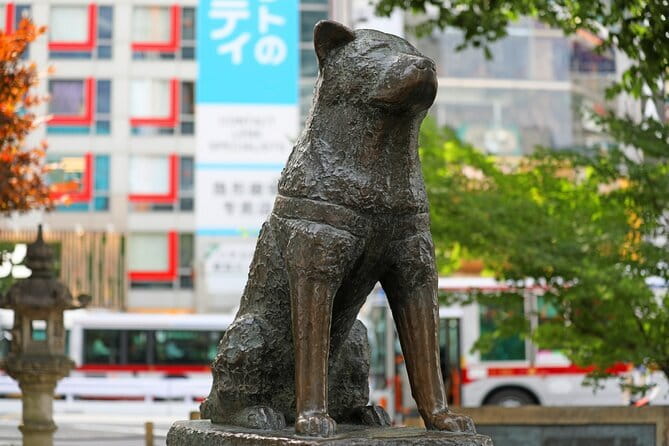
Senso-ji is the heart of the walk. It is Tokyo’s oldest temple and is dedicated to Kannon, the Buddhist goddess of mercy. The planned visit lasts about 30 minutes, making it the longest stop on the main sightseeing route.
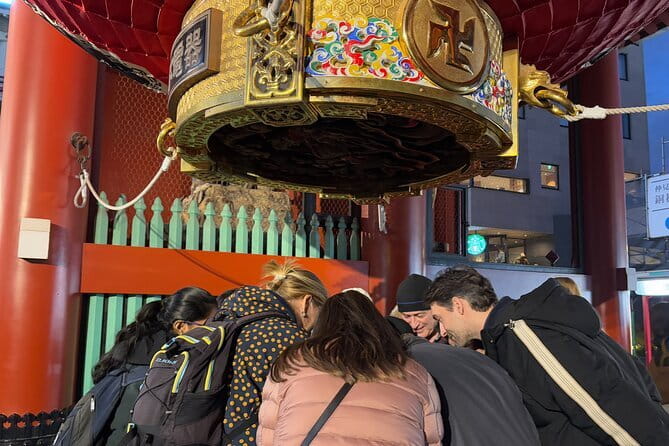
That half hour gives your guide time to explain the temple’s background and the basic customs for worship. You can learn how to approach the site, how to pray, and how to get a fortune. Kayoko has also shown people how to pray properly and draw fortunes, while other guides have answered questions about the religious and historical meaning of the area.
This guidance is especially helpful if you are new to Japan. Many first-time visitors know there are customs but are unsure when to bow, where to cleanse, or what to do with a fortune. A short explanation removes the awkwardness and lets you take part with respect.
You should still expect a public temple, not a quiet museum. Senso-ji is one of Tokyo’s best-known sights, so the courtyard and approaches can be busy. The tour gives you an introduction, not private access or an extended study of every building.
The guide’s role matters most here. The individual guide names associated with this experience include Sachi, Andy, Kayoko, Chiharu, also known as Sunny, and Yoshiko. The available feedback places strong emphasis on their warmth, answers to questions, help with photographs, and explanations of religious practice. Guide assignments can vary, so you should not assume a specific person will lead your departure.
More history and heritage tours in Tokyo:
- Tokyo: Imperial Palace and Shogun Historical Walking Tour
★ 5.0 · 2,251 reviews - Tokyo: Imperial Palace Japanese History Walking Tour
★ 4.9 · 987 reviews - Tokyo: Shinjuku Historical Walking Tour & Secret Backstreets
★ 5.0 · 530 reviews - Yanaka Walking Tour: Historic and Traditional District of Tokyo
★ 5.0 · 530 reviews
Hanayashiki Street and the old amusement-park district
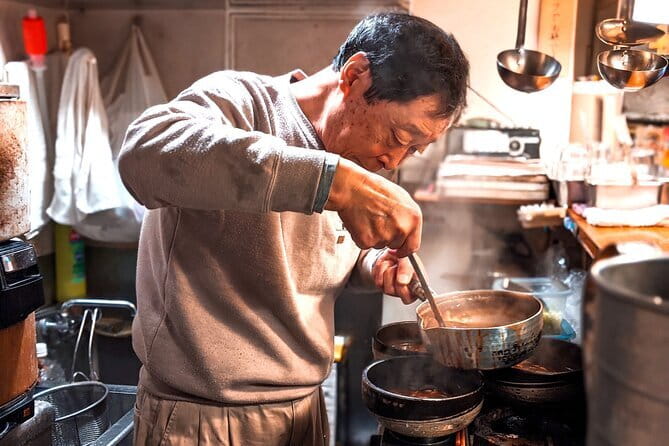
After Senso-ji, the walk turns toward Hanayashiki Street. The street takes its name from Hanayashiki, identified here as Japan’s oldest amusement park. Shops, restaurants, cafes, snacks, and small local businesses give this section a different feel from the straight approach along Nakamise-dori.
The planned stop lasts about 20 minutes. This is a useful transition point because you move from the formal temple setting into Asakusa’s everyday entertainment district. The street carries a nostalgic old-Tokyo mood, with places to pause for food or browse for small gifts.
Do not expect a major attraction at every step. The appeal is the change in texture: less ceremonial than Senso-ji, more casual than the main shopping street, and full of small details that are easy to miss when you rush between landmarks. Your guide may point out places for lunch, dinner, or dessert, based on the group’s questions and the guide’s local knowledge.
If you are most interested in grand architecture, this may be the least essential stop. If you want a sense of how Asakusa works beyond its famous gate and temple, it earns its place on the route.
Hoppy Street and Asakusa after the postcard sights
Hoppy Street is the final listed stop, with about 20 minutes set aside. It is known for izakayas, Japanese pubs, and the local drink called Hoppy. You may also see foods such as yakitori, grilled chicken skewers, and oden, a simmered hot-pot dish.
The street keeps a post-war atmosphere and a relaxed pub culture. That makes it a useful counterpoint to Senso-ji. The temple shows Asakusa’s religious identity, while Hoppy Street shows its social side, where people gather for simple food and drinks.
The timing matters. Twenty minutes is enough for an explanation and a look around, but it is not a full evening at the pubs. If you want to eat or drink here, plan to return after the tour. You can ask your guide where to go, but the walk itself does not promise a meal or drink.
This part may be less suitable for young children late in the day, although the information provided does not set an age restriction. The street is also more about atmosphere and local eating than polished sightseeing. I like that the route includes it because it keeps the tour from becoming a temple-only circuit.
What the $35 price really buys you
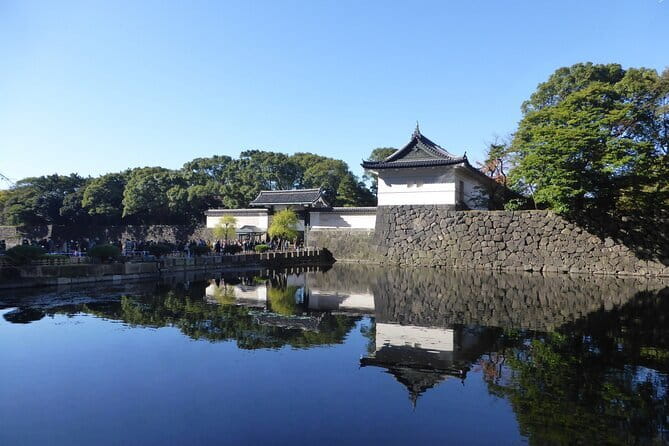
At $35 per person, the cost is reasonable for a 1.5-hour private-style orientation in a group of no more than eight. Admission to the listed stops is free, so you are mainly paying for the guide’s time, explanations, local direction, and help navigating a busy district.
The value is strongest if you are visiting Asakusa for the first time. You get the major landmarks, basic religious etiquette, photo help, and an introduction to shopping and food areas without having to research every stop yourself. The guides have also helped people find suitable gift shops and eating areas, which adds practical value beyond the formal schedule.
The price is less compelling if you already know Asakusa well or prefer to wander without a plan. Since the public sights do not require an admission ticket, an independent visit costs very little. In that case, book this for interpretation and local advice, not for access.
The optional sushi class changes the calculation. It adds one hour after the 1.5-hour walking tour, with class times from 12:30 to 13:30 or 15:30 to 16:30. The supplied details do not state the extra price, so check the selected option before booking. If you want a hands-on food activity as well as sightseeing, the combination may make a fuller half-day.
Timing, fitness, and how to plan your day
The advertised duration ranges from about 1 hour 30 minutes to 3 hours 30 minutes. The standard route is described as a 1.5-hour walk, while the sushi option adds a one-hour class. The wider range may reflect the chosen option and the way the activity is scheduled, so check your specific booking time.
You should be comfortable walking and standing. The activity asks for moderate physical fitness, and the route includes several outdoor streets and temple areas. Comfortable shoes matter more than dressy clothes here.
The meeting point is near public transportation, which makes it practical to reach from another part of Tokyo. The walk ends back at the starting point. That return is convenient if you want to leave bags at your hotel before the tour or continue with a planned afternoon nearby.
The tour offers a mobile ticket, and confirmation is provided at booking. Cancellation is free if you cancel at least 24 hours before the local start time. A cancellation inside that window is not refundable, and changes made during the final 24 hours are not accepted.
Which guide style suits you best
The strongest pattern in the available feedback is personal attention. Sachi is associated with careful answers and a small handmade or special gift activity at the end. Andy has helped with shopping and offered useful information about key places, history, and culture.
Kayoko has shown people how to pray and get fortunes, while Chiharu, also called Sunny, has been praised for guiding people through food and shopping areas as well as the temple. Yoshiko has taken photographs and explained the background of souvenirs as well as the area’s religious setting.
These details suggest a tour that can be conversational rather than strictly scripted. You can ask about customs, food, gifts, and local streets. Still, guide assignments are not guaranteed, so book for the route and format rather than for one named guide.
The activity provider is Japan Wonder Travel. The experience has a listed rating of 5 from seven ratings, but the more useful point for your decision is the repeated focus on guide warmth, clear explanations, photo help, and local recommendations.
Who should book this experience
I would recommend it to a first-time Tokyo visitor who wants a short, organized introduction before exploring alone. Families and older adults who appreciate a slower explanation of temple customs may also find the small group helpful, provided everyone can manage moderate walking.
It suits people who like a mix of famous sights and ordinary streets. You get the essential Asakusa photographs, but you also reach Hanayashiki Street and Hoppy Street, where the district feels less formal.
The tour is less suitable if you want a long temple study, extensive shopping time, or a full food tour. The listed stop times are short, and the sushi class is the only clearly defined hands-on food add-on.
Should you book the Asakusa historic landmarks tour?
Book it if you want to understand Asakusa rather than simply pass through it. For $35, the small group, temple etiquette, photo help, and practical shopping and food advice offer solid value on a first visit.
Skip it if you already know Senso-ji and prefer to set your own pace. If you do book, choose a start time that leaves room afterward for Nakamise-dori shopping or a meal on Hoppy Street. Add the sushi class if you want a longer cultural activity, and confirm the selected option and price before paying.
FAQ
Where does the Asakusa tour start?
It starts at the Asakusa Culture Tourist Information Center, located at 2-chome-18-9 Kaminarimon, Taito City, Tokyo 111-0034, Japan.
Where does the activity end?
The activity ends back at the meeting point.
How long does the standard walking tour last?
The walking tour is described as 1 hour 30 minutes. The overall activity duration may range from about 1 hour 30 minutes to 3 hours 30 minutes, depending on the selected option.
What sights are included?
The route includes Kaminarimon Gate, Nakamise Shopping Street, Senso-ji Temple, Hanayashiki Street, and Hoppy Street.
Is a sushi class available?
Yes. You can add a one-hour sushi-making class after the 1.5-hour walking tour. The listed class times are 12:30 to 13:30 and 15:30 to 16:30.
How many people can join the tour?
The activity has a maximum of eight people.
Is the tour suitable for someone with moderate fitness?
Yes. The activity information recommends a moderate level of physical fitness, and you should expect walking and standing during the route.
Can I cancel for a full refund?
Yes, if you cancel at least 24 hours before the experience start time based on local time. Cancellations or changes made less than 24 hours before the start are not accepted for a refund.
Newly reviewed around Tokyo
- Tokyo Asakusa:Calligraphy & Make T-shirt Activity★ 5.0 · 62 reviews
- Travel Tokyo with Your Own Personal Photographer★ 5.0 · 43 reviews
- Intercity Shuttle, Tokyo to Haneda /Narita /Yokohama /Makuhari★ 5.0 · 5 reviews
- 1 Hour Travel around Tokyo with a Professional Photographer★ 5.0 · 3 reviews
- Train in Samurai Swordsmanship and Defeat the Demon in Tokyo★ 5.0 · 5 reviews
- Shuttle Van 6hr Tokyo Tour to-and-from Tokyo, Yokohama and Narita★ 5.0 · 9 reviews
- Kickboxing & Body Training with EX-Pro Fighter★ 5.0 · 4 reviews
- Traditional Japanese Knife Sharpening Class★ 5.0 · 18 reviews
Asakusa and Sensoji Tours, compared.

Japanese Dance Cabaret Theater Asakusa-Kaguwa Ticket
Read our review →
Meiji Shrine, Asakusa, Skytree Bus Tour and Cruise
Read our review →
Roll and Authentic Sushi Making Class in Asakusa
Read our review →
Asakusa Walking Tour with Sensoji Temple Visit
Read our review →
Tokyo Panoramic 1 Day: Meiji Shrine, Asakusa, Odaiba and SKYTREE®
Read our review →
Tokyo Go Kart: Asakusa, Skytree, and Akihabara **IDP MUST**
Read our review →
Asakusa, Skytree & Akhihabara Go-Kart City Experience
Read our review →Browse the lists this tour appears in