
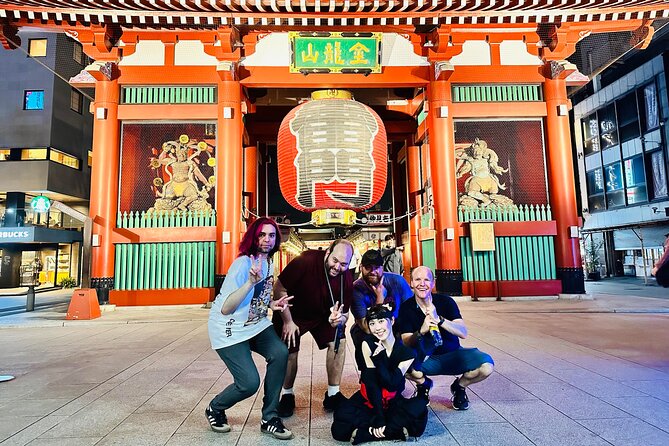
Reviewed · ASAKUSA AND SENSOJI TOURS
Asakusa’s Historic Treasures
Asakusa packs centuries of Tokyo into one afternoon. You move from temples and shrines to buildings that survived the war, then switch gears with karaoke and monja cooking, a local dish that looks unusual but tastes far better than its appearance suggests. Guide Miley brings personal experience from working in both Asakusa and Akihabara.
I like the small group of nine or fewer, which should make the history walk easier to follow and the food stop more hands-on. I also like the unusual mix of culture and play: you get historical context, a free-drink karaoke session, and one included drink with your monja meal. The main drawback is the price, $164.72 per person, which is a lot if you mainly want a temple walk or a quick meal.
Key points to know
- Asakusa in chronological order: The tour frames the district through dates from 628 to 2012, giving you a sense of how old and modern Tokyo meet in one neighborhood.
- Temple and shrine contrasts: You visit both types of religious site and see buildings connected with the period from 1649 to 1945.
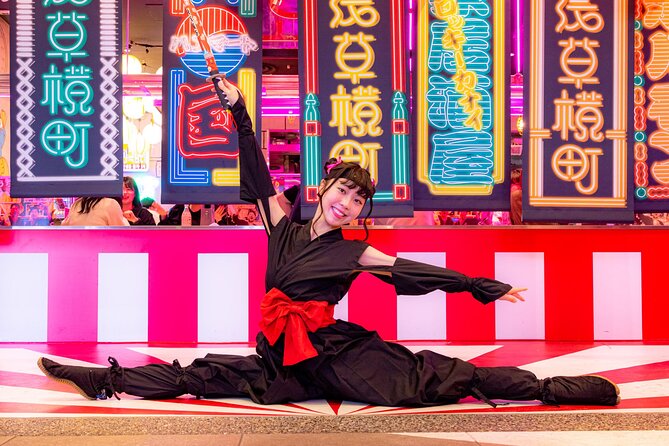
- Festival-style photo stop: Asakusa Yokocho offers 20 minutes of colorful, Japanese-festival-themed photo opportunities.
- One hour of karaoke: The session includes a free drink bar, making this more than a passing look at a famous Japanese pastime.
- Hands-on monja meal: Your guide teaches you how to prepare Asakusa-style monja, with one drink included.
- Easy small-group timing: The approximately four-hour experience starts at 2:00 pm and finishes near Ninja House.
Why this Asakusa tour feels different
Many Asakusa outings focus almost entirely on Sensoji and the Kaminarimon gate. This experience takes a broader view. It treats Asakusa as a place where religious tradition, wartime survival, local food, entertainment, and modern themed spaces sit close together.
That mix matters because Asakusa can seem simple at first glance. You see a temple, take a few photographs, and move on. A guide who has worked in the area can help connect those sights to the district’s longer story. Here, the historical portion is presented in chronological order, with the unusual date range of 628 to 2012 used to frame the area’s development.
I also like that the afternoon is not built around facts alone. After the history walk, you enter Asakusa Yokocho for a short photo stop, sing karaoke for an hour, and then prepare monja. You get several kinds of Japanese culture in one booking, rather than repeating the same sort of sightseeing for four hours.
The tone is likely social and energetic. Several comments about Miley describe a lively host who keeps the mood high, including on a rainy day. That is useful to know if you prefer a quiet, formal lecture. This is better suited to someone who wants history explained with jokes, conversation, and activities.
More Asakusa and Sensoji tours:
- Tokyo: Japanese Dance Cabaret Theater Asakusa-Kaguwa Ticket
★ 4.8 · 2,270 reviews - Tokyo: Meiji Shrine, Asakusa, Skytree Bus Tour and Cruise
★ 4.7 · 1,986 reviews - Tokyo: Roll and Authentic Sushi Making Class in Asakusa
★ 4.9 · 1,957 reviews
Starting near Kaminarimon at 2:00 pm
The meeting point is outside Burger King Asakusa Azumabashi, at Cross Bil Royal Palace, 2-chome-20-6 Kaminarimon, Taito City. The start time is 2:00 pm.
This is a practical afternoon start. You can spend the morning elsewhere in Tokyo, have lunch before meeting the group, and still reach Asakusa without rushing out of bed. Since the tour begins near public transportation, it should fit neatly into a day based around the district.
I would arrive early. The meeting address is specific, but busy Tokyo streets can make a first visit confusing, especially around a station and major sightseeing area. Keep the mobile ticket ready and allow enough time to locate the exact meeting point.
The tour lasts about four hours. That is long enough for a real meal and karaoke session, but not so long that the afternoon becomes an all-day commitment. The listed schedule gives roughly 20 minutes for Asakusa Yokocho, one hour for karaoke, and one hour for monja. The remaining time is used for the historical walk, transfers, and conversation.
Reading Asakusa through dates from 628 to 2012
The first major idea is a time-slip journey through Asakusa. The district has many visible reminders of its past, and the guide presents them in chronological order rather than as disconnected stops.
The date 628 is part of the tour’s framing of Asakusa’s early history, while 2012 marks the modern end of the timeline provided for the experience. You should not expect a university lecture. The appeal is the way the dates give shape to what you are seeing now.
The tour also asks you to notice the difference between temples and shrines. That distinction is useful because the two can look similar to someone visiting Japan for the first time. Seeing both in the same area gives you a chance to compare their atmosphere and function as your guide explains them.
Another focus is buildings that survived the war, tied to the period from 1649 to 1945. These details give the walking portion more weight than a simple photo route. You are not only looking at attractive structures. You are being asked to notice what remained, what changed, and how Asakusa reached its present form.
Miley’s background in both Asakusa and Akihabara adds a personal angle. The tour description specifically points to information beyond standard guidebooks. That does not mean every detail will be obscure, but it does suggest that the value lies in local explanation and context, not just pointing out famous sights.
Asakusa Yokocho and 20 minutes of festival-style photographs
Asakusa Yokocho is the first listed activity stop. It is a theme park-style setting based on Japanese festivals, designed for photographs. The stop lasts 20 minutes and admission is listed as free.
This is a short, light section of the afternoon. You will not have time for a long independent visit, so think of it as a visual change of pace between historical sightseeing and the later entertainment stops. If you enjoy taking photos, the festival concept gives you a more playful backdrop than the temples and shrines.
The limitation is clear: 20 minutes passes quickly. You will need to follow the group’s timing rather than wander at length. If you want a slow visit to every corner, this tour will not provide it.
Still, the stop works well in the larger plan. Asakusa is not treated as a solemn museum district. The tour shows its religious and historical side, then lets you enjoy the modern, theatrical side of Japanese culture. That contrast is one of the strongest reasons to choose this outing.
More history and heritage tours in Tokyo:
- Tokyo: Imperial Palace and Shogun Historical Walking Tour
★ 5.0 · 2,251 reviews - Tokyo: Imperial Palace Japanese History Walking Tour
★ 4.9 · 987 reviews - Yanaka Walking Tour: Historic and Traditional District of Tokyo
★ 5.0 · 530 reviews - Tokyo: Shinjuku Historical Walking Tour & Secret Backstreets
★ 5.0 · 530 reviews
Karaoke with a free drink bar
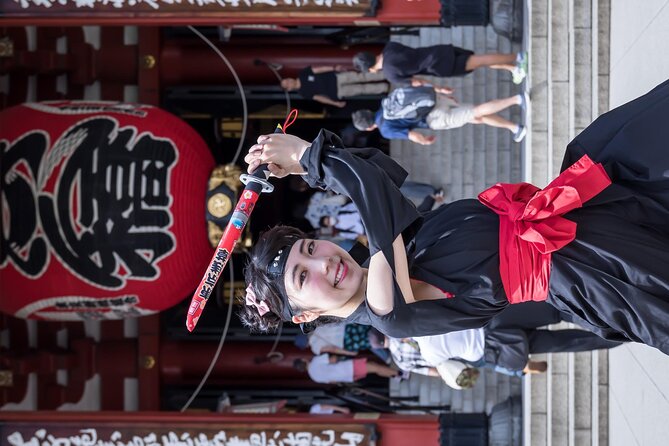
The karaoke session lasts one hour and includes a free drink bar. Japan is identified as the birthplace of karaoke in the tour description, and the activity gives you a direct way to take part rather than simply hear about it.
An hour is enough time to settle in and enjoy the experience without making karaoke the entire afternoon. You can expect this section to be participatory. If you like singing, it is an obvious highlight. If you are shy, the group format may feel more comfortable than booking a private karaoke outing on your own, though the supplied information does not specify the room arrangement.
The free drink bar adds practical value, especially because it gives you refreshment during a full afternoon. It also helps separate this from a basic neighborhood walk. You are paying for an activity, not just transportation between sights.
The trade-off is that karaoke may not appeal to everyone. If you want a purely historical tour, one hour is a large portion of the experience. I would book this only if you are willing to take part or at least enjoy watching others join in.
Making monja, Asakusa’s messy-looking local specialty
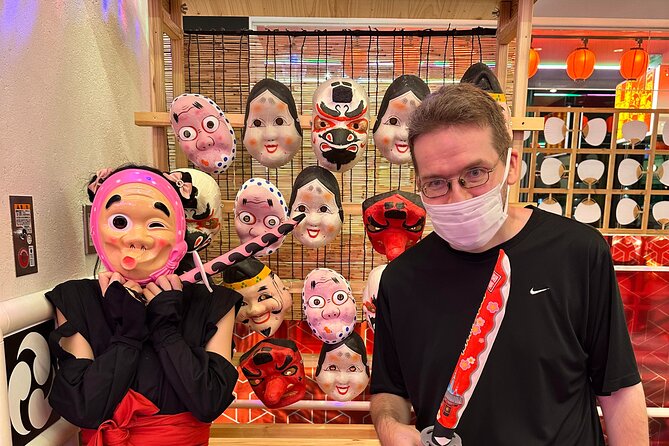
The monja stop lasts one hour and includes instruction from the guide. You learn how to make the dish, and one drink is included with the meal.
Monja is described frankly as looking like vomit but tasting delicious. That blunt humor tells you what kind of food experience to expect. It is not polished fine dining. The point is to try a distinctive Asakusa specialty and learn how to prepare it with help from someone who knows the process.
The hands-on element gives this stop more value than simply ordering a dish at a restaurant. You learn by doing, and the guide can make the unfamiliar appearance less intimidating. For many people, food is the easiest way to understand a neighborhood. Monja ties the afternoon directly to Asakusa instead of offering a generic Japanese meal.
One included drink is a useful addition, but the supplied details do not specify the exact monja ingredients, restaurant name, or drink choice. If you have allergies or strict dietary needs, ask before booking or at the start of the experience. The available information does not promise special dietary arrangements.
The meal lasts about an hour, so it is substantial enough to count as one of the tour’s main activities. You may want only a light snack before the tour, though the exact portion size is not provided.
Finishing near Ninja House
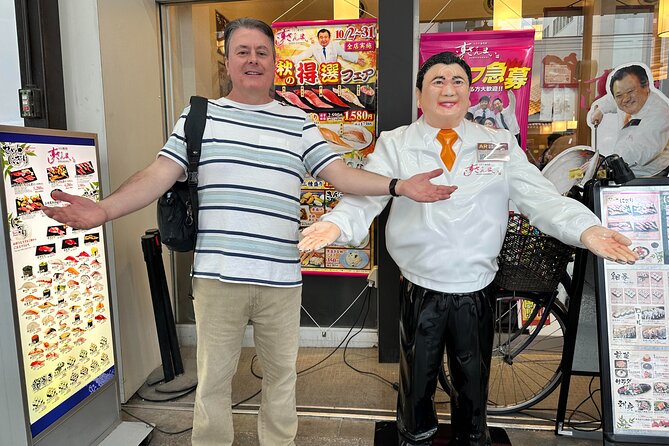
The listed endpoint is 2-chome-4-3 Asakusa, Taito City, near Ninja House. The tour ends there after the main activities.
There is also an optional chance to continue with the guide for a drink at Ninja House. That extra option is not part of the core four-hour schedule, and the supplied details do not state its price or duration. Treat it as a possible add-on rather than something included in the $164.72 booking.
Ending in Asakusa is convenient if you want to keep exploring the area afterward. You can also use the finish as a simple point from which to continue your evening, though no onward transportation arrangement is included.
What the $164.72 price buys you
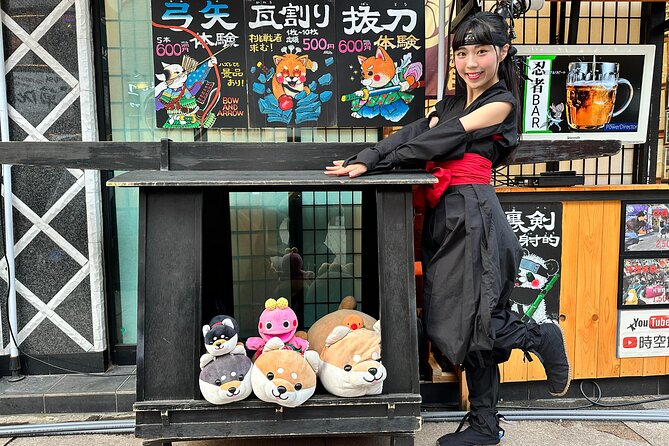
At $164.72 per person, this is not a budget walking tour. Its value depends on how many parts you would otherwise book separately.
The price combines a guided historical walk, a festival-themed photo stop, one hour of karaoke with a free drink bar, and a guided monja meal with one drink. Admissions for the listed stops are shown as free, so you are mainly paying for the guide, organization, activities, food, drinks, and the convenience of putting them together.
The small group cap of nine matters here. A guide can answer more questions and keep a hands-on food activity moving without managing a large crowd. That personal attention is part of the price, especially if Miley is your guide and you value her energetic style.
I would consider the tour a fairer deal for someone who wants a social afternoon with several included elements than for someone who only wants sightseeing. If you would separately pay for karaoke, try monja, and hire a guide for Asakusa, the bundled format may make sense. If you plan to visit temples independently and eat a quick local meal, the cost will feel high.
Who will enjoy this four-hour outing
I would recommend it to first-time visitors who want an easy introduction to Asakusa without keeping the entire afternoon serious. It also suits repeat visitors who have already seen the major sights and want a more playful local activity.
The experience should work well for people who enjoy:
- Guided history with a conversational tone
- Karaoke and group participation
- Trying unfamiliar local food
- Small groups capped at nine
- A mix of traditional and modern Asakusa
- A guide who keeps the energy up
It may be a poor fit if you prefer silent temple visits, a slow photography schedule, or a tightly focused food tour. The four-hour plan changes mood several times, and karaoke is a major part of the schedule.
Most people can participate, and the tour is near public transportation. The available details do not describe specific accessibility arrangements, so you should contact Smiley Walk if you need information about walking conditions or access.
Weather, timing, and cancellation details
The experience requires good weather. If poor weather causes the tour to be canceled, you are offered another date or a full refund. The same applies if the minimum number of participants is not met.
You can cancel for a full refund up to 24 hours before the local start time. Cancellations or changes made less than 24 hours before the 2:00 pm start are not accepted for a refund.
Confirmation is provided when you book, and the ticket is mobile. Keep the booking details accessible on your phone when you meet the guide.
Should you book Asakusa’s Historic Treasures?
Book it if you want more than a temple checklist. The strongest feature is the combination of Asakusa history, karaoke, and monja cooking, all led by a guide who knows the area and keeps the pace lively. Miley’s energy is repeatedly praised, and that matters because the tour depends as much on personality as on places.
Skip it if you want the lowest-cost way to see Asakusa or if karaoke sounds like an obligation. At $164.72, this is a special-interest experience, not a simple neighborhood stroll.
For the right person, it offers a memorable way to understand Asakusa through its old buildings, religious sites, local food, and modern Japanese fun. The small group and included activities make the price easier to justify, especially for a first Tokyo visit.
FAQ
How much does the tour cost?
The listed price is $164.72 per person.
How long does the experience last?
The tour lasts approximately four hours.
What time does the tour start?
The start time is 2:00 pm.
Where does the tour begin?
The meeting point is Burger King Asakusa Azumabashi, Cross Bil Royal Palace, 2-chome-20-6 Kaminarimon, Taito City, Tokyo 111-0034, Japan.
Where does the tour finish?
The main experience ends at 2-chome-4-3 Asakusa, Taito City, near Ninja House.
How large is the group?
The tour has a maximum of nine participants.
Is a mobile ticket available?
Yes. The experience includes a mobile ticket.
What is included with the karaoke session?
The karaoke activity lasts one hour and includes a free drink bar.
What happens if the weather is poor or the minimum group size is not reached?
If poor weather or an insufficient number of participants cancels the experience, you are offered another date or experience, or a full refund.
Newly reviewed around Tokyo
- Tokyo Asakusa:Calligraphy & Make T-shirt Activity★ 5.0 · 62 reviews
- Intercity Shuttle, Tokyo to Haneda /Narita /Yokohama /Makuhari★ 5.0 · 5 reviews
- 1 Hour Travel around Tokyo with a Professional Photographer★ 5.0 · 3 reviews
- Travel Tokyo with Your Own Personal Photographer★ 5.0 · 43 reviews
- Train in Samurai Swordsmanship and Defeat the Demon in Tokyo★ 5.0 · 5 reviews
- Shuttle Van 6hr Tokyo Tour to-and-from Tokyo, Yokohama and Narita★ 5.0 · 9 reviews
- Kickboxing & Body Training with EX-Pro Fighter★ 5.0 · 4 reviews
- Traditional Japanese Knife Sharpening Class★ 5.0 · 18 reviews
Asakusa and Sensoji Tours, compared.
Japanese Dance Cabaret Theater Asakusa-Kaguwa Ticket
Read our review →
Meiji Shrine, Asakusa, Skytree Bus Tour and Cruise
Read our review →
Roll and Authentic Sushi Making Class in Asakusa
Read our review →
Asakusa Walking Tour with Sensoji Temple Visit
Read our review →
Tokyo Panoramic 1 Day: Meiji Shrine, Asakusa, Odaiba and SKYTREE®
Read our review →
Tokyo Go Kart: Asakusa, Skytree, and Akihabara **IDP MUST**
Read our review →
Asakusa, Skytree & Akhihabara Go-Kart City Experience
Read our review →Browse the lists this tour appears in